


Market Size
The Germany Food Supplement Market was US$ 10,854.95 million in 2025 and is expected to reach US$ 20,421.52 million in 2033 growing at a CAGR of 8.22% during the forecast period (2026-2033).
The Germany food supplements market is one of the largest and most mature markets in Europe, driven by a health-conscious population, a strong healthcare system and a high standard of living. The market has seen consistent growth, supported by consumer demand for preventive healthcare solutions, sports nutrition, cognitive enhancers and immunity-boosting supplements. The e-commerce sector plays a crucial role in market expansion, with online sales of food supplements experiencing rapid growth. Platforms such as Amazon, DocMorris, and Aponeo offer a wide range of products with convenient delivery options, making supplements more accessible.
Despite the market's growth potential, challenges such as stringent regulations, market saturation and intense competition persist. The German Federal Office of Consumer Protection and Food Safety (BVL) and the European Food Safety Authority (EFSA) enforce strict guidelines on product formulations and health claims, which can delay product launches. Germany's food supplements market remains dynamic and highly competitive, driven by factors such as preventive healthcare trends, sports and active lifestyles and cognitive health awareness.
Market Scope
| Metrics | Details |
| CAGR | 8.22% |
| Size Available for Years | 2023-2033 |
| Forecast Period | 2026-2033 |
| Data Availability | Value (US$) |
| Segments Covered | Ingredient, Dosage, Application, Age and Distribution Channel |
| Report Insights Covered | Competitive Landscape Analysis, Company Profile Analysis, Market Size, Share, Growth, Demand, Recent Developments, Mergers and Acquisitions, New Product Launches, Growth Strategies, Revenue Analysis, Porter’s Analysis, Pricing Analysis, Regulatory Analysis, Supply-Chain Analysis and Other key Insights. |
Market Drivers
Rising Aging Population and Preventive Healthcare Focus
Germany's aging population is a significant factor driving the growth of the food supplements market. Germany is currently one of only five “super-aged” societies in the world, and its population of those age 65 and older will continue to grow, reaching nearly one-third of the total population by 2050. Germany’s population aged 65 and older is projected to grow by 41 percent to 24 million by 2050, accounting for nearly one-third of the total population. At the same time, the population ages 15 through 64 will shrink by 23 percent – from about 53 million in 2015 to about 41 million by 2050.
As people live longer, the focus shifts from treating illnesses to preventing chronic diseases and maintaining a high quality of life. This demographic trend boosts the consumption of food supplements aimed at addressing common health concerns among the elderly, such as osteoporosis, cardiovascular diseases, joint health, and cognitive decline. For instance, Calcium and Vitamin D supplements are widely consumed to maintain bone density and reduce the risk of fractures, while Omega-3 fatty acids and Coenzyme Q10 support cardiovascular health.
Additionally, Ginkgo biloba supplements are popular for enhancing cognitive function and memory, addressing concerns related to age-related cognitive decline. This focus on preventive healthcare reduces the burden on the healthcare system and ensures sustained demand for high-quality, science-backed supplements, driving market growth in Germany.
Sports Nutrition and Active Lifestyle Trends
The growing emphasis on sports nutrition and active lifestyles is a major driver of the Germany food supplements market. According to a survey conducted by Techniker Krankenkasse (TK), more than half (52%) of adults over 18 engage in sports regularly, reflecting a nationwide shift toward health-conscious living. For many, sports act as a healthy counterbalance to sedentary work routines, leading to increased demand for supplements that enhance performance, endurance, and recovery.
The survey also highlights that 37% of respondents engage in over one hour of daily exercise, such as walking or cycling, while 66% manage at least 30 minutes of physical activity per day. This rise in physical activity fuels the consumption of protein powders, branched-chain amino acids (BCAAs), creatine and electrolytes, which are essential for muscle recovery and stamina enhancement. For instance, whey protein supplements from brands like Optimum Nutrition and MyProtein are popular among fitness enthusiasts for muscle building and post-workout recovery.
Additionally, pre-workout formulas containing caffeine, beta-alanine and L-citrulline are gaining traction among young adults seeking to boost energy and performance during workouts. Germany's robust sports infrastructure further contributes to this trend, with nearly 90,000 sports clubs accommodating around 28 million members. Thus, the rising trend of active living, combined with structured sports participation and a growing fitness culture, is significantly propelling the demand for sports nutrition supplements in Germany.
Market Restraints
Stringent Regulatory Environment
The stringent regulatory environment in Germany significantly restrains the growth of the food supplements market by imposing strict compliance requirements and complex approval processes. Governed by the German Federal Office of Consumer Protection and Food Safety (BVL) and aligned with the European Food Safety Authority (EFSA) standards, these regulations ensure high product quality and consumer safety but create substantial barriers to entry for manufacturers.
Every health claim made by a supplement must be scientifically validated and approved by EFSA, which involves lengthy clinical studies, substantial documentation and high associated costs. For instance, supplements claiming to support immune health, cognitive performance or heart health must undergo rigorous evaluations to prove their efficacy. This process can take up to 3-5 years, delaying product launches and increasing time-to-market.
Moreover, the Novel Food Regulation adds another layer of complexity for companies introducing supplements with new ingredients. These ingredients require separate approval, which is both time-consuming and cost-intensive. Smaller firms and startups are particularly affected, as the high compliance costs and legal complexities limit their ability to compete with established players. Thus, while Germany’s strict regulatory framework ensures consumer safety and product quality, it simultaneously hampers market growth by creating financial, procedural and time-related obstacles for supplement manufacturers.
Trends
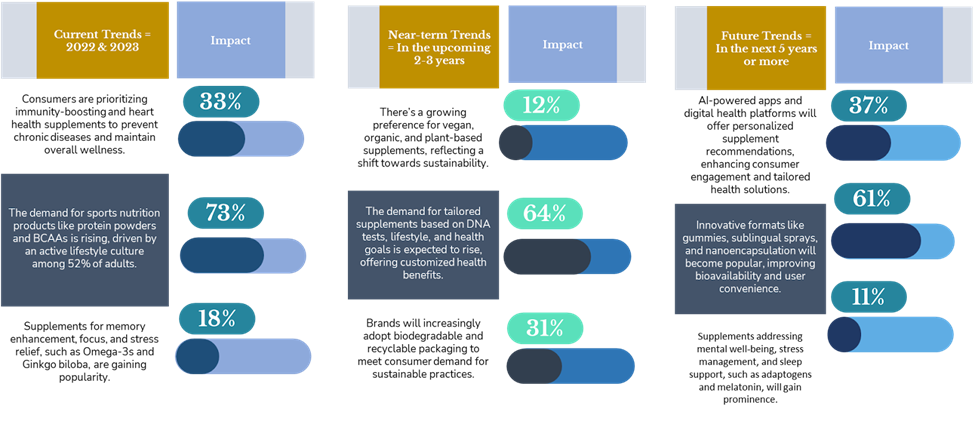
Market Segment Analysis
The Germany food supplement market is segmented based on ingredients, dosage, application, age and distribution channel.
Rising Digestive Health Awareness
The demand for food supplements aimed at gastrointestinal health in Germany has been increasing, influenced by a growing public awareness of digestive well-being and the prevalence of related health issues. Approximately one-third of German adults regularly consume food supplements, with vitamins and minerals being particularly popular. This trend reflects a proactive approach to health maintenance, especially concerning digestive health.
The Federal Institute for Risk Assessment (BfR) has observed that about one-third of the population takes vitamins via food supplements at least once a week and every sixth person even daily. This indicates a significant consumer interest in supplementing their diet to address potential deficiencies and support overall health, including gastrointestinal function.
While the market for these supplements is expanding, the BfR emphasizes that a balanced and varied diet typically provides sufficient nutrients for a healthy body. They caution that unnecessary intake of high-dose supplements may lead to excessive nutrient consumption, potentially causing adverse health effects. Therefore, while consumer demand for gastrointestinal health supplements is on the rise, it is essential to approach their use judiciously and consult healthcare professionals when necessary.
Sustainability Analysis
The sustainability of Germany's food supplement market is shaped by consumer behaviour, regulatory oversight and environmental considerations. Regulatory bodies, such as the Federal Institute for Risk Assessment (BfR), play a crucial role in ensuring the safety and quality of these products. The BfR has observed that about one-third of German adults regularly consume food supplements, underscoring the importance of stringent safety assessments to protect public health.
Environmental sustainability is also a key focus, with the German government implementing strategies to reduce the ecological footprint of food production. Initiatives promoting resource-efficient manufacturing and plant-based diets aim to lessen the environmental impact associated with the production of food supplements. In summary, the sustainability of Germany's food supplement market is supported by strong consumer demand, rigorous regulatory frameworks and proactive environmental policies, collectively fostering a responsible and resilient industry.
Unmet Needs
The German food supplement market faces several unmet needs, particularly in the areas of consumer education, regulatory clarity and product quality assurance. Consumer education is a significant concern, as many individuals lack comprehensive knowledge about the appropriate use and potential risks of food supplements. The Federal Institute for Risk Assessment (BfR) has observed that about one-third of the population takes vitamins via food supplements at least once a week and every sixth person even daily. This widespread consumption underscores the necessity for targeted educational initiatives to inform consumers about proper usage and possible interactions with medications or health conditions.
Regulatory clarity is another area requiring attention. The German food supplement market is subject to complex regulations and there is a need for more transparent guidelines to assist manufacturers in compliance and to ensure consumer safety. The BfR emphasizes the importance of setting maximum levels for vitamins and minerals in food supplements to prevent excessive intake, which can lead to adverse health effects. Clear and accessible regulatory information would aid both producers and consumers in making informed decisions.
Major Players
The major players in the market include Dr. Wolz Zell GmbH, Queisser Pharma GmbH & Co. KG, ZEINPHARMA GERMANY GMBH orthomol pharmazeutische Vertriebs GmbH, Kaya Biotics GmbH, SYMBIOPHARM GMBH, Kneipp GmbH, Nature Love, HLH BioPharma GmbH, INSTITUT ALLERGOSAN PHARMACEUTICALS RESEARCH & SALES GMBH, Nestlé Deutschland (Nestlé S.A.), HALEON GROUP OF COMPANIES (CENTRUM), AMWAY Germany, BioGaia, Culturelle (dsm-firmenich) and others.
By Ingredient
- Vitamins
- Botanicals
- Minerals
- Protein & Amino Acids
- Omega Fatty Acids
- Probiotics
- Others
By Dosage
- Tablet
- Capsules
- Liquid
- Powder
- Others
- Chewables & Gummies
- Soft Gels
- Others
By Application
- Gastrointestinal Health
- Gut Microbiota/Microbiome Balance
- Digestion
- Constipation
- Bloating
- Diarrhea
- Leaky Gut
- Inflammation
- Immune System
- Others
- Gluten sensitivity
- Abdominal Pain
- GERD/Helicobacter pylori
- Antibiotic-Associated Diarrhea/Post-Antibiotic Treatment
- Gut Flora/Gut Microbiome Restoration
- Others
- Vaginal Health
- Urinary Tract Health
- Kidney Stones
- UTIs
- Others
- Oral Health
- Anti/Healthy Ageing
- Allergies/Asthma
- Bone & Joint Health
- Osteoarthritis
- Osteoporosis/Low Mineral Bone Density
- Inflammation
- Brain/Mental Health
- Sleep
- Cognition
- Mood
- Depression
- Focus
- Cardiovascular Health
- Circulation
- Energy/Fatigue Reduction
- Metabolic Syndrome/Blood Glucose
- Liver Health
- Energy
- Immunity/Respiratory Infections
- Nutrient Absorption
- Skin-Hair-Nails
- Atopic Dermatitis & Eczema
- Acne
- Rosacea
- Hair Growth/Hair Loss
- Skin Microbiome
- Others
- Sports
- Women’s Health
- Fertility
- Menopause
- Pregnancy
- Pcos
- Vaginal Health & Health Vaginal Microbiome
- Vaginal Infections (Bv/Vvc)
- Pregnancy Outcomes
- Others
- Men’s Health & Men's Fertility
- Weight Management
- Pediatric Health
- Colic
- Constipation
- Regurgitation
- Atopic Dermatitis
- Others
- Others
By Age
- Infant
- Children
- Adults
- Seniors
By Distribution Channels
- Online Retailers
- Pharmacies and Drug Stores
- Supermarkets/Hypermarkets
- Convenience Stores
- Other Distribution Channels
Key Developments
- September 2025: Bayer AG expanded its consumer health R&D footprint in Germany
Bayer AG strengthened its Germany-based innovation pipeline by expanding its botanical and biotic research activities in Darmstadt. The facility focuses on plant-based nutraceutical ingredients and next-generation dietary supplement formulations targeting immunity and gut health, supporting rising consumer demand for natural supplements in Germany. - July 2025: Queisser Pharma (Doppelherz) signed strategic sports nutrition partnership
Queisser Pharma GmbH & Co. KG, through its flagship brand Doppelherz, entered a long-term partnership with FC Bayern Munich to promote nutritional supplements and sports health products. This move strengthens Germany's sports nutrition segment and enhances brand penetration across European and global markets. - In February 2025, Valbiotis, a Germany-based biotechnology company announced, the launch of Valbiotis PRO Metabolic Health in Germany, a plant-based dietary supplement targeting metabolic syndrome and type 2 diabetes. Powered by TOTUM•63, a patented active ingredient validated through four clinical trials and multiple scientific publications, it offers a natural, non-drug solution for dysglycemia and weight management.
Why Purchase the Report?
- To visualize the Germany food supplement market segmentation based on ingredient, dosage, application, age and distribution channel, as well as understand key commercial assets and players.
- Identify commercial opportunities by analyzing trends and co-development.
- Excel data sheet with numerous data points of Germany Food Supplement market-level with all segments.
- PDF report consists of a comprehensive analysis after exhaustive qualitative interviews and an in-depth study.
- Product mapping available as excel consisting of key products of all the major players.
The Germany food supplement market report would provide approximately 60 tables, 68 figures and 190 pages.
Target Audience 2026
- Manufacturers/ Buyers
- Industry Investors/Investment Bankers
- Research Professionals
- Emerging Companies



























































