


Flying Cars Market Size and Forecast
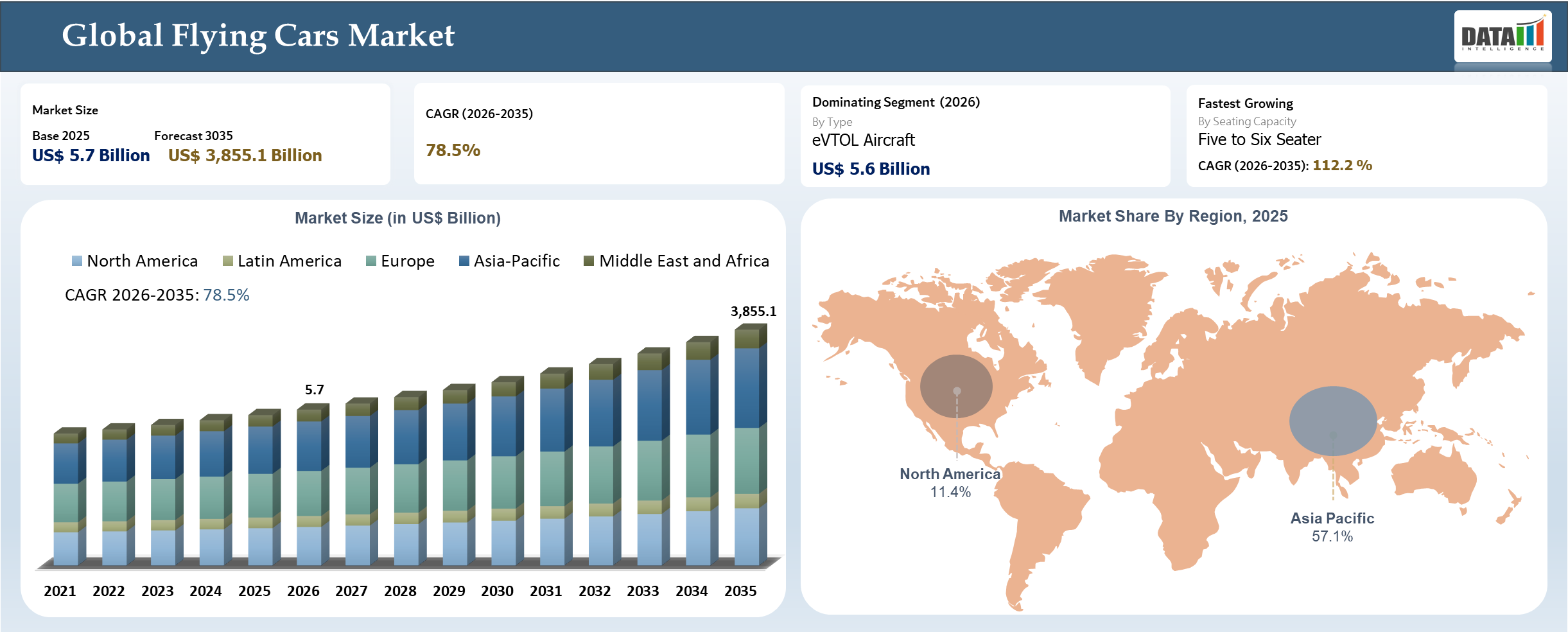
The global flying cars market reached US$ 5.7 billion in 2026 and is expected to reach US$ 3,855.1 billion by 2035, growing with a CAGR of 78.5% during the forecast period 2026-2035. The global transition toward Advanced Air Mobility (AAM) has shifted from conceptual R&D to a critical industrialization and certification phase. The sector is defined by a rigorous "race to type-certification" under the scrutiny of global aviation authorities.
The route to commercialization is influenced by unprecedented regulatory guidelines. In the U.S., the Federal Aviation Administration (FAA) is carrying out its "Innovate28" implementation strategy, designed to facilitate scalable AAM operations by 2028. Major industry leaders, such as Joby Aviation, have effectively achieved Stage 4 in the FAA’s five-stage type certification process and have recently started flight tests with production-conforming aircraft (Tail Number N547JX) to meet Type Inspection Authorization (TIA) criteria.
In December 2025, U.S. Department of Transportation introduced the inaugural National AAM Strategy, offering a unified framework across seven pillars, such as airspace modernization and flexible security. Leading companies are increasing output in preparation for entry into service in 2026-2027; for example, production plants in Ohio and California are being enhanced to achieve a rhythm of four aircraft monthly.
Flying Cars Industry Trends and Strategic Insights
- The FAA (US) and EASA (Europe), among other regulating agencies, have ceased conjecture and established concrete regulations under the “Powered Lift” rules, offering a clear but rigorous process to obtain type certification.
- Owing to stringent regulations, the last-mile delivery and medical transport market is growing faster than passenger taxis due to earlier revenue generation for the manufacturer.
Flying Cars Market Scope
| Metrics | Details | |
| 2026 Market Size | US$ 5.7 Billion | |
| 2035 Projected Market Size | US$ 3,855.1 Billion | |
| CAGR (2032-2035) | 78.5% | |
| Largest Market | Asia-Pacific | |
| Fastest Growing Market | Middle East and Africa | |
| By Type | eVTOL Aircraft and Roadable Aircraft Flying Cars | |
| By Mode of Operation | Piloted, Autonomous, and Semi Autonomous | |
| By Seating Capacity | Single Seater, Two Seater, Three to Four Seater, Five to Six Seater, and More than Six Seater | |
| By Lift Technology Architecture | Multirotor, Lift & Cruise, Tiltrotor, Tiltwing, Ducted Fan, and Hybrid Configurations | |
| By Propulsion Type | Fully Electric, Hybrid Electric, and Hydrogen Fuel Cell | |
| By Range | Short Range (<50 km), Medium Range (50–150 km), and Long Range (>150 km) | |
| By Maximum Take-Off Weight (MTOW) | Less than 1,000 kg, 1,000–2,000 kg, and More than 2,000 kg | |
| By Battery Capacity (kWh Bands) | Below 100 kWh, 100–200 kWh, 200–350 kWh, 350–500 kWh, and Above 500 kWh | |
| By Certification Status | Concept Design Phase, Prototype (Flight Testing Phase), Pre-Certification (Type Certification in Progress), Certified (Type Certified Aircraft), and Commercial Operations Approved | |
| By Production Capacity Level (Annual Units) | R&D & Prototype Only (<10 units per year), Low-Rate Initial Production (10–100 units per year), Scaled Production (100–500 units per year), and Mass Production (>500 units per year) | |
| By Cruise Speed | Below 150 km per hour, 150 to 250 km per hour, and Above 250 km per hour | |
| By Charging Infrastructure | Battery Electric Charging, Hydrogen Refueling, and Hybrid Fuel Systems | |
| By Ownership Model | Fleet Based Operations, Private Ownership, and Government Procurement | |
| By Aircraft Price (ASP Band) | Below US$ 1.5 Billion, US$ 1.5 – 3 Billion, US$ 3 – 5 Billion, and Above US$ 5 Billion | |
| By Application | Air Taxi Passenger Transport, Cargo and Logistics, Defense and Military, Medical Evacuation Air Ambulance, Personal Mobility, and Tourism and Leisure Flights | |
| By End-User | Commercial Operators, Fleet Aggregators, Government & Defense, Emergency Services, and Private Owners | |
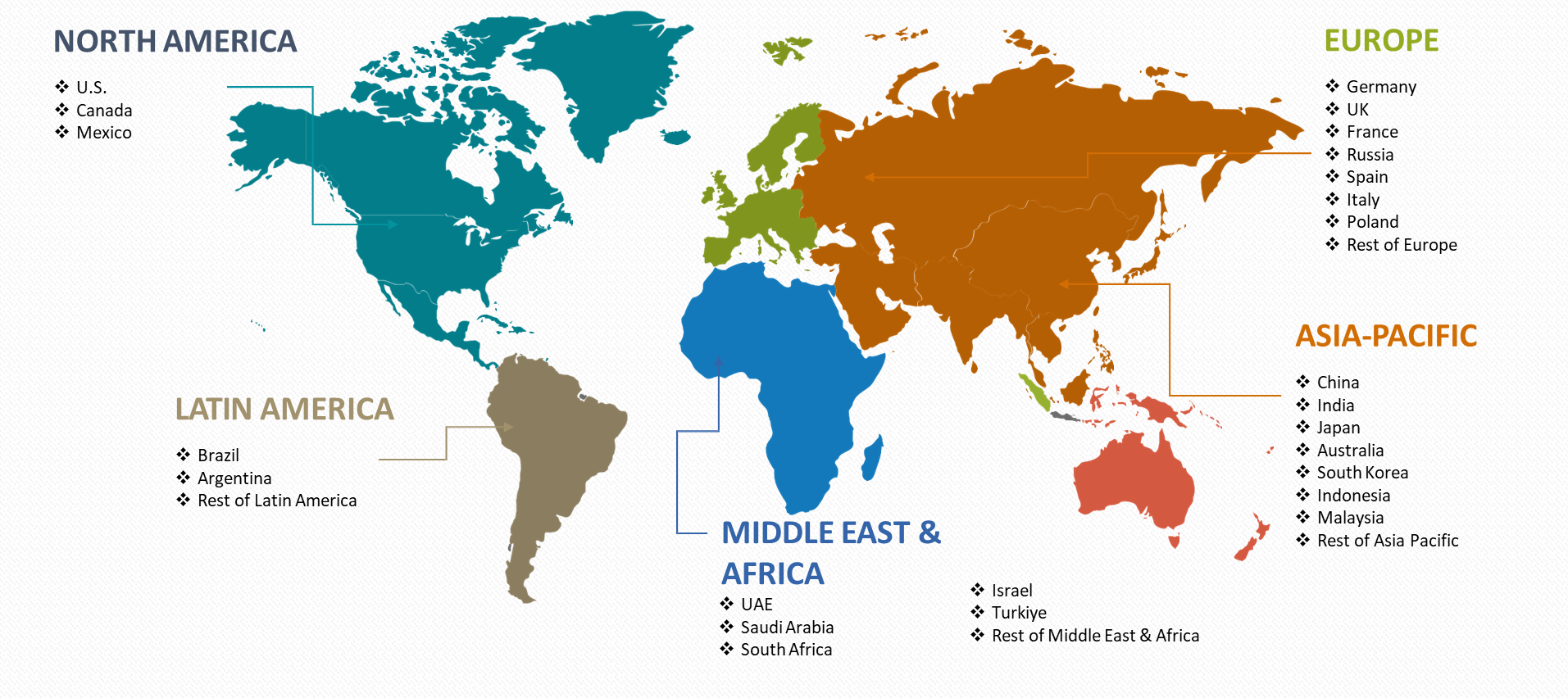
| By Region | North America | U.S., Canada, Mexico |
| Europe | Germany, UK, France, Spain, Italy, Norway, Netherlands, Sweden, Denmark, Belgium, Switzerland, Austria, Poland, Finland | |
| Asia-Pacific | China, India, Japan, Australia, South Korea, New Zealand, Indonesia, Malaysia, Philippines, Singapore, Thailand, Vietnam | |
| Latin America | Brazil, Argentina | |
| Middle East and Africa | UAE, Saudi Arabia, South Africa, Israel, Egypt, Turkey, Qatar, Kuwait, Oman, Bahrain | |
| Report Insights Covered | Competitive Landscape Analysis, Company Profile Analysis, Market Size, Share, Growth | |
Flying Cars Market Key Takeaways
- The market is expected to create more than US$ 3.8 trillion in new revenue opportunities by 2035, making it one of the fastest-growing emerging mobility industries globally.
- Electric Vertical Take-Off and Landing (eVTOL) aircraft account for approximately 62.4% of market demand, driven by advancements in battery technology, autonomous flight systems, and urban air mobility initiatives.
- North America holds nearly 39.6% of the global market share, supported by strong aerospace innovation, regulatory progress, venture capital investments, and urban air mobility pilot programs.
- Urban air mobility (UAM) is emerging as the primary application segment, offering solutions for traffic congestion, faster commuting, and sustainable transportation.
- Significant investments from aerospace companies, automotive manufacturers, technology firms, and venture capital investors are accelerating commercialization efforts.
- Autonomous flight technologies are becoming a major innovation focus, enabling safer operations, reduced pilot dependency, and improved operational efficiency.
- Advances in battery energy density and electric propulsion systems are improving flight range, safety, and economic viability.
- Smart city development programs are increasingly incorporating air mobility infrastructure into long-term transportation planning.
- Regulatory agencies are actively developing certification frameworks to support commercial deployment of flying vehicles.
- Air taxi services are expected to become one of the most commercially attractive segments as urban transportation networks evolve.
- Growing investments in vertiports, charging infrastructure, and air traffic management systems are supporting ecosystem development.
Flying Cars Market Analyst Viewpoint
The Flying Cars Market is transitioning from a futuristic concept into a rapidly emerging transportation ecosystem. Technological advancements in electric propulsion, autonomous navigation, battery systems, and lightweight materials are accelerating the commercialization of flying vehicles worldwide.
Increasing urban congestion, growing demand for efficient transportation, and government support for sustainable mobility solutions are creating favorable market conditions. While regulatory challenges and infrastructure requirements remain important considerations, industry participants are making substantial progress toward commercial deployment.
As urban air mobility ecosystems mature, flying cars are expected to transform passenger transportation, logistics, emergency services, and regional mobility. Companies that establish early leadership in aircraft development, infrastructure deployment, and autonomous technologies are likely to benefit significantly from future market expansion.
Flying Cars Market AI Impact Analysis
The development of Artificial Intelligence technology is becoming increasingly important for accelerating the process of bringing flying cars into mass production, especially in facilitating their autonomous and semi-autonomous operation. Flight control systems based on AI are reducing reliance on pilots while ensuring safe and efficient flights in congested urban areas. In addition, advanced AI solutions can be used in air traffic management systems that will help coordinate flights at low altitudes, which is essential for the successful implementation of urban air mobility on a massive scale.
Moreover, AI technology is revolutionizing fleet management and operation processes by optimizing the maintenance process and fleet performance. Machine learning-based predictive analytics is increasing aircraft efficiency by minimizing downtime and maximizing their use, which is particularly important for start-ups with small fleets of planes. Furthermore, AI is helping develop effective forecasting, routing, and pricing strategies for air taxi companies.
Flying Cars Market Disruption Analysis
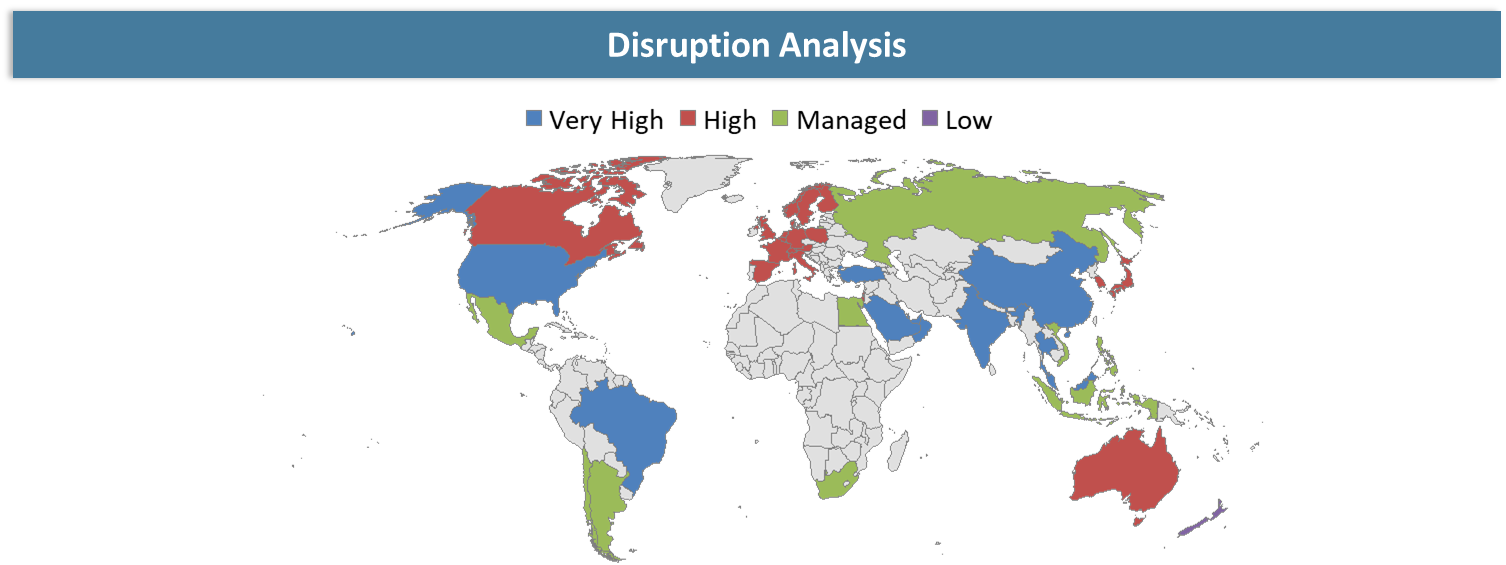
Flying cars will disrupt traditional transportation and aviation industries through the introduction of the next generation of transportation modes that move freely in the air above ground transport infrastructure challenges. Unlike the typical aviation model that operates in an extensive airport-based model, flying cars have adopted the vertiport concept where flying cars connect points within a city to another. In addition, the adoption of such vehicles is set to redefine the economic dynamics of mobility through reduced travel times and introduction of new premium transportation categories.
A further disruption brought about by the adoption of flying cars is the convergence of automotive and aviation. The introduction of these vehicles means that there is competition between traditional OEMs and aviation firms in addition to newer start-up enterprises. There is also an element of challenging the regulations through innovations that need to be introduced. Flying cars have forced aviation authorities to create new certification regimes based on electricity-powered flying cars and autonomous systems.
Flying Cars Market BCG Matrix: Company Evaluation

The competitive structure of the flying cars industry can be successfully assessed by means of applying BCG matrix analysis based on technology maturity and commercialization preparedness of organizations. Stars refer to commercial organizations with successful regulatory compliance and imminent capability of commercial deployments, especially those that enter commercial markets at the earliest stage possible. They are set to dominate the market during the phase of commercial deployments of flying cars.
Emerging players refer to innovative companies whose commercial success is currently lacking because their main objective lies in research & development activities. Their future market position is contingent upon certification and funding success. Examples of emerging players involve companies involved in developing niche application such as road cars or personal mobility. On the other hand, the Pervasive Players category involves well-funded aerospace and auto companies that have taken up positions in the flying car industry.
Flying Cars Market Dynamics
Rising metropolitan traffic levels necessitating alternative three-dimensional transport routes
The consequence of urbanization and the increase in population as well as vehicles has led to constant congestion that cannot be effectively solved by the development of infrastructure alone. The academic and policy literature stresses the two-dimensional characteristic of the surface transportation network and limits its capacity for development in densely populated metropolitan regions.
The emergence of flying cars in the form of eVTOLs marks an important shift due to the use of three-dimensional space that makes them immune to congestion. In the case of the first mode of transportation, the need arises for the existence of complex airport networks, but this is not necessary with regard to flying cars. Travel delays, inefficiency and logistics disruptions cumulatively impact urban productivity negatively. UAM directly tackles this problem because it reduces travel time and increases its predictability.
Multi-dimensional transport systems have begun to be incorporated into transportation policy and planning, particularly in countries such as China, where three-dimensional transportation is a component of their long-term transportation policy. The idea brings about a complete paradigm shift from dealing with congestion to improving mobility. The flying car falls within the scope of the solution aimed at improving mobility through aerial mobility as fast as possible.
Significant lack of specialized vertiports and charging stations
The lack of infrastructure, namely vertiports and fast-charging systems, is another bottleneck that could hinder the growth of UAM ecosystems. Traditional aviation relies on airports as centralized nodes, but flying cars need decentralized facilities that allow for efficient landing and takeoff operations. According to guidelines by regulatory bodies like the FAA and EASA, vertiports should have a number of features. These include obstacle-free approach areas, fire prevention, passenger screening and connection to ground transport systems.
eVTOLs need super-fast charging solutions or battery replacement technologies, meaning that the power grid would have to be modernized and energy storage devices built. The urban grid in most cities, especially in developing countries, cannot cope with the load created by a high volume of charging events. Regulatory inconsistencies between municipalities complicate the implementation process. There is no universal vertiport certification program, resulting in redundant certification processes and discouraging investments. In developed countries, vertiport trials still remain experimental projects.
Flying Cars Market Segmentation Analysis
The global flying cars market is segmented based on type, mode of operation, seating capacity, lift technology architecture, propulsion type, range, maximum take-off weight (MTOW), battery capacity (kWh Bands), certification status, production capacity level (annual inputs), cruise speed, charging infrastructure, ownership model, aircraft price (ASP band), application, end-user and region.
Technological readiness, modernization and investment
Autonomous flying cars employ cutting-edge technologies of artificial intelligence, sensors and real-time decision-making that allow them to fly without any intervention by pilots, thereby altering costs, scale and general efficiency. The US National Aeronautics and Space Administration states that current aviation relies much on automation for navigation and stabilization processes; however, the latter still lack necessary decision-making capabilities needed for dealing with uncertainties and unpredictable events.
Government-driven research and development efforts remain another source of progress in technology advancement; thus, for example, NASA continues to improve autonomous air traffic control systems using simulations, piloting and other software validation methods with regard to safety-critical features of pilotless operations. Public acceptance can serve as yet another obstacle to overcome; reluctance shown by passengers to pilotless flying cars indicates the need for appropriate safety assurances and step-by-step implementation strategy.
Flying Cars Market Geographical Penetration
Strengthening of regulatory landscape and government action plans supporting flying cars requirements
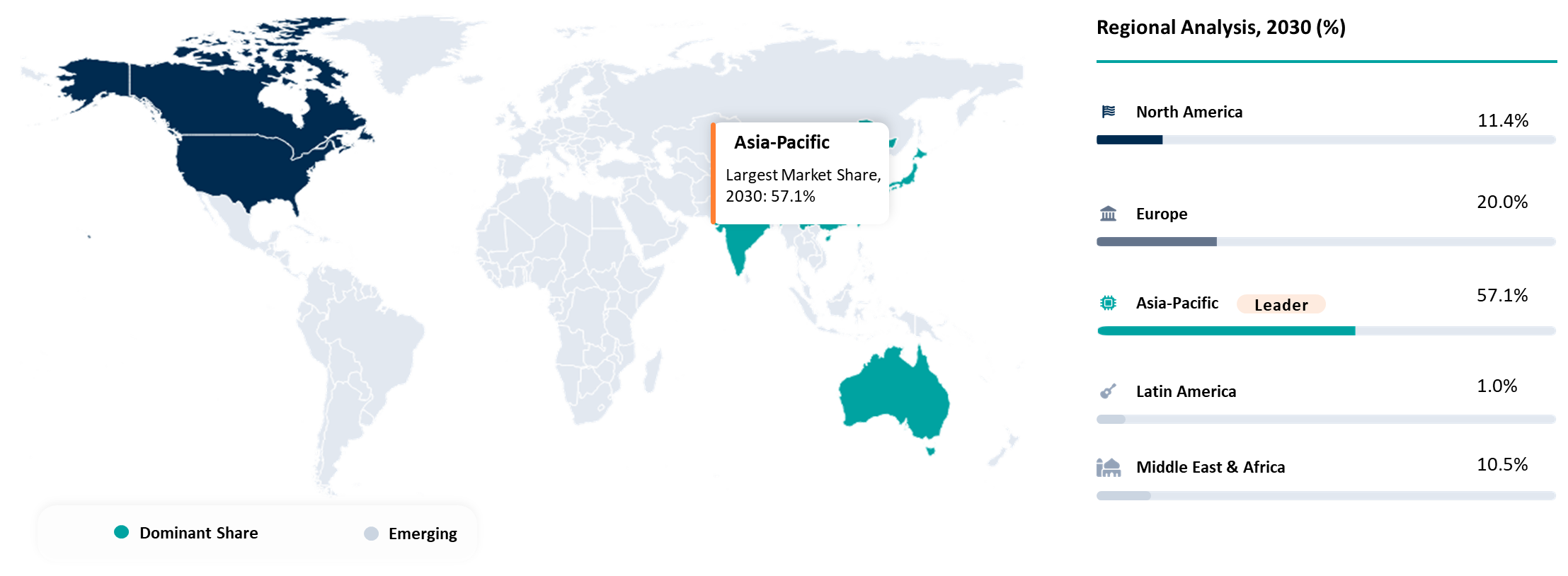
Asia-Pacific flying cars market is the largest market globally, accounting for around ~53% of the total market in 2030.
China Flying Cars Market Trends
Entry of major car manufacturers such as Ehang, Changan, FAW, Chery and GAC, resulting in a convergence between the automobile and aerospace industries and allowing increased capital investment, larger manufacturing capacities and rapid industrialization. The market is quickly moving towards commercialization with scheduled test flights in 2025 and commercial delivery forecasted in 2026. Operations involving passengers will commence soon after certification.
Leading companies such as XPeng AeroHT and Aerofugia are on the way to receiving their aircraft’s type certificates and late airworthiness certificates. This implies high regulatory compliance within China’s emerging low-altitude airspace regulations, allowing for systematic market entry. Initial demand is seen through extensive pre-orders, such as GAC’s 1,000 orders and GOVY’s 2,000 unit backlog, signaling commercial feasibility and lower demand risk before full-scale launch.
Governments’ efforts to develop a “low-altitude economy” in China are fostering the creation of infrastructure and pilot programs, solidifying China as a front-runner in large-scale commercialization and a global leader in advanced air mobility.
India Flying Cars Market Outlook
India is evolving from the stage of basic concept development as seen in the case of Vinata Aeromobility to that of certification and infrastructure development as seen in the case of The ePlane Company. It marks a definitive transition from concept exploration to engineering development and validation. The domestic companies such as Sarla Aviation and The ePlane Company are developing and implementing systems based out of India in terms of time-bound deployments as well (2028, Shunya).
The efforts towards obtaining DGCA certification alongside government interest indicate growing regulatory readiness. Collaborations with research institutes such as IIT Madras are aiding the process. The market is poised to grow through a gradual approach in terms of application as well, starting with urban air mobility with applications such as air taxis and emergency medical response vehicles.
South Korea Flying Cars Market Analysis
South Korea's strategy involves a sequential implementation approach, which consists of demonstration flights by 2025, commercial operations by 2030, and completion of network roll-out by 2035. The plan underscores the necessity of embracing the infrastructure-first strategy, where vertiports will be developed at key urban locations and integrated with existing transportation systems to facilitate scalability and incremental commercial launch.
South Korea also shows significant interest in OEMs such as Hyundai Motor Group, which revealed the S-A2 eVTOL vehicle platform during the CES 2024 event. The S-A2 eVTOL vehicle will be commercially launched by 2028; hence, the launch demonstrates that South Korea plans to embrace more producible and economical eVTOL aircraft through car manufacturing models.
The nation's market potential is significant, with the UAM population set to rise from 700,000 in 2030 to 4.7 million in 2040, yielding an economic benefit worth 2.2 trillion won for both airport and urban mobility applications.
Flying Cars Market Competitive Landscape
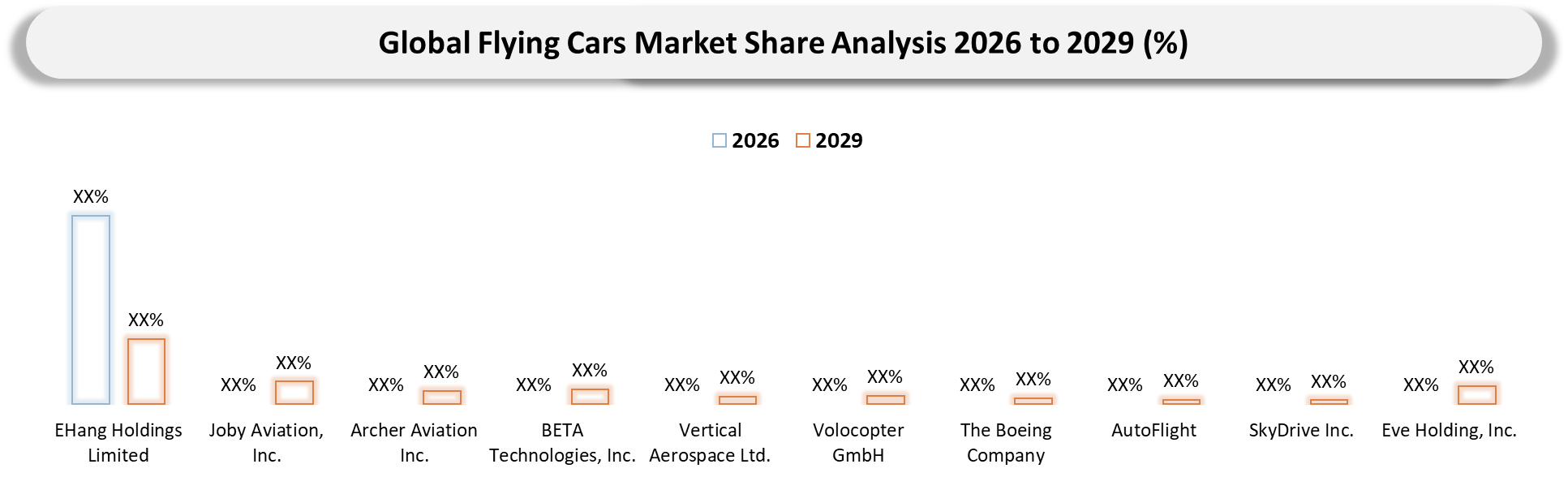
- Globally, only a handful of players have achieved flight tests due to stringent certification processes and UAM launches.
- Top five competitors include EHang Holdings Limited, Joby Aviation, Inc., Eve Holding, Inc., BETA Technologies, Inc. and Archer Aviation Inc., which will collectively account for a total market share of over 71% in 2029.
- In 2029, the market leader EHang will account for a majority market share in the market with a share of 34.6%, owing to its first-mover advantage in getting autonomous flight certifications and conducting pilot program trials in Asia and Middle East.
- Major other participants such as Volocopter GmbH, Vertical Aerospace Ltd. and The Boeing Company have made a significant mark in North American and European regions. Such companies are concentrating more on denser regions of Europe and America for conducting experimental flights to provide air taxi services commercially.
- Key players include EHang Holdings Limited, Joby Aviation, Inc., Eve Holding, Inc., BETA Technologies, Inc., Archer Aviation Inc., Volocopter GmbH, Vertical Aerospace Ltd., The Boeing Company, AutoFlight, SkyDrive Inc., Airbus SE, Geely Technology Group Co., Ltd., PAL-V International B.V., XPeng Inc., Alef Aeronautics, Inc., AeroMobil, s.r.o., Honda Motor Co., Ltd., Electra.aero, Inc., Lilium GmbH, TCab Technology Co., Ltd., Guangzhou Automobile Group Co., Ltd., Jetson AB, Samad Aerospace Ltd., AIR EV Ltd., Horizon Aircraft Ltd., Ascendance Flight Technologies SAS, SkyFly Technologies Ltd., AMSL Aero Pty Ltd, Manta Aircraft S.r.l., LIFT Aircraft Inc., Jaunt Air Mobility, LLC, Shanghai Volant Aerotech Co., Ltd., Pivotal Aero, Inc., Alauda Aeronautics Pty Ltd, Elroy Air, Inc., Overair, Inc., Doroni Aerospace, Inc., XTI Aerospace, Inc., Samson Sky, LLC, NFAS, Inc., Ryse Aero Technologies, Inc., Piasecki Aircraft Corporation, Dufour Aerospace AG, CycloTech GmbH, FlyNow Aviation GmbH, Crisalion Mobility S.L., Pipistrel d.o.o., Leonardo S.p.A., Klein Vision, s.r.o., Sirius Aviation AG, Bellwether Industries Limited, The ePlane Company, Muyutian Aviation Technology Jiangsu Co., Ltd., ZeroG Aircraft Industry Hefei Co., Ltd., Guangdong Seagull Flying Car Group Co., Ltd., PteroDynamics, Inc., Sarla Aviation Private Limited, BluJ Aerospace Pvt. Ltd., United Aircraft Group and Vela Aero
Key Developments in the Flying Cars Market
- August 2026: Joby Aviation, Inc. reported Q2 2026 results and raised its 2026 revenue guidance. The company also stated that its first eIPP flights in Texas are expected in September 2026, with initial passenger operations targeted for 2026.
- August 2026: Joby Aviation announced plans to strengthen its defense business through the acquisition of Resonant Sciences, expanding capabilities for defense and autonomous aviation applications.
- August 2026: Eve Air Mobility completed its first partial transition flight, activating the rear pusher propeller and advancing its eVTOL aircraft toward wing-borne flight.
- August 2026: BETA Technologies began test flights of its ALIA CX300 electric aircraft from Galveston, Texas, as part of an advanced-air-mobility pilot program examining future regional passenger, medical and offshore-support operations.
- August 2026: Archer Aviation demonstrated a breakthrough for its ZEE aviation AI foundation model, showing real-time prediction of aircraft trajectories on airport surfaces to provide additional time for safety interventions.
- August 2026: Volocopter GmbH signed a strategic agreement with Aeromot to introduce advanced air mobility in Brazil, expanding its international commercialization strategy.
- July 2026: Eve Air Mobility secured an order for up to 16 eVTOL aircraft from Shearwater Global Capital and signed an LOI with Moov for up to 30 eVTOLs for tourism and regional mobility in Cabo Verde.
- July 2026: Eve Air Mobility partnered with the Florida Department of Transportation to advance advanced-air-mobility infrastructure and operational planning in Florida.
- July 2026: Archer Aviation Inc. and Anduril unveiled a jointly developed autonomous VTOL platform for commercial and defense applications, with Archer subsequently introducing Halo, the commercial variant.
- July 2026: Archer Aviation, BETA Technologies and Macquarie Capital launched ACES (America's Consortium for Electric Skyways) to develop interoperable charging infrastructure across 250+ aviation sites in the U.S. by 2030.
- July 2026: Vertical Aerospace Ltd. received an expanded Permit to Fly from the UK Civil Aviation Authority, allowing its aircraft to conduct public demonstration flights away from Cotswold Airport. The company also expanded its flight-test fleet with an additional prototype.
- May 2026: Eve Air Mobility completed its hover and low-speed flight-test block after 59 successful flights, generating additional flight data ahead of transition-flight testing.
Latest Industry Intelligence & Future Growth Catalysts (2026)
eVTOL Aircraft Are Driving Industry Growth
Electric vertical take-off and landing aircraft continue to dominate product development pipelines due to their lower emissions, reduced operating costs, and suitability for urban environments.
Urban Air Mobility Programs Accelerate
Major cities are actively evaluating urban air mobility networks to address traffic congestion and improve transportation efficiency.
Autonomous Flight Technologies Advance
Artificial intelligence, advanced sensors, and autonomous navigation systems are improving safety, operational efficiency, and scalability.
Vertiport Infrastructure Gains Momentum
Governments and private investors are increasing investments in vertiports, charging stations, and air traffic management systems.
Aerospace and Automotive Industries Converge
Strategic partnerships between aerospace manufacturers and automotive companies are accelerating technological innovation and commercialization.
Sustainable Aviation Becomes a Priority
Electric propulsion systems are positioning flying cars as a low-emission alternative for future urban transportation.
Advanced Battery Technologies Improve Performance
Next-generation battery systems are extending flight ranges and improving operational economics for commercial operators.
Why Choose DataM?
- Technological Innovations: Explores the latest advancements in flying cars design, including improved hydraulic systems, advanced operator controls, telematics integration, electric and hybrid powertrains and enhanced attachment versatility that are driving higher productivity and lower operating costs across construction and industrial applications.
- Product Performance & Market Positioning: Evaluates how different OEMs perform in real-world construction, landscaping, agriculture and municipal environments. The analysis compares lifting capacity, breakout force, fuel efficiency, durability, operator comfort and attachment compatibility, highlighting how leading manufacturers differentiate themselves globally.
- Real-World Evidence: Highlights practical use cases of flying cars across infrastructure development, road maintenance, warehouse handling and smart city projects. It demonstrates measurable improvements in jobsite efficiency, reduced labor dependency, faster material handling and optimized equipment utilization.
- Market Updates & Industry Changes: Tracks important industry developments such as new product launches, electrification initiatives, localized manufacturing expansions, tightening emission standards (Stage V, Tier 4 Final) and shifts in construction spending across major regions, including North America, APAC, China and India.
- Competitive Strategies: Analyzes how leading manufacturers are expanding their footprint through dealer network strengthening, localized production, electric model introductions, strategic partnerships and technology-driven differentiation such as AI-enabled monitoring and autonomous-ready platforms.
- Pricing & Market Access: Explains pricing structures across standard, high-capacity and electric skid steer models, including outright purchase, leasing and rental models. It also reviews regional availability, distribution networks and financing strategies that enhance market penetration.
- Market Entry & Expansion: Identifies growth opportunities in emerging economies driven by infrastructure development, urbanization, smart city programs and expanding rental ecosystems. It also outlines strategies for OEMs to scale operations globally through regional manufacturing hubs and after-sales service optimization.
Target Audience 2026
- Urban Air Mobility Operators & Fleet Aggregators: Air taxi service providers, on-demand mobility platforms and fleet operators planning deployment of eVTOL aircraft for passenger and cargo transport across urban and intercity routes.
- Logistics & Cargo Companies: Express delivery firms, e-commerce logistics providers and last-mile delivery operators exploring cargo eVTOL solutions for high-value, time-sensitive shipments and remote connectivity.
- Government & Aviation Authorities: Civil aviation regulators, urban planning bodies and smart city authorities responsible for airspace management, vertiport infrastructure development and regulatory approvals for flying car operations.
- OEMs & Aerospace Manufacturers: eVTOL developers, aviation OEMs and automotive companies investing in flying car technologies for product development, certification strategies and global expansion.
- Defense & Emergency Service Agencies: Military organizations, disaster response units and medical evacuation providers leveraging flying cars for surveillance, rapid response and critical mission operations.
- Infrastructure & Vertiport Developers: Companies involved in building vertiports, charging infrastructure, air traffic management systems and supporting ecosystem for urban air mobility deployment.
- Investors & Private Equity Firms: Venture capital firms, institutional investors and strategic investors tracking early-stage commercialization opportunities and long-term scalability of flying car technologies.
- Technology & AI Solution Providers: Companies offering autonomous flight systems, navigation software, battery technologies and digital platforms supporting the operational ecosystem of flying cars.



























































