


Coenzyme Q10 Market Overview
Global Coenzyme Q10 market reached US$ 910.31 million in 2025 and is projected to grow to US$ 1,742.6 million by 2033, growing with a CAGR of 6.4% during the forecast period 2026-2033.
Coenzyme Q10 market is growing steadily due to rising consumer focus on health, wellness, and preventive care. Coenzyme Q10 is widely used as an active ingredient in dietary supplements, pharmaceuticals, functional foods, and personal care products because of its role in supporting energy production and overall well-being. Demand is increasing with the growing aging population, higher awareness of lifestyle-related health concerns, and stronger interest in nutritional supplementation. The market is also benefiting from expanding product availability in capsule, tablet, softgel, and liquid formats, making CoQ10 more accessible to a broader consumer base. In addition, manufacturers are investing in improved formulations and broader application areas to strengthen product appeal. North America and Europe remain established markets due to strong supplement consumption, while Asia-Pacific is emerging as a key growth region supported by rising disposable incomes, expanding health awareness, and increasing demand for functional ingredients. Overall, the market is expected to witness sustained growth over the coming years.
Coenzyme Q10 Industry Trends and Strategic Insights
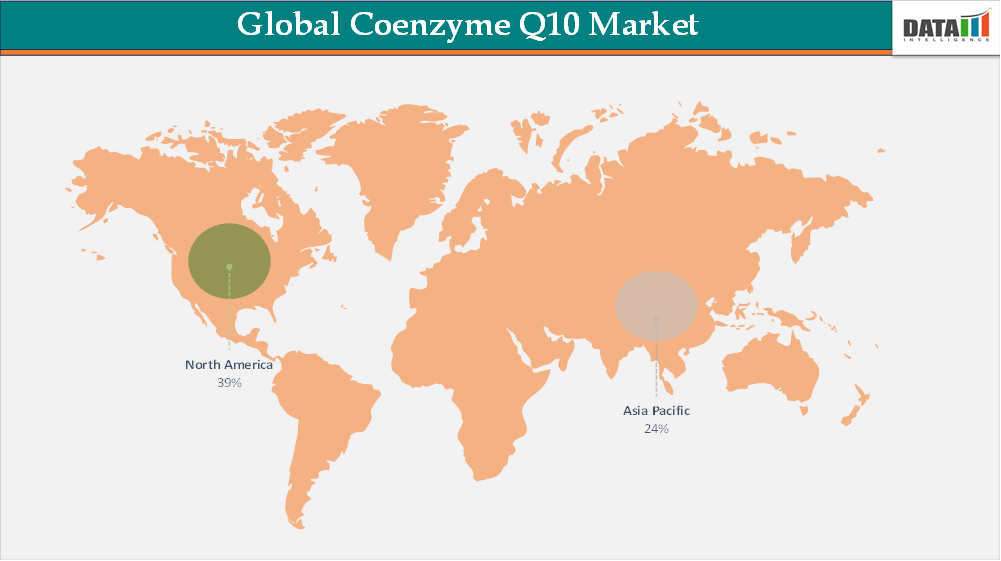
- Asia-Pacific is the fastest-growing region in the Coenzyme Q10 market, capturing a share of 24% in 2025.
- By application, dietary supplements are projected to be the largest market, holding a significant share of about 60% in 2025.
Global Coenzyme Q10 Market Size and Future Outlook
- 2025 Market Size: US$ 910.31 Million
- 2033 Projected Market Size: US$ 1,742.6 Million
- CAGR (2026-2033): 6.4%
- Largest Market: North America
- Fastest Market: Asia-Pacific
Market Scope
| Metrics | Details |
| By Product Type | Ubiquinone (oxidized CoQ10) Ubiquinol (reduced CoQ10) |
| By Application | Dietary Supplements, Cosmetics & Personal Care, Pharmaceuticals, Functional Food & Beverages and Animal Health |
| By Dosage Form | Powder, Softgels, Capsules, Tablets, Liquid, Gummies and Others |
| By Source | Fermentation-derived (Natural), Synthetic chemical synthesis |
| By Grade | Pharmaceutical, Nutraceutical, Cosmetic and Others |
| By Distribution Channel | Offline Retail and Online |
| By Region | North America, Latin America, Europe, Asia-Pacific, Middle East and Africa |
| Report Insights Covered | Competitive Landscape Analysis, Company Profile Analysis, Market Size, Share, Growth |
For More Detail Information Request for sample
Market Dynamics
Rising Geriatric Population Globally Seeking Preventive Cardiovascular Health Solutions
CoQ10 is a vitamin-like compound found in virtually every cell in the body, essential for producing adenosine triphosphate (ATP), the primary energy currency of the cell. Organs with high energy demands, like the heart, have the highest concentrations of CoQ10. However, the natural production of CoQ10 declines significantly with age. Studies have shown that a 70-year-old may have CoQ10 levels in the heart that are over 50% lower than those of a 20-year-old. This age-related deficiency creates a direct physiological need for supplementation.
The link to cardiovascular health is particularly strong. CoQ10 is vital for myocardial energy production and acts as a potent antioxidant, protecting cardiac cells from oxidative damage. Its clinical relevance is most pronounced in relation to statin medications, which are widely prescribed to the elderly to manage cholesterol. A well-documented side effect of statins is the depletion of CoQ10 levels in the body, as the drug works on the same metabolic pathway. This depletion can lead to statin-associated muscle symptoms, including fatigue and weakness. Consequently, cardiologists and patients increasingly recommend and seek CoQ10 supplementation to mitigate these side effects and support overall heart function, making it a cornerstone of preventative care for statin users.
Beyond statin therapy, the aging population is increasingly proactive about health. Rather than waiting for acute cardiac events, older adults are actively seeking nutraceuticals and dietary supplements to maintain vitality, manage age-related energy decline, and support long-term wellness.
High Production Costs and Price Volatility of Raw Materials
The production of CoQ10 is a complex and capital-intensive process. While it can be sourced from animal tissues (like heart or liver), this is inefficient and not scalable for mass production. Nearly all commercial CoQ10 is produced through microbial fermentation, primarily using specific strains of yeast or bacteria. This biotechnology-based method requires sophisticated infrastructure: sterile fermentation tanks, precise control systems for temperature and pH, and advanced downstream processing equipment for extraction and purification.
The entire process is energy-intensive and demands a high level of technical expertise, leading to substantial fixed and operational costs. Any contamination in a batch can lead to complete product loss, further increasing the cost per unit. Compounding the high costs of the process itself is the volatility in the prices of raw materials. The fermentation process requires large quantities of key inputs, such as carbon sources (e.g., glucose or sucrose from corn or sugarcane), nitrogen sources (like yeast extract), and various specific nutrients and precursors.
The prices of these agricultural commodities are notoriously unstable, influenced by a myriad of external factors including weather patterns, harvest yields, global demand for biofuels, trade policies, and geopolitical events. A drought affecting the sugarcane crop or increased demand for corn-based ethanol can cause a sharp spike in the cost of these essential feedstocks, directly and immediately impacting CoQ10 manufacturing costs.
Segmentation Analysis
The global Coenzyme Q10 market is segmented by product type, application, dosage form, source, grade, distribution channel and region.
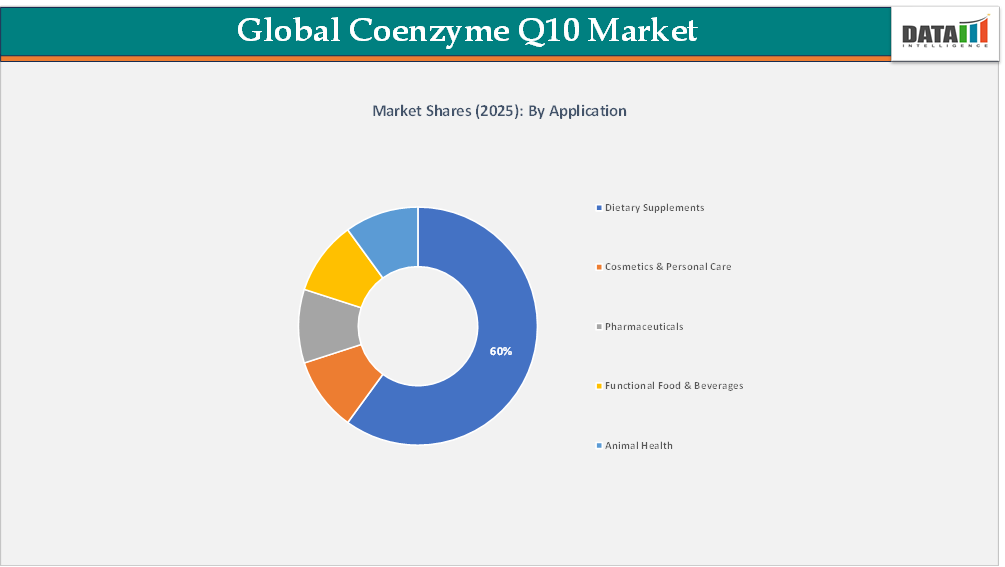
Dietary Supplements Drive Value Growth in the Global Coenzyme Q10 Market Through Clinical Specialization
The dietary supplements segment remains the largest and most commercially strategic application in the global Coenzyme Q10 market, but growth is shifting from volume-led expansion to value-driven differentiation. While baseline demand is secured by aging populations and widespread statin usage, the category is maturing beyond single-ingredient ubiquinone products. Competitive advantage now hinges on clinical substantiation, targeted health positioning, and premium formats that address specific physiological needs rather than general energy support.
Product innovation is increasingly focused on condition-specific and format-led differentiation. In September 2025, Kaneka Corporation launched Watashi no Chikara Q10 Drink Sukoyaka Rhythm, a functional beverage delivering active-form CoQ10 in a stabilized liquid format for perimenopausal and menopausal women. This launch demonstrates how proprietary delivery technologies and demographic targeting are enabling CoQ10 to move into higher-margin functional nutrition and women’s health segments, particularly through digital-first channels.
Similarly, in June 2025 STAT10 launch by Healthy Extracts Inc. underscores the segment’s evolution toward prescription-adjacent nutraceuticals. By formulating CoQ10 alongside synergistic cardiovascular ingredients to address statin-induced nutrient depletion, the product repositions CoQ10 as a clinically relevant support solution rather than a discretionary supplement. Together, these developments signal that the future of the dietary supplements segment lies in specialized formulations, enhanced bioavailability, and clearly defined use cases that support premium pricing and defensible brand equity.
Cosmetics & Personal Care Segment Elevates the Global Coenzyme Q10 Market Through Preventive Anti-Aging Innovation
The cosmetics and personal care segment is a high-growth application area for Coenzyme Q10, driven by rising demand for preventive, science-backed anti-aging skincare. CoQ10 has evolved from a supportive antioxidant ingredient to a core active positioned around cellular energy, collagen protection, and skin resilience. Growth in this segment is fueled by daily-use skincare routines, broad consumer reach, and strong alignment with the global shift toward early-intervention beauty rather than corrective treatments.
For instance, in April 2024 launch of the Q10 Dual Action Serum by Beiersdorf under its Nivea portfolio, developed after more than a decade of R&D and positioned around anti-glycation protection. By combining patented CoQ10 with the proprietary NAHP (Glycostop) technology to prevent sugar-induced collagen damage, the product translates advanced anti-aging science into a mass-market format. This instance highlights how leading skincare companies are leveraging CoQ10 as a cornerstone active in democratized, clinically inspired beauty portfolios, reinforcing the segment’s shift toward preventive, ingredient-led innovation that supports long-term premium growth.
Geographical Penetration
Asia-Pacific Coenzyme Q10 Market Accelerates on Aging Demographics and Functional Nutrition Demand
The Asia-Pacific Coenzyme Q10 market is expanding rapidly, driven by aging populations, preventive healthcare adoption, and the mainstreaming of functional nutrition across major economies. Regional growth is increasingly supported by government alignment with healthy aging strategies and the rise of the “silver economy,” encouraging development of senior-friendly nutraceutical formats and science-backed wellness products. CoQ10 is being positioned as a core ingredient in both supplements and dermaceutical portfolios, benefiting from strong consumer trust in clinically framed bioactives. This shift reinforces APAC as a high-growth market where demographic trends, regulatory support, and premium everyday health positioning collectively strengthen long-term demand.
India Coenzyme Q10 Market Outlook
In India, CoQ10 demand is rising steadily within preventive cardiology, diabetes management, and active aging segments, supported by growing awareness of statin-related nutrient depletion and mitochondrial health. The market remains largely supplement-led, with CoQ10 positioned in combination cardiovascular and energy-support formulations sold through pharmacies, e-commerce, and practitioner channels. While regulatory frameworks remain conservative, increasing lifestyle disease prevalence and expansion of organized nutraceutical brands are strengthening CoQ10’s role as a value-added ingredient in India’s long-term wellness and preventive healthcare ecosystem.
China Coenzyme Q10 Market Trends
China’s CoQ10 market is entering a new growth phase following regulatory changes that enable senior-friendly product formats. Effective March 1, 2026, the State Administration for Market Regulation (SAMR) has approved CoQ10 health foods in oral liquid and powder forms, expanding beyond traditional tablets and capsules. This policy directly supports China’s Healthy China strategy and silver economy agenda, addressing swallowing and absorption challenges among the elderly. With over 22% of the population aged 60+ and strong policy alignment, CoQ10 is increasingly positioned as a core functional ingredient in aging-focused nutrition portfolios rather than a discretionary supplement.
North America Coenzyme Q10 Market Strengthens Through Premium Clinical Positioning
North America accounts for 39% of the global Coenzyme Q10 market, driven by strong adoption of preventive healthcare supplements, aging demographics, and premium positioning of science-backed nutraceuticals. Regional growth increasingly comes from condition-specific innovation rather than general wellness demand. For instance, in June 2025 STAT10 launch by Healthy Extracts Inc. illustrates this shift by expanding CoQ10 into a statin-support segment targeting a large prescription user base, repositioning the ingredient as a functional cardiovascular nutrient. This reflects how North America is evolving into a high-value market centered on clinically framed applications, physician-linked credibility, and higher-margin formulations.
US Coenzyme Q10 Market Insights
In the United States specifically, CoQ10 demand is reinforced by integration into multifunctional healthy aging products that extend beyond standalone supplementation. For instance, in June 2023 PreserVision AREDS 2 Formula Soft Gels plus CoQ10 launch by Bausch + Lomb embeds CoQ10 within a clinically recognized eye-health platform while adding cardiovascular positioning. This strategy strengthens pharmacy-channel presence and aligns with U.S. consumer preference for evidence-driven, dual-benefit nutrition solutions, highlighting the market’s shift toward premium, disease-adjacent nutraceutical portfolios.
Canada Coenzyme Q10 Industry Growth
Canada’s Coenzyme Q10 skincare segment is gaining traction as premium, ingredient-led beauty brands integrate the molecule into daily anti-aging routines aligned with science-backed positioning. For instance, in January 2026 Canadian launch of Cosmetisse Beauty illustrates this trend, with CoQ10 positioned as a core antioxidant in luxury-inspired yet accessible day and night creams developed with lab-supported formulation standards. This development highlights growing demand for multifunctional skincare that blends clinical credibility with everyday usability, reinforcing Canada’s shift toward premium dermaceutical products where CoQ10 serves as a value-added active in healthy aging and skin resilience portfolios.
Sustainability Analysis
The CoQ10 market is improving its sustainability profile by moving away from solvent-intensive chemical synthesis toward higher-yield microbial fermentation and emerging plant-based bioproduction, thereby reducing energy intensity, waste streams, and per-unit costs. These process innovations support a more resource-efficient supply chain, lower exposure to energy and raw material volatility, and enable scalable production aligned with circular bioeconomy models, strengthening long-term manufacturing resilience.
Demand-side sustainability is supported by CoQ10’s validated role in protecting cellular energetics and oxidative balance, positioning it as a structurally relevant preventive health ingredient rather than a cyclical wellness product. This evidence-backed functionality sustains investment in R&D and capacity expansion while aligning producers with ESG priorities, healthcare cost containment trends, and growing consumer preference for scientifically supported, low-impact bioactives.
Competitive Landscape
- The global Coenzyme Q10 market is characterized by a competitive landscape that includes both established and regional players.
- Key players include Kaneka Corporation, Kyowa Hakko Bio Co., Ltd., Xiamen Kingdomway Group Co., Ltd., Zhejiang Medicine Co., Ltd., dsm-firmenich, Anthem Biosciences Pvt. Ltd., Nisshin Seifun Group Inc., Otsuka Holdings Co., Ltd., Pharma Nord and Zhejiang NHU Co., Ltd.
Key Developments
- In September 2025, Kaneka Corporation, a Japan-based manufacturer of functional ingredients and wellness products, launched “Watashi no Chikara Q10 Drink Sukoyaka Rhythm,” a functional beverage containing 100 mg of active-form CoQ10. With this launch, the company expanded its presence in the women’s health segment by targeting consumers in the perimenopausal and menopausal stage. The product uses Kaneka’s proprietary emulsification technology to stabilize CoQ10 in liquid format and reflects the company’s move toward value-added consumer wellness beverages through e-commerce channels.
- In January 2026, China expanded the permitted filing dosage forms for single-ingredient CoQ10 health foods, allowing oral liquid and powder formats effective March 1, 2026. This is a notable regulatory development expected to improve accessibility, especially for senior-focused supplement products.
Why Choose DataM?
- Data-Driven Insights: Dive into detailed analyses with granular insights such as pricing, market shares and value chain evaluations, enriched by interviews with industry leaders and disruptors.
- Post-Purchase Support and Expert Analyst Consultations: As a valued client, gain direct access to our expert analysts for personalized advice and strategic guidance, tailored to your specific needs and challenges.
- White Papers and Case Studies: Benefit quarterly from our in-depth studies related to your purchased titles, tailored to refine your operational and marketing strategies for maximum impact.
- Annual Updates on Purchased Reports: As an existing customer, enjoy the privilege of annual updates to your reports, ensuring you stay abreast of the latest market insights and technological advancements. Terms and conditions apply.
- Specialized Focus on Emerging Markets: DataM differentiates itself by delivering in-depth, specialized insights specifically for emerging markets, rather than offering generalized geographic overviews. This approach equips our clients with a nuanced understanding and actionable intelligence that are essential for navigating and succeeding in high-growth regions.
- Value of DataM Reports: Our reports offer specialized insights tailored to the latest trends and specific business inquiries. This personalized approach provides a deeper, strategic perspective, ensuring you receive the precise information necessary to make informed decisions. These insights complement and go beyond what is typically available in generic databases.
Target Audience 2026
- Manufacturers/ Buyers
- Industry Investors/Investment Bankers
- Research Professionals
- Emerging Companies


























































