


Global Ceramic Textile Market Size & Overview
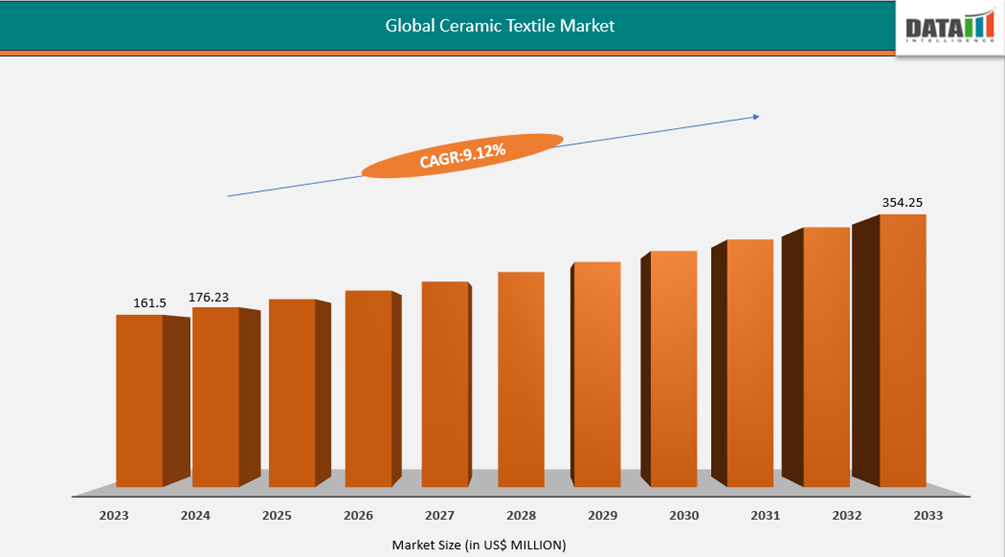
The global ceramic textile market reached US$ 176.23 Million in 2024 and is expected to reach US$ 354.25 Million by 2032, growing at a CAGR of 9.12% during the forecast period 2025-2032. The Global ceramic textile market is witnessing growth due to its expansion by Steady growth in the ceramic textile market is driven by rising demand for high temperature insulation across steel, petrochemical, and battery manufacturing industries where conventional materials often fall short. This momentum is further supported by energy-efficiency mandates, innovations in bio-persistent fiber chemistry, and the rapid expansion of electric vehicle production, all of which broaden the scope for ceramic textile applications.
Global Ceramic Textile Market Industry Trends and Strategic Insights
The Asia-Pacific region dominates the global ceramic textile market in the market, capturing the largest revenue share of 42.23% in 2024.
By end-user, the Industrial Sector is projected to experience the largest market share in the global ceramic textile market
Market Size and Future Outlook
2024 Market Size: US$ 176.23 Million
2032 Projected Market Size: US$ 354.25 million
CAGR (2025-2032): 5.20%
Largest Market: Asia-Pacific
Fastest Market: North America
Market Scope
Metrics | Details |
By Fiber Type | Alumina-Silica, Alumina-Zirconia-Silica , Pure Alumina, Polycrystalline Ceramic Fiber Others |
By End user | Industry Sector , Aerospace, Transportation, Automotive, Others. |
By type | Refractory Ceramic Fiber (RCF), Alkaline Earth Silicate Wool (AES wool), Polycrystalline Fiber, Others. |
By Region | North America, South America, Europe, Asia-Pacific, Middle East and Africa |
Report Insights Covered | Competitive Landscape Analysis, Company Profile Analysis, Market Size, Share, Growth |
For More details Insights: Request for Sample
Market Dynamics
Demand for High-Temperature Insulation in Industrial End users
The global ceramic textile market is witnessing strong momentum due to increasing demand for high-temperature insulation. Industries such as metallurgy, petrochemicals, and power generation require materials that withstand extreme heat. Ceramic fibres offer superior thermal resistance, making them ideal for furnace linings and heat shields. This demand is further fueled by stricter safety regulations and energy efficiency goals. As industrial infrastructure expands globally, the need for reliable insulation solutions continues to surge.
High Production Costs as a Market Restraint
One of the key challenges facing the ceramic textile market is its high production cost, which significantly limits adoption in cost-sensitive manufacturing sectors. The use of expensive raw materials like high-purity alumina and silica, combined with intricate manufacturing techniques, drives up overall production expenses. Specialized equipment and skilled labor further add to operational costs, making ceramic textiles less accessible for industries with tight budget constraints. This economic barrier often leads manufacturers to opt for cheaper alternatives, even if they compromise on performance. As a result, market penetration remains limited in sectors where cost-efficiency outweighs advanced material benefits.
At the same time, competitive intensity is increasing as leading manufacturers scale up capacity. Regulatory focus on worker safety is accelerating the transition toward low bio-persistent fibre grades, reshaping product strategies. These combined forces reflect a market that is evolving beyond niche use, gaining traction as a mainstream industrial solution.
Segmentation Analysis
The Global ceramic textile market is segmented based on fibre type, type, end user, and region.
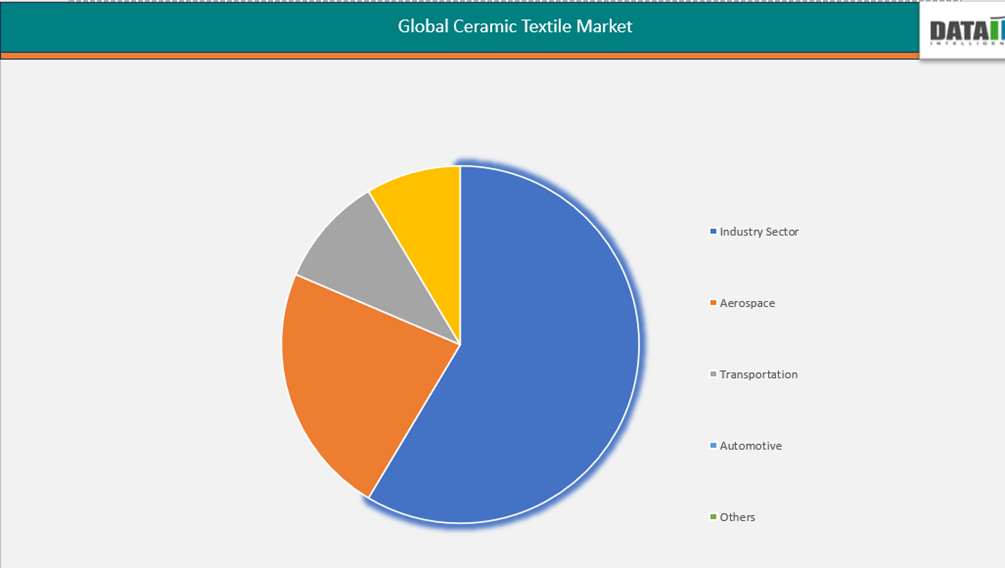
Industrial Powerhouse Driving Ceramic Textile Demand Globally
The industrial sector stands as the most significant end-use segment in the ceramic textile market due to its extensive demand for high-temperature insulation and fire-resistant materials. Industries such as metallurgy, petrochemicals, and power generation rely heavily on ceramic textiles for End users like furnace linings, welding blankets, and heat shields. These materials offer exceptional thermal stability, chemical resistance, and mechanical durability, making them indispensable in harsh operating environments. The growing emphasis on workplace safety, energy efficiency, and equipment longevity continues to drive adoption across industrial facilities worldwide.
In 2023, Kanthal and Rath, both global leaders in their respective field – Kanthal in industrial electric heating technology, and Rath in high temperature refractory products announced a strategic partnership to broaden their joint portfolio in industrial heating solutions, the collaboration will empower sectors like steel and petrochemical to accelerate their transition toward sustainable, low-carbon operations. Ceramic fiber, a key insulation material, will benefit through enhanced energy efficiency and better compatibility with electric furnaces. This collaboration marks a step toward more sustainable, fossil-free industrial operations.
Automotive Industry Driving Rapid Growth in Ceramic Textile End users
The automotive industry is rapidly emerging as the fastest-growing segment in the ceramic textile market, driven by the global push for electric vehicles, stricter emission standards, and the need for advanced thermal management solutions. Ceramic textiles are increasingly used in exhaust systems, battery insulation, fireproofing components, and heat shields due to their lightweight nature and ability to withstand extreme temperatures.
In April 2024, Alkegen partnered with Jaguar Land Rover to supply anti-thermal propagation products for EV batteries. These use advanced insulation materials, including ceramic fiber composites, to prevent thermal runaway and enhance safety.
Geographical Penetration
Asia-Pacific Leads Ceramic Textile Market with Industrial Momentum and Scale
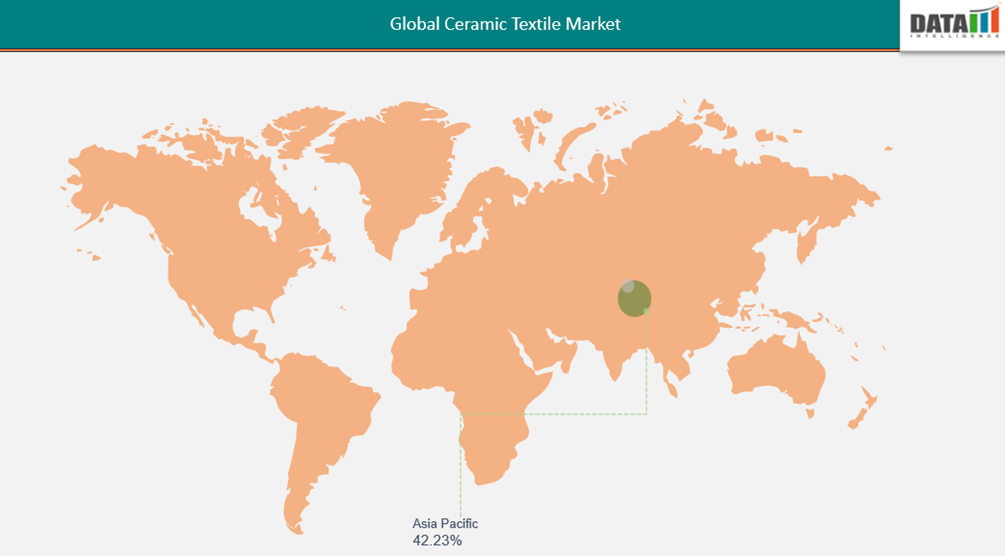
Asia-Pacific currently holds the largest share of the global ceramic textile market, driven by rapid industrialization, expanding infrastructure, and strong demand across key sectors such as automotive, construction, and power generation. The region benefits from a robust manufacturing base, particularly in countries like China, India, and Japan, where ceramic textiles are widely used for high-temperature insulation and fire protection.
Government initiatives promoting energy efficiency and industrial safety have further accelerated adoption. Additionally, the presence of cost-effective labor and abundant raw materials supports large-scale production, making Asia-Pacific a dominant force in both volume and market penetration.
For instance, in 2025, KCC launched Cerak Wool New-Bio α1200, the first eco-friendly ceramic fiber in Korea to reach a working temperature of 1,260°C. That same year, the product passed key international safety standards including the EU Textiles Fiber Safety Regulatory Commission, EU Directive 67/548 EWG, and Germany’s TRGS 905 demonstrating top-tier bio-solubility and human safety.
China Ceramic Textile Market Outlook
China plays a pivotal role in the global ceramic textile market, driven by its vast industrial infrastructure, strong manufacturing capabilities, and growing demand for high-performance insulation materials.China plays a pivotal role in the global ceramic textile market, driven by its vast industrial infrastructure, strong manufacturing capabilities, and growing demand for high-performance insulation materials. China's access to raw materials, skilled labor, and advanced production technologies further strengthens its position as both a leading consumer and exporter of ceramic textile products.
From a ceramic fibre perspective, the competition between Luyang Energy Conservation, Beijing Lier, and Punai reflects China's push to dominate high-temperature insulation markets. Luyang leads with large-scale production and global exports, while Beijing Lier focuses on R&D and sustainable refractory solutions. Punai remains a regional player offering cost-effective ceramic fibre product
India Ceramic Textile Market Trends
India benefits from a strong domestic manufacturing base, access to raw materials like alumina and silica, and a growing pool of skilled labor. The rise of electric vehicles and renewable energy projects is further expanding the scope of ceramic textile End users, particularly in battery insulation, heat shields, and fireproofing systems.
The 2024 India UK Free Trade Agreement (FTA) enables duty-free access for Indian textile exports, including ceramic fibre-based technical textiles. Manufacturers in Gujarat benefit by exporting ceramic blankets, tapes, and ropes more competitively to the UK. This supports UK industries needing high-performance insulation in aerospace, automotive, and energy sectors.
North America Leads Market Growth Fueled by Jewellery
North America is projected to register the highest compound annual growth rate in the global ceramic textile market over the forecast period, fueled by surging demand for advanced thermal insulation solutions across aerospace, defense, and industrial sectors. Stringent fire safety regulations, increased capital flow into energy-efficient technologies, and continuous innovation in high-performance materials are accelerating market expansion particularly in the United States and Canada, where adoption is being driven by both regulatory mandates and technological advancement.
In 2024, Morgan Advanced Materials launched bio-soluble ceramic fiber products to boost environmental compliance. This innovation supports U.S. industries in meeting OSHA and EPA standards. It offers safer handling with reduced health risks for workers. American manufacturers benefit from sustainable insulation without sacrificing performance.
U.S.A Ceramic Textile Market Industry Growth
The ceramic textile market in the United States is witnessing consistent growth, propelled by rising demand for high-temperature insulation solutions across key industries including aerospace, automotive, and power generation. These advanced materials are valued for their exceptional thermal resistance, chemical stability, and structural flexibility, making them well-suited for End users that require reliable insulation and protection in extreme heat environments. Their versatility and performance under harsh conditions continue to drive adoption in both legacy systems and emerging technologies.
Canada Ceramic Textile Market Industry Growth
Canada’s ceramic textile market is steadily gaining traction, driven by growing demand for high-temperature insulation in sectors such as power generation, automotive, and industrial manufacturing. While smaller in scale compared to the U.S., Canada is leveraging its focus on energy efficiency, emission control, and advanced materials to expand ceramic textile End users in welding protection, furnace linings, and EV battery insulation. For instance ,Canada entered into voluntary environmental performance agreements with the refractory ceramic fibre (RCF) industry in 2002, 2006, 2013, and 2024, each designed to enable the continued use of RCFs while actively managing associated emissions and health risks.
Sustainability Analysis
The ceramic industry plays a vital role in the global economy, supporting diverse End users across construction, electronics, and the arts. Despite its economic importance, ceramic production poses considerable environmental challenges ranging from intensive raw material extraction to high energy usage and significant waste generation throughout the manufacturing process.
For instance, in 2025, Luyang Energy Saving Materials introduced a new generation of ceramic fiber blanket technology designed with environmental sustainability in mind. The manufacturing process was refined to reduce both emissions and industrial waste, aligning with global trends toward greener and more responsible industrial development.
Competitive Landscape
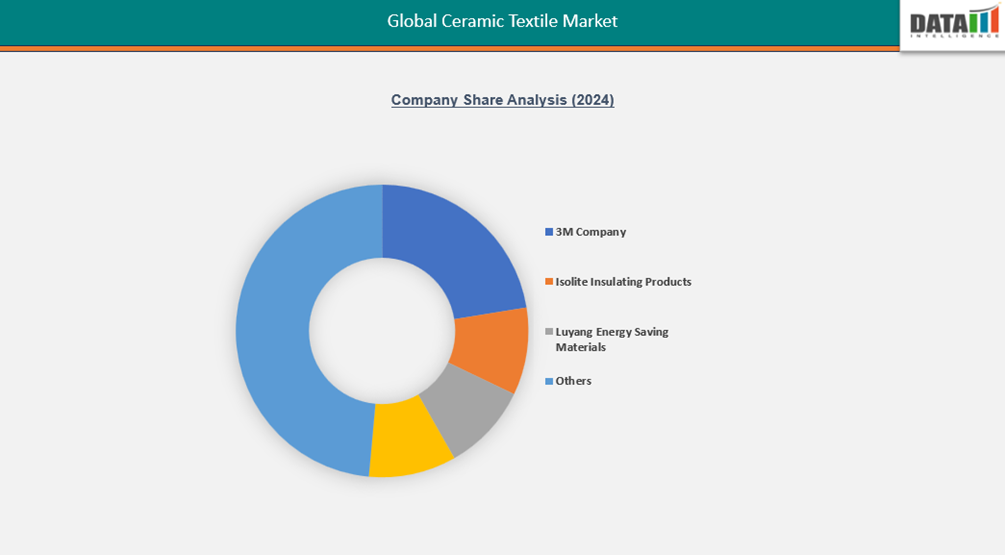
The global ceramic textile market is highly competitive, driven by a mix of global and regional players striving for technological efficiency and cost leadership.
Key players include,3M, Alkagen, Ibiden, Isolite Insulating Products, Luyang Energy Saving Materials, Morgan Advanced Materials, Nutec Fibratec 2025, Rath Group, Thermal Products Company, Unifrax
Key Developments:
In 2025, 3Box Labs announced its acquisition by Textile, marking a new chapter for Ceramic as it became part of the Textile ecosystem. This strategic move positioned Ceramic alongside other innovative decentralized data solutions such as Tableland DB and Basin Network, reinforcing Textile’s commitment to advancing open, composable data infrastructure.
Why Choose DataM?
Data-Driven Insights: Dive into detailed analyses with granular insights such as pricing, market shares and value chain evaluations, enriched by interviews with industry leaders and disruptors.
Post-Purchase Support and Expert Analyst Consultations: As a valued client, gain direct access to our expert analysts for personalized advice and strategic guidance, tailored to your specific needs and challenges.
White Papers and Case Studies: Benefit quarterly from our in-depth studies related to your purchased titles, tailored to refine your operational and marketing strategies for maximum impact.
Annual Updates on Purchased Reports: As an existing customer, enjoy the privilege of annual updates to your reports, ensuring you stay abreast of the latest market insights and technological advancements. Terms and conditions apply.
Specialized Focus on Emerging Markets: DataM differentiates itself by delivering in-depth, specialized insights specifically for emerging markets, rather than offering generalized geographic overviews. This approach equips our clients with a nuanced understanding and actionable intelligence that are essential for navigating and succeeding in high-growth regions.
Value of DataM Reports: Our reports offer specialized insights tailored to the latest trends and specific business inquiries. This personalized approach provides a deeper, strategic perspective, ensuring you receive the precise information necessary to make informed decisions. These insights complement and go beyond what is typically available in generic databases.
Target Audience 2024
Manufacturers/ Buyers
Industry Investors/Investment Bankers
Research Professionals
Emerging Companies



























































