


Cancer Therapeutics Market Size and Overview
The global cancer therapeutics market reached US$189.34 billion in 2025 and is expected to reach US$620.32 billion by 2035, growing with a CAGR of 12.6% during the forecast period 2026-2035.
Market growth is moving beyond rising cancer incidence toward greater treatment intensity, earlier use of advanced therapies and longer treatment duration across adjuvant, maintenance and metastatic settings. Chemotherapy and hormonal therapies remain important because of established clinical familiarity, broad availability and continued use across multiple tumor types. However, treatment resistance, relapse, cumulative toxicity and limited durability are accelerating treatment escalation toward immunotherapies, targeted small molecules, antibody-drug conjugates, bispecific antibodies and radioligand therapies.
The expanding use of KEYTRUDA, OPDIVO, TAGRISSO, ENHERTU, IMFINZI, RYBREVANT, PLUVICTO and other precision oncology therapies has broadened treatment options across lung, breast, prostate, hematological and gastrointestinal cancers. Adoption is increasingly supported by improvements in overall survival, progression-free survival, objective response rates and duration of response across treatment-naïve and previously treated populations. Competitive differentiation increasingly depends on biomarker specificity, depth and durability of response, safety, resistance profile, route of administration, dosing convenience, combination potential and positioning within treatment sequencing.
The next competitive inflection point will involve therapies capable of delivering deeper and more durable tumor control while overcoming acquired resistance and limiting systemic toxicity. Antibody-drug conjugates, bispecific and T-cell-engaging antibodies, radioligand therapies, next-generation checkpoint inhibitors, synthetic-lethality approaches and biomarker-guided combinations could reshape future treatment pathways. Commercial leadership will increasingly depend on demonstrated survival benefit, earlier-line expansion, effectiveness in resistant disease, manageable long-term safety, companion-diagnostic availability, patient-reported outcomes and payer evidence showing improved clinical outcomes and reduced overall treatment burden.
Cancer Therapeutics Market Key Takeaways
- Sustained Market Expansion Through 2035: The global Cancer Therapeutics Market was valued at approximately US$189.34 billion in 2025 and is projected to reach approximately US$620.32 billion by 2035, registering a CAGR of 12.6% during 2026-2035.
- Targeted Therapy Maintains Market Leadership: Targeted therapies are estimated to generate approximately US$72.33 billion in 2025, supported by expanding biomarker testing, precision oncology, mutation-specific treatment and broader use across lung, breast and hematological cancers.
- Immunotherapy Emerges as a Key Growth Engine: Immunotherapy is estimated to register approximately 15.4% CAGR during 2026-2035, driven by checkpoint inhibitors, combination regimens, earlier-line use and continued expansion across multiple solid and hematological malignancies.
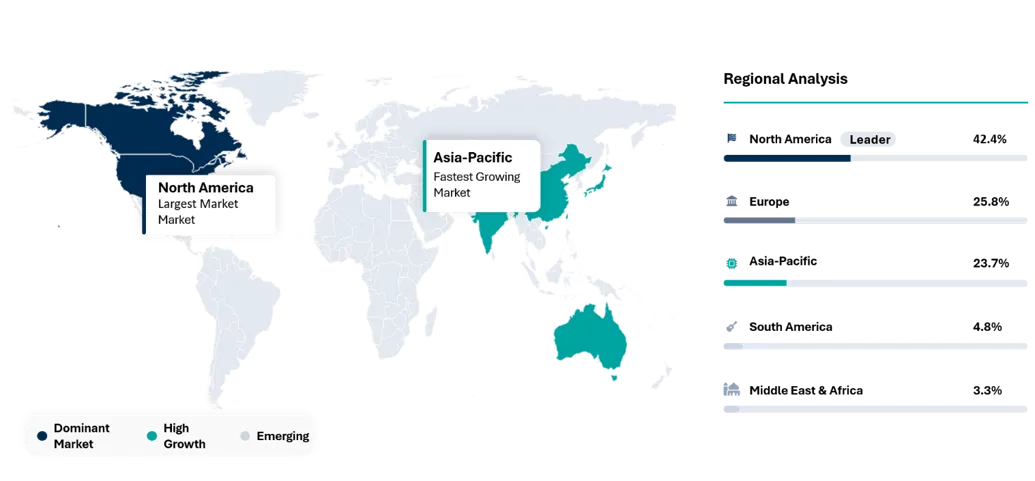
- North America Maintains Regional Dominance: North America accounted for approximately 42.4% of the market, equivalent to around US$80.28 billion in 2025, supported by high oncology expenditure, rapid adoption of innovative therapies, strong clinical-trial activity and extensive pharmaceutical commercialization infrastructure.
- Precision Oncology Reshapes Competitive Strategy: Future leadership will increasingly depend on biomarker-driven patient selection, durable survival benefits, resistance management, ADCs, bispecific antibodies, radioligand therapies and next-generation immunotherapy combinations, alongside earlier-line expansion and improved treatment convenience.
Cancer Therapeutics Market Scope
| Metrics | Details | |
| 2025 Market Size | US$189.34 Billion | |
| 2035 Projected Market Size | US$620.32 Billion | |
| CAGR (2026-2035) | 12.6% | |
| Largest Market | North America | |
| Fastest Growing Market | Asia-Pacific | |
| By Therapy | Hormonal Therapy, Targeted Therapy, Chemotherapy, Radiotherapy, Immunotherapy, Others | |
| By Cancer Type | Breast Cancer, Lung Cancer, Prostate Cancer, Blood Cancer, Cervical Cancer, Malignant Meningioma, Head and Neck Cancer, Others | |
| By Distribution Channel | Hospital Pharmacies, Retail Pharmacies, Online Pharmacies, Others | |
| By End-User | Hospitals, Cancer Centers, Research Institutes | |
| By Region | North America | U.S., Canada, Mexico |
| Europe | Germany, UK, France, Spain, Italy, Poland | |
| Asia-Pacific | China, India, Japan, Australia, South Korea, Indonesia, Malaysia, Singapore, Vietnam, Thailand, Philippines, Taiwan | |
| South America | Brazil, Argentina | |
| Middle East and Africa | Israel, Saudi Arabia, UAE, Turkiye, South Africa, Nigeria | |
| Report Insights Covered | Competitive Landscape Analysis, Company Profile Analysis, Market Size, Share, Growth | |
Cancer Therapeutics Market White Space & Investment Opportunities
- Earlier Cancer Detection and Precision Patient Stratification: Invest in liquid biopsy, circuSouthg tumor DNA, multi-cancer early detection, advanced imaging, molecular profiling and AI-supported risk stratification to identify cancers earlier, characterize actionable mutations and improve selection of patients most likely to benefit from targeted and immune-based therapies.
- Therapies for Biomarker-Negative and Treatment-Resistant Cancers: Develop effective treatment options for patients lacking actionable genomic alterations or showing resistance to established targeted therapies and checkpoint inhibitors. This population represents an opportunity for novel combination regimens, synthetic-lethality approaches and pathway-independent therapies.
- Next-Generation Precision and Tumor-Selective Therapies: Advance antibody-drug conjugates, bispecific antibodies, radioligand therapies, tumor-specific immune engagers and next-generation targeted agents capable of improving tumor selectivity, response depth and safety while reducing systemic toxicity.
- Durable Treatment Response and Relapse Prevention: Invest in therapies capable of maintaining long-term disease control, preventing metastatic progression and overcoming acquired resistance after initial response. Opportunities exist across maintenance therapies, minimal residual disease-directed treatment and rational combination approaches.
- Expansion into Earlier Treatment Lines: Develop advanced therapeutics for neoadjuvant, adjuvant and first-line settings rather than restricting innovation to heavily pretreated metastatic patients. Earlier intervention can significantly expand addressable patient populations and increase the commercial lifecycle of successful oncology assets.
- Underserved Rare and Difficult-to-Treat Cancers: Prioritize pancreatic, brain, ovarian, liver and selected rare cancers where survival outcomes remain poor and effective systemic treatment options are limited, creating substantial clinical and commercial white-space opportunities.
Cancer Therapeutics Market Buyer Decision-Making Criteria
Major Buyer Decision-Making Criteria:
- Overall Survival and Progression-Free Survival
- Objective Response Rate and Duration of Response
- Complete and Partial Response Rates
- Speed and Depth of Tumor Response
- Prevention of Disease Progression and Recurrence
- Effectiveness Across Cancer Stages and Tumor Types
- Effectiveness in Treatment-Naïve and Previously Treated Patients
- Biomarker and Mutation-Specific Clinical Effectiveness
- Safety, Tolerability and Long-Term Clinical Evidence
- Suitability Across Age Groups and Treatment Lines
- Route of Administration, Dosing Convenience and Treatment Burden
- Monitoring Requirements and Adverse-Event Management
- Compatibility with Combination Treatment Regimens
- Resistance Profile and Effectiveness in Relapsed or Refractory Disease
- Quality-of-Life Improvement and Symptom Control
- Drug Acquisition Cost, Reimbursement and Overall Treatment Cost
- Regulatory Approval Status and Guideline Inclusion
- Availability of Companion Diagnostics and Biomarker Testing
Cancer Therapeutics Market BCG Matrix: Company Evaluation
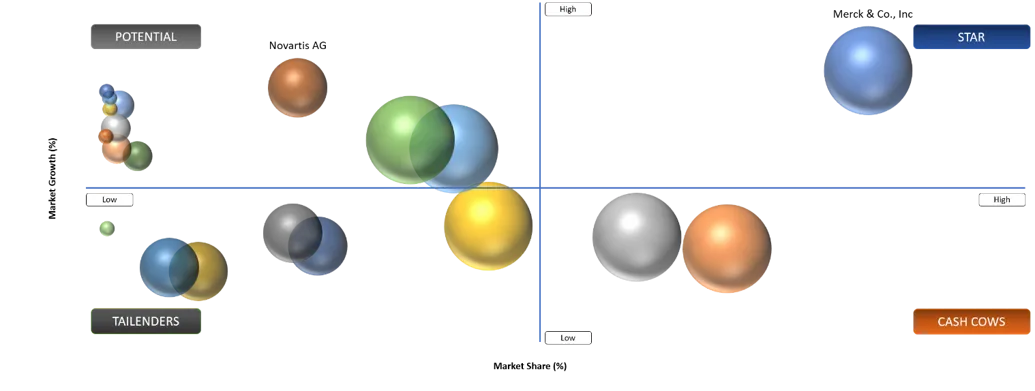
STAR
Merck & Co., Inc., AstraZeneca PLC, F. Hoffmann-La Roche Ltd and Bristol Myers Squibb Company are positioned in the Star category based on their extensive commercial oncology portfolios, leadership across immunotherapy and targeted treatment, broad geographic commercialization capabilities and continuous label expansion across major solid and hematological cancers. Merck maintains a particularly strong position through KEYTRUDA, with KEYTRUDA and KEYTRUDA QLEX generating US$8.4 billion in Q2 2026, while the FDA approved KEYTRUDA or KEYTRUDA QLEX combined with Trodelvy as first-line therapy for PD-L1-positive advanced triple-negative breast cancer in June 2026. AstraZeneca continues to strengthen its leadership through Enhertu and Tagrisso; in 2026, Enhertu received U.S. approvals in both neoadjuvant and adjuvant HER2-positive early breast cancer and EU approval as a tumour-agnostic HER2-directed therapy. Bristol Myers Squibb expanded Opdivo into previously untreated Stage III or IV classical Hodgkin lymphoma in the U.S. during 2026, while Roche continues advancing Tecentriq across additional tumor settings, including a 2026 FDA Priority Review in Stage III dMMR/MSI-H colon cancer.
POTENTIAL
Novartis AG, Eli Lilly and Company, Amgen Inc. and AbbVie Inc. are positioned in the Potential category based on accelerating pipelines in radioligand therapy, bispecific antibodies, targeted oncology and next-generation hematology therapies that could materially expand their future competitive positions. Novartis represents a strong precision-oncology opportunity through Pluvicto, which received FDA approval in July 2026 for PSMA-positive metastatic hormone-sensitive prostate cancer and reduced the risk of radiographic progression or death by 33% when combined with standard therapy. Amgen is building momentum through IMDELLTRA, with its Phase III DeLLphi-305 study reporting a statistically significant overall-survival benefit in first-line extensive-stage small-cell lung cancer in September 2026. Lilly continues expanding Jaypirca across CLL treatment lines, supported by Phase III results showing a 45% reduction in the risk of disease progression or death when added to a venetoclax-based regimen. AbbVie is strengthening its hematologic oncology position through EPKINLY/TEPKINLY, with European approval in July 2026 for a bispecific-based, chemotherapy-free regimen in relapsed or refractory follicular lymphoma and ongoing Phase III expansion into DLBCL.
Cancer Therapeutics Market Dynamics
Driver Impact Analysis
| Driver | Market Growth Impact (%) | Demand Concentration | Impacted Use Case | Strategic Impact |
Rising Cancer Incidence and Expanding Treatment-Eligible Population | 15.6% | Patient volume, therapy demand and treatment initiation | Patients diagnosed with breast, lung, colorectal, prostate, hematological and other major cancers | Expands the addressable patient pool and sustains demand for systemic, targeted and combination therapies |
Rapid Expansion of Precision Oncology and Biomarker-Driven Therapies | 13.8% | Treatment selection, response rates and personalized care | Patients with actionable mutations, receptor expression or molecular biomarkers | Accelerates adoption of targeted therapies, companion diagnostics, ADCs and tumor-specific treatment strategies |
Increasing Approvals and Earlier-Line Use of Advanced Cancer Therapies | 11.9% | Therapy adoption, treatment sequencing and commercial penetration | Patients receiving immunotherapies, ADCs, bispecific antibodies, radioligand therapies and targeted medicines | Broadens eligible populations, moves innovative treatments into earlier settings and increases lifecycle value of oncology products |
Driver: Rising Cancer Incidence and Expanding Treatment-Eligible Population
Rising cancer incidence and an expanding treatment-eligible population remain major drivers of the cancer therapeutics market. increasing diagnoses of lung, breast, colorectal, prostate and hematological cancers are expanding demand across first-line, maintenance, adjuvant and metastatic treatment settings. improvements in screening and molecular diagnostics are also identifying patients earlier and enabling more individuals to qualify for targeted and biomarker-directed therapies. at the same time, improving survival is increasing the number of patients requiring longer treatment durations, maintenance therapy and subsequent treatment lines. This enlarging addressable population supports sustained utilization of chemotherapy, immunotherapy, targeted medicines, antibody-drug conjugates and emerging combination regimens.
Restraint Impact Analysis
| Restraint | Drag on Market Growth (%) | Primary Impact Area | Impacted Use Case | Strategic Impact |
High Treatment Costs and Reimbursement Constraints for Advanced Cancer Therapies | 13.2% | Patient access, reimbursement and treatment affordability | Patients receiving immunotherapies, antibody-drug conjugates, CAR-T therapies, radioligand therapies and targeted treatments | Limits treatment uptake, increases payer scrutiny and delays adoption of high-cost oncology therapies |
Severe Toxicities and Intensive Safety Monitoring Requirements | 10.8% | Treatment eligibility, prescribing confidence and treatment persistence | Patients receiving checkpoint inhibitors, chemotherapy combinations, bispecific antibodies, CAR-T therapies and other systemic treatments | Narrows eligible patient populations and increases hospitalization, laboratory monitoring and adverse-event management requirements |
Drug Resistance, Relapse and Limited Durability in Advanced Cancers | 9.6% | Long-term efficacy, treatment sequencing and clinical outcomes | Patients with metastatic, relapsed or refractory solid tumors and hematological malignancies | Increases treatment switching, combination-therapy requirements and demand for next-generation therapies while limiting durability of existing treatments |
Restraint: High Treatment Costs and Reimbursement Constraints for Advanced Cancer Therapies
High treatment costs and reimbursement constraints remain a major restraint for the cancer therapeutics market, particularly as treatment shifts toward immunotherapies, antibody-drug conjugates, CAR-T therapies, radioligand therapies and biomarker-driven targeted medicines. These therapies can require substantial drug expenditure, specialized administration, diagnostic testing, hospitalization and adverse-event management, increasing the total cost of care. Payers are consequently applying tighter utilization controls, prior authorization and evidence requirements, particularly for high-cost combination regimens and later-line therapies. The restraint is most pronounced in lower-access markets and among patients with inadequate insurance coverage, potentially delaying treatment initiation, limiting therapy persistence and slowing broader commercial uptake.
Cancer Therapeutics Market Geographical Penetration
U.S. Cancer Therapeutics Market Landscape
The U.S. Cancer Therapeutics Market is supported by a high cancer burden, rapid adoption of precision oncology and a strong regulatory pathway for novel therapies. The American Cancer Society estimated approximately 2.04 million new cancer diagnoses and 618,120 cancer deaths in the U.S. in 2025, sustaining significant demand for systemic therapies. Market activity is increasingly concentrated around immune checkpoint inhibitors, antibody-drug conjugates, bispecific antibodies, targeted small molecules and biomarker-directed therapies. During 2025, the FDA approved multiple oncology treatments across breast, lung, hematological and gastrointestinal cancers, reinforcing the U.S. as a key launch market for next-generation cancer therapeutics.
Japan Cancer Therapeutics Market Outlook
The Japan Cancer Therapeutics Market is being shaped by a large cancer patient population, an aging demographic and increasing adoption of biomarker-driven and targeted treatments. Japan’s National Cancer Center projected approximately 1.02 million new cancer cases in 2025, including 160,000 colorectal, 130,100 lung and 118,400 stomach cancer cases. Therapeutic demand is consequently shifting toward precision medicines, immune checkpoint inhibitors, antibody-drug conjugates and combination regimens. Japan also continued regulatory expansion of innovative oncology products during 2025, including new and expanded treatments for lung, colorectal and hematological malignancies, supporting broader patient access to advanced therapies through the country’s established PMDA and MHLW approval framework.
Cancer Therapeutics Market Competitive Landscape
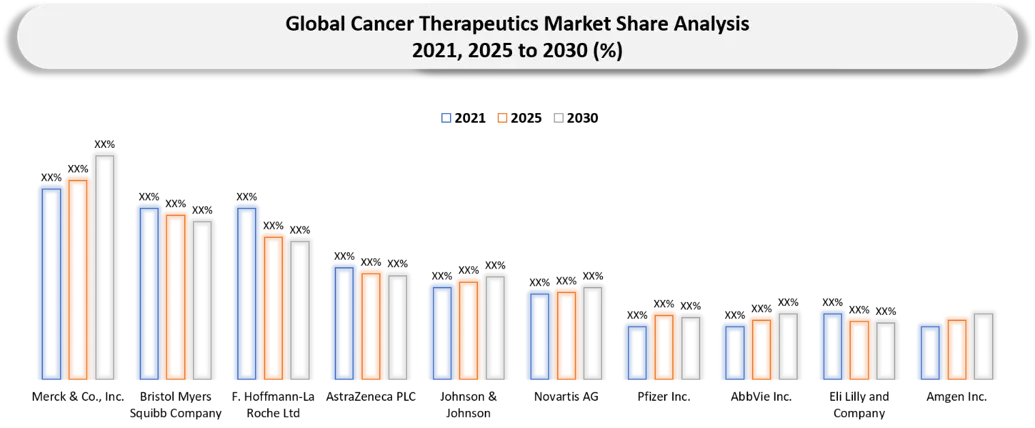
- The global Cancer Therapeutics Market is led by Merck & Co., Inc., Bristol Myers Squibb Company, F. Hoffmann-La Roche Ltd, AstraZeneca PLC, Johnson & Johnson and Novartis AG through broad oncology franchises spanning immune checkpoint inhibitors, targeted therapies, antibody-drug conjugates, bispecific antibodies, radioligand therapies and hematologic cancer treatments. Merck continues to reinforce its immuno-oncology leadership through KEYTRUDA and expanding combination regimens, while AstraZeneca is strengthening its position through TAGRISSO, IMFINZI and ENHERTU across lung, breast and other solid tumors. In 2026, ENHERTU expanded further into HER2-positive early breast cancer and demonstrated Phase III progression-free survival improvement in first-line HER2-mutant advanced NSCLC.
- Johnson & Johnson is expanding precision oncology and T-cell-directed therapy through RYBREVANT, TECVAYLI and TALVEY, with RYBREVANT-based regimens advancing across EGFR-mutated lung cancer and head and neck cancer. Novartis is strengthening radioligand therapy leadership through PLUVICTO, which received FDA approval in July 2026 for PSMA-positive metastatic hormone-sensitive prostate cancer and reduced the risk of radiographic progression or death by 33% in the PSMAddition study. Pfizer is simultaneously increasing investment in ADCs, bispecific antibodies and small-molecule oncology, including a 2026 collaboration with Innovent covering 12 early-stage cancer programs.
- Competitive differentiation is increasingly shifting toward biomarker-driven precision oncology, antibody-drug conjugates, bispecific and T-cell-engaging antibodies, radioligand therapies, next-generation immunotherapy combinations, tumor-agnostic indications and movement of advanced therapies into earlier treatment lines. Companies with broad biomarker strategies, durable survival benefits, scalable manufacturing and strong combination-development capabilities are increasingly positioned to capture competitive advantage across both solid tumors and hematological malignancies.
Key Companies of the Cancer Therapeutics Market
- Merck & Co., Inc. (United States)
- Bristol Myers Squibb Company (United States)
- F. Hoffmann-La Roche Ltd (Switzerland)
- AstraZeneca PLC (United Kingdom)
- Johnson & Johnson (United States)
- Novartis AG (Switzerland)
- Pfizer Inc. (United States)
- AbbVie Inc. (United States)
- Eli Lilly and Company (United States)
- Amgen Inc. (United States)
Cancer Therapeutics Market Recent Developments
- September 2026: Amgen reported positive Phase III DeLLphi-305 results for IMDELLTRA (tarlatamab-dlle) in combination with AstraZeneca’s IMFINZI (durvalumab) as first-line maintenance treatment for extensive-stage small cell lung cancer. The study met its primary endpoint, demonstrating a statistically significant and clinically meaningful improvement in overall survival versus durvalumab alone.
- August 2026: The U.S. FDA approved Revolution Medicines’ RASONQUE (daraxonrasib), a RAS GTPase inhibitor, for adults with metastatic pancreatic adenocarcinoma who had received at least one prior systemic therapy or were not candidates for multiagent systemic therapy, introducing a new targeted treatment option for advanced pancreatic cancer.
- July 2026: The U.S. FDA approved Novartis’ Pluvicto (lutetium Lu 177 vipivotide tetraxetan) in combination with an androgen receptor pathway inhibitor for PSMA-positive metastatic hormone-sensitive prostate cancer. The approval expanded Pluvicto into an earlier stage of metastatic prostate cancer treatment, supported by PSMAddition results showing a 33% reduction in the risk of radiographic progression or death.
What DATAM Uniquely Provides
- In-depth segmentation of the Cancer Therapeutics Market by therapy type, cancer type, distribution channel, end-user and region, with additional analysis of treatment modality, mechanism of action and emerging therapeutic platforms where relevant.
- Competitive analysis of leading cancer therapeutics companies covering approved oncology portfolios, clinical efficacy, progression-free survival, overall survival, response durability, safety profile, mechanism of action, combination strategies, pipeline maturity, regulatory progress and commercialization strategy.
- Comprehensive assessment of diagnosed and treatment-eligible cancer populations, newly diagnosed and relapsed/refractory patients, biomarker-defined patient groups, treatment-line positioning, tumor stage, prior-treatment status, mutation profile, treatment resistance, unmet clinical needs and regional treatment-access dynamics.
- Actionable intelligence on oncology drug pricing, reimbursement, regulatory pathways, biomarker testing, companion diagnostics, therapy sequencing, patient-support programs, market-access barriers, licensing activity, strategic partnerships, patent expiries, biosimilar competition and investment opportunities.
- Analyst forecasts highlighting high-growth therapy classes, commercially attractive cancer indications, emerging biomarker-driven opportunities, regional expansion potential, pipeline inflection points and next-generation oncology treatment platforms.




























































