


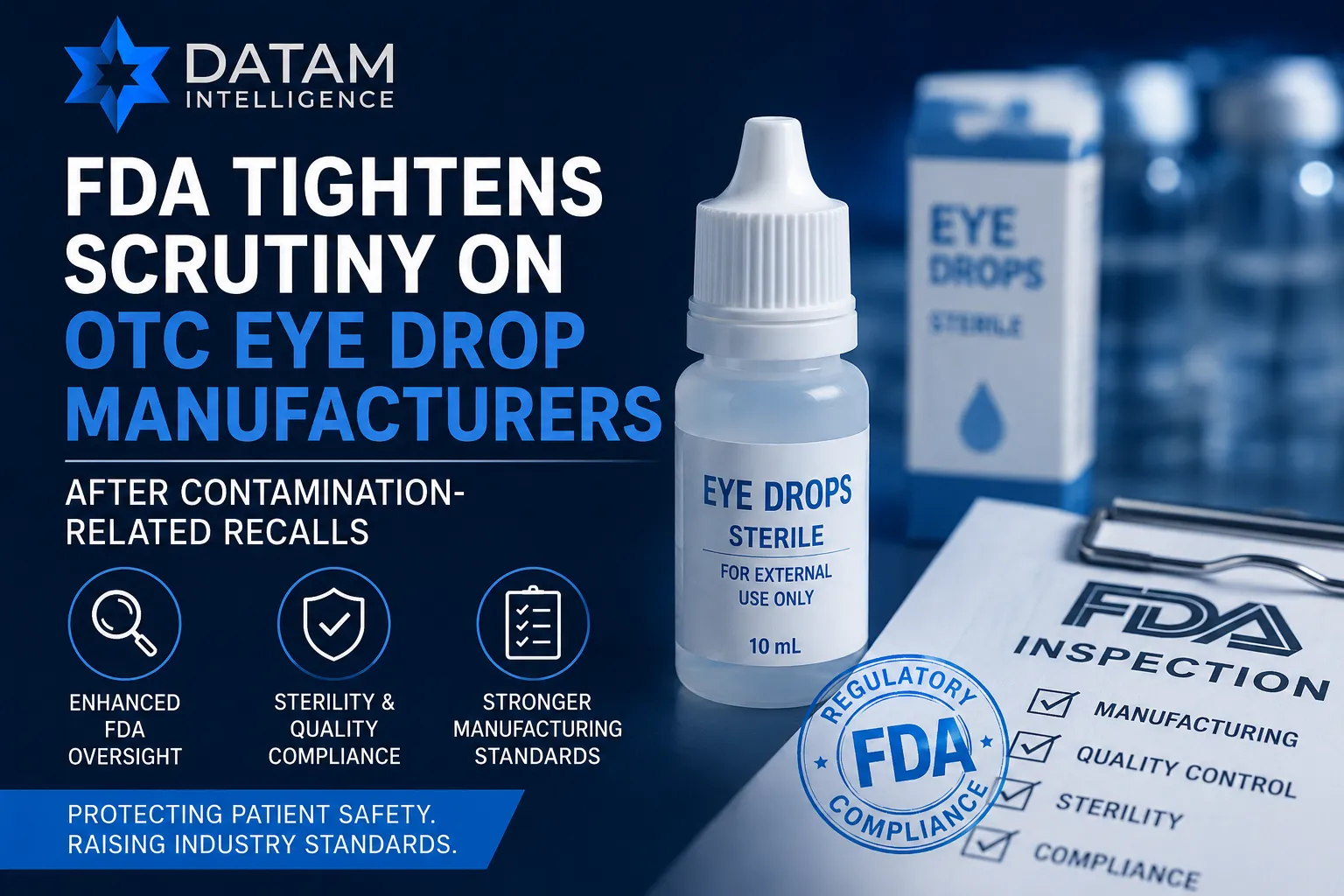
The U.S. Food and Drug Administration (FDA) is strengthening its oversight of over-the-counter (OTC) eye drop manufacturers as ongoing contamination-related recalls continue to raise concerns about product sterility, manufacturing quality, and patient safety across the ophthalmic drug industry.
The regulatory push follows several high-profile recalls and safety alerts linked to potential microbial contamination and manufacturing deficiencies in ophthalmic products. Over the past few years, multiple OTC eye drop products have been removed from the market after FDA investigations identified sterility risks, inadequate quality controls, and deviations from current Good Manufacturing Practices (cGMPs).
Growing Regulatory Pressure on Ophthalmic Drug Manufacturers
Sterility remains one of the most critical quality requirements for ophthalmic products. Unlike many oral medications, eye drops are administered directly to sensitive ocular tissues, making contamination a significant patient safety concern.
FDA officials have increasingly emphasized the importance of robust microbial testing, validated manufacturing processes, contamination control strategies, and comprehensive quality management systems throughout the production lifecycle. Recent enforcement actions indicate the agency is placing greater focus on manufacturing facilities producing sterile ophthalmic products for the U.S. market.
Industry analysts note that manufacturers operating in the OTC eye care segment may face more frequent inspections, enhanced documentation requirements, and heightened regulatory scrutiny as the FDA seeks to reduce recurring quality failures.
Recalls Highlight Industry-Wide Challenges
The FDA's intensified focus comes after several contamination-related incidents affected major retailers and private-label ophthalmic products. Regulatory actions have cited concerns ranging from lack of sterility assurance and microbial contamination risks to deficiencies in manufacturing controls and quality testing procedures.
In recent cases, millions of OTC eye drop units were recalled due to concerns that products may not have been manufactured under conditions sufficient to guarantee sterility. Such incidents have reinforced the need for manufacturers to strengthen quality oversight and risk management programs.
Impact on the Pharmaceutical Industry
For pharmaceutical companies and contract manufacturing organizations, the evolving regulatory landscape is expected to increase investments in:
- Advanced sterility assurance systems
- Environmental monitoring programs
- Automated quality control technologies
- Manufacturing process validation
- Regulatory compliance infrastructure
- Supplier quality management
Industry experts believe organizations that proactively invest in quality and compliance capabilities will be better positioned to meet regulatory expectations while maintaining market access and consumer confidence.
Explore Ophthalmology Drugs Market report and request for customized market report.
Market Outlook
The global ophthalmic drug market continues to expand due to rising prevalence of dry eye disease, aging populations, and increasing demand for self-care treatments. However, regulatory expectations surrounding product safety and manufacturing reliability are becoming more stringent.
As the FDA continues to prioritize patient safety, manufacturers are expected to face increased pressure to demonstrate consistent compliance with sterility standards and quality management requirements. Companies that successfully adapt to these expectations may gain a competitive advantage in an increasingly regulated marketplace.
Analyst Perspective
The FDA's heightened scrutiny signals a broader shift toward preventive quality management across sterile drug manufacturing. Rather than reacting to recalls after products reach consumers, regulators are increasingly focusing on identifying manufacturing vulnerabilities earlier in the production process. This trend is likely to drive long-term investments in pharmaceutical quality systems, digital manufacturing technologies, and contamination prevention strategies throughout the ophthalmic sector.
Conclusion
The FDA is increasing oversight of OTC eye drop manufacturers following multiple contamination-related recalls involving sterility concerns and manufacturing deficiencies. The agency is emphasizing stricter compliance with current Good Manufacturing Practices (cGMPs), enhanced microbial testing, and stronger quality control systems to reduce patient safety risks. The regulatory shift is expected to impact pharmaceutical manufacturers, contract manufacturing organizations, and ophthalmic drug suppliers worldwide while driving greater investment in sterility assurance and manufacturing quality programs.