


Introduction
For years, endpoint security has served as the frontline defense against cyber threats. Antivirus software, endpoint protection platforms (EPP), and endpoint detection and response (EDR) solutions helped organizations defend laptops, desktops, servers, and mobile devices from malware, ransomware, and unauthorized access.
However, the cybersecurity landscape has changed dramatically.
Today's enterprises operate in highly distributed environments where employees work remotely, applications run across multiple cloud platforms, and business-critical data flows continuously between devices, networks, and cloud services. At the same time, cybercriminals are leveraging artificial intelligence, automation, and advanced attack techniques to bypass traditional security controls.
As a result, organizations are discovering a critical reality:
Endpoint security alone is no longer sufficient to protect modern enterprises from increasingly sophisticated cyber threats.
To address this challenge, businesses are increasingly adopting Extended Detection and Response (XDR) and Zero Trust Architecture (ZTA) as foundational components of modern cybersecurity strategies.
What Is Endpoint Security?
Endpoint security refers to the technologies and processes used to protect devices that connect to corporate networks.
These endpoints include:
- Laptops
- Desktop computers
- Mobile devices
- Servers
- Virtual machines
- IoT devices
- Remote workstations
Traditional endpoint security solutions focus on:
- Malware detection
- Antivirus protection
- Device monitoring
- Threat prevention
- Endpoint remediation
While these capabilities remain essential, attackers have evolved beyond traditional endpoint-focused attack methods.
For more information, explore Endpoint Security Market Report.
Why Traditional Endpoint Security Is Reaching Its Limits
Modern cyberattacks rarely target a single device.
Attackers increasingly exploit:
- Stolen credentials
- Cloud misconfigurations
- Identity vulnerabilities
- SaaS applications
- Remote access tools
- Third-party integrations
Once attackers gain initial access, they move laterally across the environment searching for valuable assets.
Traditional endpoint solutions often operate in isolation, limiting visibility into broader attack activity.
This creates significant security gaps.
Growing Attack Surface
Organizations now manage:
- Remote employees
- Hybrid work environments
- Cloud workloads
- Mobile devices
- Edge computing infrastructure
Every connected device expands the attack surface.
AI-Powered Cyber Threats
Artificial intelligence enables attackers to:
- Automate phishing campaigns
- Generate malware variants
- Identify vulnerabilities faster
- Evade traditional detection tools
Legacy endpoint protection systems struggle to detect these increasingly adaptive threats.
Sophisticated Ransomware Campaigns
Modern ransomware groups target entire environments rather than individual devices.
Attackers often spend weeks conducting reconnaissance before launching attacks.
Endpoint-only visibility is no longer enough to stop these campaigns.
What Is XDR and Why Is It Important?
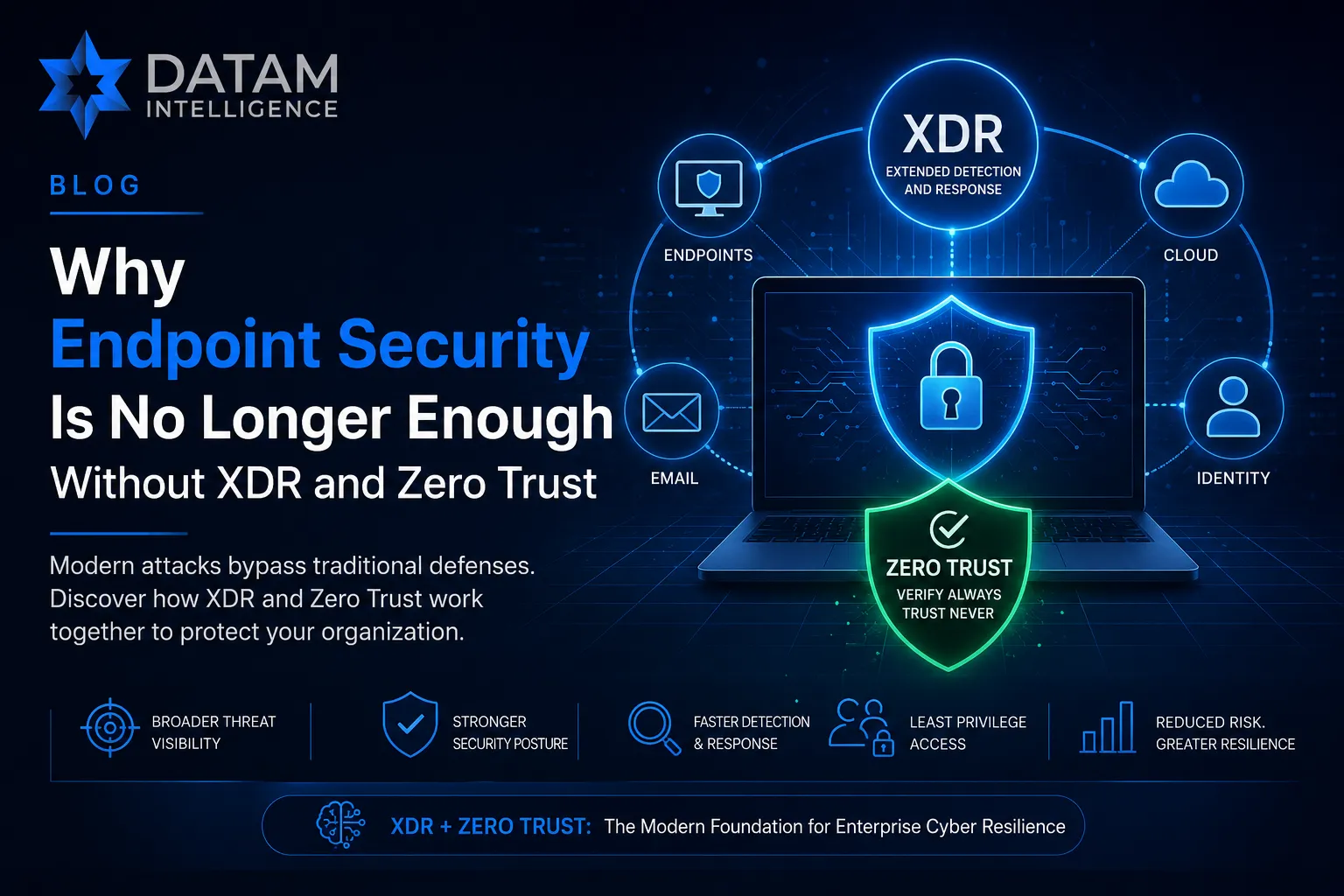
Extended Detection and Response (XDR) is a cybersecurity approach that integrates security data from multiple sources into a unified platform.
Unlike traditional endpoint security, XDR correlates information from:
- Endpoints
- Networks
- Cloud environments
- Identity systems
- Email platforms
- Security tools
This broader visibility allows security teams to identify attack patterns that would otherwise remain hidden.
Key Benefits of XDR
Unified Threat Visibility
XDR eliminates security silos by providing a centralized view of threats across the organization.
Faster Threat Detection
Correlated security data enables earlier identification of suspicious behavior.
Improved Incident Response
Security teams can investigate and respond to threats more quickly using integrated workflows.
Reduced Alert Fatigue
XDR platforms prioritize high-risk incidents, helping analysts focus on genuine threats.
Better Protection Against Advanced Attacks
By analyzing activity across multiple environments, XDR helps detect ransomware, insider threats, and advanced persistent threats (APTs).
Why Zero Trust Has Become a Security Necessity
While XDR improves visibility and response capabilities, Zero Trust focuses on preventing unauthorized access in the first place.
Zero Trust operates under a simple principle:
Never Trust. Always Verify.
Rather than assuming users or devices are trustworthy once authenticated, Zero Trust continuously validates access requests based on risk factors.
Core Principles of Zero Trust
Verify Explicitly
Every access request is evaluated using:
- User identity
- Device posture
- Location
- Behavioral analytics
- Risk scores
Enforce Least Privilege Access
Users receive only the permissions necessary to perform their tasks.
Assume Breach
Organizations operate under the assumption that attackers may already be present within the environment.
This mindset helps reduce potential damage from successful intrusions.
Why XDR and Zero Trust Work Better Together
Many organizations mistakenly view XDR and Zero Trust as competing strategies.
In reality, they complement one another.
Zero Trust Prevents Unauthorized Access
Zero Trust limits attacker opportunities by restricting access and continuously validating identities.
XDR Detects What Gets Through
Even with strong access controls, some threats may still gain entry.
XDR provides the visibility needed to identify suspicious activity and respond quickly.
Together They Create a Stronger Security Posture
Organizations benefit from:
- Improved threat prevention
- Faster detection
- Better incident response
- Reduced attack surfaces
- Enhanced operational resilience
The combination significantly improves cybersecurity effectiveness.
The Rise of AI-Powered Security Operations
Artificial intelligence is becoming a critical component of modern endpoint security strategies.
AI-powered security platforms help organizations:
- Detect anomalies
- Analyze user behavior
- Identify compromised accounts
- Automate threat hunting
- Improve incident response
Machine learning algorithms continuously process vast amounts of telemetry data to uncover threats that may otherwise remain hidden.
As attack volumes continue to grow, AI-driven security operations are becoming essential for maintaining effective protection.
Hybrid Work Is Driving Endpoint Security Transformation
The shift toward hybrid work has fundamentally changed how organizations secure endpoints.
Employees now access corporate resources from:
- Home offices
- Shared workspaces
- Mobile devices
- Public networks
This distributed workforce creates new security challenges.
Organizations increasingly require solutions that provide:
- Continuous visibility
- Secure remote access
- Identity-based security controls
- Cloud-native protection
XDR and Zero Trust frameworks are helping organizations address these evolving requirements.
Industries Leading Adoption
Banking and Financial Services
Financial institutions are investing heavily in XDR and Zero Trust to protect customer data and digital banking systems.
Healthcare
Healthcare providers use advanced endpoint security solutions to secure patient records and connected medical devices.
Government
Public-sector organizations are strengthening endpoint protection to defend sensitive information and critical infrastructure.
Manufacturing
Industrial organizations are securing operational technology (OT) systems and connected production environments.
Technology and Telecommunications
Technology companies are adopting XDR and Zero Trust to protect cloud-native applications and distributed digital ecosystems.
Strategic Recommendations for Security Leaders
Organizations seeking to modernize endpoint security should consider the following priorities:
Adopt XDR Platforms
Improve visibility and threat detection across endpoints, networks, cloud environments, and identities.
Implement Zero Trust Frameworks
Reduce risk through continuous verification and least-privilege access controls.
Strengthen Identity Security
Deploy multi-factor authentication (MFA) and identity governance solutions.
Invest in Security Analytics
Leverage AI-driven analytics to improve threat detection and response capabilities.
Modernize Security Operations
Automate workflows and improve incident response efficiency through integrated security platforms.
Frequently Asked Questions
What is the difference between EDR and XDR?
EDR focuses primarily on endpoint monitoring and response, while XDR integrates data from endpoints, networks, cloud environments, identity systems, and other security tools to provide broader visibility.
Why is endpoint security no longer enough?
Modern cyberattacks target identities, cloud environments, networks, and applications in addition to endpoints. Organizations need broader visibility and stronger access controls to defend against sophisticated threats.
How does Zero Trust improve endpoint security?
Zero Trust continuously verifies users and devices before granting access, reducing the risk of unauthorized access and limiting attacker movement.
What industries benefit most from XDR and Zero Trust?
Banking, healthcare, government, manufacturing, technology, and telecommunications organizations are among the leading adopters.
Analyst Perspective
The endpoint security market is evolving rapidly as organizations confront increasingly sophisticated cyber threats. While endpoint protection remains a critical security layer, modern attack techniques require broader visibility, stronger identity controls, and faster response capabilities.
XDR and Zero Trust have emerged as two of the most important technologies helping enterprises strengthen cyber resilience. Together, they enable organizations to move beyond reactive security models and adopt more proactive, intelligence-driven approaches to threat detection and prevention.
For security leaders planning future cybersecurity investments, endpoint protection alone is no longer sufficient. The future belongs to integrated security ecosystems built on visibility, identity, automation, and continuous trust verification.
Explore the Full Market Analysis
To evaluate market forecasts, technology adoption trends, competitive intelligence, vendor benchmarking, and regional opportunities within endpoint security, explore DataM Intelligence's comprehensive Endpoint Security Market report.
Related Reports
Zero Trust Security Market
Organizations are increasingly adopting Zero Trust frameworks to strengthen identity security, reduce attack surfaces, and improve cyber resilience.
Managed Security Services Market
Managed security service providers help organizations improve threat detection, incident response, and continuous monitoring capabilities.
Security Analytics Market
Security analytics platforms leverage AI and machine learning to improve visibility, threat detection, and security operations performance.
Artificial Intelligence (AI) in Security Market
AI-powered security technologies are transforming cybersecurity through automation, behavioral analytics, and predictive threat detection.