


Whey Prices Are Forcing a Protein Supply Reset: Can Yeast Protein Become the Next Alternative?
KEY TREND Whey inflation and dairy supply constraints are accelerating qualification of fermented yeast protein in mainstream nutrition. |
MARKET OUTLOOK The winners may be suppliers that can deliver complete protein quality with lower exposure to cheese output, milk economics and imported whey. |
RECOMMENDED FOR Protein Ingredient Buyers, Sports Nutrition Companies, Dairy and Fermentation Strategy Teams, Functional Food Product Developers |
DataM Analyst View
Whey protein is entering a supply cycle that exposes a structural weakness in the sports nutrition and functional food industry. Demand can rise quickly, yet whey availability remains tied to milk production, cheese manufacturing economics and the amount of whey that processors can upgrade into high value concentrates and isolates. In 2026, tighter producer economics, strong protein demand and higher input costs are colliding with a market that has limited short term supply elasticity.
That is creating an opening for fermented yeast protein. The shift resembles an earlier transition in Omega 3 ingredients. Fish oil supply shocks did not eliminate demand for EPA and DHA. They encouraged buyers to qualify algal alternatives that could offer more controlled production, reduced dependence on wild fisheries and a second procurement route. Yeast protein could follow a similar path if suppliers can prove nutritional quality, sensory performance, cost stability and industrial scale.
Source: Vesper
Whey Demand Is Growing Faster Than the Supply Chain Can Flex
The global whey protein market remains attractive. DataM Intelligence values it at US$12.64 billion in 2025 and forecasts US$26.16 billion by 2033. Growth in sports nutrition, healthy aging and everyday protein consumption continues to broaden the customer base. The supply side is more constrained because whey is a co product of cheese manufacturing rather than a protein stream that can be expanded independently whenever supplement demand rises.
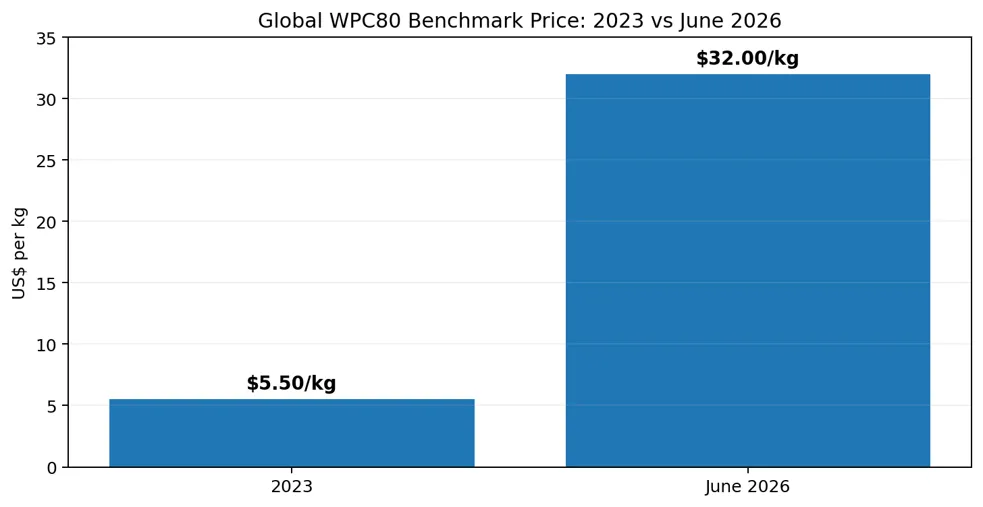
The price shock is global. Commodity intelligence data cited by NutraIngredients put WPC80 at exactly US$32.00 per kilogram in June 2026, compared with US$5.50 per kilogram in the comparable 2023 period. That is a 482% increase. The magnitude of the move is forcing food, beverage and sports nutrition companies to revisit protein architecture, contract structures and alternative ingredient qualification. High protein foods, healthy aging, weight management and GLP 1 related nutrition are expanding demand faster than whey capacity can respond.
Upstream dairy economics add another layer of risk. The National Milk Producers Federation reported rising feed and fuel costs tightening U.S. producer margins in September 2026. Earlier data showed increases in corn, premium alfalfa and soybean meal costs offsetting much of the improvement in milk prices. For protein buyers, this means whey exposure starts before the ingredient plant. Farm economics, milk component values and cheese production decisions can all influence future availability.
| Track whey market growth, pricing and supplier dynamics. Explore the DataM Intelligence report |
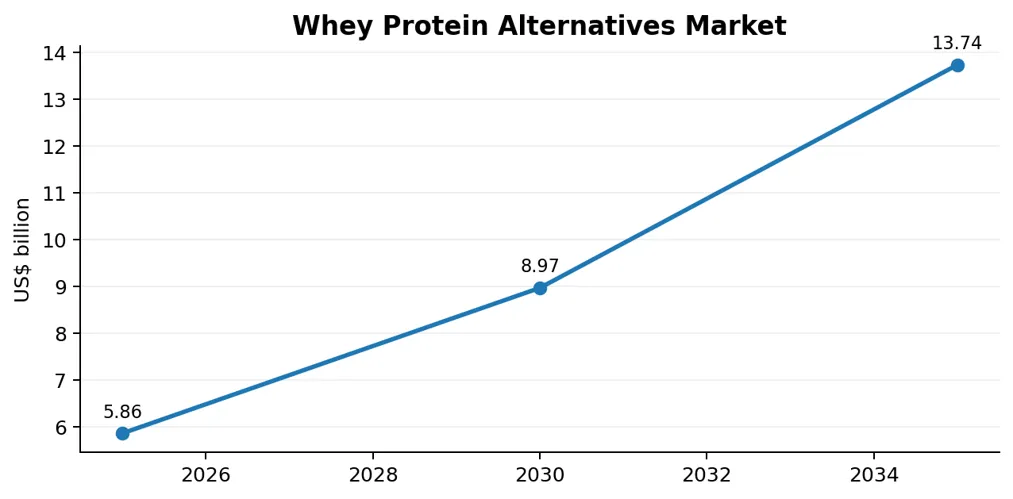
Source. DataM Intelligence forecast for the global Whey Protein Alternatives Market, US$ billion.
Yeast Protein Is Moving From Niche Alternative to Procurement Hedge
The strongest evidence of substitution is appearing in commercial product development. Hindustan Unilever selected fermented yeast protein for Horlicks Protein in ready to drink and powder formats. The company cited protein quality, cost balance and digestibility. Marico backed Cosmix has expanded from plant based supplements into yeast protein, while SuperYou is developing additional yeast formats. This matters because large consumer brands are beginning to treat fermentation derived protein as a formulation platform rather than a specialist vegan ingredient.
Yeast protein has several procurement advantages. Fermentation capacity can be located closer to demand, production is less dependent on livestock cycles and output can be planned around bioreactor utilization. The ingredient can also offer a complete amino acid profile with strong digestibility. These advantages become more valuable when whey prices are volatile or when brands want lactose free positioning without accepting the taste or amino acid compromises associated with some plant proteins.
The economics are still developing. Hindustan Times reported yeast protein prices rising about 20% over six months, showing that substitution does not remove all inflation risk. Fermentation requires capital, energy, feedstock and downstream processing. The commercial opportunity therefore belongs to suppliers that can scale capacity while maintaining consistent protein concentration, flavor neutrality and price discipline.
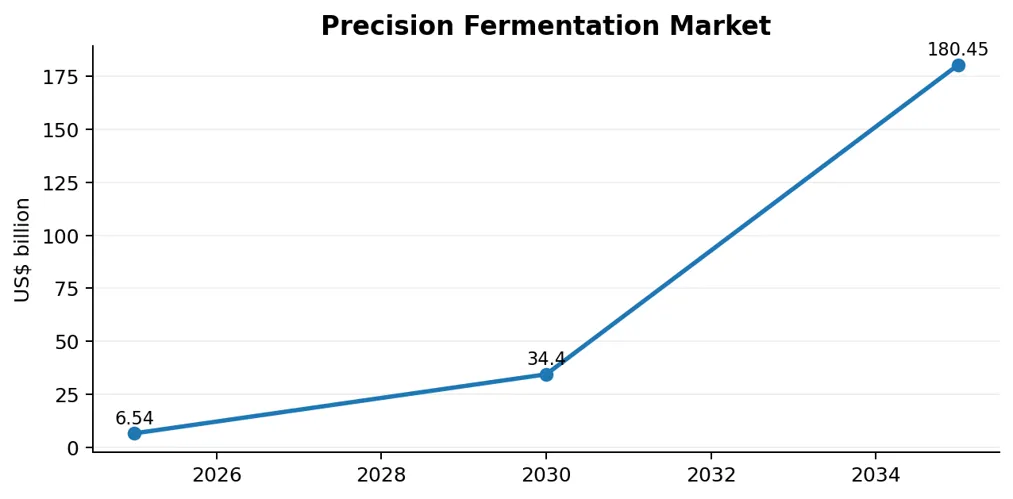
Source: DataM Intelligence forecast for the Precision Fermentation Market, US$ billion.
Assess fermentation scale up, commercial ingredients and investment pathways. Explore the DataM Intelligence report
The Fish Oil Shift Offers a Useful Commercialization Template
The Omega 3 market shows how an alternative ingredient can gain strategic value when the incumbent supply chain becomes unreliable. Fish oil has faced repeated supply shocks because availability depends on wild fisheries, quotas and ocean conditions. FAO reported that global fishmeal and fish oil supplies in the first half of 2026 were tighter than at any point since the 2023 El Nino disruption. Lower quotas in Peru and Chile, weaker North Atlantic supply and renewed climate risk pushed the market back toward scarcity.
The 2023 Peruvian anchovy disruption was particularly important. The cancellation of the first fishing season caused a sudden shortage and a sharp Omega 3 price response. The industry subsequently increased attention on algae derived EPA and DHA because fermentation and cultivation can create a supply source that is less exposed to wild catch variability.
The Centre for Feed Innovation estimates global algal EPA and DHA production at about 20,000 tonnes in 2025, rising to 36,000 tonnes by 2030. Its analysis also projects the global fish oil deficit widening from about 20,000 tonnes in 2025 to 100,000 tonnes by 2030. Microalgal oils can replace fish oil in selected aquafeed formulations, while human nutrition companies have increasingly developed vegan Omega 3 products around algal DHA and EPA.
| Supply chain pattern | Fish oil Omega 3 | Algal / plant based Omega 3 response | Whey / yeast protein implication |
| Incumbent constraint | Wild catch availability and fishery variability limit rapid supply expansion. | Fermentation and controlled cultivation decouple EPA/DHA output from fish catch. | Whey remains linked to milk and cheese economics, while yeast protein can be scaled through fermentation capacity. |
| Trigger for substitution | Supply shocks and price volatility exposed dependence on marine feedstock. | Brands qualified algal sources first as a resilient second source, then expanded use in vegan and premium products. | Record WPC80 prices create a similar incentive to qualify yeast before shortages become acute. |
Why the alternative gained | Supply security, vegan positioning and traceable production improved the value proposition. | The alternative did not need to replace fish oil everywhere to become strategically important. | Yeast does not need to beat whey in every formulation. It can win where price stability, local capacity or dairy free positioning matter. |
| Likely market outcome | Marine Omega 3 remains important, while alternative Omega 3 becomes a permanent part of sourcing architecture. | Dual sourcing and application specific formulation become normal procurement tools. | A mixed protein architecture is more plausible than wholesale whey replacement, with yeast becoming a strategic second source. |
Yeast Protein and Algal Omega 3 Share the Same Strategic Logic
The analogy is strongest at the procurement level. Fish oil and whey are both high performance ingredients with supply that cannot respond instantly to end market demand. Fish oil depends on biological availability and fishing quotas. Whey depends on dairy production and cheese processing. Algal Omega 3 and yeast protein offer a different production logic based on controlled biological manufacturing.
| Factor | Whey | Yeast Protein | Fish Oil | Algal Omega 3 |
| Supply dependency | Milk and cheese production | Fermentation capacity | Wild fisheries and quotas | Controlled algae cultivation or fermentation |
| Main shock exposure | Dairy economics and import dependence | Energy, feedstock and plant utilization | Climate, quotas and catch variability | Scale economics and downstream processing |
| Buyer value | Established nutrition and consumer trust | Supply diversification and lactose free formulation | Established EPA and DHA source | Supply resilience and vegan positioning |
Commercialization challenge | Price volatility | Cost parity and sensory qualification | Finite marine supply | Cost, concentration and customer qualification |
The critical difference is that yeast protein does not need to replace whey across every application. Algal Omega 3 gained relevance first where supply security, vegan positioning and sustainability justified a different cost structure. Yeast protein can follow the same route in ready to drink nutrition, bars, everyday protein powders and blended formulations where buyers value stable sourcing as much as maximum whey purity.
Compare the broader shift toward dairy free and fermentation derived protein systems. Explore the DataM Intelligence report
Blended Protein Systems May Scale Faster Than Full Whey Replacement
The near term commercial winner may be a blended architecture. Brands can combine whey with yeast or plant proteins to reduce exposure to whey pricing while preserving familiar taste and amino acid performance. Fermentation derived protein can also be used as a premium functional component rather than a complete substitute. This lowers the qualification barrier and gives procurement teams flexibility when dairy ingredient prices move sharply.
For ingredient suppliers, the opportunity is therefore broader than selling a new protein powder. It includes contract fermentation, strain optimization, downstream purification, flavor masking, ready to mix systems and application development. DataM Intelligence forecasts the global Whey Protein Alternatives Market to rise from US$5.86 billion in 2025 to US$13.74 billion by 2035, while the broader Alternative Proteins Market is forecast to reach US$126.52 billion by 2033.
What Buyers Should Do Before the Next Protein Supply Shock
Protein buyers should treat alternative qualification as supply chain planning rather than emergency substitution. The first priority is to define which product attributes truly require whey. High leucine content, rapid digestibility and consumer familiarity may justify continued whey exposure in some sports nutrition products. Other applications may have greater flexibility if yeast protein delivers acceptable amino acid quality, solubility, taste and cost per gram of usable protein.
The second priority is dual sourcing. Buyers that qualify yeast protein before a whey shortage can negotiate from a stronger position and shift formulations more quickly. The third priority is supplier diligence around fermentation scale, feedstock exposure and downstream capacity. A novel ingredient does not improve resilience if production depends on a single plant or a fragile purification step.
The Omega 3 market provides the strategic lesson. Supply disruption can permanently change ingredient architecture when the alternative solves a real procurement problem. Algal Omega 3 moved from niche positioning toward a credible second source as fish oil constraints became persistent. If whey inflation remains elevated, yeast protein could make the same transition in functional nutrition.
| Explore the parallel shift from fish derived to algae based Omega 3 supply. Explore the DataM Intelligence report |