


Whey Protein Alternatives Market Size and Overview
The global whey protein alternatives market reached an estimated US$ 5.86 billion in 2025 and is projected to reach US$ 13.74 billion by 2035, growing at a CAGR of 8.9% during 2026-2035. The market includes plant, microbial, fungal, algae, egg, collagen and hybrid proteins positioned as substitutes for whey in sports nutrition, wellness, clinical nutrition and food fortification.
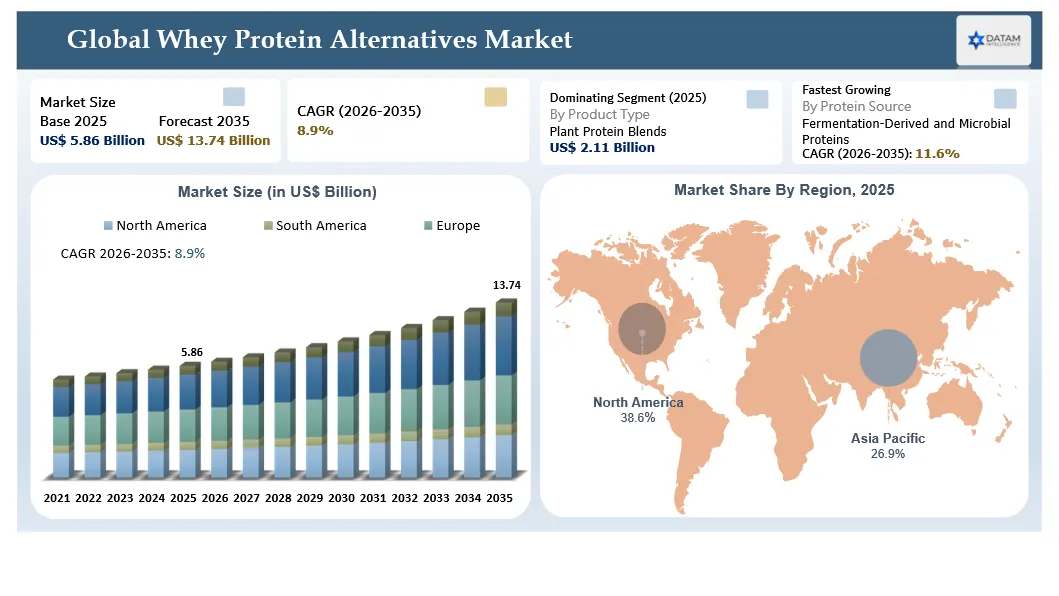
Plant protein blends remain the largest commercial segment because they combine broad availability, vegan positioning and improving sensory quality. Pea protein is the leading individual source, while fermentation-derived proteins are expected to grow fastest as companies seek whey-like nutrition with lower land use and reduced dependence on dairy supply. Powder formats dominate, although ready-to-drink beverages and bars are expanding as brands target convenience and mainstream consumers.
| Metric | Details |
| 2025 Market Size | US$ 5.86 Billion |
| 2035 Projected Market Size | US$ 13.74 Billion |
| CAGR (2026-2035) | 8.9% |
| Largest Market | North America |
| Fastest-Growing Market | Asia-Pacific |
| Largest Product Type | Alternative Protein precursors |
| Fastest-Growing Health Benefit | Other Applications |
| Largest Channel | Online and Direct-to-Consumer |
Whey Protein Alternatives Key Takeaways
- North America leads through a mature sports-nutrition market, strong vegan product innovation and advanced ingredient supply. Europe benefits from flexitarian demand and sustainability commitments. Asia-Pacific is expected to grow fastest as protein consumption, fitness participation, lactose-free demand and local ingredient processing expand.
- Sports nutrition remains the largest application because protein powders, bars and beverages support frequent repeat purchasing across athletes and active consumers.
- Healthy aging, muscle preservation and weight-management nutrition are broadening demand beyond traditional bodybuilding users.
- High-performance plant blends and fermentation-derived proteins command premium pricing when they deliver complete amino-acid profiles, strong digestibility and neutral sensory performance.
- Fermentation-derived protein is the fastest-growing strategic theme as brands seek whey-like nutrition with lower dairy dependence and more consistent supply.
- Online and direct-to-consumer channels lead growth through subscriptions, education, personalization and bundled regimens.
- Consumer trust increasingly depends on clinically relevant doses, third-party testing, transparent sourcing and avoidance of exaggerated hormone claims.
- Asia-Pacific offers the strongest growth through urbanization, e-commerce, sports participation and established herbal-supplement traditions.
- Future leadership will depend on evidence, personalization, format innovation, retention economics and responsible communication.
Whey Protein Alternatives Industry Trends and Strategic Insights
- The category is moving from simple vegan substitution toward performance-engineered proteins that target whey-like amino-acid quality, digestibility and texture. Blends of pea, rice, fava bean and seed proteins are becoming more sophisticated, while fermentation-derived ingredients are creating a separate high-performance tier.
- Brands are expanding beyond bodybuilders into women, older adults, weight-management consumers and people using GLP-1 therapies. This broadens demand for lower serving sizes, neutral flavors, digestive comfort and clinically relevant muscle-preservation positioning.
- Ingredient suppliers are investing in fractionation, enzymatic treatment, fermentation, flavor masking and agglomeration to improve solubility and reduce beany or bitter notes. Application support is becoming a major differentiator because the same protein performs differently in powders, bars and beverages.
- Retail is shifting toward omnichannel discovery. Direct-to-consumer brands use subscriptions and targeted messaging, while mass retailers increasingly carry plant-based and lactose-free protein lines. Foodservice and ready-to-drink partnerships are helping alternative proteins reach non-supplement consumers.
- Dietitian, trainer and clinician credibility is becoming more valuable as consumers compare protein quality, leucine content and digestive tolerance.
- Regulatory scrutiny of novel proteins and sustainability claims is creating a quality premium for suppliers with complete documentation and transparent sourcing.
Whey Protein Alternatives Report Scope
| Metrics | Details |
| 2025 Market Size | US$ 5.86 Billion |
| 2035 Projected Market Size | US$ 13.74 Billion |
| CAGR | 8.9% |
| By Product Type | Alternative Protein precursors, Protein and Amino Acids, Botanicals, Omega and Lipids, Probiotics, Specialty Nutrients |
| By Application | General Wellness, Performance, Prostate, Sexual Wellness, Fertility, Cardiometabolic, Cognitive and Sleep, Healthy Aging |
| By Ingredient | Vitamins, Minerals, Proteins, Creatine and D-Ribose, Botanicals, Lipids, Biotics, Algae, Fungi and Novel Protein Sources |
| By Dosage Form | Capsules, Tablets, Powders, Gummies, Softgels, Liquids, Ready-to-Consume |
| By Consumer Group | 18-30, 31-45, 46-60, Above 60 |
| By Channel | Online, Pharmacy, Mass Retail, Specialty, Gyms, Practitioner |
| Report Insights | Market Size, Share, Growth, Competition, Company Profiles and Country-Level Opportunity |
Why does this report matter in 2026?
The year 2026 is a strategic inflection point because alternative proteins are moving from niche vegan products into mainstream sports nutrition, healthy aging and clinical wellness. Consumer expectations have increased, and products must now compete with whey on taste, texture, protein quality and price rather than relying only on ethical or sustainability claims.
Ingredient economics are also changing. Pea and soy remain established, while fava bean, potato, canola, algae and fermentation-derived proteins are attracting investment. Companies must decide which platforms can scale reliably, meet regulatory requirements and support several applications. The report helps identify where demand is commercially mature and where technology risk remains high.
The timing matters for portfolio planning. Brands making formulation, manufacturing and supplier decisions in 2026 will influence their ability to serve lactose-free, vegan, flexitarian and healthy-aging demand through the remainder of the decade.
Whey Protein Alternatives Market White Space & Investment Opportunities
- High-leucine plant protein blends that match whey amino-acid performance while maintaining digestive tolerance.
- Fermentation-derived proteins for clear beverages, ready-to-drink products and clinical nutrition.
- Alternative proteins designed for women, older adults and GLP-1 users seeking muscle preservation.
- Localized pea, fava bean, chickpea and rice protein processing in Asia-Pacific and emerging markets.
- Low-flavor, highly soluble proteins for coffee, hydration and mainstream beverage applications.
- Hybrid systems combining plant, microbial and animal-free functional proteins to optimize cost and performance.
Whey Protein Alternatives Future Market Transformation
The market will transform from a plant-protein category into a broader performance-protein ecosystem. Pea, soy and rice will remain foundational, but fermentation-derived, fungal, algae and hybrid proteins will create new tiers based on amino-acid quality, sensory performance and sustainability.
Formulation will become more application-specific. Powder blends will prioritize mixability and flavor, ready-to-drink products will require heat stability, bars will require texture control and clinical products will emphasize digestibility and evidence. Suppliers able to provide technical support across these formats will capture greater value.
By 2035, successful brands are likely to integrate protein source, digestive support, micronutrients and personalized nutrition. Partnerships among ingredient companies, contract manufacturers, clinical experts and retailers will become central to differentiation.
Whey Protein Alternatives Market Buyer Decision-Making Criteria
Buyers evaluate protein quality, leucine content, digestibility, flavor, texture, solubility, allergen profile, sustainability and cost per effective serving. Sports consumers compare amino-acid performance with whey, while general wellness users prioritize taste and digestive comfort.
B2B buyers also assess batch consistency, supply security, regulatory documentation, application support and scalability. Fermentation-derived proteins face additional scrutiny around approval status, production economics and consumer acceptance.
Demand is strongest for products that solve a clear need such as sports recovery, healthy aging, lactose-free nutrition or convenient meal support. White space remains in high-leucine blends, clear beverages, clinical nutrition and protein products designed for GLP-1 users.
Whey Protein Alternatives Market Economic & Investment Analysis
The economics of whey alternatives differ by source. Soy and pea benefit from established agricultural and processing infrastructure, while rice, hemp, fava bean and potato proteins often command premiums because of lower scale or specialized positioning. Fermentation-derived proteins can offer consistent quality and lower land dependence, but capital intensity and fermentation capacity influence cost.
Investment decisions should separate ingredient economics from finished-product economics. A protein with a higher ingredient price may improve flavor, reduce masking requirements or support premium claims. Conversely, low-cost proteins may require blending, flavor systems and processing that narrow the cost advantage.
Investors should evaluate utilization rates, raw-material contracts, downstream processing, regulatory status and application validation. Platforms that serve multiple categories, such as sports powders, beverages, bars and clinical nutrition, can spread development cost and create stronger strategic value.
Raw-material and working-capital requirements vary by format. Powders require flavor systems and moisture control, ready-to-drink products require heat stability and aseptic capacity, while bars require texture management and shelf-life testing.
From a portfolio perspective, the market supports a balanced strategy. High-volume powders provide recurring cash flow, while ready-to-drink, clinical and fermentation-derived products create premium growth and brand authority.
Whey Protein Alternatives Investment Trends in the Market
- Capital is moving toward pea, fava bean, chickpea and other regional crop-processing capacity.
- Fermentation-derived protein companies are attracting investment for whey-like nutrition and supply diversification.
- Ingredient suppliers are funding flavor masking, enzymatic treatment and agglomeration technologies.
- Brands are investing in muscle-preservation products for older adults, women and GLP-1 users.
- Ready-to-drink and clear-protein applications are receiving greater formulation and manufacturing investment.
- Partnerships between protein suppliers and food manufacturers are expanding alternative proteins into mainstream foods.
Strategic Indicators for Whey Protein Alternatives Market
High Regulation Impact
Protein alternatives must comply with food, supplement, allergen, novel-food and labeling requirements. Fermentation-derived and novel proteins may require premarket authorization, while claims around muscle growth, satiety and sustainability need substantiation.
High Investment Activity
Investment is concentrated in crop fractionation, fermentation capacity, sensory improvement, ready-to-drink applications and healthy-aging nutrition. Capital favors platforms with multi-application potential and defensible processing know-how.
Supply Chain Disruption
Pea, soy, rice and seed proteins are exposed to crop yields, trade flows and processing capacity. Whey alternatives reduce dairy dependence, but single-source strategies can create new vulnerabilities. Multi-source qualification is increasingly important.
Pricing Volatility
Pricing varies by crop, protein concentration, processing intensity and application functionality. Fermentation proteins remain premium, while soy and pea offer better scale. Flavor systems and packaging also influence finished-product economics.
Procurement Pressure
Brands seek consistent protein quality, low off-flavor, reliable solubility and strong documentation. Large buyers increasingly require sustainability data, allergen controls and contingency supply.
New Technology Adoption
Enzymatic treatment, precision fermentation, extrusion, agglomeration, microencapsulation and AI-assisted formulation are improving digestibility, texture and flavor.
Regional Expansion Opportunity
Asia-Pacific offers strong growth through rising protein intake and local crop processing. North America remains the largest sports-nutrition market, while Europe supports sustainability-led and flexitarian products.
Government Policy Support
Agricultural diversification, sustainable-protein policy and local food-manufacturing incentives can support capacity. Novel-food approval pathways and labeling rules remain critical for commercialization.
Pricing Intelligence
Premiums are strongest for complete amino-acid blends, highly soluble proteins, clear beverages, organic sourcing and clinically supported muscle-preservation products.
AI Impact Analysis of Whey Protein Alternatives
AI can improve protein blending by predicting amino-acid completeness, flavor interactions, solubility, viscosity and digestibility. Formulators can screen combinations before pilot production and identify lower-cost blends that meet target nutrition and sensory profiles.
AI also supports demand forecasting, crop procurement, quality control and personalized protein recommendations. Adoption will depend on robust ingredient data and validation across real manufacturing conditions.
Disruption Analysis of Whey Protein Alternatives
Precision fermentation and novel protein processing are disrupting the assumption that whey is the benchmark for high-quality protein. New ingredients can deliver comparable amino-acid profiles with different sustainability and supply characteristics.
Ready-to-drink formats, GLP-1 companion nutrition and healthy-aging products are disrupting the traditional bodybuilding focus. The market is expanding toward everyday muscle preservation and convenient protein intake.
Whey Protein Alternatives BCG Matrix: Company Evaluation
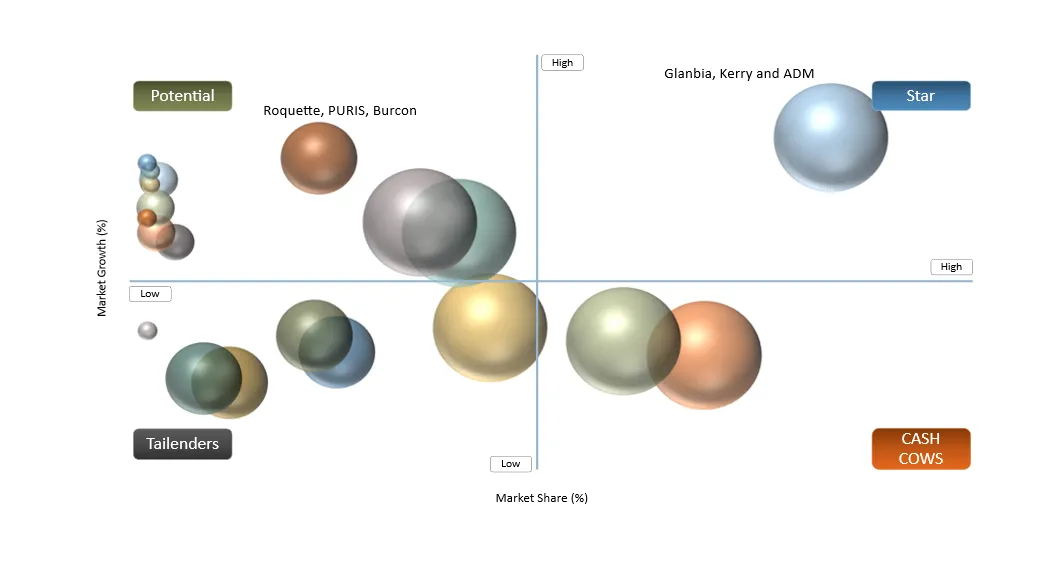
| Category | Representative Companies | Strategic Interpretation |
| Stars | Glanbia plc, Roquette Frères, Archer Daniels Midland Company, Cargill | Global leaders with extensive plant-protein portfolios, strong manufacturing capabilities, and continuous investment in alternative protein innovation and strategic partnerships. |
| Potential | Perfect Day, PURIS Proteins, Burcon NutraScience, Nutriati | High-growth companies leveraging precision fermentation, novel proteins, and next-generation plant ingredients, with significant expansion potential but relatively smaller market presence. |
| Cash Cows | Kerry Group, Ingredion Incorporated, Tate & Lyle, International Flavors & Fragrances | Established ingredient suppliers generating stable revenues through diversified food and beverage portfolios, extensive customer networks, and recurring demand from global manufacturers. |
| Tailenders | Axiom Foods, The Scoular Company, Cosucra Groupe Warcoing, regional/private-label protein suppliers | Niche or regional participants with limited global reach, narrower product portfolios, and greater dependence on specific markets or contract manufacturing opportunities. |
Glanbia, Kerry and ADM are positioned as Stars because they combine scale, application expertise and broad customer access. Roquette, PURIS, Burcon and Perfect Day represent Potential players through differentiated plant or fermentation platforms. Established soy and commodity protein portfolios function as Cash Cows, while small undifferentiated brands remain Tailenders.
Whey Protein Alternatives Market Dynamics
Driver Impact Analysis
| Driver | Market Growth Impact | Demand Concentration | Impacted Use Case | Strategic Impact |
| Preventive wellness adoption | High | All age groups | Daily wellness and immunity | Expands routine use and subscription potential. |
| Sports nutrition mainstreaming | High | 18-45 years | Protein, creatine and recovery | Broadens performance products beyond bodybuilding. |
| Cellular energy focus | High | 46+ years | Muscle, cognition and cardiometabolic support | Creates premium multi-benefit systems. |
| E-commerce and personalization | Medium-High | Urban digital consumers | Goal-based bundles | Improves education, convenience and cross-selling. |
Driver: Preventive Wellness and Life-Stage Purchasing Expand the Addressable Market
Consumers increasingly view protein as part of a broader wellness routine that includes exercise, weight management and healthy aging. This behavior expands demand beyond episodic sports use into daily nutrition and meal support.
Restraint Impact Analysis
| Restraint | Drag on Market Growth | Primary Impact Area | Impacted Use Case | Strategic Impact |
| Inconsistent evidence and claims | High | Consumer trust | Hormone, recovery and cellular-energy products | Raises skepticism and limits practitioner support. |
| Adulteration and recall risk | High | Cognitive energy | Female enhancement | Creates safety, liability and retailer risk. |
| Price and subscription fatigue | Medium-High | DTC channels | Daily bundles | Increases churn and promotional dependence. |
| Ingredient and format complexity | Medium | Manufacturing | Botanicals, gummies and probiotics | Raises quality-control and stability costs. |
Restraint: Trust, Evidence and Adulteration Risk Constrain Premium Growth
The category contains strong and weak formulations, and consumers may struggle to compare protein quality. Products with low amino-acid density, poor digestibility or exaggerated sustainability claims can damage trust. Brands should invest in transparent labeling, third-party testing and clear explanation of source, dose and intended use.
Whey Protein Alternatives Market Segmentation Analysis
The global whey protein alternatives market is segmented by Product Type, Health Benefit, Ingredient Category, Dosage Form, Age Group, Distribution Channel and region.
By Product Type
alternative protein and Single-Source Plant Proteins Will Lead Premium Growth
alternative protein precursors and pea protein lead premium cellular-energy positioning because they connect directly with protein metabolism and healthy-aging narratives. Creatine and D-ribose are expanding from sports performance into daily vitality and recovery, while B vitamins and magnesium remain the broadest mass-market ingredients. PQQ, alpha-lipoic acid and acetyl-L-carnitine support higher-value formulations, although brands need clinically relevant dosing, stability data and careful claims.
By Application
Sports Nutrition and Performance Will Remain the Largest Positioning
Sports nutrition remains the largest application, while healthy aging and muscle preservation are expected to grow fastest. The strongest products combine complete amino-acid profiles, adequate leucine, digestive comfort and convenient formats. Clinical and weight-management products can command premiums when supported by evidence.
By Protein Source
Pea Protein Will Lead Consumer Recognition While Fermentation-Derived Protein Gains Strategic Importance
Vitamins and minerals retain the largest share because they form the base of daily wellness and age-based formulas. Creatine and D-Ribose is gaining strategic importance because it is familiar in sports nutrition and increasingly used by active adults concerned with strength and muscle preservation. Proteins and amino acids support recovery and satiety. Botanicals and adaptogens provide differentiation but face variability in evidence and standardization. Probiotics and omega ingredients add digestive and cardiometabolic positioning.
By Product Format
Capsules and Tablets Will Remain Largest, While Gummies and Powders Grow Faster
Capsules and tablets lead because they support precise dosing, long shelf life and broad ingredient compatibility. Powders are central to protein, creatine and hydration products and can deliver higher doses. Gummies improve convenience and appeal to consumers who dislike pills, but dose capacity and sugar remain constraints. Softgels are preferred for omega oils. Liquids and shots support energy and convenience, while ready-to-consume nutrition can combine supplementation with meals or snacks.
By Consumer Group
Athletes and Healthy-Aging Consumers Will Form the Most Valuable Growth Cohorts
Athletes and active consumers remain the largest buyer group, but older adults and weight-management consumers will form the most valuable growth cohorts. These groups combine strong need for protein with higher willingness to pay for digestibility, convenience and evidence.
By Distribution Channel
Online and Direct-to-Consumer Will Continue to Lead Growth
Online and direct-to-consumer channels lead growth through education, subscriptions and broad assortment. Sports and healthy-aging users benefit from comparison tools and repeat delivery. Mass retail and pharmacies remain important for trust and trial, while gyms and practitioners influence premium purchases.
Whey Protein Alternatives Market Geographical Penetration
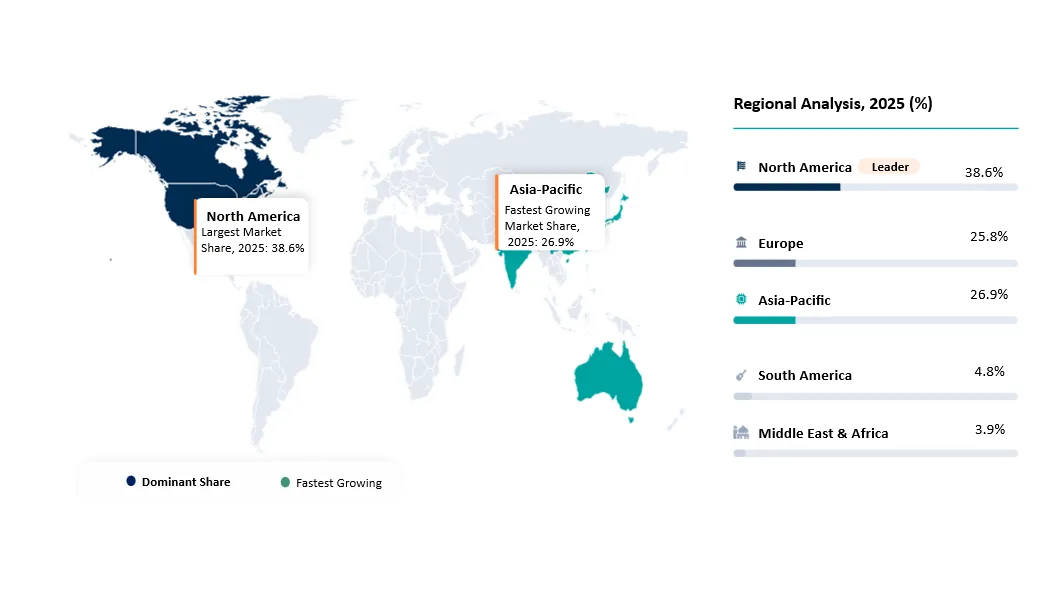
| Region | 2025 Share | Market Position | Core Growth Factors |
| North America | 38.6% | Largest | High supplement penetration, DTC maturity, sports nutrition and premium wellness. |
| Europe | 25.8% | Established | Pharmacy credibility, aging population and tighter claims governance. |
| Asia-Pacific | 26.9% | Fastest Growing | E-commerce, rising income, fitness adoption and herbal traditions. |
| South America | 4.8% | Emerging | Urban wellness, gyms and pharmacy expansion. |
| Middle East & Africa | 3.9% | Developing | Premium imports, young populations and digital retail. |
U.S. whey protein alternatives market Landscape
The U.S. is the largest national market through mature sports nutrition, strong vegan and flexitarian demand, extensive direct-to-consumer sales and a large ingredient innovation ecosystem. Pea, soy and blended proteins dominate, while fermentation-derived proteins are entering premium products. Growth is strongest in ready-to-drink beverages, healthy aging and GLP-1 companion nutrition.
Germany whey protein alternatives market Outlook
Germany is a leading European market supported by plant-based consumption, sustainability awareness and advanced food processing. Consumers expect clean labels and strong sensory quality. Retailer private labels and sports-nutrition brands are expanding plant protein, while novel proteins face careful regulatory and consumer scrutiny.
Japan whey protein alternatives market Trends
Japan combines established soy consumption with growing sports nutrition and healthy-aging demand. Opportunity is strong for easily digestible protein, smaller serving sizes and functional beverages. Local partnerships and high sensory standards are important for market entry.
China whey protein alternatives market Outlook
China offers fast growth through rising fitness participation, e-commerce, protein fortification and local pea and soy processing. Domestic brands compete aggressively on price, while imported products retain premium positioning. Food safety, taste and local flavor adaptation are key purchase factors.
India whey protein alternatives market Outlook
India is expanding through gyms, online marketplaces, pharmacies and rising awareness of protein intake. Pea, rice, soy and blended proteins are gaining traction, while price sensitivity favors locally manufactured powders and value-tier formats.
Brazil whey protein alternatives market Outlook
Brazil has a large sports-nutrition consumer base and growing interest in plant protein. Soy availability supports local production, while pea and rice blends are expanding in premium channels. Economic volatility and price sensitivity favor locally sourced formulations.
Middle East and Africa whey protein alternatives market Outlook
The region is emerging through fitness growth, lactose intolerance, premium retail and foodservice expansion in Gulf markets. South Africa has a developed supplement channel, while broader regional growth depends on affordability, distribution and imported ingredient availability.
Whey Protein Alternatives Market Competitive Landscape
- Large ingredient suppliers are investing in application support, crop-processing capacity and fermentation partnerships to defend strategic positions.
- Private-label retailers are expanding value-tier plant protein, increasing price competition while broadening category access.
- Performance categories are crowded, making flavor, solubility, certification and community credibility important differentiators.
- Fermentation-derived and clinically positioned products reward premium pricing but require strong documentation and regulatory readiness.
- Retailers are increasing private-label participation in powders and ready-to-drink products, pressuring undifferentiated brands.
- Partnerships with ingredient suppliers, food manufacturers, gyms, dietitians and clinical-nutrition providers can improve formulation, acquisition and retention.
- Competitive intensity will increase as the boundaries between sports nutrition, functional foods, healthy aging and clinical wellness continue to blur. Brands that own a trusted relationship with consumers can expand across powders, beverages, bars and meal-support products.
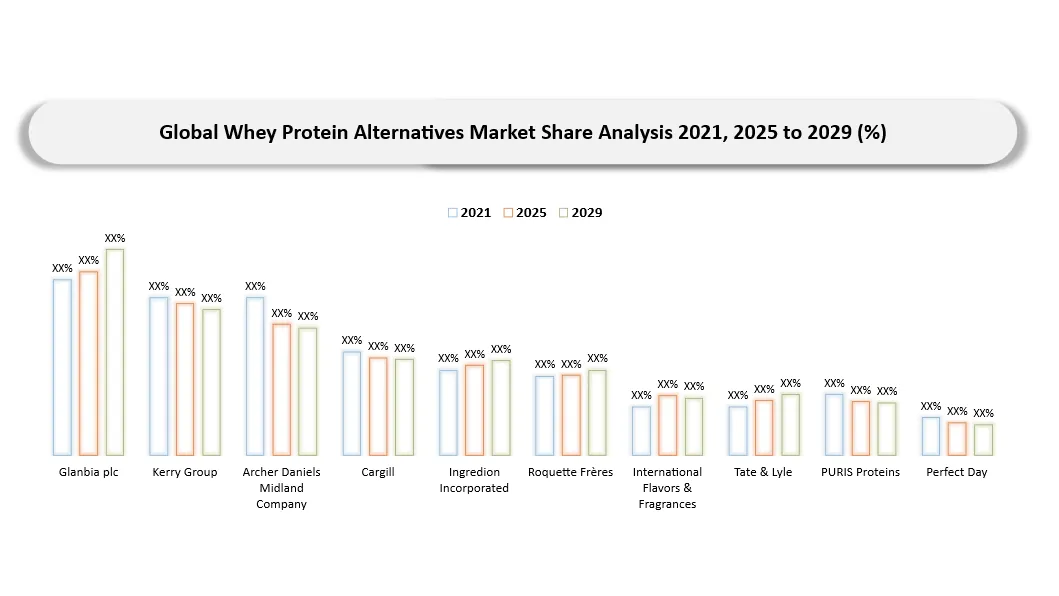
Industry-Leading Players for Whey Protein Alternatives
- Glanbia plc
- Kerry Group
- Archer Daniels Midland Company
- Cargill
- Ingredion Incorporated
- Roquette Freres
- International Flavors & Fragrances
- Axiom Foods
- The Scoular Company
- Burcon NutraScience
- Cosucra Groupe Warcoing
- PURIS Proteins
- Nutriati
- Tate & Lyle
- Myprotein
- Garden of Life
- Orgain
- Vega
- Perfect Day
- The EVERY Company
Whey Protein Alternatives' Major Pain Points
- Off-flavor, grittiness and sedimentation in some plant proteins.
- Lower leucine density or incomplete amino-acid profiles in single-source products.
- Price premiums for highly functional and fermentation-derived proteins.
- Raw-material and crop-yield volatility.
- Regulatory uncertainty for novel proteins.
- Consumer confusion around protein quality and sustainability claims.
- Heat stability challenges in ready-to-drink beverages.
- Need for stronger clinical evidence in healthy-aging and medical nutrition.
Whey Protein Alternatives: Recent Developments
- 2026: Ingredient suppliers expanded pea, fava bean and blended-protein application support for beverages and bars.
- 2026: Fermentation-derived protein developers increased pilot and commercial production partnerships.
- 2025: Sports-nutrition brands broadened vegan protein portfolios with improved flavor and lower-sugar positioning.
- 2025: Healthy-aging and GLP-1 companion nutrition launches increased demand for digestible high-protein formulations.
- 2025: Retailers expanded private-label plant protein powders and ready-to-drink products.
Analyst View / Opinion on whey protein alternatives market
The market has moved beyond a simple dairy-free niche. Buyers now expect products to match whey on protein quality, flavor and convenience. Plant blends will remain the volume base, while fermentation-derived proteins create the strongest long-term disruption potential.
- Commercial winners will combine reliable supply, application-specific formulation and credible nutritional evidence. Healthy aging, women’s nutrition and GLP-1 companion products will expand the addressable market beyond traditional sports users.
- Plant protein blends will provide the broadest long-term platform because they balance cost, amino-acid quality, sustainability and application flexibility.
- Pea, soy and rice proteins will remain important volume anchors as alternative protein expands into mainstream wellness and healthy aging.
- Fermentation-derived proteins will remain commercially attractive, but cost, regulatory readiness and consumer acceptance can determine whether they create or destroy value.
- Digital subscriptions can improve retention when recommendations are relevant, transparent and easy to follow.
- Long-term leadership will depend on protein quality, sensory performance, supply reliability, evidence and omnichannel trust.
Whey Protein Alternatives Market Target Audience
| Industry | Who Should Buy This Report? | Reason to Buy This Report |
| Supplement Brands | Portfolio, innovation, marketing and commercial teams | Assess growth categories, positioning and channel strategy. |
| Ingredient Suppliers | Business development, technical and clinical teams | Identify evidence needs, formulation gaps and customer opportunities. |
| Retail and E-commerce | Category managers, private-label teams and marketplace operators | Improve assortment, trust, compliance and pricing architecture. |
| Contract Manufacturing | CDMOs, formulators, testing laboratories and packaging providers | Evaluate demand by format, quality requirement and capacity need. |
| Healthcare-Adjacent Platforms | Telehealth, recovery, weight management and preventive wellness providers | Identify responsible nutrition partnerships and subscription opportunities. |
| Investors & Consulting | Private equity, venture capital, institutional investors and advisors | Evaluate market size, economics, risks and white spaces. |
| Government & Regulators | Food authorities, trade bodies and consumer-protection organizations | Understand claims, adulteration, safety and market structure. |
Why Choose DATAM?
- Data-driven insights combining market sizing, consumer behavior, channel economics, regulation and ingredient trends.
- Post-purchase analyst consultations for portfolio planning, market entry, partner identification and custom modeling.
- Annual updates covering product launches, recalls, ingredient regulation, acquisitions and channel shifts.
- Specialized focus on emerging markets and country-level commercial pathways.
- Actionable analysis connecting product innovation with evidence, quality and customer retention.
What DATAM Uniquely Provides
- Ten-year forecasts across product type, application, protein source, format, consumer group, channel and region.
- Clear separation of plant blends, single-source proteins, fermentation-derived proteins and hybrid systems.
- Buyer-focused analysis of amino-acid quality, digestibility, flavor, cost, sustainability and channel economics.
- Country-level views linking consumer behavior, regulation, retail structure and premiumization.
- Strategic recommendations for partnerships, quality systems, product architecture and market entry.
- Comprehensive company coverage in the report scope without duplicating profile narratives in this brochure.


























































