


The BioLNG Market Is Entering a Compliance-Value Price Discovery Event
For BioLNG producers, shipowners, bunker suppliers and traders, MEPC 85 is not simply another regulatory meeting. It is a potential reset of the economic value assigned to every tonne of biomethane sold into marine transport. The key uncertainty is no longer whether lifecycle carbon accounting matters. It is how the IMO will calculate it - and whether the most carbon-negative BioLNG pathways will receive the same kind of compliance credit already possible under FuelEU Maritime.
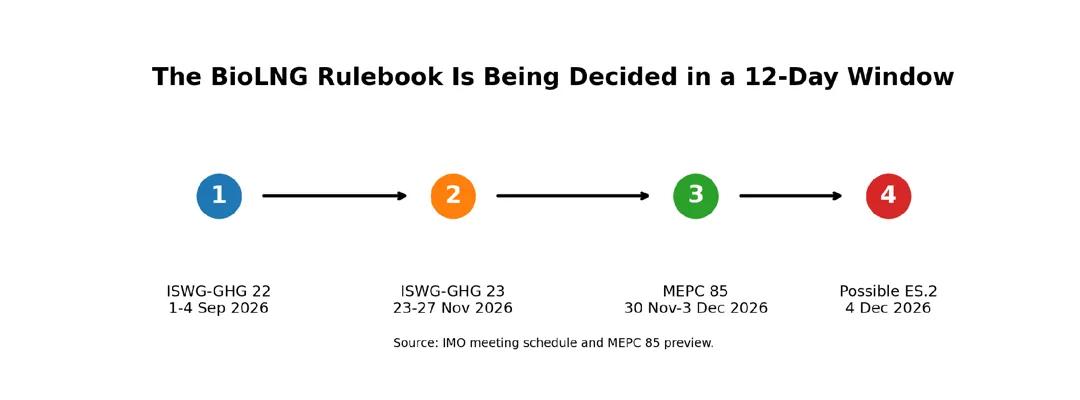
| 1 | THE DECISION WINDOW ISWG-GHG 23 is meeting 23-27 November, followed immediately by MEPC 85 on 30 November-3 December. The working group is resolving fuel-value and certification issues that feed directly into MEPC 85. |
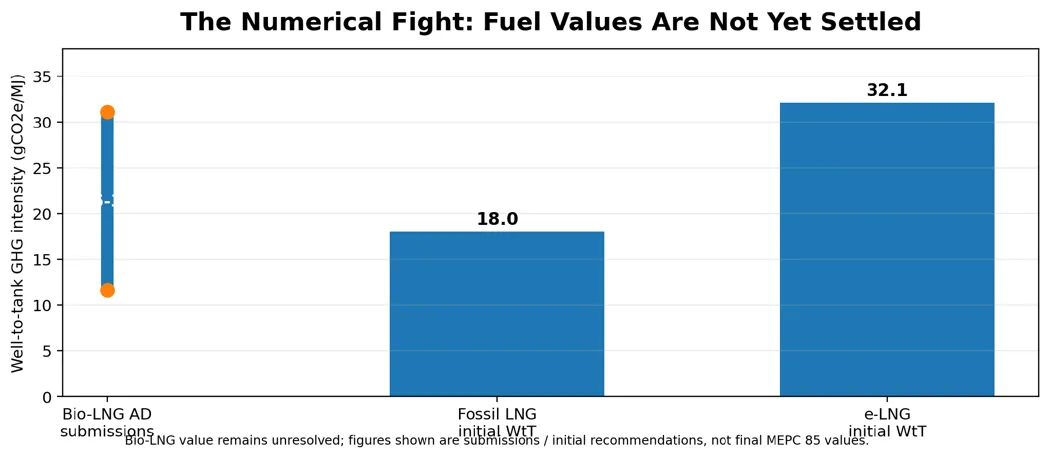
| 2 | THE OPEN VALUE QUESTION Anaerobic-digestion BioLNG submissions currently span 11.6-31.1 gCO2e/MJ on a well-to-tank basis. A final default value has not yet been agreed. |
| 3 | THE NET-NEGATIVE QUESTION FuelEU can recognize zero or negative BioLNG lifecycle intensity. IMO has not yet clarified whether negative values will create the same compliance upside under its Net-Zero Framework. |
1. MEPC 85 Is a Compliance-Value Event, Not Just a Policy Event
The IMO Net-Zero Framework uses a well-to-wake GHG Fuel Intensity metric. That means fuel competitiveness depends on upstream production emissions, transport, combustion emissions and non-CO2 gases such as methane. Ships above the required GFI thresholds would need surplus units or remedial units, while very low-carbon fuels can create compliance value and potentially qualify for rewards from the IMO Net-Zero Fund.
For BioLNG, this turns a methodology decision into a commercial pricing decision. A manure-based pathway with a strongly negative certified lifecycle value could be worth substantially more to a shipowner than a pathway assigned a conservative positive default. If the IMO floors negative emissions at zero, that premium compresses. If grid-injected biomethane cannot be handled cleanly through mass balance, physical supply flexibility becomes more limited.
Request Exclusive Sample: https://www.datamintelligence.com/download-sample/biolng-market
2. The Market Is Already Pricing the Uncertainty
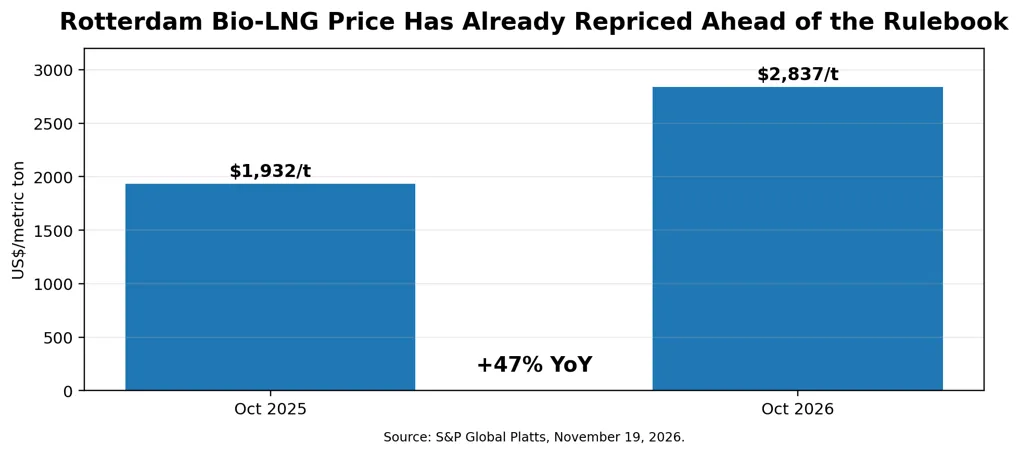
The regulatory debate is taking place against a rapidly repricing physical market. S&P Global reported unsubsidized Rotterdam BioLNG averaging US$2,836.92/t in October 2026, up 47% from US$1,932.35/t a year earlier. That increase is not proof that MEPC 85 will be favorable. It does show that buyers are already paying more for scarce low-carbon molecular fuels before the global IMO compliance value is fully defined.
This creates a classic pre-rulebook contracting problem. Long-term sellers want to lock in the future compliance premium. Buyers want protection if IMO methodology weakens that value. The result is likely to be more contracts with carbon-intensity adjustment clauses, pathway-specific guarantees, certification requirements and regulatory reopeners tied directly to IMO outcomes.
3. Methane Slip Can Overturn the Feedstock Advantage
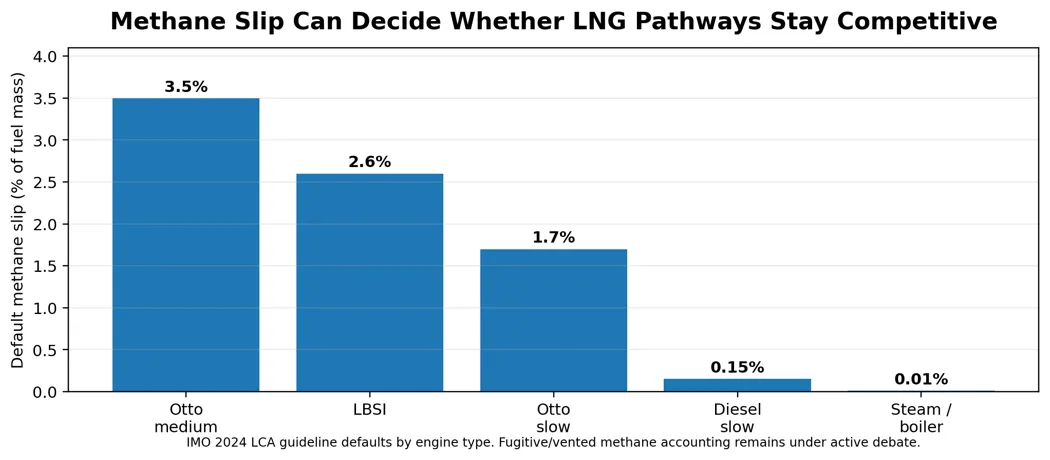
BioLNG inherits the combustion characteristics of LNG. Even if the upstream feedstock is strongly carbon-negative, poor methane performance at the engine or vessel level can erode the lifecycle advantage. IMO’s existing LCA guidelines already show a wide range of default methane-slip values by engine type, from 3.5% for medium-speed Otto-cycle engines to 0.15% for slow-speed diesel dual-fuel engines.
ISWG-GHG 23 is also considering how fugitive and vented methane should be measured. This matters because a future IMO methodology could reward not only low-carbon fuel origin but also lower-methane vessel technology. In that scenario, BioLNG procurement would become increasingly engine-specific rather than simply fuel-specific.
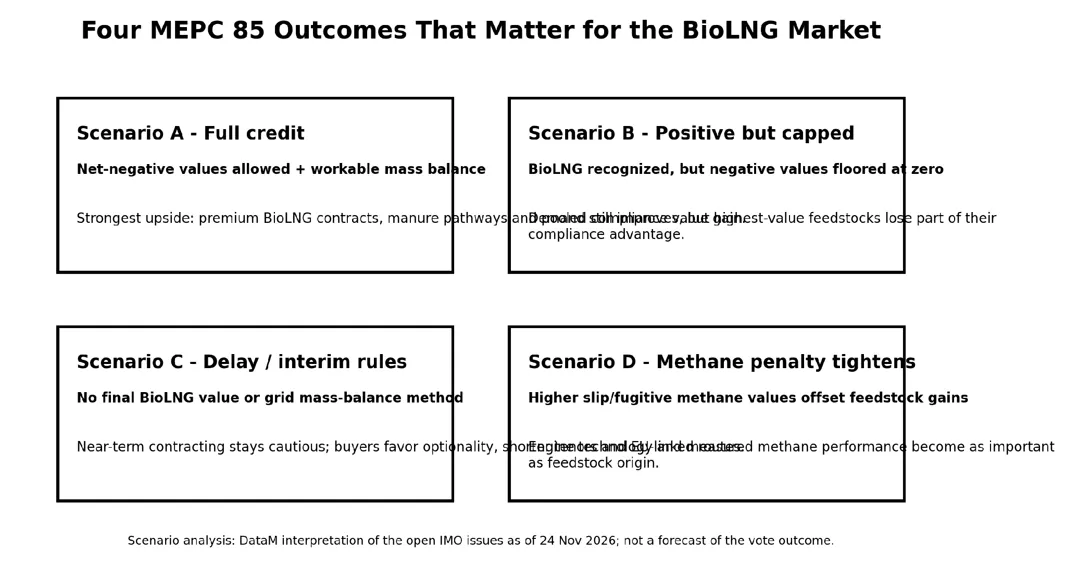
4. Four Scenarios Professionals Should Model Before MEPC 85
Request a Customized Report According to Your Business Strategy: https://www.datamintelligence.com/customize/biolng-market
5. What Each Stakeholder Should Be Watching
| Stakeholder | MEPC 85 variable | Immediate decision | Commercial risk |
| BioLNG producers | Negative values + certification | Which feedstocks and PoS pathways to prioritize | Premium collapses if negative value is capped or defaulted |
| Shipowners | GFI value + methane slip | Which engines and fuels maximize compliance value | Same BioLNG can deliver different ship-level outcomes |
| Bunker suppliers | Mass balance / grid rules | Physical vs book-and-claim supply design | Grid flexibility may be delayed or constrained |
| Traders | Default-value timing | Contract tenor and regulatory reopeners | Basis risk between FuelEU and IMO methodologies |
| Project developers | Reward eligibility | FID timing and offtake structure | Financing depends on durable compliance value |
6. What Would Be Most Bullish for BioLNG?
The strongest BioLNG outcome would combine four elements: recognition of pathway-specific lifecycle values, allowance for genuinely net-negative emissions, practical mass-balance rules for gas-grid biomethane and methane accounting that rewards low-slip engines rather than applying a punitive blanket default. That would let manure and waste-derived BioLNG monetize both renewable-carbon displacement and avoided methane.
A weaker outcome would not necessarily destroy marine BioLNG demand. Even a zero-floor treatment can leave BioLNG materially below fossil LNG on a lifecycle basis. The more important downside is that the highest-quality pathways would lose differentiation, slowing premium formation and making the IMO market less attractive than FuelEU-linked European routes.
7. What Would Be Most Bearish?
The most difficult near-term scenario would be continued deferral combined with conservative methane assumptions and unresolved grid mass-balance rules. That would leave producers with regulatory basis risk precisely when they are trying to sign long-term marine offtakes. Buyers would likely respond with shorter contracts, more optionality and stronger price reopeners rather than abandoning BioLNG entirely.
8. Why This Matters for the BioLNG Market
MEPC 85 can change the relative economics of BioLNG by feedstock, production pathway, certification route, engine technology and trading geography. A market view built only around production capacity or fuel price will miss the most important variable: compliance value. The commercial winners may not be the lowest-cost producers, but the suppliers able to prove the lowest verified well-to-wake intensity under the methodology that survives MEPC 85 and its follow-on work.
For buyers, the key questions are therefore scenario-based: which BioLNG pathways gain the most under negative-emissions recognition, which lose value if IMO floors credits at zero, how much methane slip changes vessel-level economics and whether European FuelEU premiums remain structurally higher than global IMO premiums. Those are the decisions that should drive sourcing, project finance, bunker strategy and long-term offtake negotiations.