


Stroke Rehabilitation Market Size and Trends
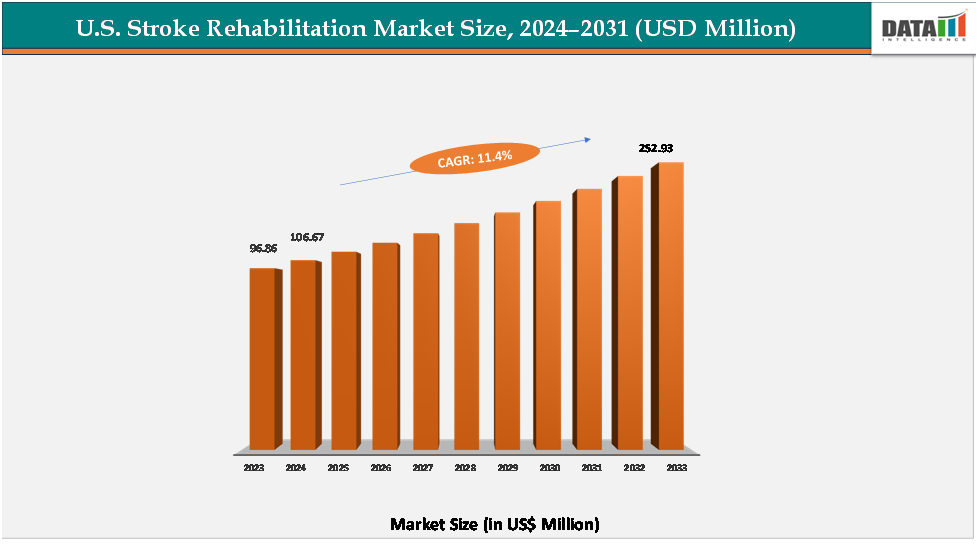
The U.S. stroke Rehabilitation Market reached US$ US$ 96.86 million in 2023, with a rise to US$ 106.67 million in 2024, and is expected to reach US$ 252.93 billion by 2033, growing at a CAGR of 11.4% during the forecast period 2025–2033.
The growing incidence of stroke and the rising emphasis on early recovery are driving the rapid adoption of stroke rehabilitation solutions in the U.S., enabling more effective, patient-centric care and reducing the risk of long-term disability. By enhancing motor function, improving cognitive recovery, and supporting continuous monitoring, these rehabilitation devices and therapies are streamlining clinical workflows and easing the burden on healthcare facilities. With advancements in robotics, electrical stimulation, and tele-rehabilitation, stroke rehabilitation is becoming an essential component of modern neurological care, aligning with broader healthcare initiatives focused on improving outcomes and quality of life for stroke survivors.
Key Market highlights
Rising prevalence of stroke cases in the U.S. combined with an aging population is driving consistent demand for advanced rehabilitation solutions.
Rapid adoption of robotic systems, wearable exoskeletons, and brain-computer interface technologies is improving patient recovery outcomes.
Strong pipeline of FDA approvals, research funding, and domestic innovation continues to position the U.S. as a leader in stroke rehabilitation advancements.
Market Size & Forecast
2024 Market Size: US$106.67Million
2033 Projected Market Size: US$252.93Million
CAGR (2025–2033): 11.4%
North America: Largest market in 2024
Asia Pacific: Fastest-growing market
Drivers & Restraints
Driver :Increasing demand for injectable drugs
The high prevalence of stroke is one of the strongest drivers of the U.S. stroke rehabilitation market, as stroke remains a leading cause of long-term disability and functional impairment across the country. According to the CDC, nearly 800,000 people in the U.S. experience a stroke each year, with a significant proportion requiring ongoing rehabilitation to regain mobility, speech, and cognitive abilities. With the aging population further increasing the at-risk group, the demand for specialized rehabilitation services and technologies is steadily rising. This surge in stroke incidence fuels the adoption of advanced rehabilitation devices such as robotics, exoskeletons, and virtual reality-based therapies, as well as tele-rehabilitation platforms that expand access to care. As more patients survive strokes due to improved acute care, the need for effective post-stroke rehabilitation continues to grow, directly driving market expansion.
Restraint: High manufacturing cost
The high cost of advanced rehabilitation devices poses a significant barrier to the growth of the U.S. Stroke Rehabilitation Market. Technologies such as robotic-assisted therapy systems, exoskeletons, and virtual reality platforms offer enhanced recovery outcomes but come with substantial upfront and maintenance expenses, often ranging from tens to hundreds of thousands of dollars. Smaller hospitals, rehabilitation centers, and patients without comprehensive insurance coverage may find these solutions financially inaccessible, limiting widespread adoption.
For more details on this report : Request for Sample
Segmentation Analysis
The U.S. stroke rehabilitation market is segmented by product type, application, end-user, and region.
Device Type:
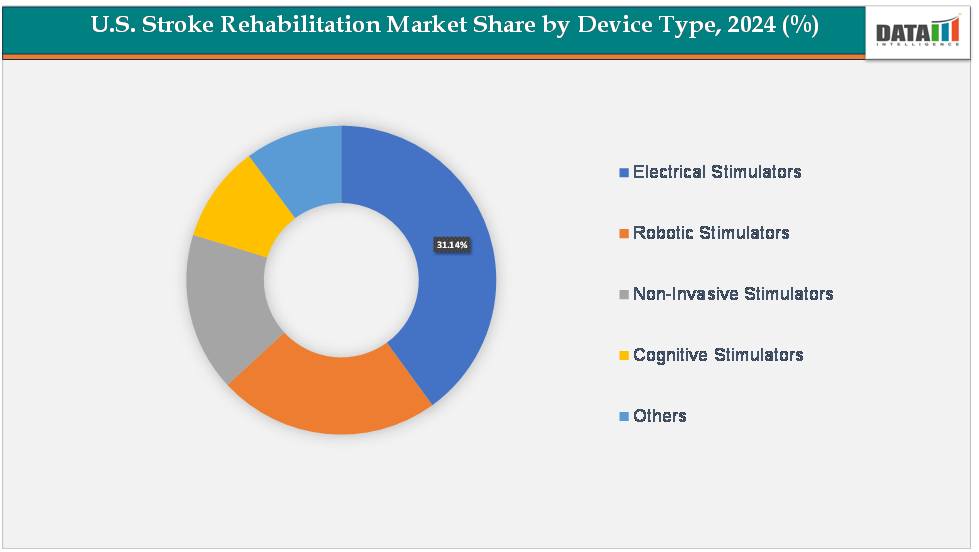
The electrical stimulators segment is estimated to have 31.14% of the stroke rehabilitation market share.
Electrical stimulators are expected to dominate the U.S. stroke rehabilitation market, holding the largest share due to their widespread clinical adoption, affordability, and proven therapeutic benefits in restoring motor function and reducing muscle atrophy. These devices are extensively used in hospitals, rehabilitation centers, and even home-care settings, making them more accessible compared to high-cost robotic systems. Their non-invasive nature, ability to improve mobility in both upper and lower limbs, and supportive reimbursement coverage contribute to their strong market position. Furthermore, continuous innovation in functional electrical stimulation (FES) technologies is enhancing their therapeutic effectiveness, solidifying their dominance in stroke rehabilitation care.
The robotic stimulators segment is estimated to have 18.01% of the stroke rehabilitation market share.
Robotic stimulators are anticipated to be the fastest-growing segment in the U.S. stroke rehabilitation market, driven by the rising demand for precision, intensive training, and AI-enabled rehabilitation solutions. These devices provide repetitive, task-specific therapy that accelerates recovery, enhances motor learning, and improves patient engagement. The integration of robotics with virtual reality, data analytics, and remote monitoring makes them particularly attractive for advanced rehabilitation programs. Although high upfront costs remain a challenge, increasing investments, expanding clinical validation, and growing adoption in specialized stroke rehabilitation centers are fueling their rapid growth. As technology becomes more affordable and reimbursement frameworks evolve, robotic stimulators are expected to see exponential adoption in the coming years.
Competitive Landscape
The major players in the stroke rehabilitation market include Ekso Bionics, Myomo Inc., Neurulations, Inc., AlterG, Inc., among others.
Market Scope
Metrics | Details | |
CAGR | 11.4% | |
Market Size Available for Years | 2022-2033 | |
Estimation Forecast Period | 2025-2033 | |
Revenue Units | Value (US $Mn) | |
Segments Covered | Device Type | Electrical Stimulators, Robotic Stimulators, Non-Invasive Stimulators, Cognitive Stimulators, Others |
Stroke Type | Ischemic, Hemorrhagic, Transient Ischemic Attack, Others | |
End-User | Hospitals, Specialty Clinics, Ambulatory Surgical Centers, Long-Term Treatment Centers, Homecare Settings, Rehabilitation Centers | |
The U.S. stroke rehabilitation market report delivers a detailed analysis with 73 key tables, more than 76visually impactful figures, and 195 pages of expert insights, providing a complete view of the market landscape.




























































