


Technical Textiles Market Overview
The global Technical Textiles market is estimated at US$ 218.07 billion in 2025 and is expected to reach US$ 340.42 billion by 2035, expanding with a CAGR of 4.55% during 2026-2035. The DataM Report identifies the market as a performance-driven materials category segmented by material, process, application and region, with Asia-Pacific as both the largest and fastest growing regional market. Technical textiles are increasingly purchased as engineered inputs for mobility, healthcare, filtration, construction, agriculture, packaging, defense and environmental applications.
The market has strong backend links with fiber production, polymer supply, nonwoven capacity, automotive production, medical consumables, infrastructure spending and industrial filtration demand. Textile Exchange reported in its 2025 Materials Market Report that global fiber production reached 132 million tonnes in 2024 and could reach around 169 million tonnes by 2030 if current trends continue. Polyester made up 59% of total fiber output, with 88% of polyester still fossil-based. This matters for technical textiles because synthetic polymers provide strength, durability, processability and cost performance across nonwovens, automotive fabrics, geotextiles, coated fabrics and filtration media.
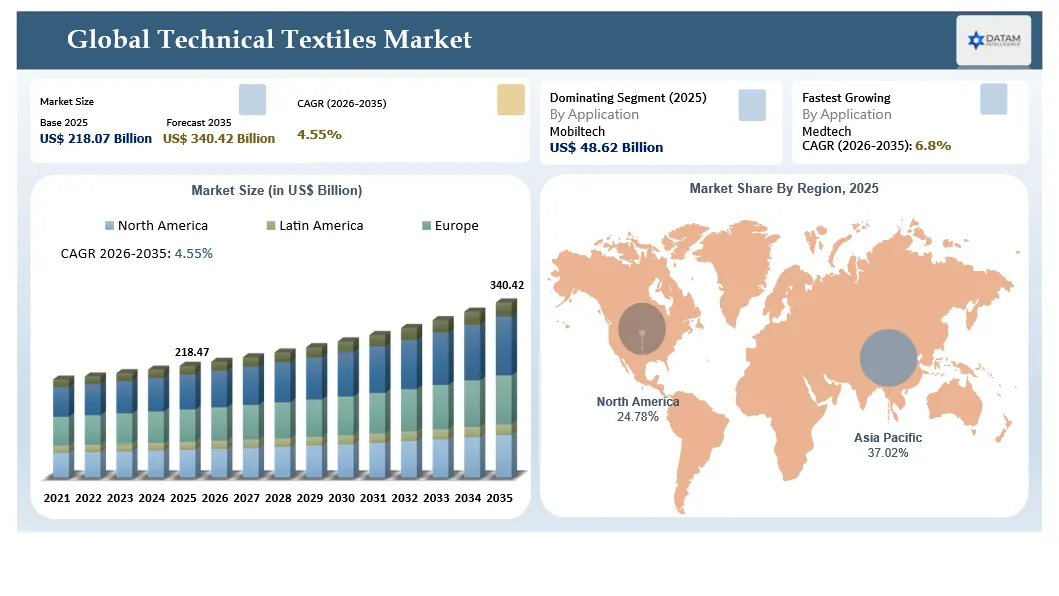
Nonwovens are a central process route for technical textiles. EDANA reported that Greater Europe produced 2,919,000 tonnes of nonwovens in 2025 despite a 2.2% decline. This shows that the segment remains large and resilient even when some end markets soften. Automotive is another important backend demand signal. OICA data for 2025 shows China producing 30,269,903 cars and 4,260,835 commercial vehicles, India producing 5,379,099 cars and 1,111,711 commercial vehicles and Japan producing 7,207,025 cars and 1,203,207 commercial vehicles. These volumes directly support mobiltech demand for seat belts, airbags, headliners, acoustic insulation, tire cords, filtration, battery protection and lightweight composite textile structures.
From 2026 to 2035, market growth will be shaped by product qualification, lightweighting, durability needs, nonwoven healthcare demand, geotextile use in infrastructure, protective equipment requirements, smart textile commercialization and circular material pressure. Buyers will increasingly ask suppliers for measurable performance, certification, carbon documentation, recycled or bio-based content, traceability and stable supply. The strongest companies will be those that combine fiber technology, conversion capability, application engineering, testing support and regional manufacturing reach.
| Metric | Details |
| 2025 Market Size | US$ 218.07 Billion |
| 2035 Projected Market Size | US$ 340.42 Billion |
| CAGR (2026-2035) | 4.55% |
| Largest Market | Asia-Pacific |
| Fastest Growing Market | Asia-Pacific |
| Largest Material Segment | Synthetic polymers |
| Fastest Growing Material Segment | High-performance fibers and regenerated sustainable fibers |
| Largest Process Segment | Non-woven and woven technical structures |
| Fastest Growing Process Segment | 3D textile structures, coated and laminated specialty fabrics |
| Largest Application Segment | Indutech and hometech-linked performance textiles |
| Fastest Growing Application Segment | Agrotech, medtech, geotech and smart textiles |
| Report Insights Covered | Market size, share, growth, buyer criteria, product qualification, pricing, regulation, supply chain, regional opportunity, white space and competitive landscape |
Technical Textiles Market Key Takeaways
- The market is estimated at US$ 218.07 billion in 2025 and projected to reach US$ 340.42 billion by 2035, with 4.55% CAGR during 2026-2035.
- Asia-Pacific is the largest regional market and accounts for nearly 46% of global market value in 2025, supported by China, India, Japan, South Korea and Southeast Asian manufacturing bases.
- Asia-Pacific is also the fastest growing region because of manufacturing localization, infrastructure investment, automotive production, medtech demand, agriculture textile adoption and policy support in India and China.
- Synthetic polymers remain the largest material segment because polyester, polypropylene, polyamide and polyethylene dominate nonwovens, filtration, automotive textiles, geotextiles and coated fabric applications.
- High-performance fibers and regenerated sustainable fibers are the fastest growing material opportunities because buyers are asking for stronger, lighter, safer and lower impact materials in mobility, defense, healthcare and industrial applications.
- Nonwovens and woven technical structures remain the largest process categories, supported by healthcare disposables, filtration, geotextiles, industrial materials, automotive interiors and hygiene applications.
- Agrotech, medtech, geotech and smart textiles are the fastest growing application areas because they address crop protection, hospital safety, infrastructure reinforcement and digital wearable functionality.
- Global fiber production reached 132 million tonnes in the 2025 Materials Market Report, reinforcing the raw material scale behind technical textile conversion, while polyester accounted for 59% of global fiber production.
- Greater Europe produced 2,919,000 tonnes of nonwovens in 2025, showing that technical textile demand remains linked to hygiene, filtration, healthcare, construction, automotive and industrial materials even during challenging market conditions.
- India technical textiles exports reached INR 24,732.68 crore in FY25 and grew 15.53% over the previous year, giving exporters, machinery suppliers and material producers a clear growth signal for regional expansion.
Technical Textiles Market Scope
| Scope Item | Coverage |
| By Material | Synthetic polymers, natural fibers, regenerated fibers, high-performance fibers, mineral fibers, metals and conductive fibers |
| By Process | Non-woven, woven, knitted, coated, laminated, braided and 3D textile structures |
| By Application | Agritech, clothtech, medtech, buildtech, hometech, indutech, mobiltech, geotech, protech, packtech, sportech and oekotech |
| By Functionality | Filtration, reinforcement, protection, absorption, insulation, conductivity, weather resistance, fire resistance and antimicrobial performance |
| By Buyer Industry | Automotive, construction, healthcare, agriculture, industrial manufacturing, defense, packaging, energy, sports and environmental services |
| By Region | North America, Europe, Asia-Pacific, South America, Middle East and Africa |
| Country Coverage | U.S., Canada, Mexico, Germany, UK, France, Italy, Spain, Poland, China, India, Japan, South Korea, Indonesia, Malaysia, Thailand, Vietnam, Brazil, Argentina, UAE, Saudi Arabia, South Africa, Israel, Turkiye and Nigeria |
Why does this report matter in 2026?
In 2026, technical textiles matter because industrial buyers are using engineered fabrics to solve performance and compliance problems in mobility, healthcare, infrastructure, agriculture, filtration, energy and protection. Buyers are not only looking for fabric suppliers. They are looking for validated material partners that can reduce vehicle weight, improve air and liquid filtration, stabilize roads, protect workers, reduce infection risk, improve crop yield, enable connected wearables and replace heavier or less sustainable materials.
The report supports business decisions by identifying where demand is moving, which applications have specification-driven buying behavior, where regional capacity is being built and which suppliers are best positioned for OEM qualification. It helps producers understand whether to invest in nonwovens, coated fabrics, high-performance fibers, smart textiles, geotextiles or medical textiles. It helps buyers compare material options, supply risk, pricing volatility and certification requirements. It helps investors screen platforms with strong conversion capability, recurring industrial demand and defensible customer qualification.
Technical Textiles Market White Space and Investment Opportunities
- Expansion of high-performance fibers, including aramid, carbon, glass and ultra-high molecular weight polyethylene for defense, automotive, energy, construction reinforcement and industrial safety.
- Growth of medtech nonwovens, including surgical gowns, drapes, masks, sterilization wraps, wound care substrates, filtration media and antimicrobial barrier fabrics.
- Geotextile opportunities linked to roads, railways, drainage systems, slope stabilization, erosion control, landfill liners, coastal protection and climate-resilient infrastructure.
- Circular technical textile platforms using recycled polyester, textile-to-textile recycling, bio-based polymers and recyclable coating systems for automotive, filtration, construction and packaging buyers.
- Smart textile and e-textile platforms for health monitoring, worker safety, defense communication, sports performance, elderly care and industrial condition sensing.
- Domestic manufacturing and import substitution in India under the National Technical Textiles Mission, supported by INR 1,480 crore outlay, 168 R&D projects and INR 520 crore approved for specialty fiber and application projects.
- Asia-Pacific converter networks that can serve automotive, healthcare, hygiene, agriculture and infrastructure buyers with lower lead times and local compliance support.
Technical Textiles Future Market Transformation
The technical textiles market will transform from a material supply category into an application engineering ecosystem. During the forecast period, buyers will increasingly ask suppliers to co-develop products based on end-use performance, certification needs, installation conditions and sustainability requirements. In construction and geotextiles, material suppliers will need to prove durability, soil compatibility, drainage performance and lifecycle cost savings. In automotive, they will need to prove lightweighting, acoustic performance, fire behavior, abrasion resistance and recyclability. In healthcare, they will need to prove barrier performance, biocompatibility, sterilization compatibility and lint control.
The next phase of growth will be shaped by automation, AI-driven process optimization, advanced coatings, 3D textile structures, functional finishes, conductive fibers and hybrid composites. Producers that can combine high-volume manufacturing with application-specific qualification will gain advantage. As buyers move away from generic textiles toward engineered performance materials, the technical textile supplier base will become more strategic and more consolidated.
Technical Textiles Market Buyer Decision-Making Criteria
Buyer decisions in technical textiles are driven by specification fit, testing documentation, supply reliability, cost-in-use, qualification timelines and sustainability alignment. Automotive buyers prioritize weight reduction, flame performance, acoustic behavior, abrasion resistance and OEM approval. Healthcare buyers prioritize barrier performance, sterility, absorbency, lint control and compliance with medical device or hospital procurement standards. Construction buyers prioritize tensile strength, puncture resistance, drainage, installation speed and long-term durability. Industrial buyers prioritize chemical resistance, filtration efficiency, temperature resistance, mechanical performance and maintenance cost.
Procurement teams are increasingly asking for complete data packs that include test reports, certificates of analysis, restricted substance compliance, recycled content verification, life cycle information, traceability and regional supply continuity. Suppliers that can support both the technical buyer and procurement team will win more consistently. The key buying shift is from price per meter to total value in use, including reduced failure, faster installation, lower weight, longer life and improved compliance.
Technical Textiles Market Economic and Investment Analysis
Technical textiles are attractive for investment because demand is linked to industrial performance rather than discretionary apparel cycles. End markets such as healthcare, filtration, automotive, infrastructure, agriculture and worker protection create recurring demand where qualification cycles can protect margins. Investment is moving into specialty nonwovens, filtration media, smart textile systems, coated fabrics, composite reinforcement, aramid materials, geotextiles and sustainable textile platforms. Arclin completing the acquisition of DuPont aramids in April 2026 for about US$ 1.8 billion illustrates the strategic value of high-performance fibers such as Kevlar and Nomex in safety, defense, industrial and thermal protection applications.
Investment risk is tied to raw material volatility, customer qualification delays, overcapacity in commoditized nonwovens, regulatory changes, PFAS restrictions, carbon reporting and competition from low-cost imports. The most attractive targets have proprietary finishing, application-specific customer relationships, certified material performance, regional production, defensible pricing and exposure to infrastructure, healthcare or mobility growth.
Technical Textiles Investment Trends in the Market
- Increasing investment in specialty fiber capacity, especially aramids, carbon fibers, glass fiber tissues, high-tenacity yarns and conductive fibers.
- Rising investment in filtration media for HVAC, industrial air filtration, liquid filtration, medical filtration, microplastic testing and cleanroom environments.
- Growth in circular materials, including recyclable release liners, lignin-containing filtration media, recycled polyester technical yarns and PFAS-free water repellent materials.
- Expansion of automotive and mobility textile platforms focused on acoustic performance, lightweight structures, EV battery protection and interior sustainability.
- Rising government support for technical textiles in India through NTTM, PM MITRA Parks, startup grants, export promotion and technical textile R&D.
- Growing investment in smart textiles and e-textiles that integrate sensors, RFID, conductive yarns and wearable monitoring functions.
Strategic Indicators for Technical Textiles Market
High Regulation Impact
Technical textiles are increasingly shaped by safety, fire performance, medical, automotive, construction and environmental standards. Buyers require test evidence for tensile strength, abrasion, breathability, filtration efficiency, barrier performance, flame resistance, antimicrobial activity and restricted substances. Regulatory pressure is especially high in medtech, protech, automotive interiors and construction reinforcement.
High Investment Activity
Investment is strongest in specialty nonwovens, aramid materials, filtration, coated fabrics, composites, smart textiles and sustainable materials. India technical textile exports increased to INR 24,732.68 crore in FY25 and NTTM has supported 168 R&D projects with INR 520 crore approvals, indicating strong public and private momentum.
Supply Chain Disruption
Technical textiles depend on polymer resins, specialty fibers, additives, coatings, binders, solvents, finishing chemistry and conversion machinery. Disruption in polyester, polypropylene, aramid, glass fiber or coating materials can affect lead times and pricing. Buyers are shifting toward dual sourcing and regional supply models.
Pricing Volatility
Pricing varies by fiber type, process, coating, testing requirements and end-use qualification. Commodity nonwovens face pricing pressure, while aramid, carbon fiber, coated technical fabrics, smart textiles and certified medtech materials command premium pricing because of performance and qualification barriers.
Procurement Pressure
Procurement is moving from low-cost sourcing toward verified performance and supply assurance. OEMs increasingly ask for certificates, recycled content data, PFAS position, restricted substance compliance, testing documentation and multi-year supply continuity.
New Technology Adoption
Adoption is strongest in AI-based nonwoven process control, 3D textile structures, smart coatings, conductive yarns, e-textiles, nanofiber filtration and recyclable coating systems. The next competitive advantage will come from process repeatability and verified performance in end-use conditions.
Regional Expansion Opportunity
Asia-Pacific is the largest and fastest growing region. China leads in manufacturing scale, India is supported by NTTM and export momentum, Japan and South Korea support high-performance fibers and advanced materials, while Southeast Asia benefits from supply chain diversification.
Government Policy Support
Government support is visible through India NTTM, PM MITRA Parks, technical textile startup grants and export promotion. Policy support matters because technical textiles require standards, testing infrastructure, skilling and buyer education to scale adoption.
Pricing Intelligence
| Pricing Factor | Buyer Impact | Strategic Interpretation |
| Fiber type | Aramid, carbon and glass fiber products command premium pricing versus polyester and polypropylene | Material selection is tied to performance specification and certification rather than textile weight alone |
| Process route | Meltblown, spunbond, needle punched, coated and laminated materials have different cost structures | Buyers compare price against filtration, barrier, strength and durability requirements |
| Certification | Medical, automotive, construction and protective textile standards increase testing cost | Certified suppliers can protect margins through approved status and lower buyer risk |
| Raw material volatility | Polymer, energy, additives and coating costs influence contract pricing | Long-term contracts and indexed pricing are becoming common for large buyers |
| Sustainability | Recycled content, PFAS-free chemistry and traceability can add cost | Premium pricing is strongest where sustainability is tied to regulatory or customer requirements |
AI Impact Analysis of Technical Textiles Market
AI is beginning to change technical textile production by improving process control, defect detection, formulation optimization, demand planning and application engineering. In nonwovens, AI and machine learning can optimize web formation, fiber distribution, bonding, homogeneity and basis weight control. In coated textiles, AI can support coating thickness control, defect classification and recipe optimization. In smart textiles, AI can interpret signals from conductive fibers, wearable sensors and embedded devices. For buyers, AI enables faster material selection by matching specifications with test data, compliance needs and cost-in-use assumptions.
AI also supports predictive maintenance for production lines and improves yield in high-value materials where scrap is costly. Technical textile producers that connect plant data, quality data and customer test results can reduce rework and shorten qualification cycles. The strongest near-term impact will be in nonwoven process optimization, visual inspection, filtration media design, smart textile analytics and customer-specific product development.
Disruption Analysis of Technical Textiles Market
The market is being disrupted by three structural shifts. The first is material substitution, where technical textiles replace heavier materials such as metal, leather, foam, paper, rubber and rigid plastics in selected use cases. The second is sustainability-linked procurement, where buyers push for recycled polyester, bio-based polymers, PFAS-free coatings, lower carbon materials and recyclable structures. The third is digital functionality, where textiles are moving into sensing, RFID tracking, health monitoring, worker safety and connected product environments.
Disruption also comes from geopolitical sourcing risk. Buyers are localizing key technical textile inputs for automotive, healthcare, defense and infrastructure. This creates opportunities for regional producers but raises the bar for quality and standards. Suppliers that remain positioned as low-cost fabric vendors will face margin pressure. Suppliers that act as specification partners will capture higher value.
Technical Textiles Market BCG Matrix: Company Evaluation
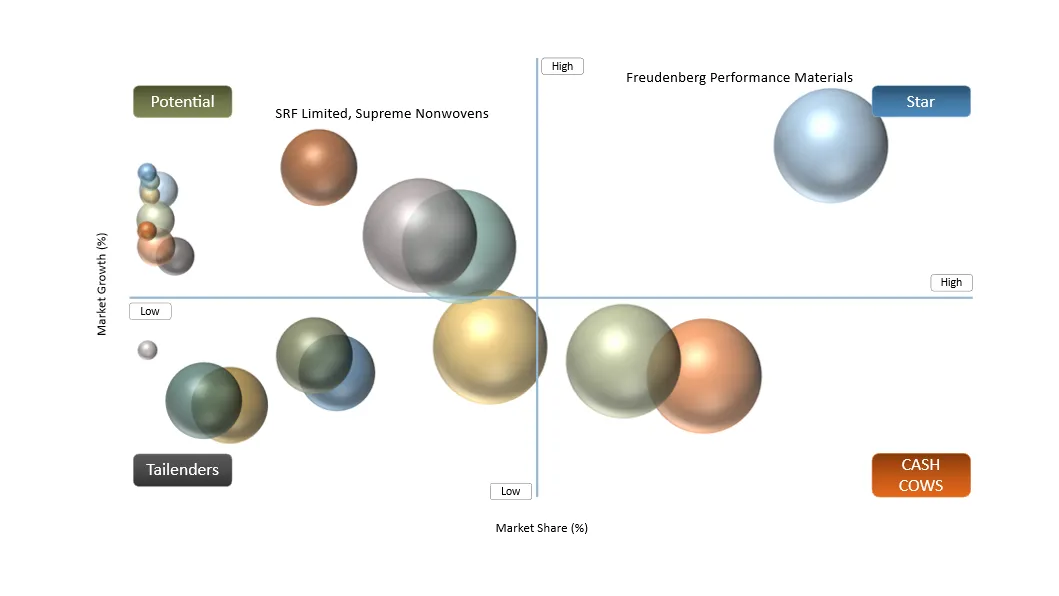
STAR
DuPont Aramids under Arclin, Freudenberg Performance Materials, Ahlstrom, Berry Global, Toray, Teijin, Asahi Kasei, 3M, Saint-Gobain and Sioen are positioned as star players because they combine technical capability, global reach, strong customer relationships and high-performance product portfolios. These companies are active in nonwovens, filtration, aramids, coated fabrics, composites, protective materials and specialty applications that benefit from stringent customer specifications.
POTENTIAL
SRF Limited, Supreme Nonwovens, Garware Technical Fibres, Hyosung, Kolon Industries, Toyobo, Milliken, Trelleborg, Low & Bonar, TenCate and specialist smart textile companies represent potential growth players. They can gain share by focusing on regional expansion, high-growth applications, sustainability claims, product customization, industrial partnerships and faster customer-specific development.
Technical Textiles Market Dynamics
Driver Impact Analysis
| Driver | Market Growth Impact (%) | Demand Concentration | Impacted Use Case | Strategic Impact |
Rising demand from automotive, construction, healthcare and industrial applications | 28% | Global, Asia-Pacific | Mobiltech, buildtech, medtech and indutech | Expands demand for high-strength, lightweight, protective and durable textile structures |
| Growth in nonwoven and filtration applications | 22% | Europe, North America, China, India | HVAC, medical, industrial filtration and hygiene | Drives demand for meltblown, spunbond, glass microfiber and specialty filtration media |
| Government support and manufacturing localization | 18% | India, China, Southeast Asia | Agrotech, geotech, medtech and defense textile inputs | Supports domestic supply chains, R&D and export-oriented production |
| Sustainability and compliance pressure | 16% | Europe, North America, Japan | PFAS-free materials, recycled fibers and low-carbon procurement | Pushes suppliers to invest in certified and traceable materials |
| Smart textile and high-performance fiber innovation | 14% | North America, Europe, Japan, South Korea | E-textiles, protech, aerospace and defense | Creates premium value pools with stronger IP and qualification barriers |
Driver: Rising Demand from Automotive, Healthcare, Construction and Industrial Applications
Technical textiles are gaining demand because they solve practical performance problems in end-use industries. Automotive buyers use textiles for airbags, seat belts, interiors, acoustic insulation, tire reinforcement, battery protection and lightweight structures. Healthcare buyers use nonwovens and specialty fabrics for gowns, drapes, masks, wound care, filtration and sterilization. Construction buyers use geotextiles, membranes, reinforcement fabrics and coated technical textiles for drainage, waterproofing, road life extension and structural support. Industrial buyers use filter fabrics, conveyor belts, hoses, insulation and protective fabrics. This breadth reduces dependence on apparel cycles and makes technical textiles a more resilient material category.
Restraint Impact Analysis
| Restraint | Drag on Market Growth (%) | Primary Impact Area | Impacted Use Case | Strategic Impact |
High cost of specialty fibers and performance coatings | 20% | Material cost | Aramid, carbon fiber, coated and smart textiles | Limits adoption in price-sensitive markets and pushes buyers toward lower performance substitutes |
| Long qualification cycles | 17% | OEM and regulated applications | Automotive, medtech, construction and defense | Delays revenue conversion and raises technical support burden |
| Raw material and energy volatility | 14% | Polymer and synthetic fiber supply | Nonwovens, geotextiles, filtration and coated fabrics | Creates margin pressure and contract pricing complexity |
| Sustainability compliance complexity | 12% | Regulatory and customer documentation | PFAS-free coatings, recycled fibers and medical textiles | Raises testing, documentation and reformulation costs |
| Competition from low-cost imports | 10% | Commodity technical textile grades | Basic nonwovens, packaging and geotextiles | Compresses margins unless suppliers differentiate through performance and certification |
Restraint: High Cost and Qualification Burden
Technical textiles often require advanced fibers, finishing, coating, bonding, lamination and testing. These inputs raise production cost compared with standard textiles. The challenge is highest in aramid protection fabrics, carbon fiber reinforcement, medical barrier fabrics, smart textiles and coated industrial fabrics. Long qualification cycles add another barrier because automotive, medical, defense and infrastructure buyers need test data, field performance and supplier reliability before switching materials. Smaller suppliers may struggle to fund testing and application engineering, while buyers may hesitate to adopt new materials without proven durability.
Technical Textiles Market Segment Analysis
The global Technical Textiles market is segmented by material, process, application, functionality, buyer industry, manufacturing technology, distribution channel and region. Each subsection below is a separate segmentation lens to support procurement, investment and product planning decisions.
By Material: Synthetic Polymers Will Remain the Largest Material Base
Synthetic polymers remain the largest material segment because polyester, polypropylene, polyethylene, polyamide and specialty polymers are deeply embedded in technical textile conversion. Polyester is especially important because the 2025 Materials Market Report shows it accounts for 59% of global fiber production. Polypropylene is important for spunbond and meltblown nonwovens, hygiene products, medical disposables and filtration. Polyamide and polyethylene support industrial textiles, nets, ropes, airbags, tire reinforcement and protective applications. Buyers prefer synthetic polymers where they need strength, durability, chemical resistance, moisture resistance and process efficiency. The key buyer issue is sustainability because most polyester is still fossil-based. Suppliers with recycled, bio-based or lower carbon synthetic options will gain procurement advantage.
By Process: Non-Woven Technical Textiles Will Continue to Scale Across Hygiene, Medical and Filtration
Non-woven processes are critical because they enable high-volume, functional materials for healthcare, hygiene, filtration, insulation, automotive and construction applications. EDANA reported 2,919,000 tonnes of nonwovens production in Greater Europe in 2025, showing the industrial scale of the category despite demand softness in some markets. Spunbond, meltblown, spunlace, airlaid and needle punched materials serve different performance needs. Meltblown is central for filtration, spunbond is used in hygiene and protective layers, while needle punched nonwovens support geotextiles, automotive insulation and industrial uses. Buyers evaluate basis weight, uniformity, pore size, tensile strength, liquid handling, barrier performance and lint behavior. Producers with high line efficiency and consistent quality will win large contracts.
By Application: Indutech and Mobiltech Create High-Value Industrial Demand
Indutech and mobiltech are high-value application areas because they serve industrial machinery, filtration, transport, automotive interiors, tire reinforcement, belts, hoses, composites and protective parts. Automotive production data for 2025 shows China, India and Japan together produced more than 43 million cars, creating substantial demand for seat belts, airbags, headliners, insulation, trunk liners, reinforcement fabrics and EV battery textile components. Industrial users need materials that reduce downtime and improve operational performance. Buyer decisions depend on tensile strength, abrasion resistance, chemical resistance, temperature stability and field durability. Technical textile suppliers that are qualified into industrial and automotive platforms can benefit from long product cycles and recurring replacement demand.
By Functionality: Filtration and Barrier Performance Will Drive Specification-Led Procurement
Filtration and barrier performance are becoming important growth areas because buildings, factories, hospitals, vehicles and cleanrooms need better air, liquid and particle control. Ahlstrom launched advanced glass microfiber media in 2026 for HVAC filtration, showing that buyers are asking for longer lifetime and responsible high-performance filtration media. Barrier performance is also important in medical gowns, drapes, protective clothing, packaging and industrial safety. Buyers evaluate filtration efficiency, pressure drop, dust holding capacity, liquid repellency, microbial barrier, breathability and durability. This segment is attractive because buyers focus on validated performance and cost-in-use rather than fabric price alone. Suppliers with testing data and application support can defend margins.
By Buyer Industry: Healthcare and Hygiene Demand Is Becoming More Quality-Driven
Healthcare and hygiene buyers require nonwovens, absorbent materials, barrier fabrics, wound care substrates, sterilization wraps and filtration media. The category remains attractive because it is linked to patient safety, infection prevention and regulatory compliance. Healthcare buyers evaluate biocompatibility, linting, barrier performance, fluid resistance, sterilization compatibility and traceability. Ahlstrom launched breathable ChemoGard BVB fabric in July 2026 for chemotherapy handling, indicating continued innovation in specialized protective healthcare materials. The key opportunity is to move beyond basic disposable fabrics toward certified, comfortable, breathable and application-specific medical textile systems. Suppliers that can provide hospital-grade documentation and consistent quality will win premium contracts.
By Manufacturing Technology: 3D Textile Structures and Advanced Coatings Are Emerging Premium Segments
3D weaving, 3D knitting, coating, lamination, nanotechnology and smart textile integration are becoming premium manufacturing routes. These technologies help create structures with better dimensional stability, impact resistance, reinforcement, shape control, sensing capability or barrier performance. Coated technical textiles are used in architectural membranes, protective covers, transport materials, industrial hoses, inflatables and weather-resistant products. DataM Report coverage of coated technical textiles identifies smart and functional coatings such as temperature control, self-cleaning and conductive properties as growth areas. Buyers use these technologies when performance cannot be achieved through standard fabrics. Suppliers with proprietary coatings, 3D forming know-how and repeatable production can capture higher margins.
By Distribution Channel: Direct OEM Sales Are Becoming More Strategic
Direct OEM sales are becoming more important because buyers in automotive, healthcare, construction, defense and energy want application-specific material partnerships. Technical textile suppliers increasingly work with OEMs during product design, testing and qualification. This creates stronger relationships than catalog sales and allows suppliers to influence specifications early. Converter networks remain important for regional finishing, cutting, lamination and assembly, while industrial distributors serve smaller buyers and maintenance markets. Project-based procurement is important in geotextiles, membranes, infrastructure and environmental applications. Suppliers that combine direct technical support with regional converter capacity can serve both global OEMs and local project demand.
By Sustainability Positioning: Recycled and PFAS-Free Technical Textiles Will Gain Procurement Weight
Sustainability positioning is now a buyer requirement in many technical textile applications. Textile Exchange reported that recycled polyester reached around 9.3 million tonnes in 2024, but its share declined to 12% of polyester because virgin polyester production grew faster. This creates pressure for technical textile producers to offer credible recycled or lower carbon materials. PFAS-free coatings are also gaining attention in filtration, water resistance, medical protection and outdoor technical fabrics. Ahlstrom expanded lignin-containing filtration media production to Europe in 2026 and launched recyclable release liner materials, reinforcing the move toward lower impact materials. Suppliers need proof of recycled content, chemical compliance, durability and lifecycle performance to win sustainability-linked procurement.
By Smart Textile Maturity: E-Textiles Are Moving from Demonstration to Niche Commercial Adoption
Smart textiles and e-textiles are growing from research-led prototypes into niche commercial applications for worker safety, healthcare monitoring, sports performance, defense and logistics tracking. Conductive yarns, RFID threads, flexible sensors, embedded electrodes and washable electronics are central technologies. Teijin Frontier expanded its RecoHand Mobile RFID Reader product lineup in June 2026, showing how textile-linked tracking and identification technologies are entering practical operations. Buyers still need durability, washability, power management, data security and comfort. The strongest near-term opportunities are in industrial PPE, health monitoring garments, military textiles and inventory traceability rather than mass-market fashion. Suppliers with electronics partnerships will be better positioned.
By Regional Manufacturing Strategy: China Plus One and Localized Supply Are Reshaping Sourcing
Regional manufacturing strategy is becoming a major segmentation lens because buyers want supply security and shorter lead times. China remains a large production base, but India, Vietnam, Indonesia, Mexico and Turkiye are gaining relevance as companies diversify supply chains. India technical textile exports reaching INR 24,732.68 crore in FY25 signals stronger regional capability. PM MITRA Parks and NTTM support domestic infrastructure, while Asian automotive and industrial manufacturing bases continue to drive demand. Buyers increasingly compare landed cost, tariff exposure, supplier reliability, technical support and compliance documentation. Regional suppliers that can meet global standards while offering local responsiveness will gain share.
By Project Type: Infrastructure and Geotextile Procurement Is Moving Toward Lifecycle Cost
Geotextiles and construction technical textiles are used for roads, railways, drainage, erosion control, slope stabilization, landfill liners, tunnels, roofing membranes and reinforcement. Buyers increasingly evaluate lifecycle cost rather than upfront material cost. Geotextiles can reduce aggregate needs, improve drainage and extend road life when specified correctly. Public infrastructure agencies require standards, installation guidance and durability data. The opportunity is strongest where climate resilience, soil stabilization and road rehabilitation are budget priorities. Suppliers that can support engineering design, installation training and performance validation will capture higher project value.
By Buyer Model: Specification-Led and Custom Development Buyers Will Create Premium Demand
Technical textile customers increasingly fall into two buyer models. The first model is specification-led procurement, where the buyer has a defined standard and needs reliable supply at cost. The second is custom development, where the supplier works with the buyer to design a material for a new product or project. Premium margins are stronger in custom development because performance, testing and co-engineering are central to the sale. This is common in automotive, defense, filtration, healthcare, composites and smart textiles. Suppliers that invest in application labs, pilot lines and test capability can move from volume selling to solution selling.
Technical Textiles Market Geographical Penetration
Asia-Pacific Technical Textiles Market Landscape
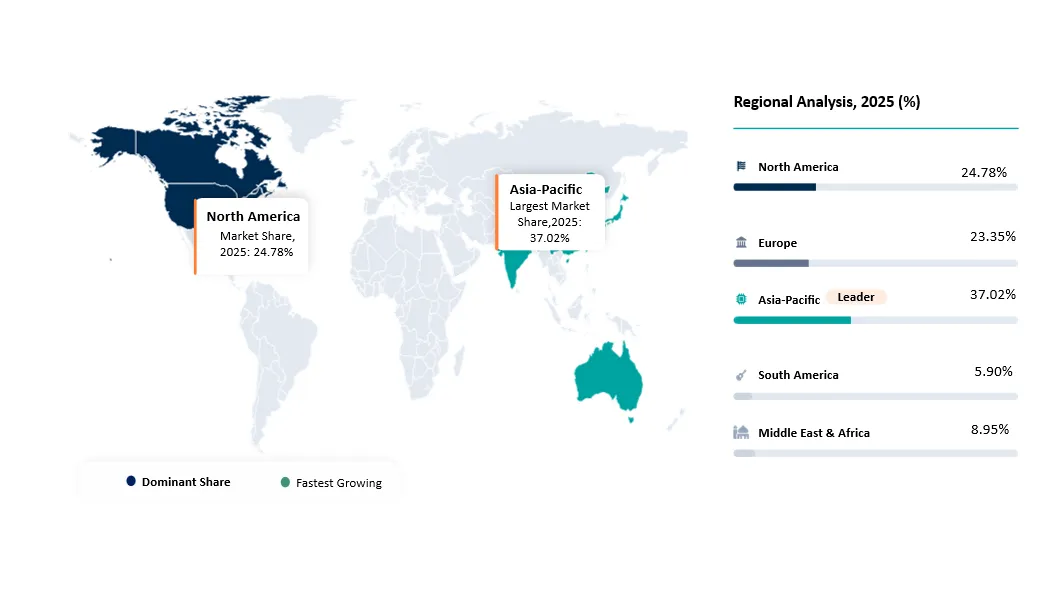
Asia-Pacific is the largest and fastest growing market for technical textiles, supported by China, India, Japan, South Korea, Indonesia, Vietnam and other manufacturing economies. The region combines large-scale fiber production, polymer supply, automotive production, construction activity, healthcare manufacturing, exports and government support. China remains the largest textile and technical material manufacturing base. India is becoming a stronger technical textile growth market through NTTM, PM MITRA Parks and export promotion. Japan and South Korea support high-performance fibers, automotive textiles, smart materials and advanced nonwovens. Buyers in the region prioritize cost efficiency, scale, lead time and increasingly sustainability documentation.
The region has strong backend industry support. China produced 30,269,903 cars and 4,260,835 commercial vehicles in 2025, while India produced 5,379,099 cars and 1,111,711 commercial vehicles. This strengthens mobiltech demand. India technical textile exports reached INR 24,732.68 crore in FY25 with 15.53% year-on-year growth, while NTTM has approved 168 R&D projects worth INR 520 crore and has an outlay of INR 1,480 crore. These data points make Asia-Pacific the most important market for capacity expansion, export positioning and application-specific development.
| Asia-Pacific Country | Technical Textile Opportunity | Buyer-Intent Insight |
| China | Synthetic fibers, nonwovens, mobiltech, filtration, industrial textiles and export-scale conversion | Buyers source for scale, price and broad converter capability, but need supplier auditing and quality consistency |
| India | Agrotech, geotech, medtech, mobiltech, defense textiles and export-led manufacturing | Policy support and export momentum make India attractive for localization, sourcing diversification and joint development |
| Japan | High-performance fibers, automotive textiles, advanced materials and smart textile components | Buyers value material reliability, certification and high-specification performance |
| South Korea | Mobility, electronics textiles, filtration, conductive textiles and industrial materials | Opportunity is strongest in EV, electronics and premium industrial applications |
| Vietnam | Apparel-to-technical textile transition, coated fabrics, nonwovens and industrial textile conversion | Best suited for buyers seeking China Plus One manufacturing and regional export capacity |
| Indonesia and Malaysia | Packaging, hygiene, agrotech, industrial fabrics and nonwoven materials | Buyers should evaluate port access, raw material imports and local converter maturity |
North America Technical Textiles Market Outlook
North America is a high-value market for technical textiles because demand is concentrated in healthcare, protective materials, filtration, defense, automotive, aerospace, construction and industrial applications. The U.S. has strong demand for aramids, composites, filtration media, smart textiles and medical materials. Canada supports geotextiles, mining, infrastructure and industrial safety. Mexico is an important automotive and manufacturing hub, creating mobiltech and industrial textile demand. North American buyers focus on certifications, domestic sourcing, supply security and lifecycle performance. The acquisition of DuPont aramids by Arclin in April 2026 strengthens the regional high-performance fiber ecosystem and shows that safety, defense and industrial protection remain strategic value pools.
| North America Country | Technical Textile Opportunity | Buyer-Intent Insight |
| U.S. | Aramids, defense textiles, PPE, filtration, aerospace composites, medical nonwovens and smart textile R&D | Buyers prioritize domestic capability, standards, performance testing and long-term supply continuity |
| Canada | Geotextiles, mining fabrics, infrastructure reinforcement, protective clothing and industrial filtration | Opportunity is linked to infrastructure, mining safety and harsh-weather durability |
| Mexico | Automotive textiles, seat components, acoustic materials, airbags, filtration and industrial fabrics | Nearshoring makes Mexico attractive for OEM-qualified mobiltech supply |
Europe Technical Textiles Market Outlook
Europe is a mature and innovation-oriented market. Demand is supported by automotive, filtration, construction, medtech, protective textiles, sustainability regulation and advanced manufacturing. Greater Europe produced 2,919,000 tonnes of nonwovens in 2025 according to EDANA, showing the continued scale of the regional nonwoven industry even during challenging demand conditions. Germany, France, Italy and the UK are important hubs for automotive, industrial, medical, defense and high-performance materials. Sustainability and chemical compliance are major buyer triggers, especially for PFAS-free coatings, recyclable release liners, lower carbon fibers and certified materials. Suppliers with EU regulatory documentation and application engineering have a strong advantage.
| Europe Country | Technical Textile Opportunity | Buyer-Intent Insight |
| Germany | Automotive textiles, filtration, industrial fabrics, coated textiles and machinery-linked technical materials | Buyers value engineering support, testing, quality systems and sustainability data |
| France | Aerospace, defense textiles, luxury technical materials, filtration and medtech | Opportunity is strongest in high-performance and certified technical materials |
| Italy | Nonwovens, filtration, automotive interiors, industrial fabrics and specialty finishing | Buyers value design flexibility and advanced conversion capability |
| UK | Protective textiles, aerospace composites, medtech and smart textile innovation | Growth is linked to R&D, defense and healthcare adoption |
| Spain and Poland | Automotive supply chains, industrial textiles, construction textiles and cost-competitive conversion | Attractive for regional manufacturing and EU supply diversification |
South America Technical Textiles Market Outlook
South America is led by Brazil and Argentina, with demand linked to agriculture, automotive, mining, construction, oil and gas, packaging and healthcare. Brazil is the strongest market because it has large agriculture, automotive and industrial bases. Agrotech demand is linked to shade nets, crop covers, mulch fabrics, anti-bird nets, greenhouse materials and irrigation-related textile products. Geotextiles support road building, mining, drainage and erosion control. Buyers in South America are price sensitive but increasingly demand imported high-performance fibers for safety, filtration and specialty applications. Local converter partnerships and technical training will be important for suppliers entering the region.
| South America Country | Technical Textile Opportunity | Buyer-Intent Insight |
| Brazil | Agrotech, geotech, automotive textiles, mining fabrics, filtration and healthcare nonwovens | Buyers seek performance but need cost-effective local distribution and inventory support |
| Argentina | Agriculture textiles, construction reinforcement, packaging and industrial protective materials | Market access depends on distributor networks and import economics |
Middle East and Africa Technical Textiles Market Outlook
Middle East and Africa demand is driven by infrastructure, oil and gas, construction, water management, agriculture, protective clothing and environmental applications. GCC countries use geotextiles, architectural membranes, coated fabrics, filtration media, protective clothing and industrial textiles for infrastructure and energy projects. South Africa supports mining textiles, geosynthetics, industrial filtration and protective equipment. Nigeria and other African markets present long-term opportunities for agriculture textiles, road construction, water management and healthcare materials. Buyers prioritize durability under harsh climate, UV resistance, chemical resistance, installation support and imported product reliability. Growth will require distributor partnerships, training and project-level specifications.
| MEA Country | Technical Textile Opportunity | Buyer-Intent Insight |
| UAE | Architectural membranes, geotextiles, construction textiles, filtration and industrial safety | Project-based procurement favors suppliers with technical support and international certification |
| Saudi Arabia | Infrastructure reinforcement, oil and gas textiles, protective clothing and environmental textiles | Demand is linked to giga projects, industrial development and harsh-climate durability |
| South Africa | Mining textiles, geosynthetics, filtration, protective equipment and agriculture textiles | Suppliers need local distribution and application-specific performance proof |
| Turkiye | Regional textile manufacturing, coated fabrics, automotive textiles and export conversion | Potential supplier base for Europe, Middle East and Central Asia buyers |
| Nigeria | Agrotech, construction textiles, water management and healthcare nonwovens | Long-term demand depends on infrastructure spending and distributor maturity |
Technical Textiles Market Competitive Landscape
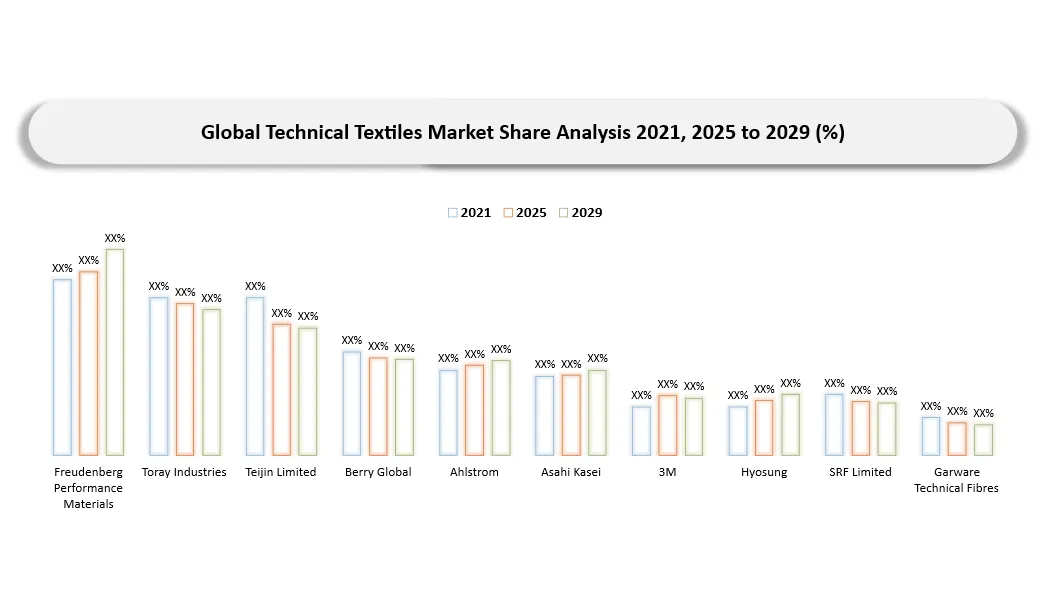
- Competition is moving from commodity technical fabrics toward specification-driven materials with testing support, documentation and end-use certification.
- Large producers are expanding through acquisitions and portfolio integration, as shown by Arclin completing the acquisition of DuPont aramids, including Kevlar and Nomex, in April 2026.
- Innovation is strongest in filtration media, PFAS-free coatings, recyclable release liners, advanced protective fabrics, smart textile tracking systems and high-performance polyester materials.
- Regional players are gaining opportunities through localized supply, lower lead times and customer-specific conversion, especially in India, Southeast Asia, Turkiye and Mexico.
- Sustainability is becoming a differentiator. Suppliers that can offer recycled content, PFAS-free chemistry, traceability and reduced carbon documentation will gain preference with global buyers.
- OEM qualification and standards compliance create barriers to entry, especially in automotive, medtech, defense, construction reinforcement and industrial filtration.
Key Companies of Technical Textiles Market
- Arclin
- Freudenberg Performance Materials
- Ahlstrom
- Berry Global
- Toray Industries
- Teijin Limited
- Asahi Kasei
- 3M
- SRF Limited
- Garware Technical Fibres
- Sioen Industries
- Hyosung
- Kolon Industries
- Toyobo
- Milliken
- Trelleborg
- Saint-Gobain
- TenCate
- Low & Bonar
- Supreme Nonwovens
Technical Textiles Market Major Pain Points
- High cost of specialty fibers, high-performance polymers, coated fabrics, smart textile components and certified medical materials.
- Long customer qualification timelines in automotive, medical, defense, construction and industrial applications.
- Raw material exposure to polyester, polypropylene, aramid, glass fiber, carbon fiber, coating chemistry, binders and energy cost volatility.
- Growing buyer expectations for PFAS-free chemistry, recycled content, carbon documentation and restricted substance compliance.
- Limited availability of skilled technical textile engineers, coating specialists, nonwoven process experts and application testing personnel.
- Competition from low-cost imports in basic nonwovens, geotextiles, packaging textiles and commodity technical fabrics.
- Difficulties in scaling smart textiles due to washability, durability, electronics integration, comfort and data security requirements.
- Need for better standards and buyer education in emerging markets where technical textiles are still underutilized.
Technical Textiles Market Recent Developments
- April, 2026: Arclin completed the acquisition of DuPont Aramids, including Kevlar and Nomex, for approximately US$ 1.8 billion. The deal strengthens Arclin position in high-performance fibers for protection, defense, industrial safety and thermal applications.
- February, 2026: Freudenberg Performance Materials presented MehlerHeytex and Filc at Techtextil Frankfurt 2026. The showcase focused on coated technical textiles, automotive nonwovens, durability, acoustic performance, weight reduction and sustainability.
- May, 2026: Ahlstrom launched advanced glass microfiber media for HVAC filtration, designed to improve energy efficiency and lifetime while avoiding intentionally added PFAS. The launch supports demand for high-performance and responsible filtration media.
- May, 2026: Fincantieri and Teijin Automotive Technologies signed an agreement to develop advanced composite bulkheads for maritime vessels. The agreement highlights the use of composite and technical textile-reinforced structures in mobility and marine applications.
- July, 2026: Ahlstrom launched breathable ChemoGard BVB fabric to enhance protection and comfort in chemotherapy handling. This supports growth in specialized medtech and protective textile applications.
- June, 2026: Teijin Frontier expanded the product lineup for its RecoHand Mobile RFID Reader. The development supports technical textile applications linked to tracking, inventory visibility and digital textile operations.
Analyst View / Opinion on Technical Textiles Market
- The technical textiles market is expected to move from broad material supply toward application-specific performance platforms with stronger OEM qualification and documentation requirements.
- Synthetic polymers will remain the largest material base, but buyers will increasingly pressure suppliers to prove recycled content, lower carbon inputs and safer finishing chemistry.
- Nonwovens will remain a critical process segment because healthcare, filtration, hygiene, automotive and geotextile applications depend on scalable functional materials.
- Asia-Pacific will remain the core growth region, driven by automotive output, infrastructure, India policy support, China manufacturing scale and Japan-South Korea high-performance material capability.
- Smart textiles will remain a smaller but strategically important opportunity because they can transform technical textiles into sensor-enabled and data-linked materials.
- Long-term leadership will depend on application labs, certification support, regional capacity, raw material security and measurable performance in buyer use cases.
Technical Textiles Market Target Audience
| Industry | Who Should Buy This Report? | Reason to Buy This Report |
| Technical Textile Manufacturers | CEOs, strategy heads, product managers and sales leaders | To identify high-growth product categories, application opportunities, buyer criteria and regional expansion priorities |
| Nonwoven Producers | Plant heads, business development teams and product teams | To assess medtech, filtration, hygiene, geotextile and automotive nonwoven growth opportunities |
| Fiber and Polymer Suppliers | Raw material suppliers, specialty fiber producers and resin companies | To understand demand for polyester, polypropylene, aramid, glass fiber, carbon fiber and regenerated fibers |
| Automotive and Mobility OEMs | Procurement heads, materials engineers and tier suppliers | To benchmark mobiltech materials, supplier capabilities and lightweighting opportunities |
| Healthcare and Hygiene Companies | Medical textile producers, hospital suppliers and hygiene product manufacturers | To evaluate nonwoven, barrier, filtration and protective textile demand |
| Construction and Infrastructure | Engineering firms, contractors, geosynthetic suppliers and public agencies | To assess geotextile, buildtech, membrane and reinforcement opportunities |
| Agriculture and Horticulture | Agrotech suppliers, greenhouse companies and irrigation providers | To identify crop protection, shade net, anti-bird net and yield-support textile demand |
| Investors and Consultants | Private equity, venture capital, strategy consultants and corporate development teams | To identify acquisition targets, white spaces, regional growth and high-margin technical textile platforms |
Why Choose DATAM?
- Data-driven insights: detailed analysis with market sizing, pricing, market shares, value chain evaluations, buyer criteria and interviews with industry stakeholders.
- Post-purchase support and expert analyst consultations: direct access to analysts for strategic guidance, supplier evaluation, target screening and market entry questions.
- White papers and case studies: quarterly studies around purchased titles to refine operational, sourcing and marketing strategies.
- Annual updates on purchased reports: updates to reflect technical advancements, regional manufacturing shifts, policy changes and competitive developments.
- Specialized focus on emerging markets: in-depth coverage of Asia-Pacific, India, Southeast Asia, Middle East and other high-growth technical textile regions.
- Value of DataM Reports: tailored insights focused on buyer questions, supplier capability, standards, material substitution and actionable commercial opportunities.
What DATAM Uniquely Provides
- Detailed 10-year market predictions by material, process, application, functionality, buyer industry, manufacturing technology, distribution channel and region.
- Thorough competitive analysis covering nonwoven producers, specialty fiber companies, coated fabric suppliers, filtration media producers, geotextile suppliers and smart textile innovators.
- Comprehensive assessment of buyer requirements including tensile performance, filtration efficiency, fire safety, barrier performance, sustainability documentation and OEM qualification.
- Strategic insights through AI impact evaluation, disruption assessment, BCG Matrix, pricing intelligence, trade analysis, investment trends and white space analysis.
- Country-level recommendations for producers, converters, OEM buyers, investors, exporters and policymakers.
- Tailored solutions through DMI Insights and DMI Connect built around client context, with 81% of clients choosing customized solutions.
Questions This Report Answers
- How will demand for technical textiles evolve across automotive, healthcare, construction, agriculture, filtration, defense and smart textile applications through 2035?
- Which material categories will generate the greatest value, and where will high-performance fibers or sustainable fibers gain share?
- Which process routes will see the fastest adoption across nonwovens, woven structures, coated textiles, laminates, 3D textiles and smart textiles?
- How are regional policies, particularly India NTTM and manufacturing localization programs, changing technical textile capacity and exports?
- Which buyer criteria matter most for qualification, including testing standards, sustainability data, reliability, price and lifecycle performance?
- Which companies are best positioned in nonwovens, filtration, aramids, coated fabrics, technical yarns and smart textile systems?
- Where are the most attractive investment opportunities across medtech, geotech, mobiltech, filtration, protective textiles and circular technical textile platforms?



























































