


Seed Treatment Market Size and Overview
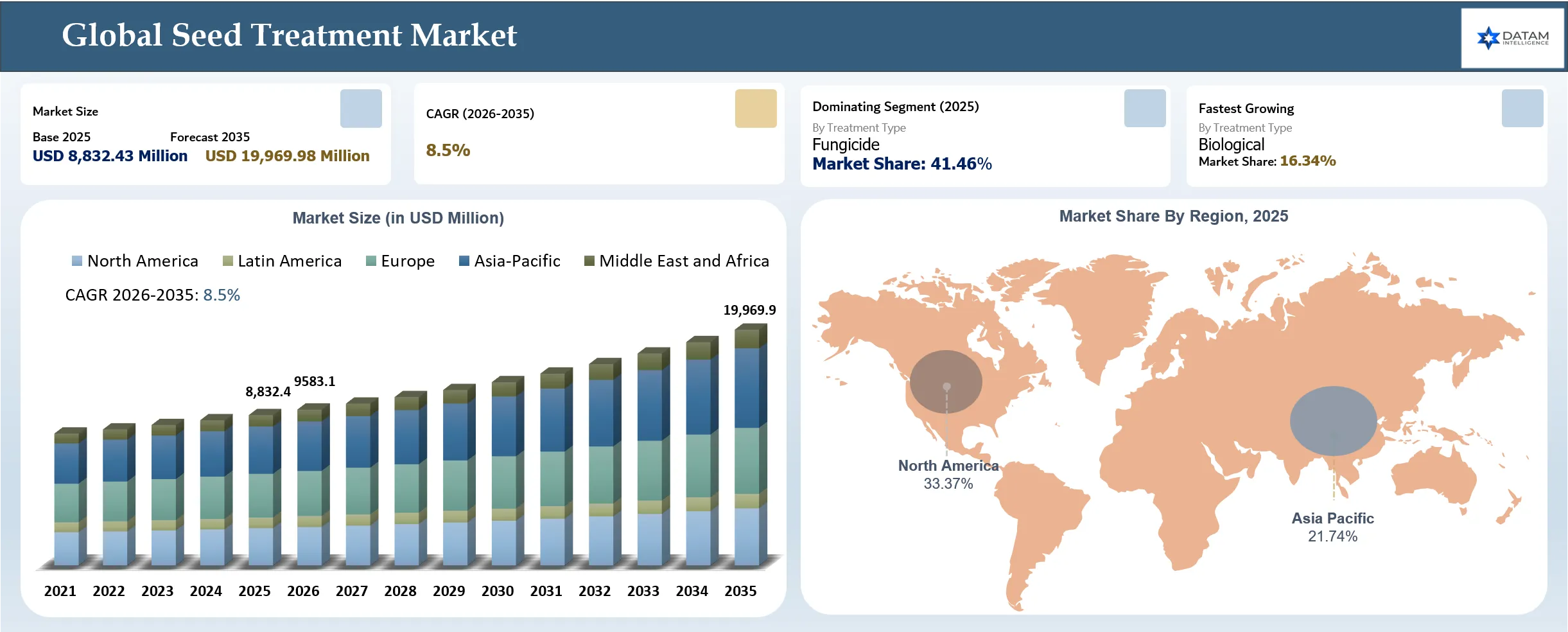
The global seed treatment market reached USD 8,832.43 million in 2025 and is expected to reach USD 19,969.98 million by 2035, growing with a CAGR of 8.5% during the forecast period 2026-2035. The global seed treatment market is entering a phase of accelerated growth, driven by the rising need to enhance seed and seedling protection, improve nutrient efficiency and achieve higher yields under growing climate and pest pressures. Farmers worldwide are increasingly turning to seed treatments as a high-ROI solution that protects the seed at its earliest and most vulnerable stage, reducing crop losses and minimizing the need for in-season chemical applications. Innovation remains one of the strongest market catalysts, supported by new product approvals and significant investments in biological and next-generation chemistries. For instance, in 2025, Syngenta advanced the market with the introduction of Victrato, a next-generation Seedcare solution that secured EPA registration in the United States for soybeans and cotton, offering broad and durable protection against plant-parasitic nematodes and seedling diseases through a single active molecule, with commercial launch planned for 2025 and full availability for the 2026 planting season pending state-level approvals.
BASF similarly strengthened its biological seed treatment portfolio in 2025 with Integral Pro, a microbial-based fungicide approved in France and set for EU-wide availability for the 2026 planting season, offering strong defense against seed- and soil-borne fungal diseases in sunflowers. European developments such as Aphea.Bio’s ΛCTIV highlight the growing focus on nutrient-use efficiency and yield improvement through biological seed treatments. Asia, particularly China, represents a major adoption center, supported by extensive treated-acreage coverage and increasing use across wheat, corn, and rice. Rising labor costs, hybrid seed adoption, precision planting and demand for lower-residue agricultural inputs are further influencing treatment uptake. Over the long term, biologicals, nutrient-enhancing microbes, RNA-based technologies, integrated seed-plus-digital solutions and sustainability-focused formulations are expected to shape the competitive landscape.
White-Space Opportunities for Biological Seed Treatment, Advanced Crop Protection, and Emerging Market Expansion
The seed treatment market is developing beyond conventional fungicidal and insecticidal protection toward multifunctional biological solutions combining disease control, plant vigor, nutrient efficiency and stress management. In 2025, Bayer expanded its biological SeedGrowth portfolio with Ibisio, Yoalo and Susteed, including a biostimulant seed treatment and a biological designed for use alongside other seed treatment products. Corteva's Lumialza also demonstrates the growing focus on biological nematode management at the seed stage.
A further white space lies in non-chemical treatment technologies, microbiome-compatible formulations and precision application systems that reduce chemical dependency while maintaining treatment consistency. Emerging plasma and electric-field seed treatment technologies indicate potential for chemical-free seed enhancement, while the 2025 shift in Bayer's seed-treatment equipment strategy highlights opportunities for specialized application technologies. Such developments create opportunities for crop-specific biological platforms and integrated treatment systems targeting early establishment, pest protection and sustainable crop production.
Seed Treatment Market Key Takeaways
- North America dominated the global seed treatment market with a 33.37% share, supported by large-scale commercial agriculture, high treated-seed adoption and established use of seed treatments across major crops such as corn, soybean and wheat.
- Asia-Pacific accounted for 21.74% of the market and represents the fastest-growing regional market, driven by expanding agricultural productivity requirements, increasing use of hybrid and improved seeds, rising treatment adoption and growing demand for biological and sustainable seed-treatment solutions.
- Fungicide seed treatments remain a core treatment segment with a 41.46% share, supported by persistent seed- and soil-borne disease pressure across major crops. Recent launches such as BASF’s Integral Pro and Syngenta’s CruiserMaxx Vibrance Elite demonstrate continued investment in advanced fungicide-based seed protection.
- Biological seed treatments with 16.34% market share are emerging as a high-growth opportunity, with companies including Nufarm, UPL, BASF and Syngenta expanding microbial, biological fungicide and bionematicide offerings to address resistance management, sustainability requirements and demand for lower-chemical-load crop protection.
Seed Treatment Market Industry Trends and Strategic Insights
- The trend towards biological and multifunctional seed treatments is rapidly advancing, with more manufacturers offering microbial, biostimulant and biological protection products that cover disease, nematode resistance, crop vitality and nutrient uptake from one seed treatment package.
- The combination of biological and traditional seed treatments is an ongoing trend, providing wider coverage while decreasing reliance on high chemical levels. This allows for creation of combination products which include fungicide, insecticide or nematicide protection alongside biological and crop performance traits.
- Sustainability trends are pushing development of low-residue and reduced-chemistry seed treatments such as biological formulations, biodegradable coatings, as well as new physical treatment methods. Seed companies are increasingly moving towards development of seed treatments which minimize environmental impact while maintaining effectiveness and planting.
- Precision application and seed treatment quality is becoming a crucial element in commercial seed treatment sector, leading to increased use of automated dosing and advanced coating and application systems.
- Climate variability is expanding the role of seed treatment from conventional pest protection toward crop establishment and stress management, increasing demand for treatments designed to support germination, root development, nutrient efficiency and tolerance to drought, salinity and temperature stress.
Seed treatment Market Scope
| Metrics | Details | |
| 2025 Market Size | USD 8832.43 Million | |
| 2035 Projected Market Size | USD 19969.98 Million | |
| CAGR (2026-2035) | 8.5% | |
| Largest Market | North America | |
| Fastest Growing Market | Asia-Pacific | |
| By Treatment Type | Fungicides, Insecticides, Nematicides, Biologicals, Biostimulants | |
| By Application | Seed Pelleting, Seed Dressing, Seed Coating, Seed Priming, Others | |
| By Formulation | Liquid, Powder, Granules & Pellets, Film/Polymer Coatings | |
| By Crop Type | Cereals & Grains, Oilseeds & Pulses, Fruits & Vegetables, Turf & Ornamentals, Others | |
| By Region | North America | U.S., Canada, Mexico |
| Europe | Germany, UK, France, Spain, Italy, Poland | |
| Asia-Pacific | China, India, Japan, Australia, South Korea, Indonesia, Malaysia | |
| Latin America | Brazil, Argentina | |
| Middle East and Africa | UAE, Saudi Arabia, South Africa, Israel, Türkiye | |
| Report Insights Covered | Competitive Landscape Analysis, Company Profile Analysis, Market Size, Share, Growth | |
Seed Treatment Market Disruption Analysis
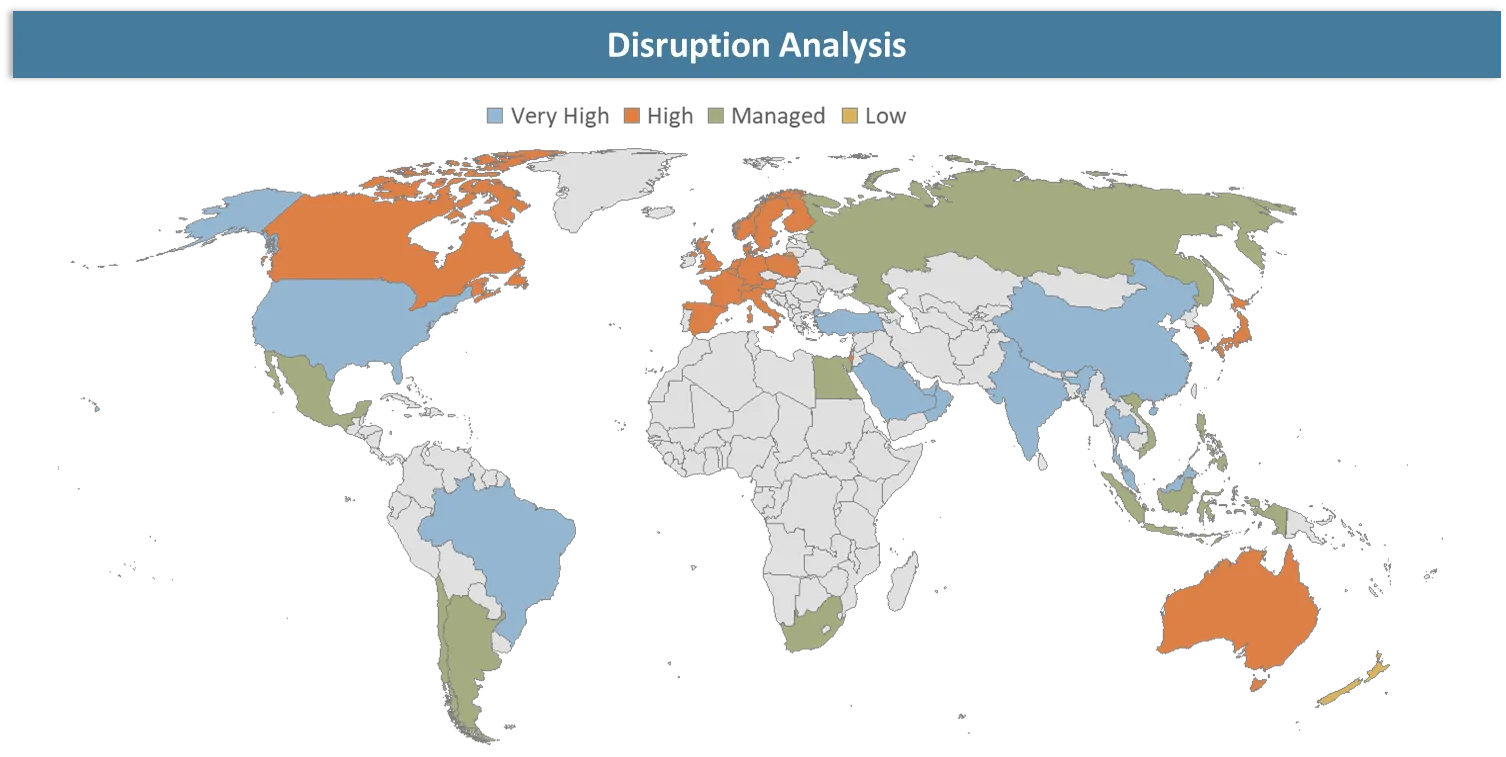
Shift from Conventional Chemistry to Biological Seed Treatments Disrupting the Seed Treatment Market
The shift toward biological seed treatments is disrupting the traditional chemical-dominated seed treatment landscape as growers and seed companies seek effective crop protection with lower chemical loading and improved environmental compatibility. Biological fungicides, bionematicides and microbial seed treatments are moving from niche applications toward commercial-scale products, particularly where resistance management and regulatory pressure are increasing.
The shift is being reinforced by recent product commercialization. In November 2025, BASF received French registration for Integral Pro, a biological fungicide seed treatment based on Bacillus amyloliquefaciens MBI600 for sunflower, with EU availability planned for the 2026 sowing season. BASF reported average yield gains of 3.5 dt/ha versus untreated seeds in European field trials. In April 2025, Nufarm launched Pretium SDS in the U.S., using biologically produced natamycin to target soybean diseases including Sudden Death Syndrome and Red Crown Rot. These developments indicate that biologicals are increasingly being commercialized as performance-oriented alternatives rather than only sustainability-led products.
The disruption is therefore occurring at both the product and competitive levels: conventional agrochemical companies are expanding biological portfolios, while biological specialists are entering crop-protection applications traditionally dominated by synthetic chemistry. This is likely to increase competition around microbial strains, biological active ingredients, formulation stability, field performance and integrated chemical-biological treatment programs.
Seed treatment Market BCG Matrix: Company Evaluation
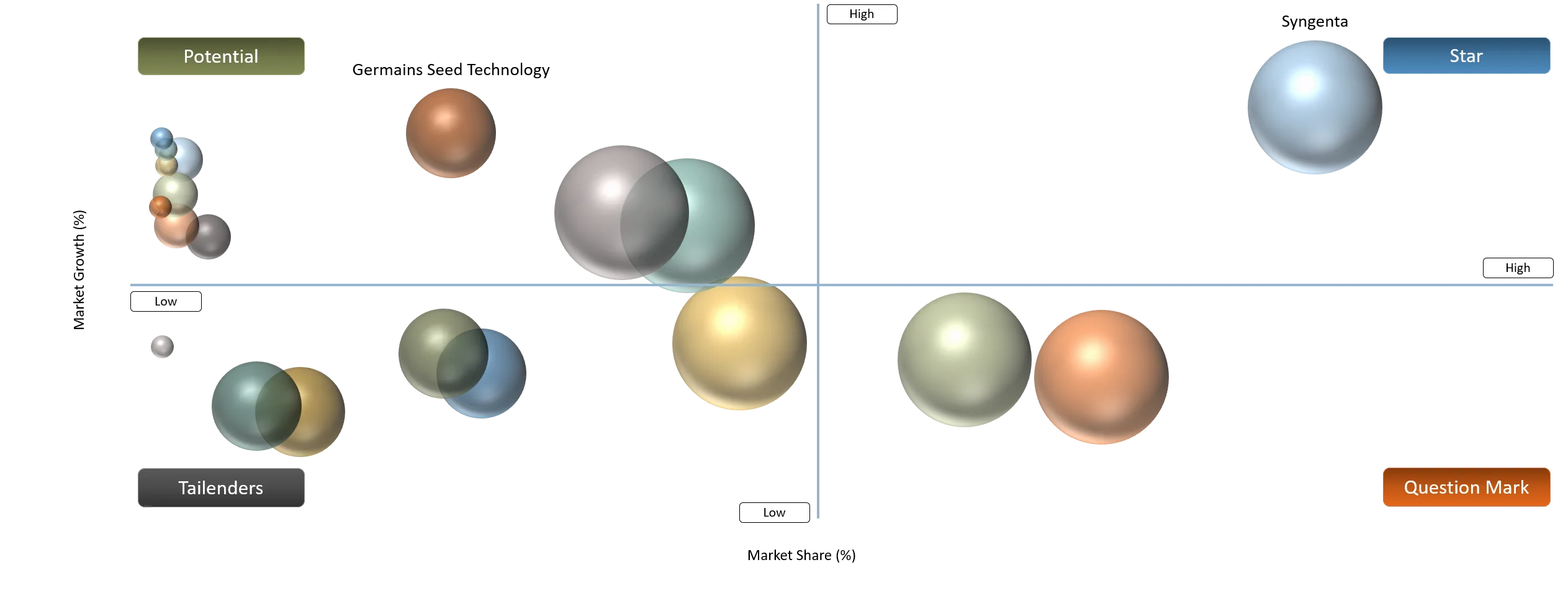
The star players in this market are Syngenta, Bayer AG, BASF and Corteva Agriscience. The companies possess significant market share in the field due to diversified portfolios that cover fungicides, insecticides, nematicides, biological products and multi-functional seed-treatment products. Regular product launches, regulatory approvals, biological technology and robust global distribution channels will help them to capitalize on future advancements in seed treatment technologies.
Question marks are UPL Ltd., FMC Corporation, Nufarm Ltd. and Croda International Plc. The companies have already developed crop protection, formulation and biological capabilities, yet their market share is relatively low compared to other companies. Future growth prospects are associated with the development of biological seed treatment, innovative formulation, novel actives and collaborations with seed manufacturers. The potential players include Germains Seed Technology and Koppert, which have specialized capabilities in seed enhancement, biological solutions, microorganisms and sustainable crop inputs.
Seed Treatment Market Dynamics
Driver Impact Analysis
| Driver | Market Growth Impact (%) | Demand Concentration | Impacted Use Case | Strategic Impact |
Rising Demand for Higher Crop Yield | 30% | High across major crop-producing regions, particularly North America, Asia Pacific and Latin America, where farmers are seeking higher productivity from existing agricultural land. | Cereals & grains, oilseeds, commercial row crops, high-value crops | Increases demand for seed protection and enhancement solutions that improve early establishment, reduce stand losses and protect yield potential from the outset. |
Increasing Adoption of GM and Hybrid Seeds | 25% | Concentrated in major commercial seed markets, particularly the Americas and Asia, with strong adoption across corn, soybean, cotton and other high-value crops. | Hybrid corn, soybean, cotton, hybrid rice and other premium seed varieties | Higher seed value increases the economic incentive to protect planting material, strengthening demand for premium seed treatment products and integrated seed-treatment programs. |
Growing Incidence of Seed and Soil-Borne Diseases | 25% | High in regions with intensive cropping, recurring pathogen pressure and cereal, oilseed and vegetable production. | Fungicidal seed treatment, biological seed treatment, nematicide treatment, disease-prone crops | Expands preventive treatment adoption as farmers seek early-stage protection against pathogens that can reduce germination, plant establishment and final yield. Syngenta's 2025 U.S. registration of Victrato for soybean and cotton, targeting both nematodes and diseases, reflects continued product development around these pressures. |
Rising Pest Pressure and Climate-Related Crop Stress | 20% | Increasingly relevant across drought-prone, heat-stressed and pest-intensive agricultural regions, particularly Asia Pacific, Latin America and parts of North America. | Nematode and insect treatment, biological seed treatment, stress-tolerance and seed-enhancement applications | Broadens seed treatment demand from conventional pathogen protection toward solutions that improve establishment and crop resilience under variable growing conditions. 2025 research on cold atmospheric plasma showed improved sunflower seed germination under water stress, indicating emerging interest in seed-applied technologies for climate-stress management |
Rising Demand for High-Crop Yield
The rising demand for high crop yields is strengthening the seed treatment market as population growth, increasing food consumption and changing dietary patterns place greater pressure on agricultural productivity. According to the FAO, global dietary energy supply has increased over the long term with economic development and expanding middle-income populations; however, more than 582 million people are projected to remain chronically undernourished by 2030, highlighting the need to increase food production efficiently. The global food market is also expected to reach approximately US$9.21 trillion in 2025, with rising consumption in emerging economies increasing demand for agricultural output.
Changing diets are increasing demand for both food and feed crops, particularly as higher animal-product consumption requires greater volumes of crop-based feed. USDA projections indicate that a 39% increase in global population between 2011 and 2050 could require food calories to increase by 44% and crop calories by 47%, making yield improvement increasingly important as agricultural land cannot expand at the same pace.
Seed treatment addresses this requirement by protecting seeds against seed- and soil-borne diseases, insects and early-stage threats, while improving germination, seedling vigor and crop establishment. Growing adoption of hybrid and biotech seeds further increases the need to protect high-value planting material and maximize yield potential. With food-at-home expenditure reaching approximately 40% of spending in low-income countries and 22% in middle-income countries, stable crop production remains critical. Climate stress, soil degradation and pest pressure further increase yield risks, positioning advanced seed treatments as an important input for protecting productivity and supporting global food security.
Restraint Impact Analysis
| Restraint | Drag on Market Growth (%) | Primary Impact Area | Impacted Use Case | Strategic Impact |
Risk of Phytotoxicity from Chemical Treatments | 25% | Seed germination, seedling establishment, treatment compatibility | Chemical fungicide, insecticide and nematicide seed treatments, particularly sensitive seed varieties | Limits treatment rates and product combinations, increasing demand for safer formulations, improved seed compatibility testing and biological alternatives. |
Resistance Development in Pathogens & Pests | 25% | Treatment efficacy and long-term product performance | Fungicidal, insecticidal and nematicidal seed treatments facing recurring pest and disease pressure | Reduces the effectiveness of established active ingredients and increases the need for new modes of action, biologicals and integrated treatment programs. |
High Cost of Advanced and Biological Seed Treatment Solutions | 20% | Product affordability and farmer adoption | Premium hybrid seeds, biological treatments and multifunctional seed treatment products, particularly in price-sensitive markets | Can slow adoption among small and cost-sensitive farmers, increasing the importance of cost-effective formulations, treated-seed pricing and demonstrated return on investment. |
Stringent Regulatory Requirements for Seed Treatment Active Ingredients | 15% | Product registration, active-ingredient availability and market access | Chemical seed treatments and new active ingredients across regulated agricultural markets | Increases development and registration timelines, encourages manufacturers to diversify toward biologicals and lower-risk formulations, and can reduce the availability of certain conventional treatment products. |
Risk of Phytotoxicity from Chemical Treatments
The risk of phytotoxicity is a key restraint on the seed treatment market because excessive chemical loading, unsuitable formulations, active-ingredient interactions and uneven coating can damage seeds and impair early plant development. Phytotoxic effects can include reduced germination, poor root development, seedling discoloration, delayed emergence and seed mortality, creating direct yield and financial risks for farmers. The risk is particularly pronounced when treated seeds are exposed to stressful conditions such as cold or waterlogged soils, where high-dose chemical treatments can further affect seedling establishment.
Evidence from maize and oilseed rape studies has reported reduced germination and weakened root development under certain high-dose neonicotinoid treatments, while older fungicides such as thiram and captan have been associated with seedling injury when application rates exceed recommended levels. Compatibility issues between insecticides and polymer coatings have also been linked with delayed emergence in crops such as cotton and sorghum under stress-prone conditions. These risks increase scrutiny of treatment dosage, formulation compatibility and coating uniformity, while regulatory authorities continue to evaluate the safety profile of seed-applied chemicals. As growers become more cautious about potential seed injury, phytotoxicity can constrain adoption of chemical-heavy formulations and create greater demand for biological, low-toxicity and safer seed treatment alternatives.
Seed treatment Market Segment Analysis
The global seed treatment market is segmented based on treatment type, application, formulation, crop type and region.
Fungicide Seed Treatments Maintain Dominance Driven by Strong Early-Stage Disease Protection and New Formulation Development
Fungicide seed treatments represent a core treatment category, as fungal pathogens carried on seeds or present in soil can directly affect germination, seedling establishment, root development and early crop health. Demand remains strong across major crops because seed-applied fungicides provide preventive protection at the earliest stage of crop development, while new formulations are increasingly targeting broader disease coverage and improved treatment performance.
In November 2025, BASF received registration in France for Integral® Pro, a biological fungicide seed treatment for sunflower targeting seed- and soil-borne fungal diseases, with availability planned for the 2026 EU sowing season. Syngenta also received U.S. EPA registration for CruiserMaxx Vibrance Elite, a fungicide-insecticide seed-treatment premix for cereals designed to provide early-season disease and insect protection while improving emergence and root development. In December 2025, BASF and ADAMA entered a co-development and commercialization agreement for Gilboa (flumetylsulforim), with new cereal formulations planned for European markets. Together, the developments indicate that fungicide seed treatment is evolving through biological alternatives, combination treatments and new fungicide chemistry, strengthening its role in preventive crop protection.
Seed Treatment Market Geographical Penetration
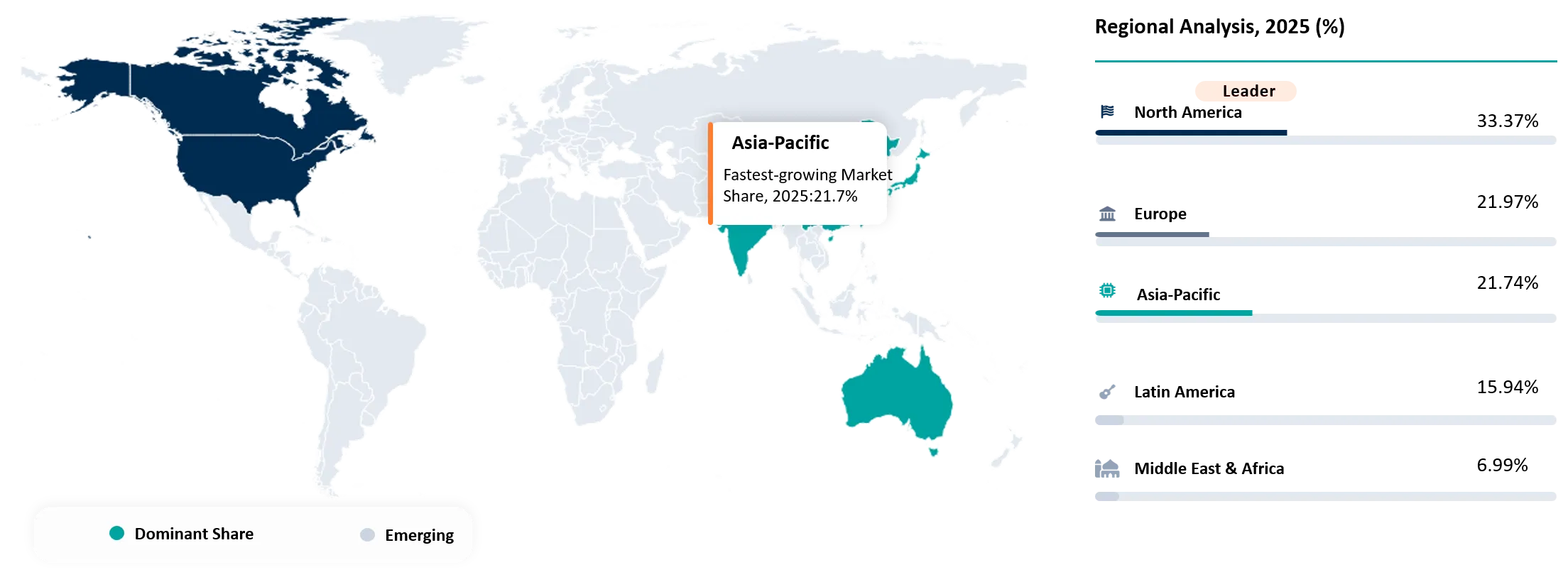
Mature Adoption Shifts Growth Toward Biological and Multifunctional Treatments in North America
North America has a well-established seed treatment market, supported by large-scale corn, soybean, wheat and other row-crop production and widespread use of treated seed. With adoption of conventional treatments already high, market expansion is increasingly shifting toward premium formulations, biological technologies, and treatments that address multiple early-season threats. The shift is reinforced by growing demand for solutions that improve crop establishment while reducing dependence on conventional chemical inputs.
In April 2025, Nufarm launched Pretium SDS in the U.S., a biological fungicide seed treatment containing natamycin to protect soybeans against Sudden Death Syndrome and Red Crown Rot. The product can also be integrated with Nufarm's Trunemco nematode seed treatment, demonstrating the move toward biological and multifunctional treatment programs. The above development indicates that North American growth is increasingly driven by treatment upgrading, disease-specific biologicals and combination solutions rather than simply expanding treated acreage.
U.S. Seed Treatment Market Trends
The U.S. represents the principal demand center for seed treatment in North America, supported by the exceptionally large acreage base of corn and soybean production. USDA reported 91.5 million acres of corn and 86.1 million acres of soybeans in 2024, creating more than 177 million acres of combined acreage requiring recurring seed inputs. For 2025, USDA projected corn acreage to increase to 95.2 million acres, while soybean acreage was projected at 83.4 million acres, showing that changes in crop allocation can directly influence annual seed-treatment volumes.
Grower adoption further demonstrates the entrenched position of seed treatment. A 2024 survey across the 17 largest soybean-producing states found that 90% of soybean acres were planted with treated seed, while only 3% of growers reported never using treated seed. Among treated soybean acres, fungicides were used on 72%, insecticides on 66% and nematicides on 34%. Applied to the 86.1 million soybean acres reported in 2024, the 90% treated-seed rate represents approximately 77.5 million treated soybean acres. The widespread use of biotech seed reinforces this structure: USDA reported that 94% of U.S. corn acreage was planted with biotech varieties in 2024, making protection of high-value seed an established part of commercial crop production.
The economic value proposition also strengthens adoption because seed treatment can reduce the need to compensate for early seedling losses through higher seeding rates or additional in-season pesticide applications.
Canada Seed Treatment Market Outlook
Canada's seed treatment market is strongly linked to its canola, wheat, soybean and cereal production, where early-season fungal diseases can cause seed rot, damping-off and poor crop establishment. Fungicide treatment remains particularly relevant because Canadian crops are exposed to variable soil moisture and temperature conditions during planting. The market is also moving toward novel treatment technologies: in April 2025, Health Canada's Pest Management Regulatory Agency registered Vismax Seed Treatment, based on Flg22-Bt peptide, for controlling Fusarium disease in soybean and wheat. The registration followed a formal scientific assessment and consultation process, demonstrating that novel biological or peptide-based fungicide technologies are progressing from development into commercial regulatory approval in Canada.
Regulatory developments are simultaneously reshaping the conventional fungicide landscape. In July 2025, Health Canada published changes concerning tebuconazole, a systemic fungicide used in field crops and seed treatment, following its re-evaluation under Canada's pesticide regulatory framework. The decision illustrates the increasing scrutiny applied to established active ingredients and the need for manufacturers to maintain compliant use patterns and mitigation measures. At the same time, Health Canada's 2025 registration of VICTRATO as a soybean seed treatment of new chemistry entering the Canadian market for combined fungal and nematode protection.
Asia-Pacific’s Large-Scale Crop Protection Demand and Regulatory Shift Toward Precision Seed-Applied Solutions
The Asia-Pacific seed treatment market continues to expand due to its central role in improving crop resilience, yield quality and seedling establishment in one of the world’s most intensive agricultural regions. According to the Food and Agriculture Organization (FAO), Asia is the largest global consumer of crop-protection active ingredients and countries such as China and India together account for 7.5% of total global pesticide consumption in the region, based on FAOSTAT’s pesticide-use dataset (1990-2023). This large-scale use, coupled with vast cropped areas, naturally drives higher demand for seed treatments, which remain the lowest-dose and most targeted method for delivering crop protection at planting.
ICAR–KVK field studies show that adoption can reach 70-80% in targeted districts, though some regions still report 30-40% adoption, demonstrating large headroom for demand growth. The numbers are verified in district-level agricultural situation reports and KVK demonstration summaries, which regularly highlight seed treatment as an economical tool to reduce root rots, smuts, early damping-off and soil-borne pathogens. Regulators in developed Asia-Pacific markets are also shaping demand. The Australian Pesticides and Veterinary Medicines Authority (APVMA) has approved several seed-treatment actives based on stringent residue, dust-drift and pollinator-safety assessments. Such regulatory frameworks often encourage companies to invest more in seed-applied formulations because they are easier to control, deliver lower environmental loads and reduce off-target exposure compared to field-applied insecticides or fungicides. The Asia-Pacific region’s regulatory baseline is therefore moving toward safer, precision-based, seed-applied inputs, boosting demand for advanced treatments such as film coatings, microencapsulation and polymer-based binders.
China Seed Treatment Market Trends
China's seed treatment demand is closely linked to its strategy of improving domestic seed quality, crop productivity and resistance to biotic stresses across wheat, maize, soybean and other strategic crops. In Feb 2025, China introduced guidelines for advancing agricultural biotechnology, including development of high-yield and multi-resistant varieties and more self-reliant seed sources. This direction increases the value of protecting improved genetics during germination and early establishment, creating demand for targeted fungicide, insecticide and nematicide seed treatments.
China's 2026-2030 agricultural strategy is further targeting 725 million tonnes of grain-production capacity, with greater emphasis on raising yield per unit area through improved seeds, biotechnology and higher-quality farmland rather than expanding cultivated land. The focus on stress-resistant and high-yield varieties strengthens the need for seed-applied protection that preserves establishment and yield potential under disease and environmental pressure. China's opportunity is increasingly shifting toward higher-performance and crop-specific seed treatments linked to improved genetics and national food-security objectives, rather than simple expansion of conventional treated-seed volumes.
India Seed Treatment Market Trends
India's seed treatment market is supported by extensive cultivation of cereals, pulses and oilseeds, but adoption remains uneven across regions, creating room for wider farmer penetration. Government and ICAR extension programs continue to promote seed treatment as part of crop-protection practices, while India's push toward improved and climate-resilient varieties is increasing the need to protect seed during germination and early crop establishment. The emphasis is shifting from conventional chemical treatment alone toward seed enhancement, biologicals and advanced coating technologies.
In June 2026, ICAR-IIOR's biopolymer-based Smart Seed Coating Technology, which reported up to 30% higher yields in groundnut and soybean in field evaluations and is being advanced through partnerships with public and private seed systems for wider adoption. This demonstrates that India's market is expanding beyond disease and insect protection toward seed coatings that improve seed quality, crop establishment and tolerance to drought, temperature stress, pests and diseases. India's strongest medium-term opportunity lies in combining conventional seed treatment with biological, biopolymer and stress-management technologies, particularly for smallholder and rainfed production systems.
Seed treatment Market Competitive Landscape
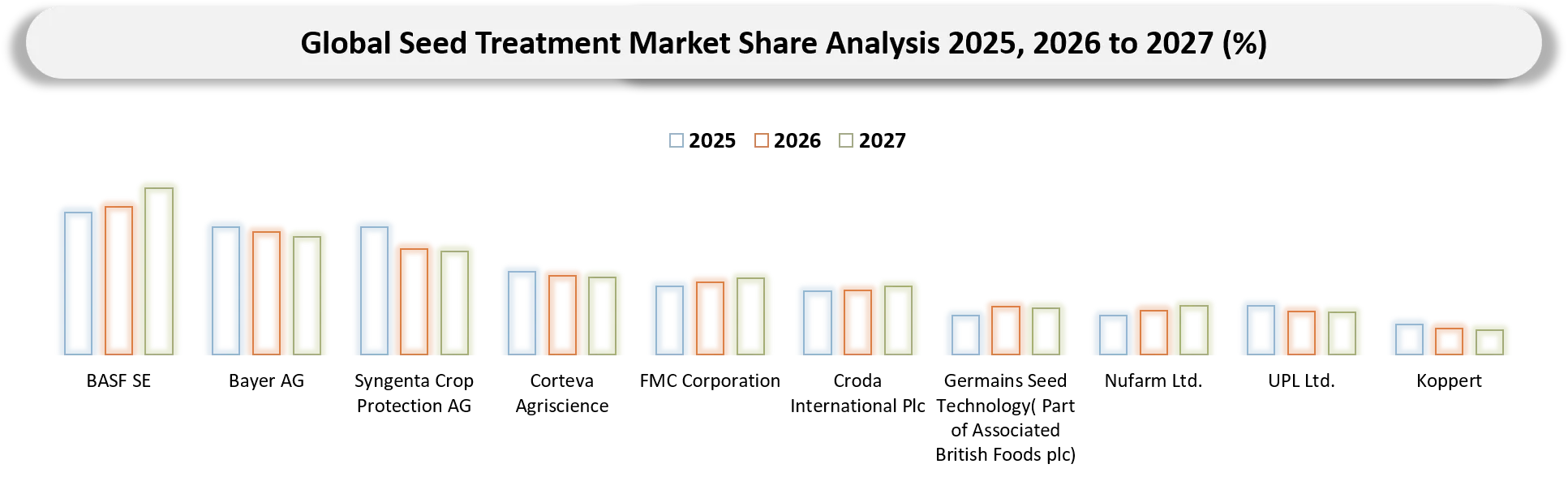
- The Seed Treatment Market is characterized by integrated crop-protection companies, seed-treatment specialists, biologicals providers, and formulation technology companies. BASF, Bayer, Syngenta, Corteva, and FMC lead through broad fungicide, insecticide and nematicide portfolios, while Germains Seed Technology and Croda focus on seed enhancement, coatings and formulation technologies. Nufarm, UPL and Koppert strengthen competition through diversified crop-protection and biological seed-treatment solutions. Competition is increasingly driven by novel chemistries, biologicals, multifunctional treatments, advanced coatings, regulatory approvals and strategic partnerships.
- Key players include BASF SE, Bayer AG, Syngenta Crop Protection AG, Corteva Agriscience, FMC Corporation, Croda International Plc, Germains Seed Technology, Nufarm Ltd., UPL Ltd., and Koppert.
Key Developments
- November 2025: BASF SE, a Germany-based agricultural solutions company, received registration in France for Integral Pro, a biological fungicide seed treatment for sunflower. The Bacillus amyloliquifaciens-based treatment targets seed- and soil-borne fungal diseases and is planned for the 2026 EU sowing season.
- December 2025: Bayer AG, a Germany-based agricultural company, launched EverGol Rise in Canada, an all-in-one pulse seed treatment combining four active ingredients for protection against major seed- and soil-borne pathogens, including Fusarium, Rhizoctonia and Ascochyta.
- September 2025: Bayer AG, a Germany-based agricultural company, launched Raxil Rise in Canada for the 2026 growing season. The four-active-ingredient cereal seed treatment provides broad-spectrum protection against diseases including Fusarium and true loose smut, with improved seed coverage and low dust-off.
- November 2025: Syngenta Crop Protection AG, a Switzerland-based agricultural company, received U.S. EPA registration for VICTRATO for soybean and cotton. The TYMIRIUM-based seed treatment combines nematode and disease protection, targeting soybean cyst, root-knot and reniform nematodes as well as Sudden Death Syndrome.
- November 2025: Syngenta Crop Protection AG, a Switzerland-based agricultural company, launched CruiserMaxx Vibrance Elite in the U.S., a fungicide-insecticide seed-treatment premix for cereals. The formulation provides early-season disease and insect protection while improving emergence, stand establishment and root development.
- May 2025: Syngenta Crop Protection AG, a Switzerland-based agricultural company, and Rizobacter, an Argentina-based biological-inputs company, entered an exclusive partnership for South Africa. The agreement covers distribution of Rizobacter's inoculants and biological technologies through Syngenta's Seedcare platform.
- April 2025: Nufarm Ltd., an Australia-based agricultural company, launched Pretium SDS in the U.S., a biological soybean seed treatment containing natamycin. The product targets Sudden Death Syndrome and Red Crown Rot while providing a biological alternative for early-season disease management.
- January 2025: UPL Ltd., an India-based agricultural solutions company, launched ATROFORCE Bionematicide in the U.S. following EPA registration. The Trichoderma atroviride-based seed treatment targets reniform and southern root-knot nematodes in cotton and promotes stronger root development.
- December 2024: UPL Ltd., an India-based agricultural solutions company, launched NIMAXXA Bionematicide in the U.S. for soybeans and corn. The triple-strain biological seed treatment targets major nematodes while providing root-growth and crop-resilience benefits.
Key Procurement Priorities and Buyer Evaluation Criteria
- Organizations procuring seed treatment products increasingly prioritize proven crop-protection efficacy, seed safety, consistent treatment performance and compatibility with high-value seed varieties across major crops.
- Procurement decisions are influenced by the need to manage seed- and soil-borne diseases, insects and nematodes, while improving germination, stand establishment and early-season crop protection.
- Buyers evaluate suppliers based on treatment efficacy, active-ingredient profile, phytotoxicity risk, seed compatibility, application and coating performance, regulatory approvals, technical support, product availability and cost per treated acre.
- Large seed companies and commercial growers increasingly consider biological content, sustainability profile, formulation technology and compatibility with integrated seed-treatment programs when selecting suppliers.
Why Choose DataM?
- Technological Innovations: Covers advancements in seed treatment technologies, including biological fungicides, bionematicides, multifunctional seed treatments, microbial inoculants, polymer coatings, seed priming and advanced formulation technologies that improve seed protection, germination and crop establishment.
- Product Performance & Market Positioning: Evaluates products based on disease, insect and nematode control, germination performance, seed safety, treatment compatibility, formulation quality and suitability across major crops, highlighting how leading companies differentiate through novel chemistries and biological solutions.
- Real-World Evidence: Highlights commercial product launches, field-trial results, regulatory approvals and grower adoption demonstrating improvements in disease control, root development, emergence, yield protection and crop resilience.
- Market Updates & Industry Changes: Tracks new product registrations, biological seed-treatment launches, novel active ingredients, strategic partnerships, regulatory changes and expansion of seed-treatment technologies across North America, Europe, Asia-Pacific and other major agricultural markets.
- Competitive Strategies: Analyzes how leading companies strengthen their position through product innovation, biological technology development, strategic partnerships, acquisitions, regulatory approvals and expansion across crop-specific seed-treatment portfolios.
- Pricing & Market Access: Assesses pricing based on treatment type, active ingredient, formulation, crop, dosage and application requirements, along with distribution through seed companies, agricultural retailers, distributors and direct supplier channels.
- Market Entry & Expansion: Identifies opportunities arising from increasing adoption of biologicals, multifunctional treatments, improved seed genetics, disease-specific solutions and sustainable seed technologies, while assessing strategies such as local regulatory registration, partnerships with seed companies, regional distribution expansion and crop-specific product development.
Target Audience
- Seed Treatment & Crop Protection Companies
- Seed Companies & Seed Technology Providers
- Biologicals & Agri-Biotechnology Companies
- Agricultural Distributors & Retailers
- Commercial Growers & Farmer Organizations
- Investors & Strategic Decision-Makers




























































