


Security Inks Market Overview
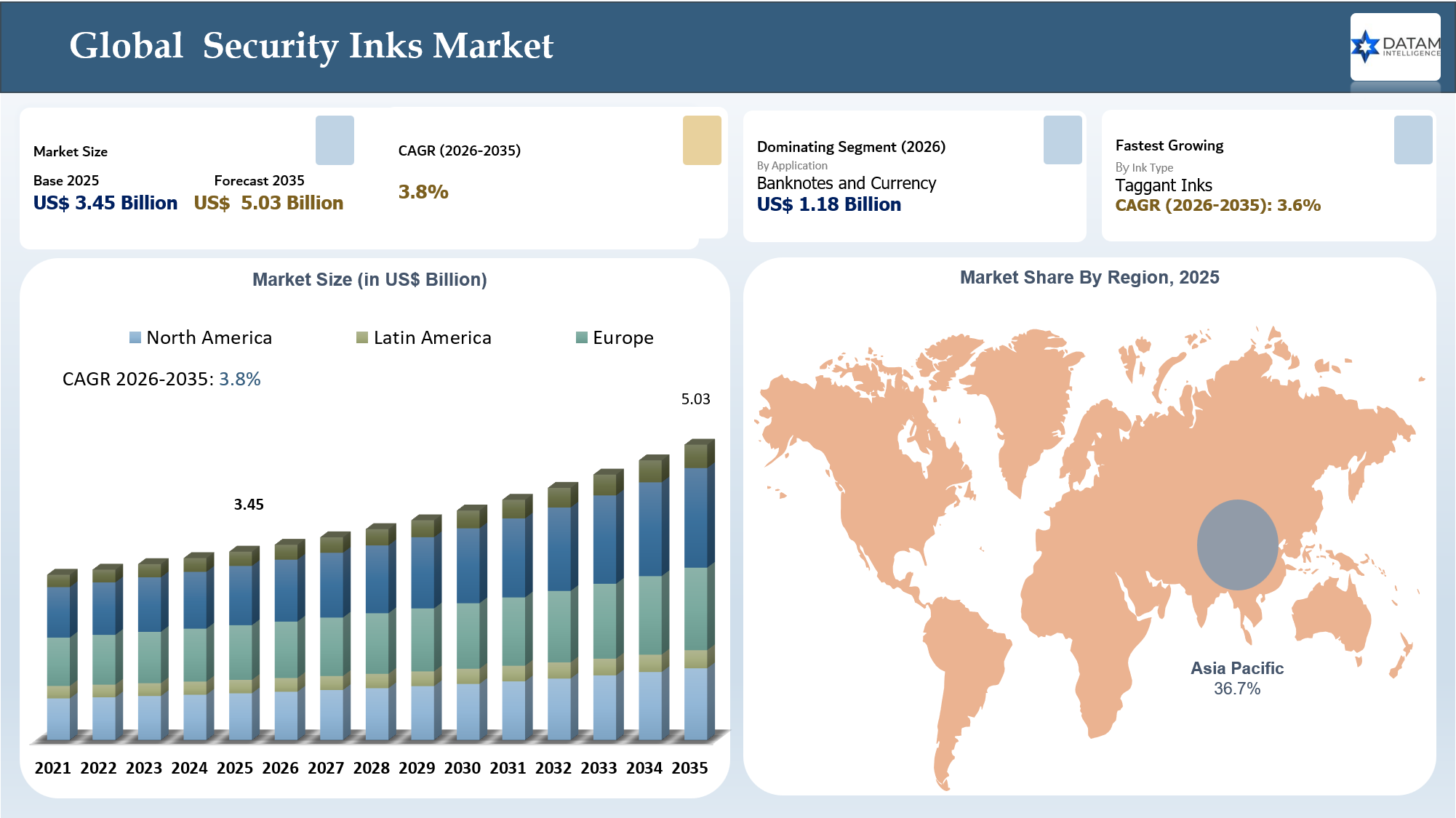
The Global Security Inks Market stood at US$ 3.45 billion in 2025 and is expected to reach US$ 5.03 billion by 2035, growing with a CAGR of 3.8% during the forecast period 2026-2035.
The security inks market is making a move towards anti-counterfeit authentication systems rather than just providing print protection, as indicated by enforcement statistics from 2024 to 2026 on the rise of counterfeit pressures on branded goods, packaging, and secure documents. For instance, according to U.S. Customs and Border Protection's statistics for FY2024, there were approximately 32.3 million counterfeit articles valued at about US$5.4 billion, explaining why branded items, packaging, and labels require more reliable physical anti-counterfeit solutions. Japan Customs recorded a high number of seizures totaling 33,019 in 2024, involving infringing articles totaling 1.29 million, implying that packaged consumer goods require more secure features to prevent counterfeiting.
Consumers need security inks because traditional labels, QR codes, and other packaging designs can be replicated easily. According to the 2025 OECD counterfeit goods trade analysis, seizures involving counterfeit trade in packages, labels, and authentication devices constituted about 20% of total seizures. This is increasing demand for UV fluorescent, infrared, magnetic, optically variable, taggant and forensic marker inks that will provide overt, covert and forensic features of banknotes, tax stamps, identification cards, checks, election ballots, certificates and brand packaging.
Key Takeaways: Security Inks Market
- The Global Security Inks Market was valued at US$3.45 billion in 2025 and is projected to reach US$5.03 billion by 2035, growing at a CAGR of 3.8% during 2026–2035
- Asia-Pacific held the highest market share at 36.7% in 2025, supported by high-volume banknote issuance, secure document demand, tax stamps and anti-counterfeit packaging adoption/
- Europe remained the second-largest region with 25.4% share in 2025, driven by strong secure printing infrastructure, currency authentication, pharmaceutical packaging security and luxury goods protection.
- North America accounted for 21.8% share in 2025, supported by counterfeit enforcement, financial document security, voting ballots, pharmaceutical packaging and brand protection programs.
- Banknotes and currency were the largest application segment in 2025, accounting for around 37.8% share, due to recurring central bank replacement cycles and multi-layer security printing requirements.
- UV Fluorescent Inks dominated the ink type segment in 2025 with an estimated 28.6% share, supported by wide use across documents, tax stamps, labels and packaging authentication.
- Overt Authentication led the authentication level segment with approximately 42.3% share, as it enables easy public verification across banknotes, certificates, packaging and security labels
- Paper was the largest substrate segment with nearly 46.5% share, supported by heavy use in banknotes, certificates, checks, voting ballots, tax stamps and legal document
- Taggant Inks are expected to be the fastest-growing ink type during 2026–2035, driven by rising demand for covert, forensic and machine-readable authentication.
- Buyers are increasingly shifting from standalone security inks toward layered authentication solutions combining overt, covert, forensic and digital verification features.technology segment through 2035, supported by demand for advanced visualization, AI-assisted imaging and complex structural heart guidance.
Security Inks Market Scope
| Metrics | Details | |
| 2025 Market Size | US$ 3.45 Billion | |
| 2035 Projected Market Size | US$ 5.03 Billion | |
| CAGR (2026-2035) | 3.8% | |
| Largest Market | Asia-Pacific | |
| Fastest Growing Market | Asia-Pacific | |
| By Ink Type | UV Fluorescent Inks, Infrared Inks, Magnetic Inks, Optically Variable Inks, Thermochromic Inks, Photochromic Inks, Solvent Reactive Inks, Water Fugitive Inks, Taggant Inks, Forensic Marker Inks, and Others | |
| By Authentication Level | Overt Authentication, Covert Authentication, and Forensic Authentication | |
| By Printing Technology | Offset Printing, Intaglio Printing, Flexographic Printing, Gravure Printing, Screen Printing, Digital and Inkjet Printing, and Others | |
| By Application | Banknotes and Currency, Passports and Identity Documents, Tax Stamps and Excise Labels, Certificates and Legal Documents, Checks and Financial Instruments, Voting Ballots, Brand Protection and Security Labels, Tickets, Vouchers and Coupons, Tamper Evidence and Alteration Detection, and Others | |
| By End User | Government and Public Security Agencies, Central Banks and Financial Institutions, Security Printers, Packaging and Label Converters, Pharmaceutical and Healthcare Companies, Food, Beverage, Alcohol and Tobacco Companies, Consumer Goods and Luxury Brands, and Others | |
| By Substrate | Paper, Polymer, Plastic Films, Labels and Stickers, Packaging Board, Metal Foils, and Others | |
| By Source | Bio-Based Security Inks and Non-Bio-Based Security Inks | |
| By Region | North America | U.S., Canada, Mexico |
| Europe | Germany, UK, France, Spain, Italy, Poland | |
| Asia-Pacific | China, India, Japan, Australia, South Korea, Indonesia, Malaysia | |
| Latin America | Brazil, Argentina | |
| Middle East and Africa | UAE, Saudi Arabia, South Africa, Israel, Turkiye | |
| Report Insights Covered | Competitive Landscape Analysis, Company Profile Analysis, Market Size, Share, Growth | |
Disruption Analysis
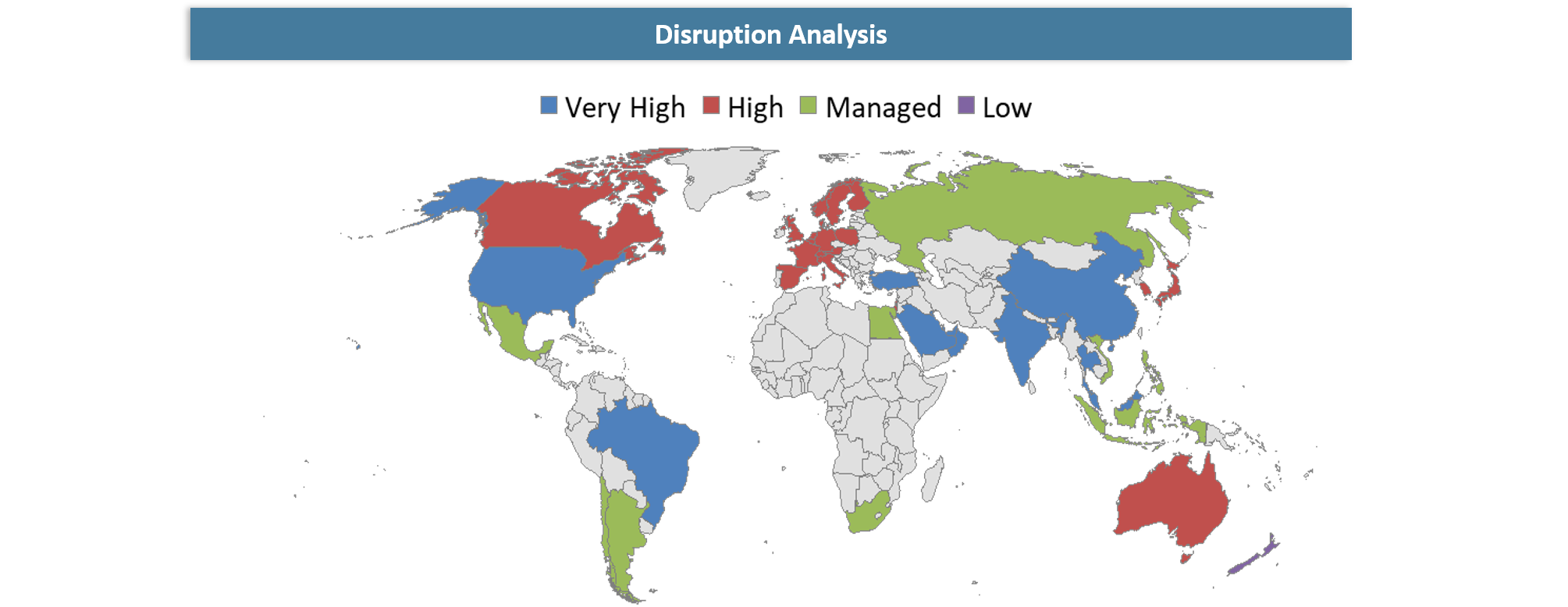
Security Inks Are Moving From Hidden Marks to Integrated Authentication Systems
Disruptions in security ink industry come in form of transition from conventional UV or visible security inks to more sophisticated multi-layered security inks that increase difficulty in counterfeiting by adding complexity into verification process. As counterfeiters become better at replicating simpler security features, there is a greater need for sophisticated ink types like infrared, magnetic, optical variable, taggant and forensic marker inks. This will benefit government, central bank and security printers as well as brand owners, who are likely to see enhanced levels of security for printed products like bank notes, passports, tax stamps, certificates, labels and branded packaging.
A significant disruption is in the use of physical security inks together with digital security methods. The combination of traditional security inks with methods like QR code, serialization and track-and-trace systems, which can even be used via smartphones to verify authenticity, becomes an important aspect of security solutions in a number of industries including pharma, alcohol, tobacco, beverages, cosmetics and luxury products. These areas suffer greatly from counterfeiting issues because of their financial and health risks involved, thus making custom-made ink systems a preferred choice.
BCG Matrix: Company Evaluation

In the Security Inks Market, companies such as SICPA Holding SA, Sun Chemical Corporation, Luminescence Sun Chemical Security, Gleitsmann Security Inks GmbH, Kao Collins Corporation and Authentix Inc. may be considered Stars as a result of their unique focus on security inks, secure printing services, brand authentication solutions, bank note protection technology, tax stamps and anti-counterfeiting purposes. The above named companies seem to have excellent positions to meet the increasing demands for multi-level authentication products by governments, central banks, security printers, regulatory authorities and brands.
Microtrace LLC, NanoMatriX Technologies Limited, Aron Universal Limited, HSA Systems ApS, China Banknote Ink Co., Ltd., ISAKATA INX CORPORATION., Chromatic Technologies Inc. and LCR Hallcrest LLC should be considered either Question Marks or Niche Growth Players due to their involvement in providing relevant taggants, forensics, invisible inks, thermochromic and photochromic security inks. The last three companies mentioned above should be recognized as Strategic Ecosystem Players as opposed to security inks suppliers.
Security Inks Market Dynamics
Rising Counterfeit Exposure Across Currency, Identity Documents, Tax Stamps and Branded Packaging
Growing exposure to counterfeit cases among currencies, identity documents, tax stamps, and branded packaging has been identified as one of the key reasons behind rising demand for the security inks market. Counterfeit currencies, counterfeit identities, fraudulent certificates, illegal tax stamps, and cloned product packages are becoming a growing challenge and end users have been increasingly pressured to protect their high-value printed items from being copied or misused. In such scenarios, there is a growing inclination toward advanced security inks rather than conventional printing inks. There are different types of security inks available in the market including UV fluorescent ink, infrared ink, magnetic ink, optically variable ink, taggant ink, and forensic marker ink which are used to create multiple layers of protection through various forms of authentication. The security inks can be applied effectively on branded products particularly within the pharmaceutical, food & beverages, alcoholic beverages, tobacco, cosmetics, and luxury goods industry sectors.
Higher Implementation Cost Compared to Conventional Printing Inks and Standard Packaging Features
The higher costs associated with their implementation in comparison with conventional printing inks and regular packaging features continue to pose as a significant limitation for the security inks industry, particularly on the part of cost-conscious organizations. In particular, security inks entail the use of special pigments, taggants, chemical markers, special formulation, and secure manufacturing, all of which drive up the costs associated with using them in contrast to ordinary inks employed in printing. The costs can even be higher when there is the need to have UV lamps, infrared scanners, magnetic detectors, inspection teams, and special validation measures to authenticate the security feature. Thus, small and medium-sized enterprises, which need anti-counterfeiting solutions yet cannot afford costly security measures for all their products, can struggle with implementing these inks as well. Therefore, security inks tend to be primarily adopted by large firms and organizations for critical security applications such as currency notes, passports, stamps, pharmaceutical drugs, alcohol, tobacco, and luxury goods.
Security Inks Market Segment Analysis
The global security inks market is segmented based on ink type, authentication level, printing technology, application, end user, substrate, source, and region.
Banknotes and Currency Dominate Security Inks Demand Through High-Volume Secure Printing
Banknotes and Currency Segment will dominate the Security Inks Market on account of the high degree of authentication, durability, formulation control and anti-counterfeiting required for currency printing. While both Packaging and Labeling segments may employ various formulations of security inks, banknotes employ multilayered security inks including optical variable inks, magnetic inks, fluorescent inks under ultraviolet light, infrared inks and machine readable components for verification by consumers, retailers, banks and central banks. The segment receives periodic boosts via ongoing currency replacement cycle and anti-counterfeiting initiatives in leading nations. For instance, as per the data of U.S. Currency Education Program, there were 55.4 billion notes circulating in the USA as of December 31, 2024, with a value of US$2,322.9 billion, depicting a large secure printing base driving the demand for security inks. Moreover, Japan has recently released its new series of banknotes in July 2024, and the government aims to issue 7.5 billion bills during the current financial year.
Security Inks Market Geographical Penetration
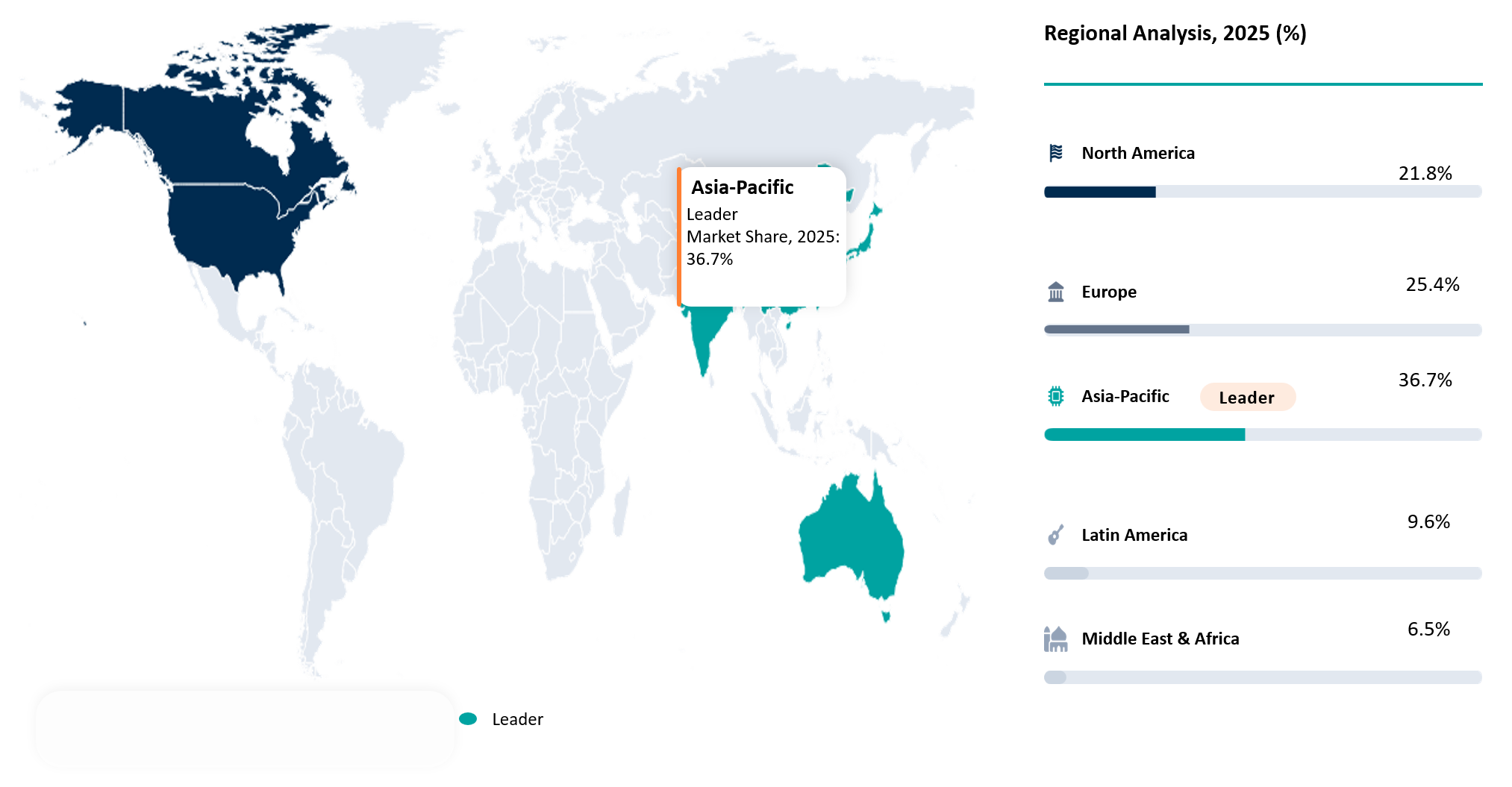
Asia Pacific Leads Security Inks Demand as Counterfeit Risk and Secure Printing Volumes Rise
Asia-Pacific is projected to continue its role as the leading region in the Security Inks Market on account of substantial banknote printing volumes, extensive identity document programs, increasing adoption of tax stamp and growing packaging security ink requirements. The region has an abundance of high-risk counterfeit flow; according to a study by OECD in 2025, China comprised 45% of total counterfeit goods seizures. Furthermore, based on seizure data, 20% of all seizures included packaging material, labels, and/or authentication component, which positively impacted the demand for security inks and printing of authentication layer.
The growth is further driven by increasing government attention towards secured document, excise control, and product authentication in China, India, Japan, South Korea, and Southeast Asian countries. Security inks find their applications in the production of banknotes, passports, tax stamp, check, voting ballot papers, certificates, pharmaceuticals, FMCG packaging, alcohol and tobacco packaging. Increasing sophistication of counterfeiter results in preference of buyers for UV inks, infrared inks, optically variable inks, taggant inks, and forensic marker inks. The World Customs Organization’s 2024 Illicit Trade Report also highlights rising sophistication in concealment methods and counterfeit goods trafficking, reinforcing Asia Pacific’s need for multi-layer authentication systems.
Japan Security Inks Market Trends
Japan is forecasted to retain high-potential opportunities as a security ink market in Asia Pacific, backed by introduction of new banknotes, stringent document security requirements and increasing demand for product authentication solutions. In July 2024, Japan launched the first series of new banknotes in two decades, equipped with the latest anti-counterfeiting measures, while at least 7.5 billion newly designed banknotes were supposed to be printed in the fiscal year-end. The development stimulates demand for highly secure printing components such as anti-counterfeit inks used for authentication of currencies, documents and machines.
The country has also experienced an increase in counterfeits being imported into Japan, creating additional demand for security inks used in branded packaging, labels and product authentication purposes. In 2024, Japan Customs made 33,019 import seizures while there were 1.28 million infringing articles involved, requiring increased measures for protecting consumer goods, luxury products, pharmaceuticals and packaging from counterfeit products. Various security inks, such as UV fluorescent ink, infrared ink, optically variable ink, taggant ink and forensic marker ink are becoming increasingly important among currencies, identity documents, certificates, tax stamps, checks and voting ballots.
U.S. Security Inks Market Outlook
The USA is forecasted to be among the key players in the security inks market driven by strong counterfeit enforcement actions, wide spread adoption of brand protection technology, and demand for secure money notes, finance instruments, tax label stickers, voting ballots, and tamper-resistant product packaging. According to the report provided by U.S. Customs and Border Protection, seizures for IP rights infringements increased over 100 % from FY2020 to FY2024 with FY2024 having about 32.3 million counterfeit items having total retail value of US$5.4 billion. Hence, printed security features will become increasingly important for pharmaceutical drugs, luxury goods, electronics, apparels, alcoholic beverages, tobacco products, and other consumer packages.
Security inks will still play an important role in USA currency protection considering the presence of security features on U.S. banknotes. According to the definition provided by the U.S. Treasury Department, the banknote security features include specialized ink, watermarks, and magnetic signatures used in authenticating and securing money against forgery. With the increasing sophistication of counterfeiters in replicating package designs and forged documents, U.S. consumers are expected to seek UV, IR, magnetically coded, optically variable, taggant, and forensic marker inks.
Security Inks Market Competitive Landscape
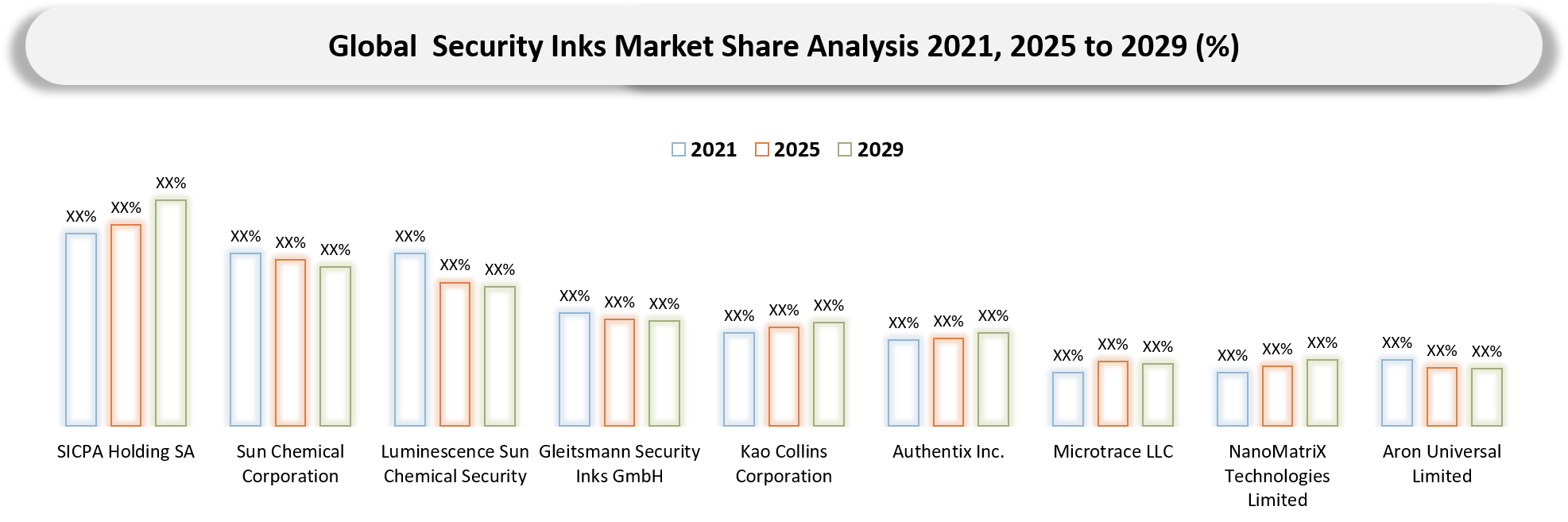
The Global Security Inks Market is fairly concentrated, where the competition in the market is driven by specialized security ink as well as authentication solutions suppliers including SICP A Holding SA, Sun Chemical Corporation, Luminescence Sun Chemical Security, Gleitsmann Security Inks GmbH, Kao Collins Corporation, Authentix Inc., Microtrace LLC, NanoMatriX Technologies Limited, Aron Universal Limited, and HSA Systems ApS. The companies are competing based on secure formulation of inks, covert and forensic authentication, UV and IR properties, taggants, ink jet security inks, and banknotes, passports, tax stamps, certificates, labels, and protective packaging applications.
Additionally, the market includes other specialized secure printing and ink products suppliers including China Banknote Ink Co., Ltd., Flint Group, SAKATA INX CORPORATION., Chromatic Technologies Inc., LCR Hallcrest LLC, Giesecke+Devrient GmbH, De La Rue plc, Crane Currency, and LEONHARD KURZ Stiftung & Co. KG. The companies create strong competition by offering solutions in terms of banknote security, secure document features, color-changeable inks, specialty coating, currency substrates, and advanced authentication solutions. The trends in the competition indicate moving away from individual security ink products to more holistic counterfeit protection and authentication solutions.
Recent Developments
- January 2026: Crane Currency announced Fiji’s new polymer banknote series would enter circulation with MOTION SURFACE micro-optic security, strengthening banknote authentication against emerging counterfeiting threats.
- December 2025: De La Rue supported the Central Bank of Samoa’s transition to polymer banknotes using SAFEGUARD technology with advanced security and design features, supporting stronger currency protection.
- December 2025: De La Rue announced that Bank of Thailand and Royal Monetary Authority of Bhutan polymer denominations featuring ARGENTUM, ROTATE and Enhanced GEMINI security elements won HSP Asia 2025 awards.
- November 2025: SICPA Pakistan celebrated 30 years of secure identification, authentication and traceability solutions, reinforcing SICPA’s long-term role in security inks, secure documents and brand protection ecosystems.
- November 2025: De La Rue announced the Royal Monetary Authority of Bhutan’s new banknote series with ARGENTUM, ROTATE, Enhanced GEMINI and tactile embossing, strengthening public and machine authentication.
- October 2025: Giesecke+Devrient highlighted Kenya’s new ePassport with optically variable ink and MAGIC ID technology, supporting stronger identity document authentication and anti-replication protection.
- June 2025: Crane Currency introduced cBREEZE, a tailor-made banknote security feature for lower-value, high-volume notes, improving durability, cost efficiency and public authentication confidence.
- November 2024: Crane Currency announced Denmark’s upgraded 100- and 200-krone banknotes with 5 mm RAPID security thread, supporting national currency protection and counterfeit resistance.
AI Impact Analysis
AI is predicted to enhance the security inks industry through improved inspection, verification and monitoring of security features on high-value print media. The current verification system highly relies on manual verification using UV lights, hand-held readers or laboratory analysis processes that may be inefficient in large scale applications. Machine learning algorithms that incorporate AI have the ability to enable more efficient recognition and monitoring of ink security features through their capability to detect optical properties including color shifting, UV fluorescence, infrared detection and micro-patterning.
In addition, AI technology can aid in boosting the level of counterfeit intelligence through the association between ink authentication and digital technologies like serial numbers, QR codes, tracking systems and supply chain systems. AI can play an important role in identifying abnormal flow, multiple scanning, geography anomalies and counterfeit concentration for drugs, alcoholic beverages, tobacco products, cosmetics, electronics and luxury goods. Nevertheless, counterfeit intelligence can cause more market pressure for AI technology due to the possibility of the use of advanced techniques in creating replica products through packaging, labeling and counterfeit protection methods. The need for more sophisticated inks such as covert, machine readable and forensic marker inks will arise.
White Space Opportunities
The most promising area for white space opportunities in security inks relates to the expansion of the current product use from banknotes, passports, and tax stamps to mainstream brand protection packaging. More and more pharmaceutical, nutraceutical, cosmetic, luxury goods, electronic devices, food & beverages, alcohol, and tobacco products face significant counterfeit, diversion, and tampering threats, but many still rely only on basic labels, holograms, or QR codes for their protection. In this situation, security ink suppliers should offer cost-effective solutions with visible, covert, and forensic attributes integrated in the ink system, which does not require changes in packaging equipment.
Another major opportunity relates to the use of security inks in combination with the digital authentication system. The printed information contained in the security ink could be incorporated with serialization, QR code, smartphone scanning, AI inspection, and track & trace mechanisms. This would make the hybrid approach particularly relevant in emerging markets where counterfeit risk and tax evasion, as well as supply chain diversion, are significant issues.
DMI Opinion
According to DMI, the demand trend of the security inks market would evolve from a specific industry sector - that is, secure printing - to authentication enabling. The application areas in the traditional sense would remain relevant; in particular, banknotes, passports, tax stamps and official certificates, however, the growth in the coming years would be seen in the regulated products and brand protection packaging applications like pharmaceuticals, nutraceuticals, spirits, tobacco, cosmetics, luxury goods and high-value consumer goods for which counterfeiting has direct economic and compliance risks.
The future would belong to those security inks manufacturers who are able to provide more than just an ink formula. It is expected that clients will increasingly need a partner in development who would not only provide the inks, but who would be able to integrate them into a multi-layered system that includes substrates, readers, forensic verification methods and digital traceability platforms. While the low-cost security inks based on simple visual UV and visible technologies will remain valid, the future demand will see increasing usage of covert inks, machine readable inks, optically variable inks, taggant inks, and forensics markers.
Why This Report Matters in 2026?
Security Inks Market is relevant in 2026 because counterfeiting activities are not confined anymore to paper money or identification cards; counterfeiting activity now extends to pharmaceutical products, food and beverages, alcohol, tobacco, cosmetics, electronics, luxury goods, and e-commerce packages. With the advancement in techniques used by the counterfeiters, organizations are faced with the challenge of developing more sophisticated and secure means that go beyond the simple label or mark. The use of security inks as authentication technology is gaining traction because it can be integrated in current printing and packaging techniques while providing overt, covert, forensic, and machine-readable authentication capabilities.
This report serves as a useful guide to know where demand is shifting, what type of ink solutions are growing, and what applications have the most business potential. It is an important tool in making informed decisions for security ink companies, security printers, packaging converters, brand owners, governments, and investors by showing growth trends in banknotes, passports, tax stamps, certificates, labels, and brand protection packaging.
Why Choose DataM?
- End-to-End Security Inks Ecosystem Assessment: DataM provides detailed insights across security inks, authentication technologies, secure printing, anti-counterfeit packaging, tax stamps, identity documents and brand protection applications, helping clients understand where demand is actually scaling.
- Commercially Feasible Segmentation: Our segmentation is built around measurable revenue pools such as ink type, authentication level, printing technology, application and use cases, end users and regions, reducing overlap and improving market-sizing accuracy.
- Competitive and Ecosystem Mapping: DataM tracks direct security ink manufacturers, security printing companies, authentication solution providers, taggant technology suppliers and packaging security players to give clients a clear view of the competitive landscape.
- Application-Led Market Intelligence: The report evaluates demand across banknotes, passports, identity documents, certificates, tax stamps, excise labels, security labels, brand protection packaging, tickets and tamper-evident applications.
- Decision-Ready Strategic Add-Ons: Clients receive actionable insights such as BCG matrix, white space opportunities, AI impact analysis, disruption analysis, market dynamics, recent developments and procurement priorities to support business planning.
- Client-Specific Growth Support: DataM helps companies identify high-growth applications, priority geographies, potential customers, technology gaps, partnership opportunities and commercialization strategies across the evolving security inks market.
Key Procurement Priorities and Buyer Evaluation Criteria
- Buyers in the Global Security Inks Market are increasingly prioritizing providers that can deliver proven anti-counterfeit performance, strong authentication reliability, substrate compatibility and secure formulation control across currency, identity documents, tax stamps, labels and branded packaging.
- Procurement decisions are shifting from standalone security ink supply toward integrated authentication solutions that combine overt, covert and forensic inks with readers, inspection tools, serialization, QR-linked verification, track-and-trace systems and forensic validation support.
- Government agencies, central banks, security printers, packaging converters and brand owners are evaluating vendors based on ink durability, print quality, resistance to replication, compatibility with offset, intaglio, flexographic, gravure, screen and digital printing, as well as consistency across paper, polymer, plastic films, cartons and labels.
- Buyers are also giving higher importance to confidentiality, secure sourcing, controlled supply chains, regulatory compliance, customization capability, technical support, lead time reliability and the supplier’s ability to provide application-specific formulations for high-risk use cases.
- Vendors with strong capabilities in optically variable inks, UV and infrared inks, magnetic inks, taggant inks, forensic marker inks, tamper-responsive inks and machine-readable authentication are better positioned to win long-term contracts as buyers move toward multi-layer, risk-based anti-counterfeit protection.



























































