


Rice Starch and Sweeteners & Derivatives Market Overview
The Global Rice Starch and Sweeteners & Derivatives Market reached US$ 1.27 billion in 2025 and is expected to reach US$ 2.4 billion by 2035, growing with a CAGR of 4.94% during the forecast period 2026-2035. Rice Starch and Sweeteners and Derivatives Market has shifted focus from conventional commodity ingredient market to that of premium specialty ingredient market due to changes in food formulation and functional nutrition. Growing focus on the size of Rice Starch Market Size, clean-label, non-allergenic and plant-based formulation options have been aiding the increasing use of rice-based products including rice starch, syrups, maltodextrin, and dextrin.
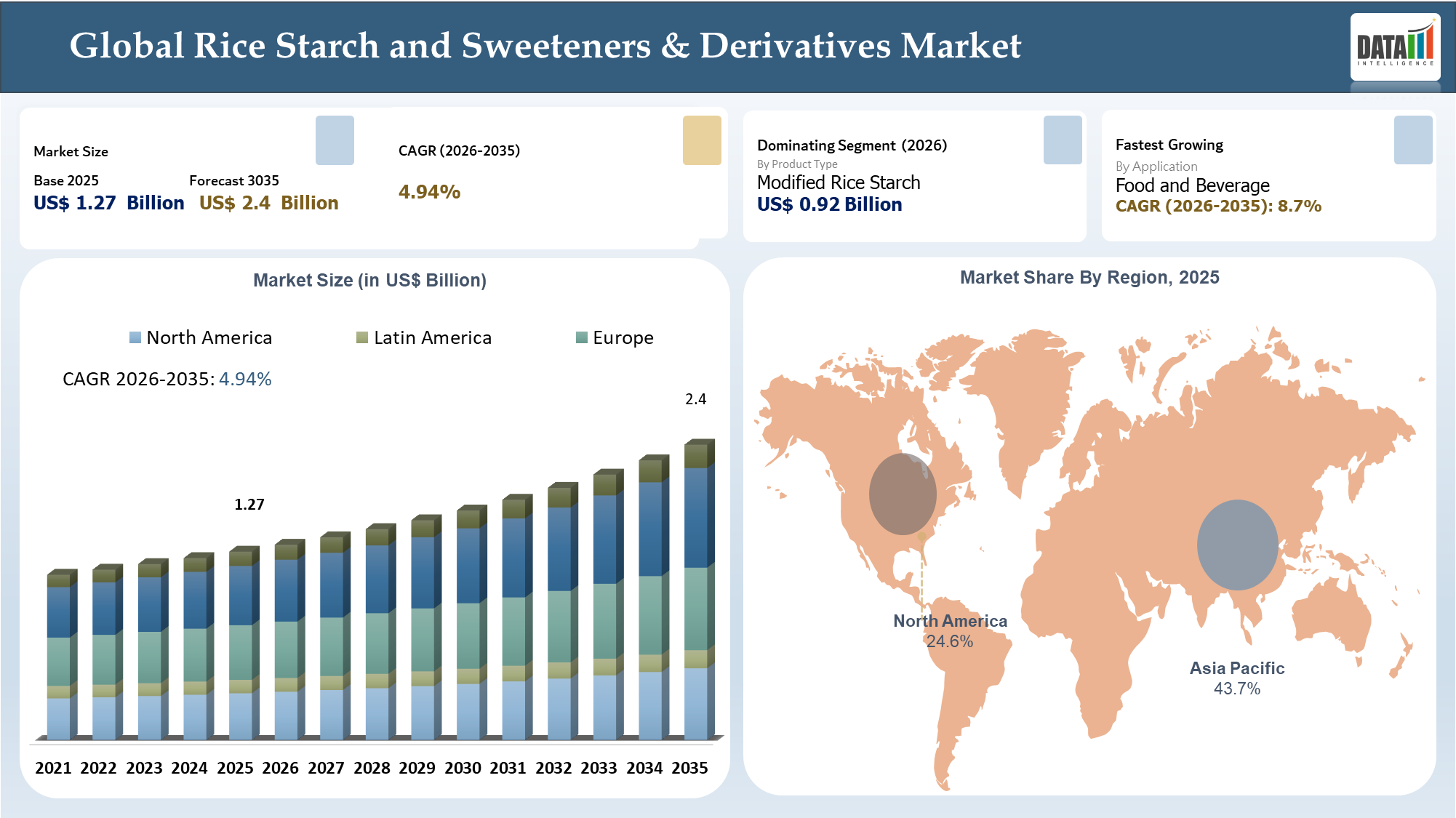
Rice is one of the most consumed agricultural products, providing more than 20% of dietary energy globally. The production and consumption of more than 90% of global rice happens in the Asia-Pacific region, providing solid background for Rice Processing Market Forecast and the development of their ingredients. Such large-scale production helps to develop Rice Derivatives Market Growth.
The usage of modified rice starch persists because of better viscosity, stability, moisture retention, and texturization abilities. The size range of rice starch granules falls under 3-10 microns, making it suitable for uses that require a smooth mouthfeel, including dairy products, baby food, sauces, and cosmetic items. Due to high market demand for food grade starch market trends, suppliers are moving towards developing gluten-free, hypoallergenic, and clean label starch formulations. Simultaneously, Starch Ingredients Market Analysis reveals a higher adoption of rice-based carbohydrates in baked items, confectionery, beverages, sports nutrition, and food preparations.
Countries like India, China, Thailand, and Vietnam are boosting the market by way of rice exportations and milling activities. India accounted for around 21.55 million metric tons of rice exports during 2025, indicating its relevance in the rice ingredient market. As companies emphasize product traceability, premium formulation efficiency, and sustainable production practices, more innovations will occur in the area of rice starch modification.
AI Impact Analysis
The implications of AI for the Rice Starch and Sweeteners and Derivatives Market are becoming more relevant when considering raw material procurement, manufacturing processes, quality control, formula development, and demand estimation. The use of AI can enable businesses to evaluate the characteristics of different varieties of rice, amylose content, moisture, starch extraction, viscosity profiles, and processing capabilities to enhance consistency in producing rice starches and derivatives.
From the perspective of the manufacturer, AI can assist in the optimization of wet milling, enzymatic degradation, physical modifications, chemical modifications, syrup production, and drying processes. It will also allow the reduction of batch variations, increasing yields, reducing energy consumption, and maintaining consistency in product quality. AI-powered quality inspections and predictive analyses will also identify any discrepancies in color, particle size, sweetening properties, microbial risks, and functional capabilities.
From the commercialization perspective, AI can facilitate clean label product development, price estimation, supply chain optimization, consumer demand prediction, and formulation recommendations for food and beverages, infant formula, pharmaceuticals, nutraceuticals, cosmetics, and industrial purposes. Businesses that leverage AI to enhance ingredient performance, production efficiency, and formula recommendations tailored to the needs of their customers are expected to be more competitive in the market.
Rice Starch and Sweeteners & Derivatives Market Industry Trends and Strategic Insights
- The market for modified rice starch and rice-based sweeteners shall continue to be highly significant as the said products have many benefits in terms of clean-labeling, improving textures, sweetness, binding properties, and stability in various applications, including food and beverages, infant formula, pharmaceuticals, and nutraceuticals.
- Increasing consumer preference for gluten-free, hypoallergenic, GMO-free, plant-based, and easily digestible ingredients shall propel the demand for ingredients such as rice starches, rice syrups, maltodextrin, dextrin, and others to replace wheat, corn, and artificial ingredients.
- Factors such as high production of rice, low costs, and rising demand from food processing, infant formula, functional foods, and personal care segments shall impact the dynamic nature of the Asia Pacific market.
- Market leaders shall continue to have a competitive edge on account of innovations in specialty starches, clean-label ingredients, organic and non-GMO products, customized formulations, and collaborations with food, pharmaceuticals, nutraceuticals, and cosmetics producers.
Market Scope
| Metrics | Details | |
| 2025 Market Size | US$ 1.27 Billion | |
| 2035 Projected Market Size | US$ 2.4 Billion | |
| CAGR (2026-2035) | 4.94% | |
| Largest Market | Asia-Pacific | |
| Fastest Growing Market | Asia-Pacific | |
| By Product Type | Native Rice Starch, Modified Rice Starch, Rice Sweeteners and Derivatives | |
| By Source | White Rice, Brown Rice, Broken Rice, Glutinous Rice, Specialty Rice Varieties | |
| By Form | Powder, Granules, Liquid, Syrup, Gel | |
| By Processing Method | Wet Milling, Dry Milling, Enzymatic Processing, Chemical Modification, Physical Modification, Fermentation Processing | |
| By Functionality | Thickening, Stabilizing, Binding, Texture Enhancement, Moisture Retention, Encapsulation, Film Formation, Fat Replacement, Sweetening, Anti Caking | |
| By Grade | Food Grade, Pharmaceutical Grade, Cosmetic Grade, Industrial Grade, Nutraceutical Grade | |
| By Application | Food and Beverage, Pharmaceuticals, Nutraceuticals, Cosmetics and Personal Care, Industrial Applications, Animal Feed | |
| By Distribution Channel | Direct Sales, Ingredient Distributors, Specialty Ingredient Suppliers, Online B2B Platforms | |
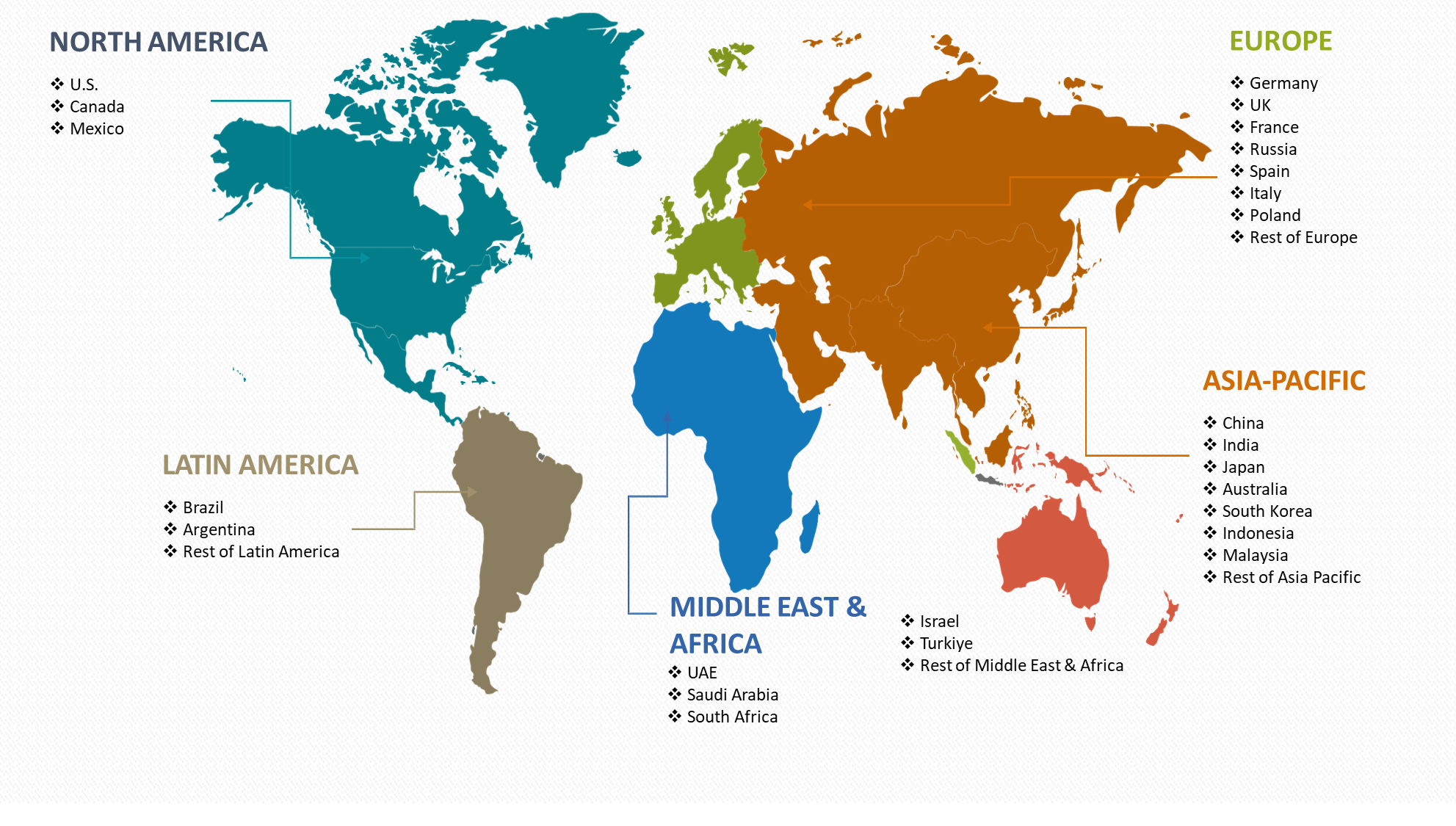
| By Region | North America | |
| Europe | U.S., Canada, Mexico | |
| Asia-Pacific | Germany, UK, France, Spain, Italy, Poland | |
| Latin America | China, India, Japan, Australia, South Korea, Indonesia, Malaysia | |
| Middle East and Africa | Brazil, Argentina | |
| Report Insights Covered | Competitive Landscape Analysis, Company Profile Analysis, Market Size, Share, Growth | UAE, Saudi Arabia, South Africa, Israel, Turkiye |
Disruption Analysis
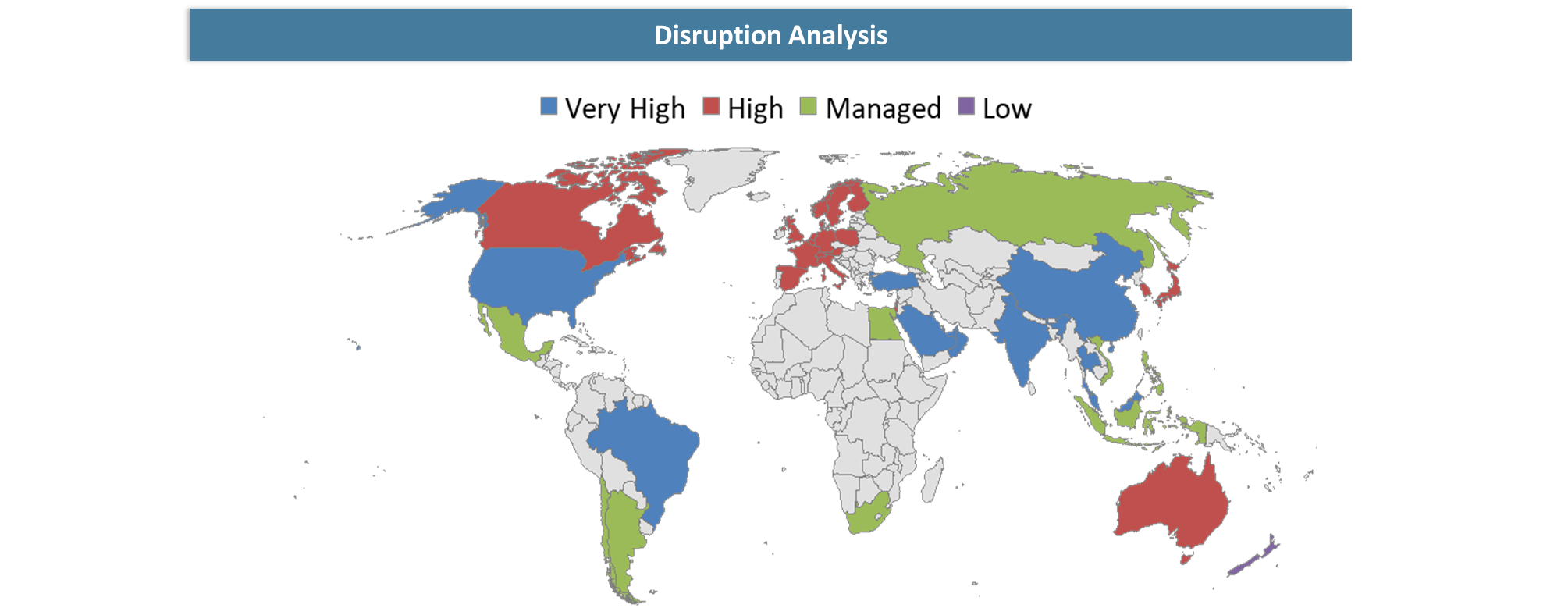
Transition Toward Clean-Label and Functional Ingredient Disruption in Rice Starch and Sweeteners and Derivatives Market
The Rice Starch and Sweeteners and Derivatives Market is witnessing disruption as a result of shifting consumer preferences, ingredient reformulations, and innovations in food processing techniques. The demand for traditional starch is slowly moving towards rice ingredients due to an increase in interest for gluten-free, clean label, hypoallergenic, and plant-based ingredients. Manufacturers are reformulating their products by reducing the use of artificial ingredients and substituting the existing corn, wheat, and synthetic ingredients with rice ingredients.
Disruption in the market is also a result of increased demand for specialty modified starches and natural sweeteners that offer additional benefits such as texture improvement, improved stability, enhanced digestibility, and formulation flexibility. Innovations such as enzymatic processing, starch modification, and fermentation processes have enabled manufacturers to introduce performance-driven rice ingredients for use in applications like infant nutrition, sports nutrition, pharmaceuticals, and personal care applications.
Companies are focusing on diversifying their supply chain with traceable rice ingredients, non-allergen ingredients, and bio-degradable materials. There is also an increasing trend for manufacturers to produce functional food products and health-focused premium products.
BCG Matrix: Company Evaluation

As per the BCG matrix approach towards strategy alignment, the market leaders of the Rice Starch and Sweeteners and Derivatives Market include firms with diverse offerings of starches, effective global distribution of ingredients, efficient modification processes, and strong relationships with customers in the food, pharmaceutical, and industrial industries. Firms like Ingredion Incorporated, Roquette Frères, AGRANA Beteiligungs AG, and BENEO GmbH have established their position based on specialty starch technology, clean-label ingredients, application knowledge, and global manufacturing facilities. The ability of these firms to provide modified starches, sweeteners, and rice ingredients across various industries allows them to remain as market leaders.
The growth market players include Thai Wah Public Company Limited, Emsland Group, Axiom Foods, Inc., and Sunar Mısır. Such companies have adopted clean-label positioning and specialty ingredient offerings to expand their operations into functional foods and nutrition markets. Increasing consumer interest in allergen-free, gluten-free, and plant-based ingredients drives the business growth of these companies.
Rising and specialized companies like Bangkok Starch Industrial Co., Ltd., Thai Flour Industry Co., Ltd., GABIO Co., Ltd., Anhui Shunxin Shenyuan Biological Food Co. Ltd., and Burapa Prosper Co., Ltd. are increasing their market penetration with their production aimed for exports, unique rice starch products, and efficient production processes. Their competitive edge is based on regional strengths, raw materials availability, and focus on ingredients derived from rice.
Competitive regional players that include Sayaji Industries Limited and Grain Processing Corporation keep themselves relevant due to their diversified range of starches, industrial customer base, and consistent supply capability. They remain competitive using their technological prowess, customer base, and extensive experience in ingredient processing.
Market Dynamics
Rising demand for gluten-free and hypoallergenic ingredients
The growing trend towards gluten-free and hypoallergenic food products is driving the application of rice starch and sweetening agents made from rice in food formulations. As stated by Kurppa et al., celiac disease affects up to 1% of people globally, resulting in a steady demand for gluten-free products in the categories of baked goods, snacks, infant foods, and processed foods. The number of people affected by some type of food allergy across the globe exceeds 220 million individuals, which results in a growing demand for hypoallergenic ingredient systems, as indicated by Manea et al. Rice starch has no gluten content, lacks flavor, has high digestibility, and is ideal for use in special food formulations for infants and people who are intolerant to gluten.
Limited raw material consistency due to rice variety differences
The inconsistencies in terms of the consistency of raw materials because of variation in the types of rice used constitute limitations to the Rice Starch and Sweeteners and Derivatives Market. The amylose contents of different rice types, along with differences in their starch granule structures, protein makeup, and gelatinization characteristics, have an effect on viscosity, processability, and sweetness formation. As reported by Kong et al., rice has an apparent amylose content that varies widely, from below 2% in waxy rice to 25-33 percent in high amylose rice. This makes it difficult to predict starch functionality. In addition, research done by Tu et al. has revealed that starch structure, protein content, and crystallinity are responsible for up to 90% of variance in pasting and rheological performance.
Segmentation Analysis
The Global Rice Starch and Sweeteners & Derivatives Market is segmented based on product type, source, form, processing method, functionality, grade, application, distribution channel, and region/countries.
Modified Rice Starch Dominance in the Rice Starch and Sweeteners & Derivatives Market
The Modified Rice Starch market dominates the overall Rice Starch and Sweeteners and Derivatives market since it helps overcome the shortcomings of native rice starch and is used for high-end applications in food, infant formula, cosmetics, drugs, and organic products. The granules of rice starch are small, around 3–10 micrometers in size. There is evidence that the size of rice starch granules can be less than 5 micrometers. It gives excellent characteristics for creating a smooth texture, creamy consistency, and cosmetic powders.
The functionality of rice starch is greatly dependent on the amount of amylose in the starch. Waxy rice has amylose content of less than 1.0%, while in short and medium-grain rice, amylose is 8.7-15.4%, and in long-grain rice, it is 17.1-19.9%.
This segment also benefits from the strength of its raw materials, as the majority (more than 90%) of the world’s rice production occurs in Asia Pacific. According to FAO, rice contributes more than 60% of the total food energy requirement in several populous nations, providing ongoing rice processing capabilities.
Considering the applications of this product, Ingredion emphasizes that rice starches provide stable texture through their shelf-life period, rich and creamy texture, clean label status, and functionality in difficult conditions, including high brix, high protein, frozen, refrigerated, and ambient food products.
Geographical Penetration
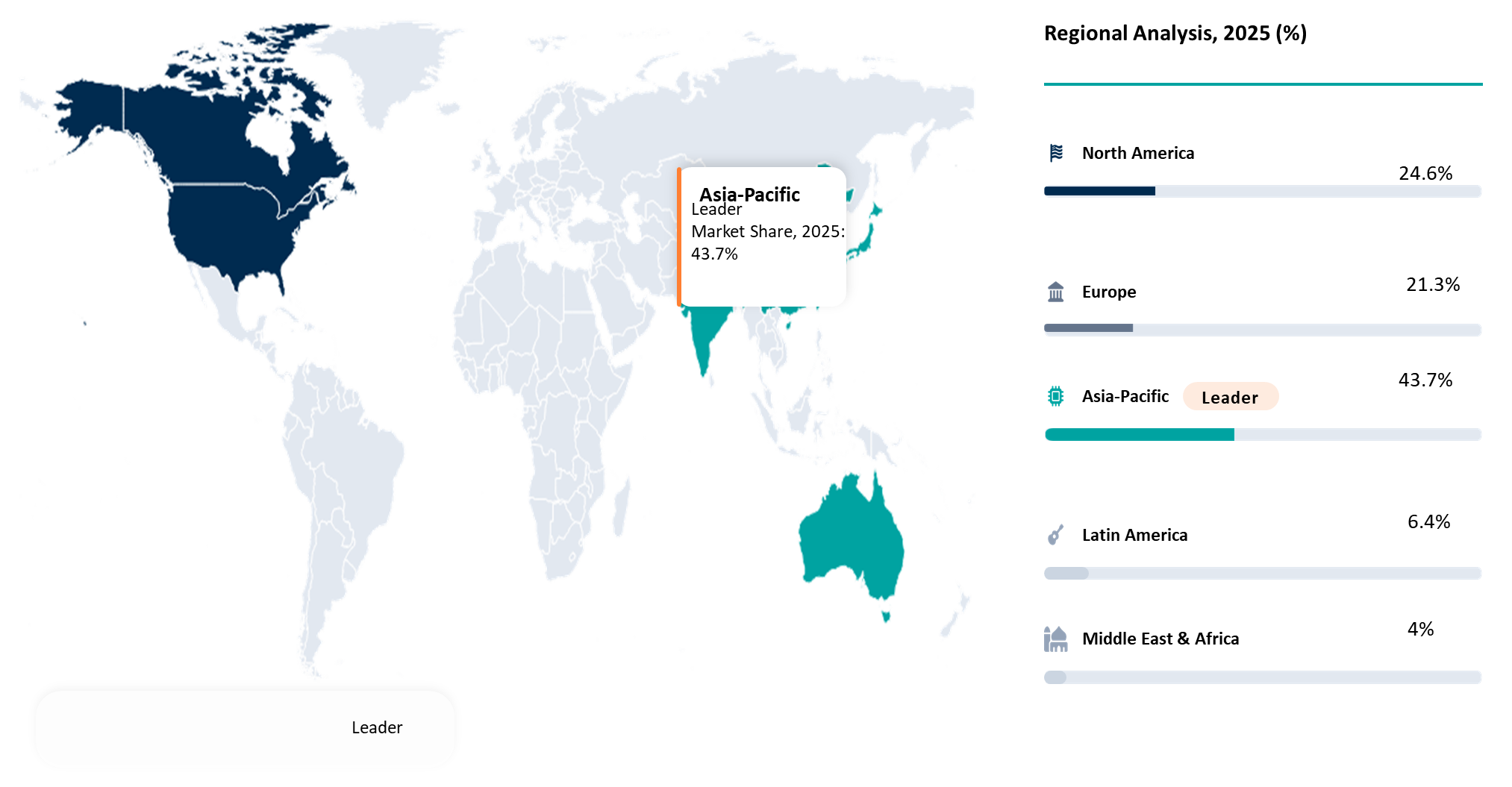
Asia Pacific Leadership Driven by Rice Supply Strength and Ingredient Processing Scale in the Rice Starch and Sweeteners and Derivatives Market
Rice Starch and Sweeteners and Derivatives Market leadership belongs to Asia Pacific due to its incomparable base of rice production, milling industry, and capacity of ingredient manufacturing. Being the largest producer of the product, the region supplies over 90% of world rice, and provides direct access to raw materials in form of broken rice and carbohydrates feedstock for syrups, maltodextrins, dextrins, and modified starches.
Leadership of the region is also facilitated by significant exports from several countries in the region. Thus, rice exports from India in 2025 were 21.55 million metric tons, including 15.15 million tons of non-basmati rice and 6.4 million tons of basmati rice. Thailand exported 7.9 million tons of rice, as well as Vietnam that exported about 7.9 million tons of the product.
Access to such quantity of raw material allows the region to produce rice starch, glucose syrup, maltodextrin, syrup solids, and other derivatives that are used in food applications, infant feeding formula, functional beverages, pharmaceutical industry, cosmetics, and others. With increasing need in ingredients without allergens and GMOs, Asia Pacific continues playing leading role in this regard.
India Rice Starch and Sweeteners & Derivatives Market Trends
India has become an important market growth center in the Rice Starch and Sweeteners and Derivatives Market owing to its high rice production, exports, and food processing industry. In MY 2023-24, India’s total production of rice was 137.8 million metric tons, while in MY 2024-25, it was forecast to reach a record-high level of 142 million metric tons, providing a rich source for the raw materials required for rice starch, rice syrup, maltodextrin, dextrin, and modified starch.
India has also become an active player in international trade. In 2025, India’s exports of rice were up 19.4% to 21.55 million metric tons, comprising 15.15 million tons of non-basmati rice and 6.4 million tons of basmati rice. Broken rice is an essential ingredient for making starch and sweetener products. The Indian government permitted exports of 100% broken rice in 2025 in order to lower its excessive stocks; rice stocks, which include unmilled paddy, reached 67.6 million tons in February, almost nine times higher than the government target.
This strength is bolstered by an additional domestic surplus. According to Reuters, India has produced 146.1 million tons of rice for its crop year ending June 2025, compared to a requirement of only 120.7 million tons, making it easier for value-added ingredient development from rice. In light of the increasing demand for gluten-free, clean label products, infant nutrition ingredients, functional foods, and nutraceuticals, India is very well positioned for ingredient development from rice.
China Rice Starch and Sweeteners & Derivatives Market Outlook
China has a significant market position in the Rice Starch and Sweeteners and Derivatives industry due to high rice production, extensive local processing capabilities, and huge demands from food, beverages, pharmaceuticals, nutraceuticals, and industries. China is projected to produce approximately 146.33 million metric tons of rice in MY2025/26, representing almost 27% of total global rice production, thus forming one of the major sources of raw materials in the world following only India.
China had stable rice production of about 146 million metric tons in MY2025/26, while rising imports by 0.5 million metric tons to 2.8 million metric tons on account of low costs in other countries' markets that help stabilize rice starch, rice syrup, maltodextrin, dextrin, and modified starch supply chains.
Also, China's general grain policy enhances its ingredients security. The country has increased its grain production goal by around 700 million metric tons and expanded its grain stock budget by 6.1% to 131.66 billion yuan in the year ended March 31, 2025.
It is also noted that China has a very robust processing ecosystem for starches and sweeteners, where manufacturers and equipment makers contribute to the processing of starches, derivatives, fermentation, evaporation, crystallization, and sweeteners. With this process, there will be value addition from raw rice and rice by-products to make other food products and ingredients.
Competitive Landscape
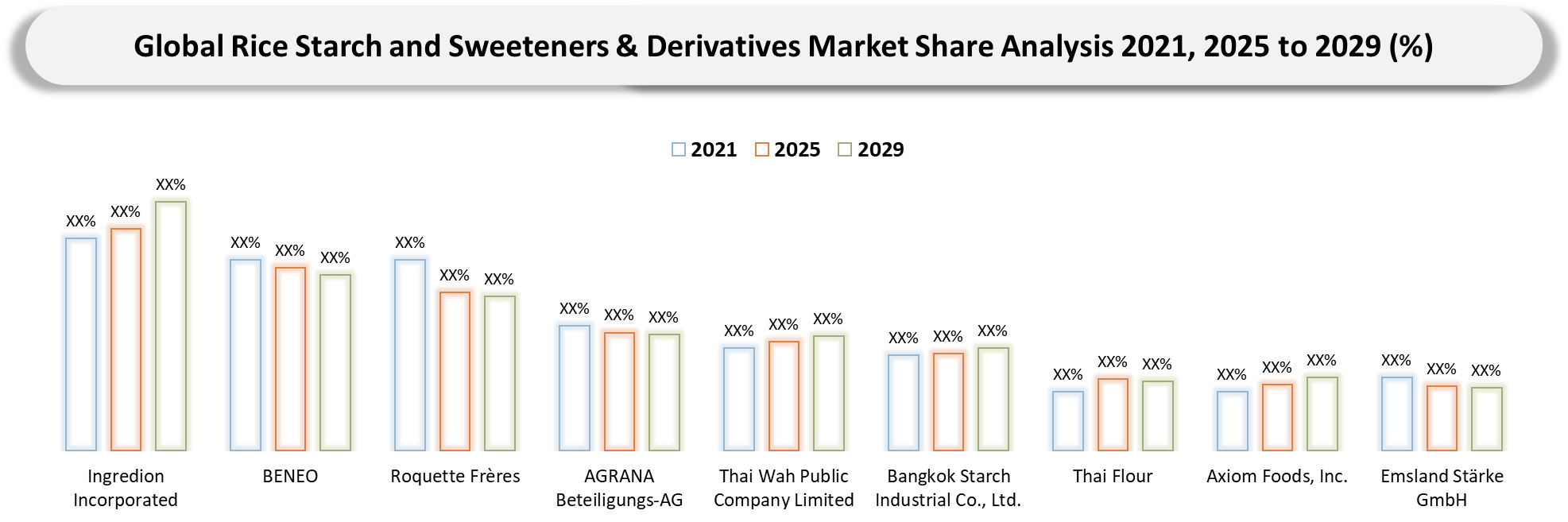
- The competitiveness in the Rice Starch and Sweeteners and Derivatives market industry is gradually shifting from a focus on quantity of starch production to differentiation along lines of speciality ingredients know-how, clean-labeling, processing skills, and product applications. The major players in this market include Ingredion Incorporated, BENEO GmbH, Roquette Frères, AGRANA Beteiligungs AG, Thai Wah Public Company Limited, Bangkok Starch Industrial Co., Ltd., Thai Flour Industry Co., Ltd., and Emsland Stärke GmbH. Some of the differentiating factors of companies like Ingredion, Roquette, AGRANA, and BENEO include their global range of ingredients, expertise in starch modification, technical know-how, and wide application in various industries.
- On the other hand, specialized and regional manufacturers like Axiom Foods, Inc., Sayaji Industries Limited, Grain Processing Corporation, Burapa Prosper Co., Ltd., GABIO Co., Ltd., Anhui Shunxin Shenyuan Biological Food Co. Ltd., and Sunar Mısır gain competitive advantage by engaging in efficient production, sourcing local raw materials, manufacturing with an export orientation, and customizing products for specific niches. The competitive edge is more likely to be derived from the capability to secure consistent raw materials, provide formulations free from any potential contamination or allergens, provide formulation assistance, and cater to growth-oriented industries such as infant formula, functional foods, nutraceuticals, cosmetics, and biodegradable products.
Key Developments
- February 2026 - BENEO reported that its Vietnam sustainable rice farming project reached its first milestone with 500 tonnes of SRP-certified paddy rice harvested in December 2025, strengthening traceable sourcing for rice-based ingredients.
- July 2025 - BENEO partnered with Rikolto and CarbonFarm to promote sustainable rice farming in Vietnam’s Mekong Delta, supporting long-term rice raw material security for rice starch ingredients.
- October 2025 - Roquette launched AMYSTA L 123, a label-friendly soluble starch made through an enzyme-free and chemical-free process, strengthening clean-label starch innovation.
- April 2026 - Roquette introduced Beauté by Roquette DS 700, a starch-based and biodegradable cosmetic softgel solution, expanding starch derivative applications in personal care.
- April 2026 - Thai Wah established a new subsidiary in China, Thai Wah Food Zhejiang Company Limited, to manufacture, import, export, and distribute food-related products, supporting regional expansion.
- January 2025 - Axiom Foods launched Oryzatein 2.0 rice protein for plant-based and infant nutrition applications, strengthening its broader rice-derived ingredient portfolio.
White Space Opportunities
DataM perceives the potential for white spaces within the Rice Starch and Sweeteners and Derivatives Market that goes beyond the typical applications of thickening and sweetness for foodstuffs. While the focus of many players in the market remains on commodities such as rice starch, rice syrups, and maltodextrins, there are some under-penetrated segments within the market such as infant nutrition, gluten-free bakery products, allergen-free products, medical nutrition, beverages, cosmetics, and biodegradable packaging. Such segments will require highly digestible and non-allergenic ingredients that are clean label and have no taste, very small particle size, and good formulation stability. Suppliers that cater to these applications can expect higher margins and differentiation as opposed to being mere commodity starches.
A trend that could create opportunities for suppliers is how they package and promote their ingredient solutions. Suppliers that offer formulation guidance based on the applications they serve, offer customization of their modified starches, have clear labeling for traceability, have their ingredients available in organic or non-GMO forms, and perform well are more likely to be preferred by customers than competitors.
DMI Opinion
DataM suggests that this market is not dependent solely on starch availability; it depends on the ability of the manufacturer to provide consistent quality products and application-dependent performance. There has been a shift away from starch commodities in favor of specialty rice-based ingredients for formulations that are gluten-free, hypoallergenic, non-genetically modified, plant-based, and digestible.
As per DataM, manufacturers who can provide consistency in terms of texture, stability, sweetness, purity, and traceability will have a competitive edge in the market, provided they have the capacity for supporting formulations, sourcing quality raw materials and achieving competitiveness in price. Formulations used in high-value applications like infant feeding, functional foods, nutraceuticals, pharmaceuticals, cosmeceuticals, and biodegradable packaging will be key to success in this market. Thus, the market needs to be considered a specialty ingredient market.
Why Choose DataM?
- Ingredients and Process Innovation: Describes developments in native rice starch, modified rice starch, rice syrups, maltodextrin, dextrin, glucose syrup, syrup solids, clean label starches, organic rice ingredients, and specialty rice-derived ingredients.
- Position of Major Competitors in the Industry: Analyzes major competitors on the basis of product portfolio, sourcing of rice, starch modification techniques, sweetener manufacturing capabilities, food grade quality, export opportunities, pricing, and applications supported.
- Market Trend & Dynamics: Identifies trends such as gluten free products, hypo-allergenic ingredients, clean label formulation, infant nutrition, functional foods, vegetarian products, plant-based food products, increased consumption of rice derivatives for nutritional products and cosmetics.
- Strategies Adopted by Major Players: Examines strategic initiatives such as sustainable rice sourcing, innovations, capacity enhancement, regional marketing, specialty ingredient offerings, and collaborations with food, nutraceuticals, pharmaceutical, and personal care product manufacturers.
- Rice Starch and Sweeteners and Derivatives Market Pricing and Availability: Provides information on price fluctuations, variety of rice, manufacturing cost, export-import prices, food grade standards, and availability of rice-based ingredients across different geographies.
Target Audience 2026
- Food and beverage ingredient manufacturers
- Rice starch and rice sweetener producers
- Processed food and bakery manufacturers
- Infant nutrition and pediatric food companies
- Nutraceutical and functional food brands
- Pharmaceutical excipient manufacturers
- Cosmetics and personal care companies
- Animal feed and pet nutrition manufacturers
- Paper, packaging, adhesive, and bioplastics companies
- Procurement, strategy, and market intelligence teams
- Food technology and formulation R&D teams
- Investors, private equity, and venture capital firms
- Ingredient distributors and specialty chemical suppliers
- Rice millers, processors, and agri-commodity companies
- Consulting and food industry advisory firms


























































