


Recreational Boats Market Size
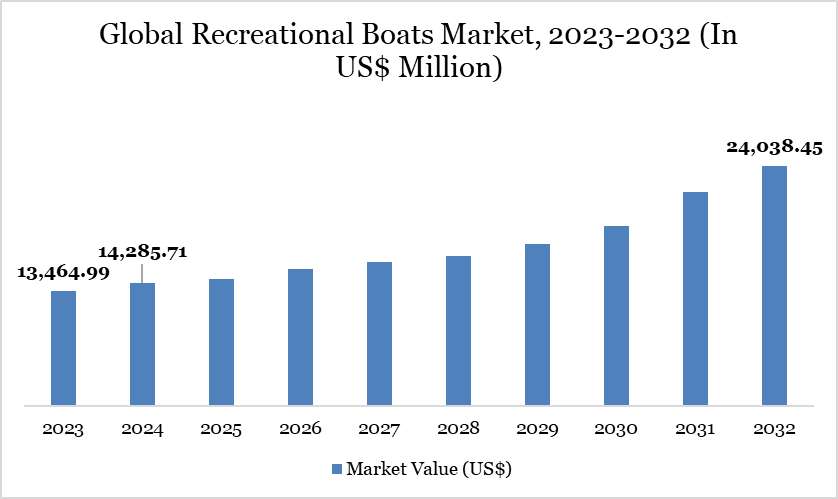
The recreational boats market reached US$14,285.71 million in 2024 and is expected to reach US$24,038.45 million by 2032, growing at a CAGR of 6.8% during the forecast period 2025-2032.
The global recreational boats market is experiencing notable growth, propelled by increasing disposable incomes, a burgeoning tourism sector, and a rising interest in leisure activities.
This expansion is further supported by the development of new water bodies as tourist hotspots and strong government support for the tourism industry. Additionally, the market benefits from the growing participation in recreational and competitive boating activities worldwide. The recreational boating industry is witnessing a significant shift toward sustainability, with manufacturers integrating eco-friendly technologies into their vessels. This includes the development of electric and hybrid propulsion systems aimed at reducing carbon emissions and minimizing environmental impact. For instance, the adoption of electric engines in recreational boats is gaining traction, reflecting a broader industry commitment to environmental stewardship.
The market is also experiencing growth due to the expansion of boat rental and sharing platforms, making recreational boating more accessible to a broader audience. These platforms allow individuals to enjoy boating experiences without the financial commitment of ownership, catering to the preferences of younger generations seeking flexible and cost-effective leisure options. This trend aligns with the broader sharing economy movement, which emphasizes access over ownership.
The Asia-Pacific region is rapidly emerging as the fastest-growing market for recreational boats, driven by several key factors. Economic growth and rising disposable incomes in countries like China and India have significantly increased consumer spending on leisure activities, including boating. The expanding tourism industry in these emerging economies further fuels market growth by attracting more visitors interested in water-based activities. Government initiatives and infrastructure development, such as the construction of marinas and waterfronts, create a favorable environment for the boating industry by promoting tourism and recreational activities.
Recreational Boats Market Trend
Sustainability is a leading trend in the recreational boats market, driven by increasing environmental awareness and stricter regulations. Manufacturers are integrating eco-friendly materials such as recycled plastics, natural fibers, and FSC-certified marine-grade plywood to minimize environmental impact. Solar panels, wind turbines, and hybrid propulsion systems are also being adopted to improve energy efficiency and reduce emissions.
The integration of renewable energy systems such as solar panels, wind turbines, and hybrid propulsion, is improving energy efficiency and lowering emissions. Design innovations like hydrodynamic hulls and lightweight structures further support fuel efficiency and environmental compliance.
Companies like Marine Window Services (MWS) are leading the shift by using durable, low-impact materials and supporting marine conservation efforts. As environmental responsibility becomes a market standard, firms that embrace sustainable practices are better positioned for long-term growth and brand differentiation.
Recreational Boats Market Scope
Metrics | Details |
By Type | Yachts, Sailboats, Personal Watercraft Boats and Others |
By Activity | Watersports and Cruising, Fishing and Others |
By Boat Size | Small Boats (<30 Feet), Medium Boats (30-50 Feet) and Large Boats (>50 Feet) |
By Material | Aluminum, Steel, Fiberglass and Others |
By Engine | Outboards, Inboards and Others |
By Region | North America, South America, Europe, Asia-Pacific, Middle East and Africa |
Report Insights Covered | Competitive Landscape Analysis, Company Profile Analysis, Market Size, Share, Growth |
Recreational Boats Market Dynamics
Technological Advancements and the Shift Toward Sustainable Boating
Technological innovations in boat manufacturing and propulsion systems are transforming the recreational boating market. The industry is increasingly shifting toward electric and hybrid propulsion systems, driven by stringent environmental regulations and growing consumer awareness of sustainability. According to the UN Trade and Development (UNCTAD), the maritime sector contributes nearly 2.8% of global greenhouse gas emissions, prompting stricter emission norms.
The rise of electric boats (e-boats) is a direct response to sustainability concerns. Companies like Torqeedo, Candela, and X Shore are leading advancements in electric propulsion technology, offering zero-emission boats with enhanced efficiency. The European Commission’s Green Deal aims for climate neutrality by 2050, pushing manufacturers toward electric and alternative fuel-based solutions. The market for electric boats is anticipated to grow significantly, according to the International Energy Agency (IEA).
Additionally, the integration of autonomous navigation systems and smart connectivity features is revolutionizing user experience. Companies are incorporating Artificial Intelligence (AI) and Internet of Things (IoT) technologies to provide enhanced safety, automated docking, and real-time monitoring of engine performance. Brunswick Corporation, a major player in the boating industry, has invested in autonomous docking systems, making recreational boating more accessible and user-friendly.
Material innovations are also shaping the future of the boating industry. The use of lightweight composites, carbon fiber, and bio-based resins is improving fuel efficiency and reducing emissions. Sustainable boatbuilding practices are being adopted widely, with manufacturers focusing on recyclable materials and eco-friendly coatings.
High Ownership and Maintenance Costs
Recreational boats, particularly yachts and luxury vessels, require substantial initial investments, making them inaccessible to many potential buyers. Even smaller boats, such as personal watercraft and sailboats, can be expensive, with costs ranging from tens of thousands to millions of dollars, depending on size, brand, and features.
Beyond the purchase price, ongoing expenses such as docking fees, insurance, fuel, repairs, and routine maintenance create a substantial financial burden. For instance, Marina docking fees typically range from US$30 to US$150 per foot per month, depending on the size of the boat and the location and amenities of the marina. Similarly, insurance costs are another major concern, as premiums vary based on factors like boat type, usage frequency, and geographic location.
Moreover, recreational boating industry is highly sensitive to fluctuations in fuel prices. Since most boats rely on gasoline or diesel engines, rising fuel costs can significantly impact operational expenses, discouraging frequent usage. According to the US Energy Information Administration (EIA), crude oil prices surged in 2021 and 2022, leading to a sharp increase in fuel costs for boat owners. The price of marine diesel fuel in certain regions has risen by over 40% in the last five years, making it costly for boaters to operate their vessels regularly.
Additionally, maintenance costs have increased due to inflation and supply chain disruptions. The rising costs of essential components such as engines, batteries, and navigation systems make boat repairs more expensive. Supply shortages caused by geopolitical tensions and global trade disruptions further delay the availability of critical spare parts, impacting the boating experience and reducing market growth potential.
Recreational Boats Market Segment Analysis
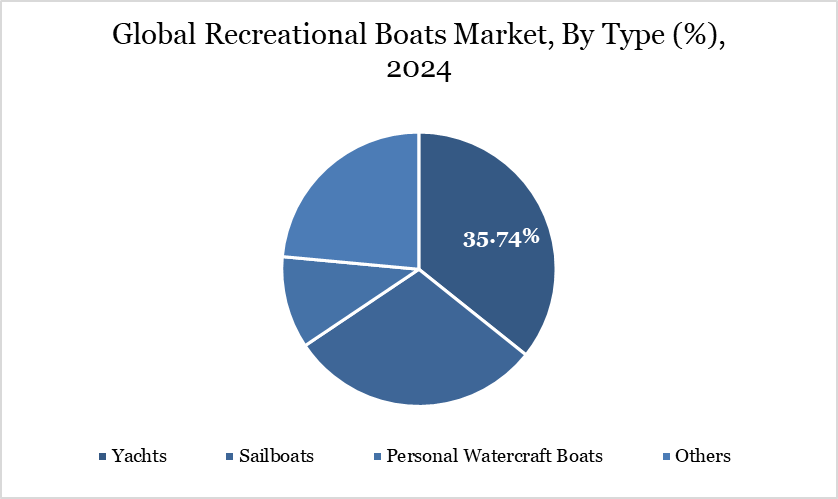
The global recreational boats market is segmented based on type, activity, boat size, material, engine and region.
Sustainable Design, Personalization, and Wealth Expansion Drive Recreational Boat Demand
Yachts in the recreational boats market were valued at US$ 5,105.24 million in 2024 and is expected to reach US$ 8,360.06 million by 2032, growing with a CAGR of 6.4% between 2025 and 2032. The global recreational boats market is experiencing steady growth, driven by increasing disposable incomes, a flourishing tourism sector, and a rising interest in water-based recreational activities. This expansion is underpinned by technological advancements, evolving consumer preferences, and a heightened focus on sustainability.
There is a growing emphasis on sustainability within the yacht industry. Manufacturers are integrating eco-friendly technologies, such as hybrid propulsion systems and energy-efficient designs, to reduce environmental impact. For instance, the yacht "Reduce," showcased at the 2025 Miami International Boat Show, exemplifies this trend with its eco-friendly features. This shift aligns with the broader global movement towards environmental responsibility and caters to the preferences of environmentally conscious consumers.
Yacht buyers are increasingly seeking personalized and unique designs that reflect their individual tastes and lifestyles. This trend has led to innovative concepts, such as the Migaloo M5, a 500-foot submersible superyacht featuring customizable luxury amenities, including an onboard spa and helipad. The desire for bespoke experiences is driving manufacturers to offer more tailored options, enhancing the appeal of yacht ownership.
The expansion of the global economy has led to a significant increase in the number of high-net-worth individuals, particularly in emerging markets. This demographic shift has expanded the potential customer base for luxury yachts, contributing to market growth. As wealth distribution becomes more concentrated among a smaller group of affluent individuals, the demand for luxury goods and services, including yachts, has seen a notable rise. The growth in wealth among these individuals has not only increased their purchasing power but also their desire for exclusive and high-end experiences, such as owning and cruising on luxury yachts.
Recreational Boats Market Geographical Penetration
North America’s Booming Marine Industry Drives Recreational Boat Market Expansion
North America’s recreational boats market was valued at US$6,554.29 million in 2024 and is estimated to reach US$11,555.69 million by 2032, growing at a CAGR of 7.4% during the forecast period from 2025-2032.
North America commands a significant share of the global recreational boats market, led by strong economic fundamentals, high disposable incomes, and a deeply rooted boating culture. The US remains the largest contributor, with around 12 million registered boats and US$56.7 billion in annual sales from boats, marine products, and services. The domestic manufacturing base, where 95% of boats sold are made locally, supports economic growth and ensures supply chain resilience. Rising consumer interest in activities such as fishing, cruising, and watersports continues to fuel demand across the country.
Major players like Brunswick Corporation, MasterCraft Boat Holdings, and Malibu Boats are strengthening their market presence through innovation, customer-centric models, and strategic expansions. For example, Sportsman Boats announced an US$8 million expansion in March 2024, enhancing its production capabilities to meet growing US demand. The recreational boating sector’s contribution to the US economy is substantial, with boating and fishing representing the largest segments of the US$639.5 billion outdoor recreation economy, accounting for 2.3% of national GDP in 2023.
Canada and Mexico also play critical roles in North America's market growth. Canada has over 2 million recreational boats, supported by effective safety regulations and a maritime sector contributing over US$3 billion annually. In Mexico, coastal tourism destinations like Cancún, Puerto Vallarta, and Cabo San Lucas are driving demand for yachts and sailboats. The region’s strong infrastructure, favorable economic environment, and vibrant marine culture collectively position North America as a key growth hub for the global recreational boats industry.
Recreational Boats Market Regulatory Analysis
The global recreational boats market operates within a complex framework of regulations aimed at ensuring safety, environmental protection, and industry standardization. These regulations vary by region and significantly influence manufacturing, operations, and market dynamics.
In the European Union, the Recreational Craft Directive (RCD) establishes minimum technical, safety, and environmental standards for recreational watercraft ranging from 2.5 to 24 meters in length. Initially introduced as Directive 94/25/EC and later amended by Directive 2003/44/EC, the RCD was revised in 2013 to align with the New Legislative Framework, resulting in Directive 2013/53/EU, commonly referred to as RCD. This directive mandates compliance with essential requirements related to design, construction, and emissions, ensuring that products meet stringent safety and environmental criteria before entering the European market.
Similarly, in In the US, regulatory oversight is provided by various federal and state agencies. For instance, the National Oceanic and Atmospheric Administration (NOAA) proposed the North Atlantic Right Whale Vessel Strike Reduction Rule, aiming to impose speed restrictions on small boats along the Eastern Seaboard to protect endangered whale species. This proposal faced opposition from industry stakeholders concerned about its economic impact on the boating sector.
Additionally, local regulations can directly affect recreational boating activities. For example, in the Firth of Clyde, Scotland, the Peel Ports Clydeport harbor authority proposed a "leisure vehicle conservancy fee" on small boats, eliciting criticism from boat owners and public figures who argue that such charges could deter tourism and traditional maritime activities. Significant contribution of recreational boating to the broader outdoor recreation economy. According to the US Bureau of Economic Analysis (BEA), the outdoor recreation sector accounted for 2.3% of the US gross domestic product (GDP) in 2023, equating to US$639.5 billion.
Recreational Boats Market Competitive Landscape
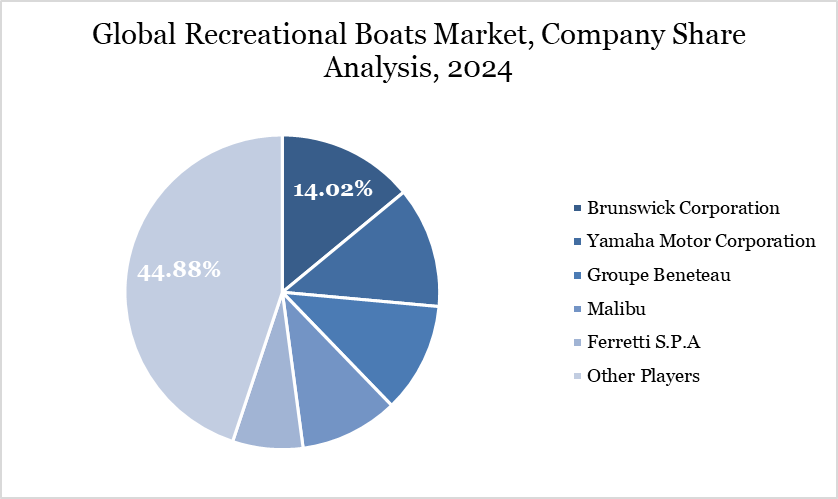
The major global players in the market include Brunswick Corporation, Yamaha Motor Co Ltd, Groupe Beneteau, Malibu Boats Inc, Bryton Marine Group, Ferretti S.P.A, Mastercraft Boat Holdings, Inc, Nautique Boats, Regal Marine Industries, Inc., Marine Products Corporation.
Key Developments in the Recreational Boats Market
- September 2026: Brunswick announced that NAVAN Boats will unveil the new C38 at the Cannes Yachting Festival, expanding its premium recreational boat portfolio.
- September 2026: Brunswick highlighted its strategy of integrating AI, autonomous navigation and connected technologies into recreational boats, including expanded use of its AutoCaptain system and an upcoming onboard virtual assistant.
- August 2026: Yamaha Marine Connected Boat expanded its partnership with Skipperi, creating new dealer revenue opportunities through connected-boat and boat-club services.
- August 2026: Malibu Boats reported strong fiscal 2026 fourth-quarter performance, with net sales rising 42.7% to $295.5 million and unit volume increasing 19.2%.
- August 2026: Ferretti Group reported its H1 2026 financial results as it navigated a more challenging luxury-yacht market, with new-yacht revenue reaching approximately €585.6 million.
- August 2026: MasterCraft announced its fiscal 2026 fourth-quarter and full-year earnings schedule, reflecting continued focus on its premium recreational boat business.
- July 2026: Yamaha Motor joined a proof-of-concept project with Finnish organization Cefmof to explore a hydrogen-powered sauna boat, supplying HARMO electric boat-control technology.
- July 2026: Nautique hosted major 2026 wakeboarding and wakesurfing championships, reinforcing its positioning in the premium watersports and recreational boating segment.
- July 2026: Ferretti Group continued preparations for its 2026 Private Preview in Monaco, showcasing its luxury-yacht portfolio ahead of major European boat shows.
- June 2026: Groupe Beneteau announced plans to halt production at its Cadillac, Michigan facility and divest the facility and the Four Winns, Scarab and Glastron brands as part of an adaptation of its U.S. operations.
- May 2026: Brunswick received a company-record 15 Boating Industry Top Product Awards across 13 brands, covering boats, propulsion, vessel control and marine electronics.
- May 2026: Bryton Marine Group was recognized among Canada’s Best Managed Companies for the ninth consecutive year, entering the program's Platinum Club.
- May 2026: MasterCraft reported fiscal Q3 2026 net sales of $78.2 million, supported by favorable model mix, options sales, pricing and lower dealer incentives.
- May 2026: Ferretti underwent a major leadership change after Weichai-backed shareholders secured control of the board, with Stassi Anastassov appointed as the new CEO.
- May 2026: Marine Products Corporation reported Q1 2026 net sales of $66.5 million, up 13% year over year, although boat unit volume declined slightly.
Why Choose DataM?
Data-Driven Insights: Dive into detailed analyses with granular insights such as pricing, market shares and value chain evaluations, enriched by interviews with industry leaders and disruptors.
Post-Purchase Support and Expert Analyst Consultations: As a valued client, gain direct access to our expert analysts for personalized advice and strategic guidance, tailored to your specific needs and challenges.
White Papers and Case Studies: Benefit quarterly from our in-depth studies related to your purchased titles, tailored to refine your operational and marketing strategies for maximum impact.
Annual Updates on Purchased Reports: As an existing customer, enjoy the privilege of annual updates to your reports, ensuring you stay abreast of the latest market insights and technological advancements. Terms and conditions apply.
Specialized Focus on Emerging Markets: DataM differentiates itself by delivering in-depth, specialized insights specifically for emerging markets, rather than offering generalized geographic overviews. This approach equips our clients with a nuanced understanding and actionable intelligence that are essential for navigating and succeeding in high-growth regions.
Value of DataM Reports: Our reports offer specialized insights tailored to the latest trends and specific business inquiries. This personalized approach provides a deeper, strategic perspective, ensuring you receive the precise information necessary to make informed decisions. These insights complement and go beyond what is typically available in generic databases.
Target Audience
Manufacturers/ Buyers
Industry Investors/Investment Bankers
Research Professionals
Emerging Companies





























































