


Precision Nutrition Market Size
The precision nutrition market size reached US$ 7.89 billion in 2025 and is expected to reach US$ 27.4 billion by 2033, growing with a CAGR of 16.38% during the forecast period 2026-2033.
The global precision nutrition industry is experiencing substantial expansion driven by an increase in consumer demand for individualized health and wellness solutions. The growing recognition of nutrition's role in illness prevention, along with the global transition to preventive healthcare, has established precision nutrition as a feasible long-term option. The amalgamation of artificial intelligence and sophisticated analytics with genetic and biomarker testing is augmenting the scalability and efficacy of dietary recommendations.
As healthcare expenses rise, consumers are adopting proactive, individualized approaches for illness management and wellbeing enhancement. Strategic partnerships among technology providers, healthcare experts, and nutrition firms are further influencing the competitive environment.
Viome and Thorne are at the forefront of AI-driven platforms that provide data-informed insights and tailored nutritional treatments. The market's growth is further bolstered by the growing acceptance in emerging economies, particularly in Asia-Pacific, where rising disposable incomes and heightened health awareness persistently drive demand for customized nutrition services.
Precision Nutrition Market Trend
Technological advancements are a pivotal trend redefining the precision nutrition sector. Cutting-edge genetic testing, biomarker evaluation, and AI-driven instruments now offer highly individualized nutritional guidance. Viome has an always evolving AI engine that evaluates microbiome data, health feedback, and external variables to provide individualized health ratings and suggestions.
Thorne use extensive knowledge graphs and neural networks to analyze billions of biological data points, providing comprehensive and predictive health insights. Moreover, microbiome-oriented nutrition and personalized supplements are emerging as significant trends, facilitating dietary choices that correspond with gastrointestinal health and metabolic requirements.
The integration of digital health is propelling this trend; mobile health application downloads reached 3.2 billion in 2023, with nutrition-centric applications comprising 23% of the total. The advancement of wearable technology and real-time biomarker monitoring has made it possible to provide immediate, accurate recommendations. These technologies enhance user experience and promote sustained engagement with nutritional therapies.
Precision Nutrition Market Key Takeaways
- The market generated US$ 7.89 billion in 2025, highlighting increasing commercial adoption of individualized nutrition services.
- Asia-Pacific represents the fastest-expanding regional opportunity due to rising disposable income, digital health adoption, and increasing chronic disease prevalence.
- Disease management applications are expected to deliver the strongest expansion as healthcare providers increasingly integrate nutrition into chronic care pathways.
- Artificial intelligence, biomarker analytics, and microbiome science are becoming core competitive differentiators among leading precision nutrition companies.
- Pricing remains one of the primary adoption constraints, encouraging vendors to develop scalable testing platforms and subscription models that improve affordability.
- Strategic collaborations between healthcare providers, diagnostics companies, and nutrition technology firms continue to reshape the competitive landscape.
For more details on this report, Request for Sample
Precision Nutrition Market Scope
| Metrics | Details |
| Market Size (2025) | US$ 7.89 Billion |
| Forecast Value (2033) | US$ 27.40 Billion |
| CAGR | 16.38% (2026-2033) |
| Historic Years | 2023-2024 |
| Base Year | 2025 |
| Forecast Period | 2026-2035 |
| Segments Covered | Technology, Platform Type, Application, End User, Region |
| Leading Region | North America |
| Fastest Growing Region | Asia-Pacific |
Precision Nutrition Market Dynamics
Individualized Health Requirements and Preventive Emphasis Expansion of the Fuel Market
Multiple reasons are driving the expansion of the precision nutrition industry. The primary factor is the rising consumer desire for personalized health measures, driven by the increasing incidence of chronic diseases. By 2023, 45% of the 12 million persons in North America who underwent genetic testing did so to acquire nutrition-specific health insights. This indicates a robust connection between nutrigenomics and dietary selections.
Moreover, AI-driven systems are improving accessibility and precision in tailoring suggestions based on genetic and biomarker data. Preventive healthcare is increasingly popular as customers aim to reduce future medical costs. The amalgamation of AI with health monitoring instruments facilitates this transition by providing anticipatory dietary recommendations.
Strategic alliances among healthcare, technology, and nutrition sectors are enhancing the provision of integrated and efficient solutions. The emergence of microbiome-based goods and the efficacy of customized supplements demonstrate the growing confidence customers have in data-driven, scientifically validated health enhancement.
Elevated Testing Expenses Present an Obstacle to Widespread Adoption
The encounters considerable obstacles owing to elevated testing expenses. The examination of genetic material and biomarkers necessitates advanced equipment and skilled interpretation, resulting in increased consumer costs. The expenses are transferred via costly at-home test kits and customized supplement programs, rendering them unattainable for price-sensitive consumers, especially in developing economies.
Subscription-based models, although providing continuous value, increase the overall expense over time, and numerous services are not reimbursed by health insurance. In areas characterized by significant income disparity, such as certain countries in Asia, elevated prices restrict market penetration and scalability.
To achieve widespread adoption, firms must prioritize the development of cost-reduction initiatives and scalable platforms. In the absence of this, the complete potential of precision nutrition may be restricted to affluent demographics, hence constraining its public health influence and impeding development in neglected areas. Ensuring the affordability of tailored nutrition is essential for achieving equitable health innovation worldwide.
Precision Nutrition Market Opportunities
Investment opportunities extend well beyond personalized supplements. Technology developers can expand AI-driven nutrition platforms capable of integrating wearable health devices, microbiome sequencing, biomarker analytics, and electronic health records into unified consumer ecosystems.
Ingredient manufacturers also have attractive opportunities through customized formulations targeting metabolic health, immune support, gastrointestinal wellness, sports nutrition, and healthy aging. Growing demand for bioactive compounds, probiotics, personalized vitamins, functional ingredients, and microbiome-supporting formulations creates new commercialization opportunities across pharmaceutical, nutraceutical, and food sectors.
Retail distribution is also evolving rapidly. Traditional pharmacies remain important channels for clinically supported nutrition products, while direct-to-consumer platforms continue expanding through subscription services, digital consultations, and home-based testing kits. Online retail offers nutrition companies greater consumer engagement while enabling continuous product personalization based on evolving health data.
Precision Nutrition Market Segment Analysis
The global is segmented based on technology, platform type, application, end-user and region.
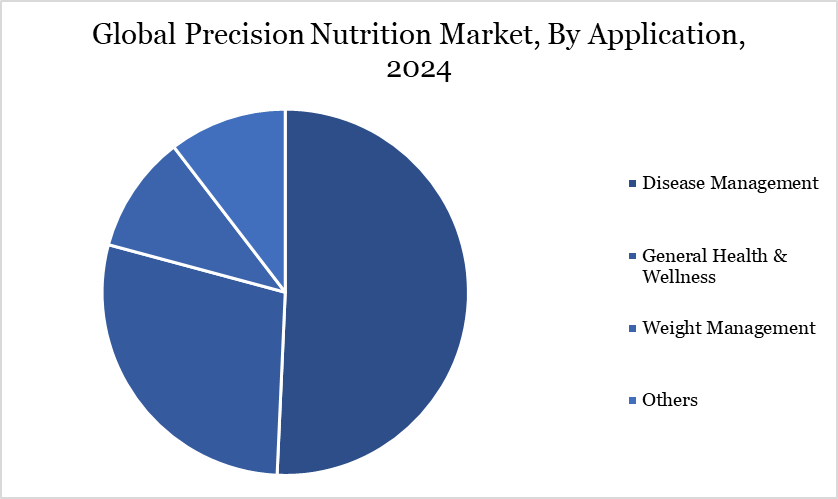
Precision Nutrition Enhances Chronic Disease Management with Customized Dietary Approaches
The disease management sector is anticipated to have the most significant growth in the, propelled by the increasing implementation of individualized dietary approaches to tackle chronic and lifestyle-related health issues. Precision nutrition facilitates tailored advice for ailments including diabetes, cardiovascular diseases, obesity, and gastrointestinal disorders by utilizing genetic, biomarker, and lifestyle information.
Progress in artificial intelligence, genetics, and microbiome analysis has markedly improved the creation of customized treatments that better patient outcomes. These breakthroughs offer profound insights into individual metabolic reactions and microbiome makeup, enhancing the precision and efficacy of nutritional therapies.
The changing healthcare environment highlights the importance of preventative care, resulting in a heightened demand for individualized nutrition as a crucial component of disease management strategies. Moreover, digital health platforms facilitate the real-time monitoring of disease-specific biomarkers, allowing healthcare professionals to assess the efficacy of dietary modifications in conjunction with medical therapies. This integration positions illness management as a fundamental component in the advancement of precision nutrition.
Precision Nutrition Market Geographical Share
The Asia Pacific Region has Emerged as a Hub for the Growth of Precision Nutrition
The Asia Pacific area is the most rapidly expanding sector in the precision nutrition industry, driven by increasing health consciousness, technological advancements, and a burgeoning middle-class demographic. By 2030, the middle class is expected to comprise 3.5 billion individuals, 65% of the world population, thereby increasing the demand for tailored nutrition. Between 2020 and 2023, discretionary health and wellness expenditures in Asia increased by 8.5% per annum, as reported by the Asian Development Bank.
In 2025, smartphone penetration reached 68%, and downloads of health-related applications increased by 34% year-over-year, with 72% of urban consumers utilizing at least one digital tool for nutrition tracking. Chronic conditions like diabetes are increasing demand; Asia comprises 60% of the worldwide diabetic population, with associated healthcare expenditures anticipated to reach $200 billion in 2025.
Government investments enhance market potential-Japan designated $2.8 billion for personalized healthcare in 2024, while Singapore earmarked SGD 400 million for nutrition counseling. Organizations such as GeneQuest, AMILI, and Xcode Life are leading innovation by providing culturally tailored, affordable, and technology-driven solutions.
Precision Nutrition Market Sustainability Analysis
Sustainable innovation is emerging as a fundamental component in the advancement of precision nutrition, as enterprises strive to mitigate environmental effects while promoting long-term health equity. The growing dependence on digital technology, including AI and biomarker-based applications, diminishes the necessity for resource-intensive procedures and in-person consultations, thereby reducing the carbon footprint of healthcare delivery.
Moreover, as companies expand personalized nutrition via mobile platforms and at-home kits, they are integrating packaging innovation and recyclable materials to improve environmental sustainability. The sustainable procurement of components for customized supplements and functional foods is increasingly a priority for leading companies. Cost continues to impede access; yet, the pursuit of affordability coincides with sustainability by promoting efficient operations and reducing waste.
The emergence of microbiome-centric goods and digital health monitoring diminishes systemic resource utilization by prioritizing prevention rather than cure. With increasing consumer awareness, sustainability both ecological and economic is poised to become a fundamental principle in the continuous advancement of precision nutrition.
Precision Nutrition Market Major Players
The major global players in the market include Viome Life Sciences, Thorne HealthTech, Habit, DayTwo, Nutrigenomix, InsideTracker, Care/of, Persona Nutrition, Xcode Life, 23andMe.
Precision Nutrition Market Recent Developments
- May 2026: Nestlé expanded its precision nutrition portfolio through AI-driven personalized nutrition platforms, strengthening consumer-specific diet recommendation systems and metabolic health optimization solutions globally.
- April 2026: PepsiCo accelerated investment in data-driven functional nutrition products, integrating biomarker-based personalization tools into its health and wellness product ecosystem.
- March 2026: Danone launched advanced gut-health and microbiome-focused precision nutrition programs, enhancing personalized dietary intervention capabilities across clinical and consumer segments.
- February 2026: Amway expanded AI-based nutrition assessment tools within its personalized supplement platforms, improving individualized nutrient optimization and lifestyle-based nutrition planning.
- January 2026: Herbalife Nutrition strengthened digital nutrition coaching systems with wearable-integrated health tracking to enhance personalized diet recommendations and metabolic profiling.
- December 2025: Abbott Laboratories advanced clinical-grade precision nutrition solutions through diagnostic-linked nutrition interventions targeting chronic disease management and therapeutic nutrition support.
- November 2025: GNC Holdings expanded personalized supplement formulation services using AI-driven consumer health data analytics and genetic-based nutrition profiling.
- October 2025: DSM-Firmenich enhanced precision nutrition ingredient innovation focusing on bioactive compounds and tailored nutritional solutions for individualized health outcomes.
- September 2025: Bayer increased investment in preventive nutrition and digital health ecosystems integrating precision nutrition into chronic disease risk reduction strategies.
- August 2025: IBM strengthened AI-powered nutrition analytics platforms enabling large-scale personalization of dietary recommendations using health data integration and predictive modeling.
Why Choose DataM?
- Data-Driven Insights: Dive into detailed analyses with granular insights such as pricing, market shares and value chain evaluations, enriched by interviews with industry leaders and disruptors.
- Post-Purchase Support and Expert Analyst Consultations: As a valued client, gain direct access to our expert analysts for personalized advice and strategic guidance, tailored to your specific needs and challenges.
- White Papers and Case Studies: Benefit quarterly from our in-depth studies related to your purchased titles, tailored to refine your operational and marketing strategies for maximum impact.
- Annual Updates on Purchased Reports: As an existing customer, enjoy the privilege of annual updates to your reports, ensuring you stay abreast of the latest market insights and technological advancements. Terms and conditions apply.
- Specialized Focus on Emerging Markets: DataM differentiates itself by delivering in-depth, specialized insights specifically for emerging markets, rather than offering generalized geographic overviews. This approach equips our clients with a nuanced understanding and actionable intelligence that are essential for navigating and succeeding in high-growth regions.
- Value of DataM Reports: Our reports offer specialized insights tailored to the latest trends and specific business inquiries. This personalized approach provides a deeper, strategic perspective, ensuring you receive the precise information necessary to make informed decisions. These insights complement and go beyond what is typically available in generic databases.
Sustainability and Industry Impact
Digital delivery models are improving both healthcare efficiency and environmental sustainability by reducing dependence on traditional in-person consultations. Home-based diagnostic kits, virtual consultations, AI-assisted nutritional planning, and recyclable packaging initiatives contribute to lower operational resource consumption while improving accessibility.
Companies are also emphasizing responsible ingredient sourcing, efficient manufacturing, and waste reduction as sustainability becomes increasingly important to consumers and institutional buyers.
Report Benefits
This report supports:
- Manufacturers evaluating personalized nutrition product opportunities.
- Investors assessing long-term commercial potential and competitive positioning.
- Technology companies developing AI-driven nutrition platforms.
- Healthcare providers integrating nutrition into preventive care strategies.
- Procurement teams identifying emerging suppliers and technology partners.
- Corporate strategy teams evaluating regional expansion and investment priorities.
Target Audience
- Nutrition and nutraceutical manufacturers
- Healthcare providers and hospital networks
- Diagnostic laboratories
- Biotechnology companies
- Digital health platform providers
- Artificial intelligence solution developers
- Ingredient manufacturers
- Pharmaceutical companies
- Institutional investors and private equity firms
- Research organizations
- Emerging precision nutrition companies
- Retail pharmacy chains
- Wellness and fitness organizations
Conclusion
Precision nutrition is transitioning from a specialized wellness offering into an increasingly important component of preventive healthcare and chronic disease management. Advances in artificial intelligence, biomarker science, genomics, microbiome research, and digital health platforms are creating measurable commercial opportunities while improving clinical relevance. Although affordability, reimbursement, and regulatory compliance continue to influence adoption, organizations capable of combining scientific validation, scalable technology platforms, personalized ingredient development, and strong digital engagement are expected to strengthen their competitive position through 2035. As healthcare systems continue prioritizing personalized prevention, precision nutrition remains a market that business leaders, investors, healthcare providers, and technology innovators should monitor closely.



























































