


Pancreatic Cancer Market Overview
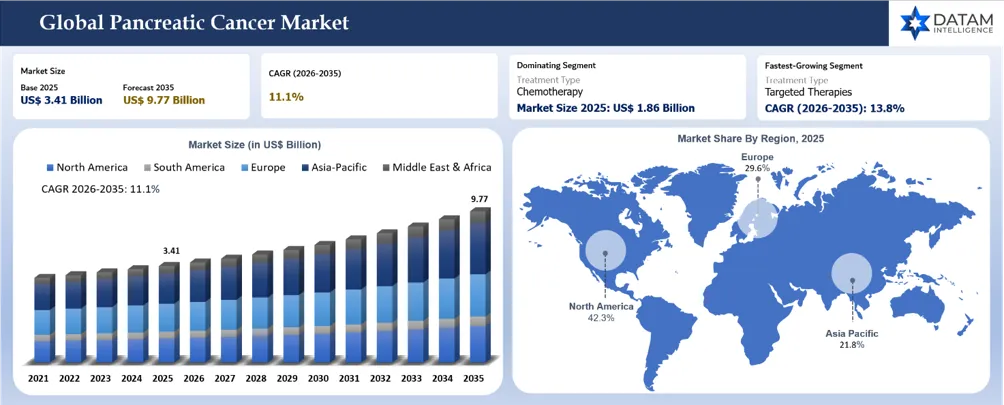
The global pancreatic cancer market reached US$3.41 billion in 2025 and is expected to reach US$9.77 billion by 2035, growing with a CAGR of 11.1% during the forecast period 2026-2035.
Growth is being shaped by rising diagnosis of advanced disease, increased treatment intensity, longer multi-line treatment pathways and improving access to molecular profiling. Nevertheless, late-stage presentation and low surgical eligibility continue to concentrate commercial demand within systemic therapies. Chemotherapy remains the market’s revenue foundation, led by modified FOLFIRINOX, gemcitabine plus nab-paclitaxel and NALIRIFOX across resectable, locally advanced and metastatic settings. However, cumulative toxicity, declining performance status and rapid treatment resistance restrict therapy duration. These limitations create a commercially significant opportunity for regimens that extend survival without materially increasing adverse-event management or hospitalization costs.
Precision oncology represents the market’s principal growth vector. Broader testing for KRAS, BRCA1/2, PALB2, NTRK, HER2 and microsatellite instability is enabling smaller but higher-value addressable populations. Competitive advantage will increasingly depend on mutation coverage, response durability, combination potential, earlier-line positioning and the ability to convert clinical benefit into guideline inclusion and reimbursement.
The next value-creation cycle will center on KRAS-directed therapies, antibody-drug conjugates, cancer vaccines, stromal-modulating agents and rational immunotherapy combinations. Sustainable leadership will require clinically meaningful overall-survival gains, manageable toxicity and scalable biomarker identification. Companies integrating drug development with companion diagnostics, real-world evidence and disciplined market-access strategies will be best positioned to reshape treatment sequencing and capture premium value.
Pancreatic Cancer Market Key Takeaways
- Sustained Market Expansion Through 2035: The global pancreatic cancer market was valued at US$3.41 billion in 2025 and is projected to reach US$9.77 billion by 2035, registering a CAGR of 11.1% during 2026-2035.
- Chemotherapy Maintains Market Leadership: Chemotherapy remains the leading treatment segment, supported by the established use of modified FOLFIRINOX, gemcitabine plus nab-paclitaxel and NALIRIFOX across resectable, locally advanced and metastatic disease settings.
- Targeted Therapies Become the Primary Growth Engine: Targeted therapies are expected to record the fastest growth through 2035, driven by expanding molecular testing and clinical development targeting KRAS mutations, BRCA1/2 alterations, NTRK fusions, HER2 and other actionable biomarkers.
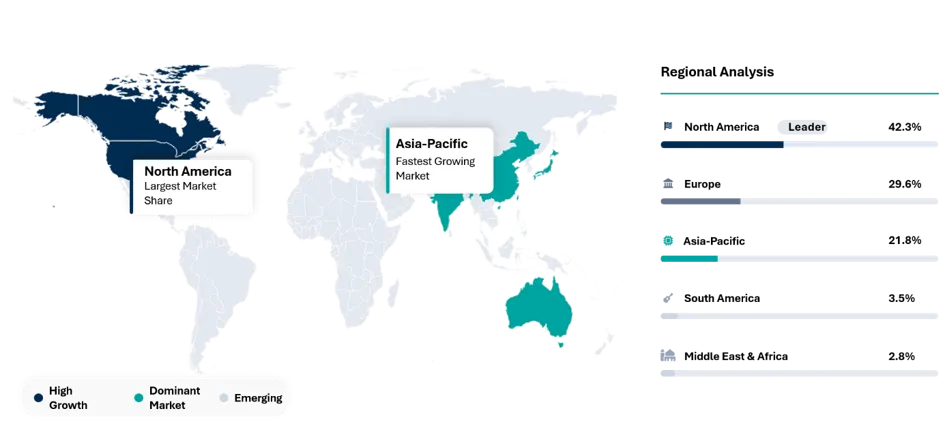
- North America Maintains Regional Dominance: North America accounted for an estimated 42.3% of the global market in 2025, equivalent to approximately US$1.44 billion, supported by advanced oncology infrastructure, high treatment expenditure, biomarker-testing availability and rapid adoption of innovative therapies.
- Precision Oncology Reshapes Competitive Strategy: Future market leadership will depend on successful KRAS-directed drug development, biomarker-guided patient selection, earlier diagnosis and effective treatment sequencing. Companies demonstrating survival improvement, manageable toxicity and broad commercial access will be best positioned to capture market share.
Pancreatic Cancer Market Scope
| Metrics | Details | |
| 2025 Market Size | US$3.41 Billion | |
| 2035 Projected Market Size | US$9.77 Billion | |
| CAGR (2026-2035) | 11.1% | |
| Largest Market | North America | |
| Fastest Growing Market | Asia-Pacific | |
| By Treatment Type | Targeted Therapies, Chemotherapy, Surgery, Other Treatments | |
| By End-user | Hospitals, Specialty Clinics, Home Care, Others | |
| By Region | North America | U.S., Canada, Mexico |
| Europe | Germany, UK, France, Spain, Italy, Poland | |
| Asia-Pacific | China, India, Japan, Australia, South Korea, Indonesia, Malaysia, Singapore, Vietnam, Thailand, Philippines, Taiwan | |
| South America | Brazil, Argentina | |
| Middle East and Africa | Israel, Saudi Arabia, UAE, Turkiye, South Africa, Nigeria | |
| Report Insights Covered | Competitive Landscape Analysis, Company Profile Analysis, Market Size, Share, Growth | |
Pancreatic Cancer Market White Space & Investment Opportunities
- Earlier Detection and Risk Stratification: Invest in liquid biopsies, circulating tumor DNA, multi-omics biomarkers, AI-enabled imaging and surveillance tools for high-risk populations. Detecting pancreatic cancer before vascular invasion or distant metastasis can expand eligibility for potentially curative surgery.
- Therapies for Resectable and Borderline-Resectable Disease: Develop effective neoadjuvant and adjuvant regimens that increase R0 resection rates, eliminate micrometastatic disease and reduce postoperative recurrence among patients who currently receive surgery combined with chemotherapy.
- Direct RAS and Biomarker-Defined Therapies: Advance pan-RAS, KRAS G12D, KRAS G12V and mutation-selective inhibitors alongside treatments targeting NRG1 fusions, BRCA mutations, HER2, CLDN18.2 and DNA-damage repair pathways. Companion diagnostics will be essential for identifying eligible patient populations.
- Tumor-Microenvironment and Immune-Restorative Treatments: Invest in therapies that overcome pancreatic cancer’s dense stromal barrier and immunosuppressive microenvironment. CD40 agonists, cancer vaccines, stromal modifiers, oncolytic viruses and localized drug-delivery platforms could improve immune-cell and drug penetration.
- Treatment-Sequencing and Combination Evidence: Generate comparative evidence defining how FOLFIRINOX, gemcitabine with nab-paclitaxel, NALIRIFOX, PARP inhibitors, RAS inhibitors, immunotherapies and emerging targeted treatments should be sequenced according to disease stage, molecular profile, performance status and previous treatment.
- Geographic Access and Outcome-Based Reimbursement: Expand molecular testing, specialist oncology access and reimbursement across underserved countries while generating real-world evidence linking earlier diagnosis, resection eligibility, treatment durability and quality-of-life improvement with reduced hospitalization and overall care costs.
Pancreatic Cancer Market Buyer Decision-Making Criteria
Major Buyer Decision-Making Criteria:
- Overall Survival and Durability of Response
- Progression-Free Survival and Disease-Control Rate
- Objective Response and Tumor-Resection Conversion Rate
- Effectiveness by Disease Stage and Treatment Line
- Suitability for PDAC and Pancreatic Neuroendocrine Tumors
- Biomarker Eligibility, Including KRAS, BRCA, NRG1, MSI-H and dMMR
- Safety, Tolerability and Long-Term Clinical Evidence
- Effectiveness in Previously Treated and Chemotherapy-Resistant Patients
- Route of Administration, Dosing Convenience and Treatment Burden
- Companion-Diagnostic and Molecular-Testing Requirements
- Hospitalization, Monitoring and Adverse-Event Management Requirements
- Improvement in Symptoms, Functional Status and Quality of Life
- Pricing, Reimbursement and Overall Treatment Cost
- Guideline Positioning, Regulatory Approval and Physician Experience
- Manufacturing Reliability, Geographic Availability and Patient-Support Services
Pancreatic Cancer Market BCG Matrix: Company Evaluation
STAR
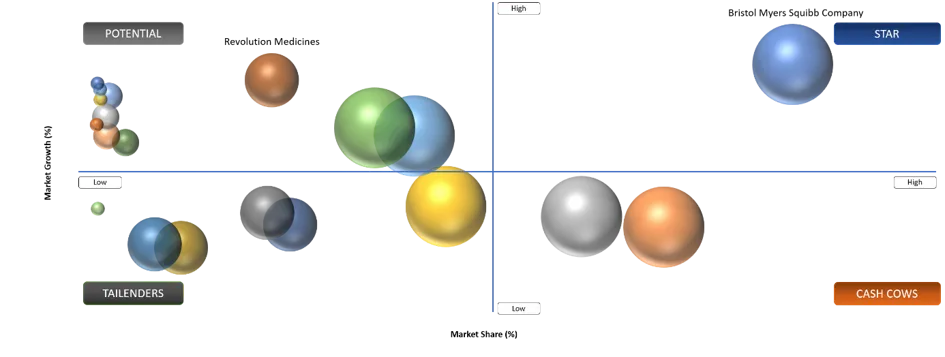
Servier Laboratories, Bristol Myers Squibb Company, AstraZeneca plc and Genmab A/S are positioned in the Star category based on their approved pancreatic cancer therapies, established oncology commercialization capabilities and influence on treatment sequencing. Servier maintains a strong position through ONIVYDE, which is used in combination regimens for metastatic pancreatic adenocarcinoma. Bristol Myers Squibb competes through ABRAXANE combined with gemcitabine, while AstraZeneca’s LYNPARZA provides biomarker-directed maintenance therapy for patients with germline BRCA-mutated metastatic disease.
Genmab strengthens the targeted-therapy landscape through BIZENGRI, a HER2 and HER3-directed bispecific antibody approved for previously treated, advanced NRG1 fusion-positive pancreatic adenocarcinoma. Future leadership will depend on indication expansion, geographic approvals, companion-diagnostic availability, reimbursement, treatment accessibility and real-world evidence demonstrating durable survival improvement. Companies that successfully integrate molecular testing with specialist oncology networks will retain stronger commercial positioning.
POTENTIAL
Revolution Medicines, Immuneering Corporation, BioNTech SE, Verastem, Inc., Alligator Bioscience AB, Candel Therapeutics, Inc. and RenovoRx, Inc. are positioned in the Potential category because of their involvement in emerging RAS inhibitors, MEK-pathway therapies, individualized cancer vaccines, immunotherapies and localized drug-delivery platforms.
Revolution Medicines is advancing daraxonrasib and zoldonrasib for RAS-driven pancreatic cancer, while Immuneering is evaluating atebimetinib with chemotherapy in metastatic pancreatic ductal adenocarcinoma. BioNTech and Roche are developing autogene cevumeran as an individualized neoantigen therapy. Verastem is investigating avutometinib-based combinations, Alligator Bioscience is progressing mitazalimab, Candel Therapeutics is developing CAN-2409 and RenovoRx is evaluating RenovoGem. Progression toward the Star category will depend on Phase III success, regulatory approval, clinically meaningful survival benefits, manageable toxicity, biomarker-defined positioning, manufacturing scalability and successful commercialization partnerships.
Pancreatic Cancer Market Dynamics
Driver Impact Analysis
| Driver | Market Growth Impact (%) | Demand Concentration | Impacted Use Case | Strategic Impact |
Rising Detection of Metastatic and Locally Advanced Pancreatic Cancer Requiring Multi-Line Systemic Treatment | 17.2% | High across North America and Europe; increasing across Asia Pacific | First-line and subsequent-line treatment of unresectable, locally advanced and metastatic pancreatic cancer | Rising Detection of Metastatic and Locally Advanced Pancreatic Cancer Requiring Multi-Line Systemic Treatment |
Expanding Molecular Testing for KRAS, BRCA, NRG1, MSI-H and Other Actionable Biomarkers | 16.4% | Concentrated in the United States, Germany, UK, France and Japan; expanding in China | Patient selection for PARP inhibitors, RAS inhibitors, tumor-agnostic therapies and clinical trials | Expanding Molecular Testing for KRAS, BRCA, NRG1, MSI-H and Other Actionable Biomarkers |
Regulatory and Clinical Progress of RAS-Targeted Therapies for Previously Undruggable Pancreatic Tumors | 15.7% | Initially concentrated in the United States and leading European oncology centres | Treatment of RAS-driven and KRAS-mutated pancreatic ductal adenocarcinoma | Regulatory and Clinical Progress of RAS-Targeted Therapies for Previously Undruggable Pancreatic Tumors |
Increasing Adoption of NALIRIFOX, FOLFIRINOX and Biomarker-Directed Maintenance Treatment Across Specialist Oncology Centres | 14.1% | High in developed oncology markets and tertiary cancer hospitals | Treatment sequencing across first-line, maintenance and recurrent-disease settings | Increasing Adoption of NALIRIFOX, FOLFIRINOX and Biomarker-Directed Maintenance Treatment Across Specialist Oncology Centres |
Driver: Rising Detection of Metastatic and Locally Advanced Pancreatic Cancer Requiring Multi-Line Systemic Treatment
The rising detection of metastatic and locally advanced pancreatic cancer is expanding demand for systemic therapies across multiple treatment lines. Because early-stage disease frequently produces nonspecific symptoms, many patients are diagnosed only after tumors have become unresectable or spread to distant organs. These patients require prolonged clinical management involving intensive chemotherapy, targeted treatments, maintenance therapy, symptom control and subsequent-line regimens following progression, creating sustained demand across the pancreatic cancer treatment pathway.
Treatment increasingly begins with NALIRIFOX, modified FOLFIRINOX or gemcitabine combined with nab-paclitaxel, depending on performance status, comorbidities and institutional protocols. Disease progression subsequently creates demand for liposomal irinotecan combinations, biomarker-directed therapies, clinical trials and emerging RAS inhibitors. Wider access to high-quality imaging, endoscopic ultrasound, pathology and multidisciplinary cancer centres is also improving staging accuracy and identifying patients requiring systemic intervention. Consequently, companies with differentiated products across first-line, maintenance and refractory settings can capture greater treatment duration while strengthening relationships with specialist oncology centres and diagnostic networks.
Restraint Impact Analysis
| Restraint | Drag on Market Growth (%) | Primary Impact Area | Impacted Use Case | Strategic Impact |
Late-Stage Diagnosis Restricting Eligibility for Curative Surgical Resection | 16.8% | Treatment eligibility, clinical outcomes and care-pathway selection | Patients diagnosed with unresectable, locally advanced or metastatic pancreatic cancer | Reduces access to potentially curative surgery and shifts demand toward palliative systemic treatment with limited survival benefits |
Dense Desmoplastic Stroma Limiting Drug Penetration and Immunotherapy Response | 15.6% | Drug delivery, tumor response and clinical-development success | Targeted therapies, immunotherapies, antibodies and combination regimens for PDAC | Weakens intratumoral drug exposure, increases clinical-trial failure risk and raises investment requirements for combination approaches |
Limited Actionable Biomarker Populations and Insufficient Tissue for Molecular Profiling | 14.3% | Patient identification, companion diagnostics and targeted-treatment adoption | KRAS, BRCA, NRG1, MSI-H, dMMR and HER2-directed treatment selection | Restricts eligible patient pools and increases dependence on high-quality biopsies, sequencing infrastructure and validated diagnostic assays |
High Treatment Toxicity and Declining Performance Status Restricting Multi-Line Therapy | 13.7% | Treatment persistence, regimen selection and subsequent-line utilization | FOLFIRINOX, NALIRIFOX, gemcitabine-based combinations and refractory-disease treatment | Increases dose reductions and discontinuations while limiting intensive regimens to clinically fit patients and reducing treatment duration |
Restraint: Late-Stage Diagnosis Restricting Eligibility for Curative Surgical Resection
Late-stage diagnosis remains a critical structural restraint because pancreatic cancer frequently develops without distinctive early symptoms. Patients commonly enter the treatment pathway after vascular involvement, regional progression or distant metastasis has occurred, substantially reducing eligibility for curative-intent surgical resection. Consequently, a large proportion of diagnosed patients depend on systemic chemotherapy, targeted treatment, radiotherapy or supportive care, where treatment objectives generally shift from disease eradication toward progression control, symptom management and survival extension.
This diagnostic delay also restricts commercial uptake of perioperative therapies designed for resectable or borderline-resectable disease. Advanced-stage patients often present with declining performance status, biliary obstruction, weight loss and comorbidities that limit intensive treatment eligibility and reduce treatment persistence. For pharmaceutical and diagnostic companies, the constraint narrows addressable populations for curative pathways while increasing clinical-development complexity in metastatic settings. Market participants must therefore integrate biomarker testing, high-risk surveillance, referral acceleration and multidisciplinary assessment to identify disease earlier and increase the proportion of patients reaching surgery or conversion therapy.
Pancreatic Cancer Market Geographical Penetration
U.S. Pancreatic Cancer Market Landscape
The U.S. pancreatic cancer market is shaped by a substantial disease burden, late-stage diagnosis and concentrated demand for multi-line systemic therapy. The American Cancer Society estimates approximately 67,530 new diagnoses and 52,740 deaths in 2026, demonstrating the close relationship between incidence and mortality. Pancreatic cancer represents only 3.2% of new U.S. cancer cases but 8.4% of cancer deaths. Moreover, just 15% of patients are diagnosed with localized disease, while 51% present with distant metastases, sustaining demand for chemotherapy and subsequent-line treatment.
Commercial competition is shifting from broadly administered chemotherapy toward biomarker-directed and RAS-targeted treatment. NALIRIFOX, modified FOLFIRINOX and gemcitabine with nab-paclitaxel remain important treatment foundations, while molecular testing increasingly determines eligibility for PARP inhibitors and therapies targeting KRAS, NRG1, MSI-H and dMMR alterations. Leading comprehensive cancer centres accelerate clinical-trial enrolment and adoption of precision oncology. Future market development will depend on earlier diagnosis, broader genomic testing, reimbursement for premium targeted therapies and evidence demonstrating meaningful survival gains without excessive treatment burden.
Japan Pancreatic Cancer Market Outlook
Japan’s pancreatic cancer market is expected to expand as population ageing increases the number of patients entering high-risk age groups. In 2025, approximately 36.19 million people, or 29.4% of Japan’s population, were aged 65 years or older, reinforcing the long-term diagnostic and treatment burden for age-associated cancers. Pancreatic cancer remains difficult to identify early, sustaining demand for CT, MRI, endoscopic ultrasound, CA 19-9 testing, surgery, chemotherapy and multidisciplinary management across designated cancer hospitals.
Treatment demand will remain centred on modified FOLFIRINOX, gemcitabine-based combinations, S-1 and other regimens selected according to disease stage and performance status. Japan’s universal health insurance system supports access to approved therapies, although reimbursement pricing and cost-effectiveness reviews influence commercial returns. Growth opportunities are emerging in genomic profiling, KRAS-directed medicines, PARP inhibitors for BRCA-mutated disease, liquid biopsy and surveillance of high-risk individuals. Domestic participation in global clinical trials and strong academic oncology networks can accelerate adoption; however, late diagnosis, treatment toxicity and regional disparities in specialist access will continue to constrain outcomes. Commercial success will depend on locally generated evidence and reimbursement alignment.
Pancreatic Cancer Market Competitive Landscape
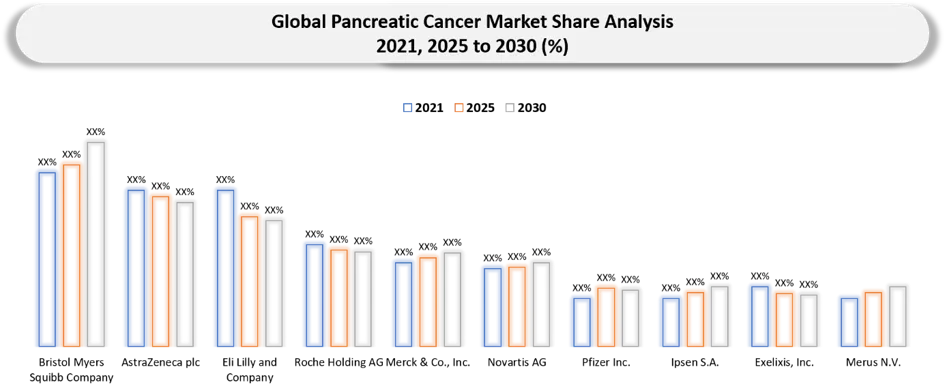
- The global pancreatic cancer market remains moderately consolidated in established therapies but increasingly fragmented across emerging targeted treatments, immunotherapies and precision-medicine platforms. Commercial leadership is concentrated among Bristol Myers Squibb, Servier, AstraZeneca, Roche, Merck, Novartis, Pfizer and Ipsen, supported by approved chemotherapy, PARP inhibitor, immunotherapy and pancreatic neuroendocrine tumor portfolios. Competition centres on treatment-line expansion, biomarker-based patient selection, combination regimens, regulatory approvals and geographic commercialization rights. Servier’s ONIVYDE and AstraZeneca’s LYNPARZA remain important differentiated assets, while established chemotherapy regimens continue to anchor treatment pathways.
- The development landscape is shifting toward direct RAS inhibition, tumor-microenvironment modification, therapeutic vaccines and localized drug delivery. Revolution Medicines is advancing RAS-targeted candidates, while Immuneering is progressing atebimetinib combinations for metastatic pancreatic ductal adenocarcinoma. BioNTech and Roche are evaluating individualized neoantigen therapy, whereas Alligator Bioscience, Candel Therapeutics, Verastem and RenovoRx are pursuing immune activation, viral immunotherapy, pathway combinations and intra-arterial delivery. Future competitive advantage will depend on demonstrating meaningful survival improvement, securing biomarker-defined positioning, improving tolerability and building partnerships with diagnostic companies and specialist oncology centres.
Key Companies of Pancreatic Cancer Market
- Bristol Myers Squibb Company (United States)
- AstraZeneca plc (United Kingdom)
- Eli Lilly and Company (United States)
- Roche Holding AG (Switzerland)
- Merck & Co., Inc. (United States)
- Novartis AG (Switzerland)
- Pfizer Inc. (United States)
- Ipsen S.A. (France)
- Exelixis, Inc. (United States)
- Merus N.V. (Netherlands)
- Revolution Medicines, Inc. (United States)
- Immuneering Corporation (United States)
- Verastem, Inc. (United States)
- BioNTech SE (Germany)
- Amgen Inc. (United States)
- Boehringer Ingelheim International GmbH (Germany)
- Alligator Bioscience AB (Sweden)
- Candel Therapeutics, Inc. (United States)
- RenovoRx, Inc. (United States)
- Servier Laboratories (France)
Pancreatic Cancer Market Recent Developments
- August 2026: The U.S. FDA granted accelerated approval to Revolution Medicines’ RASONQUE (daraxonrasib) for previously treated metastatic pancreatic adenocarcinoma. The once-daily oral RAS inhibitor represents an important transition from chemotherapy-dominated treatment toward direct targeting of RAS-driven disease.
- August 2026: Merck and Moderna continued expanding the clinical development of their individualized neoantigen therapy intismeran autogene, combined with KEYTRUDA, across solid tumors including pancreatic cancer. The program highlights increasing investment in patient-specific mRNA cancer vaccines, although manufacturing turnaround time and scalability remain commercialization barriers.
- June 2026: Immuneering advanced its pancreatic cancer strategy toward the Phase III MAPKeeper 301 study of atebimetinib combined with modified gemcitabine and nab-paclitaxel as first-line treatment for metastatic pancreatic ductal adenocarcinoma. The company also continued a Phase II atebimetinib combination program with modified FOLFIRINOX.
- June 2026: Late-stage daraxonrasib findings presented during the ASCO 2026 period reinforced RAS inhibition as a potentially disruptive treatment class in metastatic pancreatic cancer. The results supported subsequent regulatory acceleration and intensified competitive development of pan-RAS and mutation-selective KRAS inhibitors.
What DATAM Uniquely Provides
- In-depth segmentation of the pancreatic cancer market by cancer type, disease stage, treatment type, drug class, mechanism of action, route of administration, treatment line, patient age, care setting, distribution channel and region.
- Competitive analysis of leading pancreatic cancer companies covering overall survival, progression-free survival, objective response, response durability, safety, mechanism of action, biomarker positioning, dosing convenience, pipeline maturity and commercialization strategy.
- Comprehensive assessment of diagnosed and treatment-eligible populations, resectable, borderline-resectable, locally advanced and metastatic patients, PDAC and pancreatic neuroendocrine tumor populations, refractory patients, previous treatment status, performance status, actionable mutations, comorbidities, unmet clinical needs and regional access dynamics.
- Actionable intelligence on pharmaceutical pricing, reimbursement, regulatory pathways, companion diagnostics, molecular testing, treatment-response assessment, therapy sequencing, patient-support programs, market-access barriers, licensing activity, strategic partnerships and investment opportunities.
- Analyst forecasts highlighting high-growth drug classes, commercially attractive patient populations, regional expansion opportunities and emerging competitive threats across chemotherapy, targeted therapies, PARP inhibitors, RAS inhibitors, immunotherapies, cancer vaccines, stromal modifiers, radiopharmaceuticals and localized drug-delivery platforms.



























































