


MASH Disease Overview:
The Metabolic Dysfunction-Associated Steatohepatitis (MASH) Market size reached US$ $8.12 billion in 2025 and is expected to reach US$ 40.95 billion by 2035, growing at a CAGR of 17.55% during the forecast period 2026-2035.
Metabolic Dysfunction-Associated Steatohepatitis (MASH), formerly known as Nonalcoholic Steatohepatitis (NASH) is a disease caused by a build-up of fat in the liver, not caused by alcohol consumption. As a result of fat deposition, the liver becomes inflamed (hepatitis). The inflammation and liver damage from MASH can cause fibrosis and scarring and can lead to cirrhosis, where the liver is scarred and significantly damaged, often permanently. The development of MASH is linked with underlying conditions such as metabolic syndrome, obesity, and type 2 diabetes.
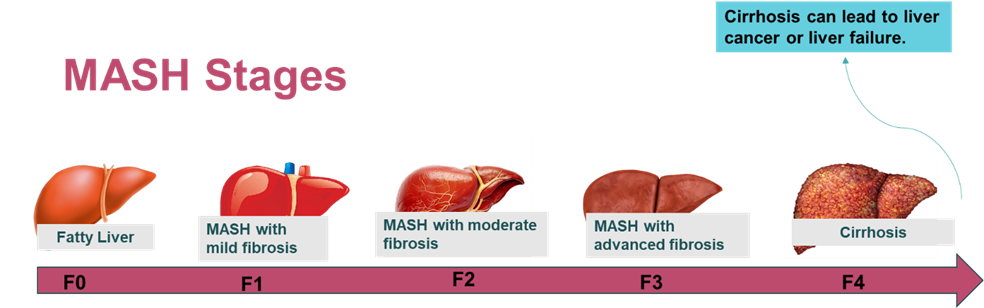
MASH is an advanced form of MSALD (Metabolic dysfunction-associated steatotic liver disease) and is staged based on the level of fibrosis observed in liver. Stage F0 refers to the early stage of MASH, where no scarring is observed, stage F1 refers to mild to moderate perisinusoidal or periportal fibrosis, stage F2 refers to both perisinusoidal and portal/periportal fibrosis, stage F3 refers to advanced fibrosis, and F4 refers to liver cirrhosis, which can progress to hepatocellular carcinoma and liver failure.
Key Takeaways
- The MASH market is entering a high-growth commercialization phase, with market size estimated at USD 8.12 billion in 2025 and projected to reach USD 40.95 billion by 2035, growing at a strong 17.55% CAGR from 2026 to 2035.
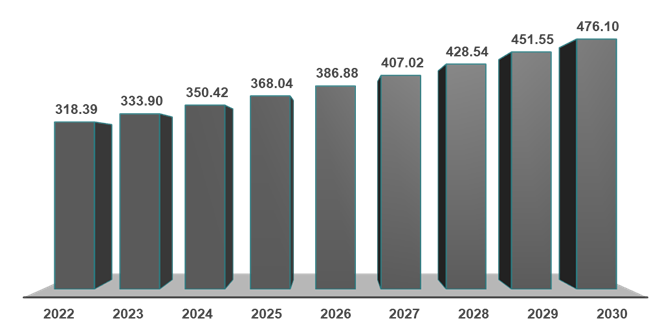
- Global disease burden is extremely large and still rising. DataM estimates 371.4 million prevalent MASH cases worldwide in 2025, with total prevalent cases expected to increase from 368.04 million in 2025 to 476.10 million by 2030.
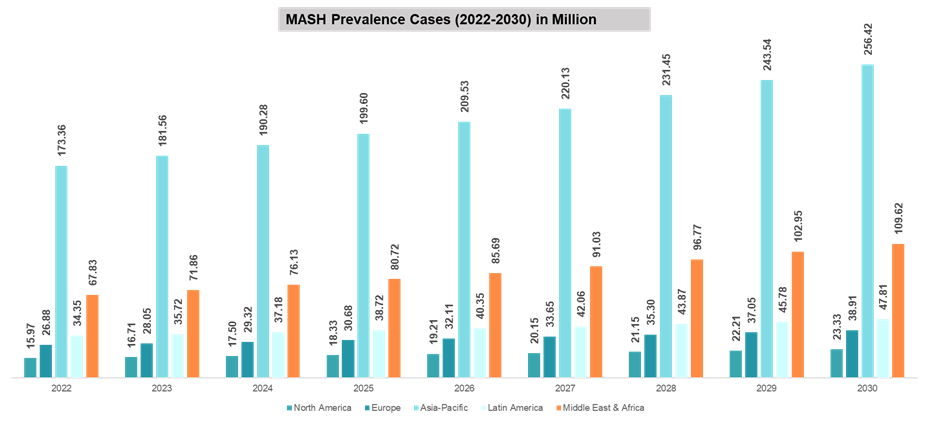
- Asia-Pacific carries the largest patient burden, driven mainly by population size. The region accounted for 190.28 million prevalent cases and is projected to reach 256.42 million cases by 2030, making it the most important region for long-term epidemiology-based opportunity.
- Diagnosis and treatment gaps remain major market expansion opportunities. In 2024, global MASH prevalence stood at 350.42 million cases, but only 37.84 million were diagnosed and just 12.71 million were receiving treatment, showing a large untreated population pool.
- Therapeutic innovation is accelerating after the first FDA approval. Rezdiffra became the first FDA-approved drug for MASH in 2024, while multiple advanced pipeline drugs entered Phase 3 trials in the US by February 2026, targeting anti-fibrotic, metabolic, and multi-target mechanisms.
Diagnosis:
The diagnosis of MASH currently involves the following tests:
- Liver Stiffness Test: This is a non-invasive test for measuring liver elasticity and fibrosis, perfomed using the gold standard imaging techniques like transient elastography (FibroScan) or magnetic resonance elastography (MRE).
- Blood Tests: The common blood tests involve liver function tests for measuring liver enzymes such as ALT (alanine aminotransferase) and AST (aspartate aminotransferase). fibrosis assessment tests such as AST-to-Platelet Ratio Index (APRI) score and Fibrosis-4 (Fib-4) score for measuring the level of liver scarring or fibrosis, and lipid panel.
- Liver Biopsy: This is the gold standard confirmatory test for MASH, which involves microscopic observation of collected liver tissue for fibrosis and scarring. The downside of it is its invasive nature.
Treatment:
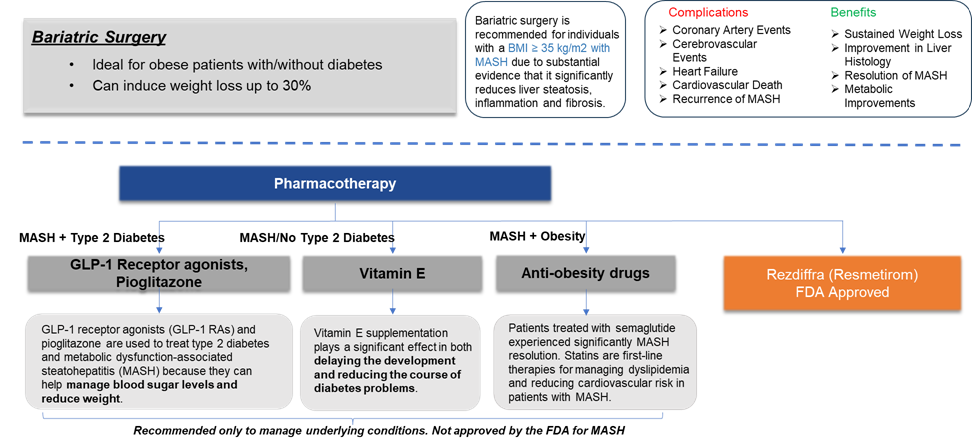
The current standard of care of MASH involves the combination of lifestyle interventions with bariatric surgery and pharmacotherapy to address the underlying disease. However, In 2024, Rezdiffra (resmetirom) became the first drug to be approved by the U.S. FDA. Below is the current treatment options available for MASH treatment.
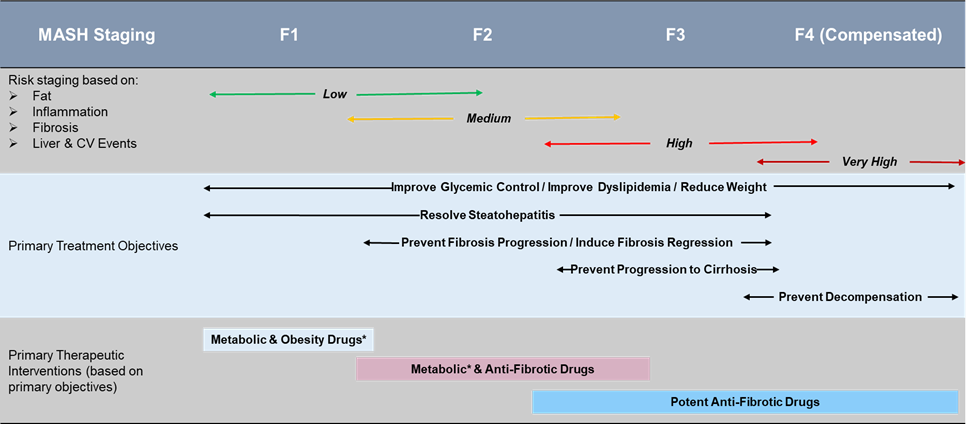
However, the treatment goals differ as per the stage of diagnosis. The treatment for stage F0 usually involves lifestyle modifications such as diet and exercise, along with addressing any underlying condition. Likewise, the treatment goals vary for each stage as mentioned below.
Metabolic Dysfunction-Associated Steatohepatitis Market Executive Summary:
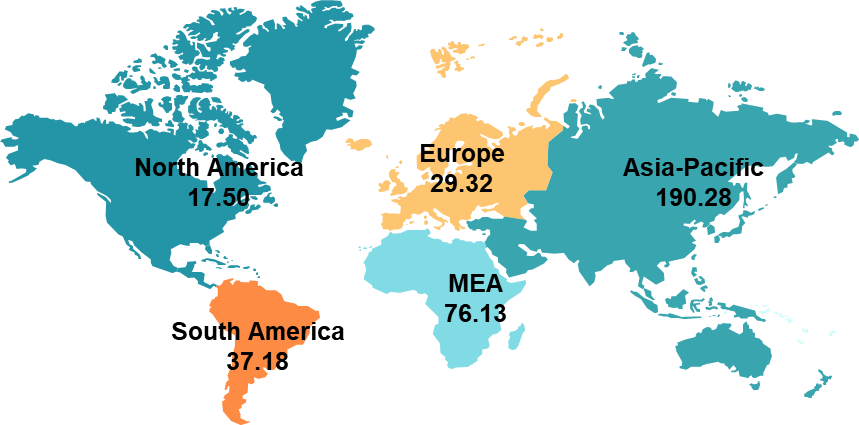
As per DataM intelligence estimates, nearly 371.4 million prevalent cases are estimated worldwide in 2025. The region with the highest prevalence is Asia-Pacific, accounting for 190.28 million cases. The prevalent cases of MASH across global regions are as follows:
As per DataM estimates, globally, the prevalent cases of MASH were estimated to be 368.04 million in 2025, 386.88 million in 2026, and a rise of up to 476.10 million by 2030.
3 Fast Growing Use Cases
F2 to F3 Fibrosis Drug Treatment
F2 to F3 fibrosis treatment is the fastest growing use case because it sits at the center of approved drug labels and payer logic. These patients have meaningful liver damage but still have a treatment window before cirrhosis. Resmetirom and semaglutide both reinforce the commercial importance of this segment. Growth will accelerate as non invasive testing identifies more patients with moderate to advanced fibrosis. The highest uptake will occur in patients with obesity or type 2 diabetes because they are already visible within metabolic care pathways. This segment will define launch strategy and payer coverage.
Metabolic Profile Based Therapy Selection
Metabolic profile based therapy selection is becoming a fast growing use case as MASH treatment moves closer to obesity and diabetes management. Patients with high body weight, insulin resistance or type 2 diabetes are strong candidates for GLP 1 based treatment pathways. Patients with liver dominant disease may remain more aligned with liver directed mechanisms. This segmentation will influence drug choice and sequencing. Growth will be strongest in integrated care settings where hepatology and endocrinology work together. The market will increasingly classify patients by fibrosis stage and metabolic profile before selecting therapy.
Non Invasive Screening Linked Treatment Initiation
Non invasive screening linked treatment initiation is becoming a core growth use case because most MASH patients remain undiagnosed. Wider use of FibroScan, blood based fibrosis scores, imaging tools and biomarker panels will expand the treated population. Screening will focus on people with obesity or type 2 diabetes because these groups carry higher risk of disease progression. This use case directly connects diagnostics with drug revenue. Adoption will grow where primary care and endocrinology pathways identify high risk patients earlier. The strongest market expansion will occur when diagnosis and reimbursement move together.
Epidemiology by Region:
Asia-Pacific is the leading region with the highest number of estimated MASH prevalent cases. In 2024, a total of up to 190.28 million prevalent cases were estimated in the region, which may reach up to 256.42 million by 2030. This higher prevalence is majorly attributed to the region’s huge population.
Global MASH Prevalent, Diagnosed and Treatment Population (2024) in Million
Globally, the overall prevalent cases of MASH in 2024 were 350.42 million, of which the diagnosed population were 37.84 million, and the patients who are taking one or the other treatment were 12.71 million.
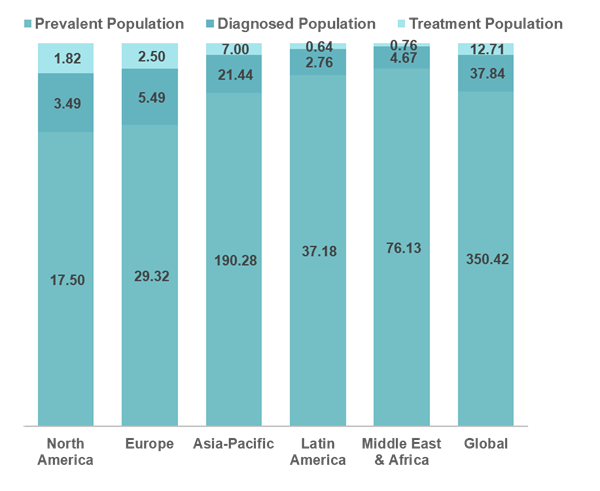
- In North America, the overall prevalent cases in 2024 were 17.50 million, of which the diagnosed population were estimated to be 3.49 million and among the diagnosed population, nearly 1.82 million were estimated to be getting treatment.
- In Europe, the overall prevalent cases in 2024 were 29.30 million, of which the diagnosed population were estimated to be 5.49 million and among the diagnosed population, nearly 2.50 million were estimated to be getting treatment.
- In Asia-Pacific, the overall prevalent cases in 2024 were 190.28 million, of which the diagnosed population were estimated to be 21.44 million and among the diagnosed population, nearly 7.00 million were estimated to be getting treatment.
- In Latin America, the overall prevalent cases in 2024 were 37.18 million, of which the diagnosed population was estimated to be 2.76 million, and among the diagnosed population, nearly 0.64 million were estimated to be getting treatment.
- In Middle East and Africa, the overall prevalent cases in 2024 were 76.13 million, of which the diagnosed population were estimated to be 4.67 million and among the diagnosed population, nearly 0.76 million were estimated to be getting treatment.
Recent Developments:
- May 2026 – Madrigal Pharmaceuticals Presented New Phase III and Real-World Rezdiffra Data at EASL 2026 - Madrigal announced new clinical and real-world evidence demonstrating that Rezdiffra (resmetirom) improved cardiovascular risk markers, liver stiffness, and biomarkers in patients with MASH, further strengthening its position as the leading approved therapy for MASH.
- March 2026 – Sagimet Biosciences Advanced Combination Therapy Program - Sagimet Biosciences completed a Phase I pharmacokinetic study evaluating denifanstat in combination with resmetirom and announced plans to initiate a Phase II trial in patients with advanced (F4) MASH during the second half of 2026.
- February 2026 – Madrigal Expanded Its MASH Pipeline with Six siRNA Programs - Madrigal signed an exclusive global licensing agreement with Ribo Life Science and Ribocure Pharmaceuticals to develop six preclinical siRNA therapies for MASH, expanding its pipeline beyond Rezdiffra into next-generation precision therapies.
- February 2026 – Madrigal Reported Strong Commercial Growth for Rezdiffra - The company reported nearly US$1 billion in annual Rezdiffra sales during 2025 and more than 36,000 patients receiving treatment, highlighting rapid commercialization of the first approved MASH therapy.
- February 2026 – Madrigal Initiated Development of an Oral GLP-1 Candidate for Combination Therapy- Madrigal confirmed plans to advance MGL-2086, an oral GLP-1 receptor agonist, into clinical development as part of its strategy to develop future combination therapies for MASH.
- February 2026 - Multiple advanced pipeline drugs in the US advanced to Phase 3 trials, targeting anti-fibrotic, metabolic, and multi-target mechanisms to address liver histology and disease progression.
- January 2026 - Madrigal Pharmaceuticals outlined an expansion strategy at JPM 2026, acquiring rights to Pfizer’s DGAT-2 inhibitor ervogastat and an oral GLP-1 agonist MGL-2086 to build early dominance in the emerging MASH market.
- December 2025 - The MASH treatment market grew to $2.6 billion, driven by a 30% compound annual growth rate from rising prevalence of metabolic conditions, processed food diets, and sedentary lifestyles.
Patient Pool Conversion Analysis
The MASH market is shifting from a large hidden disease burden into a defined commercial treatment pool. The biggest conversion gap sits between people with metabolic risk and patients formally staged for fibrosis. Obesity and type 2 diabetes create a broad at risk base, but market revenue will concentrate in patients with confirmed F2 to F3 fibrosis. Screening expansion in endocrinology and primary care will determine how quickly this population converts into treated patients. The United States has the strongest conversion potential because obesity prevalence, specialist access and drug availability are aligned. Asia Pacific shows faster volume expansion because diabetes prevalence and urban metabolic disease are rising. The commercial market will grow fastest where non invasive testing becomes routine for high risk patients. Diagnosis conversion will be the main limiter of revenue capture despite strong drug innovation.
Fibrosis Stage Opportunity Analysis
Fibrosis stage is the main commercial filter in the MASH market. F0 and F1 patients remain largely managed through lifestyle intervention and metabolic risk control. F2 and F3 patients represent the highest value treatment segment because they have meaningful liver damage while still being eligible for disease modification before cirrhosis. F4 patients require more complex management because cirrhosis changes safety, monitoring and clinical outcome priorities. Market value will concentrate in F2 to F3 patients as approved drugs and late stage pipeline assets continue to target moderate to advanced fibrosis. Drug adoption will rise as physicians become more confident using non invasive tests to stage patients. The strongest growth will come from patients with fibrosis progression risk and metabolic comorbidities. This stage based segmentation will shape pricing, payer access and launch sequencing across major markets.
Drug Pipeline Analysis
The MASH pipeline is entering a more competitive phase after the first approved liver directed therapy and the 2025 approval of semaglutide for eligible MASH patients. Future pipeline value will concentrate around drugs that improve fibrosis, fit cardiometabolic care and support long term disease control.
- Resmetirom, Rezdiffra, Madrigal Pharmaceuticals: Approved in 2024 for adults with noncirrhotic NASH with F2 to F3 fibrosis. It anchors the liver directed treatment pathway through thyroid hormone receptor beta activation.
- Semaglutide, Wegovy, Novo Nordisk: Approved in 2025 for adults with MASH and moderate to advanced scarring. It strengthens the metabolic treatment route through weight reduction and GLP 1 activity.
- Tirzepatide, Eli Lilly: A late stage incretin based contender with strong interest because MASH overlaps heavily with obesity and diabetes. Its positioning will depend on fibrosis benefit and label scope.
- Efruxifermin and Pegozafermin: FGF21 based candidates remain strategically important because they target metabolic dysfunction and liver injury through a differentiated mechanism.
Diagnosis and Care Pathway Analysis
MASH treatment growth depends on a stronger diagnosis pathway across metabolic and liver care settings. Most patients enter the system through obesity, diabetes or abnormal liver enzyme evaluation rather than liver specialist referral. Primary care and endocrinology will become more important entry points as pharmacotherapy raises the value of early disease identification. Non invasive testing will become the central bridge between risk detection and drug initiation. FibroScan, blood based fibrosis scoring, imaging tools and biomarker panels will reduce dependence on biopsy in routine care. Hepatologists will remain important for treatment confirmation and complex disease management. The most efficient care pathway will identify high risk metabolic patients, stage fibrosis quickly and route F2 to F3 patients into active therapy. Markets with stronger diagnostic infrastructure will convert patients faster and capture higher treatment revenue.
Payer Access and Reimbursement Pressure Analysis
Payer access will become one of the strongest determinants of MASH market growth because the eligible patient pool is large and therapy duration may be long. Reimbursement will focus on fibrosis stage, clinical evidence, safety monitoring and ability to reduce downstream liver disease cost. F2 to F3 patients will receive the strongest payer attention because they represent a defined intervention window before cirrhosis. Drugs with clear histology improvement and durable real world outcomes will command better access. Payers will likely restrict use through prior authorization, fibrosis confirmation and specialist involvement. GLP 1 based therapies may face added scrutiny because obesity and diabetes demand already creates high budget pressure. Market access success will depend on demonstrating liver benefit beyond weight loss. The strongest commercial positions will come from therapies that combine clinical differentiation with clear economic value.
Competitive Positioning Analysis
Competitive positioning in MASH will be shaped by mechanism differentiation, physician familiarity, payer access and patient fit. Resmetirom holds first mover advantage in liver directed therapy for eligible noncirrhotic patients with F2 to F3 fibrosis. Semaglutide brings metabolic scale advantage through established use in obesity and diabetes care. Future entrants must show stronger fibrosis improvement, broader patient suitability or clear combination value. Incretin based drugs will compete strongly in patients with obesity or type 2 diabetes. FGF21 assets will compete through differentiated liver and metabolic biology. Brand strength will depend on specialist education, diagnostic support, real world evidence and reimbursement execution. Companies with existing metabolic franchises will have commercial leverage because MASH care increasingly overlaps with obesity management. Long term leadership will favor drugs that fit real world staging and treatment workflows.
Investor White Space Analysis
Investor white space in MASH is expanding beyond drug development into diagnostics, access infrastructure and care pathway enablement. The strongest drug investment themes are fibrosis regression and metabolic liver correction. FGF21 assets and incretin based candidates remain attractive because they address different parts of the disease biology. Diagnostic enablement is becoming equally important because approved therapies cannot scale without identifying eligible F2 to F3 patients. Non invasive fibrosis testing, biomarker panels, clinical decision tools and specialty care platforms are positioned for rising strategic value. Pharmaceutical deal activity will favor assets that complement obesity and metabolic disease franchises. Partnerships will also form around diagnostics and real world evidence generation. The most attractive investment targets will combine strong clinical data with a clear route into screened and reimbursed patient populations.
What You Get Compared with Competitors
| Dimension | Traditional Market Research | DataM Intelligence |
| Product | Static PDF reports covering broad liver disease trends with limited depth on MASH staging, drug pathways and patient conversion | Custom dashboards for MASH with interactive views across fibrosis stages, drugs, patient groups, regions and companies |
| Data Age | 6 to 12 months old with historical snapshots of clinical activity and limited updates on approvals or pipeline movement | Living data with continuous updates on approved therapies, late stage pipeline assets, regulatory decisions and treatment pathway shifts |
| Engagement | One time transaction with limited follow up after delivery of market size, segmentation and company data | Continuous partnership with analyst support to track drug launches, physician adoption, payer access and competitive movement |
| Output | Raw market information with limited guidance on MASH therapy positioning and commercialization decisions | Actionable insights with clear recommendations for launch planning, patient targeting, market access and investment evaluation |
| Customization | One size fits all syndicated templates with limited tailoring for fibrosis stage, drug class, care setting or access model | Tailored solutions through DMI Insights and DMI Connect built around each client context with 81% of our clients choosing a customized solution |
| Market Depth | General coverage of liver therapeutics with limited detail on resmetirom, semaglutide, FGF21 assets and incretin competitors | Focused intelligence on MASH across drug pipeline, patient conversion, payer access and investor white space |
| Decision Support | Limited ability to compare countries, drug classes, fibrosis stages and payer readiness in one view | Dashboard based comparison of country opportunity, treatment adoption, competitive positioning and investment attractiveness |
| Investor View | Limited insight into pipeline valuation, diagnostic enablement, partnership activity and acquisition potential | Investor focused tracking of drug pipeline, competitive moats, launch readiness and scalable diagnosis linked opportunities |
| Retention | Low chance of re engagement once the report is delivered | Over 35% of our clients are repeat customers due to ongoing updates, customization and long term decision support |



























































