


NASH/MASH Treatment Market Size and Overview
The global NASH/MASH treatment market reached US$ 8.13 Billion in 2025 and is expected to reach US$ 33.02 Billion by 2035, growing with a CAGR of 17.55% during the forecast period 2026-2035.
The global NASH/MASH treatment market is poised to enter a new era of commercialization, as there will be a move away from the management of the disease by means of lifestyle modification to a system that involves stage-appropriate multimodal treatment approach. The introduction of approved drugs has led to the creation of a quantifiable treatment market focused on patients who have fibrosis of moderate-to-advanced stage, while management of obesity, metabolic surgery, and advanced liver treatments continue to contribute to wider treatment pathways. Rising incidences of obesity, type 2 diabetes, dyslipidemia, and metabolic syndrome have expanded the population of patients at risk of developing NASH/MASH, requiring earlier fibrosis evaluation, referral, and treatment.
Success in the market will not be dependent only on the effectiveness of the therapies. The key market players will have to prove their value for payers, identify patients, maintain adherence, report real-world data, and ensure accessible distribution infrastructure. North America will continue dominating the market because of its early approval of therapies and well-developed reimbursement system, but Europe and Asia-Pacific will present vast opportunities for growth as they become more regulated with better screening techniques and specialist infrastructure. Investments will be made into the integration of metabolic-liver care, monitoring, support programs, value-based reimbursement, and therapy sequencing..
NASH/MASH Treatment Market Key Takeaways
- The Global NASH/MASH Treatment Market stood at US$ 8.13 billion in 2025 and is expected to reach US$ 33.02 billion by 2035, growing at a CAGR of 17.55 during 2026–2035.
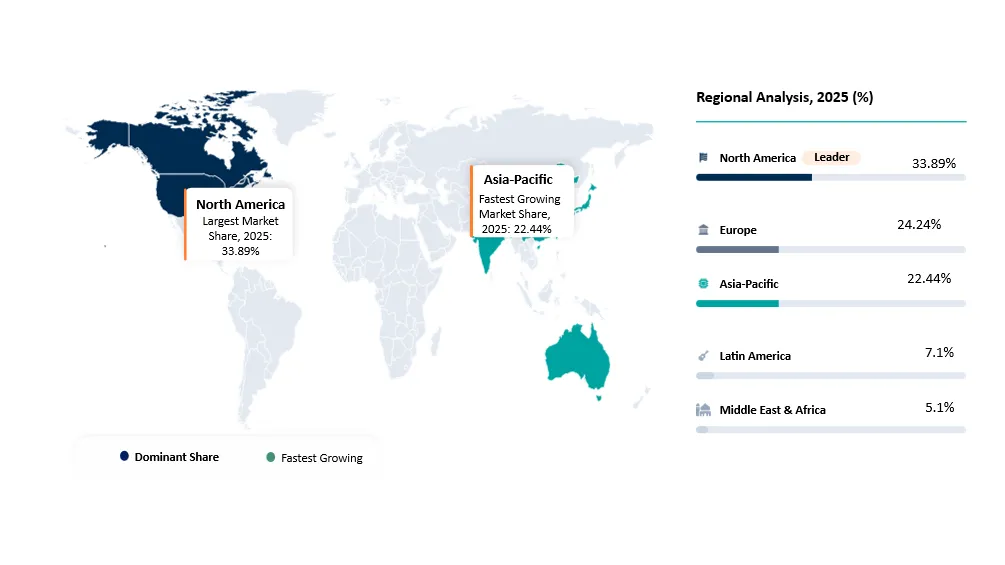
- North America held the highest market share at 33.89% in 2025, supported by early disease-specific drug approvals, established hepatology networks, strong specialty-pharmacy infrastructure, high metabolic disease burden, and comparatively developed reimbursement pathways.
- Europe remained the second-largest region with 24.24% share in 2025, driven by expanding access to approved MASH therapies, established gastroenterology infrastructure, increasing fibrosis assessment, and growing emphasis on early intervention for progressive liver disease.
- Asia-Pacific accounted for 22.44% share in 2025, supported by rising obesity and diabetes prevalence, expanding specialist liver-care capacity, improving disease awareness, and increasing adoption of structured metabolic and weight-management treatments.
- Pharmacological treatment dominated the treatment-modality segment in 2025, supported by the commercialization of disease-modifying therapies, long-duration treatment requirements, specialist-led prescribing, and increasing payer recognition of early fibrosis intervention.
- Moderate-to-advanced fibrosis, F2–F3, represented the leading disease-stage segment, reflecting the approved treatment population, higher progression risk, stronger clinical urgency, and greater willingness among payers to fund disease-modifying therapy.
- Rezdiffra’s FDA approval in March 2024 established the first disease-specific treatment pathway for adults with noncirrhotic NASH/MASH and moderate-to-advanced fibrosis, accelerating patient identification, specialist referrals, and pharmacological adoption.
- Wegovy’s FDA approval for MASH in August 2025 expanded the market into incretin-based treatment, strengthening convergence across hepatology, obesity, diabetes, and cardiovascular-risk management while increasing competition for eligible F2–F3 patients.
- Integrated treatment models are gaining strategic importance, combining pharmacotherapy, medical nutrition, structured weight management, bariatric intervention, fibrosis monitoring, and advanced liver care to improve outcomes across the disease continuum.
NASH/MASH Treatment Market Scope
| Metrics | Details | |
| 2025 Market Size | US$ 8.13 Billion | |
| 2035 Projected Market Size | US$ 33.02 Billion | |
| CAGR (2026-2035) | 17.55% | |
| Largest Market | North America | |
| Fastest Growing Market | Asia-Pacific | |
| By Treatment Modality | Pharmacological Treatment, Structured Lifestyle and Weight-Management Treatment, Surgery and Liver Transplantation | |
| By Disease Stage | Mild Fibrosis, F0–F1; Moderate Fibrosis, F2; Advanced Fibrosis, F3; Compensated Cirrhosis, F4; and Decompensated Cirrhosis | |
| By Patient Type | Adult Patients and Pediatric Patients | |
| By Route of Administration | Oral and Subcutaneous | |
| By Treatment Setting | Hospitals and Academic Medical Centers, Hepatology and Gastroenterology Clinics, Endocrinology and Metabolic Disease Clinics, Obesity and Weight-Management Centers, Bariatric Surgery Centers, Liver Transplant Centers, and Other Treatment Settings | |
| By Distribution Channel | Specialty Pharmacies, Hospital and Health-System Pharmacies, Retail and Community Pharmacies, and Mail-Order Pharmacies | |
| By Payer Type | Public and Government Payers, Private Health Insurance, Out-of-Pocket Payment, and Other Payers | |
| By Region | North America | U.S., Canada, Mexico |
| Europe | Germany, UK, France, Spain, Italy, Poland | |
| Asia-Pacific | China, India, Japan, Australia, South Korea, Indonesia, Malaysia, Singapore, Vietnam, Thailand, Philippines, Taiwan | |
| South America | Brazil, Argentina | |
| Middle East and Africa | UAE, Saudi Arabia, South Africa, Israel, Turkiye | |
| Report Insights Covered | Competitive Landscape Analysis, Company Profile Analysis, Market Size, Share, Growth | |
Why does this report matter in 2026?
NASH/MASH Treatment has reached a critical stage of commercialization in 2026. In light of the approval of Rezdiffra and Wegovy drugs, the MASH treatment regime will evolve from disease management through lifestyle modification to one that involves liver-targeted pharmacologic treatments, metabolism/weight management, bariatrics, and advanced liver treatment approaches. The approval of Wegovy® is of particular importance since it signals the adoption of GLP-1 treatment as a clinically and commercially relevant MASH treatment regime.
The evolution of this treatment approach is influencing patient identification, specialist referrals, treatment sequences, reimbursement, and market dynamics. Participants in this market have to evaluate their prospects for MASH treatment uptake based on the degree of fibrosis, obesity, diabetes prevalence, specialization of physicians, payer and country level of access. This market includes not only pharmaceuticals companies, but also weight management organizations, bariatric surgical organizations, specialty pharmacies, hospitals, hepatology centers and transplantation technologies organizations.
In this report, we provide an analysis of the entire MASH treatment environment that is commercially defendable. This will aid the stakeholder in quantifying the treatment population, assessing revenue potential for each treatment, benchmarking treatments that have been approved, assessing barriers to reimbursement, finding underserved markets, and allocating investment in pharmacological treatment, weight management, metabolic surgery, and advanced liver disease treatment.
NASH/MASH Treatment Market: White Space & Investment Opportunities
- Integrated care platforms combining MASH pharmacotherapy, structured weight management, fibrosis monitoring, and specialist follow-up remain underdeveloped, creating scalable, outcomes-based treatment models.
- Therapy sequencing and combination strategies across liver-directed and incretin-based treatments offer significant whitespace as approved options expand and patient profiles diversify.
- Real-world evidence, adherence support, and payer-linked outcome programs present investment opportunities because current accelerated approvals require long-term confirmation of clinical benefit.
- Localized specialty-care networks and reimbursement support across underserved countries can improve treatment access, reduce referral leakage, and create recurring service revenue.
NASH/MASH Treatment Future Market Transformation
The market for the treatment of NASH and MASH by 2035 will transition from a fragmented one that is driven by lifestyle treatments into an integrated disease management solution involving liver-targeted pharmacological therapy, metabolic interventions based on incretins, managed weight loss, bariatric surgery, and sophisticated liver care. Treatment will become more personalized depending on fibrosis stage, obesity level, diabetes severity, cardiovascular risk, and response to treatment. Companies offering drugs, specialty centers, payers, and digital health players will move beyond their current approach of offering only treatments to include adherence support, remote monitoring, fibrosis staging, outcome measurement, and multidisciplinary care coordination. Business models will move towards value-based pricing, risk sharing agreements, specialty pharmacy, and long-term patient management relationships. The market will become more preventive and outcomes-focused, assisting healthcare systems to detect high-risk patients early, prevent fibrosis progression, reduce need for transplantation, increase treatment persistence, and decrease costs associated with advanced liver disease.
NASH/MASH Treatment Buyer Decision-Making Criteria
Evaluation of NASH/MASH therapeutic choices among healthcare buyers encompasses multidimensional criteria covering clinical effectiveness, improvement in fibrosis, resolution of MASH, safety, durability, and suitability for metabolically complicated patient populations. Coverage and formulary teams especially emphasize clinical evidence, liver-specific long-term outcomes, cardiovascular/metabolic benefits, total cost of therapy, and opportunity to prevent cirrhosis, hospitalization, and need for liver transplant. Patient eligibility criteria assessed by hepatologists and gastroenterologists include the stage of fibrosis, degree of obesity and diabetes, contraindications, drug interactions, mode of administration, and therapy-monitoring criteria.
In addition, commercial acceptance of new therapies depends on coverage status, prior authorization process, need for diagnostic confirmation, routes of specialists’ referrals, and availability from specialty pharmacy networks. Convenient dosing schedule, low rate of adverse events, high adherence support, and compatibility with currently available therapies for obesity and/or diabetes would help to achieve rapid acceptance. In addition, health systems give preference to companies which provide integrated support for patients, doctors, diagnostics, outcomes monitoring, and generation of real-world data.
Within larger networks of providers and payers, differentiation of clinical value, predictability of budget impact, scalability of access solutions, and consistency of therapy outcomes among various patient groups would be increasingly important criterion for supplier selection.
NASH/MASH Treatment Economic & Investment Analysis
Macroeconomic uncertainty, high costs of financing, and limited budgets for healthcare may hamper biotech investment, infrastructure development, and adoption of expensive NASH/MASH drugs. But commercial opportunities will be inherently driven by increasing prevalence of obesity, type 2 diabetes, and chronic liver disease. The approval of Rezdiffra and Wegovy has changed the trend in investment from speculative pipeline to commercialization, therapy differentiation, patient identification, access, and real world data generation.
The payers will be increasingly interested in therapeutic agents' potential in delaying fibrosis progression, cirrhosis, hospitalizations, and liver transplantation and not just their costs. Limited budgets will drive payers' focus on prior authorizations, criteria based on stage of fibrosis, and results-driven reimbursement, thereby making the diagnostics and follow-up monitoring critical for commercialization. The hospitals also have increased costs associated with labor, surgery, and transplantation services, which will facilitate such investments.
Capital is being attracted to integrated platforms that include pharmacological treatment, weight management programs, assessment of fibrosis, specialized pharmacies, adherence programs, and digital tracking. There are further possibilities for business development in multidisciplinary care centers, non-invasive patient screening, value-based contracts, and networks for hepatology, endocrinology, obesity medicine, bariatric surgery, and transplants. Even though there are only modest projections for global growth, long-term investments can be considered profitable due to the nature of MASH.
NASH/MASH Treatment Investment Trends in the Market
Investment is shifting from isolated pharmacological development toward integrated, outcomes-driven NASH/MASH treatment platforms covering early intervention, metabolic management, advanced liver care, and long-term patient support.
- Commercialization of approved MASH therapies, with investment focused on physician education, specialty pharmacy networks, reimbursement access, patient identification, and real-world evidence generation.
- Integrated metabolic-liver care models combining pharmacotherapy, structured weight management, nutrition support, fibrosis monitoring, and multidisciplinary specialist coordination.
- Precision treatment and patient stratification platforms using fibrosis stage, obesity status, diabetes burden, cardiovascular risk, and treatment response to guide therapy selection.
- Combination and sequencing strategies integrating liver-directed therapies with incretin-based, weight-management, and antifibrotic approaches to improve clinical outcomes.
- Digital adherence and remote monitoring solutions supporting treatment persistence, lifestyle modification, adverse-event management, and longitudinal outcomes tracking.
- Expansion of specialized treatment infrastructure, including hepatology clinics, metabolic liver centers, bariatric surgery networks, and transplant-care capabilities.
- Value-based reimbursement and risk-sharing models linking payment to fibrosis improvement, disease stabilization, reduced hospitalizations, and avoidance of advanced liver complications.
- Geographic expansion into underserved markets, supported by specialist training, diagnostic pathway development, local reimbursement strategies, and coordinated referral networks..
Disruption Analysis NASH/MASH Treatment
The NASH/MASH market is experiencing disruption through the move away from supportive lifestyle management to stage-based and multimodal therapy. The development of liver-targeted and incretin-based therapies is changing the treatment paradigm, moving the value proposition to early diagnosis, fibrosis-driven patient selection, and disease modification. The use of GLP-1 therapy is also creating overlap between obesity, diabetes, and liver disease, increasing competition between hepatologists, endocrinologists, and metabolic specialists.
The introduction of non-invasive tools for the evaluation of fibrosis, digital technologies for monitoring patients and the collection of real-world evidence is also transforming patient selection and access. There will be a trend towards payer restrictions on accessing treatments, including prior authorizations, threshold biomarkers, and outcomes contracts favoring therapies which have demonstrated value beyond the scope of disease modification to include metabolic and cardiovascular benefit. At the same time, combination therapies may present an issue for single product approaches and could drive collaboration among pharmaceutical companies, digital health companies, specialty pharmacies, and delivery organizations.
NASH/MASH Treatment BCG Matrix: Company Evaluation
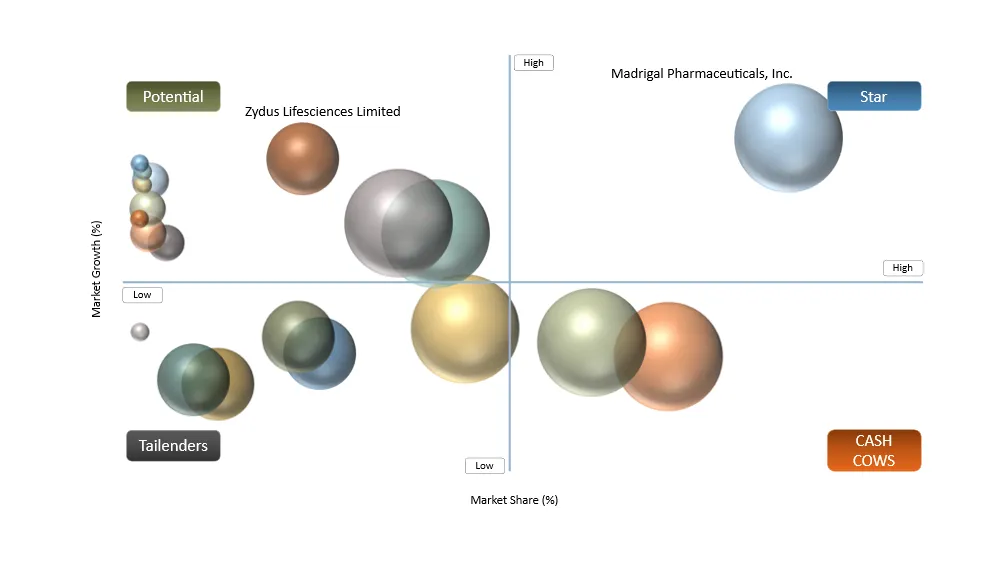
STAR
The stars of the worldwide NASH/MASH treatment market include firms that have an approved therapy, are well commercialized, have clinical uptake, and have scalable treatment infrastructure. The firms that are best placed directly due to their approved therapies of Rezdiffra and Wegovy are Madrigal Pharmaceuticals, Inc. and Novo Nordisk A/S respectively, owing to their first mover advantage, specialist involvement, payer access abilities, and geographical approvals. The firms that are well placed in advanced liver care are TransMedics Group, Inc. and Terumo Corporation due to their commercially proven organ preservation and liver perfusion technologies.
POTENTIAL
The potential players group consists of regional pharmaceuticals, metabolic-care companies, minimally invasive weight-management firms, and transplant technology companies that have a significant presence in the MASH market but relatively less market penetration on the disease-specific level. The Zydus Lifesciences Limited, Eli Lilly and Company, Allurion Technologies, Inc., Bridge to Life Ltd., and XVIVO Perfusion AB all have expansion opportunities in terms of wider geographically based commercialization, integration in clinics, insurance reimbursement, and partnerships. Zydus has an advantage due to its approval of NASH drug in India, whereas other players could develop their significance by addressing obesity problems, more effective liver treatments, and transplantation technologies.
Market Dynamics
Driver Impact Analysis
| Driver | Market Growth Impact (%) | Demand Concentration | Impacted Use Case | Strategic Impact |
Commercialization of Approved Disease-Modifying Therapies | 30–35% | United States, Germany, United Kingdom, France, and other early-access markets | Pharmacological treatment of noncirrhotic MASH with F2–F3 fibrosis | Rezdiffra and Wegovy are shifting MASH from lifestyle-led management toward reimbursed pharmacotherapy, accelerating diagnosis, specialist referrals, formulary inclusion, and treatment uptake. |
Rising Obesity, Type 2 Diabetes, and Metabolic Disease Burden | 25–30% | North America, Europe, China, India, Japan, and the Middle East | Integrated liver, obesity, diabetes, nutrition, and weight-management treatment | Expansion of metabolically high-risk populations increases the addressable MASH patient pool and strengthens demand for multidisciplinary, long-duration treatment pathways. |
Expansion of Fibrosis Screening and Risk-Based Patient Identification | 20–25% | Diabetes clinics, primary care networks, hepatology centers, and obesity-care programs | Identification, referral, staging, and treatment initiation for F2–F3 patients | Wider adoption of non-invasive fibrosis assessment can reduce underdiagnosis, improve eligible-patient conversion, and create scalable referral pathways into pharmacological and specialist care. |
Commercialization of Approved Disease-Modifying Therapies
The commercial success of Rezdiffra and Wegovy has changed MASH from an unmanaged chronic illness into a defined therapeutic category that can be reimbursed. With Rezdiffra approved in 2024 for the first liver-based drug for non-cirrhotic MASH with F2 to F3 fibrosis and Wegovy approved in 2025 for the first GLP-1 receptor agonist able to treat both the hepatic disease and its metabolic root causes.
Commercial success has uncovered latent demand. Rezdiffra achieved sales of US$958.4 million in 2025 and has now reached over 42,250 patients by March 2026, recording 127% sales growth on a year-over-year basis in Q1 2026. This trend is driving fibrosis testing, specialist referrals, formulary listings, specialty pharmacy dispensing, and payer support for early intervention. The focus of competition in consequence has shifted from regulatory approval to patient discovery, successful reimbursement, adherence, real-world results, and physician adoption. Firms that can develop commercial capabilities in hepatology, endocrinology, obesity, diagnostics, and patient management will be able to take disproportionate share as the prevalence of MASH therapy increases around the world.
Restraint Impact Analysis
| Restraint | Drag on Market Growth (%) | Primary Impact Area | Impacted Use Case | Strategic Impact |
Underdiagnosis and Limited Fibrosis-Staging Infrastructure | 5–7% | Patient identification, specialist referral and treatment eligibility | Identification and treatment initiation for patients with F2–F3 fibrosis | Limited routine fibrosis screening, uneven access to imaging-based assessment and fragmented referrals reduce the conversion of high-risk metabolic patients into diagnosed, treatment-eligible MASH populations. |
High Treatment Costs and Restrictive Reimbursement Pathways | 4–6% | Affordability, formulary access and treatment initiation | Long-term pharmacological treatment through specialty and hospital pharmacies | Prior authorization, documentation requirements, cost-sharing and uncertain coverage can delay therapy initiation, restrict access to narrowly defined patient groups and widen adoption disparities between countries and payer systems. |
Limited Long-Term Outcomes Evidence and Treatment-Specific Safety Considerations | 3–5% | Physician confidence, payer assessment and treatment persistence | Long-duration use of liver-directed and incretin-based therapies | Accelerated approvals remain dependent on confirmatory evidence demonstrating sustained clinical benefit. Monitoring requirements, adverse-event management and drug interactions may increase treatment complexity and encourage cautious adoption. |
High Treatment Costs and Restrictive Reimbursement Pathways
The high cost of the therapy continues to be a material barrier due to long duration of treatment, fibrosis staging, specialist consultation, testing, and assessment of the therapy response and management of diet and physical activity. The affordability burden may be considerable especially for uninsured and under-insured patients; Novo Nordisk's 2026 direct payment program, for instance, has the price for Wegovy set at US$349 per month following the introductory fills, dependent on certain eligibility criteria.
Payers have been implementing tight reimbursement pathways in order to mitigate the financial risk associated with MASH treatment. Payer coverage may involve the presence of F2-F3 stage of fibrosis, hepatologist or gastroenterologist consultation, dietary and physical activity management, and reauthorization. Some payer policies also prohibit the concurrent use of Wegovy and Rezdiffra for the same indication.
These criteria may delay treatment initiation, limit the eligible patients, and result in access differences across payers and countries. Therefore, the successful market launch will be conditional on robust health economic data, simplification of the diagnostic pathway, patient assistance program, and value-based agreements demonstrating a reduction in progression to cirrhosis and transplantation.
NASH/MASH Treatment Market Segment Analysis
the NASH/MASH Treatment Market is segmented based on the treatment modality, disease stage, patient type, route of administration, distribution channel, payer type, treatment setting and region.
By Treatment Modality
Pharmacological Treatment
Pharmacotherapy is considered the leading segment in terms of the NASH/MASH treatment market, reflecting the shift from only lifestyle therapy towards reimbursement-driven, disease modifying treatment. The FDA approval of Rezdiffra in March 2024 marked the advent of the first liver-targeted therapy approved for treating adults with non-cirrhotic MASH and F2-F3 fibrosis, while Wegovy’s MASH indication in August 2025 opened up the market to the GLP-1-based metabolic therapy treatment. Each of the therapies targets different drivers of the disease, such as hepatic steatosis, inflammation, fibrosis, obesity, and overall metabolic disorder. The segment will be driven by prolonged treatment duration, specialist prescribing, repeat pharmacy revenues, and growing collaboration between hepatologists, endocrinologists, diabetes specialists, and obesity specialists. Commercial success will require confirmation of patients’ fibrosis stage, payer coverage, physician acceptance, adherence to the therapy and evidence of efficacy. Pharmacological treatment is expected to remain the leading value-generating segment throughout the forecast period.
By Disease Stage
Moderate Fibrosis(F2)
The fastest-growing disease-stage segment in the NASH/MASH treatment market is projected to be moderate fibrosis, F2, since this corresponds to the stage at which clinical significance of the liver scarring begins to appear yet is still reversible without advancing to advanced fibrosis or cirrhosis. F2 patients are crucial for today’s commercialization efforts, considering that Rezdiffra and Wegovy, both of which have been approved by FDA, are indicated for adults with noncirrhotic MASH and moderate-to-advanced fibrosis, which corresponds to F2 and F3 stages. ([U.S. Food and Drug Administration][1]) The market is also driven by the growth in non-invasive diagnosis, better referral practices for high-risk obesity and diabetes patients, and increased focus of payers on early interventions to prevent developing complications and the resulting high cost burden on the healthcare system. Another factor is the size of undiagnosed patient population and rising hepatology/endocrinology/obesity-care pathways alignment. Adherence and response durability will affect the success of treatment uptake.
NASH/MASH Treatment Market Geographical Penetration
U.S. NASH/MASH Market Landscape
The United States is considered to be one of the most commercialized markets for NASH/MASH therapy due to the large number of high-risk patients, regulatory approvals, infrastructure of specialists, and specialty pharmacies. The National Institute of Diabetes and Digestive and Kidney Diseases states that 1.5%–6.5% of the adult American population suffers from NASH, and approximately 24% are affected by fatty liver disease.
The market has shifted from lifestyle to disease-oriented pharmacotherapy after Rezdiffra's approval in March 2024 for the treatment of noncirrhotic NASH with moderate-to-advanced fibrosis. Wegovy was granted FDA approval in August 2025 for the treatment of adults with noncirrhotic MASH and moderate-to-advanced fibrosis based on incretin metabolism.
The adoption of therapy reflects significant unmet treatment needs in the market. According to the reports provided by Madrigal Pharmaceuticals, the company earned US$958.4 million in net sales in 2025 and had more than 42,250 patients treated by March 31, 2026.
Japan NASH/MASH Market Outlook
Commercialization stage of the MASH treatment market in Japan started in June 2026 with the approval of Wegovy for use in adults with noncirrhotic MASH and moderate to advanced fibrosis, making it the first pharmacologic treatment approved for MASH in the country. This indication includes the treatment of weekly semaglutide 2.4 mg on top of diet and physical activity control for patients with F2-F3.
These patient pools are driven by the high burden of metabolic diseases in the country. As per the Ministry of Health, Labour and Welfare, about 11 million people are strongly believed to have diabetes, and there is no certainty that 7 million others do not have diabetes. The national survey conducted in 2024 by the country revealed that obesity was seen in 34.0% of men aged between 20-69 years and 20.2% of women aged between 40-69 years.
Short-term growth will be contingent on the discovery of eligible patients via non-invasive fibrosis evaluation, enhanced referrals in the diabetes and general practice sectors, and increased hepatology capacity. The controlled prescribing environment in Japan might facilitate appropriate use but could temper early adoption. Strategic benefit will lie with those who can combine risk management, specialist training, fibrosis staging, therapy monitoring, and patient support into the national health care system.
Competitive Landscape
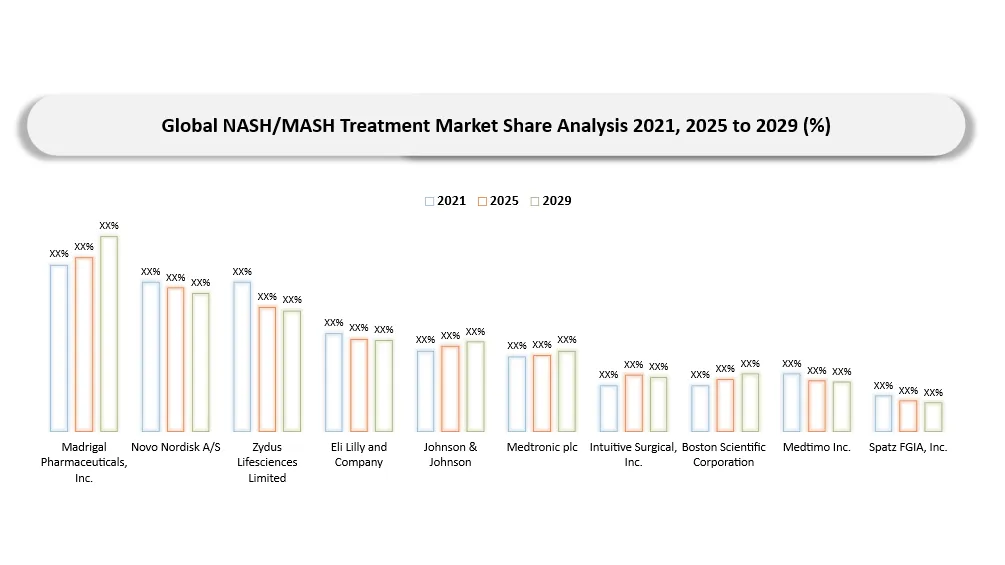
- The competitive dynamics of the NASH/MASH therapy market is better described using an ecosystem consisting of four layers rather than peer groups. Madrigal Pharmaceuticals, Novo Nordisk, and Zydus Lifesciences have the strongest pharmaceutical positioning via disease-specific products that have been approved. Madrigal is the strongest player in the liver-targeted pharmacotherapy through Rezdiffra, Novo Nordisk has combined MASH therapy along with GLP-1 and obesity care capabilities on a global basis with Wegovy, while Zydus is the unique regional player via saroglitazar in India.
- The competitive landscape more broadly is extended to include weight-management therapies and liver care innovations. Johnson & Johnson, Medtronic, and Intuitive Surgical compete via bariatric surgery platforms, while Boston Scientific, Medtimo, Spatz, and Allurion compete via non-invasive methods of obesity treatment. Companies including TransMedics, Terumo, Bridge to Life, and XVIVO compete via liver preservation and perfusion for liver transplantation. These companies have an indirect but strategic exposure to MASH in terms of the fact that the management of disease is involved in metabolic disease prevention, surgical intervention, cirrhosis management, and liver transplantation. In order to be successful in the long run, the integration of therapy delivery with diagnosis, referral, payment, and outcome monitoring is essential.
Key Companies
- Madrigal Pharmaceuticals, Inc.
- Novo Nordisk A/S
- Zydus Lifesciences Limited
- Eli Lilly and Company
- Johnson & Johnson
- Medtronic plc
- Intuitive Surgical, Inc.
- Boston Scientific Corporation
- Medtimo Inc.
- Spatz FGIA, Inc.
- Allurion Technologies, Inc.
- TransMedics Group, Inc.
- Terumo Corporation
- Bridge to Life Ltd.
- XVIVO Perfusion AB
Major Pain Points
- High treatment costs and restrictive reimbursement pathways limiting access to long-term NASH/MASH therapies.
- Large undiagnosed patient population due to low disease awareness and inconsistent fibrosis screening.
- Dependence on accurate fibrosis staging to confirm treatment eligibility and guide therapy selection.
- Limited specialist capacity and fragmented referrals across primary care, hepatology, endocrinology, and obesity medicine.
- Variable treatment response across patients with different metabolic profiles, fibrosis stages, and comorbidities.
- Long-term adherence challenges associated with chronic therapy, lifestyle modification, and repeated clinical monitoring.
- Safety concerns, contraindications, and adverse-event management affecting physician confidence and treatment persistence.
- Limited long-term evidence on liver-related outcomes, cirrhosis prevention, and transplantation avoidance.
- Complex prior-authorization and reauthorization requirements delaying treatment initiation and increasing administrative burden.
- Unequal access to approved therapies, bariatric procedures, specialist clinics, and transplantation services across countries and healthcare systems.
Recent Developments
- July 2026: Novo Nordisk A/S received UK authorization for Wegovy to treat adults with noncirrhotic MASH and moderate-to-advanced liver fibrosis, expanding the therapy’s commercial availability in Europe.
- June 2026: Novo Nordisk A/S received Japanese approval for Wegovy in patients with noncirrhotic MASH and moderate-to-advanced fibrosis, making it the first approved MASH treatment in Japan.
- May 2026: Madrigal Pharmaceuticals, Inc. presented new Rezdiffra data demonstrating improvements in cardiovascular risk markers and indicators associated with portal hypertension among MASH patients.
- May 2026: Madrigal Pharmaceuticals, Inc. reported continued commercial expansion of Rezdiffra, supported by increasing patient adoption and broader payer access across the U.S. MASH treatment market.
- August 2025: Novo Nordisk A/S received FDA accelerated approval for Wegovy to treat adults with noncirrhotic MASH and moderate-to-advanced liver fibrosis.
- August 2025: Madrigal Pharmaceuticals, Inc. received European Commission conditional marketing authorization for Rezdiffra, establishing the first approved MASH-specific pharmacotherapy in the European Union.
- June 2025: The European Medicines Agency recommended Rezdiffra for adults with MASH and stage F2–F3 liver fibrosis, supporting its subsequent European commercialization.
Analyst View / Opinion
- The NASH/MASH treatment market is entering a sustained commercialization phase as approved pharmacotherapies move disease management beyond lifestyle intervention toward structured, stage-specific treatment pathways.
- Clinical and commercial value is concentrating in patients with moderate-to-advanced fibrosis, where the risk of progression, treatment urgency, and payer willingness to reimburse are comparatively higher.
- The approval of liver-directed and incretin-based therapies is broadening competitive dynamics by linking hepatology with obesity, diabetes, endocrinology, and cardiovascular risk management.
- Patient identification remains the critical market bottleneck, making fibrosis screening, specialist referrals, and non-invasive disease staging central to treatment adoption and revenue expansion.
- Payer access will increasingly depend on demonstrated fibrosis improvement, durable clinical outcomes, reduced progression to cirrhosis, and credible evidence of long-term healthcare cost avoidance.
- Demand is shifting toward integrated treatment models combining pharmacotherapy, medical nutrition, structured weight management, behavioral support, and longitudinal monitoring rather than isolated interventions.
- Specialty pharmacies and patient-support platforms are becoming strategically important because prior authorization, adherence management, reimbursement navigation, and treatment persistence directly influence commercial uptake.
- North America is expected to remain the leading revenue market, while Europe and selected Asia-Pacific countries represent the next major expansion opportunities as reimbursement pathways and specialist capacity improve.
- Competitive differentiation will increasingly depend on treatment convenience, metabolic benefits, safety, real-world evidence, and the ability to support patients across multiple stages of liver and metabolic disease.
Target Audience
| INDUSTRY | WHO SHOULD BUY THIS REPORT? | REASON TO BUY THIS REPORT |
| Pharmaceutical & Biotechnology Companies | Commercial Strategy Leaders, Market Access Teams, Portfolio Managers, Business Development Executives | Evaluate treatment-class opportunities, competitive positioning, country-level demand, pricing potential, reimbursement pathways, and commercialization priorities across the MASH treatment ecosystem. |
| Hospitals & Integrated Health Systems | Hospital Administrators, Liver Care Directors, Clinical Strategy Teams, Service-Line Managers | Plan multidisciplinary treatment pathways, forecast patient volumes, strengthen referrals, and assess infrastructure requirements across hepatology, metabolic care, bariatric surgery, and transplantation. |
| Hepatology & Gastroenterology Providers | Hepatologists, Gastroenterologists, Clinic Directors, Practice Managers | Understand fibrosis-stage demand, treatment adoption, prescribing trends, eligible patient populations, and opportunities to expand specialist-led MASH treatment services. |
| Endocrinology, Diabetes & Obesity Care Providers | Endocrinologists, Diabetologists, Obesity Medicine Specialists, Metabolic Care Directors | Assess the convergence of obesity, diabetes, and liver disease treatment and identify opportunities for integrated metabolic-liver care programs. |
| Health Insurance & Government Payers | Medical Directors, Formulary Committees, Health-Economics Teams, Reimbursement Decision-Makers | Compare treatment costs, budget impact, eligibility criteria, clinical outcomes, and potential savings from delaying cirrhosis, hospitalization, and liver transplantation. |
| Specialty Pharmacies & Patient-Support Providers | Specialty Pharmacy Executives, Patient Access Teams, Adherence Managers, Reimbursement Specialists | Quantify dispensing demand, prior-authorization requirements, adherence challenges, patient-support needs, and service opportunities linked to long-term MASH therapies. |
| Investors, Private Equity & Venture Capital Firms | Healthcare Investors, Equity Analysts, Due-Diligence Teams, Portfolio Managers | Assess market attractiveness, commercial readiness, treatment-modality growth, reimbursement risk, competitive intensity, and investment opportunities across the MASH care continuum. |
Why Choose DATAM?
- Granular, Decision-Ready Intelligence: Access detailed analysis of the NASH/MASH treatment landscape, including treatment-modality shares, pricing benchmarks, reimbursement pathways, patient segmentation, country-level demand, and competitive positioning.
- Primary Research-Led Validation: Our findings are strengthened through interviews with hepatologists, gastroenterologists, endocrinologists, market-access professionals, payers, specialty pharmacies, and other stakeholders across the MASH care ecosystem.
- Direct Analyst Access and Post-Purchase Support: Clients receive access to experienced analysts for clarification, strategic interpretation, custom data cuts, and guidance aligned with their commercial, investment, or market-entry priorities.
- Customized White Papers and Case Studies: Quarterly strategic content can be provided on topics such as therapy adoption, payer access, patient identification, treatment sequencing, integrated metabolic-liver care, and country-specific commercialization opportunities.
- Annual Report Updates: Purchased reports can be updated annually to reflect new approvals, reimbursement changes, treatment adoption, competitive developments, clinical evidence, and evolving market dynamics. Terms and conditions apply.
- Strong Emerging-Market Coverage: DataM provides deeper analysis of high-growth markets across Asia-Pacific, Latin America, and the Middle East, including specialist availability, treatment access, local reimbursement, diagnostic infrastructure, and unmet patient demand.
- Beyond Standard Database Intelligence: DataM reports combine quantitative market estimates with strategic interpretation, enabling clients to understand not only market size, but also where demand is emerging, which treatment pathways are gaining traction, and how value may shift across the MASH treatment ecosystem.



























































