


Metabolic Dysfunction-Associated Steatohepatitis (MASH) Drugs Market Size
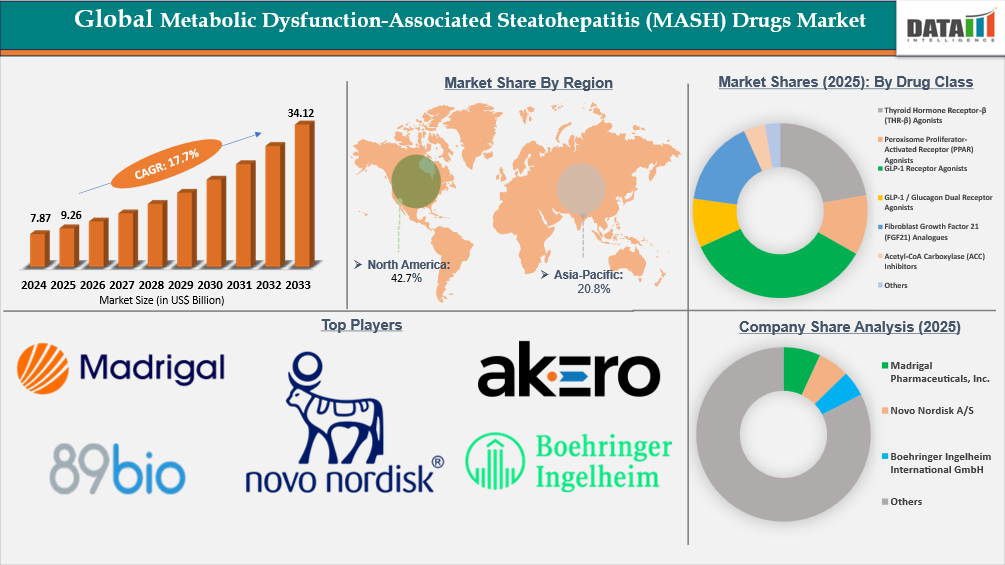
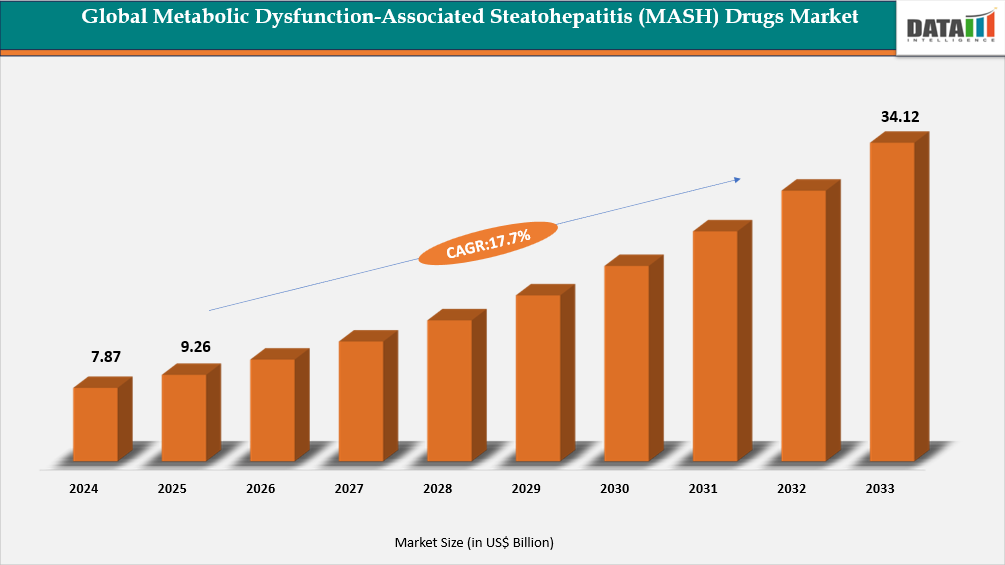
The Global Metabolic Dysfunction-Associated Steatohepatitis (MASH) Drugs Market reached US$ 8.56 Billion in 2025, rising to US$ 34.12Billion in 2033, with CAGR of 17.70 during the forecast year 2026-2033
The Global Metabolically Dysregulated-Associated Steatohepatitis (MASH) drugs market is rapidly evolving as pharmaceutical innovation addresses the growing burden of metabolic liver diseases. The rising prevalence of obesity, type 2 diabetes, and metabolic syndrome is increasing the number of patients at risk of fatty liver disease progressing to MASH. This has created a substantial unmet need for effective therapies that target liver inflammation, fibrosis, and associated metabolic dysfunction. Innovative drug classes, including GLP-1 receptor agonists, THR-β agonists, PPAR agonists, and FGF21 analogues, are gaining attention for their ability to address underlying metabolic risk factors, improve liver health, and support disease management. North America continues to lead the market in the adoption of new therapies. At the same time, the Asia-Pacific shows significant growth potential driven by increasing disease awareness, the development of healthcare infrastructure, and expanding clinical research. The competitive landscape is characterized by strong R&D pipelines, strategic collaborations, and ongoing clinical development, positioning the market for continued expansion and therapeutic breakthroughs.
Metabolic Dysfunction-Associated Steatohepatitis (MASH) Drugs Market Key Takeaways
- The market generated US$ 9.26 Billion in 2025 and is forecast to surpass US$ 34 Billion by 2033, highlighting strong commercial potential.
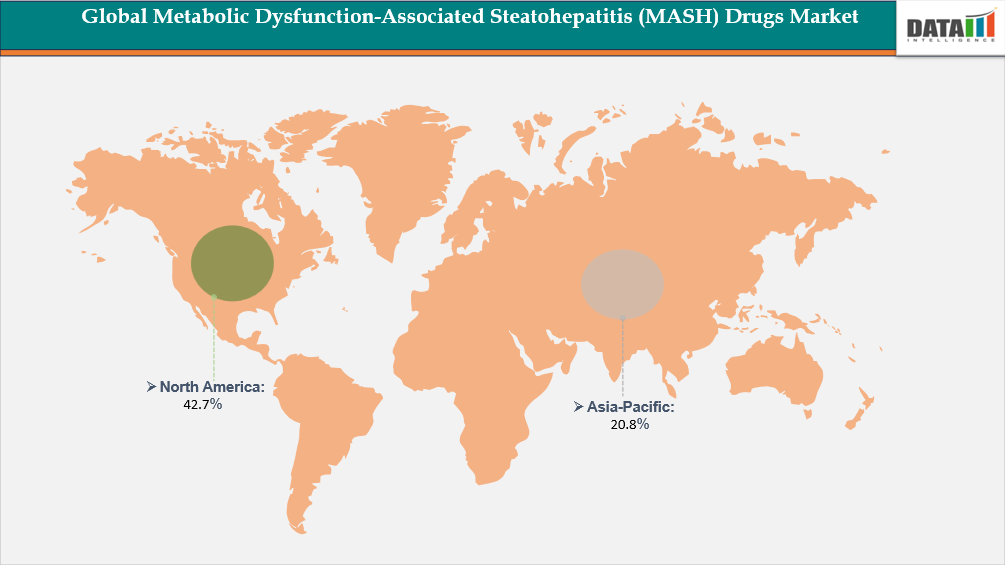
- North America accounted for 42.7% of global revenue in 2025 due to high disease prevalence, advanced healthcare infrastructure, and rapid therapeutic adoption.
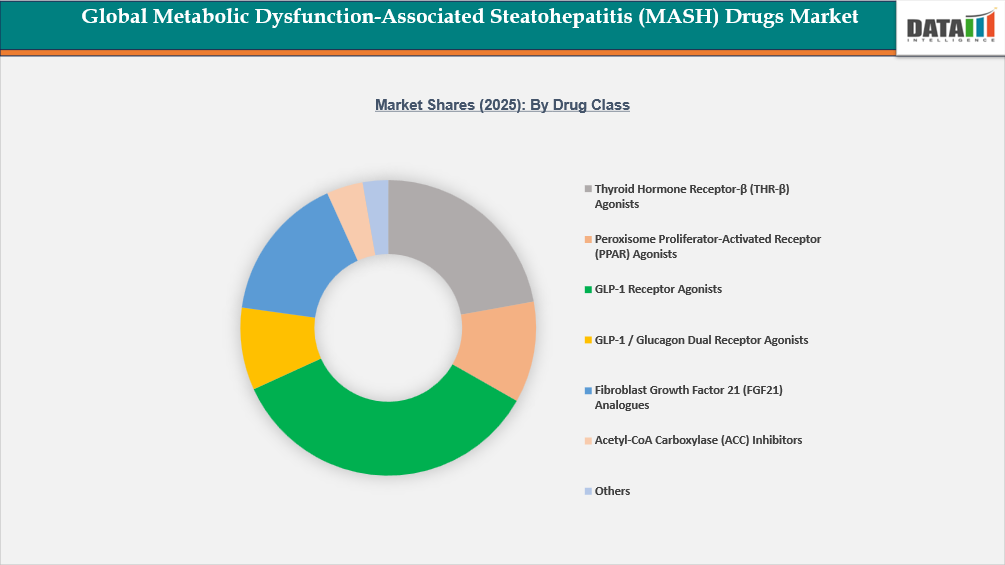
- GLP-1 receptor agonists represented 34.96% of the global market, making them the leading drug class.
- Asia-Pacific is expected to deliver the strongest growth as obesity rates, diabetes prevalence, and healthcare investments continue to rise.
- Expanding clinical pipelines and increasing FDA approvals are improving confidence among investors and pharmaceutical manufacturers.
Metabolic Dysfunction-Associated Steatohepatitis (MASH) Drugs Market Scope
| Metrics | Details |
| Market Size (2025) | US$ 9.26 Billion |
| Forecast Market Value (2033) | US$ 34.12 Billion |
| CAGR (2026-2033) | 17.70% |
| Historic Years | 2023-2024 |
| Base Year | 2025 |
| Forecast Period | 2026-2035 |
| Segments Covered | Drug Class, Fibrosis Stage, Age Group, Distribution Channel, End User, Region |
| Largest Regional Market | North America |
| Fastest Growing Region | Asia-Pacific |
Global Metabolic Dysfunction-Associated Steatohepatitis (MASH) Drugs Industry Trends and Strategic Insights
- North America leads the global metabolic dysfunction-associated steatohepatitis (MASH) drugs market, capturing the largest revenue share of 42.7% in 2025.
- By Drug Class segment, GLP-1 Receptor Agonists led the global metabolic dysfunction-associated steatohepatitis (MASH) drugs market, capturing the largest revenue share of 34.96% in 2025.
Global Metabolic Dysfunction-Associated Steatohepatitis (MASH) Drugs Market Size and Future Outlook
- 2025 Market Size: US$9.26 Billion
- 2033 Projected Market Size: US$34.12 Billion
- CAGR (2026–2033): 17.7%
- Dominating Market: North America
- Fastest Growing Market: Asia-Pacific
For More Detailed Information, Request for Sample
Metabolic Dysfunction-Associated Steatohepatitis (MASH) Drugs Market Dynamics
Rising Global Burden of Obesity and Metabolic Syndrome
The primary driver of the Metabolically Dysregulated-Associated Steatohepatitis (MASH) drugs market is the rapidly increasing prevalence of obesity and metabolic disorders worldwide. MASH is strongly associated with metabolic risk factors such as obesity, type 2 diabetes, dyslipidemia, and insulin resistance. According to the World Health Organization, more than 1 billion people globally are living with obesity, significantly increasing the population at risk of developing metabolic liver diseases. Studies also indicate that around 20–30% of individuals with metabolic dysfunction-associated fatty liver disease (MAFLD) progress to MASH, which can lead to advanced liver fibrosis, cirrhosis, and liver failure if untreated.
This growing patient population is creating a significant unmet clinical need for effective pharmacological therapies, as lifestyle modification alone is often insufficient to manage advanced disease stages. As healthcare systems increasingly recognize MASH as a major public health concern and pharmaceutical companies accelerate drug development efforts, the demand for innovative MASH treatments is expected to grow substantially, driving the expansion of the global MASH drugs market.
Segmentation Analysis
The Global Metabolically Dysfunctional-Associated Steatohepatitis (MASH) Drugs Market is segmented based on drug class, fibrosis stage, age group, distribution channel, end user, and region.
Growing Role of GLP-1 Receptor Agonists in the Global Metabolically Associated Steatohepatitis (MASH) Drugs Market
GLP-1 receptor agonists are gaining significant attention in the Metabolically Dysregulated-Associated Steatohepatitis (MASH) drugs market due to their ability to target underlying metabolic risk factors such as obesity, insulin resistance, and type 2 diabetes. Semaglutide, a long-acting GLP-1 receptor agonist, has shown promising results in clinical studies by reducing liver fat accumulation, improving metabolic parameters, and supporting substantial weight loss, all of which are critical factors in slowing the progression of MASH.
The growing global burden of obesity is further driving interest in semaglutide as a potential therapy for metabolic liver diseases. According to the World Health Organization, more than 1 billion people worldwide are living with obesity, which significantly increases the risk of developing MASH. In clinical research evaluating semaglutide in patients with nonalcoholic steatohepatitis, nearly 59% of patients achieved resolution of liver inflammation without worsening fibrosis, demonstrating its potential effectiveness in addressing key pathological features of the disease.
With strong clinical evidence and increasing adoption of GLP-1-based therapies in metabolic disorders, semaglutide is being actively explored for expanded indications in liver disease. Ongoing clinical development and growing recognition of its metabolic benefits are expected to strengthen the role of semaglutide in future treatment strategies within the Metabolically Dysregulated-Associated Steatohepatitis (MASH) drugs market.
Geographical Penetration
Largest Market:
Demand for Metabolically Dysfunctional-Associated Steatohepatitis (MASH) Drugs Market in North America
North America holds significant demand for Metabolically Dysregulated-Associated Steatohepatitis (MASH) drugs, largely driven by the high prevalence of obesity, type 2 diabetes, and metabolic syndrome in the region. These metabolic conditions are key risk factors for fatty liver disease and its progressive stage, MASH. According to the U.S. Centers for Disease Control and Prevention (CDC), the age-adjusted prevalence of obesity among U.S. adults was 40.3%, while the American Diabetes Association reports that over 38 million Americans are living with diabetes, creating a large population at risk for metabolic liver diseases.
Additionally, research published by the U.S. National Institutes of Health (NIH) indicates that metabolic dysfunction-associated fatty liver disease affects approximately 25–30% of adults in the United States, and a portion of these patients may progress to MASH, which can lead to liver fibrosis, cirrhosis, and liver failure if left untreated. This increasing disease burden is driving demand for effective pharmacological therapies that target liver inflammation, fibrosis, and metabolic dysfunction.
Moreover, North America benefits from advanced healthcare infrastructure, strong clinical research activity, and supportive regulatory frameworks for innovative drug development. The presence of major pharmaceutical and biotechnology companies, along with ongoing clinical trials and increasing awareness of liver diseases, is accelerating the adoption of emerging MASH treatments. These factors collectively support the strong and growing demand for MASH drugs across North America.
U.S. Metabolic Dysfunction-Associated Steatohepatitis (MASH) Drugs Market Outlook
The United States represents one of the most significant markets for Metabolically Dysregulated-Associated Steatohepatitis (MASH) drugs due to the large patient population affected by metabolic liver diseases and the strong presence of pharmaceutical innovation. MASH is a progressive form of fatty liver disease associated with obesity, insulin resistance, and type 2 diabetes, all of which are highly prevalent in the country. Epidemiological estimates indicate that approximately 1.5% to 6.5% of U.S. adults have MASH, representing around 9 to 15 million individuals in the country. These patients are at increased risk of developing advanced liver complications such as fibrosis, cirrhosis, and liver cancer.
The broader metabolic dysfunction-associated steatotic liver disease (MASLD) population in the United States is even larger, affecting tens of millions of individuals. Research suggests that about 20–25% of U.S. adults have fatty liver disease, and a portion of these patients progress to MASH over time. This growing disease burden is increasing the demand for effective pharmacological treatments aimed at slowing disease progression and preventing severe liver complications.
In addition, the U.S. healthcare ecosystem strongly supports the development and adoption of innovative therapies. The country hosts leading pharmaceutical and biotechnology companies involved in MASH drug development and clinical trials. Regulatory support and recent therapeutic approvals are accelerating market expansion, while increasing clinical awareness and improved diagnostic tools are helping identify more patients requiring treatment. As a result, the U.S. is expected to remain a key hub for research, commercialization, and demand for MASH drugs in the coming years.
Canada Metabolic Dysfunction-Associated Steatohepatitis (MASH) Drugs Market Trends
The Canada Metabolic Dysfunction-Associated Steatohepatitis (MASH) drugs market is witnessing growing interest due to the rising prevalence of metabolic liver diseases and related risk factors such as obesity and type 2 diabetes. Studies suggest that metabolic dysfunction-associated steatotic liver disease (MASLD) affects nearly 20% of the Canadian population, and a portion of these patients progress to MASH, creating a significant need for effective therapeutic options.
In addition, increasing clinical awareness, improved screening practices, and growing research on metabolic liver diseases are supporting earlier diagnosis and treatment. The rising burden of fatty liver disease and expanding pharmaceutical research efforts are expected to drive the development and adoption of emerging MASH therapies in Canada.
Fastest Growing Market:
Asia-Pacific Records the Fastest Growth in the Metabolic Dysfunction-Associated Steatohepatitis (MASH) Drugs Market
The Asia-Pacific region is expected to witness the fastest growth in the Metabolic Dysfunction-Associated Steatohepatitis (MASH) drugs market due to the increasing prevalence of metabolic liver diseases and related risk factors such as obesity and diabetes. Rapid urbanization, lifestyle changes, and dietary shifts are contributing to the rising burden of metabolic disorders across countries, including China, India, and Japan.
Studies published in Hepatology report that metabolic dysfunction-associated steatotic liver disease (MASLD) affects around 28% of the population in the Asia-Pacific region, indicating a large patient pool that may progress to MASH and require therapeutic intervention.
In addition, improving healthcare infrastructure, increasing disease awareness, and growing pharmaceutical research activities are supporting the development and adoption of new therapies. These factors are expected to significantly drive demand for MASH drugs across the Asia-Pacific region in the coming years.
India Metabolic Dysfunction-Associated Steatohepatitis (MASH) Drugs Market Insights
India is emerging as a significant market for Metabolic Dysfunction-Associated Steatohepatitis (MASH) drugs due to the rising prevalence of metabolic disorders such as obesity and type 2 diabetes. These conditions are major risk factors for metabolic liver diseases that can progress to MASH.
Epidemiological estimates indicate that 16%–32% of the Indian population is affected by metabolic dysfunction-associated steatotic liver disease (MASLD), and about one-third of these patients may progress to MASH. The prevalence of MASH in the general population is estimated to be around 1.5%–6.5%, highlighting a substantial patient population at risk of developing severe liver complications. In addition, recent studies suggest that the age-adjusted prevalence of MASLD in India is approximately 38.9% among adults, indicating a large population vulnerable to advanced liver conditions.
The growing disease burden, along with increasing clinical awareness and improvements in diagnostic practices, is expected to support the demand for MASH drug therapies in India in the coming years.
China Metabolic Dysfunction-Associated Steatohepatitis (MASH) Drugs Market Industry Growth
China is emerging as a major market for Metabolic Dysfunction-Associated Steatohepatitis (MASH) drugs due to the rapidly increasing prevalence of metabolic liver diseases and related risk factors such as obesity, diabetes, and metabolic syndrome. The country has one of the largest patient populations affected by metabolic dysfunction-associated steatotic liver disease (MASLD), which can progress to MASH and severe liver complications.
Recent epidemiological studies estimate that the prevalence of MASLD in China is around 30.4% of the population, while the pooled prevalence of MASH is approximately 6.7%, indicating a substantial patient population requiring clinical management and therapeutic intervention.
In addition, the overall prevalence of MASLD in China has been reported to range from 20.4% to 48.4%, reflecting the growing burden of metabolic liver diseases in the country. The rising incidence of obesity, sedentary lifestyles, and dietary changes is expected to further increase the number of patients at risk of developing MASH, thereby driving the demand for effective pharmacological therapies in China.
Market Opportunities
Significant commercial opportunities exist for companies developing therapies that combine weight reduction with liver disease management.
Manufacturers capable of demonstrating fibrosis improvement, durable liver inflammation resolution, and metabolic benefits are expected to strengthen their competitive positioning. Strategic partnerships between biotechnology innovators and established pharmaceutical companies are also expected to accelerate commercialization.
Emerging economies across Asia-Pacific present attractive opportunities as governments invest in diagnostic infrastructure, physician education, and improved access to specialty liver care.
Competitive Landscape
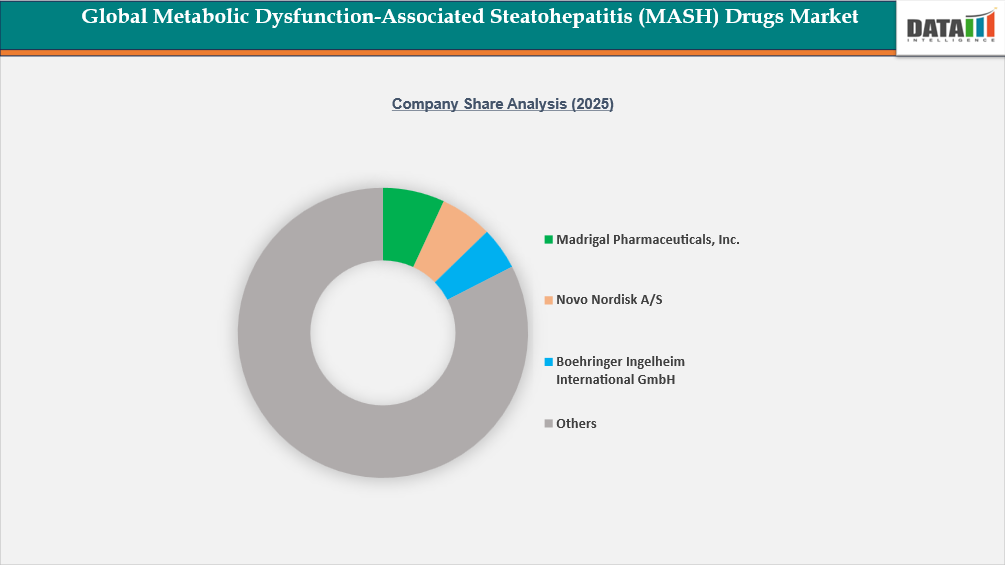
The Global Metabolic Dysfunction-Associated Steatohepatitis (MASH) drugs market is becoming highly competitive as pharmaceutical and biotechnology companies intensify their efforts to develop effective therapies for metabolic liver diseases. Leading companies such as Madrigal Pharmaceuticals, Inc., Novo Nordisk A/S, and Boehringer Ingelheim International GmbH maintain strong market positions due to their advanced clinical pipelines, extensive research capabilities, and focus on innovative treatment approaches for MASH and related metabolic disorders.
In addition, biotechnology companies, including Akero Therapeutics, Inc., 89bio, Inc., Inventiva, Sagimet Biosciences Inc., and Viking Therapeutics, are significantly contributing to the competitive landscape through the development of novel drug candidates targeting liver inflammation, fibrosis, and metabolic dysfunction. Their ongoing clinical trials and research initiatives are expected to expand therapeutic options for patients with MASH.
Furthermore, companies such as CHIA TAI TIANQING PHARMACEUTICAL GROUP CO., LTD and Gilead Sciences, Inc. are strengthening their market presence through strategic collaborations, clinical development programs, and global expansion strategies. Continuous innovation, increasing R&D investments, and growing collaboration among industry players are expected to drive competition and support the long-term growth of the Metabolic Dysfunction-Associated Steatohepatitis (MASH) drugs market.
Key Developments
- In August 2025, Novo Nordisk A/S received U.S. FDA accelerated approval for Semaglutide, a GLP-1 receptor agonist, for the treatment of MASH with fibrosis. This development marked a significant step in expanding GLP-1–based therapies into liver disease treatment, strengthening therapeutic options targeting metabolic dysfunction associated with MASH.
- In March 2026, Tangram Therapeutics announced that the first participant was dosed in its Phase 1/2 RESTORE‑MASH trial evaluating TGM‑312, a novel RNAi‑based therapeutic designed to silence a gene target in hepatocytes to treat MASH. This marks one of the first clinical tests of an RNA interference‑based candidate in the MASH space, expanding therapeutic modalities beyond traditional small molecules and biologics. Initial safety and pharmacodynamic data are expected in the second half of 2026.
What Sets This Global Metabolic Dysfunction-Associated Steatohepatitis (MASH) Drugs Market Intelligence Report Apart
- Latest Data & Forecasts – Comprehensive and up-to-date market intelligence with forecasts through 2033, covering global demand by drug class, fibrosis stage, age group, distribution channel, end user, with region-wise analysis across North America, Europe, Asia-Pacific, Latin America, and the Middle East & Africa.
- Regulatory Intelligence – Comprehensive analysis of global regulatory frameworks influencing MASH drug development and commercialization, including FDA, EMA, NMPA, PMDA, and CDSCO guidelines, clinical trial requirements, labeling standards, patent protection, and post-marketing surveillance.
- Competitive Benchmarking – Evaluation of leading innovator and generic MASH drug manufacturers based on product pipelines, clinical differentiation, geographic presence, pricing strategies, and partnerships in metabolic and liver disease therapeutics.
- Geographic & Emerging Market Coverage – Regional assessment of MASH prevalence, treatment adoption rates, reimbursement policies, and access to novel therapies, with a focus on growth potential in Asia-Pacific, Latin America, and Middle East markets.
- Actionable Strategies & Cost Dynamics – Actionable guidance on lifecycle management, generic entry risks, combination therapy positioning, pricing pressures, and manufacturing economics, informed by expert perspectives from hepatologists, clinical researchers, and pharmaceutical executives.
Market Impact Assessment
Growing regulatory support for innovative liver therapies is shortening commercialization timelines while encouraging greater pharmaceutical investment.
The expansion of diagnostic capabilities and increasing physician awareness are improving patient identification, enabling earlier intervention before progression to advanced fibrosis or cirrhosis.
Meanwhile, increasing clinical evidence supporting combination therapies may reshape future treatment protocols and improve long-term patient outcomes.
Report Benefits
This report supports:
- Pharmaceutical manufacturers evaluating commercial opportunities.
- Biotechnology companies assessing clinical development strategies.
- Investors monitoring high-growth therapeutic markets.
- Procurement and commercialization teams planning product launches.
- Healthcare providers evaluating emerging treatment pathways.
- Strategy teams identifying regional expansion opportunities.
Target Audience
- Pharmaceutical Companies
- Biotechnology Firms
- Contract Research Organizations (CROs)
- Healthcare Providers
- Hospital Networks
- Investors and Venture Capital Firms
- Regulatory Authorities
- Market Intelligence Teams
- Business Development Professionals
- Clinical Research Organizations
- Drug Commercialization Teams
Conclusion
The Metabolic Dysfunction-Associated Steatohepatitis (MASH) Drugs Market is entering a period of sustained expansion as metabolic disorders become increasingly prevalent worldwide and pharmacological treatment options continue to mature. Strong clinical pipelines, regulatory approvals, and growing physician awareness are accelerating commercialization across major healthcare markets. North America currently leads global adoption, while Asia-Pacific offers the highest long-term growth potential due to its expanding patient population and improving healthcare infrastructure. Companies capable of delivering therapies that address both metabolic dysfunction and liver fibrosis, supported by robust clinical evidence and strategic partnerships, are expected to be best positioned to capitalize on the market's long-term growth through 2035.


























































