


Melanoma Therapeutics Market Size and Forecast 2035
The melanoma therapeutics market reached USD 5.70 billion in 2025 and is projected to reach USD 9.83 billion by 2035, and growing at a CAGR of 5.6% from 2026 to 2035. Immunotherapy remains the largest treatment category, supported by PD-1, CTLA-4, and LAG-3 checkpoint blockade and the growing commercial contribution of cellular and T-cell-directed treatments.
Commercial performance confirms the strength of the immunotherapy market. Opdualag generated USD 1.185 billion in worldwide 2025 revenue, rising 28% from 2024. Iovance reported USD 220 million in U.S. Amtagvi revenue during 2025, while Immunocore reported USD 400 million in Kimmtrak sales.
Melanoma Therapeutics Market Highlights
- 2025 Market Size: USD 5.70 Billion
- 2035 Market Size: USD 9.83 Billion
- CAGR, 2026-2035: 5.6%
- Largest Region: North America - 46.5%
- Fastest-Growing Region: Asia-Pacific
- Largest Therapy Segment: Immune Checkpoint Inhibitor-Based Regimens - 63.5%
- Largest Disease Segment: Cutaneous Melanoma - 87.0%
- Key Growth Areas: PD-1/LAG-3 combinations, post-PD-1 rescue therapy, tumor-infiltrating lymphocyte therapy, individualized neoantigen therapy, neoadjuvant immunotherapy, subcutaneous checkpoint inhibitors and molecularly selected BRAF/MEK treatment.
Melanoma Therapeutics Market Definition
Melanoma is a malignant tumor arising from melanocytes. Most cases originate in the skin, but melanoma also develops in the eye and mucosal tissues. Treatment selection depends on stage, resectability, BRAF status, prior checkpoint-inhibitor exposure, disease location, performance status, and the presence of brain or visceral metastases.
Current treatment pathways include PD-1 inhibitors, CTLA-4 inhibition, PD-1/LAG-3 combinations, BRAF and MEK inhibitors, T-cell engagers, tumor-infiltrating lymphocyte therapy and oncolytic viral immunotherapy. Surgery remains central in localized disease, while systemic treatment increasingly extends into stages II and III through adjuvant and neoadjuvant approaches.
The latest GLOBOCAN 2024 estimates record 337,969 new cases of cutaneous melanoma and 58,398 deaths worldwide. Europe accounts for 44.6% of incidence, Northern America 33.0%, Oceania 6.6%, Asia 7.5%, Latin America and the Caribbean 6.0%, and Africa 2.3%.
In the United States, 112,000 new cutaneous melanoma cases and 8,510 deaths are projected for 2026, while five-year relative survival stands at 94.7%.
Pipeline Drugs
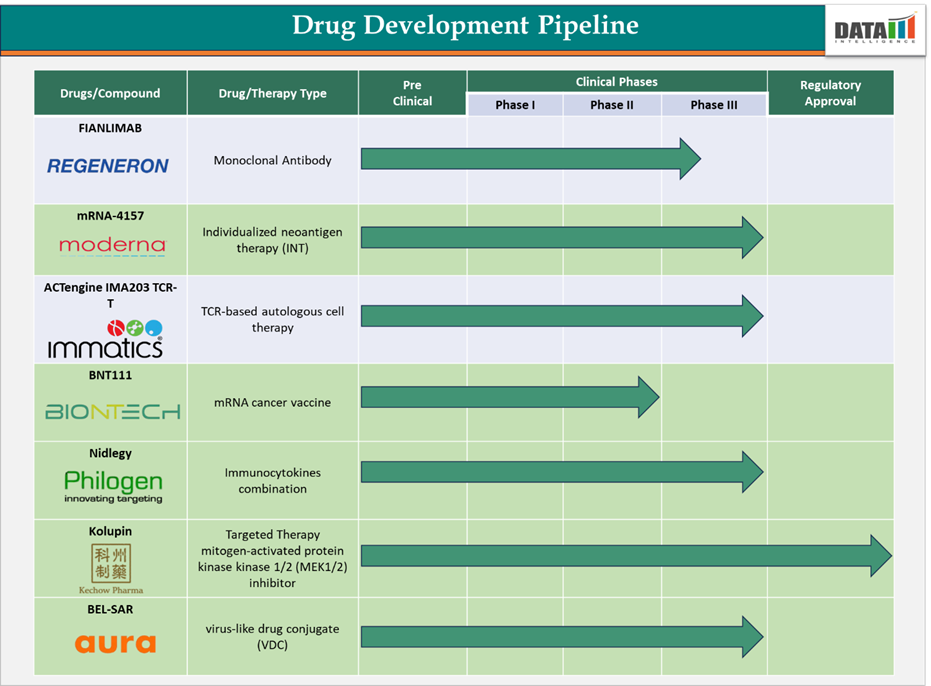
There are two types of skin cancers, namely melanoma skin cancer and non-melanoma skin cancer. Melanoma skin cancer is the most prevalent form, with cancer developing from melanocytes. Melanoma is most common in populations with white-pigmented skin and is less common in populations with dark-pigmented skin. Based on the location, melanomas can be classified as skin melanoma, uveal melanoma (eye), and mucosal melanoma (nose, throat, genitals, anus, etc.). There are different types of skin melanomas, with superficial spreading melanoma being the most common one, followed by nodular melanoma, lentigo maligna melanoma, acral melanoma, and others. Most melanomas are caused due to ultraviolet radiation from the sun.
The most common symptoms/sign of melanoma is formation of an abnormal mole or the development of existing moles. A checklist is usually followed to physically diagnose melanoma, and it is called ABCDE, which refers to asymmetrical, border, color, diameter, and evolution of moles.
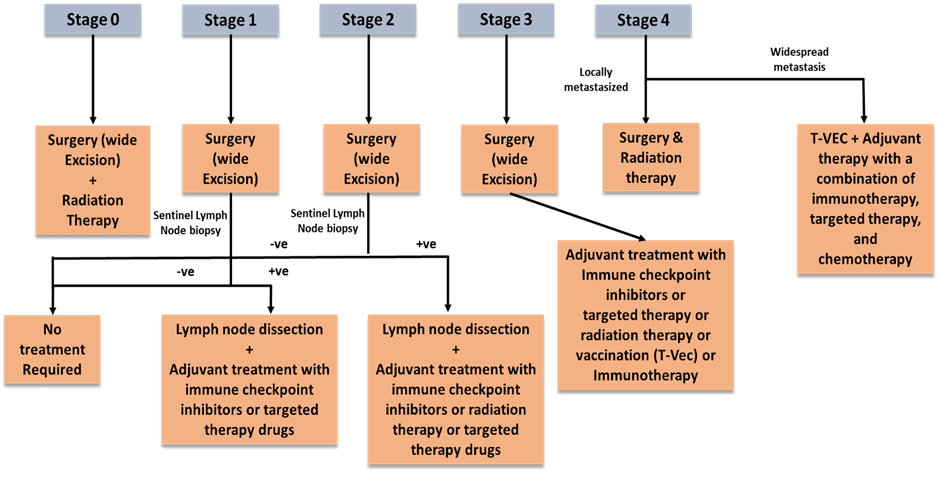
The treatment for melanoma includes surgery, radiotherapy, chemotherapy, targeted therapy and immunotherapy. The treatment of choice depends on the stage at which the melanoma is diagnosed.
Key Takeaways
- Checkpoint inhibitors remain the largest revenue pool. PD-1-based therapy is established across metastatic and adjuvant disease, while Opdualag has created a commercial PD-1/LAG-3 class and generated USD 1.185 billion in 2025.
- Post-PD-1 melanoma is becoming a distinct commercial segment. Tudriqev plus nivolumab received FDA accelerated approval on August 6, 2026 for advanced cutaneous melanoma progressing after PD-1-based treatment.
- TIL therapy has achieved commercial validation. Amtagvi generated USD 220 million in U.S. revenue during 2025 and is being tested with pembrolizumab in untreated advanced melanoma in Phase III TILVANCE-301.
- Neoadjuvant treatment is moving melanoma therapy before surgery. Randomized evidence in resectable stage III melanoma has shown superior event-free survival with preoperative nivolumab plus ipilimumab followed by response-driven treatment compared with surgery followed by adjuvant nivolumab.
- Personalized neoantigen therapy is approaching Phase III validation. Five-year follow-up of intismeran autogene plus pembrolizumab showed a 49% reduction in recurrence or death versus pembrolizumab alone in the Phase IIb study; the Phase III melanoma program is fully enrolled.
- Uveal melanoma is now a dedicated therapeutic market. Kimmtrak generated USD 400 million in 2025 and remains the FDA-approved gp100 peptide-HLA-directed CD3 T-cell engager for HLA-A*02:01-positive metastatic uveal melanoma.
- Administration is becoming a competitive variable. Subcutaneous nivolumab and pembrolizumab formulations now extend checkpoint therapy beyond conventional intravenous delivery, including melanoma indications.
Melanoma Therapeutics Market Trends
PD-1/LAG-3 Therapy Has Established a New Checkpoint Class
Checkpoint therapy initially transformed melanoma through CTLA-4 and PD-1 blockade. The next commercial checkpoint class is LAG-3.
Opdualag combines nivolumab with relatlimab and is approved for unresectable or metastatic melanoma in adults and patients aged 12 years and older. Its approval was supported by improved progression-free survival compared with nivolumab alone.
The franchise reached USD 1.185 billion in 2025, compared with USD 928 million in 2024. U.S. revenue contributed USD 1.045 billion of the 2025 total.
LAG-3 therefore moves beyond an experimental checkpoint and now represents a billion-dollar melanoma treatment mechanism.
Long-Term Survival Has Changed the Economics of Advanced Melanoma
Checkpoint inhibitors have transformed metastatic melanoma from a disease commonly associated with short survival into one in which durable long-term survival is achievable for a meaningful proportion of patients.
Final 10-year CheckMate 067 results showed median melanoma-specific survival exceeding 120 months with nivolumab plus ipilimumab. Among patients alive and progression-free at three years, 10-year melanoma-specific survival reached 96% with nivolumab plus ipilimumab and 97% with nivolumab alone.
This durability changes treatment economics because value increasingly depends on depth and persistence of response, not only short-term tumor shrinkage.
Post-PD-1 Resistant Melanoma Becomes a Dedicated Treatment Market
The expansion of first-line and adjuvant PD-1 therapy creates a growing population whose melanoma eventually progresses after checkpoint treatment.
FDA approved Tudriqev/vusolimogene oderparepvec-wtpg plus nivolumab on August 6, 2026 for adults with unresectable advanced cutaneous melanoma progressing after a PD-1-blocking regimen.
The genetically modified oncolytic viral therapy was evaluated in IGNYTE. In the efficacy population with at least one non-injected lesion, the combination produced a 24.2% objective response rate and 14.1-month median duration of response.
The approval places oncolytic therapy directly into the commercially important PD-1-refractory treatment sequence.
TIL Therapy Has Moved From Academic Treatment to Commercial Oncology
Amtagvi/lifileucel became the first FDA-approved cellular therapy for a solid tumor in February 2024.
Its indication covers adults with unresectable or metastatic melanoma previously treated with a PD-1 inhibitor and, for BRAF V600-positive disease, a BRAF inhibitor with or without a MEK inhibitor.
Iovance generated USD 220 million in U.S. Amtagvi revenue during 2025 and expanded its network of authorized treatment centers during the year.
Commercial adoption is important because TIL therapy requires tumor procurement, personalized manufacturing, lymphodepleting chemotherapy, cell infusion and IL-2 support. Amtagvi therefore establishes a new high-value treatment infrastructure within melanoma centers.
TIL Therapy Is Moving Toward First-Line Disease
The next commercial step is moving lifileucel earlier.
Phase III TILVANCE-301 is comparing lifileucel plus pembrolizumab against pembrolizumab alone in untreated unresectable or metastatic melanoma. The trial remained active with a June 2026 ClinicalTrials.gov update.
Iovance also reported accelerating global enrollment and confirmed that the study was designed with FDA and EMA input to establish the contribution of lifileucel in the combination.
A positive trial would shift TIL therapy from post-checkpoint salvage into the substantially larger frontline advanced-melanoma population.
Personalized Neoantigen Therapy Is Advancing Toward Commercial Validation
Moderna and Merck are developing intismeran autogene, an individualized mRNA-based neoantigen therapy designed from a patient's tumor mutations.
At five-year follow-up, intismeran autogene plus pembrolizumab reduced the risk of recurrence or death by 49% and distant metastasis or death by 59% versus pembrolizumab alone in resected high-risk stage III/IV melanoma.
The Phase III adjuvant melanoma program, INTerpath-001, is fully enrolled.
Successful Phase III results would establish a new category combining individualized tumor sequencing, bespoke manufacturing and checkpoint immunotherapy.
Neoadjuvant Immunotherapy Is Changing the Role of Surgery
Systemic melanoma treatment is increasingly moving before definitive surgery.
The NADINA trial evaluated neoadjuvant nivolumab plus ipilimumab followed by surgery and response-driven adjuvant treatment against surgery followed by adjuvant nivolumab in resectable macroscopic stage III melanoma. The neoadjuvant strategy produced superior event-free survival.
This approach creates a different treatment architecture: drug response observed in the resected tumor can influence whether patients require additional therapy after surgery.
NCI treatment information also includes preoperative pembrolizumab among treatment options for resectable stage III melanoma.
BRAF/MEK Therapy Retains a Major Precision-Oncology Role
BRAF remains the principal actionable genomic driver in cutaneous melanoma.
Current NCI treatment pathways include combinations of dabrafenib plus trametinib, vemurafenib plus cobimetinib and encorafenib plus binimetinib for BRAF-altered melanoma.
Targeted therapy has two commercial advantages: rapid tumor response and oral administration.
Its limitation is resistance and lower long-term disease control in some settings compared with successful immunotherapy. As a result, treatment sequencing between checkpoint blockade and BRAF/MEK inhibition remains central in BRAF V600-positive advanced melanoma.
Subcutaneous Checkpoint Therapy Changes Administration Economics
FDA approved Opdivo Qvantig in December 2024 for subcutaneous use across approved adult nivolumab solid-tumor indications, including melanoma.
FDA then approved Keytruda Qlex in September 2025 for the adult and pediatric solid-tumor indications supported by intravenous pembrolizumab, including melanoma.
These formulations can reduce chair time and change infusion-center workflow without requiring a new tumor target.
For mature checkpoint franchises, administration convenience becomes an important competitive tool as therapeutic efficacy differences narrow.
Uveal Melanoma Has Developed a Distinct Precision-Therapy Market
Uveal melanoma differs biologically from cutaneous melanoma and historically had few effective systemic treatments.
Kimmtrak/tebentafusp is approved for HLA-A*02:01-positive adults with unresectable or metastatic uveal melanoma.
Immunocore generated USD 400 million in Kimmtrak revenue in 2025, up 29% from 2024.
Five-year Phase III follow-up reported in 2026 continued to demonstrate an overall-survival advantage, strengthening the product's position as the leading systemic therapy for the eligible population.
Melanoma Therapeutics Market Scope
| Metrics | Details |
| Historical Years | 2023-2024 |
| Base Year | 2025 |
| Market Size 2025 | USD 5.70 Billion |
| Forecast Period | 2026-2035 |
| Market Size 2035 | USD 9.83 Billion |
| CAGR | 5.60% |
| Largest Region | North America |
| Fastest-Growing Region | Asia-Pacific |
| Melanoma Type | Cutaneous, Uveal, Mucosal, Other Melanomas |
| Cutaneous Subtypes | Superficial Spreading, Nodular, Lentigo Maligna, Acral Lentiginous, Others |
| Therapy Type | Checkpoint Inhibitors, BRAF/MEK & Targeted Therapy, T-Cell Engagers & Cellular Therapy, Oncolytic Virus Therapy, Chemotherapy & Others |
| Treatment Setting | Adjuvant, Neoadjuvant, Unresectable/Metastatic, Post-PD-1 |
| Key Biomarkers | BRAF V600, HLA-A*02:01, KIT, NRAS, PD-L1 and Emerging Molecular Markers |
| End Users | Hospitals, Comprehensive Cancer Centers, Specialty Oncology Centers, Cellular Therapy Centers |
| North America | U.S., Canada, Mexico |
| Europe | Germany, UK, France, Italy, Spain, Rest of Europe |
| Asia-Pacific | Australia, Japan, China, South Korea, India, Rest of Asia-Pacific |
| Latin America | Brazil, Argentina, Rest of Latin America |
| Middle East & Africa | Israel, Saudi Arabia, UAE, South Africa, Rest of MEA |
| Revenue Units | USD Billion |
Melanoma Therapeutics Market Dynamics
Increasing Melanoma Burden Supports Treatment Demand
GLOBOCAN 2024 records 337,969 new cutaneous melanoma cases worldwide, with Europe and North America accounting for 77.6% of incidence.
The strong concentration of disease in high-income pharmaceutical markets supports high treatment expenditure per patient and rapid uptake of new immunotherapies.
Earlier Treatment Expands the Eligible Population
Checkpoint therapy is no longer restricted to metastatic disease.
Pembrolizumab and nivolumab have adjuvant roles following complete resection in high-risk melanoma, including stage IIB and IIC disease.
Moving therapy from metastatic disease into stage II and III increases the number of treated patients and changes revenue toward recurrence prevention.
Post-Checkpoint Resistance Creates New Drug Classes
As more patients receive PD-1 inhibitors earlier, resistance after PD-1 exposure becomes a larger treatment problem.
Amtagvi and Tudriqev now provide distinct mechanisms after checkpoint failure: one uses expanded autologous tumor-infiltrating lymphocytes, while the other uses engineered oncolytic viral immunotherapy with nivolumab.
This creates room for additional post-PD-1 technologies rather than simple switching between similar checkpoint inhibitors.
BRAF Testing Remains Essential to Treatment Selection
BRAF mutation status directly determines eligibility for BRAF/MEK targeted therapy.
NCI lists approved BRAF and MEK combinations for BRAF-altered melanoma and identifies KIT-, RAS- and NF1-associated disease as separate molecular groups relevant to ongoing targeted-treatment research.
Biomarker testing therefore remains a core part of advanced melanoma treatment infrastructure.
Immune Toxicity Limits Combination Therapy
Combination immune checkpoint blockade can deliver strong and durable responses but creates higher immune-related toxicity than single-agent treatment.
CheckMate 067 reported substantially higher grade 3-4 treatment-related adverse events with nivolumab plus ipilimumab than with nivolumab alone.
Patient selection therefore remains central to determining when greater efficacy potential justifies higher toxicity.
Cellular Therapy Requires Specialized Infrastructure
Amtagvi must be manufactured from each patient's tumor-derived lymphocytes and administered after lymphodepleting treatment in appropriately equipped centers.
The prescribing information requires inpatient administration with intensive-care capability.
Manufacturing turnaround, referral speed and authorized treatment-center coverage directly affect commercial uptake.
Melanoma Therapeutics Therapy Segment Analysis
Immune Checkpoint Inhibitor-Based Regimens Hold 63.5%
The 2025 revenue structure places immune checkpoint inhibitor-based treatment at 63.5%, equal to USD 3.62 billion.
The category includes pembrolizumab, nivolumab, nivolumab-ipilimumab and nivolumab-relatlimab treatment across adjuvant and advanced settings.
Opdualag alone generated USD 1.185 billion in 2025, demonstrating the scale reached by checkpoint combinations beyond conventional PD-1 monotherapy.
Checkpoint therapy will remain the largest segment through 2035, but its share will face pressure from TIL therapy, individualized neoantigen treatment and newer post-PD-1 approaches.
BRAF/MEK and Other Targeted Therapies Hold 18.5%
Targeted therapies account for 18.5% of 2025 revenue, equal to USD 1.05 billion.
BRAF/MEK combinations remain the principal targeted class and include dabrafenib-trametinib, encorafenib-binimetinib and vemurafenib-cobimetinib.
Targeted therapy remains especially relevant when rapid disease control is required and in adjuvant treatment of eligible BRAF-mutated disease.
T-Cell Engagers and Cellular Therapy Hold 11.0%
T-cell engager and cellular therapy account for 11.0%, equal to USD 627 million.
The revenue structure is supported directly by two commercial franchises: Kimmtrak generated USD 400 million and Amtagvi generated USD 220 million in 2025.
This segment records one of the strongest growth profiles because Kimmtrak is expanding geographically while lifileucel is moving into earlier treatment studies.
Oncolytic Virus Therapy Holds 3.0%
Oncolytic virus therapy accounts for 3.0%, equal to USD 171 million.
The established category includes talimogene laherparepvec, while the August 2026 approval of Tudriqev creates a new commercial growth platform specifically in PD-1-resistant advanced cutaneous melanoma.
Chemotherapy and Other Systemic Therapies Hold 4.0%
Chemotherapy and other systemic approaches account for 4.0%, equal to USD 228 million.
Their share has declined sharply as checkpoint inhibitors and molecularly targeted treatments have become standard systemic options. NCI continues to list chemotherapy as an option in selected advanced or recurrent cases but positions immunotherapy and targeted therapy much more prominently.
Melanoma Type Analysis
Cutaneous Melanoma Holds 87.0%
Cutaneous melanoma accounts for 87.0% of 2025 therapeutic revenue, equal to USD 4.96 billion.
The segment includes superficial spreading, nodular, lentigo maligna and acral lentiginous melanoma and captures the majority of PD-1, LAG-3, BRAF/MEK, TIL and oncolytic-virus treatment.
The global burden of cutaneous melanoma reached 337,969 new cases in GLOBOCAN 2024.
Uveal Melanoma Holds 8.0%
Uveal melanoma accounts for 8.0%, equal to USD 456 million.
Its revenue share is much larger than its patient population because Kimmtrak is a high-value precision therapy used in HLA-A*02:01-positive metastatic disease. Kimmtrak generated USD 400 million in 2025.
Mucosal Melanoma Holds 3.0%
Mucosal melanoma accounts for 3.0%, equal to USD 171 million.
NCI describes mucosal melanoma as a rare subgroup arising in respiratory, gastrointestinal or genitourinary mucosa.
Treatment frequently relies on immune checkpoint therapy, while KIT and other molecular alterations create targeted-treatment opportunities in selected patients.
Melanoma Therapeutics Geographical Analysis
The 2025 regional revenue structure places North America at 46.5%, Europe at 29.5%, Asia-Pacific at 16.0%, Latin America at 4.5% and Middle East & Africa at 3.5%.
North America Leads with 46.5%
North America generates USD 2.65 billion in 2025 melanoma therapeutic revenue.
The United States accounts for 40.8% of the global market, equal to USD 2.33 billion. The country combines high melanoma incidence with rapid adoption of new therapies and a dense network of comprehensive cancer and cellular-therapy centers.
SEER projects 112,000 new U.S. cutaneous melanoma cases in 2026.
The U.S. also received the first approvals for Amtagvi and Tudriqev and offers access to Opdualag, Kimmtrak, Keytruda Qlex and Opdivo Qvantig.
Europe Holds 29.5%
Europe generates USD 1.68 billion in 2025 revenue.
Germany contributes 6.1% of the global market, the UK 5.0%, France 4.2%, Italy 3.0%, Spain 2.2% and the rest of Europe 9.0%.
Europe recorded 150,781 cutaneous melanoma cases in GLOBOCAN 2024, representing 44.6% of worldwide incidence.
The region has broad access to checkpoint inhibitors and BRAF/MEK therapy. Subcutaneous nivolumab received European Commission approval across multiple solid-tumor indications in May 2025, adding a lower-chair-time administration option.
Asia-Pacific Holds 16.0% and Records the Fastest Growth
Asia-Pacific generates USD 912 million in 2025 revenue.
Australia contributes 5.1% of the global market, Japan 3.1%, China 2.6%, South Korea 1.4%, India 0.9% and other Asia-Pacific countries 2.9%.
Australia represents an unusually important market because melanoma incidence is among the highest globally. GLOBOCAN 2024 reports an age-standardized incidence rate of 38.5 per 100,000 for Australia across both sexes.
China provides a different growth profile, with lower cutaneous melanoma incidence but a large oncology population and growing access to checkpoint and targeted treatments. Molecularly distinct acral and mucosal melanoma also increase the importance of therapies beyond classic UV-associated cutaneous disease.
Latin America Holds 4.5%
Latin America generates USD 257 million in 2025 revenue.
Brazil is the largest regional country market, supported by specialist oncology centers and expanding access to immunotherapy.
GLOBOCAN 2024 records 20,179 cutaneous melanoma cases across Latin America and the Caribbean.
Market growth remains constrained by reimbursement for high-cost checkpoint combinations and cellular therapy.
Middle East & Africa Hold 3.5%
Middle East & Africa generate USD 200 million in 2025 revenue.
Israel, Saudi Arabia, the UAE and South Africa represent the principal high-value treatment markets.
Africa recorded 7,907 cutaneous melanoma cases in GLOBOCAN 2024.
Growth depends on access to molecular testing, checkpoint inhibitors, specialist oncology and complex treatments such as cellular therapy.
Melanoma Therapeutics Competitive Landscape
Bristol Myers Squibb
Bristol Myers Squibb holds one of the broadest melanoma portfolios through Opdivo, Yervoy, Opdualag and Opdivo Qvantig.
Opdualag generated USD 1.185 billion in 2025, increasing 28% year over year. BMS also reported USD 10.049 billion from Opdivo and USD 2.900 billion from Yervoy across all approved indications.
In melanoma, the company competes across PD-1 monotherapy, PD-1/CTLA-4 combinations and PD-1/LAG-3 treatment.
Merck
Merck's melanoma position centers on Keytruda/pembrolizumab, which is used in unresectable/metastatic melanoma and as adjuvant therapy following complete resection of stage IIB, IIC or III disease.
The September 2025 approval of Keytruda Qlex introduced a subcutaneous formulation across the supported melanoma indications.
Merck's next major melanoma platform is the partnership with Moderna on intismeran autogene. Five-year Phase IIb data continue to support the ongoing Phase III adjuvant melanoma strategy.
Iovance Biotherapeutics
Iovance established the commercial TIL market with Amtagvi.
U.S. Amtagvi revenue reached USD 220 million in 2025. Five-year follow-up from C-144-01 reported a 31% response rate, duration of response exceeding 36 months and 20% five-year overall survival in the company's analysis.
The company's most important melanoma expansion program is TILVANCE-301, evaluating lifileucel plus pembrolizumab in untreated advanced disease.
Immunocore
Immunocore competes through Kimmtrak/tebentafusp, the leading precision therapy for HLA-A*02:01-positive metastatic uveal melanoma.
Kimmtrak generated USD 400 million in 2025, increasing 29% year over year.
The company is also evaluating tebentafusp in advanced cutaneous melanoma, potentially expanding its T-cell receptor platform beyond uveal disease.
Replimune
Replimune became a commercial melanoma company with the August 2026 FDA accelerated approval of Tudriqev plus nivolumab.
The product targets adults with unresectable advanced cutaneous melanoma progressing after PD-1-based therapy.
The ongoing confirmatory Phase III IGNYTE-3 study will determine the durability of this post-PD-1 commercial opportunity.
Novartis
Novartis remains a major targeted-therapy competitor through Tafinlar/dabrafenib and Mekinist/trametinib.
The BRAF/MEK combination is used in BRAF V600-mutated melanoma and retains an important adjuvant and advanced-disease role.
Pfizer and Other Targeted-Therapy Competitors
Pfizer competes through Braftovi/encorafenib and Mektovi/binimetinib, another established BRAF/MEK combination in BRAF-mutated melanoma.
Roche remains relevant through vemurafenib, cobimetinib and checkpoint-based treatment, while Amgen participates through oncolytic immunotherapy.
Competition increasingly occurs across treatment sequence and biomarker-defined patient populations, rather than within a single drug class.
Recent Melanoma Therapeutics Market Developments
- August 6, 2026: FDA granted accelerated approval to Tudriqev plus nivolumab for adults with unresectable advanced cutaneous melanoma progressing after PD-1-based therapy.
- June 26, 2026: The Phase III TILVANCE-301 record was updated for lifileucel plus pembrolizumab versus pembrolizumab in untreated unresectable or metastatic melanoma.
- June 1, 2026: Moderna and Merck presented five-year intismeran autogene plus pembrolizumab data showing a 49% reduction in recurrence or death and a 59% reduction in distant metastasis or death versus pembrolizumab alone.
- April 19, 2026: Immunocore presented five-year overall-survival data for Kimmtrak in first-line HLA-A*02:01-positive metastatic uveal melanoma.
- February 24, 2026: Iovance reported USD 220 million in 2025 U.S. Amtagvi revenue and continued global enrollment in frontline TILVANCE-301.
- September 19, 2025: FDA approved Keytruda Qlex, extending subcutaneous pembrolizumab delivery to supported melanoma indications.
- 2025: Opdualag worldwide revenue reached USD 1.185 billion, up 28% from 2024.
Strategic Growth Opportunities Through 2035
Post-PD-1 Rescue Therapy
PD-1 inhibitors are now used across metastatic and earlier-stage melanoma, creating a progressively larger population previously exposed to checkpoint treatment.
Tudriqev and Amtagvi validate two distinct commercial mechanisms for this population: engineered oncolytic viral immunotherapy and autologous TIL therapy.
First-Line TIL Therapy
TILVANCE-301 directly tests whether a one-time cellular-therapy regimen can improve outcomes when moved before PD-1 failure.
Positive results would expand TIL demand beyond specialist salvage treatment and increase requirements for tumor procurement, manufacturing capacity and certified treatment centers.
Personalized Neoantigen Therapy
Intismeran autogene represents a highly individualized treatment model built around tumor sequencing and patient-specific mRNA manufacturing.
The sustained five-year Phase IIb benefit makes Phase III melanoma data one of the most important pipeline catalysts in the market.
Response-Guided Neoadjuvant Treatment
Neoadjuvant immunotherapy allows clinicians to assess pathological response before deciding how much treatment is required after surgery.
NADINA established strong randomized evidence for this strategy in macroscopic stage III disease.
The commercial opportunity lies in using early response to allocate adjuvant treatment more selectively.
Next-Generation Checkpoints
Opdualag validated LAG-3 as a commercial immune checkpoint.
Future programs can target additional exhaustion and immune-suppression pathways or combine checkpoint blockade with vaccines, TILs and oncolytic therapies.
Uveal Melanoma Expansion
Kimmtrak's USD 400 million 2025 sales show that a small molecularly defined melanoma population can support a significant commercial franchise.
Future opportunities include adjuvant uveal melanoma, additional HLA populations and novel T-cell receptor therapies.
Subcutaneous Immunotherapy
Keytruda Qlex and Opdivo Qvantig reduce dependence on traditional IV checkpoint administration.
As checkpoint therapy becomes increasingly chronic or preventive in earlier-stage disease, administration time can directly affect capacity and patient convenience.
Target Audience
The report is designed for pharmaceutical and biotechnology companies, melanoma drug developers, immune-checkpoint companies, TIL and cellular-therapy developers, cancer-vaccine companies, oncolytic-virus developers, BRAF/MEK inhibitor companies, genomic-testing providers, comprehensive cancer centers, cellular-therapy centers, CROs, healthcare investors, licensing teams and market-access organizations.



























































