


Medium Voltage Switchgear Market Definition and Overview
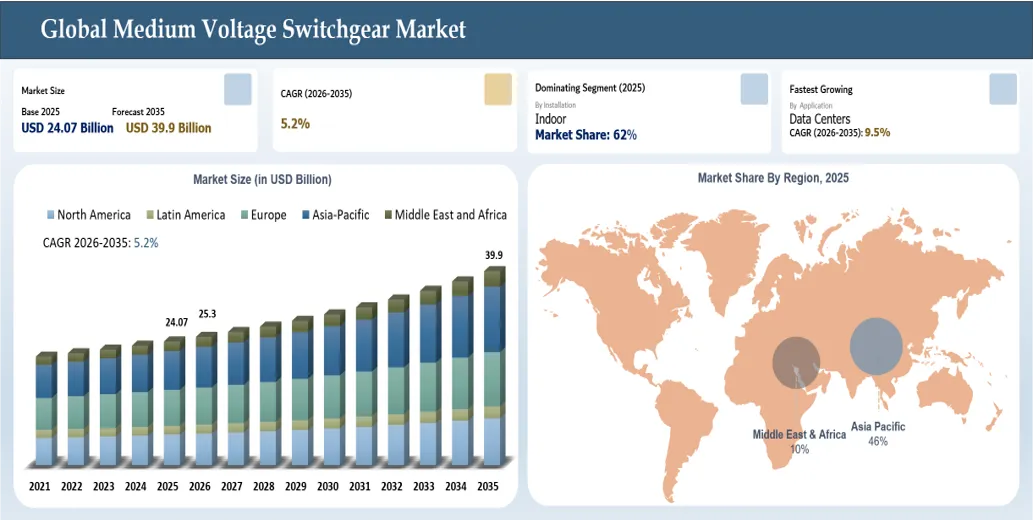
The global Medium Voltage Switchgear market reached USD 24.07 billion in 2025 and is expected to reach USD 39.9 billion by 2035, growing with a CAGR of 5.2% during the forecast period 2026-2035. The market is witnessing strong growth momentum due to rising investments in power grid infrastructure, renewable energy integration, data center expansion, and industrial electrification. In 2025, major grid equipment manufacturers announced more than USD 1 billion in investment into US manufacturing operations to enhance infrastructure capacity and alleviate supply chain shortages. For example, Hitachi Energy made more than USD 650 million in investments in manufacturing plants located in Massachusetts, Tennessee, Pennsylvania, and Virginia; Siemens Energy made USD 150 million in a new plant in North Carolina; Hyosung HICO invested USD 157 million in the expansion of transformer manufacturing facilities; and WEG made USD 77 million in investments in US transformer manufacturing facilities. The need to invest in power grid infrastructure, renewable energy, electric vehicles, and AI-powered data centers drives demand for new switchgear and electrical equipment. Increasing demand for reliable MV electrical infrastructure increases demand for sophisticated solutions for medium voltage distribution such as air-insulated switchgear, gas-insulated switchgear, and digitally monitored switchgear.
The increasing focus on reducing greenhouse gas emissions from electrical equipment is driving the adoption of sustainable and SF₆-free medium voltage switchgear technologies. In August 2025, Schneider Electric and E. ON signed a long-term framework agreement to accelerate the adoption of SF6-free Medium Voltage (MV) switchgear across E. ON’s electricity networks in Europe. Through this agreement, Schneider Electric will deliver its GM AirSeT primary MV switchgear and RM AirSeT secondary MV switchgear (Ring Main Units - RMUs) that utilize air and vacuum instead of SF₆ gas. This collaboration stems from the more than 20-year-long partnership between the two companies and is in line with the EU F-Gas regulation, which imposes a limit on the use of SF₆ gas in new medium-voltage electrical equipment up to 24kV from 2026. Schneider Electric will utilize its manufacturing sites located in Regensburg, Germany, and Duna Smart Factory, Hungary, for the delivery of sustainable MV switchgear.
White-Space Opportunities for Sustainable Medium Voltage Switchgear Manufacturing and Grid Transformation Infrastructure
In May 2026, ABB Ltd. announced a USD 200 million investment across Europe to accelerate grid transformation and expand manufacturing capabilities for next-generation electrical infrastructure, creating significant white-space opportunities in the Medium Voltage (MV) Switchgear Market. The largest share of investment is directed toward ABB’s USD 100 million expansion at its Dalmine facility in Italy, focused on increasing production capacity for medium-voltage switchgear, circuit breakers, air-insulated switchgear (AIS), and SF₆-free switchgear technologies to address rising demand from renewable energy integration, grid modernization, and electrification projects. The investment also includes approximately USD 100 million across ABB facilities in Bulgaria, Finland, Germany, Norway, and Poland to expand manufacturing capabilities for medium-voltage gas-insulated switchgear (GIS), vacuum interrupters, protection relays, and digital grid solutions. These investments highlight major opportunities in sustainable MV equipment manufacturing, supply chain localization, smart grid technologies, and environmentally friendly switchgear solutions as utilities across Europe accelerate the replacement of aging grid infrastructure and transition away from SF₆-based equipment.
The investment is expected to benefit companies across the MV switchgear ecosystem, including ABB, which will strengthen its leadership in SF₆-free MV switchgear, AIS, GIS, and grid automation solutions through expanded European production capacity. Component and technology suppliers such as Hitachi Energy, Schneider Electric, Siemens Energy, Eaton, and Toshiba Energy Systems & Solutions Corporation may benefit from increasing demand for advanced MV distribution equipment, vacuum switching technologies, digital protection systems, and sustainable electrical components. Manufacturers specializing in vacuum interrupters and switchgear components, including Eaton, Siemens, and Schneider Electric, are positioned to capture opportunities arising from the shift toward eco-friendly MV solutions. In addition, engineering, automation, and grid modernization companies such as Siemens, Schneider Electric, and Hitachi Energy can benefit through deployment of smart grid management systems, monitoring technologies, and utility modernization projects. The investment also creates opportunities for regional suppliers in Europe supporting manufacturing expansion, including providers of electrical components, insulation materials, automation systems, and testing services, particularly in Italy, Germany, Poland, Bulgaria, Finland, and Norway.
Medium Voltage Switchgear Market Strategic Takeaways
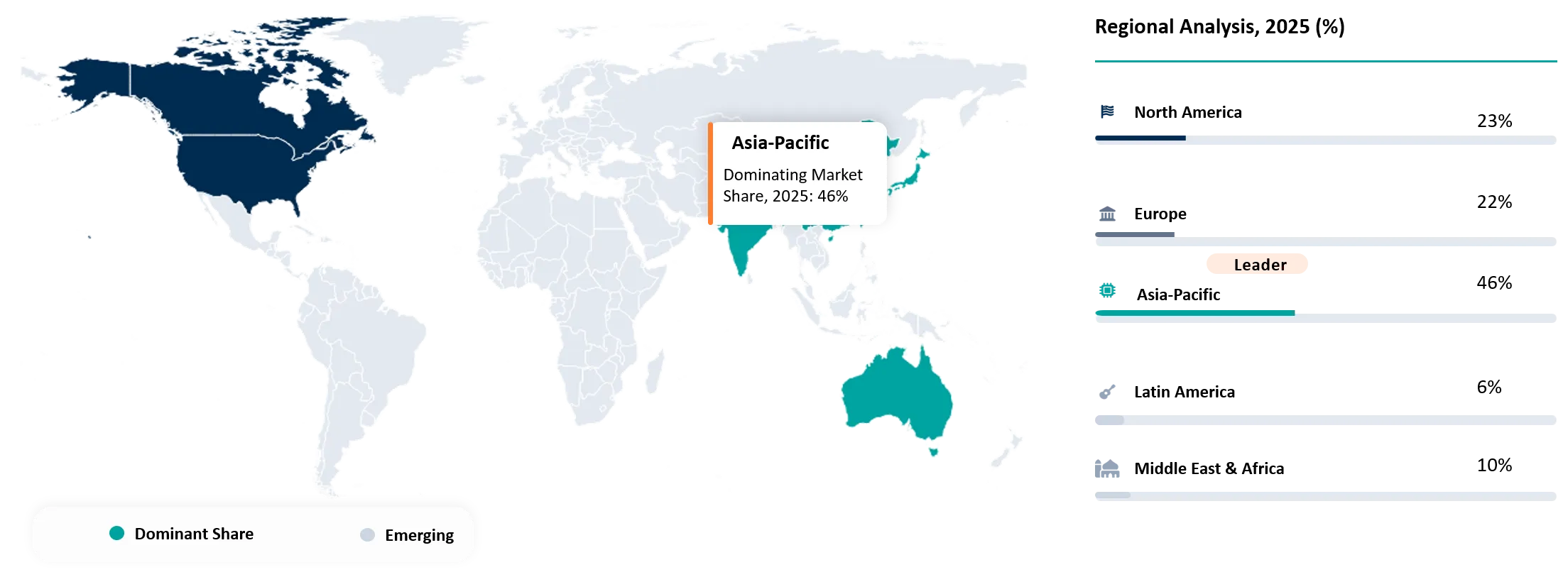
- Asia-Pacific led the global market in 2025, accounting for a dominant share of approximately 46%. North America represented another primary regional market, securing approximately 23% of the total global market share in 2025.
- The indoor installation segment dominated the medium voltage switchgear market with an estimated 62% market share in 2025. Overall global electricity demand driving this installation growth is projected to expand by 3.3% in 2025 and 3.7% in 2026.
- Schneider Electric opened a new 147,000-square-foot plant in Tennessee as part of its plan to invest more than USD 1 billion in the US by 2027. Additionally, European Union regulations limit the use of SF₆ gas in new medium-voltage electrical equipment up to 24kV starting in 2026.
- In May 2026, ABB Ltd. announced a USD 200 million investment across Europe to expand electrical infrastructure manufacturing capabilities. The investment directs USD 100 million to expand its Dalmine plant in Italy, alongside another USD 100 million distributed across facilities in Bulgaria, Finland, Germany, Norway, and Poland.
Medium Voltage Switchgear Market Industry Trends and Strategic Insight
- Utilities worldwide are upgrading aging electricity distribution networks with advanced medium voltage switchgear to improve grid reliability, fault isolation, and operational flexibility.
- Regulatory pressure to reduce greenhouse gas emissions from sulfur hexafluoride (SF₆) is driving manufacturers toward alternative insulation technologies, including clean air, vacuum, solid insulation, and fluor nitrile-based solutions.
- Medium voltage switchgear manufacturers are integrating IoT sensors, real-time monitoring systems, communication modules, and predictive analytics to enable condition-based maintenance and remote asset management.
- The rapid expansion of solar farms, wind projects, battery energy storage systems, and distributed energy resources is increasing the need for switchgear capable of managing bidirectional power flows and variable generation patterns.
- Utilities and industrial users are increasingly evaluating switchgear based on total cost of ownership, including maintenance requirements, operational efficiency, monitoring capabilities, and asset lifespan.
Medium Voltage Switchgear Market Scope
| Metrics | Details | |
| 2025 Market Size | USD 24.07 Billion | |
| 2035 Projected Market Size | USD 39.9 Billion | |
| CAGR (2026-2035) | 5.2% | |
| Largest Market | Asia-Pacific | |
| Fastest Growing Market | Middle East & Africa | |
| By Insulation | Air Insulated Switchgear (AIS), Gas Insulated Switchgear (GIS), Vacuum Insulated Switchgear, Solid Insulated Switchgear, Hybrid Switchgear, Others | |
| By Installation | Indoor, Outdoor | |
| By Voltage | 1 kV–12 kV, 12 kV–24 kV, 24 kV–36 kV | |
| By Component | Circuit Breakers, Disconnectors / Isolators, Earthing Switches, Fuses, Busbars, Protection Relays, Control and Monitoring Systems, Others | |
| By Application | Distribution Substations, Power Generation, Renewable Energy Systems, Industrial Facilities, Commercial Buildings, Data Centres, Transportation Infrastructure, Others | |
| By Region | North America | U.S., Canada, Mexico |
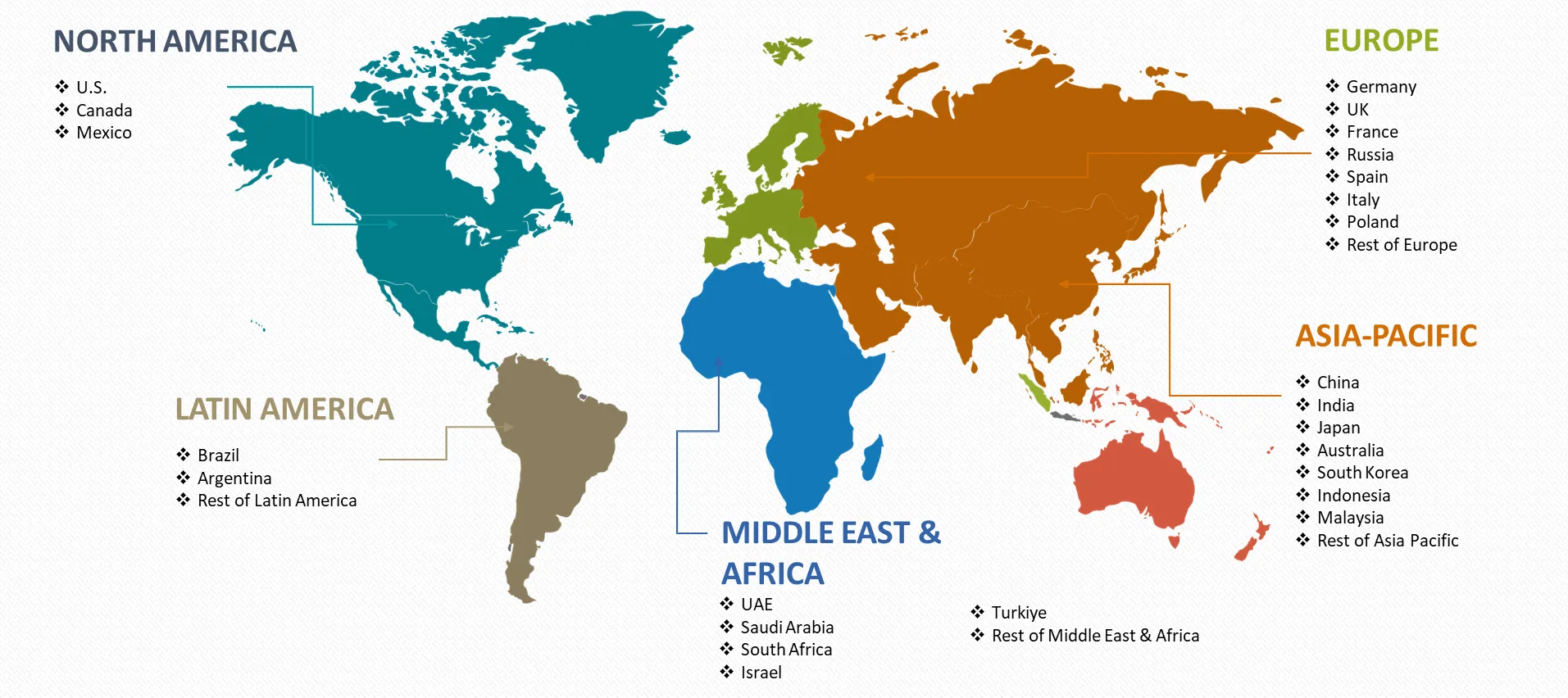
| Europe | Germany, UK, France, Spain, Italy, Poland | |
| Asia-Pacific | China, India, Japan, Australia, South Korea, Indonesia, Malaysia | |
| Latin America | Brazil, Argentina | |
| Middle East and Africa | UAE, Saudi Arabia, South Africa, Israel, Türkiye | |
| Report Insights Covered | Competitive Landscape Analysis, Company Profile Analysis, Market Size, Share, Growth | |
Medium Voltage Switchgear Market Disruption Analysis
Shift Toward Digital and Intelligent Switchgear Reshaping Medium Voltage Power Distribution Landscape
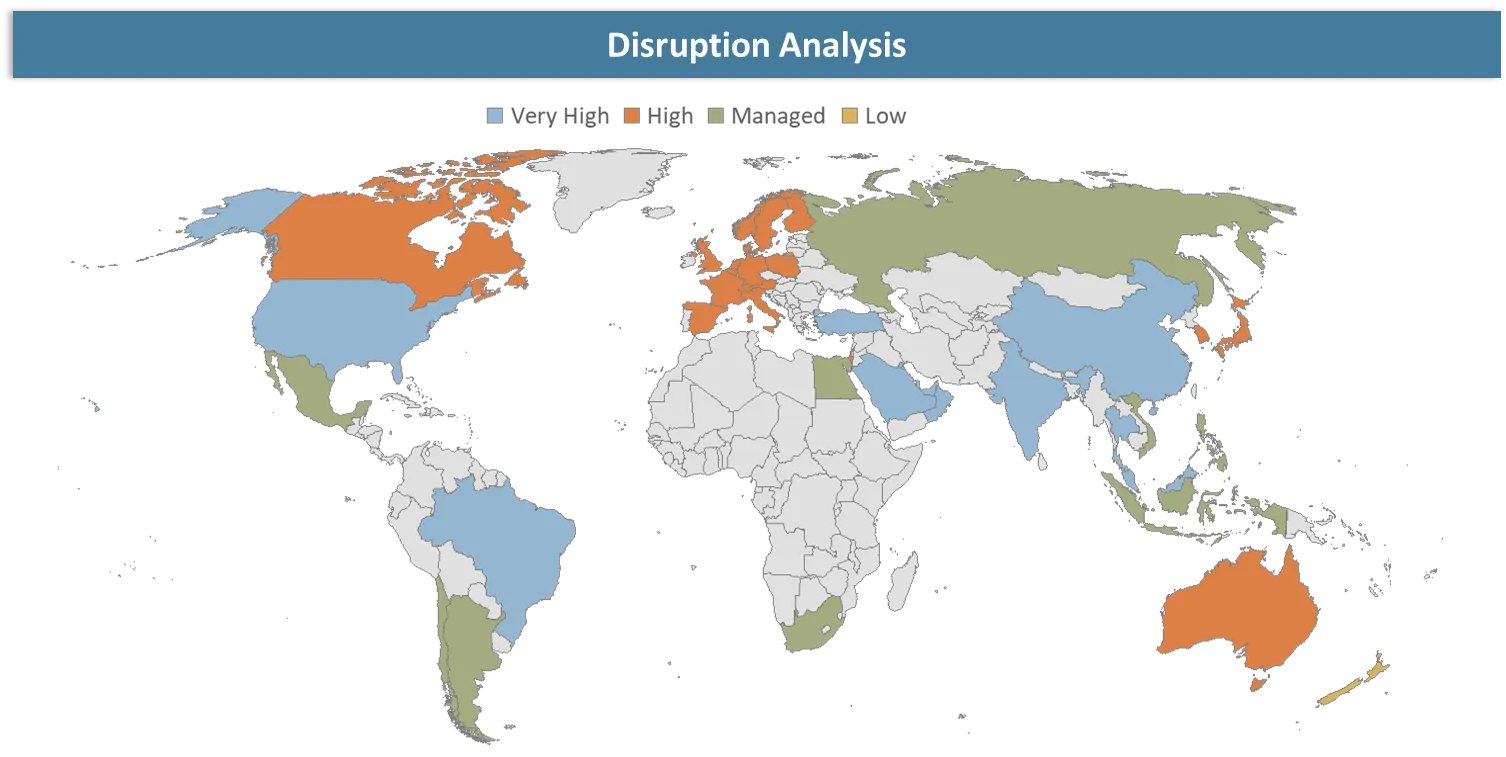
Disruption in the Medium Voltage Switchgear Market is primarily associated with the rapid adoption of digital switchgear solutions, converting traditional electrical distribution devices into intelligent and interconnected systems for power management. Traditional switchgear is being replaced by modern switchgear solutions with IoT sensor technology, intelligent electronic device technology (IED), digital protection relay systems, communication technology, and real-time condition monitoring systems. This is resulting in a shift from supplying traditional products to solutions including switchgear systems, automation, predictive analytics, and lifecycle management services. Increasing demands for reliable electricity distribution by utility companies, industries, renewable energy installations, and data centers have led to increased use of intelligent switchgear solutions.
The increasing complexity of electricity networks is accelerating this transformation as global electrification, AI infrastructure growth, and renewable energy deployment create demand for advanced grid management capabilities. As stated in the International Energy Agency (IEA), the amount of electricity consumption in the world's data centers is set to double to roughly 945 TWh by 2030, up from 415 TWh in 2024, with AI workloads forming the bulk of that increase. With the rise in AI infrastructure, there is an increase in the power density needed, with next-gen AI data centers featuring racks of over 100 kW power demand. With the rise of intelligent grid technology and digital substation infrastructure, the emphasis has been laid by the vendors on connected switchgear platforms, predictive maintenance systems, and asset management software systems, thus changing the nature of competition from traditional switching to digital intelligence.
Medium Voltage Switchgear Market BCG Matrix: Company Evaluation

Stars include ABB, Schneider Electric, Siemens Energy, and Eaton because they hold strong global positions in the medium voltage switchgear market through comprehensive portfolios covering air-insulated switchgear (AIS), gas-insulated switchgear (GIS), vacuum switchgear, digital substations, and SF₆-free technologies. These companies benefit from extensive utility partnerships, global manufacturing networks, and significant investments in grid modernization, renewable energy integration, industrial electrification, and smart grid infrastructure. Question Marks include GE Vernova, Mitsubishi Electric, Toshiba Energy Systems & Solutions Corporation, and Hyundai Electric & Energy Systems because they possess strong technological capabilities and established positions in utility and industrial power infrastructure but continue to expand their presence in digital switchgear, SF₆-free products, and smart grid applications.
The Potential category includes Fuji Electric, Bharat Heavy Electricals Limited (BHEL), and CG Power and Industrial Solutions, which are strengthening their market presence through regional manufacturing expansion, utility electrification projects, industrial power distribution, and renewable energy infrastructure. These companies benefit from increasing investments in electricity transmission and distribution, particularly across Asia-Pacific, but are still expanding their international footprint and advanced digital switchgear capabilities compared with global market leaders. The tailenders category includes CHINT Group because, although it has a broad portfolio of medium voltage distribution products and a strong domestic market presence, its global penetration in premium digital switchgear, SF₆-free technologies, and high-end utility transmission projects remains comparatively limited.
Medium Voltage Switchgear Market Dynamics
Driver Impact Analysis
| Driver | Market Growth Impact (%) | Demand Concentration | Impacted Use Case | Strategic Impact |
Accelerating Grid Modernization and Transmission & Distribution Infrastructure Investments are driving demand for advanced medium voltage switchgear across utility networks. | 35% | Demand is highly concentrated among electric utilities, transmission operators, and public grid modernization programs upgrading aging distribution infrastructure. | Utility substations, transmission & distribution networks, smart grid projects | Drives replacement of aging grid infrastructure and accelerates adoption of digital and SF₆-free medium voltage switchgear. |
Rapid Integration of Renewable Energy Projects is increasing the deployment of medium voltage switchgear for reliable grid interconnection and power distribution. | 27% | Demand is concentrated in utility-scale solar, wind, battery storage, and renewable energy interconnection projects requiring reliable medium voltage distribution. | Solar PV plants, wind farms, battery storage, renewable substations | Expands demand for grid interconnection equipment and switchgear capable of managing variable renewable power flows. |
Expansion of Industrial Electrification and Manufacturing Facilities is fueling the adoption of medium voltage switchgear for safe and efficient electrical distribution. | 22% | Demand is concentrated across energy-intensive industries including manufacturing, mining, oil & gas, metals, chemicals, and process industries.
| Manufacturing plants, mining, metals, cement, oil & gas, chemical industries | Increases deployment of medium voltage switchgear for reliable industrial power distribution, automation, and process continuity. |
Rising Electricity Demand from AI Data Centers and Digital Infrastructure is strengthening the need for reliable medium voltage power distribution systems. | 20% | Demand is concentrated among hyperscale cloud providers, AI data center developers, colocation operators, and digital infrastructure investors. | Hyperscale data centers, AI campuses, colocation facilities, cloud infrastructure | Accelerates adoption of intelligent medium voltage switchgear with digital monitoring, redundancy, and predictive maintenance capabilities. |
Increasing Deployment of Battery Energy Storage Systems (BESS) and Microgrids is driving demand for medium voltage switchgear to manage distributed energy resources. | 15% | Demand is concentrated in utility-scale energy storage projects, commercial microgrids, industrial campuses, and distributed energy resource deployments. | BESS installations, microgrids, distributed energy resources (DER), EV charging hubs | Strengthens demand for bidirectional, renewable-ready, and automation-enabled medium voltage switchgear supporting distributed energy integration. |
Rising Electricity Demand from AI Data Centers and Digital Infrastructure is strengthening the need for reliable medium voltage power distribution systems
The rapid expansion of artificial intelligence (AI), hyperscale data centers, and cloud infrastructure is a key driver accelerating demand for medium voltage switchgear for safe power distribution and protection systems. The International Energy Agency (IEA) reveals that electricity consumption in data centers increased by 17% in 2025. This increase is much greater than the growth rate of overall global electricity consumption. Such an increase in electricity consumption leads to the need to improve the medium voltage power distribution system using switchgear.
The rapid expansion of AI infrastructure is significantly increasing electricity demand, driving the need for resilient and high-capacity power distribution networks. In June 2026, according to the Data Centre Magazine, global data center electricity consumption is projected to reach 565 TWh in 2026, reflecting a 26% yearly increase from 447 TWh in 2025, driven by the rapid expansion of artificial intelligence (AI) applications and computing infrastructure optimized for AI. The firm also predicts that by 2026, AI-optimized servers would use 31% of total data center power, with their power consumption exceeding the power consumption of regular servers by 2027. Also, the power requirement of global data centers would increase from 104 GW in 2025 to 132 GW in 2026, and power supply would emerge as an important bottleneck for the future development of AI infrastructure. The trends described above are spurring investments in medium-voltage power distribution solutions, such as switchgear, transformers, substations, and power grid automation solutions.
Restraint Impact Analysis
| Restraint | Drag on Market Growth (%) | Primary Impact Area | Impacted Use Case | Strategic Impact |
Lengthy Regulatory Approvals and Grid Connection Procedures delay medium voltage switchgear deployment in utility and infrastructure projects. | 12% | Utility Grid Expansion & Regulatory Compliance | Transmission & distribution projects, substations, renewable grid interconnections | Extends project timelines, delays equipment procurement, and postpones revenue realization for manufacturers. |
Volatility in Copper, Aluminum, Steel, and Electrical Component Prices increases manufacturing costs and impacts project profitability. | 15% | Raw Material Procurement & Manufacturing Costs | Switchgear manufacturing, utility projects, industrial installations | Increases production costs, compresses profit margins, and creates pricing uncertainty for long-term contracts. |
Complex Replacement of Aging Grid Infrastructure slows modernization projects due to network downtime and high retrofit costs. | 11% | Grid Modernization & Asset Replacement | Utility substations, urban distribution networks, industrial electrical upgrades | Slows replacement cycles, increases retrofit complexity, and postpones modernization investments. |
Supply Chain Disruptions for Critical Electrical Components extend production lead times and delay switchgear deliveries. | 13% | Component Supply Chain & Manufacturing Operations | Circuit breakers, protection relays, vacuum interrupters, digital switchgear systems | Lengthens production lead times, disrupts project schedules, and reduces manufacturers' delivery efficiency. |
Volatility in Copper, Aluminum, Steel, and Electrical Component Prices increases manufacturing costs and impacts project profitability
The volatility in the prices of copper, aluminum, steel, and other essential electrical components has emerged as a significant restraint for the Medium Voltage Switchgear Market because of rising production costs. Medium voltage switchgear is dependent on these commodities in order to produce busbars, conductors, enclosures, circuit breakers, and other structures, which makes its production costs extremely vulnerable to any changes in the prices of these commodities. For instance, in September 2025, according to Investing, prices of copper went above USD 11,000 per metric ton, which marked a rise of over 21% from the start of the year because of the high demand for electricity, mining disruption, and trade policies.
The growing volatility in the prices of critical raw materials is leading to rising costs for producers of electrical machinery and power distribution. In April 2026, as per the Border States Commodity, the demand for electrification across the globe resulted in copper prices crossing the threshold of USD 5.20 per pound to break all previous record-high prices, driven by the ongoing demand for electricity-related infrastructural developments. The report also noted that shipments of U.S. steel rose 1.7% on an annual basis in February 2026 as the demand for the metal remained consistent from the construction, utility, and industrial sectors. The fluctuating prices of copper and steel are making the production costs of medium voltage switchgear higher because these materials are used in the production of key components like busbars, conductors, and enclosures.
Medium Voltage Switchgear Market Segment Analysis
The global Medium Voltage Switchgear market is segmented based on insulation, installation, voltage, component, application, and region.
Indoor Installations Dominate the Medium Voltage Switchgear Market Owing to Extensive Deployment Across Industrial and Commercial Infrastructure
The indoor installation segment dominated the Medium Voltage Switchgear Market by holding an approximated market share of 62% in 2025, due to the extensive use of indoor switchgear installations in industries, commercial establishments, hospitals, airports, metro railways, manufacturing units, and data centers, wherein equipment protection, safety of operations, and space optimization are of vital importance. Indoor switchgear provides better protection against dust, moisture, and other challenging environmental conditions along with space-efficient installation, less maintenance, and higher reliability. Increased urban infrastructural constructions and development of the electrical distribution system have further fueled the demand for indoor switchgear.
The increasing electrification in the commercial sector along with the growth of the digital economy will keep reinforcing the demand for indoor installations. The International Energy Agency (IEA) Electricity Mid-Year Update 2025 estimates that the demand for electricity worldwide will grow by 3.3% in 2025 and 3.7% in 2026 due to higher electricity consumption in industries, buildings, data centers, and electric cars, which means further investments in medium-voltage power distribution equipment. These trends continue to strengthen the dominance of indoor installations across modern power distribution systems.
Medium Voltage Switchgear Market Geographical Penetration
Asia-Pacific Leads the Medium Voltage Switchgear Market Through Large-Scale Grid Expansion and Industrial Electrification
Asia-Pacific region holds a dominant position in the Medium Voltage Switchgear Market, with approximately 46% market share in 2025, due to huge investments made for electric power transmission and distribution infrastructures, incorporation of renewable energy sources, industrial electrification, and rapid urbanization in China, India, Japan, South Korea, and Southeast Asia. The region is highly capable of manufacturing equipment due to the presence of advanced power generation capacities, as well as upgrades made in its distribution networks, resulting in increasing demands for medium voltage switchgear products. Smart grid installation, metro rail installation, manufacturing plants, and data center installations have added to its dominance in the market.
The rapid development of electrical energy grids in the Asia-Pacific has fueled the need for high-quality, eco-friendly medium voltage switchgear in the market. In December 2025, ABB Ltd., a Switzerland-based electrification and automation technology company, partnered with Kyoritsu Electric Corporation, a Japan-based electrical engineering and power systems solutions firm, to provide SafeRing and SafePlus Ring Main Units (RMUs) for use in Japan. The partnership will enhance the availability of solutions in medium voltage switchgear technologies for the distribution of power in the utilities and industrial sectors, while aiding the modernization efforts of the Japanese power grid network. The RMUs provided will function at up to 24 kV and are environmentally friendly as they use SF₆-free insulation technology.
China Medium Voltage Switchgear Market Trends
China holds the dominant position in the Asia-Pacific Medium Voltage Switchgear Market, due to its advanced electricity transmission and distribution networks, industrialization of electricity, and being the most significant investor in power grid modernization in the world. The country enjoys the advantage of having a highly developed ecosystem of electrical equipment manufacturing firms comprising local firms such as CHINT Group, XD Electric, Pinggao Group, and Sieyuan Electric, as well as international players like ABB, Siemens Energy, Schneider Electric, and Hitachi Energy, all of which have established manufacturing units in China. The growth of renewables, UHV power transmission systems, urban infrastructure, and industrial automation is increasingly driving up demand for medium voltage switchgear in utility, commercial, and industrial segments.
There is an increasing shift towards green energy as well as digitalized electricity systems in China, which is resulting in increased investment in smart and resilient electricity infrastructure in China. In November 2025, Shanghai Electric Group Co., Ltd., a China-based power generation and industrial equipment manufacturing company, signed a framework agreement with Siemens AG, a Germany-based industrial engineering, electrification, and automation company, to speed up the greening and digitization of the electricity grid in China. The collaboration focuses on advancing smart grid technologies, digital substations, renewable energy integration, and smart power distribution. As stated in the press release, China is planning to increase the proportion of non-fossil energy sources in its total energy consumption to 25% in 2030.
Japan Medium Voltage Switchgear Market Outlook
Japan is a major player in the Asia-Pacific Medium Voltage Switchgear Market, due to its advanced power network, robust industrial manufacturing industry, and investments in grid infrastructure and renewables. Japan has become proficient in the manufacturing of electrical equipment by companies like Mitsubishi Electric, Toshiba Energy Systems & Solutions, Fuji Electric, and Meidensha, which manufacture sophisticated medium voltage switchgear systems for power utilities, transportation systems, industries, and commercial applications. Japan’s focus on digital substations, resilient power systems, and the replacement of old electrical equipment will continue to drive the use of intelligent and environmentally friendly medium voltage switchgear.
Japan’s burgeoning capacity for offshore wind energy is creating a growing need for dependable medium voltage electric power transmission systems. In April 2025, Vestas Wind Systems A/S, a Denmark-based wind turbine manufacturer, strengthened its collaboration with Japanese suppliers by signing a Memorandum of Understanding (MoU) with Mitsubishi Electric Corporation, a Japan-based electrical equipment, automation, and power systems manufacturer, to design and manufacture locally produced switchgear for offshore wind turbines to support both international markets and Japan’s Oga-Katagami-Akita City Offshore Wind Project. As stated in the news release, the Japanese government plans to install 10 GW of offshore wind power by 2030 and as much as 45 GW by 2040, thus providing substantial demand for medium-voltage switchgear for offshore wind farms and substations.
Grid Modernization and Manufacturing Expansion Strengthen North America's Position in the Medium Voltage Switchgear Market
North America is also one of the major regions with around 23% market share in the Medium Voltage Switchgear Market, owing to heavy investments made in the modernization of grids, improvement in transmission and distribution networks, adoption of renewable power sources, and increasing development of digital infrastructure in the U.S. and Canada. The presence of some of the prominent companies like GE Vernova, Eaton, Powell Industries, ABB, Siemens Energy, Schneider Electric, and Hitachi Energy that manufacture the latest medium voltage switchgear, digital substations, and SF₆-free switchgear is aiding the region. Increasing investments in utility infrastructure, electrification of industries, AI-based data centers, and battery energy storage systems are helping North America in its market dominance.
With the growing investments in grid modernization, electrification of industries, and AI-powered data centers, there will be an increased need for medium voltage electrical equipment in North America. In November 2025, Schneider Electric SE, a France-based energy management and industrial automation company, launched a new 147,000-square-foot energy manufacturing plant located in Mt. Juliet, Tennessee, USA, for the production of electrical distribution and grid infrastructure equipment to meet the growing needs of the North American market. The manufacturing plant will cater to the manufacturing of technologies that are needed in medium voltage power distribution, grid modernization, data centers, utility and industrial electrification, thereby making the supply chain more resilient. In its efforts to make significant investments in the U.S., Schneider Electric SE has invested more than USD 1 billion in the country by 2027.
U.S. Medium Voltage Switchgear Market Trends
The U.S. holds the dominant position in the North American Medium Voltage Switchgear Market owing to its extensive electricity transmission and distribution network, large-scale investments in grid modernization, and rapid expansion of digital infrastructure, renewable energy, and industrial electrification. The presence of leading manufacturers such as GE Vernova, Eaton, Powell Industries, ABB, Schneider Electric, Siemens Energy, and Hitachi Energy has strengthened domestic manufacturing and accelerated the commercialization of intelligent medium voltage switchgear, digital substations, and SF₆-free technologies. The increasing deployment of utility-scale renewable energy projects, AI-driven data centers, battery energy storage systems, and critical infrastructure continues to reinforce the country's leadership in medium voltage power distribution.
The increasing demand for reliable power distribution infrastructure in the United States is creating a need for expanded domestic medium-voltage switchgear manufacturing capacity. In May 2026, Siemens AG, a German-based industrial technology, electrification, and automation company, partnered with Jabil Inc., a U.S.-based EMS and supply chain solutions company, to establish a 300,000-square-foot manufacturing plant located in Virginia, USA, whose purpose is to manufacture medium-voltage switchgear. The facility is designed to address the growing supply gap of MV switchgear due to several factors, including grid modernization and renewable energy integration, industrial electrification, and expanding data center infrastructure across the U.S.
Medium Voltage Switchgear Market Competitive Landscape
- The medium voltage switchgear market is characterized by three key participant groups: global electrification and energy management companies, power transmission and distribution equipment specialists, and regional electrical infrastructure manufacturers. ABB, Schneider Electric, Siemens Energy, Eaton, GE Vernova, Mitsubishi Electric, Toshiba Energy Systems & Solutions Corporation, and Fuji Electric lead the market through advanced medium voltage solutions, including air-insulated switchgear (AIS), gas-insulated switchgear (GIS), digital switchgear, and sustainable SF₆-free technologies. Hyundai Electric & Energy Systems, Bharat Heavy Electricals Limited (BHEL), CG Power and Industrial Solutions, and CHINT Group strengthen their positions through localized manufacturing, utility partnerships, and large-scale grid infrastructure projects. The market remains highly ecosystem-driven, where technological innovation, manufacturing capabilities, grid modernization expertise, and alignment with renewable energy and industrial electrification requirements define competitiveness.
- Key players include ABB, Schneider Electric, Siemens Energy, Eaton, GE Vernova, Mitsubishi Electric, Toshiba Energy Systems & Solutions Corporation, Hyundai Electric & Energy Systems, Fuji Electric, Bharat Heavy Electricals Limited, CG Power and Industrial Solutions, and CHINT Group.
Key Developments
- October 2025: CG Power and Industrial Solutions Ltd., an India-based electrical equipment and power systems manufacturing company and a part of the Murugappa Group, announced an INR 748 crore (approximately USD 90 million) investment to establish a new greenfield switchgear manufacturing facility in western India.
- August 2026: Schneider Electric SE, a France-based energy management and industrial automation company, collaborated with BSES Rajdhani Power Limited (BRPL), an India-based electricity distribution utility company, to implement India’s first pure air Ring Main Unit (RMU) pilot project.
- November 2025: Schneider Electric SE, a France-based energy management and industrial automation company, showcased its latest decarbonization and digital energy solutions at IEEE PES GTD Asia 2025 in Bangkok, Thailand.
- May 2025: Siemens AG, a Germany-based industrial technology, electrification, and automation company, appointed Teck Global Pty Ltd, an Australia-based power systems integration and electrical engineering solutions company, as its Value-Added Reseller (VAR) for Siemens’ medium-voltage portfolio in Australia.
- April 2026: Suzhou VEICHI Electric Co., Ltd., a China-based industrial automation and electrical control solutions company, signed a strategic cooperation agreement with Shenyang Feichi Electrical Equipment Co., Ltd., a China-based power equipment manufacturer specializing in medium- and low-voltage switchgear, prefabricated substations, and transformer units, to advance digital factory development.
- October 2025: Electro-Mechanical LLC, a U.S.-based manufacturer of medium-voltage switchgear and electrical power distribution equipment, acquired Powercon Corporation, a U.S.-based manufacturer specializing in custom-designed medium-voltage switchgear, e-houses, and modular substation power systems.
- January 2026: Trystar LLC, a U.S.-based manufacturer of electrical power distribution, backup power, and power reliability solutions, acquired Island Technical Installations Ltd. (ITI), a Canada-based electrical equipment engineering, manufacturing, and services company headquartered in Victoria, British Columbia.
Key Procurement Priorities and Buyer Evaluation Criteria
- Organizations that make investments in the Medium Voltage Switchgear Market pay more attention to selecting their partners for the supply of switchgear because of their reliability and efficiency, which satisfy the requirements of power distribution.
- The procurement decision-making process is increasingly influenced by the rising need for grid modernization, renewable energy generation, electrification of industries, and data center construction, along with the use of smart grid systems that require advanced medium voltage technology.
- Buyers evaluate factors such as switchgear reliability, safety, insulation technology, protection and control facilities, international standards compatibility, lifecycle cost, maintenance needs, and adaptation to different voltage distribution situations while choosing their technology partners.
- Buyers consider manufacturing expertise, customization possibilities, installation capabilities, automated systems, energy efficiency, and the capacity to offer sustainable solutions, such as SF6-free switchgear, while choosing suppliers for applications in modern power infrastructure projects.
Why Choose DataM?
- Technological Innovations: Explores advancements in medium voltage switchgear technologies, including digital switchgear, smart monitoring systems, eco-efficient insulation technologies, and SF₆-free solutions, enabling improved grid reliability, operational efficiency, predictive maintenance, and integration with renewable energy and smart grid infrastructure.
- Product Performance & Market Positioning: Evaluates how different players deliver medium voltage switchgear solutions based on operational reliability, safety performance, energy efficiency, automation capabilities, lifecycle cost, and adaptability across utilities, industrial facilities, renewable energy projects, commercial buildings, and data center applications.
- Real-World Evidence: Highlights adoption of medium voltage switchgear solutions across power distribution networks, renewable energy installations, industrial electrification projects, transportation infrastructure, and digital power systems, demonstrating benefits such as improved grid stability, reduced downtime, enhanced monitoring, and optimized power management.
- Market Updates & Industry Changes: Tracks key developments such as manufacturing expansions, sustainable switchgear launches, digital grid initiatives, utility partnerships, renewable energy infrastructure investments, and regional electrification programs across Asia-Pacific, North America, and Europe, supporting the transition toward modernized power distribution ecosystems.
- Competitive Strategies: Analyzes how leading companies expand through technology innovation, localized manufacturing, strategic partnerships, portfolio diversification, and investments in smart and sustainable switchgear solutions to address increasing demand from utilities, industries, renewable energy developers, and large-scale infrastructure projects.
- Pricing & Market Access: Explains pricing variations based on switchgear configuration, voltage ratings, insulation technology, customization requirements, automation features, and application complexity, along with access through global electrical equipment manufacturers, EPC contractors, utilities, and regional distribution networks.
- Market Entry & Expansion: Identifies growth opportunities driven by grid modernization, renewable energy integration, industrial automation, data center expansion, and electrification trends, while outlining strategies such as regional manufacturing expansion, sustainable technology development, digital transformation, and partnerships with power utilities to strengthen global market presence.
Target Audience
- Medium Voltage Switchgear Manufacturers & Technology Providers
- Electrical Equipment & Power Infrastructure Companies
- Utilities & Power Generation Companies
- Renewable Energy Developers & Independent Power Producers
- Industrial & Manufacturing Companies
- Data Center Operators & Digital Infrastructure Providers
- Engineering, Procurement & Construction (EPC) Companies
Suggestions for Related Report


























































