


Meal Kit Market Overview
Meal kits have gained significant popularity in recent years, with more people opting for convenience and time-saving. Busy lifestyles and a desire for healthier, home-cooked meals have contributed to this trend, driving the global meal kit market size. Meal kit delivery services partner with recipe and meal planning services to offer customizable meal kits with pre-measured ingredients.
They prioritize the freshness and quality of the ingredients, ensuring they meet special dietary needs. The kits come with eco-friendly packaging and include cooking instructions, storage guidelines, and clear expiration dates to ensure a seamless cooking experience at home, another driving factor for the meal kit market revenues.
Meal Kit Market Scope
| Metrics | Details |
| CAGR | 12.5% |
| Size Available for Years | 2024-2032 |
| Forecast Period | 2026-2033 |
| Data Availability | Value (US$) |
| Segments Covered | Type, Serving, Distribution Channel, and Region |
| Regions Covered | North America, Europe, Asia-Pacific, South America and Middle East & Africa |
| Fastest Growing Region | Asia-Pacific |
| Largest Region | North America |
| Report Insights Covered | Competitive Landscape Analysis, Company Profile Analysis, Market Size, Share, Growth, Demand, Recent Developments, Mergers and Acquisitions, New Product Launches, Growth Strategies, Revenue Analysis, Porter’s Analysis, Pricing Analysis, Regulatory Analysis, Supply-Chain Analysis and Other key Insights. |
To Know More Insights: Download Sample
Meal Kit Market Growth Trends
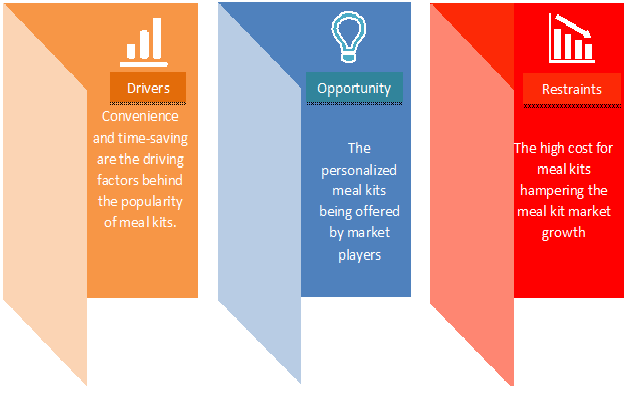
Convenience and Time-Saving are the Driving Factors Behind the Popularity Of Meal Kits
Many people have hectic schedules and limited meal planning and grocery shopping time. Meal kits provide a convenient solution by delivering pre-portioned ingredients and recipes, eliminating the need for extensive meal preparation and reducing time spent in the kitchen. Meal kits alleviate the burden of meal planning by providing curated recipes and all the necessary ingredients. This saves customers from researching recipes, creating shopping lists, and gathering ingredients from multiple sources, which drives the Global Meal Kit Market.
For instance, on December 05, 2022, The Kraft Heinz Company launched SOSU from Amoy, a line of meal kits and cooking ingredients combining Pan-Asian regional cuisine's flavors with the convenience of quick and easy meal preparation. This range is specifically designed for individuals with culinary aspirations but limited time to spend in the kitchen, allowing them to create delicious meals in just 15 minutes.
The High Cost for Meal Kits Hampering the Meal Kit Market Growth
According to a study by Dalhousie University in Canada, the cost was identified as one of the main barriers to meal kit adoption. The study found that 72% of participants perceived meal kits as more expensive than buying groceries and cooking meals from scratch. This perception was particularly prevalent among price-sensitive consumers on a tight budget.
The study also revealed that price sensitivity significantly influenced the decision to subscribe or continue using meal kit services. The high costs associated with meal kits, including the cost of ingredients, packaging, and delivery, can deter price-conscious consumers from opting for this convenience-driven option and instead choose more affordable alternatives.
Why does this report matter in 2026?
In 2026, the Meal Kit Market is being shaped by changing consumer lifestyles, demand for convenient meal solutions and growing interest in healthier, customizable food options. Consumers are increasingly looking for ready-to-cook meals that reduce preparation time while offering variety, portion control and transparent ingredients. This is creating opportunities across subscription-based, online and retail meal kit models.
The report helps meal kit providers, food manufacturers, retailers, investors and distribution partners identify attractive product categories, customer segments and regional demand centers. It also evaluates how digital ordering, personalized meal plans, sustainable packaging, dietary preferences and omnichannel distribution are influencing market development.
Competitive positioning increasingly depends on menu variety, ingredient quality, pricing, delivery efficiency, customer retention and supply chain capabilities. The report therefore examines both market demand and operational factors, helping stakeholders assess revenue opportunities and long-term growth potential across the Meal Kit Market.
Meal Kit Market White Space & Investment Opportunities
- Develop affordable meal kit formats targeting price-sensitive consumers seeking convenient home-cooked meals.
- Expand specialized meal kits for vegetarian, vegan, high-protein, low-carb, organic and other dietary preferences.
- Build localized menu offerings using regional cuisines and ingredients to improve customer relevance and retention.
- Invest in sustainable packaging, recyclable materials and optimized portioning to reduce food and packaging waste.
- Strengthen direct-to-consumer and subscription platforms with flexible ordering, personalization and digital loyalty programs.
- Expand cold-chain and last-mile delivery capabilities in emerging urban markets where meal kit adoption is increasing.
Meal Kit Future Market Transformation
The Meal Kit Market is expected to move beyond traditional subscription boxes toward flexible, personalized and omnichannel food solutions. Digital platforms will increasingly use customer preferences, purchase history and dietary requirements to recommend menus and improve retention. Retail partnerships and hybrid purchasing models will also broaden access beyond recurring subscriptions.
Personalization will become a major differentiator as consumers seek meal kits tailored to nutritional goals, household size, cooking ability and dietary restrictions. Companies that combine convenience with menu variety and transparent nutritional information can strengthen customer engagement and recurring purchases.
Sustainability will remain central to product development and operations. Meal kit providers are expected to focus on recyclable or reusable packaging, efficient cold-chain logistics, optimized portion sizes and improved demand forecasting to reduce food waste while maintaining product quality.
Meal Kit Market Buyer Decision-Making Criteria
Consumers evaluate meal kits based on price, taste, ingredient freshness, menu variety, preparation time, portion size and nutritional value. Convenience remains a primary purchase driver, while flexible subscriptions and easy cancellation can influence customer retention. Delivery reliability and packaging quality are also important because products often contain temperature-sensitive ingredients.
For health-focused consumers, ingredient transparency, nutritional information and dietary customization can strongly influence purchasing decisions. Families may prioritize portion sizes and menu variety, while younger urban consumers may place greater emphasis on convenience, digital ordering and innovative recipes.
Customer acquisition and retention increasingly depend on the complete user experience. Providers that combine competitive pricing with dependable delivery, appealing menus, flexible subscriptions and consistent food quality are better positioned to build recurring demand.
Meal Kit Market Economic & Investment Analysis
The Meal Kit Market benefits from recurring consumer demand for convenient food preparation, but profitability is closely linked to customer acquisition costs, retention rates, food procurement, packaging expenses and last-mile delivery efficiency. Companies with strong subscription retention and optimized supply chains can improve revenue predictability while controlling operational costs.
Investment opportunities are expanding across meal preparation, food sourcing, cold-chain logistics, digital commerce and packaging technologies. Regional production and distribution hubs can help providers reduce delivery distances, improve freshness and manage logistics costs as the customer base expands.
Technology is becoming an important investment area. Demand forecasting, automated fulfillment, personalized recommendations and inventory management can help reduce waste and improve operational efficiency. Investors should distinguish between businesses driven primarily by promotional customer acquisition and those supported by strong retention, differentiated products and scalable supply-chain infrastructure.
Meal Kit Investment Trends in the Market
- Expansion of digital subscription platforms with flexible plans, personalized menus and automated meal recommendations.
- Investment in sustainable packaging solutions designed to reduce plastic use, food waste and environmental impact.
- Growth of specialized meal kits focused on high-protein, plant-based, organic and other health-oriented diets.
- Expansion of retail and grocery partnerships to complement direct-to-consumer subscription channels.
- Investment in regional fulfillment centers, cold-chain infrastructure and technology-driven inventory management to improve delivery efficiency.
Strategic Indicators For Meal Kit Market
High Regulation Impact
The Meal Kit Market is influenced by food safety regulations, labeling requirements, allergen declarations, cold-chain standards, packaging rules and nutritional compliance. Regulatory requirements across ingredients, preparation, storage and delivery directly affect product formulation, packaging design and distribution operations. Increasing scrutiny of food traceability and safety is encouraging meal kit providers to strengthen quality-control and monitoring systems.
High Investment Activity
Investment activity is focused on meal kit platforms, production facilities, fulfillment centers, technology infrastructure, packaging innovation and distribution networks. Companies are investing in automated meal preparation, demand forecasting, digital ordering and efficient fulfillment systems to improve operating efficiency and customer retention. Strategic partnerships and expansion into new geographic markets are also supporting market development.
Supply Chain Disruption
Meal kit providers depend on reliable supplies of fresh produce, meat, seafood, dairy products, grains, sauces and packaging materials. Seasonal availability, transportation delays, supplier disruptions and cold-chain challenges can affect product freshness and delivery schedules. Companies are responding through supplier diversification, regional sourcing, inventory planning and improved temperature-controlled logistics.
Pricing Volatility
Meal kit pricing is influenced by ingredient costs, labor, packaging, transportation, refrigeration and last-mile delivery expenses. Fluctuations in agricultural commodities, meat, dairy and fuel prices can affect subscription pricing and provider margins. Companies are increasingly optimizing menus, portion sizes, sourcing strategies and packaging formats to manage cost pressures while maintaining perceived customer value.
Procurement Pressure
Procurement teams must balance ingredient quality, availability, cost, food safety and sustainability requirements. Meal kit providers often manage diverse supplier networks because menus require multiple fresh and packaged ingredients. Long-term supplier agreements, regional sourcing and centralized procurement can improve purchasing efficiency while reducing exposure to ingredient shortages and price fluctuations.
New Technology Adoption
Digital platforms, AI-based demand forecasting, automated fulfillment, inventory management, route optimization and smart packaging technologies are transforming meal kit operations. Data analytics can help providers predict customer preferences, reduce food waste and optimize ingredient purchasing. Temperature monitoring and connected logistics solutions are also improving visibility across cold-chain distribution.
Regional Expansion Opportunity
North America remains a significant market due to established subscription-based food delivery models and strong consumer adoption of convenient meal solutions. Europe offers opportunities through demand for healthy, sustainable and customized meal options. Asia-Pacific presents growth potential as urbanization, digital commerce and changing lifestyles increase demand for convenient food preparation solutions.
Government Policy Support
Government initiatives related to food safety, sustainable packaging, food waste reduction and digital food traceability can influence meal kit market development. Policies supporting sustainable agriculture, recycling and waste management may encourage providers to adopt recyclable packaging and more efficient sourcing models. Food safety regulations also support investments in quality management and supply-chain monitoring.
Pricing Intelligence
Meal kit pricing varies according to meal type, ingredient quality, serving size, subscription frequency, customization options, delivery distance and packaging requirements. Premium meal kits using organic, specialty or higher-value ingredients generally command higher prices, while standardized menus and larger subscription volumes can support more competitive pricing.
Delivery and fulfillment costs remain important components of overall pricing. Providers can improve cost efficiency through optimized delivery routes, regional fulfillment centers, consolidated shipments and demand forecasting. Subscription discounts and promotional pricing are commonly used to attract new customers, while customized and premium meal plans can support higher average order values.
Customers increasingly evaluate meal kits based on price, convenience, ingredient quality, variety, portion flexibility and delivery reliability. Providers that combine competitive pricing with personalization, efficient fulfillment and consistent food quality can strengthen customer retention while improving long-term market positioning.
Meal Kit Market Segmentation Analysis
The Global Meal Kit Market is segmented based on type, serving, distribution channel and region.
Health Conscious Meal Kit Segment Accounts for the Highest Share in Global Meal Kit Market
A health-conscious meal kit focuses on providing nutritious and balanced meals that prioritize whole, unprocessed ingredients. These meal kits often include lean proteins, plenty of vegetables, whole grains, and healthy fats. They may cater to specific dietary needs, such as vegetarian, vegan, gluten-free, or low-carb options.
The recipes are designed to be nutrient-dense, promoting overall well-being and supporting specific health goals. Health-conscious meal kits can be an excellent choice for individuals looking to maintain a healthy lifestyle and make mindful food choices, driving the segment expansion during the forecast period. For instance, on August 23, 2022, HelloFresh launched the Green Chef brand in the Netherlands after observing a strong interest in special diets among consumers in the country.
Meal Kit Market Regional Analysis
North America Meal Kit Market
North America remains the dominant market due to high consumer awareness, busy lifestyles, strong e-commerce penetration, and widespread adoption of convenient home-delivered meal solutions.
The United States leads the regional market through major companies including HelloFresh, Blue Apron, Home Chef, EveryPlate, and Green Chef.
Major deployment markets include:
- New York
- California
- Texas
- Florida
- Illinois
Asia-Pacific Meal Kit Market
Asia-Pacific is expected to register the fastest CAGR during the forecast period.
China leads large-scale meal kit adoption driven by rapid urbanization, expanding online grocery platforms, and growing demand for convenient home-cooking solutions.
Japan, South Korea, and Australia are rapidly investing in digital food delivery ecosystems and premium meal subscription services.
India represents a major future growth opportunity due to:
- Growing urban middle-class population
- Expansion of food delivery platforms
- Increasing demand for convenient cooking solutions
- Rising smartphone and internet penetration
Europe Meal Kit Market
Europe is witnessing strong adoption supported by changing dietary preferences, growing health consciousness, and increasing demand for sustainable food solutions.
Germany, the UK, and France are leading meal kit subscription services, while the Netherlands and Sweden have emerged as key innovation hubs for personalized and eco-friendly meal kits.
Latin America Meal Kit Market Outlook
Latin America is gradually embracing meal kit services through expanding e-commerce infrastructure and growing consumer interest in convenient and healthy meal preparation.
Brazil, Mexico, and Chile are emerging as important markets driven by urbanization, digital grocery adoption, and changing food consumption patterns.
Middle East & Africa Meal Kit Market Outlook
The Middle East & Africa region is expected to create long-term growth opportunities through increasing online food purchases, rising disposable incomes, and evolving consumer lifestyles.
Saudi Arabia and the UAE are leading regional adoption, while South Africa is witnessing growing interest in subscription-based meal delivery and ready-to-cook food solutions
Meal Kit Market Key Players
The major global players include Blue Apron, LLC, Gobble, Inc, CHEFD, Ahold, Gousto, PeachDish, HelloFresh, Plated, Green Chef Corporation, and The Purple Carrot.
Meal Kit Market Key Developments
July 2026: Marley Spoon continued expanding its meal kit offering around its Martha Stewart recipe partnership, featuring exclusive Martha Stewart recipes in its weekly menus and reinforcing its differentiated culinary positioning.
- June 2026: HelloFresh expanded beyond its traditional subscription model by launching free Cookbook and Discover features globally, allowing non-subscribers to access recipe organization and meal-planning tools through its app.
- May 2026: HelloFresh strengthened its ready-to-eat and meal solutions portfolio by opening its Factor production facility in Verden, Germany, supporting production for Germany and Austria and expanding its higher-convenience food offering.
- April 2026: Misfits Market moved to acquire FreshRealm’s operations supplying Blue Apron after FreshRealm filed for bankruptcy protection, supporting continuity of Blue Apron’s meal kit supply chain.
- March 2026: HelloFresh partnered with actress Alison Brie to launch HelloFresh Supper Club, combining curated recipes with a social dining concept designed to encourage consumers to host meals at home.
- February 2026: HelloFresh reported strong profitability progress in its meal kit category for FY2025, while continuing its efficiency program and increasing investment in product development to strengthen its meal kit portfolio.
- January 2026: HelloFresh partnered with Betches Media to launch The Galentine’s Dinner Edit, a specialty companion kit featuring tablescape essentials, games, and a hostess accessory alongside themed meal offerings.
The Global Meal Kit Market Report Would Provide Approximately 77 Tables, 82 Figures And 195 Pages.



























































