


Matcha Market Size and Forecast
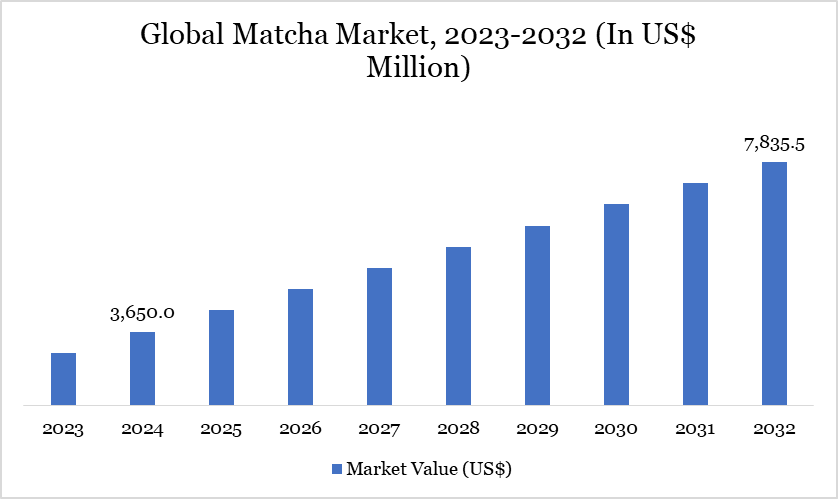
Global Matcha Market reached US$ 4.55 billion in 2025 and is expected to reach US$ 9.12 billion by 2033, growing at a CAGR of 9.66 % during the forecast period 2026-2033.
The global matcha market is witnessing steady growth driven by rising consumer preference for functional beverages and clean-label ingredients. Matcha, a finely ground powdered green tea, is rich in antioxidants, particularly catechins, and is increasingly positioned as a superfood across health-conscious consumer segments. Demand is expanding beyond traditional tea consumption into applications such as lattes, smoothies, bakery, confectionery, and nutraceuticals. The growing popularity of plant-based diets and natural energy boosters is further supporting market expansion, especially among millennials and urban consumers.
Geographically, Asia-Pacific dominates the market due to its cultural roots and high production in countries like Japan and China, while North America and Europe are emerging as high-growth regions driven by premiumization and café culture. E-commerce and specialty retail channels are accelerating accessibility and product diversification. However, challenges such as high product cost, quality standardization, and supply constraints may impact growth. Overall, the market is expected to expand steadily with innovation in product formats and health-driven positioning.
Matcha Market Trends
The functional beverages market is witnessing significant growth as health-conscious consumers seek products that deliver more than basic hydration. The beverages offer added benefits such as sustained energy, immunity support and stress relief, often leveraging natural ingredients like antioxidants, adaptogens and plant-based compounds. This demand is being driven by busy lifestyles, a shift toward preventive health and growing interest in clean-label, low-sugar alternatives.
For more details on this report, Request for Sample
Matcha Market Scope
| Metrics | Details | |
| By Grade | Ceremonial Grade, Classic Grade and Culinary Grade | |
| By Form | Powder, RTD (Ready-to-Drink) Beverages, Capsules & Supplements | |
| By Application | Food & Beverages, Nutraceuticals, Personal Care & Cosmetics and Others | |
| By Region | North America, South America, Europe, Asia-Pacific, Middle East and Africa | |
| Report Insights Covered | Competitive Landscape Analysis, Company Profile Analysis, Market Size, Share, Growth |
Matcha Market Dynamics
Rising Health and Wellness Consciousness
The growing global focus on health and wellness is significantly accelerating demand in the matcha market. Consumers are increasingly seeking products that support mental clarity, sustained energy and overall well-being, leading to a strong preference for natural, functional ingredients. Matcha, known for its rich antioxidant profile, natural caffeine and L-theanine content, aligns well with these expectations. As a result, it is being embraced not only as a traditional tea but also as a versatile superfood ingredient in modern health-focused diets.
This trend has spurred innovation across the food and beverage industry, with manufacturers incorporating matcha into lattes, smoothies, energy drinks and functional snacks. Its ability to deliver both energizing and calming effects positions it as a unique alternative to conventional caffeinated products. The demand is further reinforced by clean-label and organic consumption trends, making matcha a strategic ingredient in the development of premium wellness-oriented offerings worldwide.
High Price of Premium-Grade Matcha
Ceremonial and organic matcha, which are sourced from specific regions like Uji, Japan, require labor-intensive cultivation and meticulous processing, resulting in significantly higher prices compared to conventional teas. This cost barrier limits accessibility for price-sensitive consumers and restricts adoption in price-competitive markets.
Moreover, the premium pricing of high-quality matcha poses challenges for manufacturers and retailers aiming to offer affordable functional beverage options. While demand for clean-label and natural products continues to rise, the cost of sourcing authentic, high-grade matcha can impact profit margins and hinder widespread product expansion, particularly in emerging economies.
Matcha Market Segmentation Analysis
The global matcha market is segmented based on grade, form, application and region.
Growing Market Demand for Premium Ceremonial-Grade Matcha
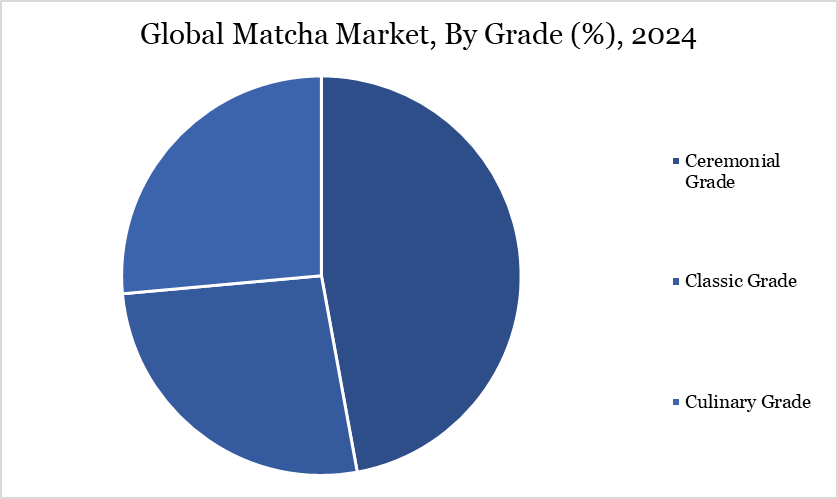
Ceremonial-grade matcha leads the grade segment in the global matcha market due to its superior quality, vibrant color and rich umami flavor. Sourced from the youngest, shade-grown leaves during the first harvest, this grade offers higher concentrations of antioxidants, L-theanine and caffeine appealing to health-focused consumers seeking clean energy and cognitive support.
For example, in March 2023, Cymbiotika launched organic, ceremonial-grade matcha. Made from first-harvest leaves grown on family-run farms in Uji and Kagoshima, Japan, the product delivers a refined flavor and premium nutritional profile. Marketed as a clean energy alternative to coffee, it reinforces the growing demand for high-quality, functional wellness products.
Matcha Market Geographical Share
Asia-Pacific Emerges as the Leading Region in Global Matcha Demand
Asia-Pacific dominates the global matcha market, driven by strong cultural roots, high consumption levels and established production hubs, particularly in Japan. Regions like Uji and Kagoshima are renowned for producing premium ceremonial-grade matcha, which continues to influence global quality standards and demand. The region's leadership is further reinforced by rising health awareness, expanding applications in food and beverages and growing consumer preference for natural, antioxidant-rich products.
Emerging markets such as China and South Korea are also witnessing increased adoption, solidifying Asia-Pacific's position as the primary growth engine for the matcha market. For example, in March 2023, Kataoka & Co., Ltd. launched Matcha Direct, a ground-to-order e-commerce service. By shipping freshly milled matcha directly from its Kyoto factory within three business days, the company ensures product freshness while expanding its international reach. It highlights Japan’s role as a premium matcha supplier and strengthens the region’s dominance in high-quality matcha exports.
Matcha Market Sustainability Analysis
The matcha market is growing rapidly as sustainability becomes a key priority for consumers and businesses. Environmental sustainability plays a major role, with natural farming methods minimizing pesticide use, though challenges like water consumption and logistics emissions remain. Social sustainability is also gaining importance, with ethical sourcing and fair trade certifications driving consumer demand. Economically, matcha’s premium value promotes innovation, but issues such as price volatility and monoculture farming present barriers to sustainable growth.
To address these challenges, Elitez Group and The Matcha Initiative (TMI) have launched the Sustainability Masterclass Series, designed to equip businesses and individuals with essential sustainability knowledge. The program focuses on key areas such as carbon management, circular economy and climate risk mitigation. By participating organizations can align with sustainability regulations, reduce operational costs and drive innovation, positioning themselves as leaders in the evolving sustainability landscape.
Matcha Market Major Global Players
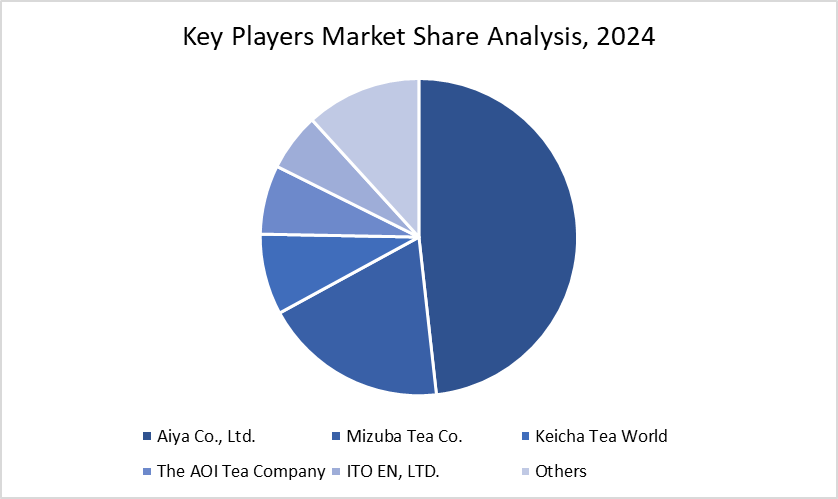
The major global players in the market include Aiya Co., Ltd. , AOI Seicha Co., Ltd., Marukyu-Koyamaen Co., Ltd., Ippodo Tea Co., ITO EN, Ltd., Encha, DōMatcha, Green Foods Corporation, Tenzo Tea, Inc., Nestlé S.A. and others
Key Developments in the Matcha Market
- August 2026: ITO EN, Ltd. continued expanding its matcha and Japanese green-tea portfolio, responding to growing international demand for premium matcha beverages and food applications.
- July 2026: Aiya Co., Ltd. continued strengthening its global matcha supply and processing capabilities, supporting demand from beverage, food, confectionery and dietary applications.
- July 2026: Marukyu-Koyamaen Co., Ltd. continued expanding its premium matcha business as international consumer interest in authentic Japanese ceremonial and culinary matcha remained strong.
- June 2026: Ippodo Tea Co. continued increasing its focus on overseas consumers, supported by rising global interest in high-quality traditional Japanese matcha and tea culture.
- June 2026: AOI Seicha Co., Ltd. continued expanding its matcha and Japanese green-tea offerings, targeting growing demand from international food, beverage and specialty-tea markets.
- May 2026: Encha continued expanding its organic matcha portfolio in the U.S., focusing on premium matcha powders and ready-to-use products for beverages, wellness and everyday consumption.
- May 2026: DōMatcha continued strengthening its premium matcha offering, with emphasis on Japanese-origin matcha and products designed for both traditional preparation and modern beverages.
- April 2026: Green Foods Corporation continued developing matcha-based products and functional beverage ingredients, benefiting from growing consumer interest in plant-based and antioxidant-rich products.
- April 2026: Tenzo Tea, Inc. continued expanding its matcha-focused product portfolio, targeting consumers seeking premium Japanese green tea for beverages and wellness applications.
- April 2026: Nestlé S.A. continued expanding matcha-based beverage and food offerings across its global portfolio, responding to increasing consumer interest in matcha flavors and functional beverages.
Why Choose DataM?
- Data-Driven Insights: Dive into detailed analyses with granular insights such as pricing, market shares and value chain evaluations, enriched by interviews with industry leaders and disruptors.
- Post-Purchase Support and Expert Analyst Consultations: As a valued client, gain direct access to our expert analysts for personalized advice and strategic guidance, tailored to your specific needs and challenges.
- White Papers and Case Studies: Benefit quarterly from our in-depth studies related to your purchased titles, tailored to refine your operational and marketing strategies for maximum impact.
- Annual Updates on Purchased Reports: As an existing customer, enjoy the privilege of annual updates to your reports, ensuring you stay abreast of the latest market insights and technological advancements. Terms and conditions apply.
- Specialized Focus on Emerging Markets: DataM differentiates itself by delivering in-depth, specialized insights specifically for emerging markets, rather than Grade generalized geographic overviews. This approach equips our clients with a nuanced understanding and actionable intelligence that are essential for navigating and succeeding in high-growth regions.
- Value of DataM Reports: Our reports offer specialized insights tailored to the latest trends and specific business inquiries. This personalized approach provides a deeper, strategic perspective, ensuring you receive the precise information necessary to make informed decisions. These insights complement and go beyond what is typically available in generic databases.
Target Audience
- Manufacturers/ Buyers
- Industry Investors/Investment Bankers
- Research Professionals
- Emerging Companies



























































