


High-Speed Separators Market Size and Overview
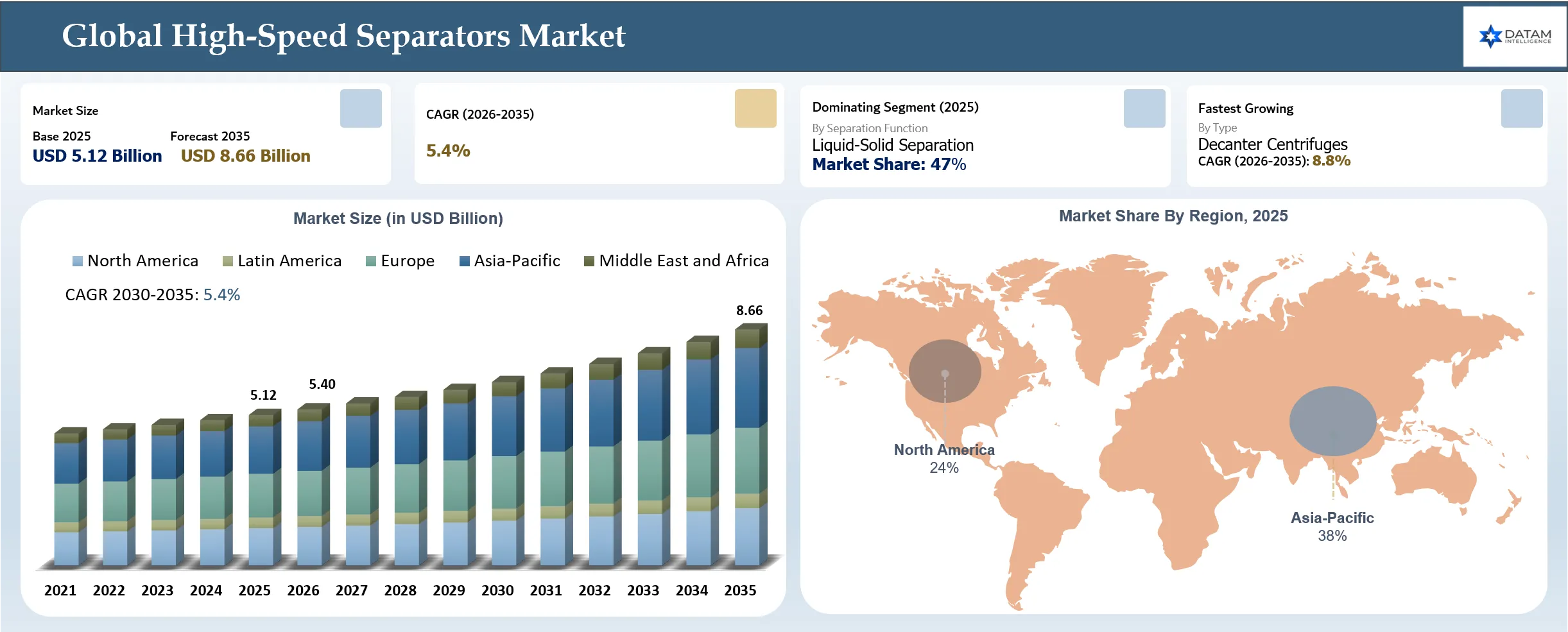
The global high-speed separators market reached USD 5.12 billion in 2025, and it is expected to reach USD 8.66 billion by 2035, growing at a CAGR of 5.4% during the forecast period 2026-2035. The market growth is supported by an increase in the need for high-capacity centrifugation. The high-speed centrifuge offers effective liquid-to-liquid and solid-to-liquid separation.
The recent developments during 2025 indicate a move toward processing yields and compact machines, along with a reduction in the use of resources. In October 2025, Alfa Laval, a Sweden-based company, introduced the Culturefuge 200 B separator designed for medium-scale biopharmaceutical applications. The company reported that a customer application achieved a 6.08% increase in product yield, which means additional value creation of USD 7.1 million per batch. In March 2025, GEA launched its Kytero 10 single-use disc stack centrifuge capable of handling volumes between 1 and 10 litres.
White-Space Opportunities for High-Speed Separator Innovation, Advanced R&D Infrastructure, and Application-Specific Separation Technologies
In November 2025, Alfa Laval, which is a Sweden-based company manufacturing separation technology and fluid handling equipment, enhanced its investments in the high-speed separators market by setting up the Flemingsberg Innovation Centre in Sweden. The centre occupies an estimated area of 20,000 m², of which 8,000 m² is the area occupied by laboratories, and will serve as a major platform for the design of next-generation separators in marine, energy, food processing, pharmaceutical, and biotechnological applications.
The highest reported allocation for the designated space for the purpose of lab and separator technology is yet to be specified, although Alfa Laval has not disclosed the total value of the investment or the breakdown of the investment in terms of the various application areas. Another area of 700 m² is used in the development of ballast water management technology jointly by Wallenius Water and Alfa Laval.
High-Speed Separators Market Key Takeaways
- The Asia-Pacific region dominated the global marketplace with a 38% market share in 2025. Growth in this region is fueled by strong industrial output and expanding pharmaceutical, food, and petrochemical manufacturing sectors.
- Liquid-solid separation stands out as the primary separation function, holding a 47% market share in 2025. Its leading position is driven by high demand across wastewater management, food processing, pharmaceuticals, and chemicals.
- GEA Group deployed nearly 100 environmental decanters in Bengaluru wastewater facilities between 2019 and early 2026. The units process roughly 4 billion liters of water annually in the region and 9 billion litres per year across India.
- Alfa Laval established the Flemingsberg Innovation Centre in Sweden, spanning an estimated total area of 20,000 m². The facility includes 8,000 m² of dedicated laboratory space along with a 700 m² ballast water research area.
High-Speed Separators Market Industry Trends and Strategic Insight
- Development of Application-Specific Separator Configurations. Equipment suppliers are adapting bowl designs, discharge mechanisms, and operating parameters to accommodate different feed viscosities, solids concentrations, and product purity requirements rather than relying on standardized equipment across all industries.
- Increasing Focus on Energy and Water Efficiency. Equipment development is increasingly emphasizing efficient drive systems, optimized separation processes, and reduced cleaning-water requirements to lower lifecycle operating costs and resource consumption.
- Compact and Modular Separator Platforms for Flexible Production. Equipment designs are shifting toward compact, modular systems that simplify installation, support changing production requirements, and allow processors to scale separation capacity without redesigning entire facilities. GEA’s beverage separator skid illustrates this approach.
- Greater Design Attention to Material Compatibility and Cleanability. Corrosion-resistant construction, accessible product-contact surfaces, and application-specific cleaning provisions are important differentiators for separators handling aggressive chemicals, sensitive pharmaceutical products, and hygienically regulated food streams.
High-Speed Separators Market Scope
| Metrics | Details | |
| 2025 Market Size | USD 5.12 Billion | |
| 2035 Projected Market Size | USD 8.66 Billion | |
| CAGR (2026-2035) | 5.4% | |
| Largest Market | Asia-Pacific | |
| Fastest Growing Market | Asia-Pacific | |
| By Type | Disc-Stack Separators, Decanter Centrifuges, Tubular-Bowl Separators, Basket Centrifuges, Solid-Bowl Centrifuges, Nozzle-Type Separators, Others | |
| By Capacity | Small-Capacity Separators (3,000-10,000 L/hour), Medium-Capacity Separators (10,000-30,000 L/hour), Large-Capacity Separators (Above 30,000 L/hour) | |
| By Separation Function | Liquid-Solid Separation, Liquid-Liquid Separation, Three-Phase Separation (Liquid-Liquid-Solid), Liquid Clarification, Others | |
| By Automation | Manual Separators, Semi-Automatic Separators, Fully Automatic Separators | |
| By End-Use | Food and Beverage Processing, Pharmaceutical and Biotechnology, Chemicals and Petrochemicals, Oil and Gas, Marine and Power Generation, Water and Wastewater Treatment, Mining and Mineral Processing, Pulp and Paper, Recycling and Resource Recovery, Others | |
| By Region | North America | U.S., Canada, Mexico |
| Europe | Germany, UK, France, Spain, Italy, Poland, Netherlands, Switzerland | |
| Asia-Pacific | China, India, Japan, Australia, South Korea, Indonesia, Malaysia | |
| Latin America | Brazil, Argentina | |
| Middle East and Africa | UAE, Saudi Arabia, South Africa, Israel, Türkiye | |
| Report Insights Covered | Competitive Landscape Analysis, Company Profile Analysis, Market Size, Share, Growth | |
High-Speed Separators Market Disruption Analysis
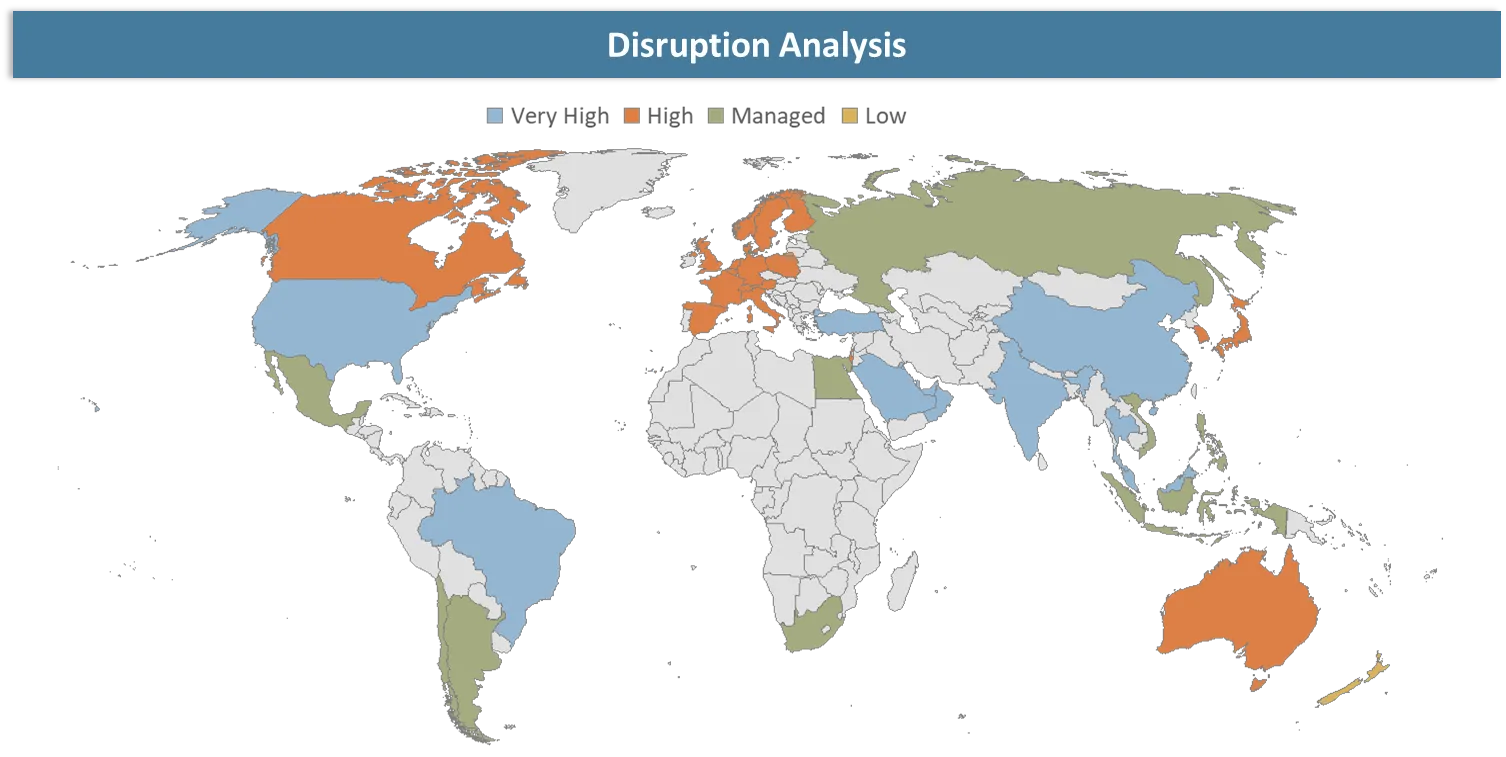
Adoption of Single-Use Bioprocessing Technologies Reshaping the High-Speed Separators Market
The disruption in the high-speed separators market is increasingly associated with the adoption of single-use bioprocessing technologies in the manufacture of pharmaceutical and biotechnology products. The integration of single-use separators is transforming traditional processing methods through the elimination of cleaning procedures and cross-contamination, and the ability to produce biologicals, vaccines, and cellular therapies in a flexible manner. With a desire for scalable and contamination-sensitive processing solutions, there is a growing need for high-speed separators that are compatible with single-use processing.
In March 2026, Alfa Laval, a Sweden-based company, provided a comparison example of the performance of its CultureOne single-use separator using the 2,000-litre bioreactor case. According to Alfa Laval, the illustration provided indicated an increase in product recovery from 92.5% to 98%, meaning that there would be an extra 99 litres of recovered product in addition to 297 grams of additional product with a concentration of 3 grams per litre. Therefore, the above illustration indicates how the improvement in separation efficiency may create an economic impact within the biopharmaceutical production industry, even though the figures are just those of one company.
High-Speed Separators Market BCG Matrix: Company Evaluation
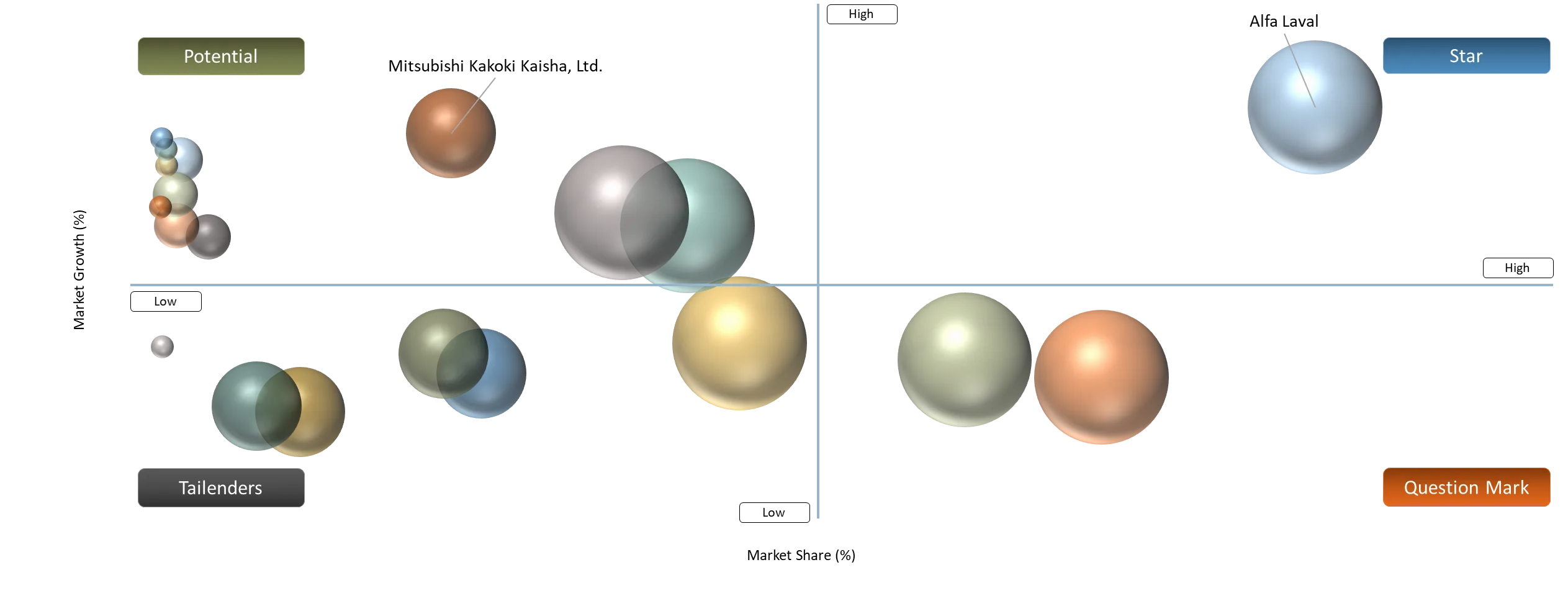
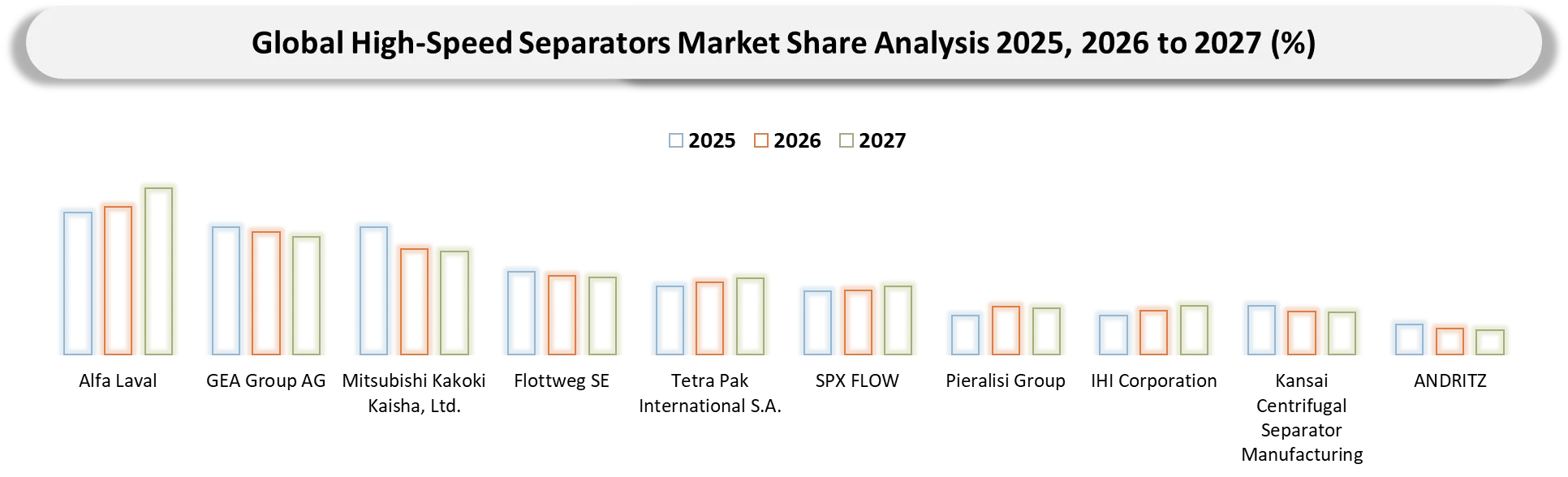
Stars include Alfa Laval and GEA Group AG, as they have built a strong position in centrifugal separator technology and offer high-speed separators for use in the food and beverage industry, pharmaceutical manufacturing, and biotechnology. The Question Mark group comprises Tetra Pak International S.A., SPX FLOW, and ANDRITZ. The companies have processing-equipment capabilities and the potential to build their position in high-speed separation.
Potential include Mitsubishi Kakoki Kaisha, Ltd., Flottweg SE, and Pieralisi Group belong to the category. Companies have capabilities in separation and centrifuges and can grow through demand from industrial processing, food production, and resource recovery. IHI Corporation and Kansai Centrifugal Separator Manufacturing belong to the category of tailenders. The companies have industrial or specialised separation capabilities, but their relative position in the world high-speed separator market is not established through publicly available market share information.
High-Speed Separators Market Dynamics
Driver Impact Analysis
| Driver | Market Growth Impact (%) | Demand Concentration | Impacted Use Case | Strategic Impact |
Increasing Wastewater Treatment and Water-Reuse Requirements | 20% | Asia-Pacific, Europe, North America | Sewage sludge dewatering, industrial wastewater treatment, process-water recovery | Strengthens demand for high-speed decanter centrifuges, automated sludge dewatering, and resource-recovery systems. |
Growing Demand for Hygienic Food and Beverage Processing | 25% | Europe, Asia-Pacific, North America | Dairy separation, beverage clarification, edible-oil processing, brewing | Encourages investment in hygienic separator designs, automated cleaning, and high-throughput food-grade processing equipment. |
Growing Demand for Separation in Battery Recycling and Mineral Processing | 15% | Asia-Pacific, Europe, North America | Battery-recycling slurry treatment, mineral slurry separation, tailings dewatering, material recovery | Creates opportunities for specialized separators that improve solids recovery, support recycling efficiency, and reduce waste-handling costs. |
Expansion of Pharmaceutical and Biotechnology Processing | 25% | North America, Europe, Asia-Pacific | Cell harvesting, fermentation-broth clarification, biologics processing, vaccine manufacturing | Increases demand for precision separation, single-use systems, contamination control, and high-value product recovery. |
Increasing Wastewater Treatment and Water-Reuse Requirements
The growing need for wastewater treatment and reusable water harvesting is one of the factors contributing to the rising demand for high-speed separators. Increased discharge standards, the increasing shortage of fresh water, and the necessity of industrial processes to conserve water are resulting in an increased requirement for effective separation of solid and liquid materials, sludge concentration, and the retrieval of useful materials during processing. High-speed centrifuges and dedicated separators aid in the separation of solid impurities, sludge, and other process materials, making it easier to treat wastewater.
GEA's installations of wastewater treatment are an example of the increasing importance of high-speed decanter centrifugation in the water recycling process and sludge volume reduction. In January 2026, according to GEA Group, almost 100 GEA environmental decanters have been deployed in the wastewater-treatment facilities in Bengaluru since 2019, aiding in the extraction of water from the treated sewage. The decanters extract roughly 4 billion liters of water per annum in the region, while GEA claims that their decanters extract 9 billion liters of water per year throughout India. In addition, GEA says that their decanters can decrease the volume of sewage sludge by 90%.
Restraint Impact Analysis
| Restraint | Drag on Market Growth (%) | Primary Impact Area | Impacted Use Case | Strategic Impact |
Accelerated Wear of Separator Components Under Demanding Operating Conditions | 8% | Mining, wastewater treatment, chemicals, mineral processing | Abrasive slurry separation, coal dewatering, sludge processing | Increases component-replacement costs and downtime, encouraging investment in wear-resistant materials and replaceable protective components. |
Vibration-Induced Performance and Equipment Stability Challenges | 7% | Heavy industry, chemicals, food processing, pharmaceutical manufacturing | High-speed centrifugation, continuous liquid–solid separation, precision clarification | Requires dynamic balancing, vibration monitoring, and preventive maintenance, potentially increasing installation and operating costs. |
Limited Flexibility When Processing Materials Outside Specified Operating Parameters | 9% | Food and beverage, biotechnology, mining, chemical processing | Variable-feed separation, changing solids concentrations, multi-product processing | Can limit equipment utilization and require application-specific configurations, feed conditioning, or additional separation stages. |
Increasing Maintenance Expenditure for Precision Rotating Components | 8% | Pharmaceuticals, food processing, industrial manufacturing, wastewater treatment | Bearing and seal replacement, bowl servicing, disc-stack maintenance, scheduled shutdowns | Raises lifecycle ownership costs and can delay purchases by cost-sensitive operators, increasing demand for durable designs and aftermarket service agreements. |
Accelerated Wear of Separator Components Under Demanding Operating Conditions
One of the important constraints that prevent the use of high-speed separators, as well as limit their performance, is the rapid wear of their crucial parts under difficult working conditions. Working at very high speeds, exposure to aggressive solids and aggressive process media, as well as frequent start-up operations, may be stressful for bowl units, bearings, seals, discs, and drives. Working with abrasive slurries in mineral processing plants, wastewater treatment plants, and chemical manufacturing industries may increase the risk of corrosion and erosion and lead to increased expenses for maintenance and replacement of parts.
In October 2025, Coal Preparation Technology examined the design of a 1.3-meter scraper-discharge centrifuge to overcome the issues associated with short service life and maintenance for the wear parts in large coal dewatering. The designed centrifuge had a screen basket of 1,300 mm, a separation factor of 302, and a 110-kW motor and was able to produce a capacity of 78 tonnes per hour and a moisture content of 12-16%. It is evident from this study that there are component durability issues arising out of the abrasive nature of the coal slurry handling process.
High-Speed Separators Market Segment Analysis
The global high-speed separators market is segmented based on type, capacity, separation function, automation, end-use, and region.
Growing Demand for Efficient Solid Removal and Resource Recovery Across Industrial Applications
The liquid-solid separation segment dominates the high-speed separators market, with a market share of 47% in 2025, owing to its extensive use in wastewater management, the food and beverage industry, pharmaceuticals, chemicals and mining industries. Liquid-solid separation involves the removal of suspended solids, biomass, sludge and any other particulates from liquids. It helps manufacturers achieve purity in their products while at the same time recovering useful materials, decreasing the quantity of waste material produced and meeting quality standards in their processes.
The latest examples have proved once more the significance of liquid-solid separation for business operations. In September 2025, Krones introduced the UniPure S decanter, which became the new addition to the company's line of separation technologies for the food industry and recycling purposes. Krones technology is capable of providing bowl sizes from 220 to 800 mm, hydraulic capacity up to 120 m³/hour in all types of the device, and loading capacity of up to 25 tonnes per hour in some configurations. UniPure S, presented during drinktec 2025, can provide a maximum loading capacity of 3 tonnes/hour, hydraulic capacity of 7 m³/hour, speed of 5,100 rotations per minute, and up to 3,200 G centrifugal force.
High-Speed Separators Market Geographical Penetration
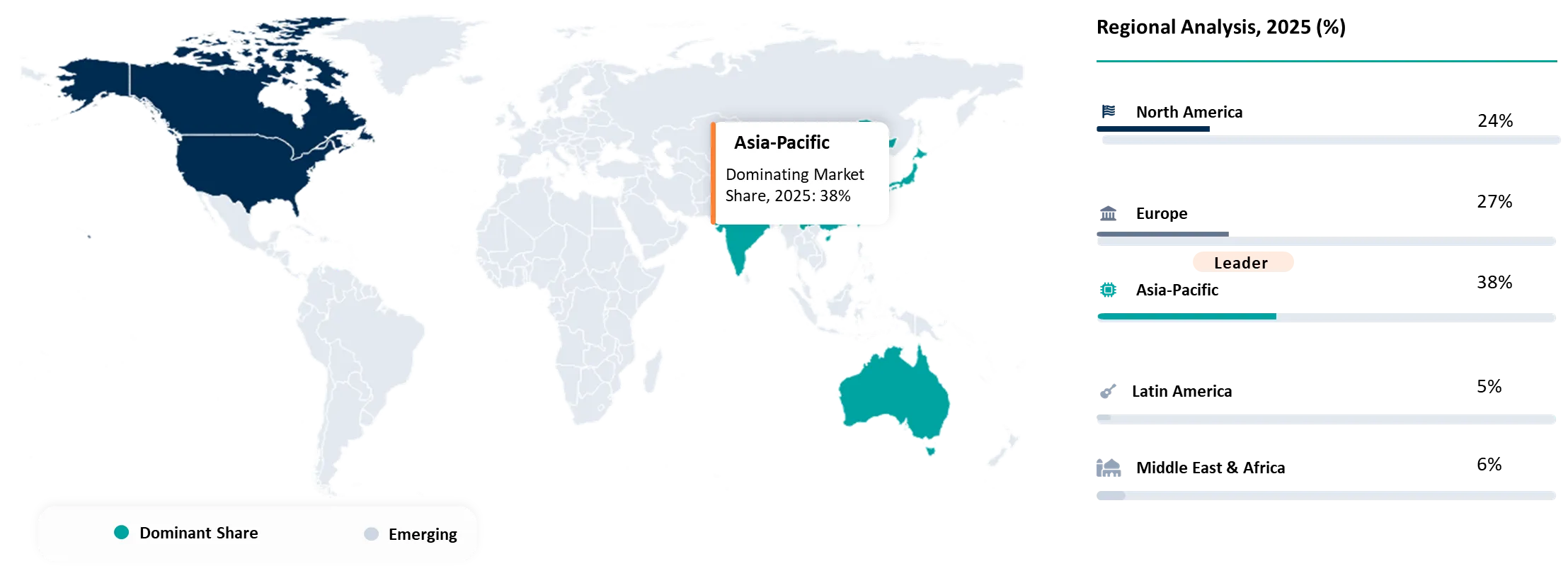
Rapid Industrialisation and Expanding Process Separation Demand in Asia-Pacific
The Asia-Pacific region is dominating the high-speed separators market, with an expected market share of around 38% in 2025. It is attributed to the presence of the well-established food & beverage processing industry, the rising pharmaceuticals and biotechnology manufacturing sector, as well as significant chemical, petrochemical, marine and wastewater treatment activities in the region. Rising industrial output, strict demands on process efficiency, and the need to recycle valuable materials from liquids and slurries are driving the demand for high-speed centrifuge separator systems.
In July 2026, GEA Group AG, a German-based supplier of industrial machinery and process technologies, allied with Chemical Systems Technologies (CST), an Indian-based engineering firm and specialist in solutions for the sugar-processing industry, to increase the application of decanter centrifuge machines for mud dewatering in sugar processing. The partnership is based on the use of almost 50 decanter machines, whose capacities range from 3,500 to 18,000 tons of sugarcane daily, already installed in Indian sugar mills. Decanters have reduced sugar loss by up to 60% in comparison with rotary vacuum drum filters and by 25% in comparison with belt presses.
China High-Speed Separators Market Trends
China holds a dominant position in the Asia-Pacific high-speed separators market, owing to the wide presence of the food and beverages processing industry in China, large-scale chemical and petrochemical operations in the country, increasing pharmaceuticals manufacturing base, and investment in wastewater treatment plants. The industrial scenario prevailing in China leads to the need for high-speed centrifugal separators, which include disc stack separators and decanter centrifuge.
The increasing need for an effective and automated process for separating beverages is leading manufacturers to develop advanced disc stack separators. In October 2025, Yixing Huading Machinery Co., Ltd. (Huading Separator), a China-based leading provider of centrifugal separation systems, launched its new generation of high-end PLC Disc Stack Separator (BRSX Series) for use in the brewery industry. The BRSX Series comes with a capacity of 300-16,000 L/h, along with different motor capacities ranging from 5.5 kW to 37 kW.
Japan High-Speed Separators Market Outlook
Japan is one of the key countries in the Asia-Pacific high-speed separators market due to its superior capabilities in manufacturing, precision engineering, and the presence of food processing, pharmaceuticals, biotech, and chemical industries in Japan. The demand for high-speed centrifugal separators is being fueled by the requirement for effective product clarification, hygiene in the processing method, solid/liquid separation and industrial wastewater treatment.
In June 2026, Mitsubishi Kakoki Kaisha, Ltd., a Japan-based manufacturer of industrial engineering and machinery, acquired 52.5% of the shares in SAITO SEPARATOR LIMITED, a Japan-based company specialising in centrifugal separators. Through the capital and business tie-up, there is an intention to enhance their businesses of centrifugal separators by using the know-how of SAITO SEPARATOR in manufacturing large-capacity centrifugal separators used in food and beverage processing with that of Mitsubishi Kakoki in manufacturing small- and medium-sized centrifugal separators and marine oil purifiers.
U.S. High-Speed Separators Market Trends
The U.S. holds a dominant position in the North American high-speed separators market, owing to its strong pharmaceutical and biotech industry, as well as food and beverage processing expertise and the emerging trend of industrial wastewater management. The demand for high-speed centrifugal separators is driven by the requirements of efficient cell harvesting, product clarification, solid/liquid separation, and continuous processes in the manufacture of biopharmaceuticals.
Strategic acquisitions in industrial process equipment have redefined the business environment by expanding product lines and capabilities in separation technology. In December 2025, ITT Corporation, a U.S.-based company that produces high-precision components and industrial technologies, signed an agreement to acquire SPX FLOW, Inc., a U.S.-based provider of industrial process equipment and separation technologies, in a deal worth USD 4.775 billion. The purchase took place on March 2, 2026, and expanded ITT’s product range to include pumps, valves, mixers, homogenisers, and separators.
High-Speed Separators Market Competitive Landscape
- The high-speed separators market is characterized by three key participant groups: international leaders in separation technology, producers of centrifuges, and industrial equipment companies. It has two leaders on the market: Alfa Laval and GEA Group, due to the wide range of separators and customer portfolio in food and beverages, pharmaceuticals, the maritime industry, chemicals and wastewater treatment. There are two specialised manufacturers on the market: Flottweg and Pieralisi, focusing on the development of centrifugal and decanter technologies. The third group includes companies like Mitsubishi Kakoki Kaisha, IHI Corporation, and Kansai Centrifugal Separator Manufacturing, which adds value to the market through Japanese engineering. Competitors like Tetra Pak, SPX FLOW, and ANDRITZ add competition through food processing systems, industrial separation equipment and solid-liquid separation solutions.
- Key players include Alfa Laval (Sweden), GEA Group AG (Germany), Mitsubishi Kakoki Kaisha, Ltd. (Japan), Flottweg SE (Germany), Tetra Pak International S.A. (Switzerland), SPX FLOW (United States), Pieralisi Group (Italy), IHI Corporation (Japan), Kansai Centrifugal Separator Manufacturing (Japan), and ANDRITZ (Austria).
Key Developments
- August 2025: GEA Group AG, a Germany-based global manufacturer of industrial machinery and process engineering systems, acquired the Flocmix brand and its associated technologies, specializing in mixing, dosing, and sensor solutions for water and wastewater treatment.
- June 2025: Alfa Laval AB, a Sweden-based global manufacturer of industrial separation, heat-transfer, and fluid-handling equipment, partnered with ScaleUp Bio Pte. Ltd., a Singapore-based contract development and manufacturing organisation (CDMO) specializing in precision fermentation for food and bio-based ingredients.
- July 2025: Krones AG, a Germany-based manufacturer of process, filling, and packaging machinery, acquired a 60% stake in GHS Separationstechnik GmbH, a Germany-based specialist manufacturer of decanter centrifuges and solid–liquid separation systems.
- July 2025: Xoma AB, a Sweden-based biotechnology and environmental technology company specializing in algae cultivation and water purification, entered into a collaboration with Alfa Laval AB, a Sweden-based global manufacturer of industrial separation, heat-transfer, and fluid-handling equipment, to develop applications for high-speed separators to efficiently separate algae from water.
Key Procurement Priorities and Buyer Evaluation Criteria
- Organizations investing in high-speed separators increasingly select suppliers based on their ability to deliver reliable, high-throughput separation systems that provide efficient solid removal, liquid clarification, and liquid-liquid separation while maintaining consistent product quality and operational performance.
- The procurement decision-making process is increasingly influenced by demand for automated processing, energy-efficient equipment, water recovery, wastewater treatment, and resource recovery, alongside growing requirements in food and beverage processing, pharmaceutical and biotechnology manufacturing, chemicals, and petrochemicals.
- Buyers evaluate factors such as separation efficiency, processing capacity (L/hour), centrifugal force, product purity, solids-handling capability, energy and water consumption, equipment reliability, maintenance intervals, and compliance with relevant food-grade, pharmaceutical, and industrial safety standards when selecting high-speed separator suppliers.
Why Choose DataM?
- Technological Innovations: Explores advancements in high-speed separation technologies, including disc-stack separators, decanter centrifuges, tubular-bowl separators, and automated separation systems, highlighting improvements in separation efficiency, throughput, energy optimization, and continuous processing.
- Product Performance & Market Positioning: Evaluates how manufacturers differentiate their equipment based on processing capacity, centrifugal force, solids-handling capability, separation accuracy, product purity, operational reliability, and suitability for demanding industrial applications.
- Real-World Evidence: Examines the adoption of high-speed separators across food and beverage processing, pharmaceutical and biotechnology manufacturing, chemicals and petrochemicals, oil and gas, marine operations, and wastewater treatment, demonstrating their role in product recovery, sludge dewatering, liquid clarification, and resource efficiency.
- Market Updates & Industry Changes: Tracks relevant industry developments during 2025–2026, including separator launches, decanter technology expansions, automation improvements, and new applications in food processing, biopharmaceutical manufacturing, industrial wastewater treatment, and recycling.
- Competitive Strategies: Analyses how leading companies, including Alfa Laval, GEA Group, Mitsubishi Kakoki Kaisha, Flottweg, Tetra Pak, SPX FLOW, Pieralisi, IHI Corporation, Kansai Centrifugal Separator Manufacturing, and ANDRITZ, strengthen their market positions through product innovation, application-specific engineering, service networks, and strategic partnerships.
- Pricing & Market Access: Assesses equipment pricing considerations based on separator type, processing capacity, automation level, materials of construction, hygienic design, installation requirements, maintenance costs, and lifecycle operating expenses, while evaluating access through manufacturers, distributors, and industrial equipment suppliers.
- Market Entry & Expansion: Identifies growth opportunities driven by pharmaceutical and biotechnology production, food processing, industrial water reuse, wastewater treatment, and resource recovery, while evaluating strategies such as regional manufacturing expansion, customised equipment development, automation integration, and after-sales service enhancement.
Target Audience 2026
- High-Speed Separator Manufacturers
- Food and Beverage Processing Companies
- Pharmaceutical and Biotechnology Companies
- Chemical and Petrochemical Producers
- Oil and Gas Companies
- Water and Wastewater Treatment Operators
- Marine and Power Generation Companies


























































