


Grain-Oriented Electrical Steel Market Size and Overview
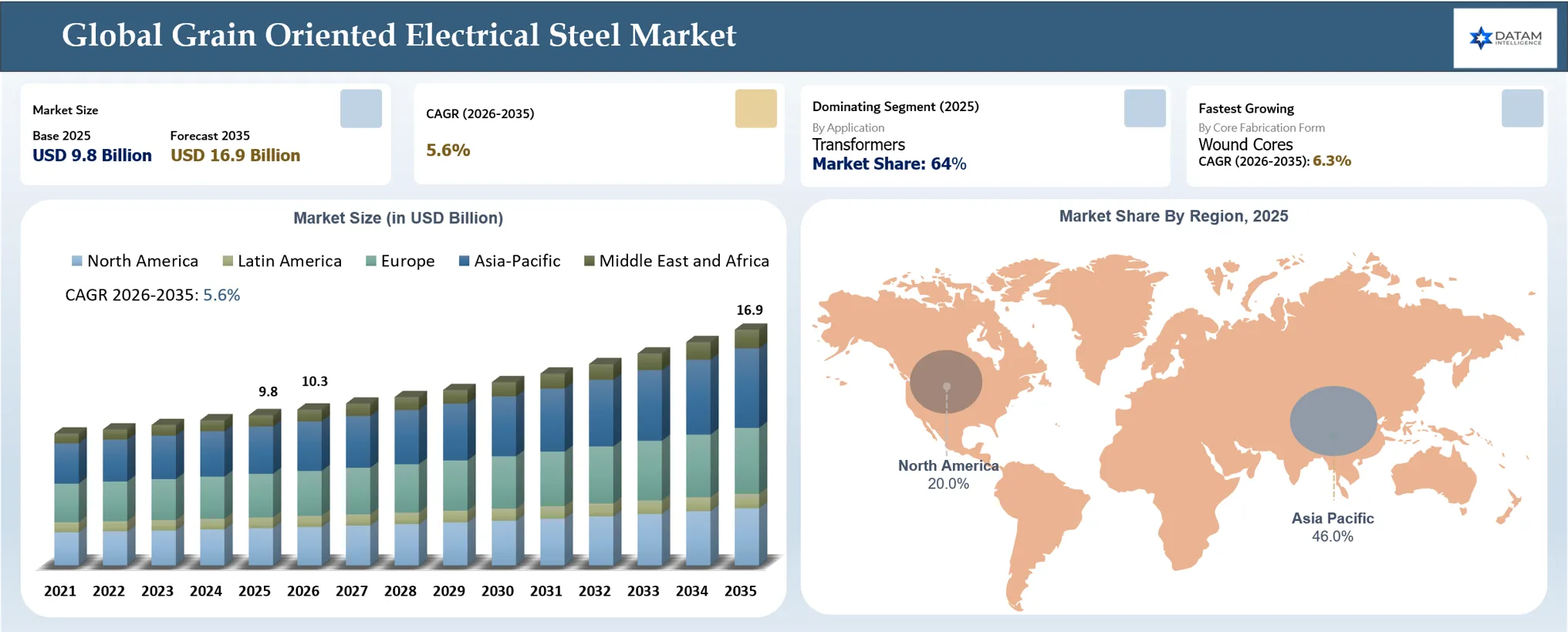
The global grain-oriented electrical steel market was valued at US$9.8 billion in 2025 and is projected to reach US$16.9 billion by 2035, growing at a CAGR of 5.6% during 2026–2035. The global grain-oriented electrical steel market is driven by the expansion of power transmission and distribution infrastructure, growing demand for power and distribution transformers, increasing investment in grid modernization, rising deployment of renewable energy systems, growing electricity demand, and the continuous replacement and upgrading of aging transformer and electrical grid equipment.
Power transmission and distribution infrastructure is supporting demand for Grain-Oriented Electrical Steel (GOES), which is primarily used in transformer cores to improve magnetic efficiency and reduce core losses. Nation such as US, India, China, has been continuously upgrading the distribution infrastructure. According to India’s Ministry of Power, the country added 78,717 MVA of transformation capacity and 11,116 circuit km of transmission lines in 2024. In addition, India plans to develop approximately 1.91 million circuit km of transmission lines and 1,274 GVA of transformation capacity during 2022–23 to 2031–32.
Grain-Oriented Electrical Steel Market Key Takeaways
- Asia Pacific held the largest regional market share, accounting for approximately 46% of the global grain-oriented Electrical Steel market in 2025, supported by expanding transmission and distribution infrastructure, rising transformer manufacturing, increasing electricity demand, renewable-energy integration, and grid modernization. Major electrical-steel and transformer manufacturing bases across the region support substantial consumption of conventional, high-permeability, and domain-refined GOES products.
- Transformers dominated the global grain-oriented electrical steel market in 2025, accounting for approximately 64% of the market, driven by extensive GOES use in power and distribution transformer cores. Rising transformer deployment, replacement of aging grid equipment, expansion of transmission and distribution networks, renewable-energy integration, and increasing requirements for energy-efficient transformers are supporting GOES consumption in transformer applications.
- Wound Cores are expected to be the fastest-growing core fabrication form, with an estimated CAGR of 6.3% during 2026–2035, supported by increasing deployment of distribution transformers, demand for compact and efficient transformer designs, and continued adoption of low-loss GOES in wound-core configurations. Growth in grid expansion and replacement of aging distribution equipment is further supporting demand for wound-core transformer designs.
Grain-Oriented Electrical Steel Market Industry Trends and Strategic Insight
- Adoption of high-permeability and low-loss electrical steel grades is becoming a key area of GOES industry development as transformer manufacturers and power-grid operators increasingly require materials with improved magnetic performance, lower core losses, and greater energy efficiency. GOES manufacturers are expanding high-permeability, domain-refined, and thinner-gauge products to improve transformer efficiency and reduce energy losses across power transmission and distribution applications.
- Development of thinner-gauge and energy-efficient GOES products is increasing as transformer manufacturers focus on reducing no-load losses and improving the efficiency of electrical equipment. Manufacturers are developing thinner electrical steel grades, optimized magnetic properties, and improved surface insulation technologies to reduce core losses while maintaining mechanical and processing performance. These developments are gaining importance as utilities upgrade aging transformer fleets and expand transmission and distribution infrastructure.
- Expansion of GOES production capacity and localized supply chains is increasing as countries strengthen domestic transformer manufacturing and invest in grid modernization. Electrical steel producers are expanding or upgrading manufacturing facilities, while steel and electrical-equipment companies are developing local production capabilities to support growing transformer demand and reduce dependence on imported electrical steel. This trend is particularly relevant in regions investing in transmission networks, renewable-energy integration, and replacement of aging grid infrastructure.
Grain-Oriented Electrical Steel Market Scope
| Metrics | Details | |
| 2025 Market Size | USD 9.8 Billion | |
| 2035 Projected Market Size | USD 16.9 Billion | |
| CAGR (2026-2035) | 5.6% | |
| Largest Market | Asia-Pacific | |
| Fastest Growing Market | Asia-Pacific | |
| By Product Type | High-Permeability Grain-Oriented Electrical Steel, Domain-Refined Grain-Oriented Electrical Steel | |
| By Thickness | ≤0.20 mm, 0.21–0.23 mm, 0.24–0.27 mm, ≥0.28 mm | |
| By Core Fabrication Form | Laminated Cores, Wound Cores, Punched/Core | |
| By Application | Transformers, Reactors, Generators, Inductors, Other Electrical Equipment | |
| By End User | Power Utilities, Industrial & Manufacturing, Commercial & Building Infrastructure, Transportation Infrastructure, Other End Users | |
| By Region | North America | U.S., Canada, Mexico |
| Europe | Germany, United Kingdom, France, Italy, Spain, Netherlands, Switzerland, Sweden, Norway, Denmark, Belgium, Poland, Austria, Ireland, Portugal, Greece, Finland, and Rest of Europe. | |
| Asia-Pacific | China, Japan, India, South Korea, Australia, New Zealand, Singapore, Malaysia, Thailand, Indonesia, Vietnam, Philippines, Taiwan, and Rest of Asia Pacific. | |
| Latin America | Brazil, Argentina, Rest of Latin America | |
| Middle East and Africa | UAE, Saudi Arabia, South Africa, Israel, Türkiye, Rest of Middle East and Africa | |
| Report Insights Covered | Competitive Landscape Analysis, Company Profile Analysis, Market Size, Share, Growth | |
Grain-Oriented Electrical Steel Market Disruption Analysis
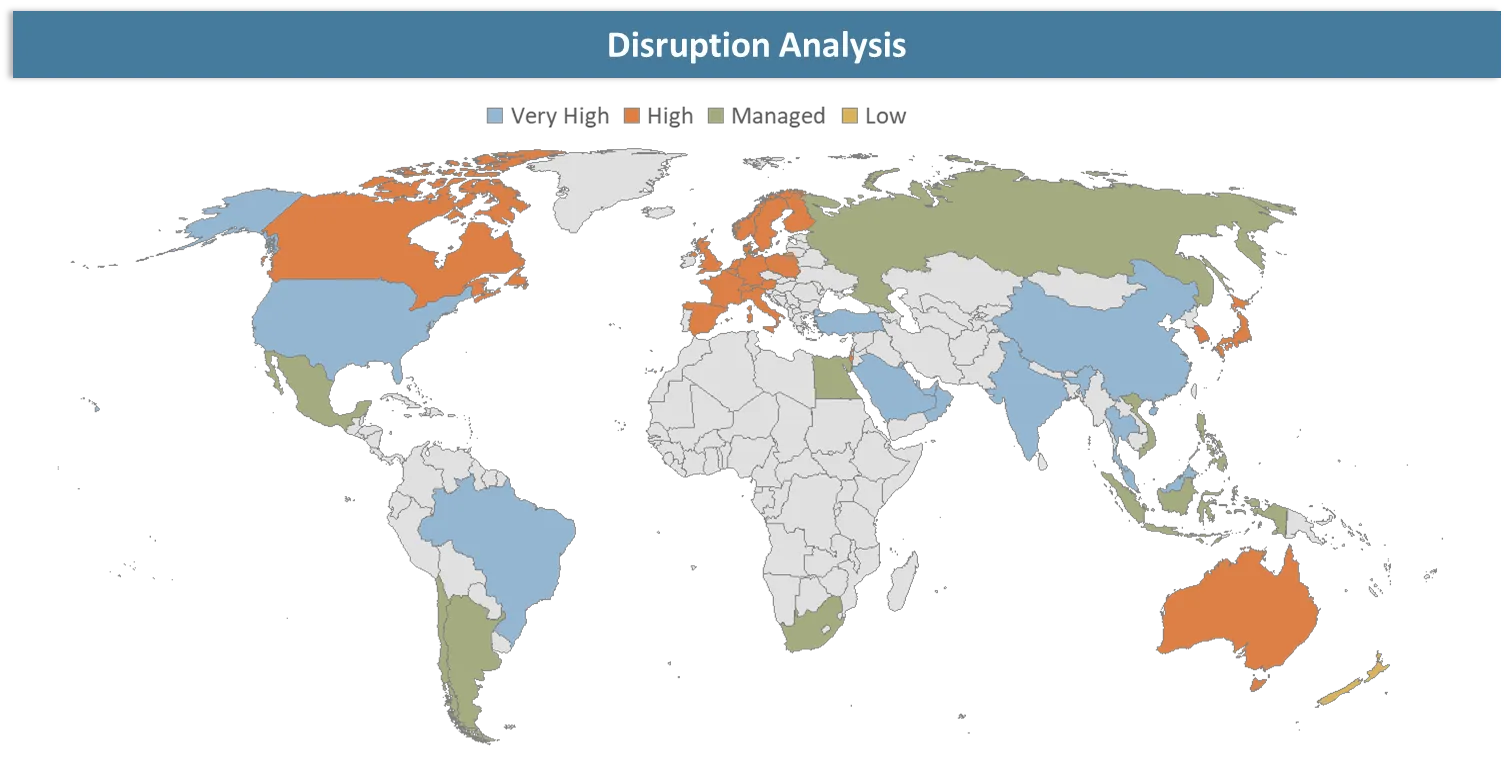
Transformation of Global GOES Supply Chains Through Capacity Expansion and Regional Production
The grain-oriented electrical steel industry is experiencing certain changes with the introduction of ultra-thin, high permeability and refined domains steel that results in lower transformer core losses. manufacturers are focusing on improving grain orientation, magnetic domain refinement, reduction of thicknesses, and improved insulation coatings in order to create a steel product with lower specific core losses. It has started creating a shift in demand from conventional GOES to higher quality grades especially when producing power and distribution transformers with low no-load energy losses.
The market is also currently influenced by changes of supply chains and increase in regional capacities of electrical steels. Growing investments in electricity transmission and distribution systems, renewable energy sources, and transformer manufacturing have been prompting electrical steel manufacturers to set up or to expand their local production of grain-oriented Electrical Steel. However, production is still concentrated within a relatively small number of specialized companies. Thus, capacity addition, technology transfer, trade policies, and availability of raw materials become an important factor in determining the supply.
Grain-Oriented Electrical Steel Market BCG Matrix: Company Evaluation
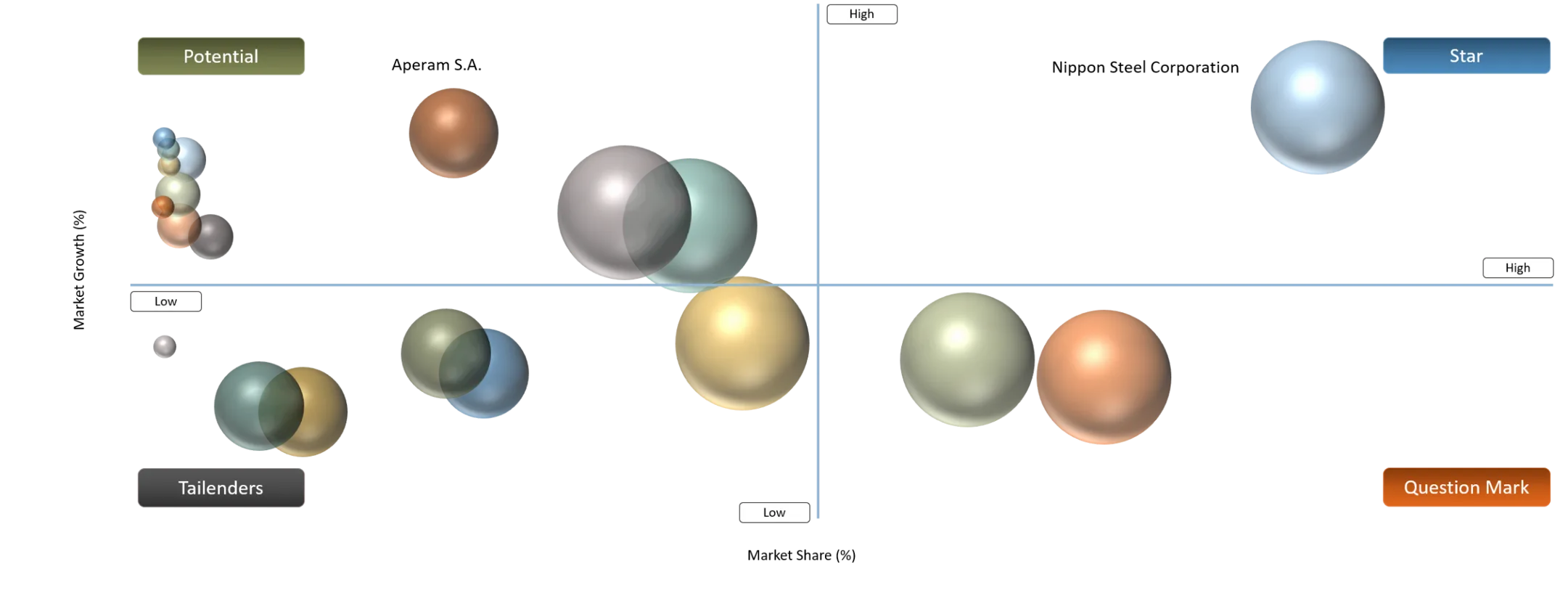
Nippon Steel Corporation, JFE Steel Corporation, POSCO, China Baowu Steel Group, and thyssenkrupp Electrical Steel GmbH can be classified as Star competitors due to their strong positions in the global grain-oriented electrical steel industry, established GOES product portfolios, advanced manufacturing capabilities, and strong relationships with transformer and electrical-equipment manufacturers. Their capabilities across conventional, high-permeability, and advanced low-loss GOES products support their presence in major power transmission and distribution markets.
Cleveland-Cliffs Inc. (AK Steel), Beijing Shougang Co., Ltd., Anshan Iron & Steel Group, and Aperam S.A. can be categorized as Established competitors, supported by established electrical-steel manufacturing capabilities, regional production bases, and existing positions in transformer and electrical-equipment applications. Their competitive presence varies by product grade, production capacity, and geographic market.
Grain-Oriented Electrical Steel Market Dynamics
Driver Impact Analysis
| Driver | Market Growth Impact (%) | Demand Concentration | Impacted Areas | Strategic Impact |
Expansion of Power Transmission and Distribution Infrastructure | 30% | Strong demand across Asia-Pacific, North America, Europe, and the Middle East, particularly in China, India, Japan, South Korea, and the U.S. | Transformer-grade GOES, high-permeability GOES, low-loss grades, thin-gauge GOES | Increases demand for GOES used in power and distribution transformers while supporting adoption of materials with lower core losses and higher magnetic permeability. |
Growing Demand for Power and Distribution Transformers | 25% | Concentrated across Asia-Pacific, North America, and Europe, supported by grid expansion, transformer replacement, and rising electricity demand. | Conventional GOES, high-permeability GOES, domain-refined GOES, transformer core sheets | Expands GOES consumption in transformer manufacturing and increases demand for high-performance grades that improve transformer efficiency and reduce no-load losses. |
Grid Modernization and Replacement of Aging Transformer Infrastructure | 20% | Strong demand in North America and Europe, with increasing requirements across China, Japan, India, and other developed and rapidly electrifying markets. | Low-loss GOES, ultra-thin GOES, domain-refined grades, transformer core materials | Supports recurring demand for electrical steel as utilities replace aging transformers and upgrade grid equipment with more efficient, higher-performance magnetic cores. |
Expansion of Renewable Energy Generation and Grid Integration | 15% | Increasing demand across China, India, the U.S., Europe, and other markets expanding solar, wind, and associated transmission infrastructure. | High-permeability GOES, low-core-loss grades, transformer-grade electrical steel | Increases demand for transformers and grid equipment required to connect renewable generation to transmission and distribution networks, supporting GOES consumption. |
Increasing Focus on Transformer Energy Efficiency and Lower Core Losses | 10% | Broad demand across major transformer-manufacturing markets, particularly Europe, North America, Japan, South Korea, China, and India. | High-permeability GOES, domain-refined GOES, thin-gauge GOES, advanced coated grades | Encourages the shift from conventional grades toward higher-performance GOES with improved magnetic properties, lower core losses, and greater energy efficiency. |
Grid Modernization and Replacement of Aging Transformer Infrastructure
The modernization of electricity grids is increasing demand for new and replacement transformers, which directly supports consumption of Grain-Oriented Electrical Steel (GOES) used in transformer cores. The International Energy Agency (IEA) reported that global investment in electricity grids reached around US$400 billion annually, with electricity-sector investment expected to reach US$1.5 trillion in 2025. The need to upgrade aging grid infrastructure, accommodate increasing electricity demand, and connect new generation capacity is encouraging utilities to replace older transformers with more efficient units, supporting demand for low-loss and high-permeability GOES.
Restraint Impact Analysis
| Restraint | Market Growth Impact (%) | Demand Concentration | Impacted Use Case | Strategic Impact |
High Energy and Production Costs | 30% | Strong impact across Europe, Asia-Pacific, North America, and other regions with energy-intensive steel manufacturing, particularly markets with high industrial electricity costs. | Conventional GOES, high-permeability GOES, domain-refined GOES, thin-gauge GOES | GOES production requires energy-intensive melting, rolling, annealing, heat treatment, and coating processes. Higher electricity and fuel costs increase production expenses and can pressure producer margins, particularly for advanced grades requiring additional processing. |
Volatility in Raw Material Prices and Supply | 25% | Significant impact across Asia-Pacific, Europe, North America, and regions dependent on imported steelmaking and alloying inputs. | Silicon steel, conventional GOES, high-permeability GOES, domain-refined GOES | Fluctuations in iron, silicon, energy, and other production inputs can increase manufacturing costs and complicate procurement planning. Electrical steel is included on the U.S. Department of Energy's critical materials list because of its role in energy technologies and potential supply-chain risks. |
Limited GOES Production Capacity and Long Lead Times | 20% | High impact in North America and Europe and in transformer-manufacturing regions dependent on specialized GOES suppliers. | Transformer cores, power transformers, distribution transformers, reactor cores | GOES production requires specialized metallurgical processing and magnetic-property control, limiting rapid capacity expansion. The IEA reported in February 2025 that procurement times for large power transformers had reached up to four years and that GOES prices had also increased, creating additional supply-chain pressure for transformer projects. |
High Capital and Technical Requirements for Advanced GOES Grades | 15% | Strong impact in emerging manufacturing markets and regions attempting to establish domestic high-performance electrical-steel production. | High-permeability GOES, domain-refined GOES, ultra-thin GOES, low-loss transformer cores | Advanced GOES requires precise grain-orientation control, specialized annealing, domain refinement, surface insulation, and strict magnetic-performance control. High capital requirements and specialized technical capabilities can restrict new entrants and slow capacity development. |
Dependence on Transformer Industry Demand and Project Cyclicality | 10% | Concentrated in major power-grid, utility, transformer-manufacturing, and electrical-equipment markets across Asia-Pacific, North America, and Europe. | Power transformers, distribution transformers, transformer laminations, reactor cores | GOES is predominantly used in transformer cores, making demand closely linked to transformer manufacturing and grid investment. Periods of weaker transformer orders, delayed grid projects, or lower capital expenditure can reduce GOES purchasing requirements. DOE identifies GOES as a key input in large power-transformer supply chains, while its distribution-transformer analysis identifies GOES as a core material. |
Dependence on Imported GOES and Exposure to Raw Material Price Volatility
GOES production depends on steelmaking inputs and specialized processing materials, while transformer manufacturers depend heavily on GOES as a core material. Fluctuations in raw-material availability and prices can therefore pass through the transformer supply chain. The U.S. Department of Energy's 2024 Large Power Transformer Resilience report states that GOES and continuously transposed copper conductor each account for roughly 25% of final large power transformer production costs, based on a U.S. Department of Commerce industry survey. The report also notes that most GOES used in U.S. large power-transformer manufacturing is not produced domestically.
Grain-Oriented Electrical Steel Market Segment Analysis
The global grain-oriented electrical steel market is segmented based on product type, thickness, core fabrication form, application, end user and region.
Rising Global Transformer Demand Driven by Grid Expansion and Electricity Consumption
Transformers represent the dominant application for grain-oriented Electrical Steel (GOES) due to the material's high permeability and low core-loss characteristics, which make it particularly suitable for power and distribution transformer cores. The demand outlook is supported by continued expansion of electricity infrastructure: global electricity demand increased by 4.3% in 2024, while global electricity-sector investment is expected to reach US$1.5 trillion in 2025, with approximately US$400 billion annually invested in electricity grids. In February 2025, IEA reported that procurement lead times for large power transformers had reached up to four years, reflecting strong demand and constrained transformer supply. These trends increase requirements for transformer manufacturing and, consequently, GOES used in transformer cores.
Grain-Oriented Electrical Steel Market Geographical Penetration
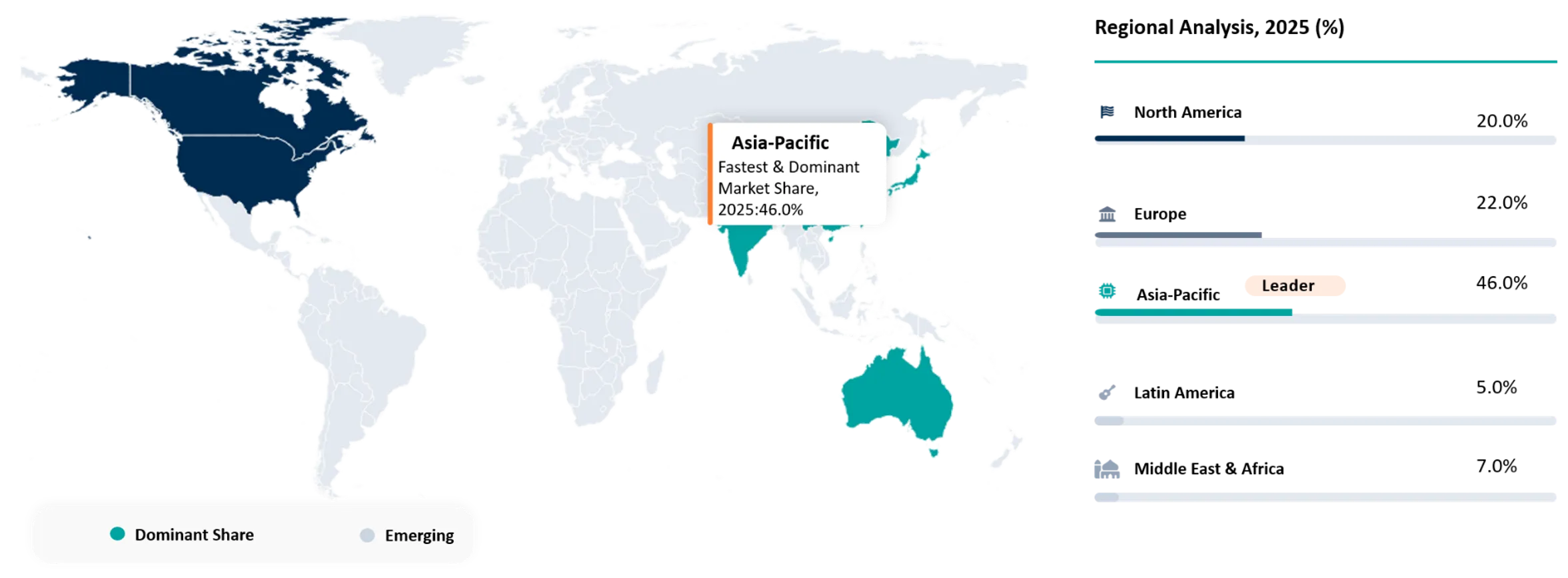
Rising Electricity Infrastructure Investment and Grid Expansion Driving North American GOES Demand
The North American GOES market is supported by grid modernization, replacement of aging electrical equipment, rising electricity demand, and expansion of power-generation and transmission infrastructure. In March 2026 The Canada Energy Regulator (CER) reported that electricity-sector investment requirements could reach US$862 billion cumulatively between 2025 and 2050 under its Higher and Canada Net-zero scenarios.
Expansion of region electricity infrastructure is creating additional requirements for transmission and distribution equipment, including transformers that use GOES cores. For instance, Hydro-Québec's Action Plan 2035 of Canada outlines major investments in new generation and transmission infrastructure to support the province's growing electricity requirements.
Grid Modernization and Energy-Efficiency Standards Driving U.S. GOES Demand
The US grain-oriented electrical steel market is driven primarily by grid modernization, replacement of aging transformers, rising electricity demand, and efforts to strengthen domestic transformer and electrical-steel supply chains. The U.S. Department of Energy reports that more than 60 million distribution transformers are currently installed across the country. In April 2024, DOE finalized distribution-transformer efficiency standards that are expected to increase demand for core materials such as GOES, with approximately 75% of the market able to meet the adopted standards using GOES.
Advancement in low-loss GOES technology is supporting the development of more energy-efficient U.S. distribution transformers. For instance, in August 2025, DOE supported an Oak Ridge National Laboratory project to develop low-loss grain-oriented steel technology for high-efficiency transformers used in electric-grid distribution systems, including alloy development, testing, and prototype-transformer validation.
Rising Power Infrastructure Requirements Strengthening Asia-Pacific GOES Market
Rapidly growing electricity demand, transmission and distribution investments, renewable energy integration, industrial electrification, and production capacity expansion of transformers have been propelling the Asia Pacific grain-oriented electrical steel market. In 2025, electricity demand in China grew to more than 9,500 TWh, posting a YoY growth of 5.1%. Simultaneously, the country's investment in transmission and distribution amounted to nearly US$88 billion in 2025, due to grid strengthening and increasing electricity demand in eastern areas.
Domestic GOES Capacity Expansion Aligned With India's Rising Transformer and Power Infrastructure Requirements
India's accelerating power infrastructure development is creating a favorable demand environment for grain-oriented Electrical Steel (GOES), supported by transmission-grid expansion, increasing transformer capacity, renewable-energy integration, and rising electricity consumption. Expansion of domestic GOES manufacturing capacity is further supporting India's electrical-steel market. For instance, in August 2025, JFE Steel and JSW Steel announced an investment of approximately US$800 million to expand GOES production at their Vijayanagar and Nashik facilities to a combined 350,000 tonnes per year. JFE identified rising power demand, renewable-energy expansion, transformer efficiency improvements, and increasing data-center activity as key factors driving GOES demand in India.
Grid Reinforcement and Transformer Capacity Expansion Driving Japan's GOES Market
The Japan grain-oriented electrical steel market is supported by rising electricity demand, grid modernization, renewable-energy integration, and the upgrading of transmission and distribution infrastructure. Expansion and reinforcement of Japan's electricity network is creating additional demand for transformer-grade GOES. The Organization for Cross-regional Coordination of Transmission Operators reported approximately 159.27 GW of assumed nationwide electricity demand for FY2026 and 188.92 GW of supply capacity, while continuing long-term planning for cross-regional transmission-system development and equipment upgrades.
Expansion of transformer manufacturing capacity in Japan is supporting downstream demand for transformer-grade GOES. For instance, in May 2025, Fuji Electric announced plans to expand transformer production at its Chiba Factory, with transformer and switchgear production capacity targeted to reach 1.5 times the current level by FY2026, the company subsequently confirmed that transformer capacity would increase to 1.5 times the FY2024 level, with production ramp-up planned for Q4 FY2026.
Grain-Oriented Electrical Steel Market Competitive Landscape
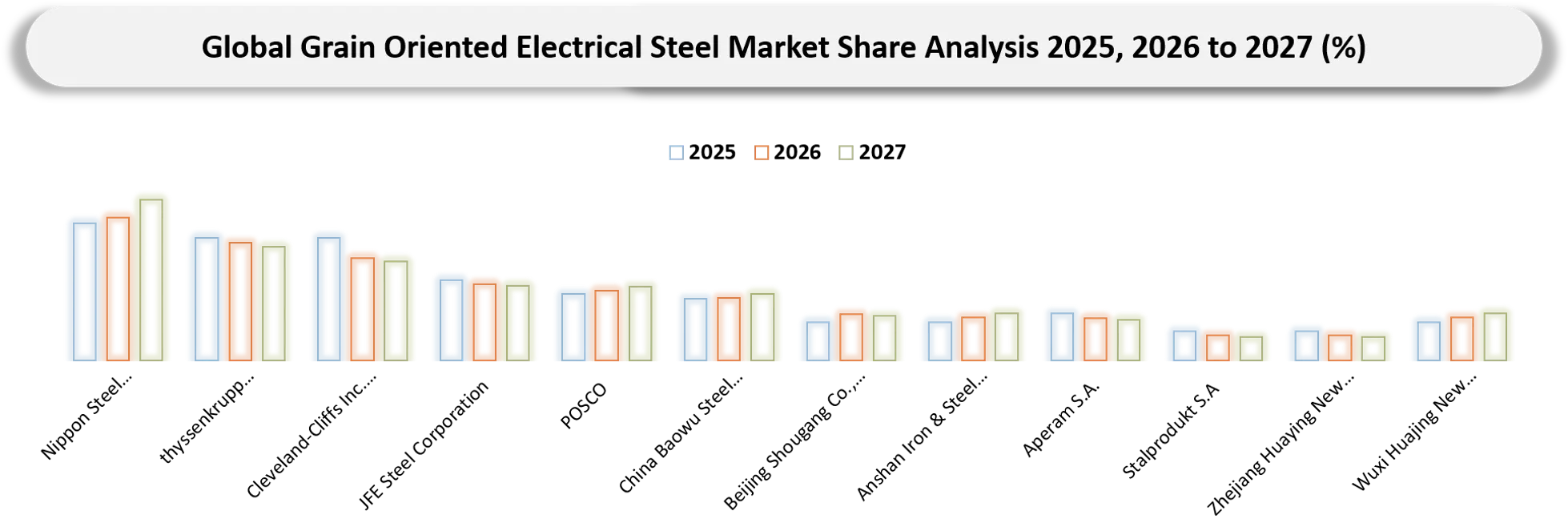
- Nippon Steel Corporation, thyssenkrupp Electrical Steel GmbH, Cleveland-Cliffs Inc. (AK Steel), JFE Steel Corporation, POSCO, China Baowu Steel Group, Beijing Shougang Co., Ltd., Anshan Iron & Steel Group, Aperam S.A., and Stalprodukt S.A. are among the notable players. Competition is primarily focused on magnetic properties, core-loss performance, magnetic permeability, product thickness, grain-orientation control, surface-insulation quality, production capacity, product consistency, and development of advanced low-loss GOES grades.
- Nippon Steel Corporation (Japan), thyssenkrupp Electrical Steel GmbH (Germany), Cleveland-Cliffs Inc. (United States), JFE Steel Corporation (Japan), POSCO (South Korea), China Baowu Steel Group (China), Beijing Shougang Co., Ltd. (China), Anshan Iron & Steel Group (China), Aperam S.A. (Luxembourg), Stalprodukt S.A. (Poland), Zhejiang Huaying New Material Technology Co., Ltd. (China), and Wuxi Huajing New Materials Co., Ltd. (China) are among the key companies operating in the global grain-oriented Electrical Steel market.
Key Developments
- May 2025: Fuji Electric announced plans to expand transformer production at its Chiba Factory, with transformer and switchgear production capacity targeted to reach 1.5 times the current level by FY2026, the company subsequently confirmed that transformer capacity would increase to 1.5 times the FY2024 level, with production ramp-up planned for Q4 FY2026.
- March 2026: thyssenkrupp Electrical Steel announced a complete production shutdown at its Isbergues, France, facility from June to September 2026 in response to rising low-cost GOES imports into Europe. The company reported that imports had tripled since 2022 and increased by 50% in 2025, accounting for more than half of European GOES market volume, putting approximately 1,200 jobs across its Gelsenkirchen, Germany, and Isbergues, France, sites at risk.
- September 2026: ArcelorMittal and China Oriental Group advanced construction of their electrical steel production base in Changzhou, Jiangsu, China, under their joint venture ArcelorMittal Jinxi New Materials. The facility is planned to have 1.8 million tonnes per year of electrical steel capacity, with the first stage targeting 500,000 tonnes per year of high-performance non-grain-oriented electrical steel for new energy vehicles, high-end equipment, and smart home appliances.
- September 2026: Flux Steel Works secured a former ATI specialty steel plant in Louisville, Ohio, to establish a grain-oriented electrical steel (GOES) manufacturing facility. The company plans to renovate and re-equip the 626,000-square-foot plant, which is designed to produce more than 260,000 tons of GOES annually at full production and is expected to create more than 200 manufacturing jobs, with commercial production targeted for 2029.
Key Procurement Priorities and Buyer Evaluation Criteria
- grain-oriented electrical steel buyers prioritize electrical steel products that provide low core losses, high magnetic permeability, stable magnetic performance, and consistent grain orientation to support efficient operation of transformers, reactors, and other electrical equipment.
- Evaluation is based on criteria such as core loss, magnetic permeability, magnetic induction, thickness, grain orientation, surface insulation quality, stacking factor, dimensional tolerance, mechanical properties, lamination performance, and compatibility with specific transformer and reactor core designs.
- Producers consider factors including material cost, energy-efficiency performance, processing and fabrication requirements, yield during core manufacturing, delivery timelines, transportation costs, product availability, expected service performance, and total cost of ownership. Consistent thickness, magnetic properties, surface quality, and supply reliability are also considered when selecting GOES suppliers.
- Preference is given to manufacturers with proven electrical-steel performance, broad GOES grade portfolios, reliable raw-material and production capabilities, advanced grain-orientation technologies, strong quality-control systems, and the ability to supply conventional, high-permeability, domain-refined, and thin-gauge grades for different core designs.
- Transformer manufacturers, electrical-equipment producers, reactor manufacturers, power utilities, grid infrastructure companies, and industrial electrical-equipment users particularly prioritize suppliers that can provide consistent magnetic properties, low-loss grades, reliable supply volumes, technical support for core design and processing, and products that improve transformer efficiency and reduce no-load losses.
Why Choose DataM?
- Technological Innovations: Examines advancements in grain-oriented electrical steel technologies, including high-permeability grades, domain-refined electrical steel, ultra-low-loss grades, thinner-gauge products, improved grain-orientation control, advanced annealing processes, surface-insulation coatings, and magnetic-domain refinement technologies. The analysis evaluates how these developments reduce core losses, improve magnetic permeability, enhance transformer efficiency, and support compact and high-performance electrical equipment.
- Real-World Evidence: Highlights the deployment of grain-oriented electrical steel across power and distribution transformers, reactors, transformer cores, electrical grid equipment, and other applications requiring high magnetic permeability and low core losses, providing evidence of actual product use and material requirements across power-generation, transmission, distribution, industrial, and infrastructure applications.
- Market Updates & Industry Changes: Tracks key developments such as new grain-oriented electrical steel production facilities, manufacturing capacity expansions, electrical-steel plant modernization, new product launches, investments in high-permeability and low-loss grades, technology upgrades, strategic partnerships, acquisitions, and initiatives to strengthen regional GOES supply chains across North America, Europe, Asia Pacific, Latin America, and the Middle East & Africa.
- Competitive Strategies: Analyzes how leading grain-oriented electrical steel manufacturers expand through production capacity additions, geographic expansion, advanced grain-orientation technologies, development of high-permeability and domain-refined grades, strategic partnerships, acquisitions, manufacturing-process improvements, and investments in low-loss and thin-gauge electrical-steel technologies.
- Pricing & Market Access: Explains variations in grain-oriented electrical steel pricing based on grade, thickness, magnetic performance, surface-insulation requirements, manufacturing technology, product specifications, order volume, energy and raw-material costs, transportation expenses, processing requirements, and supply availability. The analysis also evaluates market access through direct sales, authorized distributors, steel-service centers, and long-term supply agreements with transformer manufacturers, electrical-equipment producers, utilities, and other industrial customers.
- Market Entry & Expansion: Identifies growth opportunities driven by transmission and distribution-grid expansion, transformer capacity additions, replacement of aging electrical equipment, renewable-energy integration, rising electricity demand, and increasing requirements for energy-efficient transformers.
Target Audience 2026
- Grain-Oriented Electrical Steel Manufacturers and Electrical-Steel Producers
- Integrated Steel Producers and Specialty Steel Manufacturers
- Transformer Manufacturers and Transformer Core Producers
- Power Transformer and Distribution Transformer Manufacturers
- Reactor and Inductor Manufacturers
- Electrical Equipment and Grid Infrastructure Companies
- Power Generation, Transmission, and Distribution Utilities
- Renewable Energy Companies and Grid-Integration Equipment Providers





























































