


Global Geographic Atrophy Market Size and Overview
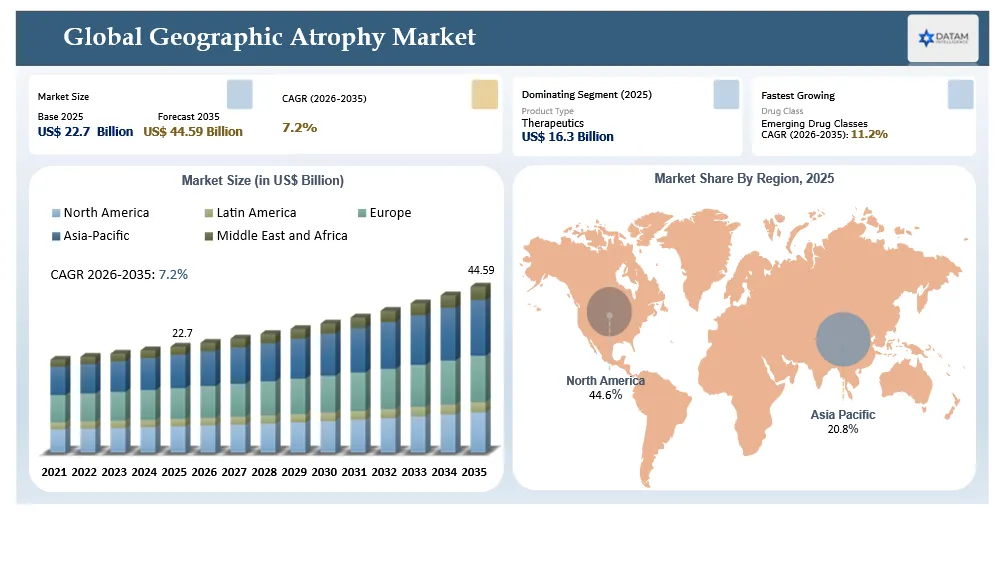
The Global Geographic Atrophy Market stood at US$ 22.7 billion in 2025 and is expected to reach US$ 44.59 billion by 2035, growing with a CAGR of 7.2% during the forecast period 2026-2035.
Global Geographic Atrophy Market is defined as the market of all therapeutic and diagnostic tools including retinal imaging systems and solutions that are involved in the treatment and diagnosis of the condition called geographic atrophy which is advanced dry age-related macular degeneration. It includes complement inhibitors, novel class of drugs, intravitreal therapy, oral pipeline agents, gene therapy and cell therapy.
Biogen’s approximately US$ 5.6 billion acquisition of Apellis, completed on May 14, 2026, represents a strategic inflection point for the geographic atrophy market, moving the category from early commercial formation toward scale-driven competitive execution. By bringing Syfovre into its portfolio, Biogen strengthens its position in complement-mediated retinal disease and gains greater leverage across physician engagement, payer negotiation, market access and global launch execution. The deal raises the competitive benchmark for emerging GA assets, as future market leadership will require more than lesion-growth reduction. Differentiation will increasingly depend on functional vision preservation, durable efficacy, safety confidence, lower treatment burden and strong real-world value evidence.
Global Geographic Atrophy Market Key Takeaways
- The Global Geographic Atrophy Market was valued at US$ 22.7 billion in 2025 and is projected to reach US$ 44.59 billion by 2035.
- The market is expected to grow at a CAGR of 7.2% during 2026-2035, supported by rising GA diagnosis, aging demographics, retinal imaging adoption and expanding treatment access.
- North America held the highest market share at 44.6% in 2025, driven by advanced retina-care infrastructure, strong reimbursement pathways, specialty pharmacy access and early adoption of approved GA therapies.
- Asia-Pacific is expected to be the fastest-growing region, supported by aging populations, improving retinal imaging access, rising AMD diagnosis and future therapy launches across Japan, China, Australia and other high-potential markets.
- The therapeutics segment dominated the product type category in 2025, valued at approximately US$ 16.3 billion, supported by approved complement inhibitors, specialist prescribing and growing treatment adoption.
- Emerging drug classes are projected to be the fastest-growing segment, expanding at an estimated 11.2% CAGR during 2026-2035, driven by C1q inhibitors, RBP4 modulators, complement factor inhibitors, gene therapies and cell therapies.
- Biogen’s approximately US$ 5.6 billion acquisition of Apellis, completed on May 14, 2026, strengthened the commercial position of Syfovre and increased competitive intensity in complement-based retinal disease treatment.
- Treatment adoption decisions are increasingly shaped by lesion-growth reduction, functional vision preservation, safety confidence, wet AMD conversion risk, injection burden, payer coverage, retina-clinic workflow fit and real-world evidence.
- The market has strong competitive intensity, with top players including Biogen Inc., Astellas Pharma Inc., Regeneron Pharmaceuticals, Inc., Annexon, Inc. and Belite Bio, Inc.
Global Geographic Atrophy Market Scope
| Metrics | Details | |
| 2025 Market Size | US$ 22.7 Billion | |
| 2035 Projected Market Size | US$ 44.59 Billion | |
| CAGR (2026-2035) | 7.2% | |
| Largest Market | North America | |
| Fastest Growing Market | Asia-Pacific | |
| By Product Type | Therapeutics, Diagnostic and Monitoring Devices, Low Vision and Supportive Care Products | |
| By Drug Class | Complement C3 Inhibitors, Complement C5 Inhibitors, Emerging Drug Classes | |
| By Route of Administration | Intravitreal, Oral, Subcutaneous, Subretinal, Suprachoroidal, Topical | |
| By Laterality | Unilateral, Bilateral | |
| By Age Group | 50-64 Years, 65-74 Years, 75-84 Years, 85 Years and Above | |
| By End User | Hospitals, Ophthalmology Clinics, Retina Specialty Centers, Ambulatory Surgical Centers, Diagnostic Imaging Centers, Others | |
| By Distribution Channel | Hospital Pharmacies, Specialty Pharmacies, Retail Pharmacies, Online Pharmacies, Others | |
| By Region | North America | U.S., Canada, Mexico |
| Europe | Germany, France, UK, Italy, Spain, Netherlands, Russia, Poland, Switzerland, Rest of Europe | |
| Asia-Pacific | China, Japan, South Korea, India, Australia, Indonesia, Malaysia, Rest of Asia-Pacific | |
| Latin America | Brazil, Argentina, Rest of Latin America | |
| Middle East and Africa | Saudi Arabia, UAE, Türkiye, South Africa, Israel, Rest of Middle East and Africa | |
| Report Insights Covered | Competitive Landscape Analysis, Company Profile Analysis, Market Size, Share, Growth | |
Global Geographic Atrophy Market Disruption Analysis
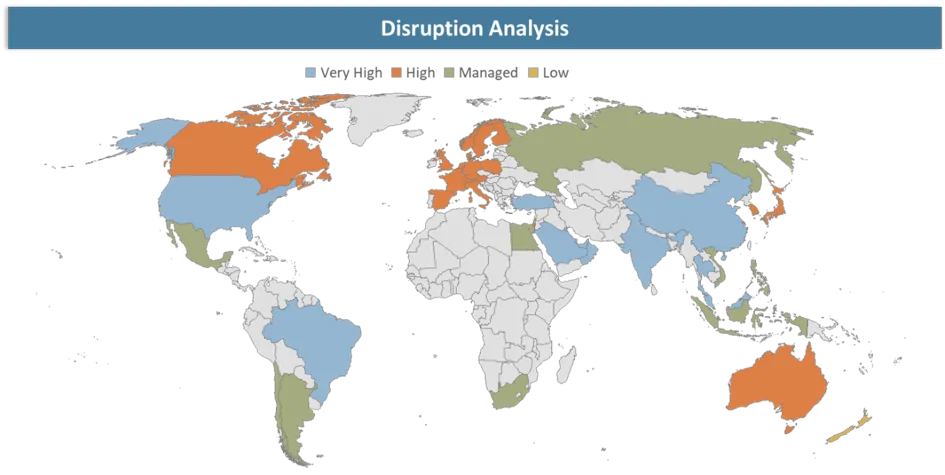
Redefining Geographic Atrophy Care Through Functional Vision Outcomes, Durable Therapies and AI-Enabled Monitoring
The global geographic atrophy market is being disrupted by the shift from lesion-growth slowing toward broader vision-preservation outcomes. Approved complement inhibitors have validated the commercial opportunity, but their reliance on repeated intravitreal injections, safety monitoring and limited functional vision evidence leaves room for differentiated therapies. Emerging oral drugs, subcutaneous approaches, long-acting injectables, gene therapies and cell therapies could reshape treatment algorithms by reducing clinic burden and improving patient persistence.
Disruption is also emerging from AI-enabled retinal imaging, real-world evidence platforms and precision patient selection. These tools can improve early diagnosis, identify treatment-eligible patients and generate payer-relevant outcome data beyond anatomical endpoints. Competitive advantage will increasingly depend on combining clinical efficacy, safety confidence, functional vision benefit, durability and market access strength. Companies that integrate therapy innovation with digital monitoring, specialty pharmacy execution and global reimbursement strategies are likely to capture the next wave of GA market value.
Global Geographic Atrophy Market BCG Matrix: Company Evaluation
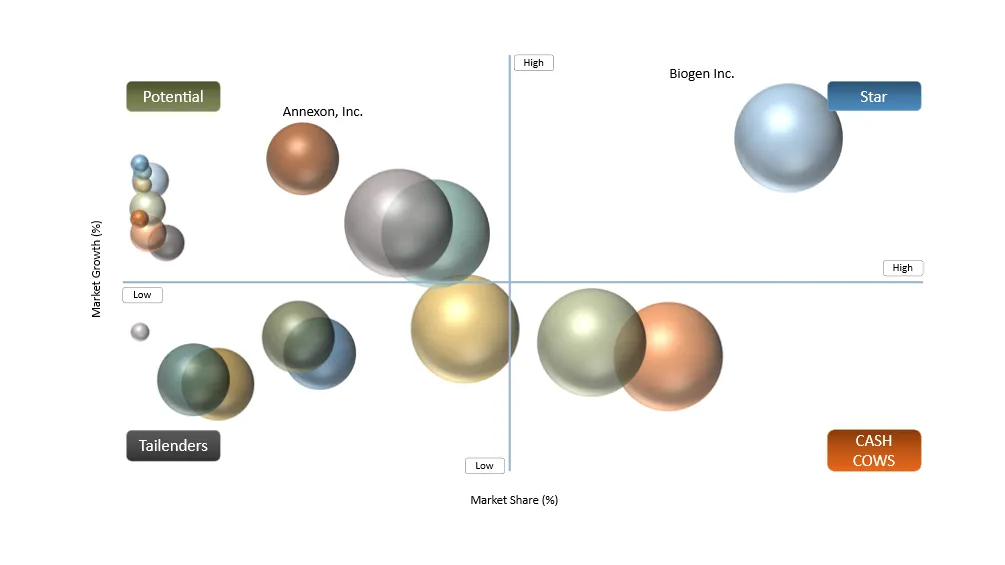
As for the BCG matrix, In the global geographic atrophy market, the Stars are firms that have approved treatments, a high commercial profile, scalability, and impact on the adoption of ophthalmology treatment. Biogen Inc. and Astellas Pharma Inc. are categorized as Stars because of the availability of Syfovre and Izervay, which are the two drugs representing the current approved treatments for GA. The position of Biogen is further strengthened by the acquisition of Apellis, which is a leader in the development of complement C3 inhibitors. Regeneron Pharmaceuticals, Inc. and Annexon, Inc. can be considered as potential Stars based on their GA pipeline.
Cash Cows are those organizations that have a good financial capability, a mature specialty medicines portfolio, regulatory experience and commercial setup, regardless of the fact that the portfolio of GA products is still evolving. Johnson & Johnson, F. Hoffmann-La Roche Ltd, Boehringer Ingelheim International GmbH and Alexion Pharmaceuticals, Inc. belong to the group because of their big R&D setup, ophthalmology or complement biology knowledge, global reach and capability for supporting retinal diseases programs. Even if these organizations do not dominate the GA therapies sales, they have a significant strategic worth.
Question Mark organizations are those that have good GA technologies, but high risk concerning clinical validation, regulatory approval, commercialization, and payers' uptake. Some of the organizations that can be classified under Question Mark organizations include Belite Bio, Inc., Stealth BioTherapeutics Inc., Aviceda Therapeutics, Inc., ADARx Pharmaceuticals, Inc., ONL Therapeutics, Inc., Kriya Therapeutics, Inc., and Ocugen, Inc. These organizations are developing unique approaches to GA treatments, including oral delivery, mitochondria protection, immune modulation, gene therapy, and complement silencing. They need to transition into the Star category through the success of their clinical readouts and the benefits of their treatment.
Global Geographic Atrophy Market Dynamics
Expanding Treated Patient Pool Due to Rising Geographic Atrophy Diagnosis, Aging Population and Improved Retinal Imaging Adoption
The treated geographic atrophy patient pool is expanding as GA represents a sizeable and increasingly visible late-stage dry AMD population, affecting more than 5 million people globally and approximately 1 million people in the United States. The disease burden is strongly age-linked, with prevalence rising sharply after 50 years and approximately quadrupling every decade, increasing from around 0.16% at age 60 to 2.91% at age 80. As aging populations expand across North America, Europe and Asia-Pacific, the number of diagnosed and treatment-eligible GA patients is expected to rise steadily.
Improved retinal imaging adoption is also converting a historically underdiagnosed patient base into a more measurable commercial opportunity. Optical coherence tomography, fundus autofluorescence and AI-supported lesion assessment enable retina specialists to detect GA earlier, measure lesion expansion and assess foveal involvement more consistently. With approved therapies now available, stronger diagnosis-to-treatment conversion is expected, supporting demand for GA drugs, monitoring platforms and retina-specialist care.
Safety Concerns Around Inflammation, Wet AMD Conversion and Long-Term Ocular Monitoring Are Slowing Broader Physician and Patient Adoption
Safety remains a key restraint in the global geographic atrophy market, particularly as approved therapies require repeated intravitreal administration in elderly patients with chronic retinal disease. Physicians remain cautious due to risks associated with intraocular inflammation, increased intraocular pressure, retinal vascular events, endophthalmitis and conversion to wet AMD. Since GA treatment is intended for long-term disease control rather than vision restoration, the perceived risk-benefit balance is closely scrutinized before therapy initiation.
These safety considerations directly influence physician confidence, patient willingness and payer evaluation. Retina specialists must monitor patients regularly for inflammatory events, neovascular conversion and treatment-related complications, which increases clinical workload and follow-up intensity. Patients may also hesitate to continue therapy if frequent injections create discomfort, anxiety or perceived vision-risk concerns. As a result, broader adoption will depend on stronger long-term safety data, clear patient selection, improved monitoring protocols and next-generation therapies that reduce injection burden while maintaining clinical benefit.
Global Geographic Atrophy Market: Segment Analysis
The global geographic atrophy market is segmented based on the product type, drug class, route of administration, laterality, age group, end-user, distribution channel, and region.
Therapeutics Lead the Market While Emerging Drug Classes Drive Future Growth
The global geographic atrophy market is led by the therapeutics segment, which accounted for the largest share in 2025 with an estimated market size of US$ 16.3 billion. This dominance is supported by the commercial uptake of approved complement inhibitors, rising retina-specialist prescribing and expanding access through specialty pharmacy and buy-and-bill pathways. Complement C3 and C5 inhibitors currently form the core revenue base, supported by Syfovre and Izervay adoption, while intravitreal administration remains the leading route due to the current approved treatment landscape.
The emerging drug classes segment is expected to be the fastest-growing segment during 2026-2035, expanding at an estimated CAGR of 11.2%. Growth is driven by pipeline innovation across C1q inhibitors, RBP4 modulators, complement factor inhibitors, visual cycle modulators, gene therapies and cell therapies. Oral and durable delivery approaches are gaining strategic relevance as the market shifts toward lower treatment burden, functional vision preservation, improved adherence and stronger long-term differentiation.
Global Geographic Atrophy Market Geographical Penetration
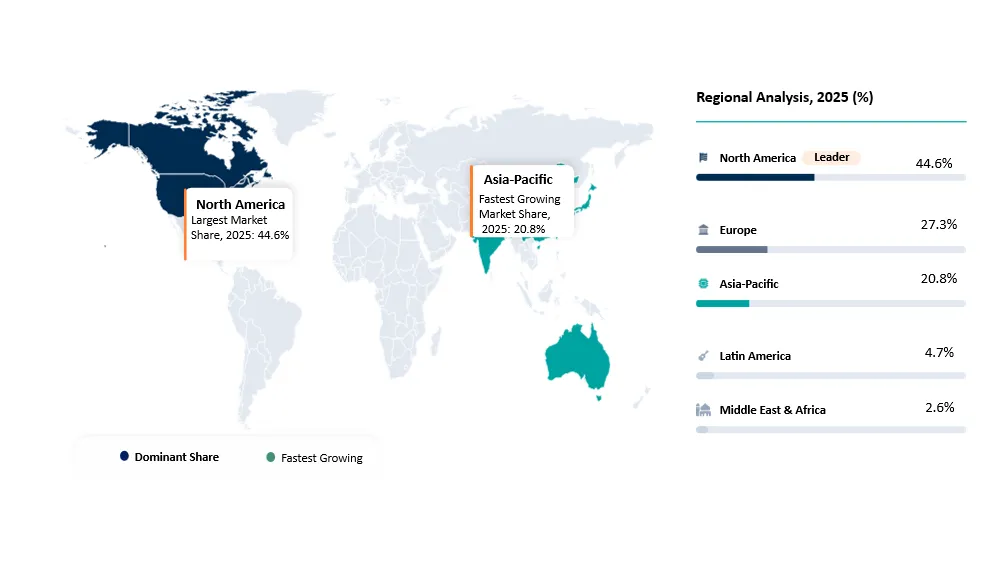
North America Geographic Atrophy Market Leadership Driven by Retina-Care Infrastructure, Commercial Adoption and Strategic Portfolio Expansion
North America currently leads the global geographic atrophy market with a share of 44.6% in 2025 on account of the strong specialist retina infrastructure, the availability of retinal imaging, specialty pharmacy networks, and early commercialization of GA drugs. The presence of wide-scale adoption of optical coherence tomography, fundus autofluorescence, and AMD tracking in the region increases patient identification and treatment suitability evaluation. Increased awareness about irreversible visual impairment and specialist care pathways helps increase the conversion rate from diagnosis to treatment in the region.
The momentum gained in terms of commercial activity is fueled by competitive dynamics between the approved complement inhibitors, along with increased pipeline activity in the late stages of development. On May 14, 2026, Biogen acquired Apellis Pharmaceuticals and added Syfovre to its portfolio, thus boosting strategic intensity in the GA market of the region. Astellas is still promoting Izervay by extending its label and physician outreach efforts. In the future, the growth of the market will be dependent upon safety confidence, payer access, treatment adherence, functional vision data and low-injection burden treatment options.
U.S Geographic Atrophy Market Trends
The U.S. geographic atrophy market continues to transition from initial treatment availability to widespread commercial adoption driven by the extensive infrastructure of retina specialists, advanced retinal imaging technologies and awareness of FDA-approved complement inhibitors among physicians. It has one of the highest diagnosed GA populations, about 1 million, thus offering a significant market opportunity. Market growth is driven by improvements in the patient identification process, use of OCT and fundus autofluorescence, specialty pharmacy distribution channels and increasing disease monitoring to identify GA progression and evaluate patients for treatment options.
The market trends in terms of commercial strategy shift from lesion growth reduction into differentiation. In 2025, the sales of Syfovre reached approximately USD 587 million showing the revenue opportunities of approved GA treatments in the U.S. dominant launch setting. At the same time, adoption is influenced by the high frequency of injections, safety monitoring, concerns about transition to wet AMD, payer controls and functional vision data needs. Biogen’s acquisition of Apellis in 2026 is expected to intensify competition by adding stronger commercial scale behind Syfovre, while Izervay, oral therapies, gene therapies and other pipeline assets increase pressure for better durability, safety and patient-relevant outcomes.
Japan Geographic Atrophy Market Outlook
Japan is considered as a high-potential geographic atrophy market in the Asia Pacific region due to its aging population, developed ophthalmology network, and focus on treating retinal diseases. By 2024, persons aged 65 years and older have represented 29.3% of the total population in Japan, providing a significant risk group of age-related macular degeneration and GA patients. The potential of the market has become evident following Izervay’s conditional approval in Japan in September 2025, when the drug became the first approved medication for inhibiting GA growth.
Commercial success of approved treatments in Japan is supposed to increase gradually along with the incorporation of GA treatment into AMD management programs by retina specialists. According to Astellas, 100,000 individuals in Japan suffer from GA, thus representing a considerable target patient population for approved drugs, retinal imaging, monitoring, and emerging pipeline products. Market success will be associated with proper reimbursement, confidence among physicians, patient selection, safety monitoring, and functional vision preservation. Japan is supposed to become an important launch and evidence generation market for next-generation GA treatments in Asia.
Global Geographic Atrophy Market: Competitive Landscape
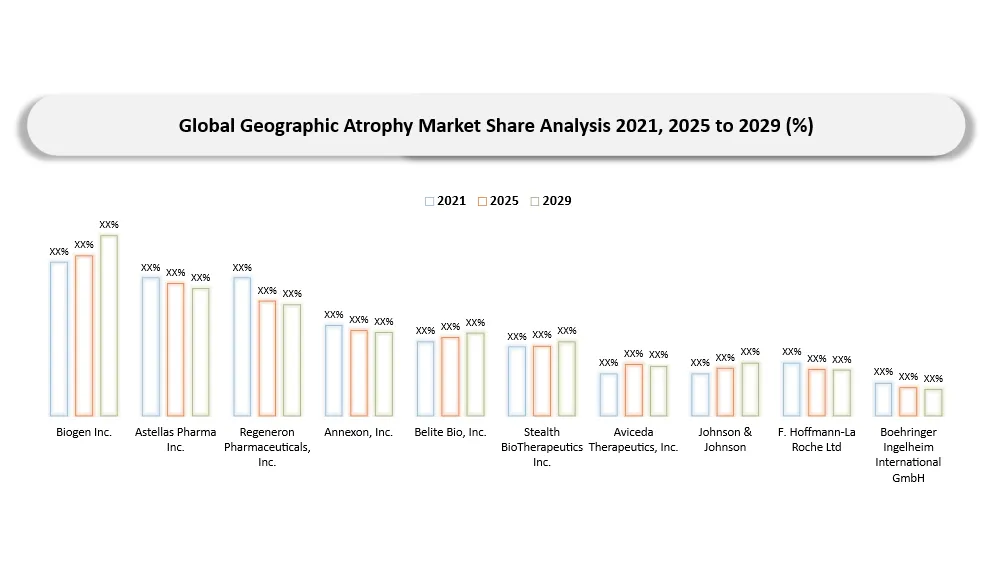
The Global Geographic Atrophy Market is becoming increasingly competitive as approved complement inhibitors establish the first commercial treatment base and late-stage pipeline assets target stronger differentiation. Biogen Inc. and Astellas Pharma Inc. currently hold leading positions through approved GA therapies, supported by commercial scale, physician engagement and payer access execution. Regeneron Pharmaceuticals, Inc., Annexon, Inc. and Belite Bio, Inc. are emerging as important challengers with differentiated mechanisms aimed at improving efficacy, convenience and functional vision outcomes.
Competition is expanding beyond C3 and C5 inhibition toward oral therapies, complement silencing, mitochondrial protection, immune modulation, gene therapy and cell therapy. Companies such as Stealth BioTherapeutics Inc., Aviceda Therapeutics, Johnson & Johnson, F. Hoffmann-La Roche Ltd, Boehringer Ingelheim International GmbH, Alexion Pharmaceuticals, ADARx Pharmaceuticals, ONL Therapeutics, Kriya Therapeutics and Ocugen are strengthening pipeline diversity. Future leadership will depend on clinical differentiation, safety confidence, dosing durability, functional vision evidence, regulatory execution and global market access capability.
Global Geographic Atrophy Market: Recent Developments
- May 2026: Biogen Inc. completed the acquisition of Apellis Pharmaceuticals, bringing Syfovre into its portfolio and strengthening its strategic position in the commercial geographic atrophy treatment landscape.
- May 2026: Astellas Pharma secured China NMPA acceptance and Priority Review for Izervay, supporting broader market expansion in a high-unmet-need aging population.
- March 2026: Ocugen reported positive 12-month Phase 2 ArMaDa data for OCU410, reinforcing the potential of gene therapy to deliver durable disease-modifying benefit in GA.
- March 2026: ONL Therapeutics randomized the first European patient in its global Phase 2 GALAXY trial of xelafaslatide, expanding the clinical footprint of neuroprotective GA treatment approaches.
- July 2025: Annexon completed enrollment in the pivotal Phase 3 ARCHER II trial of vonaprument, positioning C1q inhibition as a potential next-generation mechanism focused on vision preservation.
- July 2025: Belite Bio completed enrollment in the global Phase 3 PHOENIX trial of oral tinlarebant, highlighting increasing investment in non-intravitreal GA treatment models.
- May 2025: Boehringer Ingelheim initiated the JADE Phase II study of BI 1584862, underscoring large-pharma interest in oral therapeutic approaches for geographic atrophy.
- May 2025: Kriya Therapeutics presented preclinical data for KRIYA-825, advancing interest in one-time suprachoroidal gene therapy designed to inhibit complement activity in GA.
- January 2025: Apellis received Australian approval for Syfovre, supporting international expansion of approved GA therapy beyond the U.S. market.
Global Geographic Atrophy Market: AI Impact Analysis
AI has become a crucial facilitator in the global geographic atrophy market through its role in early detection, lesion quantification and disease progression tracking. With AI-driven retinal imaging platforms, the work of ophthalmologists in GA lesion identification, lesion size measurement and foveal involvement monitoring can be improved. It is significant since GA develops slowly, and treatment depends on proper imaging diagnosis. The combination of AI with optical coherence tomography, fundus autofluorescence and color fundus imaging may assist in lowering diagnostic variability and improving patient stratification and early referral to retinal specialists.
In terms of the market, AI can contribute to therapy adoption through proper patient identification, response monitoring and real-world evidence generation for approved or emerging therapies. Pharmaceutical companies will be able to use datasets driven by AI in order to analyze GA progression patterns, recruit patients to clinical trials and measure functional vision outcomes. Yet, its adoption is going to rely on validation, reimbursement, workflow integration and clinicians' trust. AI is expected to strengthen diagnostic efficiency, improve treatment monitoring and create differentiation for imaging, drug-development and precision ophthalmology platforms.
Global Geographic Atrophy Market: White Space & Investment Opportunities
- AI-enabled GA screening and lesion-progression analytics remain underpenetrated, as retina clinics require scalable tools to identify treatment-eligible patients earlier and monitor disease progression more consistently.
- Lower-burden treatment platforms, including oral therapies, subcutaneous approaches, long-acting injectables and gene therapies, represent attractive investment areas as intravitreal injection fatigue limits broader adoption.
- Expansion of GA treatment access in Europe, Japan, China and other aging markets can create strong growth opportunities as regulatory pathways, reimbursement models and specialist capacity improve.
- Real-world evidence platforms focused on functional vision outcomes may gain strategic value, as payers and physicians increasingly require proof beyond lesion-growth slowing, including reading ability, low-light vision and central vision preservation.
Global Geographic Atrophy Market: Why This Report Matters in 2026?
The geographic atrophy market is entering a pivotal phase in 2026, as the first approved therapies move from early launch adoption toward broader commercial scaling. Biogen completed its acquisition of Apellis Pharmaceuticals on May 14, 2026, bringing Syfovre under Biogen’s portfolio and strengthening commercial execution in one of the leading approved GA therapies. This transaction raises the competitive intensity of the market and increases the need to track brand positioning, payer access, physician adoption and pipeline response.
This report helps pharma, biotech, investors and strategy teams understand where value is shifting across the GA landscape. It supports decisions on market entry, asset differentiation, launch planning, reimbursement strategy, competitive response and partnership prioritization as the market moves beyond lesion-growth slowing toward functional vision preservation, safety, durability and lower treatment burden.
Global Geographic Atrophy Market: Future Market Transformation
By 2035, the global geographic atrophy market will transition from a market focused on access to treatments to a vision-preservation ecosystem defined by treatments with sustained lesion management, functional vision preservation, reduced treatment burden, solid safety profile and value for payers. AI-retinal imaging, RWE platforms and precision patient selection will be key components of diagnosis, monitoring and optimal treatments.
Commercial strategies will trend towards integrated retina care pathways, specialty pharmacy collaboration, evidence-based reimbursement, patient follow-up and strategic global launches. The most successful companies will possess differentiated assets, commercial scalability, regulatory excellence, market access strength and imaging and diagnostic collaboration with advanced retinal therapies.
Global Geographic Atrophy Market: Buyer Decision-Making Criteria
- Clinical differentiation is the core adoption filter, with stakeholders evaluating whether therapies move beyond lesion-growth reduction to demonstrate meaningful preservation of reading ability, low-light vision and central visual function.
- Safety, durability and treatment burden shape prescribing confidence, as retina specialists weigh injection frequency, inflammation risk, wet AMD conversion, monitoring intensity and long-term patient adherence.
- Retina-clinic workflow fit is a key commercial driver, with preference for therapies that align with existing imaging, injection, follow-up and patient-management pathways without adding operational complexity.
- Reimbursement strength and value evidence determine market access, as payers prioritize clearly defined eligible populations, durable outcomes, real-world effectiveness and evidence of reduced vision-loss burden.
Global Geographic Atrophy Market: Economic & Investment Analysis
Macroeconomic factors affecting the global geographic atrophy market include aging population trends, increasing spending on ophthalmology, specialty drug pricing, reimbursement pressure, shortage of retina clinic capacity and investment in innovation for treating retinal diseases. Adoption will be driven by payers' coverage policy, prior authorization process, buy and bill economics, drug affordability by patients, and the efficacy of approved drugs in demonstrating their clinical benefit. High cost of treatments could slow down adoption rates, but better diagnostics, longer treatment period and greater knowledge among specialists can drive further market growth.
Investments will be made in low-burden therapies such as oral drugs, subcutaneous therapy, extended-release injections, gene and cell therapy, and an AI-based imaging platform for the retina. Biogen's takeover of Apellis has heightened commercial focus on Syfovre and shows greater strategy interest in the GA treatment area. While reimbursement issues and safety monitoring present certain challenges to the market, its attractiveness lies in large unmet need, lack of approved treatments, diversified pipeline, and the ability to create value through functional vision preservation and global market access expansion.
Global Geographic Atrophy Market: Investment Trends in the Market
Investment in the global geographic atrophy market is shifting from first-generation lesion-growth slowing therapies toward differentiated platforms that improve functional vision outcomes, reduce treatment burden and strengthen long-term patient management.
- Lower-burden treatment platforms, including oral therapies, subcutaneous drugs, long-acting injectables and durable delivery approaches.
- Advanced retinal therapies, including gene therapies, cell therapies and regenerative platforms targeting broader disease modification.
- AI-enabled retinal imaging and monitoring, supporting earlier diagnosis, lesion tracking, patient stratification and real-world evidence generation.
- Functional vision outcome platforms, focused on reading ability, low-light vision, central vision preservation and payer-relevant value demonstration.
Global Geographic Atrophy Market: Analyst Insights
DataM Intelligence views the global geographic atrophy market as a high-value retinal disease opportunity, driven by the shift from supportive vision care toward disease-modifying intervention. The market is gaining strategic relevance as approved complement inhibitors validate commercial demand, while next-generation assets target functional vision preservation, lower treatment burden and broader patient eligibility. North America currently leads due to mature retina-specialist infrastructure, reimbursement access and early therapy adoption, while Asia-Pacific is expected to deliver stronger growth momentum through aging demographics, improved retinal imaging access and expanding regulatory activity across Japan, China and Australia.
By 2035, competitive advantage will be defined by therapies that combine durable lesion control, safety confidence, patient-relevant vision outcomes and efficient integration into retina-clinic workflows. Biogen’s approximately US$ 5.6 billion acquisition of Apellis, completed in May 2026, signals rising strategic interest in GA and strengthens the commercial scale behind Syfovre. As the market expands from US$ 22.70 billion in 2025 to US$ 44.59 billion by 2035, companies with differentiated clinical evidence, payer-ready value data, AI-enabled monitoring capabilities and global launch execution will be best positioned to capture long-term value.
Why Choose DataM?
- Value Chain Analysis for Geographic Atrophy: Detailed analysis of the GA value chain that includes the whole GA disease pathway, from diagnosis to imaging, patient identification, referrals, therapy development, approved therapies, intravitreal administration, specialty pharmacy, retina centers, payer and reimbursement process, and access for patients.
- Product and Technology Assessment: Evaluation of key developments related to GA treatment technologies, such as complement C3 inhibitors, complement C5 inhibitors, C1q inhibitors, RBP4 inhibitors, oral medicines, subcutaneous medicines, extended duration injections, gene therapy, cell therapy, OCT imaging, fundus autofluorescence and AI-based retinal screening systems.
- Application/Use Case and Patient Population Assessment: Analysis of GA management in terms of diagnosed patients, eligible for treatment patients, unilateral and bilateral GA, foveal and non-foveal lesion patterns, elderly patients, retina specialist setting, monitoring and preserving vision functions.
- Regulatory, Safety and Compliance Assessment: Evaluation of FDA approvals, label expansion, endpoints used in clinical trials, inflammation risks, risk of wet AMD conversion, post marketing safety, real world evidence, reimbursement considerations and regional regulatory decisions.
- Competitive Strategy Benchmarking: Tracks top firms such as Biogen / Apellis, Astellas Pharma, Regeneron, Belite Bio, Annexon, Johnson & Johnson, Roche / Genentech, Lineage Cell Therapeutics, Boehringer Ingelheim and Ocugen in terms of clinical differentiator, pipeline, mode of action, dosing, safety, launch readiness, geography and partnering strategy.
- Geographic Atrophy Pricing, Reimbursement & Access: Evaluates therapy pricing, payer coverage, specialty pharmacy access, buy and bill considerations, prior authorization needs, retina clinic uptake, drug affordability, reimbursement hurdles and therapy adherence in important markets.
- Market Growth & Innovation: Explores possibilities for market development within functional visual preservation, earlier detection of GA, non-invasive treatment, sustainable treatment options, AI-supported lesion monitoring, real world outcomes data, APAC region and Europe access and next generation retinal treatments.



























































