


Gas Chromatography Mass Spectrometry Market Definition and Overview
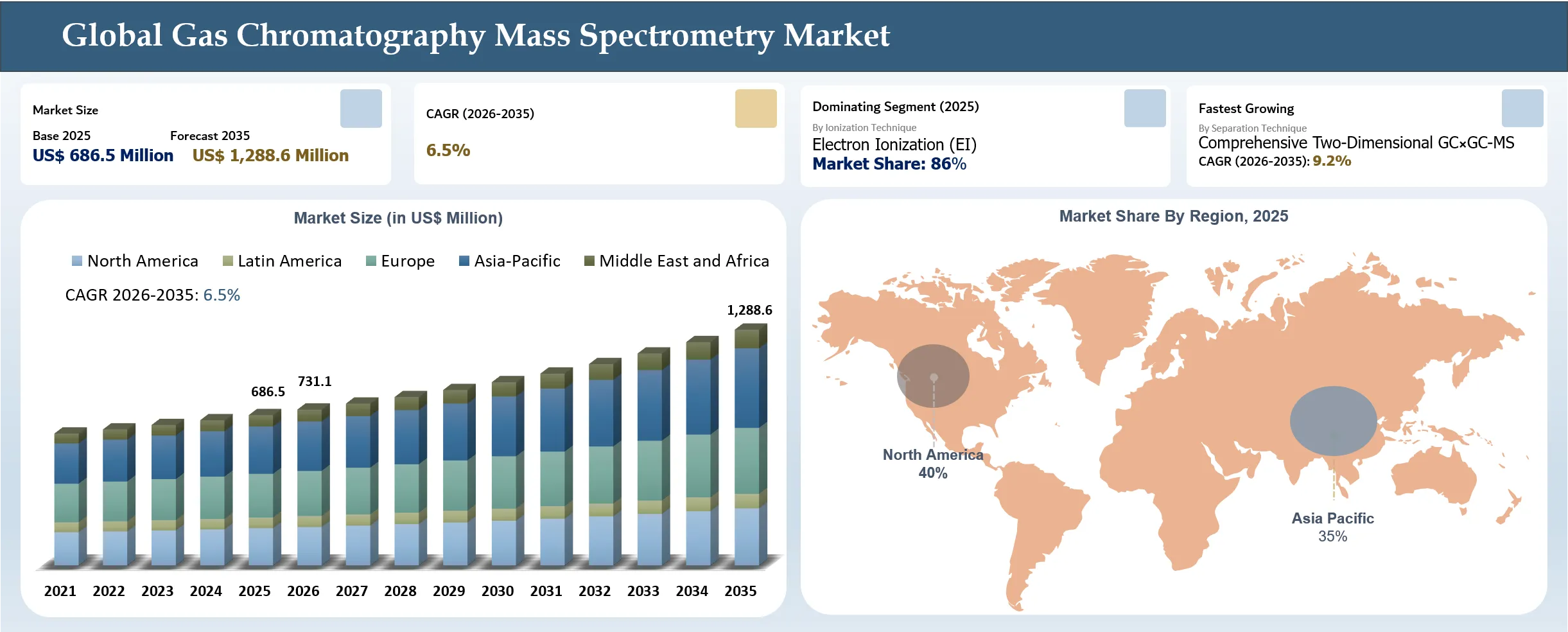
The global Gas Chromatography Mass Spectrometry market reached USD 686.5 million in 2025 and is expected to reach USD 1,288.6 million by 2035, growing with a CAGR of 6.5% during the forecast period 2026-2035. The market is growing consistently due to the rising need for highly sensitive technologies that can detect and quantify volatile and semi-volatile components at trace levels for the purposes of quality control in the pharmaceutical industry, environmental monitoring, food safety testing, forensic toxicology, and petrochemical analysis. Rising regulatory requirements on contaminant screening, impurity profiling, and residual solvent analysis, along with the implementation of automation and high-throughput systems in laboratories, are driving the global use of GC-MS technology. Technical innovations in mass spectrometers with high resolution, smart deconvolution software, artificial intelligence-based data interpretation, and advanced chromatography systems are enhancing the precision of analyses, productivity, and efficiency of laboratories. Suppliers such as Agilent Technologies, Thermo Fisher Scientific, Shimadzu Corporation, LECO Corporation, PerkinElmer, and SCIEX are offering an increased number of next-generation GC-MS systems featuring improved sensitivity, increased speed of analysis, and integrated laboratory systems. However, the high costs of installation, complicated usage of instruments, and the need for specialized analytical skills limit the adoption of the technology globally.
Hydrogen as a carrier gas for GC-MS analysis is becoming more widespread, thereby contributing to improvements in system optimization for faster and better analysis. In June 2026, according to a Journal of Chromatography study, researchers demonstrated that using the extraction lens with a size of 3 mm and a hydrogen-deactivated electron ionization (EI) source provided the highest signal intensities, enhanced peak symmetry, and kept RSD values below 30%, which is a sign of reproducibility of the analysis. Moreover, the optimized combination of GC-MS provided an analysis of metabolites like 2-hydroxyglutaric acid within 22 min instead of 37 min (using helium instead of hydrogen); thus, the speed of the analysis increased by 1.68×.
White-Space Opportunities for Expansion of GC-MS-Based Non-Targeted Analysis in PFAS Detection and Environmental Monitoring
In January 2025, a study initiative led by the U.S. Environmental Protection Agency (EPA), in collaboration with academic institutions, industry partners, and international research organizations, identified the limitations of conventional PFAS detection workflows and the underutilization of GC-MS-based non-targeted analysis (GC-NTA). The study indicates that while LC-MS has been widely adopted for PFAS monitoring, GC-MS provides complementary capabilities for detecting volatile and semi-volatile PFAS compounds, transformation products, and previously unidentified fluorinated chemicals. This creates an emerging opportunity for GC-MS manufacturers to expand into environmental monitoring, wastewater surveillance, industrial emission testing, and regulatory compliance applications. The highest investment focus is expected in PFAS detection infrastructure and environmental analytical laboratories, driven by increasing government spending on PFAS remediation and monitoring programs. In May 2026, the U.S. Environmental Protection Agency (EPA) allocated nearly USD 1 billion in supplemental funding through state drinking water programs to strengthen PFAS mitigation and compliance infrastructure, including municipal water treatment upgrades, laboratory testing, regulatory monitoring, and long-term PFAS assessment activities. Major funding allocations included USD 77.3 million for California, USD 33.6 million for New Jersey, USD 15.7 million for seven PFAS treatment projects across Southern California, USD 9.46 million for Kansas, and USD 9.5 million for New Hampshire, creating additional demand for advanced analytical technologies such as GC-MS systems for PFAS identification, exposure assessment, and compliance verification.
The expansion of PFAS remediation and monitoring investments is expected to create opportunities across multiple sectors of the GC-MS ecosystem. Environmental engineering and consulting companies including Veolia, AECOM, Jacobs, Tetra Tech, WSP Global, Stantec, and TRC Companies are positioned to benefit through PFAS site characterization, remediation planning, treatment system engineering, and regulatory compliance services. Water treatment technology providers such as Xylem, Evoqua Water Technologies, Calgon Carbon Corporation, Purolite, Kurita Water Industries, and Pentair are expected to gain from increased deployment of PFAS removal systems, including activated carbon, ion exchange, and membrane-based treatment technologies. In the analytical instrumentation sector, Agilent Technologies, Thermo Fisher Scientific, Shimadzu Corporation, PerkinElmer (U.S.), and JEOL Ltd. are likely to benefit from rising demand for GC-MS platforms, high-resolution mass spectrometry, and advanced data analysis solutions for non-targeted PFAS screening. Environmental testing laboratories such as Eurofins Scientific, SGS, Bureau Veritas (France), and ALS Limited are expected to experience increased demand for PFAS sampling, chemical identification, and compliance testing services. Additionally, emerging PFAS destruction technology companies including 374Water, Aquagga, Aclarity, and Revive Environmental may benefit from government-supported pilot projects and commercial-scale PFAS treatment deployments. As PFAS regulations continue to expand globally, GC-MS-based non-targeted analysis represents a high-potential white-space opportunity by enabling environmental agencies, laboratories, and industrial operators to move beyond targeted PFAS testing toward broader chemical discovery and exposure assessment.
Gas Chromatography Mass Spectrometry Market Key Takeaways
- North America commands the largest share of the global GC-MS market due to sophisticated laboratory infrastructure. The region accounted for approximately 40% of overall global market revenue in 2025.
- Electron Ionization remains the primary ionization technique across pharmaceutical, environmental, and forensic testing. Driven by its broad regulatory acceptance and standardized spectral libraries, the EI segment captured an 86% market share in 2025.
- In FDA Total Diet Study evaluations across 542 food items, 503 items (92.8%) showed no detectable PFAS analytes. However, 39 food items (7.2%) were found to contain trace PFAS levels, highlighting the ongoing need for sensitive GC-MS platforms.
- Utilizing a hydrogen carrier gas with a 3 mm extraction lens reduced metabolite testing times from 37 minutes down to 22 minutes. This optimization boosted analysis speed by 1.68× while maintaining high reproducibility, with RSD values kept below 30%.
Gas Chromatography Mass Spectrometry Market Industry Trends and Strategic Insight
- Regulatory monitoring of PFAS, volatile organic compounds (VOCs), dioxins, and pesticide residues is accelerating investment in triple quadrupole GC-MS platforms, as environmental agencies and food safety laboratories require trace-level detection with higher analytical confidence.
- Laboratories are shifting from standalone analytical instruments to integrated workflow platforms that combine automated sample introduction, chromatographic separation, mass spectrometric detection, and digital data processing, reducing manual intervention while improving laboratory throughput and method reproducibility.
- Artificial intelligence is emerging as a competitive differentiator in GC-MS software ecosystems, with vendors embedding AI-powered peak integration, spectral interpretation, automated method optimization, and quality assessment tools to reduce analyst workload and improve consistency across high-volume laboratories.
- Instrument manufacturers are focusing on higher analytical sensitivity while minimizing maintenance requirements, through advanced ion source technologies, longer-life detector components, improved thermal management, and optimized inlet systems capable of detecting compounds at femtogram concentrations while extending instrument uptime.
- Application-specific GC-MS solutions are replacing generic laboratory configurations, with vendors developing dedicated analytical workflows for food contaminants, forensic toxicology, petrochemical characterization, aroma profiling, environmental contaminants, and industrial quality assurance to improve method standardization and regulatory compliance.
Gas Chromatography Mass Spectrometry Market Scope
| Metrics | Details | |
| 2025 Market Size | USD 686.5 Million | |
| 2035 Projected Market Size | USD 1,288.6 Million | |
| CAGR (2026-2035) | 6.5% | |
| Largest Market | North America | |
| Fastest Growing Market | Asia-Pacific | |
| By Instrument Type | Single Quadrupole GC-MS, Triple Quadrupole GC-MS/MS, Ion Trap GC-MS, Time-of-Flight (TOF) GC-MS, Quadrupole Time-of-Flight (QTOF) GC-MS, Orbitrap GC-MS, Magnetic Sector GC-MS, Others | |
| By Ionization Technique | Electron Ionization (EI), Chemical Ionization (CI) | |
| By Sample Technique | Liquid Injection, Headspace Sampling, Purge-and-Trap Sampling, Thermal Desorption, Solid-Phase Microextraction (SPME), Pyrolysis, Gas Sampling Valve, Others | |
| By Separation Technique | One-Dimensional GC-MS, Multidimensional GC-MS (MDGC-MS), Comprehensive Two-Dimensional GC×GC-MS | |
| By End-User | Pharmaceutical & Biotechnology, Food & Beverage, Chemical, Oil & Gas & Petrochemical, Environmental Testing Laboratories, Contract Research & Testing Laboratories, Academic & Research Institutes, Government & Regulatory Laboratories, Forensic Laboratories, Clinical & Diagnostic Laboratories, Others | |
| By Region | North America | U.S., Canada, Mexico |
| Europe | Germany, UK, France, Spain, Italy, Poland | |
| Asia-Pacific | China, India, Japan, Australia, South Korea, Indonesia, Malaysia | |
| Latin America | Brazil, Argentina | |
| Middle East and Africa | UAE, Saudi Arabia, South Africa, Israel, Türkiye | |
| Report Insights Covered | Competitive Landscape Analysis, Company Profile Analysis, Market Size, Share, Growth | |
Gas Chromatography Mass Spectrometry Market Disruption Analysis
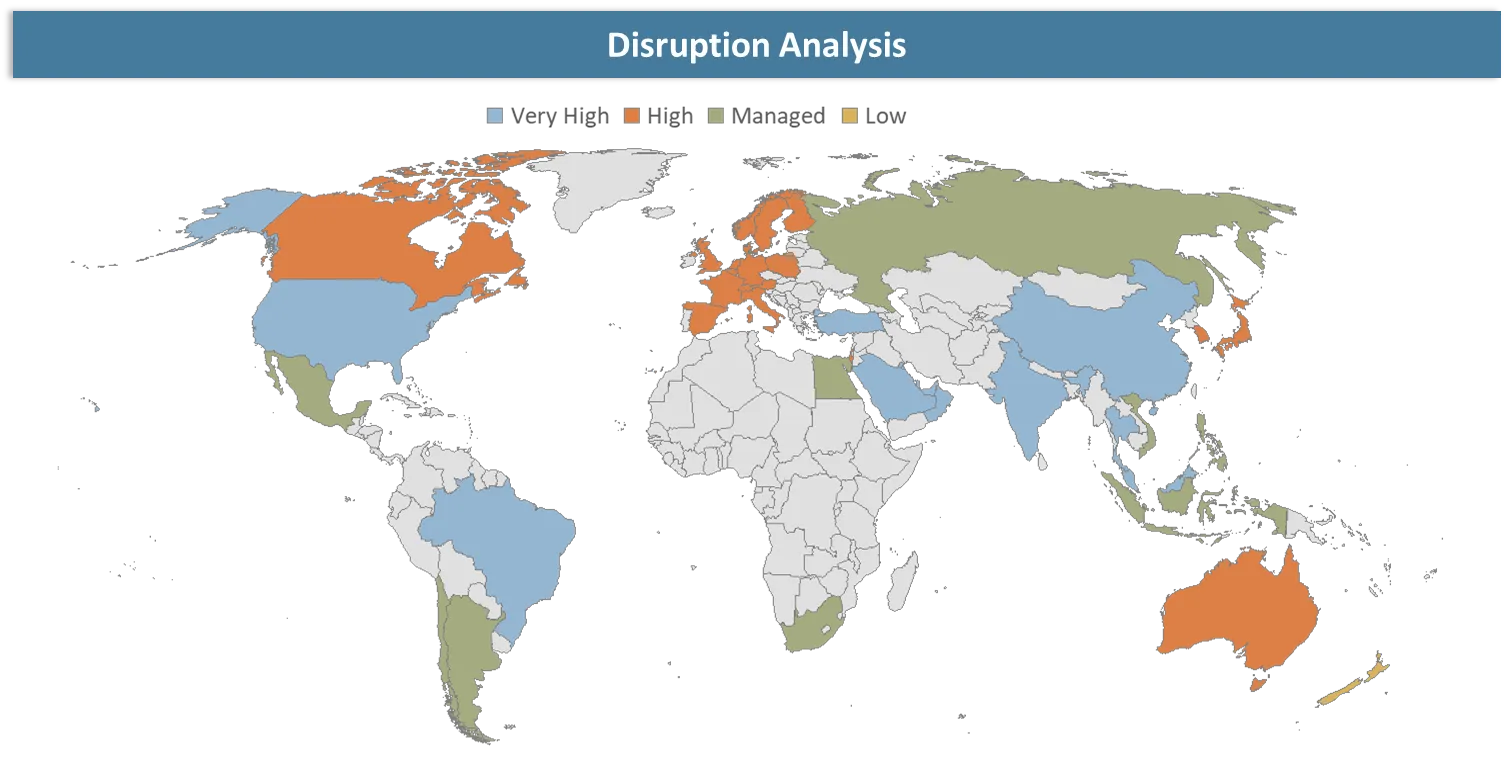
Transition Toward AI-Integrated and Fully Automated Analytical Workflows Reshaping Laboratory Analytical Operations
The disruption in the Gas Chromatography Mass Spectrometry (GC-MS) Market, there has been an increasing adoption of artificial intelligence (AI), machine learning, and laboratory automation within analytical testing laboratories. In conventional GC-MS systems, interpretation of spectral peaks, identification of compounds, integration of peaks, and method development are dependent upon highly trained analysts. This technological transition is redefining procurement priorities, with laboratories increasingly investing in intelligent, software-driven analytical ecosystems rather than standalone analytical instruments.
In addition, the increasing complexity of PFAS analysis, new contaminants, multi-residue pesticide analysis, and high-throughput pharmaceutical quality control is challenging traditional analytical practices by creating an increased need for artificial intelligence-assisted spectral interpretation and workflow automation. Modern laboratories are becoming more focused on connecting their GC-MS equipment that can be integrated into Laboratory Information Management Systems (LIMS), cloud platforms for data storage, and remote monitoring of system performance to ensure better reproducibility and compliance with regulations. Consequently, instrument vendors are investing in intelligent software, data analytics, and laboratory automation systems, moving the competition away from hardware-only innovations to digital laboratory environments. This trend was further emphasized by Shimadzu Corporation in 2026 by developing artificial intelligence-assisted software and data processing tools for their GC-MS instruments.
Gas Chromatography Mass Spectrometry Market BCG Matrix: Company Evaluation
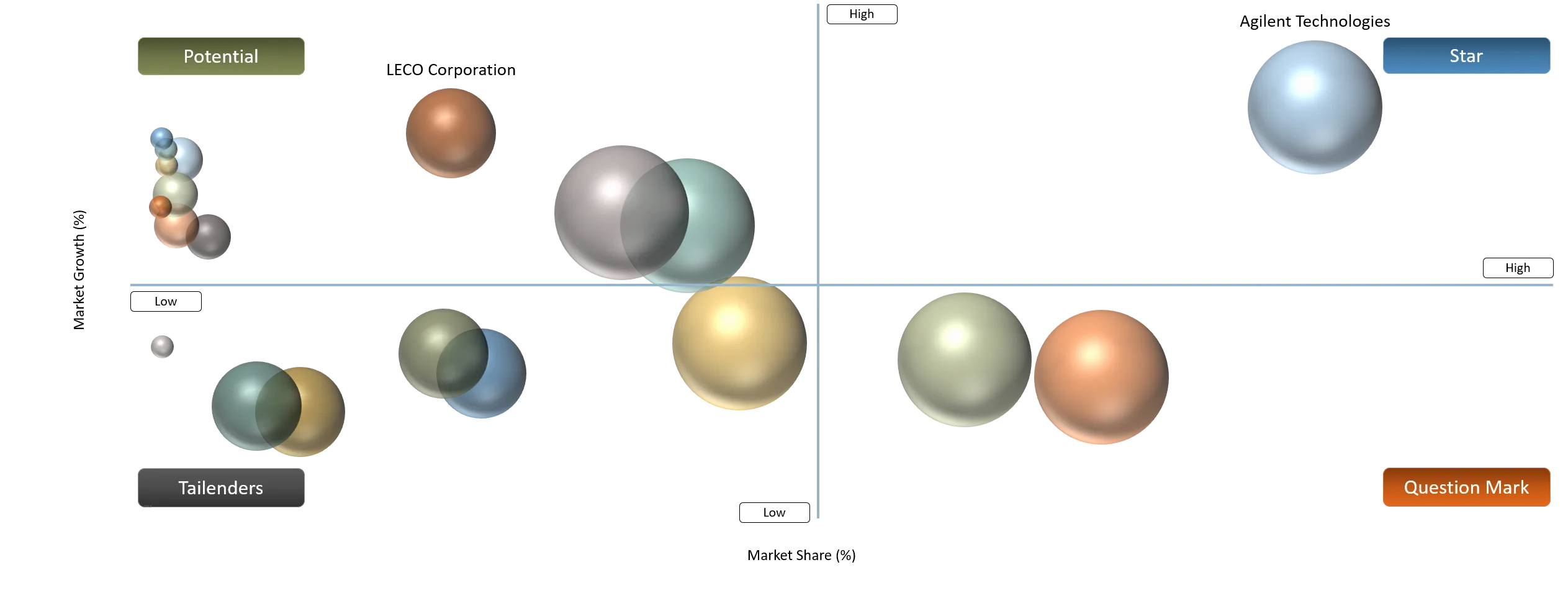
Stars include Agilent Technologies, Thermo Fisher Scientific, and Shimadzu Corporation because they maintain leading positions in the global GC-MS market through comprehensive product portfolios spanning single quadrupole, triple quadrupole, and high-resolution GC-MS platforms. These companies have extensive global service networks, continuous investments in automation, AI-enabled analytical software, and regulatory-compliant workflows, while serving pharmaceutical, environmental, food safety, petrochemical, and forensic laboratories. Question Marks include Waters Corporation, Bruker Corporation, and JEOL Ltd. as these companies possess strong expertise in mass spectrometry and analytical sciences but have comparatively smaller GC-MS portfolios than the market leaders.
MS market penetration.
The Potential category includes LECO Corporation, PerkinElmer, and Markes International, supported by their established presence in niche GC-MS applications such as environmental monitoring, petrochemical analysis, thermal desorption, food authenticity, and forensic testing. The Tailenders category includes SCION Instruments and INFICON Holding AG, as their participation in the GC-MS market is comparatively focused on selected industrial, environmental, and process analytical applications rather than broad multi-industry laboratory portfolios.
Gas Chromatography Mass Spectrometry Market Dynamics
Driver Impact Analysis
| Driver | Market Growth Impact (%) | Demand Concentration | Impacted Use Case | Strategic Impact |
Increasing regulatory requirements for trace-level chemical analysis across pharmaceutical, environmental, food safety, and forensic laboratories are accelerating GC-MS adoption. | 32% | Pharmaceutical QC, Environmental Testing, Food Safety, Forensic Laboratories
| Residual solvent analysis, pesticide residue testing, PFAS/VOC monitoring, toxicology screening | Drives replacement of conventional analytical instruments with high-sensitivity GC-MS platforms to ensure regulatory compliance and trace-level detection. |
Rising demand for high-sensitivity detection of volatile and semi-volatile compounds is driving investment in advanced GC-MS platforms. | 26% | Pharmaceutical, Petrochemical, Chemical Manufacturing, Research Laboratories | Impurity profiling, VOC analysis, hydrocarbon characterization, metabolite identification | Accelerates procurement of triple quadrupole and high-resolution GC-MS systems capable of improving analytical sensitivity, selectivity, and throughput. |
Continuous advancements in high-resolution mass analyzers, AI-assisted data processing, and laboratory automation are enhancing analytical efficiency and instrument adoption. | 22% | Pharmaceutical R&D, CROs, Government Laboratories, Academic Research | Automated data analysis, spectral deconvolution, high-throughput analytical workflows | Encourages laboratories to transition toward intelligent, software-driven analytical ecosystems with reduced manual intervention and improved laboratory productivity. |
Increasing food authenticity, contaminant screening, and regulatory compliance testing are strengthening demand for GC-MS across food and beverage laboratories. | 19% | Food & Beverage Testing Laboratories, Regulatory Agencies | Food authenticity verification, contaminant analysis, flavor profiling, pesticide residue testing | Expands adoption of GC-MS as a standard analytical platform for food quality assurance, export compliance, and contaminant monitoring. |
Rising environmental monitoring activities for air, water, and soil contaminants are driving procurement of high-performance GC-MS systems by government and research laboratories. | 17% | Environmental Protection Agencies, Water Testing Laboratories, Research Institutes | Air quality monitoring, drinking water analysis, soil contamination assessment, hazardous chemical detection | Supports long-term investments in advanced GC-MS technologies for environmental surveillance, pollution control, and sustainability compliance. |
Increasing regulatory requirements for trace-level chemical analysis across pharmaceutical, environmental, food safety, and forensic laboratories are accelerating GC-MS adoption
Stringent regulatory requirements for trace-level chemical analysis are becoming a major driver for the Gas Chromatography Mass Spectrometry (GC-MS) Market significantly because laboratories dealing with pharmaceuticals, the environment, food safety, and forensics are upgrading their analytical testing techniques. The regulatory authorities have increased monitoring programs for contaminants such as VOCs, pesticides, residual solvents, POPs, and new emerging chemical contaminants, hence increasing the demand for highly sensitive GC-MS systems that can offer accurate qualitative and quantitative information. Laboratories have been spending money on GC-MS systems to meet new analytical standards and reduce detection limits. In December 2025, the U.S. FDA published additional TDS results for 542 food items, out of which 503 (92.8%) showed no detectable PFAS and 39 (7.2%) food items had trace amounts of PFAS analytes.
Stringent regulations related to pharmaceuticals for managing trace genotoxic impurities have resulted in growing demands for high-sensitivity GC-MS/MS analysis techniques. In January 2026, according to the Springer Nature Journal of Pharmaceutical Innovation, researchers developed and validated a GC-MS/MS method for the trace-level detection of the mutagenic impurity 1-(3-bromoprop-1-en-2-yl)-2,4-difluorobenzene in parconazole. The method was able to establish a LOD of 0.1 ppm and LOQ of 0.3 ppm and was found to be 80-120% accurate, along with precision, robustness, specificity, and solution stability. The ability of GC-MS/MS to facilitate ICH M7 regulatory compliance for pharmaceutical quality control is highlighted in the study.
Restraint Impact Analysis
| Restraint | Drag on Market Growth (%) | Primary Impact Area | Impacted Use Case | Strategic Impact |
Complex instrument operation and the requirement for highly skilled analysts constrain efficient utilization of advanced GC-MS platforms. | 28% | Laboratory Operations & Workforce | Pharmaceutical QC, Environmental Testing, Food Safety, Forensic Analysis | Increases training costs, extends implementation timelines, and slows adoption of advanced GC-MS systems, particularly in resource-constrained laboratories. |
Lengthy method development and validation processes delay analytical workflow implementation in regulated laboratories. | 24% | Method Development & Regulatory Compliance | Pharmaceutical method validation, Residual Solvent Analysis, Environmental Compliance Testing | Delays laboratory productivity and increases validation costs, reducing the speed of new analytical method deployment. |
GC-MS is inherently limited to volatile and semi-volatile compounds, restricting its applicability for non-volatile and thermally unstable analytes. | 30% | Technology & Application Scope | Biomolecule Analysis, Polar Compound Testing, Large Molecular Weight Compound Analysis | Restricts addressable applications and shifts demand toward complementary analytical platforms such as LC-MS for complex analytes. |
Increasing competition from liquid chromatography-mass spectrometry (LC-MS) for complex biomolecule and polar compound analysis is limiting GC-MS adoption in certain applications. | 22% | Competitive Technology Landscape | Clinical Diagnostics, Biopharmaceutical Analysis, Metabolomics, Proteomics | Intensifies competitive pressure, encouraging GC-MS manufacturers to expand application portfolios, automation capabilities, and hybrid analytical solutions. |
Complex instrument operation and the requirement for highly skilled analysts constrain efficient utilization of advanced GC-MS platforms
One of the major challenges restraining the Gas Chromatography Mass Spectrometry (GC-MS) Market is the complexity associated with instrument operation, method development, spectral interpretation, and data validation, which require analytically skilled personnel. Modern GC-MS systems consist of multistep processes such as sample preparation, optimization of chromatography, spectral library search, instrument calibration, and method validation, which makes it difficult to operate on a routine basis. Laboratories using advanced resolution and tandem GC-MS techniques will need substantial investments in terms of training and technical expertise of the analysts to obtain reliable results in their applications. According to the World Economic Forum's Future of Jobs Report 2025, 39% of the skills of the workforce will change by 2030, while 63% of employers believe that skill gaps are the main barriers to the transformation of the business.
The growing complexity of advanced GC-MS procedures, along with the availability of fewer personnel with skills in analysis, has hindered laboratory efficiency and equipment usage. In January 2026, according to the Chromatography Online article, laboratories are increasing adoption of AI and automation in order to solve the issues associated with the increased complexity of chromatography and GC-MS work due to the lack of specialists. It's also mentioned that according to the 2025 LCGC International Salary & Employment Survey, 56% of employees indicated the increase in sample throughput as their main laboratory problem, 45% indicated data processing, and 43% indicated recruiting and retaining personnel. Such problems with personnel and laboratory processes are pushing for the application of AI-assisted software, workflow automation, and easy-to-use GC-MS instruments.
Gas Chromatography Mass Spectrometry Market Segment Analysis
The global Gas Chromatography Mass Spectrometry market is segmented based on instrument type, ionization technique, sample technique, separation technique, end-user, and region.
Electron Ionization (EI) Maintains Dominance Through Standardized Analytical Performance and Broad Regulatory Acceptance
The Electron Ionization (EI) segment dominates the Gas Chromatography Mass Spectrometry (GC-MS) Market, with a market share of about 86% in 2025, due to its high usage across various pharmaceutical, environmental, food safety, petrochemical, and forensic laboratories. It has remained the most sought-after ionization technology because it offers a highly reproducible fragmentation pattern that can easily be matched with commercial spectral libraries like the NIST Mass Spectral Library. This method is also well integrated into GC-MS analysis processes and is quite compatible with analytical techniques and volatile & semi-volatile chemical analysis.
Moreover, regulatory bodies still apply Electron Ionization GC-MS in their validated methods of contaminant detection and residue analysis. Throughout the period from 2025 to 2026, the U.S. Environmental Protection Agency (EPA) recommended using GC/MS with Electron Ionization in its existing analytical methods, such as Method 8260D for the detection of VOCs, while the FDA introduced additional GC-MS-based analytical methods for contaminant testing of pharmaceuticals, thus reinforcing the popularity of EI-based GC-MS instruments. The increasing food contaminant monitoring, environmental monitoring, and pharmaceutical quality control is predicted to ensure the predominance of Electron Ionization due to the needs of laboratories in standardizing and reproducing their analyses.
Gas Chromatography Mass Spectrometry Market Geographical Penetration
Rapid Expansion of Battery Material Manufacturing and Integrated Supply Chains Strengthens Asia-Pacific's Market Leadership
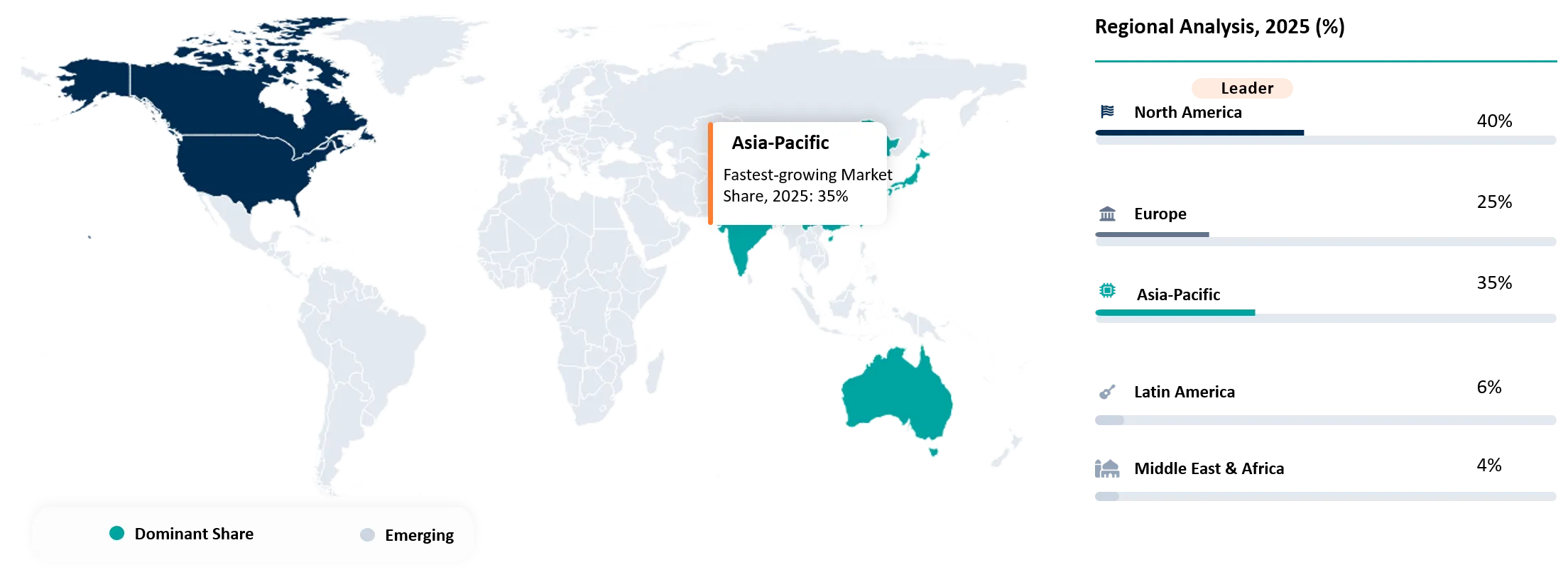
North America dominates the Gas Chromatography Mass Spectrometry (GC-MS) Market, contributing approximately 40% of the market share in 2025, due to the prevalence of the pharma, biotech, environmental testing, petrochemical, food safety, and forensics labs. This is because of the highly advanced analytical facilities present here, along with the stringent regulations regarding chemical identification and contaminant detection. High levels of investment in lab automation and high-resolution mass spectrometry contribute to the dominance of North America in the market. GC-MS systems have been adopted extensively in the U.S. and Canada for environmental monitoring, drug discovery, clinical research, and quality control in industries.
The continuous developments in the area of integrated chromatography-mass spectrometry technologies have greatly improved analytical possibilities in the regulated industries and laboratories. In May 2026, Agilent Technologies Inc., a U.S.-based analytical instrumentation, laboratory technology, and life sciences solutions provider, exhibited its mass spectrometry and chromatography integrated systems at the 2026 ASMS conference to enhance analytical performance for different applications, including pharmaceutical, biopharmaceutical, environmental, food safety, and research sectors. As an industry leader in analytical instrument and lab technology solutions, Agilent has made strides in developing GC-MS, LC-MS, chromatography workflow, and mass spectrometry data analysis systems aimed at helping laboratories achieve high-throughput and complex sample characterization.
U.S. Gas Chromatography Mass Spectrometry Market Trends
The U.S. holds a dominant position in the North America Gas Chromatography Mass Spectrometry (GC-MS) Market. This is attributed to the sophisticated infrastructure for analytical testing in the country, strong presence of pharmaceutical and biotechnological industries, strong environmental monitoring programs, and an early adopter of automation of laboratory systems. This is due to the presence of major analytical instrument suppliers, research institutes, commercial test facilities, and the use of regulatory-driven testing approaches that make possible the wide deployment of GC-MS systems in pharmaceuticals, food, petrochemicals, the environment, forensics, and scientific research purposes.
The growing requirement for automation and faster analysis techniques is forcing consolidation among companies that help run laboratories using GC-MS techniques. In January 2026, Velaris acquired Markes International to strengthen its automated sample preparation and analytical workflow capabilities for laboratories. Markes International is an analytical instrumentation company that specializes in the development of technology for sample preparation and sample introduction for gas chromatography (GC) and GC-MS analysis. The acquisition will enhance the capabilities of Velaris through the incorporation of automation technologies of Markes International, which enhance sample throughput, reproducibility, and efficiency in analyzing samples at trace levels in areas such as environmental, food safety, pharmaceuticals, and occupational hygiene. This is expected to facilitate effective work for GC-MS labs by reducing the need for manual sample preparation and analysis of complex samples.
Canada Gas Chromatography Mass Spectrometry Market Outlook
Canada has emerged as an fast-growing country in the North America Gas Chromatography Mass Spectrometry (GC-MS) Market because of the increased need for sophisticated testing, increasing need for environmental monitoring, and increased adoption of precision-based instruments in the pharmaceutical industry, food safety, biotechnology sector, and industries. In the past few years, Canada has been investing in its analytical testing capabilities through laboratory upgrading, infrastructure development, and chemical analysis programs. Increased emphasis on trace contaminant detection, such as PFAS, pesticides, VOCs, and others, has increased the need for GC-MS technology.
Increasing demand for sustainable biomaterials and renewable chemicals has resulted in an increasing application of advanced techniques in biomass characterization. July 2026, InnoFibre, a Canada-based Centre d’innovation des produits cellulosiques, explained the application of complementary analytical methods along with chromatographic methods in order to enhance biomass analysis for the development of bio-based products. InnoFibre is a research and innovation center based in Canada and focuses on cellulose products, biomass valorization, and industrial biotechnology, which employs advanced analytical methods, such as chromatography and GC-MS chemical analysis, to analyze complex compounds found in biomass samples. The study has practical implications in the field of bioenergy, bioproducts, renewable chemicals, and sustainable materials, as the identification of volatile and organic compounds is critical in this regard.
Growing Analytical Testing Demand and Environmental Monitoring Expansion in Asia-Pacific Region
The Asia-Pacific region is the fastest-growing market for Gas Chromatography–Mass Spectrometry (GC-MS) due to the rapid expansion of environmental testing, pharmaceutical research, food safety analysis, petrochemical processing, and industrial quality control activities across countries such as China, Japan, South Korea, India, and Southeast Asian economies. The region accounted for approximately a 35% share of the global GC-MS market in 2025 and is projected to expand at a CAGR of 5.5%, supported by increasing investments in advanced analytical laboratories, regulatory compliance testing, and scientific research infrastructure. The combination of growing environmental regulations, rising pharmaceutical and biotechnology production, and increasing adoption of advanced analytical techniques for complex compound identification is accelerating demand for GC-MS systems. In particular, expanding monitoring requirements for pollutants, volatile organic compounds (VOCs), PFAS contaminants, and industrial emissions are creating new opportunities for GC-MS manufacturers to supply high-resolution analytical platforms and automated laboratory solutions.
Growing investment in local production of analytical instruments and development of laboratory infrastructure in the Asia Pacific region is aiding the regional value chain of sophisticated GC-MS systems. In January 2025, Shimadzu Corporation (Japan) announced the establishment of Shimadzu Manufacturing India Private Limited (SMI) in Karnataka, India, with operations planned to begin in spring 2027. The new facility will manufacture analytical instruments, including Gas Chromatography–Mass Spectrometry (GC-MS) systems, Gas Chromatographs (GC), LC-MS, and other precision equipment, strengthening local production capabilities and supply chain responsiveness in the Asia-Pacific region. The plant will be developed on a 40,000 m² site with a 5,500 m² building, with an initial workforce of 50 employees, and is part of Shimadzu’s strategy to support growing demand from pharmaceutical, environmental testing, semiconductor, materials, and industrial applications in India.
Japan Gas Chromatography Mass Spectrometry Market Trends
Japan is one of the key players in the Asia-Pacific Gas Chromatography-Mass Spectrometry (GC-MS) market, owing to the country’s highly developed analytical instrument industry, presence of internationally known manufacturers, and constant efforts made in research and development. The nation has an established environment that comprises analytical instrument manufacturers, pharmaceutical firms, chemical manufacturers, environmental testing labs, and academic institutions, making it necessary for high-performance GC-MS equipment. Some of the key manufacturers of GC-MS equipment in Japan include Shimadzu Corporation and JEOL Ltd., which keep introducing next-generation chromatography and mass spectrometry systems.
The continuous innovation in analytical instruments through product development is contributing to increased lab efficiency and increased functionality of testing through chromatography. In March 2026, Shimadzu Corporation, a Japan-based analytical instrumentation manufacturer, launched the Nexis GC-2060, a next-generation gas chromatograph designed to improve analytical efficiency and support seamless integration with GC-MS workflows. The system features up to three analytical lines in a single unit, supports up to four detectors simultaneously, and offers up to 16-sample automated injection capacity, enabling higher laboratory throughput and operational flexibility.
Gas Chromatography Mass Spectrometry Market Competitive Landscape
- The Gas Chromatography Mass Spectrometry (GC-MS) Market is characterized by three key participant groups: leading analytical instrument manufacturers, specialized mass spectrometry technology providers, and application-focused chromatography solution companies. Agilent Technologies, Thermo Fisher Scientific, Shimadzu Corporation, and PerkinElmer lead the market through comprehensive GC-MS platforms, strong global distribution networks, and extensive adoption across pharmaceutical, environmental testing, food safety, petrochemical, and forensic applications. Bruker Corporation, LECO Corporation, and JEOL Ltd. focus on high-resolution mass spectrometry, time-of-flight GC-MS, and advanced analytical capabilities for complex compound identification, while Waters Corporation, SCION Instruments, Markes International, and INFICON Holding AG strengthen the ecosystem through specialized chromatography solutions, sample preparation technologies, and niche analytical applications. The market remains highly competitive, where instrument sensitivity, automation capabilities, software integration, application expertise, and service support define competitiveness. In 2025, the leading GC-MS manufacturers collectively accounted for a significant share of the global market, with the top five players estimated to represent around 68.9% of market revenue, reflecting the concentrated nature of the industry and the importance of technological leadership.
- Key players in the Gas Chromatography Mass Spectrometry Market include Agilent Technologies, Thermo Fisher Scientific, Shimadzu Corporation, PerkinElmer, LECO Corporation, Bruker Corporation, JEOL Ltd., Waters Corporation, SCION Instruments, Markes International, and INFICON Holding AG.
Key Developments
- July 2026: Shimadzu Corporation, a Japan-based Analytical instrumentation and scientific equipment manufacturer, introduced the GCMS-TQ8040 RX and GCMS-TQ8050 RX triple quadrupole GC-MS/MS systems to enhance sensitivity, automation, and productivity in analytical laboratories.
- June 2025: Agilent Technologies Inc., a U.S.-based Analytical instrumentation, laboratory technology, and life sciences solutions provider, introduced advanced chromatography and mass spectrometry solutions at the 73rd American Society for Mass Spectrometry (ASMS) Conference.
- March 2026: Restek Corporation, a U.S.-based chromatography products and analytical solutions manufacturer, introduced its RMX GC column family to improve trace-level detection, sensitivity, and reliability in gas chromatography and GC-MS workflows.
- June 2025: PEAK Scientific Instruments Ltd., a UK-based laboratory gas generation and analytical support equipment manufacturer, launched the Intura series of GC gas solutions at the 2025 American Society for Mass Spectrometry (ASMS) Conference to improve gas supply performance for gas chromatography and GC-MS laboratories.
- January 2025: Shimadzu Corporation, a Japan-based Analytical instrumentation and scientific equipment manufacturer, and SepSolve Analytical Ltd., a UK-based Chromatography and mass spectrometry solutions provider, entered into a strategic collaboration to expand advanced comprehensive two-dimensional gas chromatography–time-of-flight mass spectrometry (GC×GC–TOF MS) solutions for laboratories.
Key Procurement Priorities and Buyer Evaluation Criteria
- The organizations that have invested in the Gas Chromatography Mass Spectrometry (GC-MS) Market now prefer to choose suppliers who can offer instruments that are highly sensitive in terms of analysis, precise in terms of compound detection, dependable and scalable for high throughput testing needs.
- The procurement process decision making is becoming more and more impacted by the need for advanced analysis, laboratory automation, digitized data handling, regulatory compliance and rapid sample handling processes. The focus on the purchase of GC-MS equipment able to deal with advanced sample analysis and detection of trace level contaminants together with LIMS integration is becoming more important for the users.
- Buyers assess such aspects as mass spectrometric accuracy, detector sensitivity, resolution ability, instrument robustness, degree of automation, software efficiency, service maintenance, and overall cost-effectiveness when choosing suppliers of GC-MS technologies. Suppliers’ reputation, technical assistance, provision of consumables, calibrations, and conformance to analytical standards are considered by laboratories when building long-term business relationships with vendors.
Why Choose DataM?
- Technological Innovations: Explores advancements in Gas Chromatography Mass Spectrometry (GC-MS) technologies, including high-resolution mass spectrometry, automated sample processing, intelligent chromatography workflows, and advanced data analytics solutions that enhance detection accuracy, sensitivity, throughput, and operational efficiency across pharmaceutical, environmental, food safety, petrochemical, forensic, and research applications.
- Product Performance & Market Positioning: Evaluates how different GC-MS providers differentiate their solutions based on analytical sensitivity, mass resolution, compound identification accuracy, automation capabilities, software integration, instrument reliability, and cost efficiency. The analysis highlights how leading companies strengthen their market position through innovative instrument platforms, application-specific solutions, and scalable systems for laboratories with increasing testing requirements.
- Real-World Evidence: Highlights the adoption of GC-MS systems across pharmaceutical quality control, environmental contaminant monitoring, food and beverage testing, petroleum analysis, clinical research, and forensic investigations, demonstrating benefits such as improved trace-level detection, faster sample analysis, enhanced data interpretation, and compliance with stringent regulatory standards.
- Market Updates & Industry Changes: Tracks key industry developments such as new GC-MS product launches, automation advancements, software-driven analytical solutions, strategic collaborations, and laboratory modernization initiatives across North America, Europe, and Asia-Pacific. The analysis supports understanding of the shift toward intelligent, high-throughput, and digitally connected analytical laboratory ecosystems.
- Competitive Strategies: Analyzes how leading GC-MS companies expand through technology innovation, product portfolio enhancement, strategic partnerships, application development, and global service network expansion to address increasing demand for advanced chemical analysis across regulated industries and research institutions.
- Pricing & Market Access: Explains pricing variations based on instrument configuration, detector technology, resolution capability, automation level, software integration, and application requirements, along with market access through direct sales channels, authorized distributors, laboratory solution providers, and service networks supporting global analytical testing operations.
- Market Entry & Expansion: Identifies growth opportunities driven by increasing environmental regulations, pharmaceutical R&D expansion, food safety requirements, industrial quality testing, and demand for automated analytical workflows, while outlining strategies such as regional distribution expansion, customized application solutions, technology differentiation, and partnerships with research laboratories and testing organizations.
Target Audience 2026
- Analytical Instrument Manufacturers & Technology Providers
- Pharmaceutical & Biotechnology Companies
- Environmental Testing Laboratories & Regulatory Organizations
- Food & Beverage Testing Companies
- Petrochemical, Chemical & Industrial Companies
- Research Institutes, Universities & Academic Laboratories
- Laboratory Equipment Distributors & Service Providers


























































