


Gas Chromatography Market Size and Forecast 2026-2035
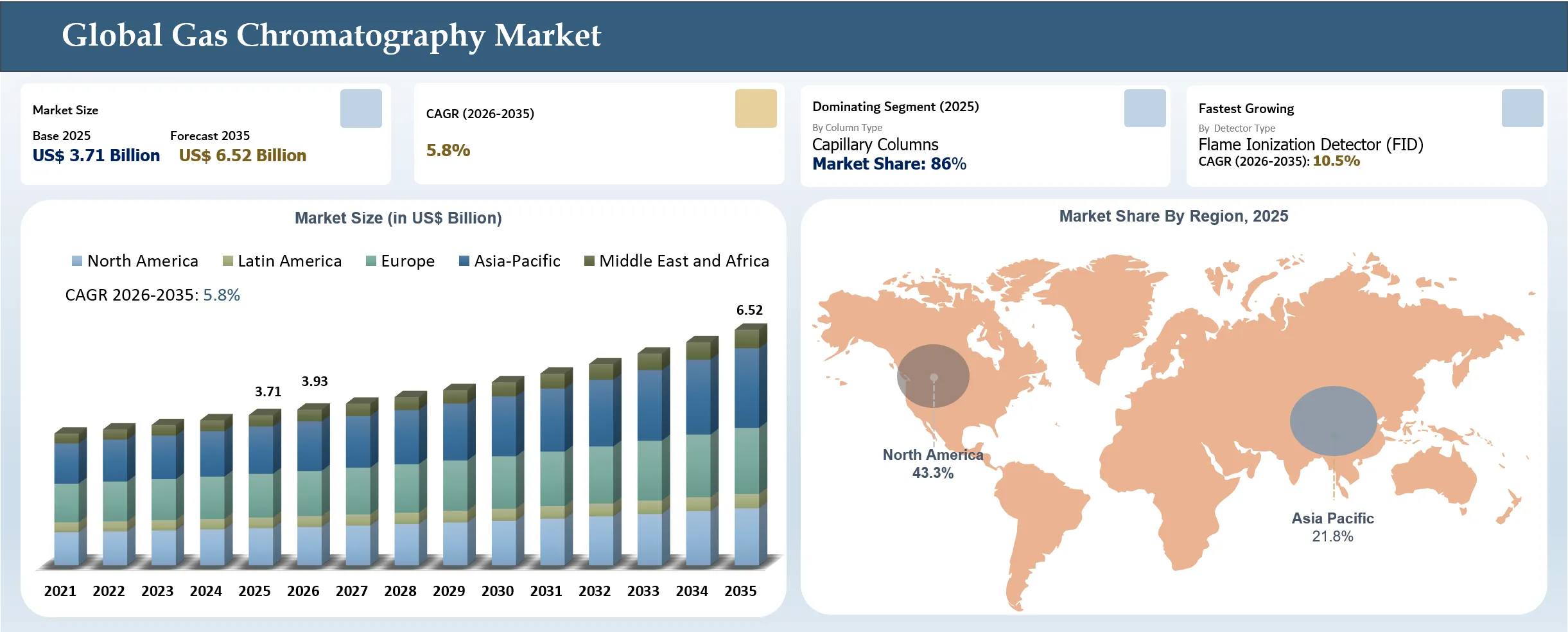
The global gas chromatography market reached USD 3.71 billion in 2025 and is expected to reach USD 6.52 billion by 2035, growing with a CAGR of 5.8% during the forecast period 2026-2035. The market is expanding rapidly due to the increased demand for high-precision analytical testing in the fields of pharmaceuticals, environment, food safety, petrochemicals, and chemicals. There has been an increased adoption of the new advanced GC models due to the need to increase efficiency in the process of analysis, minimize costs, and automate. In 2025, Agilent Technologies introduced the 8850 Gas Chromatograph, which is the world's smallest benchtop GC model. This particular instrument is 50% smaller than the traditional benchtop GC models. It uses up to 45% lower power than conventional GC systems, making it environmentally sustainable. Additionally, it features a fast temperature ramping rate of up to 300°C/min. However, some factors hinder market growth, such as high costs of purchasing equipment, the need for skills in handling the equipment, and competition from other analytical technologies.
The increasing demand for security, connectivity, and high-performance analytical instruments is driving innovation in gas chromatography. In November 2025, according to EPR Magazine, Abb, a Switzerland-based technology and automation company, launched the GCP100 gas chromatograph as part of the GCPro Series, featuring the first-ever gas chromatography solution that includes cybersecurity and Wi-Fi connectivity for analyzing gases in real-time in a secure manner. The analyzer can be used in natural gas, biogas, oil, petrochemicals, refining, and chemical industries for accurate analysis of complex gases and their processes. The GCP100 gas chromatograph offers a 1 ppm detection rate and is capable of operating in a wide temperature range of 60°C–100°C Celsius and comes with a 4-inch gesture control panel with digital connectivity features. The analyzer can save 75% maintenance time due to the dynamic QR code and digital connectivity solutions by ABB and consumes very low energy of only 12 watts.
White-Space Opportunities for Public-Sector Gas Chromatography Adoption
The increasing procurement of advanced Gas Chromatography (GC) and Gas Chromatography–Mass Spectrometry (GC-MS) systems by U.S. federal agencies highlights a significant white-space opportunity in government forensic laboratories, aerospace fuel testing, and national security applications, where analytical infrastructure is undergoing modernization. In June 2025, the U.S. Drug Enforcement Administration (DEA) issued Solicitation No. 15DDHQ26Q00000119 for the procurement of 33 Agilent 8890 Gas Chromatography systems and 16 Agilent 5977C GC-MS systems, along with autosamplers, analytical software, installation, training, and laboratory accessories to standardize forensic testing capabilities across multiple DEA laboratories. At the same time, the U.S. Space Force released a procurement for two Gas Chromatograph systems with an auto-sampler and hydrogen generator to support the Aerospace Fuels Laboratory at Cape Canaveral Space Force Station, strengthening analytical capabilities for aviation fuel quality and mission-critical testing. Although the contract values were not publicly disclosed, these procurements indicate that forensic science and defense laboratories are among the highest-investing application areas for advanced gas chromatography instrumentation, creating sustained opportunities for instrument replacement, laboratory expansion, and digital workflow integration. Companies expected to benefit include Agilent Technologies (U.S.), which is the primary instrument supplier for the DEA modernization program, as well as Thermo Fisher Scientific (U.S.), Shimadzu Corporation (Japan), PerkinElmer (U.S.), LECO Corporation (U.S.), and SCION Instruments (Netherlands), which are well positioned to compete in future federal procurements involving forensic, environmental, and defense laboratories.
Beyond forensic and aerospace applications, these government procurements indicate broader opportunities across environmental monitoring, petrochemical quality control, energy, food safety, pharmaceutical testing, and homeland security laboratories, where demand for high-throughput and highly sensitive analytical systems continues to increase. Agilent Technologies, Thermo Fisher Scientific, Shimadzu Corporation, and PerkinElmer are well positioned to benefit from expanding investments in environmental monitoring and regulatory compliance testing, while Agilent Technologies, LECO Corporation, and SCION Instruments are expected to strengthen their presence in petrochemical quality control, refinery operations, and fuel composition analysis. In the energy and aerospace sector, Agilent Technologies, Shimadzu Corporation, and Thermo Fisher Scientific are likely to gain from increasing demand for aviation fuel characterization, hydrogen fuel analysis, and mission-critical laboratory testing. Meanwhile, Thermo Fisher Scientific, Shimadzu Corporation, and PerkinElmer are well positioned to support food safety, pharmaceutical quality control, and homeland security laboratories, where GC and GC-MS systems are increasingly used for contaminant detection, drug analysis, and hazardous substance identification.
Gas Chromatography Market Key Takeaways
- North America held the largest regional market share in 2025, accounting for 43.3% of total global revenues. Regional leadership is sustained by strict environmental laws, life science investments, and top-tier testing infrastructure.
- Capillary columns dominated the product segment by capturing an 86% share of the global gas chromatography market in 2025. Dominance is driven by superior resolution and alignment with established EPA, ISO, and ASTM testing standards.
- Food safety and authenticity testing drives a 20% impact, while petrochemical/refinery expansions contribute 17% to market growth. Forensic and toxicology applications comprise the remaining major driver segment with a 12% market impact.
- The Scottish Government Marine Directorate initiated a procurement contract valued at approximately £175,000 (excluding VAT) for a GC-MS system. The investment targets marine environmental monitoring to detect and quantify polycyclic aromatic hydrocarbons (PAHs) in marine samples.
Gas Chromatography Market Industry Trends and Strategic Insight
- Integration of gas chromatography with mass spectrometry is becoming a key technology trend as industries require improved compound identification, trace-level detection, and molecular characterization.
- Analytical laboratories are increasingly adopting automated injectors, advanced sampling systems, and intelligent chromatography software to reduce manual intervention and improve testing efficiency.
- Equipment manufacturers are prioritizing energy-efficient chromatography platforms as laboratories focus on reducing operational emissions and utility consumption. New-generation GC systems are being designed with lower power requirements, optimized heating systems, and reduced laboratory footprint to support sustainable laboratory operations.
- Regulatory emphasis on monitoring volatile organic compounds (VOCs), pollutants, and industrial emissions is strengthening demand for GC and GC–MS analytical solutions. Environmental laboratories are adopting advanced chromatography systems for accurate detection of contaminants in air, water, and soil samples.
- The application scope of gas chromatography is expanding into emerging areas such as food authenticity testing, biomarker analysis, renewable fuels characterization, and advanced material analysis.
Gas Chromatography Market Scope
| Metrics | Details | |
| 2025 Market Size | USD 3.71 Billion | |
| 2035 Projected Market Size | USD 6.52 Billion | |
| CAGR (2026-2035) | 5.8% | |
| Largest Market | North America | |
| Fastest Growing Market | Asia-Pacific | |
| By Offerings | Instruments, Columns, Consumables & Accessories, Software, Services | |
| By Instrument Type | Laboratory Gas Chromatographs, Process Gas Chromatographs, Portable Gas Chromatographs, Micro Gas Chromatographs, Application-Specific Gas Chromatographs | |
| By Detector Type | Flame Ionization Detector (FID), Thermal Conductivity Detector (TCD), Electron Capture Detector (ECD), Nitrogen-Phosphorus Detector (NPD), Flame Photometric Detector (FPD), Photoionization Detector (PID), Sulfur Chemiluminescence Detector (SCD), Nitrogen Chemiluminescence Detector (NCD), Pulsed Discharge Helium Ionization Detector (PDHID), Vacuum Ultraviolet Detector (VUV), Other Specialized Detectors | |
| By Technique | Liquid Injection, Headspace Sampling, Purge-and-Trap Sampling, Thermal Desorption, Solid-Phase Microextraction (SPME), Pyrolysis, Gas Sampling Valve | |
| By Column Type | Capillary Columns, Packed Columns | |
| By Separation Technique | One-Dimensional Gas Chromatography (1D-GC), Multidimensional Gas Chromatography (MDGC), Comprehensive Two-Dimensional Gas Chromatography (GC×GC) | |
| By End-User | Pharmaceutical & Biotechnology Companies, Oil & Gas & Petrochemical Companies, Food & Beverage Manufacturers, Chemical Manufacturers, Environmental Testing Laboratories, Contract Research & Testing Laboratories, Academic & Research Institutes, Government & Regulatory Laboratories, Forensic Laboratories, Agriculture & Agrochemical Companies, Others | |
| By Region | North America | U.S., Canada, Mexico |
| Europe | Germany, UK, France, Spain, Italy, Poland | |
| Asia-Pacific | China, India, Japan, Australia, South Korea, Indonesia, Malaysia | |
| Latin America | Brazil, Argentina | |
| Middle East and Africa | UAE, Saudi Arabia, South Africa, Israel, Türkiye | |
| Report Insights Covered | Competitive Landscape Analysis, Company Profile Analysis, Market Size, Share, Growth | |
Gas Chromatography Market Disruption Analysis
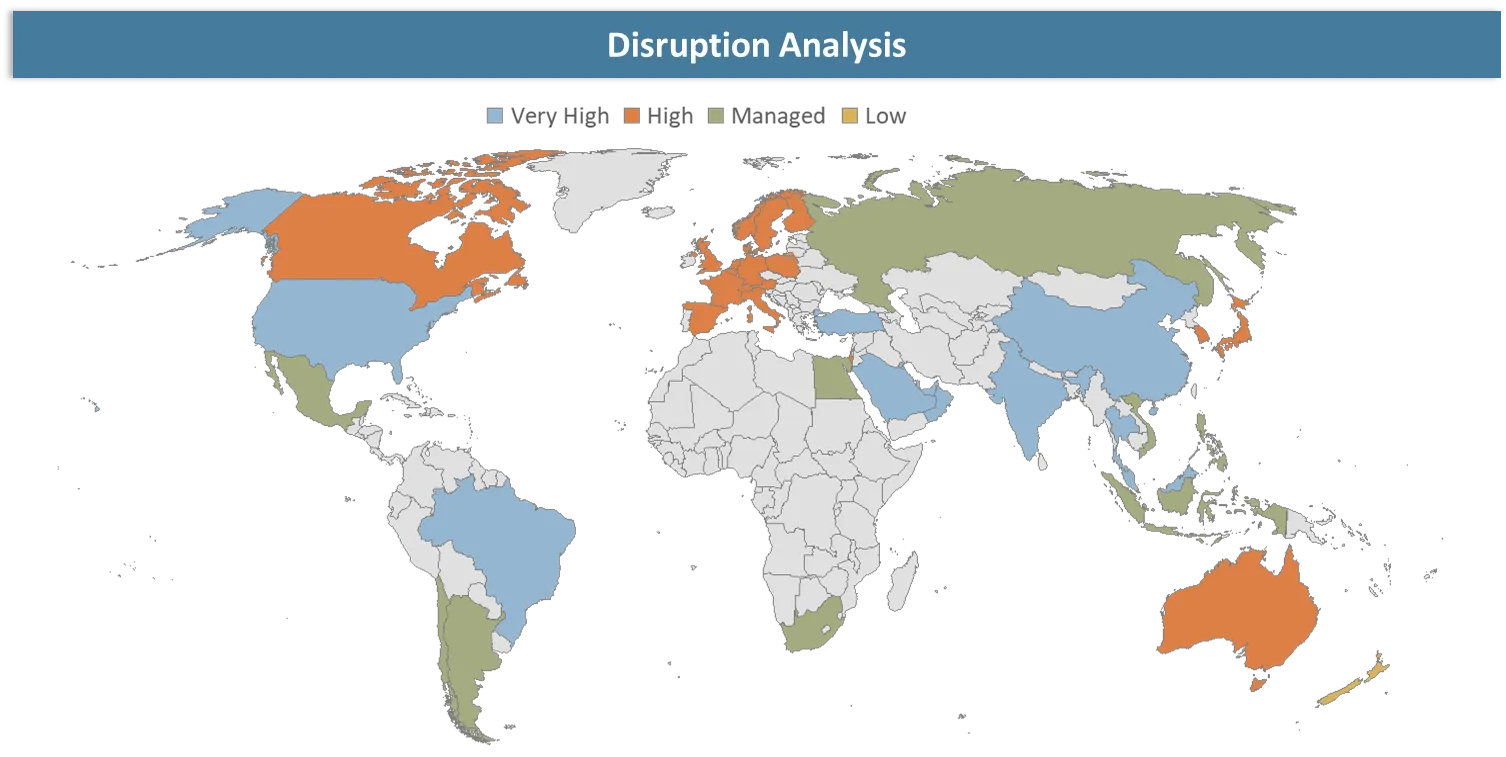
Transition Toward Integrated and Automated GC-MS Platforms Reshaping Analytical Laboratory Infrastructure
The Disruption in the gas chromatography market is largely influenced by the transition from conventional stand-alone gas chromatography instruments towards more integrated GC-MS systems with automation, intelligence software, and laboratory network connectivity. Various labs from different industries, including pharmaceuticals, environmental sciences, food testing, the energy sector, and forensic sciences, are in need of instruments that can simultaneously perform compound separation and compound identification with higher efficiency and increased reliability. Thus, companies are developing products that are modular and application-specific GC systems that enable automation and detection by mass spectrometry.
The disruption is further enhanced by innovations in products. In January 2025, Shimadzu Corporation introduced seven new Brevis GC-2050 system configurations. These new models are for the applications of Green Transformation (GX), including Automatic Gas Analysis, Multi-Detector GC, Thermal Desorption, Pyrolysis Analysis, Headspace Sampler, Customized GC, and Jetanizer/Polyarc Microreactor Systems. It shows the change in focus from the use of single-function GCs to configuration systems for carbon-neutral research, materials, and gas analysis. Also, the growing prevalence of artificial intelligence-based interpretation of data, integration with the LIMS, predictive maintenance, and automation of the analytical process is completely transforming lab operations. Rather than spending on traditional gas chromatographs, labs are now focusing on creating an interconnected high-performance system that can meet regulatory compliance and evolving analytical needs. Such developments have led to a complete transformation of the gas chromatography industry around the world.
Gas Chromatography Market BCG Matrix: Company Evaluation
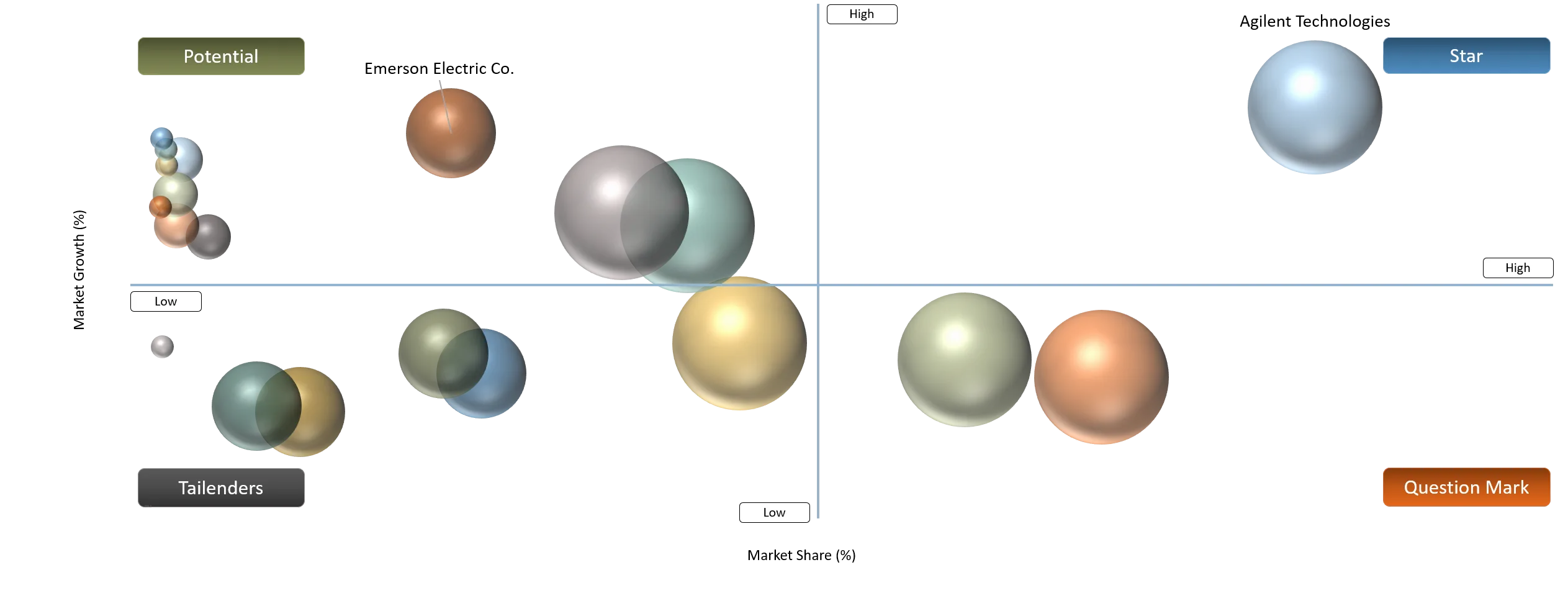
Stars include Agilent Technologies, Thermo Fisher Scientific, Shimadzu Corporation, and PerkinElmer because they command strong positions in the global gas chromatography market through comprehensive GC and GC-MS portfolios, continuous investments in analytical innovation, and extensive global sales and service networks. These companies have strengthened their competitive advantage by integrating automation, digital laboratory software, advanced detectors, and mass spectrometry solutions that address the growing requirements of pharmaceutical, environmental, food safety, petrochemical, and forensic laboratories. Question Mark companies such as LECO Corporation, Siemens AG, Yokogawa Electric Corporation, and ABB Ltd. are positioned in the category as they continue expanding their chromatography and process analytical capabilities but face intense competition from established analytical instrumentation leaders.
The Potential category includes Emerson Electric Co., Process Insights, SCION Instruments, and Chromatotec, which are benefiting from increasing demand for industrial process monitoring, environmental compliance testing, and specialty gas analysis. These companies possess strong technological expertise in specific application areas but require broader global commercialization, expanded product portfolios, and stronger penetration into pharmaceutical and life science laboratories to improve their competitive position. Tailenders include Dani Instruments and Ellutia, as their market presence is primarily concentrated in niche analytical applications and selected regional markets.
Gas Chromatography Market Dynamics
Driver Impact Analysis
| Driver | Market Growth Impact (%) | Demand Concentration | Impacted Use Case | Strategic Impact |
Stringent environmental regulations and emission monitoring requirements are increasing the adoption of gas chromatography systems. | 30% | Environmental testing laboratories, regulatory agencies, industrial emission monitoring | VOC analysis, air quality monitoring, industrial emission compliance, PFAS and contaminant analysis | Accelerates investment in high-sensitivity GC and GC-MS platforms for regulatory compliance and environmental monitoring. |
Growing pharmaceutical manufacturing and biologics research are driving demand for gas chromatography. | 26% | Pharmaceutical manufacturers, CDMOs, biotechnology companies, QC laboratories | Drug development, residual solvent analysis, impurity profiling, raw material quality control | Expands demand for validated GC systems with automation and regulatory-compliant analytical workflows. |
Rising global emphasis on food safety and authenticity testing is accelerating the use of gas chromatography. | 20% | Food & beverage manufacturers, food testing laboratories, regulatory authorities | Pesticide residue analysis, flavor profiling, contaminant detection, food authenticity testing | Strengthens adoption of multi-residue analytical platforms and improves food quality assurance capabilities. |
Expansion of petrochemical and refinery operations is boosting demand for gas chromatography | 17% | Petrochemical plants, refineries, chemical manufacturers | Hydrocarbon composition analysis, natural gas testing, refinery process control, fuel quality analysis | Increases deployment of process GC systems for continuous monitoring and process optimization. |
Increasing forensic and toxicology investigations are strengthening the adoption of gas chromatography | 12% | Forensic laboratories, law enforcement agencies, toxicology laboratories | Drug identification, toxicology screening, explosive residue analysis, forensic evidence testing | Drives adoption of high-resolution GC-MS systems for trace-level identification and legally defensible analytical results. |
Stringent environmental regulations and emission monitoring requirements are increasing the adoption of gas chromatography systems
Stringent environmental regulations that impose strict restrictions on industrial emissions and hazardous air pollutants are contributing greatly towards the increased application of gas chromatography (GC) instruments. Regulatory bodies are also making it mandatory to apply GC in the analytical procedures for the determination of VOCs, hazardous air pollutants, refinery gases, and industrial emissions in environmental tests as well as process industries. In April 2025, the U.S. Environmental Protection Agency (EPA) revised Method 18 – Measurement of Gaseous Organic Compound Emissions by Gas Chromatography. This highlights gas chromatography as an analytical procedure of choice in emission compliance tests. At the same time, sources of 25,000 metric tons or more of greenhouse gas emissions per year are required to report to EPA through its Greenhouse Gas Reporting Program (GHGRP).
As there is more emphasis on industrial air pollution control and compliance with regulations, there is a faster uptake of high-tech gas chromatography for the quick detection of emissions. In August 2025, according to PubMed, researchers developed a field-ready gas chromatography-mass spectrometry (GC-MS) technique for rapid on-site monitoring of volatile odorants released by hot-mix asphalt manufacturing facilities, contributing to environmental emission monitoring and compliance with regulations. This analytical method allowed for LODs of less than 0.13 μg/m³, recovery values greater than 85%, 10-min run time, and reliable detection of C4–C11 aliphatic aldehydes and ketones in realistic conditions. The technique was tested in field tests conducted 200 m away from the asphalt manufacturing facility, where the detected values matched those predicted by dispersion models, illustrating the increased involvement of modern gas chromatography techniques in high-throughput environmental monitoring.
Restraint Impact Analysis
| Restraint | Drag on Market Growth (%) | Primary Impact Area | Impacted Use Case | Strategic Impact |
Complex sample preparation procedures and lengthy analytical workflows reduce operational efficiency for high-volume testing applications. | 26% | Laboratory productivity & workflow efficiency | Pharmaceutical QC, environmental testing, food safety laboratories, forensic analysis | Drives demand for automated sample preparation, autosamplers, and integrated GC-MS workflows to improve throughput and reduce manual intervention. |
Dependence on high-purity carrier gases and specialized consumables increases operating costs and exposes laboratories to supply chain disruptions. | 22% | Operating cost & consumable supply | Routine analytical testing, industrial QC, research laboratories | Encourages development of hydrogen generators, carrier gas optimization technologies, and low-consumption GC platforms to reduce lifecycle costs. |
Competition from alternative analytical technologies such as LC-MS and spectroscopy limits gas chromatography adoption for non-volatile and thermally unstable compounds. | 20% | Technology substitution | Pharmaceutical analysis, biomolecule characterization, metabolomics | Forces GC manufacturers to differentiate through GC-MS innovation, multidimensional GC, and application-specific analytical solutions. |
Limited applicability for large, polar, or thermally unstable molecules restricts the use of gas chromatography across certain pharmaceutical and biochemical analyses. | 16% | Analytical capability limitations | Biologics, protein analysis, polymer characterization, complex biomolecule testing | Increases reliance on complementary analytical techniques while encouraging development of derivatization methods and hybrid analytical workflows. |
Complex sample preparation procedures and lengthy analytical workflows reduce operational efficiency for high-volume testing applications
Complex sample preparation remains a significant restraint for the gas chromatography market, especially in laboratories dealing with large quantities of environmental, pharmaceutical, food, and forensic samples. Most analysis techniques require sample preparation that includes extraction, purification, concentration, or derivatization processes before Gas Chromatography analysis, which increases time and reduces laboratory efficiency. As recently published in Analytical Science in 2025, the conventional Liquid-Liquid Extraction (LLE) and Solid Phase Extraction (SPE) techniques used in GC-MS still have problems with tedious sample preparation procedures, which led to the invention of robotic and SPME techniques. Also, Thermo Fisher Scientific has revealed that the company’s automated sample preparation systems could reduce solvent usage by up to 90% while unattended processing of up to 24 samples and 972 sample vials through robotic autosamplers.
The rising need for high-throughput analysis tests has led to greater demand for improving efficiency in laboratory processes and reducing turnaround times. According to Separation Science, complex sample preparation continues to be a time-consuming process when conducting food safety tests using gas chromatography analysis, especially in high-throughput laboratories dealing with complex food matrices. As pointed out in the article, combining automated sample preparation with GC-MS greatly increases workflow efficiency by eliminating the need for manual interventions as well as matrix interferences. Laboratories are able to conduct sample preparation in less than 5 minutes with the use of automated extraction and cleanup techniques while running the equipment 24/7 and conducting hundreds of tests daily with greater accuracy and lower chances of human errors.
Gas Chromatography Market Segmentation Analysis
The global gas chromatography market is segmented based on offerings, instrument type, detector type, technique, column type, separation technique, end-user, and region.
Adoption of Capillary Columns Driving High-Precision Gas Chromatographic Analysis
The capillary columns segment dominated the gas chromatography market, with an 86% market share in 2025, mainly because of their excellent separative capabilities, better resolution, faster performance, and complex sample compatibility with a wide variety of pharmaceutical, environmental, food safety, petrochemical, and forensic applications. When compared to packed columns, capillary columns have better sensitivity, lower sample needs, and high reproducibility, which make them the most preferred choice in modern-day labs and GC-MS systems. The increasing regulatory pressure for detecting contaminants at trace levels in samples is one of the factors responsible for the growing use of capillary columns.
Agilent Technologies augmented its J&W GC Column range in 2025 through the introduction of additional information and applications for trace-level GC-MS analysis of DB-5Q and HP-5Q Ultra Low-Bleed GC/MS capillary columns. Moreover, the increased use of the analytical method standards defined by EPA, ISO, and ASTM, which require the use of fused-silica capillary columns in environmental, petrochemical, and food safety testing, is expected to bolster the dominance of this segment within the gas chromatography market.
Gas Chromatography Market Geographical Penetration
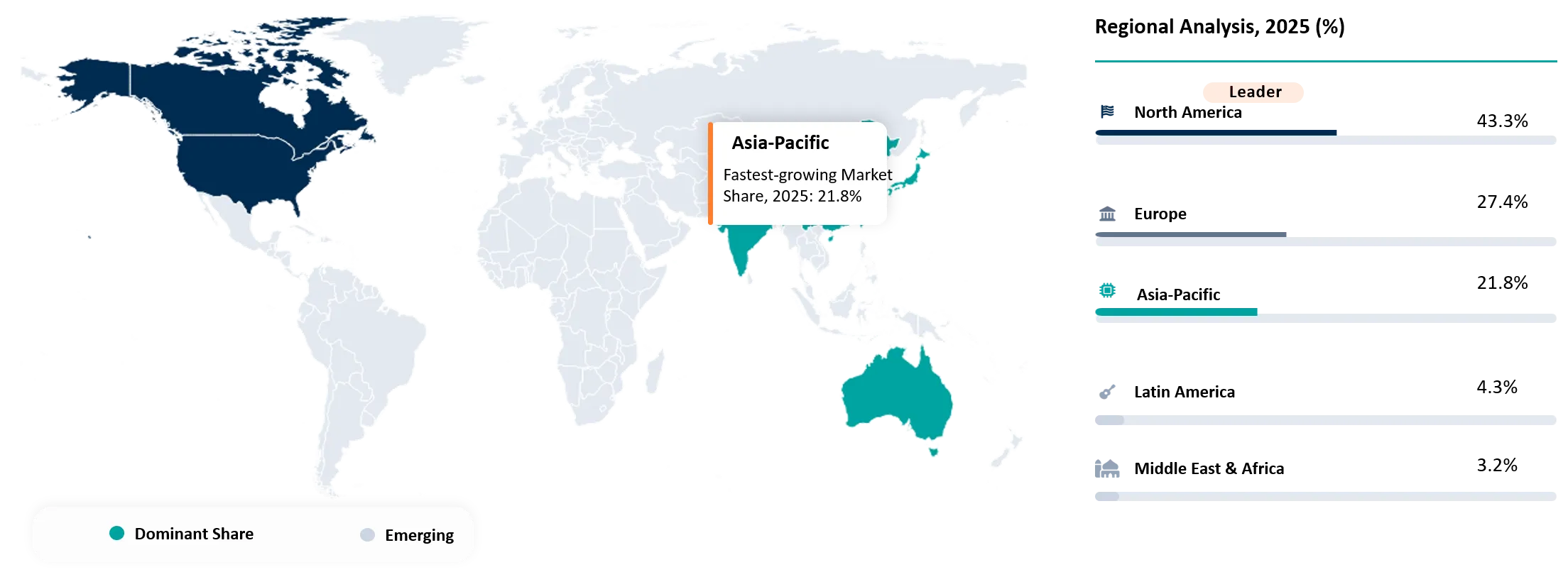
Strong Regulatory Framework and Advanced Analytical Infrastructure Driving North American Market Leadership
The North America region dominated the gas chromatography market, with 43.3% of the total market share in 2025, owing to its highly developed analytical laboratory framework, strict laws in the environment and pharmaceutical industries, and the presence of major chromatography manufacturing companies. The adoption rate of gas chromatography in North America has been very high in all the above-listed industries and will continue to remain so as the agencies keep insisting on highly precise analytical tests.
Increasing requirements for quick and efficient environmental testing in the field have made it necessary to develop portable GC devices that can achieve laboratory-level analysis capabilities. In May 2026, EN-SCAN, a U.S.-based environmental analytical instrumentation firm, launched the Labrador HH-GC, a handheld gas chromatography instrument that provides lab-quality VOC analysis right at the source. The handheld GC offers ppb-level sensitivity for analysis of VOCs in air, water, and soil samples and produces results in just 3 minutes, thus considerably reducing the need for lab analyses. This portable system allows one to perform various tasks, such as environmental remediation, BTEX analysis, vapor intrusion studies, industrial hygiene analysis, and groundwater screening and regulatory compliance, helping accelerate contamination assessment while reducing project costs and improving field-based decision-making.
U.S. Gas Chromatography Market Trends
The U.S. holds the dominant position in the North American gas chromatography market because of the well-established infrastructure for analytical labs in the country, coupled with the well-developed pharmaceutical and petrochemical sectors as well as stringent environmental and food safety regulations. The country is the place where major gas chromatography equipment manufacturers such as Agilent Technologies, Thermo Fisher Scientific, PerkinElmer, LECO Corporation, and Process Insights conduct research for more advanced GC and GC-MS solutions for use in various application areas such as life sciences, environment, energy and forensics.
Growing demands for improved lab productivity along with more intelligent analysis are driving the evolution of gas chromatography technology. In May 2026, Agilent Technologies, a U.S.-based analytical instrumentation and life sciences company, launched their advanced generation Intelligent Gas Chromatography (GC) systems such as the Agilent 8850 Gas Chromatograph as well as the improved Intuvo 9000 GC platform. These systems are equipped with built-in intelligent diagnostic systems, predictive maintenance systems, and remote instrument monitoring tools that ensure lab productivity and decrease downtime. The Agilent 8850 GC occupies less than half of the bench space of traditional GC systems but can deliver analytical procedures that are 30% faster due to fast heating and cooling technology.
Canada Gas Chromatography Market Outlook
Canada has emerged as the fastest-growing country in the North American gas chromatography market, due to rising investments in the setup of analytical laboratories, rising environmental monitoring initiatives, and rising pharmaceutical and life science research activities in the country. Canada has been witnessing rising demand for the deployment of gas chromatography and GC-MS systems in environmental testing laboratories, food safety agencies, petrochemical companies, and research institutes, due to rising need for trace analysis and monitoring of contaminants through regulatory requirements. Canada's efforts toward laboratory automation and advanced analytical technologies have been helping speed up the replacement of traditional analytical systems with advanced GC systems.
The government's investment in modern laboratory equipment is helping the use of advanced gas chromatography technology in regulatory analysis and scientific research purposes. In February 2025, the Government of Canada (Health Canada) awarded a CAD 40,983.23 contract to GERSTEL, Inc., a U.S.-based analytical instrumentation and laboratory automation company headquartered in Linthicum, Maryland, for the supply of a Gas Chromatography–Mass Spectrometry (GC-MS) equipment adapter. The non-competitive contract supports the modernization of Health Canada's analytical laboratory infrastructure in the National Capital Region, with a contract period extending from 11 February 2025 to 31 March 2026. The GC-MS adapter is designed to enhance sample preparation and analytical performance for chromatography workflows, strengthening laboratory capabilities for chemical analysis, regulatory testing, and scientific research while supporting reliable, high-throughput GC-MS operations.
Expanding Industrial Testing Infrastructure and Laboratory Modernization Accelerate Growth in Asia-Pacific
The Asia-Pacific region is projected to be the fastest-growing region in the gas chromatography market, driven by expanding investments in pharmaceutical manufacturing, petrochemical refining, environmental monitoring, food safety testing, and semiconductor production. The region accounted for 21.8% of the global gas chromatography market in 2025 and is projected to register a CAGR of 8.0% during the forecast period. Countries such as China, Japan, South Korea, India, Singapore, and Taiwan are strengthening analytical laboratory infrastructure to meet increasingly stringent regulatory requirements, improve industrial quality control, and support the rapid commercialization of advanced technologies. Rising adoption of automation, digital laboratory workflows, and high-throughput analytical systems is further accelerating demand for advanced gas chromatography platforms across research institutions, government laboratories, and industrial testing facilities.
The rapid expansion of the SAF industry in the Asia-Pacific region is resulting in an increased need for sophisticated analytics solutions that can guarantee the quality, compliance, and efficiency of fuel production. In January 2026, Precision Analyzer Company (PAC), a U.S.-based analytical instrumentation manufacturer, joined the Asia Sustainable Aviation Fuel Association (ASAFA) to support the expansion of Sustainable Aviation Fuel (SAF) across the Asia-Pacific region. PAC provides advanced laboratory and process analytical solutions, including gas chromatography (GC), elemental analyzers, and physical property testing systems that enable SAF production, fuel quality assurance, regulatory compliance, and process optimization. The company operates through 13 sales and support offices and a network of more than 140 distributors worldwide, strengthening its ability to support the rapidly growing SAF ecosystem in Asia-Pacific. The partnership is expected to enhance demand for PAC's GC technologies as regional investments in sustainable aviation fuel production and testing continue to increase.
Japan Gas Chromatography Market Trends
Japan is one of the major countries in the Asia-Pacific Gas Chromatography (GC) Market because of its highly developed analytical instrumentation industry, presence of global GC suppliers, constant development, and implementation of modern GC technology in various pharmaceutical, environmental, petrochemical, food safety, and semiconductor industries. Japan has world-renowned analytical instrument manufacturing companies like Shimadzu Corporation and a highly developed scientific infrastructure, which is constantly improving chromatography technology. An increasing trend towards the automation and digitalization of laboratories and sustainable analytical workflows, along with the Green Transformation (GX) concept, is accelerating the development of the next generation of GC systems and strengthening Japan's leadership in the analytical instrumentation market in the Asia-Pacific region.
Increasing awareness about the sustainability of lab operations and carbon emissions reduction is spurring innovation in gas chromatography technologies in Japan. In January 2025, Shimadzu Corporation, a Japan-based analytical instrumentation manufacturer, launched the world's first Gas Chromatograph (GC) systems with a CO₂ reduction visualization function by expanding its Brevis GC-2050 product lineup with seven new GC system configurations for Green Transformation (GX) applications. The new systems feature an ECO Idling Function that reduces power consumption by approximately 61% and gas consumption by about 92% compared with previous models, while visually displaying cumulative CO₂ reductions to support sustainable laboratory operations.
Gas Chromatography Market Competitive Landscape
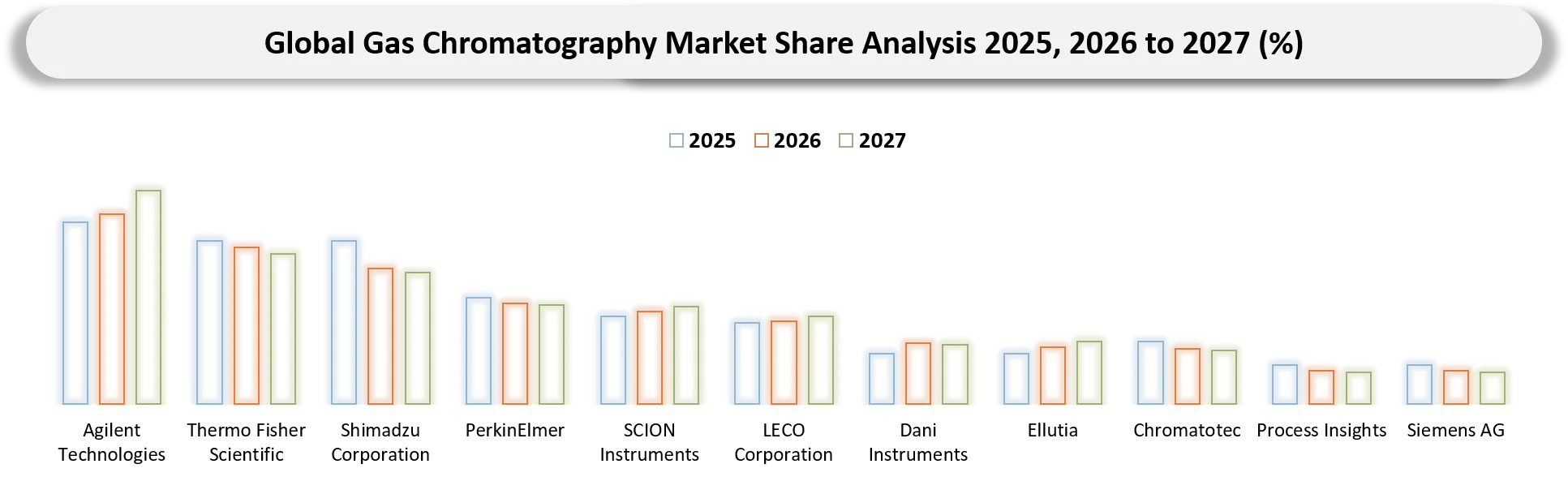
- The market is characterized by three major participant groups: global analytical instrumentation leaders, specialized chromatography solution providers, and industrial process analytics companies. Agilent Technologies, Thermo Fisher Scientific, Shimadzu Corporation, and PerkinElmer dominate the laboratory gas chromatography landscape through comprehensive GC, GC-MS, software, consumables, and service portfolios with an estimated combined market share of 64.6% in 2025. Specialized chromatography companies including LECO Corporation, SCION Instruments, Dani Instruments, Ellutia, and Chromatotec focus on niche applications such as environmental analysis, petrochemical testing, food safety, and research laboratories, while Siemens AG, Yokogawa Electric Corporation, ABB Ltd., Emerson Electric Co., and Process Insights strengthen competition in process gas chromatography, industrial automation, and continuous online gas analysis. This creates a technology-driven competitive environment where analytical performance, regulatory compliance, automation, digital laboratory integration, and global service capabilities determine long-term competitiveness.
- Key players include Agilent Technologies, Thermo Fisher Scientific, Shimadzu Corporation, PerkinElmer, SCION Instruments, LECO Corporation, Dani Instruments, Ellutia, Chromatotec, Process Insights, Siemens AG, Yokogawa Electric Corporation, ABB Ltd., and Emerson Electric Co.
Key Developments
- January 2026: Velaris, a Netherlands-based laboratory automation and analytical instrumentation platform headquartered in Breda, Netherlands, announced the acquisition of Markes International, a UK-based analytical technology company headquartered in Bridgend, Wales.
- March 2026: PerkinElmer, a U.S.-based analytical instrumentation and life sciences solutions company, showcased the enhanced Clarus® Nova Gas Chromatograph (GC) platform at Analytica 2026 in Munich, Germany.
- March 2026: Shimadzu Corporation, a Japan-based analytical and scientific instrument manufacturer, launched the Nexis GC-2060 Gas Chromatograph, its flagship GC platform developed after 70 years of gas chromatography innovation since the company introduced Japan’s first GC system in 1956.
- January 2025: Shimadzu (Asia Pacific), the regional division of Shimadzu Corporation, a Japan-based analytical and measuring instruments manufacturer, announced a strategic collaboration with SepSolve Analytical, a UK-based chromatography technology company specializing in multidimensional chromatography solutions.
- November 2025: Astrotech Corporation, a U.S.-based mass spectrometry and analytical technology company, announced that its Board of Directors initiated a review of strategic alternatives to maximize shareholder value.
Key Procurement Priorities and Buyer Evaluation Criteria
- Organizations investing in Gas Chromatography systems are increasingly selecting suppliers based on their ability to provide high-performance analytical platforms that deliver accurate compound identification, high sensitivity, reliable reproducibility, and scalability across laboratory and industrial testing environments.
- The procurement decision-making process is increasingly influenced by the growing demand for automated chromatography workflows, GC-MS integration, digital laboratory connectivity, regulatory compliance, and high-throughput analytical capabilities across pharmaceutical, environmental, food safety, petrochemical, and forensic applications.
- Buyers evaluate suppliers based on factors such as instrument sensitivity, detector performance, column compatibility, analytical resolution, sample throughput, calibration stability, software capabilities, and compliance with regulatory standards when selecting gas chromatography technology providers.
- Laboratories are also evaluating energy efficiency, instrument footprint, automation readiness, and integration with Laboratory Information Management Systems (LIMS) as key procurement factors to improve operational efficiency and enable digital transformation of analytical workflows.
Why Choose DataM?
- Technological Innovations: Explores advancements in gas chromatography technologies, including high-resolution GC, GC-MS, GC×GC, automated sample preparation, AI-enabled data analysis, and miniaturized portable GC systems, enabling improved analytical accuracy, faster detection, enhanced sensitivity, and efficient workflows across environmental, pharmaceutical, food safety, petrochemical, and life science applications.
- Product Performance & Market Positioning: Evaluates how leading players differentiate gas chromatography solutions based on detection capabilities, resolution, throughput, automation level, instrument reliability, sensitivity, and operational efficiency, highlighting competitive positioning across laboratories, industrial testing facilities, research institutions, and quality control environments.
- Real-World Evidence: Highlights adoption of gas chromatography solutions in pharmaceutical quality testing, environmental monitoring, petrochemical analysis, food and beverage safety, forensic testing, and biotechnology research, demonstrating benefits such as precise compound identification, regulatory compliance, improved laboratory productivity, and enhanced analytical performance.
- Market Updates & Industry Changes: Tracks key developments such as advanced GC instrument launches, GC-MS technology upgrades, laboratory automation initiatives, strategic collaborations, capacity expansions, and regional analytical instrumentation investments across North America, Europe, and Asia-Pacific, supporting the evolution of modern analytical testing ecosystems.
- Competitive Strategies: Analyzes how leading companies strengthen their market presence through product innovation, integrated GC-MS platforms, software advancements, service expansion, acquisitions, and partnerships to address increasing demand for accurate, high-throughput, and automated analytical solutions across multiple industries.
- Pricing & Market Access: Explains pricing variations based on instrument configuration, detector type, automation capabilities, application requirements, and integration with mass spectrometry platforms, along with market access through direct sales channels, distributors, laboratory solution providers, and analytical service networks.
- Market Entry & Expansion: Identifies growth opportunities driven by increasing regulatory testing requirements, pharmaceutical and biotechnology expansion, environmental monitoring needs, petrochemical analysis, and food safety standards, while outlining strategies such as regional distribution expansion, application-specific product development, digital integration, and strategic partnerships to strengthen global market penetration.
Target Audience 2026
- Analytical Instrument Manufacturers
- Pharmaceutical & Biotechnology Companies
- Chemical & Petrochemical Industry Stakeholders
- Food & Beverage Testing Organizations
- Environmental Testing Laboratories & Regulatory Agencies
- Healthcare, Clinical Research & Forensic Laboratories
- Academic & Research Institutions


























































