


Gallium Market Size & Forecast 2035
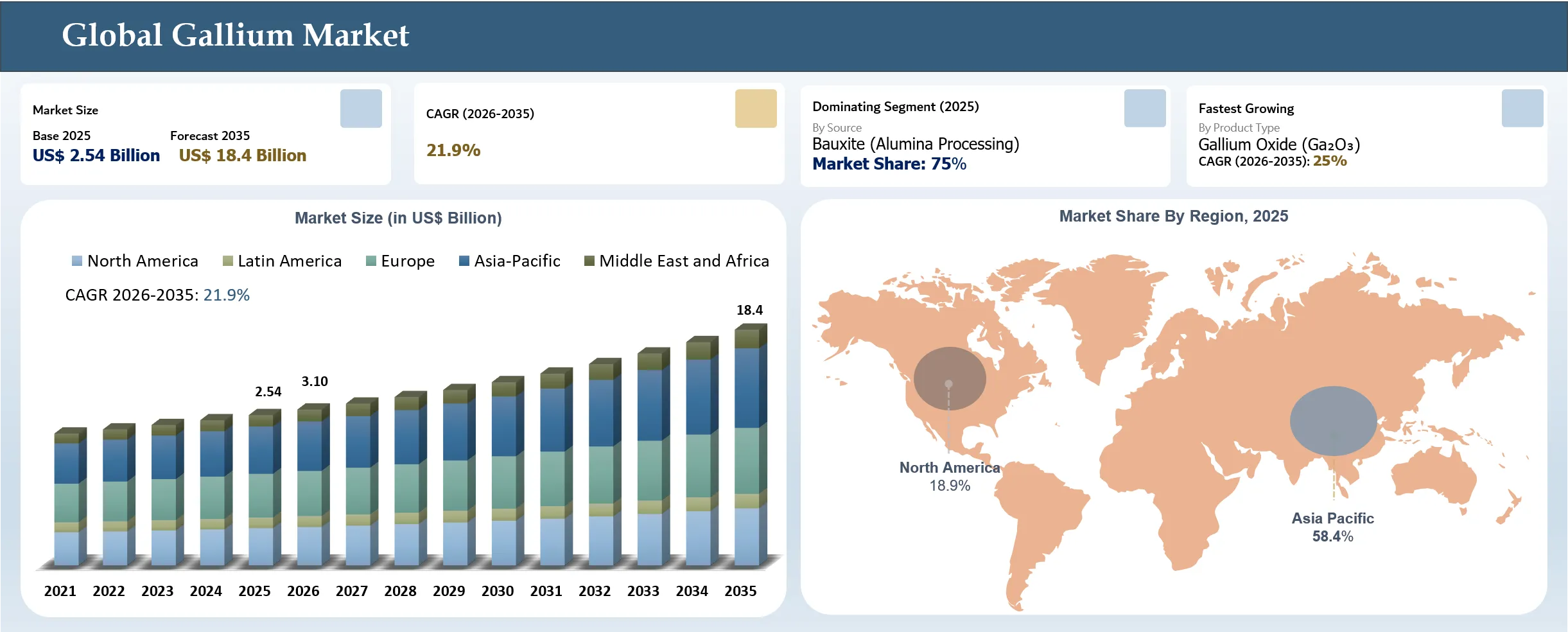
The global Gallium market reached USD 2.54 billion in 2025 and is expected to reach USD 18.4 billion by 2035, growing with a CAGR of 21.9% during the forecast period 2026-2035. The market is expanding rapidly due to the high demand for gallium semiconductors used in AI servers, electric cars, 5G, and power electronics. According to the U.S. Geological Survey (USGS) Mineral Commodity Summaries 2026, there was no primary gallium production in the United States for 2025, and thus the country relied fully on imported low-purity gallium to carry out necessary refinement processes. Gallium metal imports by the U.S. were estimated to be valued at $15 million in total, while gallium arsenide wafer imports were worth approximately $120 million. Speaking of end-use applications, integrated circuits (ICs) consumed 73% of domestic gallium, followed by optoelectronic devices at 26%, which indicates more and more active usage of gallium in semiconductor, LED, laser diode, photodetector, and solar cell manufacturing. Companies such as 5N Plus, DOWA Holdings, American Elements, Indium Corporation, and Vital Materials are improving their gallium purity technology in response to the growing demand from manufacturers of semiconductor and optoelectronics. But even at present, the market is still struggling with such problems as a concentrated raw material base, export restrictions, and a difficult purification process.
In March 2026, American Elements announced the advancement of its gallium metal R&D program in collaboration with the Government of Canada for the development of the domestic primary gallium supply chain in North America. The Government of Canada has approved the conditional financial assistance of C$18.95 million in addition to C$7 million from the Government of Quebec. The Company is going to build a pilot plant in Saguenay, Quebec, which will be operational in 2027, along with the demonstration plant that will manufacture 4 tonnes of gallium yearly. On commercialization, the company plans to manufacture 40 tonnes of gallium yearly, which will be 5% of the global production of primary gallium.
Wide-Space Opportunities Across the Gallium Value Chain
In January 2026, the European Investment Bank (EIB) approved €90 million (USD 98 million) to METLEN Energy & Metals to develop Europe’s first plant for the industrial production of gallium within the Aluminium of Greece complex at Agios Nikolaos, Greece. The bulk of the investment is devoted to the development of an exclusive plant for the processing and refinement of gallium, while further investments are made into the upgrade of bauxite mining activities and improvements in the existing alumina refinery. The project will ensure Europe’s own gallium supply for use in semiconductors, military equipment, the aerospace industry, renewable energy, and power electronics.
The investment is expected to generate significant procurement opportunities across the gallium value chain. Engineering and EPC companies such as Technip Energies, Metso, FLSmidth, and ANDRITZ are well placed to take advantage of contracts related to engineering, construction, and integration of processes. Industrial equipment and process technologies firms like Metso, Alfa Laval, Outotec, and ABB are expected to benefit from the increased need for refining and filtering technologies, separation processes, and automation. Mining equipment and infrastructure firms like Epiroc, Sandvik, and Komatsu will stand to gain from the development of bauxite mining activities. In addition, there will be long-term benefits to semiconductor material producers such as IQE, Sumitomo Electric Industries, Wafer Technology Ltd., and Coherent Corp., thanks to the secure supply of gallium in Europe for GaN and GaAs semiconductors.
Gallium Market Strategic Takeaways
- The Asia-Pacific region firmly dominated the global marketplace by securing a 58.4% market share in 2025. This leading position is supported by its massive bauxite-to-alumina refining infrastructure and strong semiconductor fabrication base.
- Bauxite processing served as the primary source of supply, contributing roughly 75% of total worldwide gallium production in 2025. This dominance remains stable because 85% of globally mined bauxite is utilized to manufacture alumina.
- Integrated circuits accounted for 73% of domestic gallium consumption within the United States market. Optoelectronic devices represented the second-largest application area, consuming 26% of the material.
- The European Investment Bank approved €90 million (USD 98 million) to METLEN Energy & Metals for critical infrastructure. This investment will develop Europe’s first industrial refinement plant to process gallium within the Aluminum of Greece complex.
Gallium Market Industry Trends and Strategic Insight
- Gallium is transitioning from a specialty metal to a strategic semiconductor raw material. Demand is increasingly linked to gallium nitride (GaN) and gallium arsenide (GaAs) devices used in AI servers, 5G base stations, satellite communications, electric vehicles, and defense electronics.
- Supply chain diversification has become a top investment priority. China's dominance in primary gallium production and export controls have accelerated investments in alternative refining capacity across Europe, North America, and Australia.
- Recovery of gallium from industrial by-products is emerging as a commercially viable production strategy. Since gallium is primarily recovered during alumina and zinc processing, producers are investing in technologies that improve extraction efficiency from existing industrial streams instead of developing standalone mines.
- Power electronics represent the fastest-growing demand center for gallium compounds. The increasing adoption of GaN-based power semiconductors in electric vehicle onboard chargers, fast-charging adapters, renewable energy inverters, and industrial power supplies is expanding gallium consumption beyond traditional RF and LED applications.
- Government industrial policies are accelerating domestic gallium ecosystems. Critical mineral strategies in the United States, European Union, Japan, and South Korea increasingly integrate gallium into semiconductor and defense supply chain programs, encouraging domestic refining, recycling, strategic stockpiling, and public-private investment in critical materials infrastructure.
Gallium Market Scope
| Metrics | Details | |
| 2025 Market Size | USD 2.54 Billion | |
| 2035 Projected Market Size | USD 18.4 Billion | |
| CAGR (2026-2035) | 21.9% | |
| Largest Market | Asia-Pacific | |
| Fastest Growing Market | North America | |
| By Product Type | Metallic Gallium, Gallium Arsenide (GaAs), Gallium Nitride (GaN), Gallium Oxide (Ga₂O₃), Other Gallium Compounds | |
| By Purity | Low Purity Gallium, High Purity Gallium, Ultra-High Purity Gallium | |
| By Source | Bauxite (Alumina Processing), Zinc Processing, Recycled Gallium, Others | |
| By End-Use | Electronics & Semiconductors, Automotive, Telecommunications, Aerospace & Defense, Renewable Energy, Industrial, Healthcare, Research Institutions, Others | |
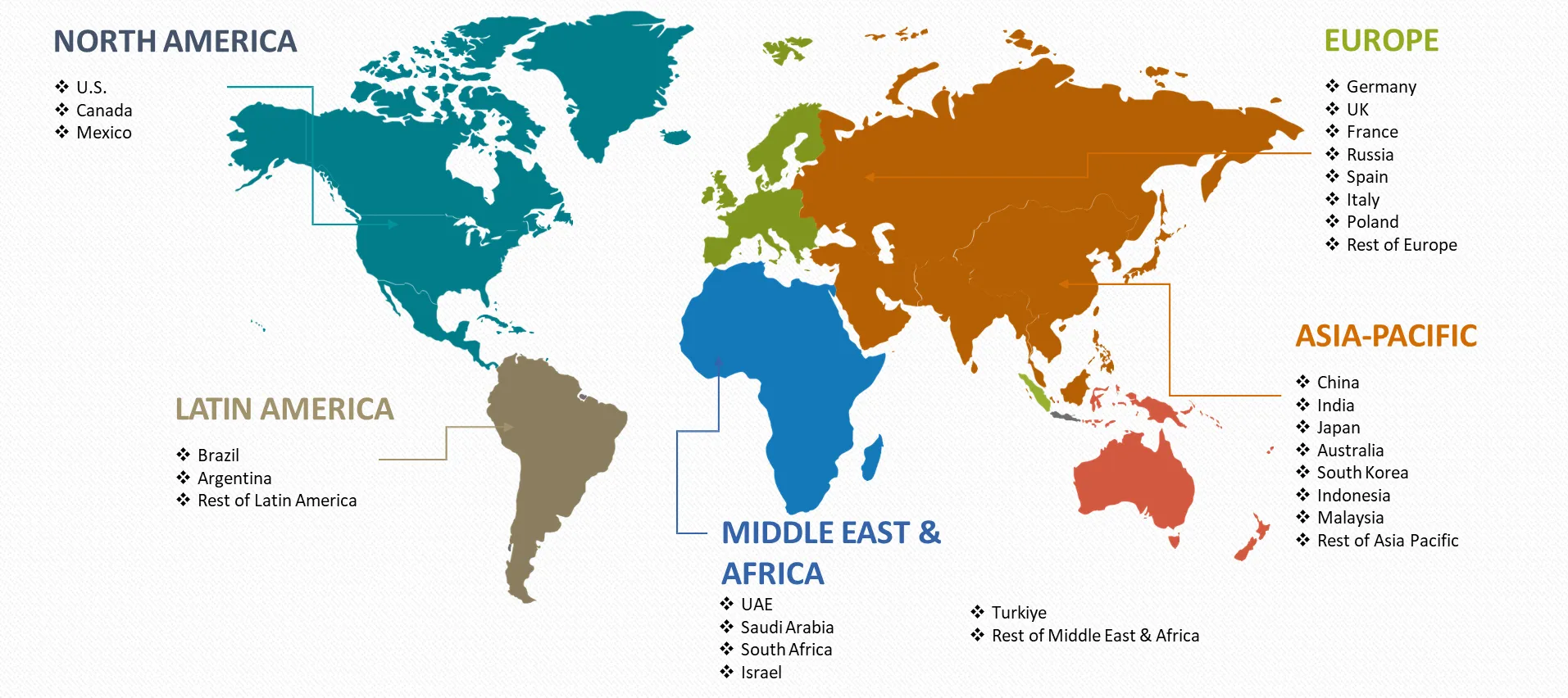
| By Region | North America | U.S., Canada, Mexico |
| Europe | Germany, UK, France, Spain, Italy, Poland | |
| Asia-Pacific | China, India, Japan, Australia, South Korea, Indonesia, Malaysia | |
| Latin America | Brazil, Argentina | |
| Middle East and Africa | UAE, Saudi Arabia, South Africa, Israel, Türkiye | |
| Report Insights Covered | Competitive Landscape Analysis, Company Profile Analysis, Market Size, Share, Growth | |
Gallium Market Disruption Analysis
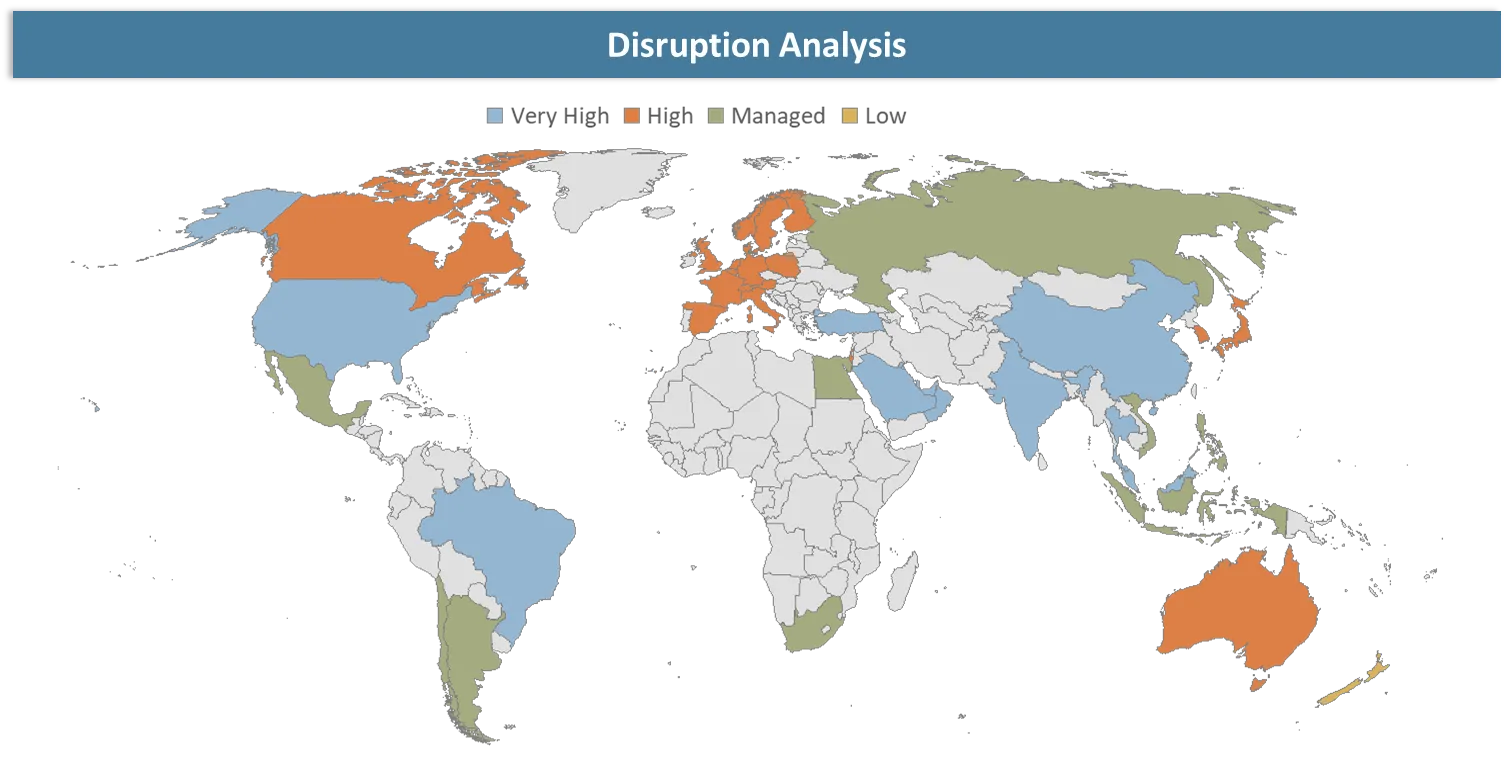
Export Restrictions and Critical Mineral Supply Chain Disruptions Reshaping Gallium Supply Landscape
The disturbance in the Gallium Market can be attributed to rising geopolitical challenges and the concentration of gallium production in a few countries globally, especially in China. Gallium production mainly happens from the production of alumina and zinc as a byproduct. The source of gallium cannot be attributed to the mining industry but depends on the present industrial base. According to the USGS Mineral Commodity Summaries 2026, China has continued to dominate the primary production of gallium in 2025. The disruption in the supply chain has led to changes in the competitive dynamics by emphasizing refining capabilities of gallium rather than its production through volume. The semiconductor companies are demanding 6N to 7N ultra-high purity of gallium for applications of GaN and GaAs in power electronics, AI, 5G technology, and military applications.
This has resulted in companies adopting strategies like increasing efforts towards recycling, advanced recovery techniques from alumina stream, and establishing localized supply chains. Moreover, government-backed projects to develop semiconductors in areas like the US, EU, Japan, and South Korea are providing new openings for national gallium ecosystems. It is anticipated that these projects will help turn the gallium market from being a geographically concentrated by-product market into a diversified strategic material network based on security of supply, recycling, and advanced semiconductor demand.
Gallium Market BCG Matrix: Company Evaluation

Stars include Chinalco (Aluminum Corporation of China Limited), Vital Materials Co., Ltd., and DOWA Electronics Materials Co., Ltd. because these companies have strong positions across gallium production, refining, and high-purity semiconductor material supply chains. Chinalco benefits from its integrated alumina refining operations, which provide a significant advantage in primary gallium recovery, while Vital Materials has established a strong position in high-purity gallium production and gallium-based compound materials used in GaN and GaAs semiconductor applications. Question Marks include Zhuzhou Keneng New Material Co., Ltd., Indium Corporation, 5N Plus Inc., and Sumitomo Chemical Co., Ltd., as these companies are expanding their presence in high-purity gallium and specialty semiconductor materials, but operate in a market facing strong competition from established Chinese producers and integrated material suppliers.
Potential companies include American Elements, Alcoa Corporation, and Neo Performance Materials Inc. because they are positioned to benefit from the increasing need for geographically diversified gallium supply chains but are still developing their gallium production capabilities. American Elements and Alcoa are leveraging their alumina refining assets to explore gallium recovery opportunities, providing strategic advantages through access to existing industrial feedstock. Tailenders include Rasa Industries Ltd. and Umicore due to their relatively limited direct involvement in primary gallium production compared with major refiners and semiconductor material suppliers.
Gallium Market Dynamics
Driver Impact Analysis
| Driver | Market Growth Impact (%) | Demand Concentration | Impacted Use Case | Strategic Impact |
Rising adoption of gallium nitride (GaN) and gallium arsenide (GaAs) semiconductors in 5G networks, AI data centers, electric vehicles, and power electronics is a ccelerating gallium demand. | 30% | High Impact | GaN power semiconductors, GaAs RF chips, 5G base stations, AI data center power systems, EV power modules, satellite communication. | Accelerates demand for high-purity gallium (6N–7N), shifts market value toward semiconductor-grade materials, and increases investments in advanced gallium refining capacity. |
Growing deployment of electric vehicles and fast-charging infrastructure is driving demand for GaN-based power devices due to their higher efficiency, lower energy losses, and compact designs. | 22% | Medium-High Impact | EV onboard chargers, fast-charging stations, power conversion systems, battery management electronics. | Expands gallium consumption beyond traditional electronics and strengthens the role of GaN technology in automotive electrification supply chains. |
Rising demand for energy-efficient electronics and renewable energy systems is supporting the adoption of gallium-based power semiconductors in solar inverters and energy conversion equipment. | 18% | Medium Impact | Solar inverters, renewable energy converters, industrial power supplies, energy storage systems. | Creates new demand channels for GaN-based power devices and improves gallium market resilience through diversification beyond consumer electronics. |
Government initiatives to strengthen critical mineral supply chains and domestic semiconductor manufacturing are encouraging investments in gallium refining, recycling, and alternative production capacity. | 25% | High Impact | Domestic gallium refining, semiconductor material production, gallium recycling, critical mineral stockpiling. | Reduces dependence on concentrated supply sources, encourages regional gallium production projects, and increases focus on recycling and supply-chain security. |
Growing use of gallium arsenide materials in aerospace, satellite communication, defense electronics, and high-frequency RF applications is expanding the market beyond traditional semiconductor uses. | 15% | Medium Impact | Satellite solar cells, military radar systems, RF amplifiers, aerospace communication equipment. | Supports premium demand for gallium-based specialty materials and strengthens long-term demand from strategic industries requiring high-performance semiconductors. |
Rising adoption of gallium nitride (GaN) and gallium arsenide (GaAs) semiconductors in 5G networks, AI data centers, electric vehicles, and power electronics is accelerating gallium demand
The growing use of gallium nitride (GaN) and gallium arsenide (GaAs) semiconductors is a primary factor contributing to the rising demand for gallium because they have higher power efficiency and frequency capability than silicon semiconductors. The fast growth of the AI infrastructure and high-performance computers in 2025 led to a greater need for more efficient power management techniques since the companies running the hyperscale data centers used efficient semiconductor technologies to reduce the power consumption. As stated by the International Energy Agency (IEA), the global data center electricity consumption was around 415 TWh last year and was predicted to keep growing until 2026.
Growing utilization of gallium nitride (GaN) semiconductor materials in high-efficiency power electronics and advanced communications devices is structurally driving the demand for gallium. In November 2025, G50 Corp highlighted the strong upward trend in the gallium market, noting that the price of gallium increased more than 30% over the year while rising almost four times from 2023 due to limited supply and higher demand from the defense industry, electronics, AI data centers, and telecommunications. In addition, G50 Corp informed that the price of gallium had risen by over 83% over the year in 2025 due to China’s supply limitations and growing demand for GaN technology. The news article stressed that the use of GaN semiconductors in AI data center power systems, telecommunications, electric cars, and defense electronics is forecast to be a key factor of gallium demand in the future.
Restraint Impact Analysis
| Restraint | Drag on Market Growth (%) | Primary Impact Area | Impacted Use Case | Strategic Impact |
Supply Chain Concentration and Geopolitical Risks – Heavy dependence on China for gallium production creates supply disruptions due to export restrictions, trade tensions, and strategic resource controls. | 20% | Global gallium supply availability and pricing stability | Semiconductor manufacturing, GaN power devices, GaAs RF components, defense electronics | Encourages diversification of gallium supply chains, development of alternative sourcing regions, and increased investment in domestic gallium recovery capabilities. |
Limited Primary Gallium Production Capacity – Low availability of dedicated gallium mining operations, as gallium is mainly recovered as a by-product of alumina and zinc processing, restricts supply expansion. | 15% | Raw material availability and production scalability | High-purity gallium production for semiconductors, LEDs, and photovoltaic applications | Limits rapid market expansion and increases reliance on recycling, secondary recovery, and improvements in extraction technologies. |
Availability of Substitute Materials – Increasing adoption of alternative semiconductor materials and technologies can reduce gallium demand in certain electronic and industrial applications. | 12% | Material selection in semiconductor and power electronics industries | EV power electronics, renewable energy systems, industrial power devices, RF applications | Creates competitive pressure from silicon carbide (SiC), silicon, and other emerging materials, requiring gallium producers to focus on high-performance applications where GaN and GaAs offer clear advantages. |
Price Volatility Due to Supply Imbalances – Fluctuations in gallium prices caused by supply constraints and speculative activity increase cost risks for downstream industries. | 15% | Cost structure and procurement strategies of downstream manufacturers | Semiconductor fabrication, optoelectronics, LED manufacturing, solar cells | Increases uncertainty for manufacturers and may encourage long-term supply agreements, inventory optimization, and investment in gallium recycling solutions. |
Availability of Substitute Materials – Increasing adoption of alternative semiconductor materials and technologies can reduce gallium demand in certain electronic and industrial applications
One of the major factors that restricts the growth of the gallium market is the rising popularity of material substitutes, which may lead to decreased dependence on gallium semiconductors. While gallium-based materials like gallium nitride (GaN) and gallium arsenide (GaAs) have better characteristics in comparison to other semiconductor materials when used in high-frequency devices, power electronics, and optoelectronic applications, there is an increasing interest in silicon carbide (SiC), silicon-based advanced semiconductors, and wide bandgap materials due to their lower price, existing production technology, and improved properties. The introduction of silicon carbide for use in power electronics of electric vehicles, renewable energy systems, and industrial power applications in 2025 generated competition between SiC and GaN products, especially in high voltage applications due to increased voltage resistance of SiC materials.
The advancement of h-BN semiconductors is one example of the increased emphasis on decreasing reliance on gallium as a critical material for power electronics technology. In January 2025, the U.S. Department of Energy (DOE) announced a research project focused on developing hexagonal boron nitride (h-BN) as a potential alternative to gallium nitride (GaN) in power electronics technology. The research is to be funded to the tune of $988,860 under the program called Critical Material Innovation, Efficiency and Alternatives at the Department of Energy. This research will be conducted by The Pennsylvania State University, in partnership with QuantCAD LLC, the University of Iowa, and The Ohio State University.
Gallium Market Segment Analysis
The global Gallium market is segmented based on product type, purity, source, end-use, and region.
Bauxite (Alumina Processing) Dominating Gallium Supply Due to Large-Scale Recovery Capacity and Established Refining Infrastructure
The Bauxite (Alumina Processing) segment dominated the gallium market, contributing around 75% of total worldwide gallium production in 2025 due to gallium’s status as an important by-product that is obtained during bauxite refining to alumina. Unlike other metals, the production of gallium does not require any special mining process; rather, it depends entirely on the already established infrastructure for the conversion of bauxite to alumina, during which gallium is obtained from the solution of sodium aluminate in the Bayer Process. As per USGS Mineral Commodity Summaries 2026, gallium is primarily obtained as a by-product of bauxite processing.
The dominance of this segment is supported by the sheer size of the alumina industry across the world, with an estimated 85% of the total amount of bauxite mined across the world serving as the raw material for producing alumina, thus providing a steady flow of supply for recovering gallium through the USGS. The growing demand for GaN semiconductor, power electronics, RF, LED, and advanced communications technology in 2025 bolstered the requirement for a dependable gallium supply chain.
Gallium Market Geographical Penetration
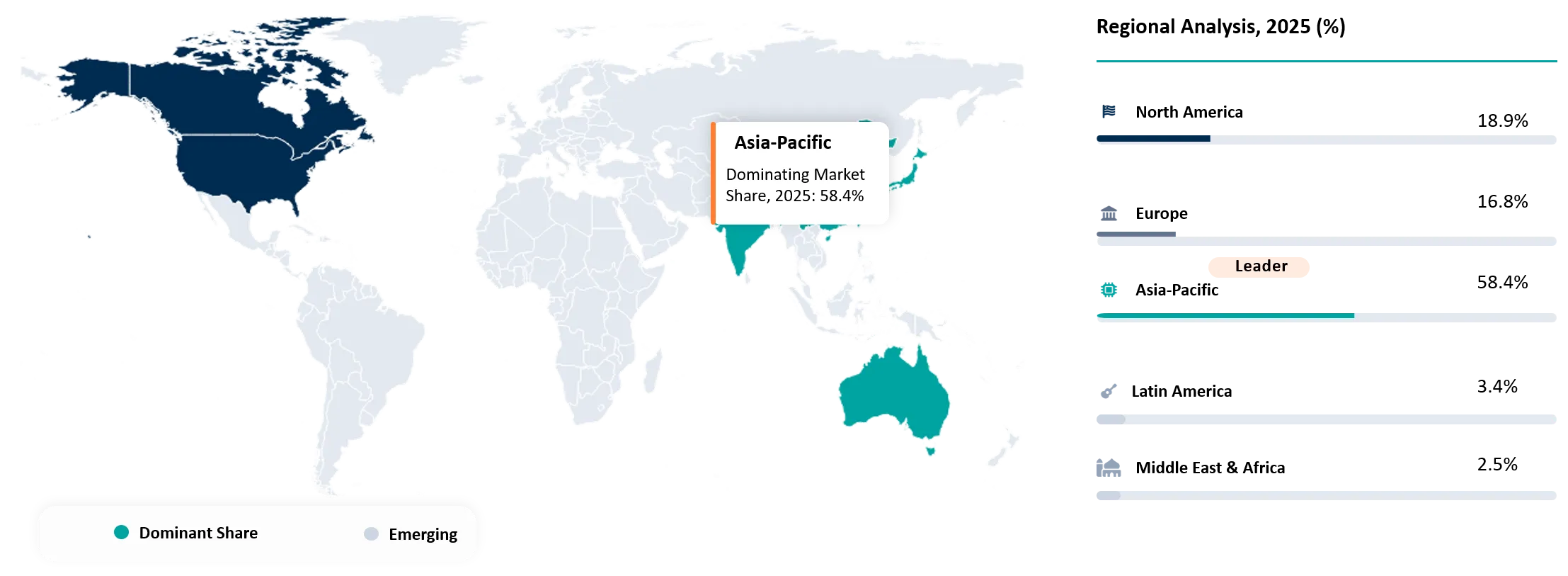
Strong Semiconductor Manufacturing Base and Critical Mineral Supply Chain Dominance Driving Asia-Pacific Leadership in Gallium Market
The Asia-Pacific region dominated the global gallium market, contributes to about 58.4% of the market share in 2025, due to its dominant standing in the fabrication of semiconductors, gallium refining, and the application of electronic devices. This has been attributed to the availability of alumina processing plants, compound semiconductor manufacturing companies, LED manufacturing units, and electronics production chain in countries such as China, Japan, South Korea, and Taiwan. The integration of the gallium value chain from the extraction of raw materials to the manufacturing of semiconductor grade gallium has made the region a dominant player in the global market.
The increase in the number of auctions for critical minerals signifies that India is strategically planning to have its own supply of gallium and other minerals that are essential for technologies related to semiconductors and electronics, among others. In July 2026, the Government of India launched the eighth tranche of auctioning of critical mineral blocks, wherein 20 blocks of critical and strategic minerals are being auctioned in nine different states, which include gallium-containing blocks along with lithium, graphite, rare earth elements (REE), tungsten, vanadium, and titanium, among others. In the current round of auction, there are 13 new blocks and 7 blocks under the second round of auctions to support India's mission to establish a self-reliant critical minerals supply chain system. As per the Ministry of Mines, 56 out of 88 blocks of critical minerals auctioned in the first seven rounds have been auctioned with an over 63% success rate.
China Gallium Market Trends
China holds a dominant position in the Asia-Pacific Gallium Market due to its extensive gallium production capacity, strong bauxite-to-alumina refining infrastructure, and well-established semiconductor manufacturing ecosystem. China derives its competitive advantage from the fact that it is able to recover the metal through the by-product process of aluminum oxide processing. This allows them to produce it on a much larger scale than in other areas where primary sources are limited. As per the USGS Mineral Commodity Summaries 2026 report, in 2025, China remained the leading global producer of primary gallium in the world, producing most of the world's supply of the product due to its huge alumina refining capability.
The increasing use of semiconductor products based on GaN is anticipated to boost the usage of gallium owing to its applications in high-quality electronics, telecommunications, and power systems that are energy efficient. In December 2025, CNLEDW reported that the advancement and commercialization of gallium nitride (GaN) semiconductor technology in China had made it possible for the application of gallium to extend into LED lights, power electronics, fast chargers, communications, and high-frequency electronics. This is due to the fact that gallium is a type of third-generation semiconductor material, which outperforms conventional silicon-based devices in terms of efficiency and power handling.
India Gallium Market Outlook
India is emerging as the fastest-growing market in the Asia Pacific region, as a result of growth within India’s semiconductor industry and increasing demand for advanced electronics. In 2025-2026, India invested heavily in semiconductor manufacturing and electronics fabrication to enhance its capabilities for the production of gallium-based compounds used in GaN power devices, radio-frequency electronics, light-emitting diodes, EV electronics, and renewables. Under the India Semiconductor Mission (ISM), India approved 12 semiconductor manufacturing facilities, which had investments exceeding ₹1.64 lakh crore ($19 billion) by 2026, which included the fabrication of micro-LED displays using gallium nitride, boosting India’s compound semiconductor industry and the need for gallium materials.
This collaboration showcases India's efforts in building its domestic GaN semiconductor ecosystem for high-efficiency power applications and minimizing dependence on foreign advanced semiconductor technology. In December 2025, Cyient Semiconductors, an India-based semiconductor design and power electronics solutions company, signed a long-term strategic partnership with Navitas Semiconductor, a US-based manufacturer of GaN and SiC power semiconductors. The collaboration is aimed at fostering India’s GaN semiconductor ecosystem. The areas of cooperation will include the development of GaN power ICs, system modules, and semiconductor solutions that can be used in AI data centers, electric mobility, industrial power, energy infrastructure, and telecommunication industries.
Gallium Market Competitive Landscape
- The gallium market is characterized by a concentrated supply structure, where competitiveness is primarily determined by gallium recovery capabilities, refining capacity, high-purity production expertise, and integration with semiconductor material supply chains. Chinalco (Aluminum Corporation of China Limited), Vital Materials Co., Ltd., Zhuzhou Keneng New Material Co., Ltd., and other Chinese producers maintain a strong position due to China’s dominance in primary gallium production and extensive alumina refining infrastructure. According to the U.S. Geological Survey (USGS) Mineral Commodity Summaries 2026, China remained the leading producer of primary gallium in 2025, accounting for the majority of global production, supported by its large-scale bauxite-to-alumina processing capacity. The market also includes specialized high-purity gallium suppliers such as DOWA Electronics Materials Co., Ltd., Sumitomo Chemical Co., Ltd., Indium Corporation, and 5N Plus Inc., which focus on semiconductor-grade gallium materials for GaN, GaAs, LEDs, and advanced electronic applications. Meanwhile, American Elements and Alcoa Corporation are exploring gallium recovery opportunities from alumina refining streams, leveraging their global aluminum production assets to strengthen future supply diversification.
- Key players in the global gallium market include Chinalco (Aluminum Corporation of China Limited), Zhuzhou Keneng New Material Co., Ltd., Vital Materials Co., Ltd., DOWA Electronics Materials Co., Ltd., Sumitomo Chemical Co., Ltd., Indium Corporation, 5N Plus Inc., Rasa Industries Ltd., Neo Performance Materials Inc., American Elements, Alcoa Corporation, and Umicore.
Key Developments
- October 2025: Alcoa Corporation, a U.S.-based global aluminium producer and mining company, announced the advancement of a joint venture to develop a gallium production plant at its Wagerup Alumina Refinery in Western Australia. The project involves collaboration with Sojitz Corporation, a Japan-based trading and investment company, Japan Organization for Metals and Energy Security (JOGMEC), headquartered in Japan, a government-backed critical minerals organization, and government entities from the United States and Australia.
- June 2025: BluGlass Limited, an Australia-based semiconductor technology company specializing in gallium nitride (GaN) laser diodes, received an order from the Indian Department of Defence, India – Government Defense Organization, to supply GaN laser technology for advanced defense applications. The contract, valued at approximately US$230,000, involves the development and supply of visible GaN laser diodes to India’s Solid State Physics Laboratory (SSPL) for defense and photonics applications.
- July 2026: NextGO Epi GmbH, a Germany-based, deep-tech semiconductor materials company specializing in gallium oxide epitaxial wafers, secured €2 million in pre-seed funding to accelerate the development and commercialization of gallium oxide (Ga₂O₃) semiconductor wafers for next-generation power electronics.
- January 2026: U.S. Department of Defense, United States – Government Defense and Strategic Industrial Organization, acquired a US$150 million preferred equity stake in Atlantic Alumina Co. (ATALCO) (headquartered in Gramercy, Louisiana, United States – alumina producer and critical minerals company) to support the development of the first large-scale primary gallium production circuit in the United States.
- May 2025: Tawazun Council, a UAE-based government defense and security sector development organization, RTX Corporation, a U.S.-based aerospace and defense technology company, and Emirates Global Aluminium (EGA), a UAE-based integrated aluminium producer and mining company, signed a Memorandum of Understanding (MoU) to explore the establishment of gallium production capabilities in Abu Dhabi.
- September 2025: Nimy Resources Ltd., an Australia-based mining exploration and critical minerals company, signed a non-binding Memorandum of Understanding (MoU) with M2i Global Inc., a U.S.-based critical minerals supply chain development company, for the potential sale of gallium from Nimy’s Block 3 gallium discovery at the Mons Project in Western Australia.
Key Procurement Priorities and Buyer Evaluation Criteria
- Organizations investing in the Gallium Market are increasingly selecting suppliers based on their ability to provide high-purity gallium materials (4N–7N+ purity levels), consistent quality, reliable supply capacity, and scalable production capabilities to meet the requirements of semiconductor, LED, GaN power device, and RF component manufacturers.
- The procurement decision-making process is being influenced by the rising demand for gallium-based semiconductor technologies, including GaN power electronics, 5G communication systems, electric vehicle power modules, renewable energy applications, AI data center infrastructure, and advanced optoelectronic devices, requiring suppliers with strong refining capabilities and stable raw material access.
- Buyers evaluate suppliers based on factors such as gallium purity level, production consistency, impurity control, certification standards, supply chain reliability, recycling capabilities, and compliance with critical mineral regulations while selecting long-term gallium supply partners.
Why Choose DataM?
- Critical Mineral Supply Chain Insights: Analyzes the evolving gallium supply ecosystem, including primary production from bauxite (alumina processing), secondary recovery, refining capabilities, and high-purity gallium manufacturing, helping stakeholders understand supply concentration, resource availability, and strategic sourcing opportunities across global markets.
- Technology Advancements & Application Analysis: Evaluates technological developments in gallium-based materials, including gallium nitride (GaN), gallium arsenide (GaAs), and semiconductor-grade gallium purification, highlighting their role in power electronics, 5G infrastructure, RF devices, LEDs, electric vehicles, renewable energy systems, and AI-driven semiconductor applications.
- Real-World Industry Evidence: Highlights the adoption of gallium materials across semiconductor manufacturing, consumer electronics, automotive power systems, telecommunications, and energy applications, demonstrating their contribution to improved efficiency, higher-frequency performance, reduced energy losses, and advanced device miniaturization.
- Market Updates & Industry Changes: Tracks key developments such as gallium export controls, new refining capacity additions, critical mineral policies, semiconductor investment programs, and supply chain diversification initiatives across major regions including Asia-Pacific, North America, and Europe.
- Competitive Landscape & Strategic Positioning: Analyzes how leading companies such as Chinalco, Vital Materials, Zhuzhou Keneng New Material, DOWA Electronics Materials, Sumitomo Chemical, Indium Corporation, 5N Plus, American Elements, and Alcoa Corporation strengthen their market position through refining expansion, high-purity material production, recycling initiatives, and strategic supply agreements.
- Pricing Dynamics & Supply Access: Evaluates gallium pricing trends based on purity grade, semiconductor demand, production concentration, recycling availability, and geopolitical factors while examining procurement access through primary producers, specialty chemical suppliers, and integrated material manufacturers.
- Market Entry & Growth Opportunities: Identifies opportunities driven by increasing demand for GaN power semiconductors, AI infrastructure, electric vehicles, renewable energy systems, and advanced communication technologies, while assessing strategies such as regional supply diversification, recycling development, and investments in domestic gallium processing capabilities.
Target Audience 2026
- Semiconductor Manufacturers and Integrated Device Manufacturers (IDMs)
- Gallium Producers, Refiners, and Material Suppliers
- Aluminum and Alumina Industry Stakeholders
- Electronic Component and Power Electronics Manufacturers
- Government Agencies and Critical Mineral Policy Organizations
- Investment Firms and Venture Capital Organizations
- Research Institutions and Technology Developers
Suggestions for Related Report


























































