


RF Gallium Nitride Market Size and Forecast 2035
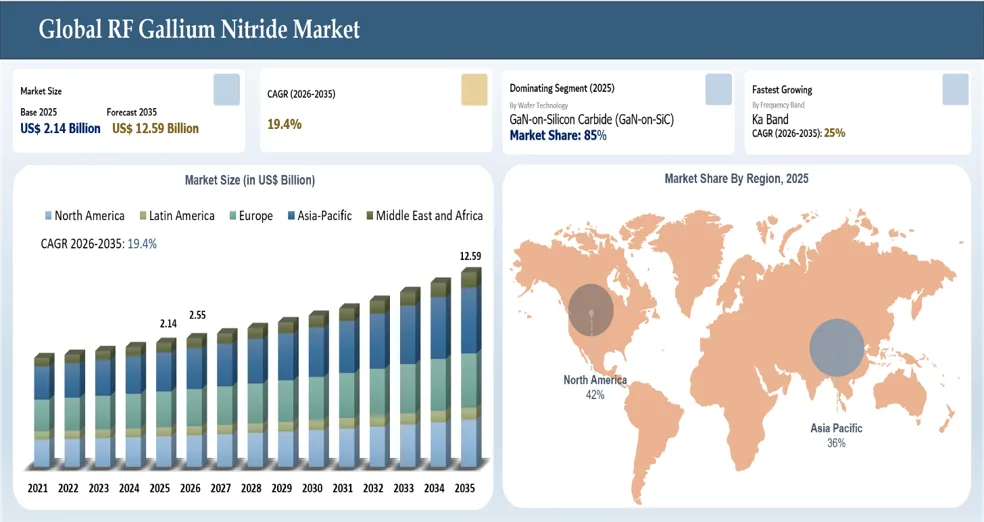
The global RF Gallium Nitride (GaN) market size was valued at USD 2.14 billion in 2025 and is projected to reach USD 12.59 billion by 2035, registering a CAGR of 19.4% during the forecast period 2026 to 2035. Market expansion is being underpinned by sustained investments in next-generation wireless communications, modernization of defense electronics, satellite communication networks, and electronic warfare capabilities, all of which require high-performance radio frequency (RF) semiconductor solutions. Compared with conventional RF technologies, RF GaN devices offer significantly higher power density, greater thermal efficiency, wider operating bandwidth, and superior signal amplification, making them the preferred technology for high-frequency and high-power applications.
The rapid rollout of 5G infrastructure continues to be one of the primary demand drivers for RF GaN solutions. According to the Ericsson Mobility Report (June 2026), global 5G subscriptions reached approximately 3.1 billion during the first quarter of 2026, following the addition of 162 million new subscriptions in the quarter. This continued expansion of 5G networks is accelerating investments in advanced RF front-end infrastructure, where GaN technology is increasingly adopted to improve network coverage, energy efficiency, and spectrum utilization. At the same time, growing investments in phased-array radar, satellite communications, and electronic warfare systems are reinforcing demand across defense and aerospace applications.
Industry participants are also accelerating innovation to enhance device performance and expand commercial deployment. Leading companies, including Qorvo, Wolfspeed, MACOM Technology Solutions, Infineon Technologies, NXP Semiconductors, and BAE Systems, continue to strengthen their RF GaN portfolios through advances in GaN-on-SiC platforms, high frequency monolithic microwave integrated circuits (MMICs), and mission critical RF solutions for defense and communications applications.
Technology advancements are further broadening the addressable market for RF GaN. In June 2025, imec, the Belgium-based nanoelectronics research and innovation center, announced a record performance RF GaN-on-Silicon (GaN-on-Si) Enhancement Mode MOSHEMT designed for future 6G FR3 (7 to 24 GHz) mobile communication systems. The device achieved an output power of 27.8 dBm (1 W/mm) with 66% power-added efficiency (PAE) at 13 GHz and 5 V, while demonstrating an industry leading contact resistance of 0.024 Ω·mm. Simulation results indicate that the newly developed contact architecture could improve output power density by as much as 70%, highlighting the significant performance gains that next generation GaN device architectures could deliver for emerging 6G infrastructure and other high frequency RF applications.
Wide-space Opportunities: GIGaNTE Project Strengthens Europe's RF GaN Ecosystem
In January 2026, the GIGaNTE (Capacity Building for Strategic Autonomy in Security and Defence) project is being executed at a total investment of €9.20 million (US$ 10.8 million) through Spain's PERTE Chip program focused on improving Europe's strategic autonomy in Radio Frequency (RF) Gallium Nitride (GaN) semiconductor technologies for defense and secure communication purposes. A significant portion of the funding is allocated to the development of high-power RF GaN Monolithic Microwave Integrated Circuits (MMICs), Process Design Kits (PDKs), Transmit-Receive Modules (TRMs), Antenna-in-Package (AiP) technology, heterogeneous packaging technology, and AESA radar systems while facilitating pilot manufacturing processes, semiconductor process development, testing, validation, and technology transfer in an industrial setting. The GIGaNTE project will create wide-ranging opportunities in the European RF GaN semiconductor technology value chain through domestic manufacturing and less dependency on imports of RF semiconductors.
The SPARC Foundry is expected to benefit through wafer fabrication using GaN technology, III-V foundry services, and process development; Indra through the next-generation radar, electronic warfare, defense communication systems, and integration of RF subsystems; Televés through RF communication modules, microwave components, and advanced packaging technologies; and RBZ through semiconductor manufacturing equipment and production technologies. Additionally, the research institutions like Universidad Politécnica de Madrid (UPM), Universidad de Salamanca (USAL), Universidad de Vigo (UVigo), and GRADIANT will benefit through RF circuit design, characterization of GaN devices, reliability testing, and technology commercialization. The investment can also provide new business opportunities for GaN epitaxy providers, RF test and measurement providers, advanced packaging providers, semiconductor manufacturing equipment providers, defense electronics providers, aerospace system integrators, and secure communication solutions providers for the long-term RF GaN ecosystem in Europe.
RF Gallium Nitride Market KeyTakeaways
- North America held the largest share of the global RF GaN market in 2025, accounting for 42% of total revenue. Growth in this region is primarily propelled by heavy defense modernization programs and 5G infrastructure expansion.
- GaN-on-Silicon Carbide (GaN-on-SiC) technology dominated the market with an estimated 85% share of the RF GaN wafer technology segment in 2025. Its adoption is heavily favored due to superior thermal conductivity and power density over alternative substrates.
- Total global 5G subscriptions expanded to approximately 3.1 billion in Q1 2026, supported by 162 million new additions in that quarter alone. This widespread rollout directly accelerates the adoption of RF GaN-based power amplifiers across wireless networks.
- Fabless firm Finwave Semiconductor secured an $8.2 million bridge investment round to advance GaN-based RF solutions. Meanwhile, the U.S. CHIPS and Science Act provide nearly $50 billion in funding to support domestic semiconductor fabrication and compound research ecosystems.
RF Gallium Nitride Market Industry Trends and Strategic Insight
- Rapid migration toward GaN-on-SiC for high-power RF systems. Defense, aerospace, and satellite communication manufacturers are increasingly adopting GaN-on-Silicon Carbide (GaN-on-SiC) technology.
- Expansion of Open RAN and 5G-Advanced infrastructure: Telecom equipment vendors are integrating RF GaN power amplifiers into massive MIMO radios and high-power base stations to improve energy efficiency, increase output power, and reduce network operating costs as 5G-Advanced deployments accelerate.
- North America, Europe, and Asia-Pacific are expanding domestic RF GaN manufacturing capabilities to reduce dependence on foreign semiconductor supply chains for strategic defense and secure communication applications.
- Leading companies are expanding internal capabilities across epitaxial wafer growth, substrate manufacturing, device fabrication, and advanced packaging to improve supply security, manufacturing yields, and product differentiation.
- Continuous investment in phased-array radar, electronic warfare systems, missile guidance, and secure military communications is positioning defense applications as the largest value-generating segment for RF GaN manufacturers.
RF Gallium Nitride Market Scope
| Metrics | Details | |
| 2025 Market Size | USD 2.14 Billion | |
| 2035 Projected Market Size | USD 12.59 Billion | |
| CAGR (2026-2035) | 19.4% | |
| Largest Market | North America | |
| Fastest Growing Market | Asia-Pacific | |
| By Device Type | RF Power Amplifiers, RF Transistors, Monolithic Microwave Integrated Circuits (MMICs), RF Front-End Modules, Low Noise Amplifiers (LNAs), RF Switches, Others | |
| By Wafer Technology | GaN-on-Silicon Carbide (GaN-on-SiC), GaN-on-Silicon (GaN-on-Si), GaN-on-Diamond, Others | |
| By Wafer Size | 2-inch Wafers, 4-inch Wafers, 6-inch Wafers and More | |
| By Frequency Band | L Band, S Band, C Band, X Band, Ku Band, Ka Band, V Band and Above | |
| By Application | 5G & 6G Wireless Infrastructure, Satellite Communication (SATCOM), Radar Systems, Electronic Warfare (EW), Aerospace Communication, Defense Communication, Test & Measurement Equipment, Others | |
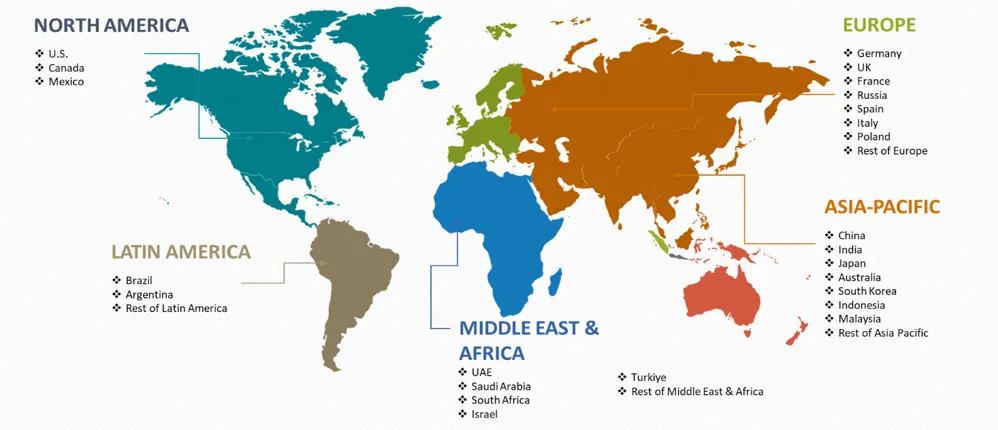
| By Region | North America | U.S., Canada, Mexico |
| Europe | Germany, UK, France, Spain, Italy, Poland | |
| Asia-Pacific | China, India, Japan, Australia, South Korea, Indonesia, Malaysia | |
| Latin America | Brazil, Argentina | |
| Middle East and Africa | UAE, Saudi Arabia, South Africa, Israel, Türkiye | |
| Report Insights Covered | Competitive Landscape Analysis, Company Profile Analysis, Market Size, Share, Growth | |
RF Gallium Nitride Market Disruption Analysis
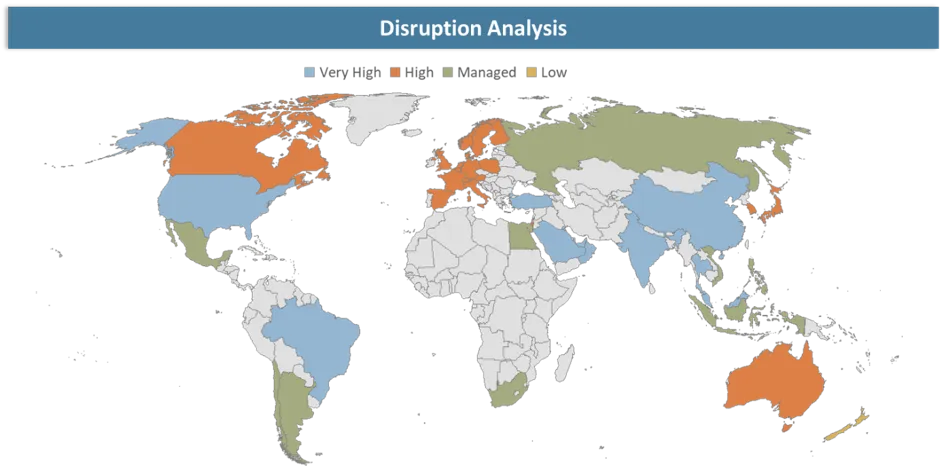
Shift from Legacy RF Technologies Toward GaN-Based RF Architectures Reshaping Semiconductor Communication Systems
Disruption in the RF Gallium Nitride market arises mainly from the rapid migration of existing RF technologies from traditional LDMOS and GaAs technologies to GaN-on-SiC architectures, due to their increased power density, better thermal properties, high bandwidth capabilities, and energy efficiency. This technological revolution is taking place within the RF semiconductor industry owing to rising demands for RF semiconductors that can support increased frequency levels and power from telecom, defense, and satellite communications organizations.
The rapid expansion of 5G-Advanced networks, active electronically scanned array radar systems, and electronic warfare platforms will be developed very fast during 2025–2026, which will speed up the replacement of conventional RF solutions. The reason why RF GaN-based power amplifiers are preferable in advanced applications is that they are able to generate more power and to work effectively on microwave and millimeter-wave frequencies than silicon LDMOS and GaAs-based ones. According to Ericsson Mobility Report of 2025, global %G subscriptions reached approximately 2.9 billion by the end of 2025, which is increasing demand for high-efficiency RF infrastructure components.
RF Gallium Nitride Market BCG Matrix: Company Evaluation
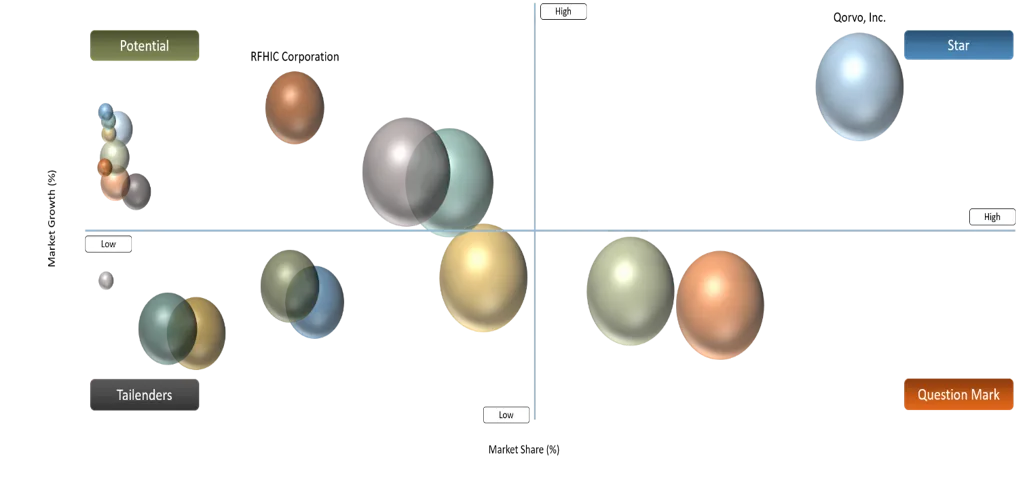
Stars include Qorvo, Inc., Wolfspeed, Inc., MACOM Technology Solutions Holdings, Inc., and Sumitomo Electric Device Innovations, Inc. because these companies hold strong positions in the RF GaN ecosystem through established GaN-on-SiC manufacturing capabilities, RF power amplifier portfolios, and high-frequency semiconductor solutions. These companies benefit from increasing demand for RF GaN devices across 5G infrastructure, aerospace, defense radar, and electronic warfare applications. Question Mark companies such as NXP Semiconductors N.V., Infineon Technologies AG, and Mitsubishi Electric Corporation are positioned because they possess strong semiconductor expertise and are investing in RF GaN technologies but face competition from established RF GaN specialists.
The Potential category includes RFHIC Corporation, Ampleon Netherlands B.V., and Analog Devices, Inc., as these companies are developing specialized RF GaN solutions and benefiting from rising demand for 5G base stations, satellite communication, and RF power systems. Tailenders include Northrop Grumman Corporation and Fujitsu Limited, as their RF GaN activities are primarily focused on specific defense, aerospace, and research-oriented applications rather than broad commercial RF GaN product markets.
RF Gallium Nitride Market Dynamics
Driver Impact Analysis
| Driver | Market Growth Impact (%) | Demand Concentration | Impacted Use Case | Strategic Impact |
Expansion of 5G and 6G wireless infrastructure is accelerating demand for RF GaN power amplifiers. | 30% | High | 5G base stations, Open RAN systems, private 5G networks, high-frequency wireless communication infrastructure. | Accelerates replacement of LDMOS-based RF solutions with GaN-on-SiC power amplifiers, enabling higher power efficiency, improved signal coverage, and next-generation network performance. |
Increasing defense modernization programs are driving adoption of RF GaN devices in AESA radar, electronic warfare, missile systems, and secure military communication platforms. | 35% | Very high | AESA radar, electronic warfare systems, military communication, surveillance radar, missile guidance systems. | Strengthens RF GaN as a strategic defense semiconductor technology, increasing demand for high-reliability GaN-on-SiC transistors and MMIC solutions. |
Growing deployment of satellite communication systems is boosting demand for RF GaN components in high-throughput satellites, LEO constellations, and aerospace communication systems. | 20% | Demand concentrated in North America, Europe, and Asia-Pacific satellite communication markets. | Satellite payloads, space-based communication networks, ground terminals, aerospace RF systems. | Creates premium opportunities for high-power, radiation-resistant RF GaN devices supporting next-generation satellite connectivity and space communication. |
Government initiatives for domestic semiconductor manufacturing and supply chain security are accelerating investments in RF GaN wafer fabrication, compound semiconductor facilities, and advanced RF device production. | 15% | Concentrated in the United States, European Union, Japan, South Korea, and Taiwan due to semiconductor localization strategies. | GaN-on-SiC wafer manufacturing, compound semiconductor foundries, RF device fabrication. | Improves regional RF GaN supply resilience, reduces dependency on limited suppliers, and encourages expansion of domestic compound semiconductor ecosystems. |
Increasing adoption of active electronically scanned array (AESA) radar systems in aerospace and defense applications is creating strong demand for high-power RF GaN transistors and MMIC solutions. | 25% | High demand | Fighter aircraft radar, naval radar systems, airborne surveillance, electronic warfare platforms. | Drives technology advancement toward higher-frequency GaN MMICs and strengthens the role of RF GaN in advanced military sensing and communication systems. |
Expansion of 5G and 6G wireless infrastructure is accelerating demand for RF GaN power amplifiers
The rapid growth in 5G network infrastructures and migration to the next-generation communication network architectures is driving the demand for RF Gallium Nitride (RF GaN) power amplifiers, as telecom operators and equipment manufacturers require semiconductor devices that can provide higher output power and energy efficiency at high frequency spectrum ranges. The growing installations of 5G base station, massive MIMO and radio unit installations in 2025-2026 will further drive the demand for RF GaN owing to superior performance over existing LDMOS based RF devices.
The continued deployment of 5G networks along with initial steps toward 6G will lead to an increase in the demand for highly efficient RF components, and RF GaN power amplifiers are anticipated to become more significant due to their excellent power density, efficiency, and high-frequency capabilities. In January 2026, According to Outlook Business, the Economic Survey highlights rapid growth in the telecom industry in India, fueled by extensive expansion of mobile and 5G infrastructure. Expansion of 5G in India achieved coverage up to 99.9 percent in districts, backed by the installation of about 5.18 lakh 5G Base Transceiver Stations (BTS), along with the expansion of the total telecom network to a level of about 31.87 lakh Mobile BTS and 8.48 lakh mobile towers by December 2025. Initiatives taken in regard to the development of 6G technology were mentioned in the report, such as Bharat 6G Vision and Bharat 6G Alliance. 5G and 6G expansions will lead to an increase in the use of RF devices, which include GaN-based power amplifiers in telecom base stations and next-generation wireless infrastructure.
Restraint Impact Analysis
| Restraint | Drag on Market Growth (%) | Primary Impact Area | Impacted Use Case | Strategic Impact |
Limited availability of GaN-on-SiC substrate supply and specialized fabrication facilities creates supply chain constraints for RF GaN semiconductor manufacturers. | 20% | Supply Chain & Manufacturing Capacity | Defense radar, electronic warfare systems, satellite communication, 5G base stations, RF power amplifiers | Restricts production scalability, increases dependency on limited GaN-on-SiC suppliers, extends lead times, and slows adoption of RF GaN solutions in high-growth applications. |
Complex RF GaN device fabrication and packaging requirements increase production challenges, reducing manufacturing yields and increasing overall device costs. | 16% | Manufacturing Process & Cost Efficiency | High-frequency RF transistors, power amplifiers, aerospace and defense communication modules | Lower production yields and complex wafer processing increase device pricing, limiting competitiveness against silicon LDMOS and other RF technologies. |
Thermal management challenges in high-power RF GaN systems require advanced packaging and cooling solutions, increasing system complexity and deployment costs. | 14% | Device Reliability & System Integration | High-power radar transmit/receive modules, military communication systems, 5G infrastructure equipment | Increases design complexity and total system cost, requiring advanced thermal solutions and slowing integration into compact RF platforms. |
Limited commercial adoption of RF GaN beyond defense and high-end communication applications restricts broader market penetration due to higher component pricing compared with conventional RF solutions. | 12% | Market Adoption & Cost Competitiveness | Commercial wireless infrastructure, consumer communication equipment, industrial RF applications | Delays mass-market adoption, limits volume production benefits, and keeps RF GaN concentrated in premium applications with higher performance requirements. |
Limited availability of GaN-on-SiC substrate supply and specialized fabrication facilities creates supply chain constraints for RF GaN semiconductor manufacturers
Limited availability of GaN-on-SiC substrates and foundry capacities is one of the critical constraints restraining the expansion of the RF Gallium Nitride market. The use of RF GaN devices in defense radar systems, electronic warfare, satellite communications, and advanced wireless infrastructure is based on the GaN-on-SiC platform because of their power density and thermal properties. Nevertheless, GaN-on-SiC is concentrated around just a few substrate manufacturers and qualified foundries, and the supply of these materials becomes a challenge under increasing demands from the defense and communication industries. According to SEMI, the global 300mm fab equipment investment is expected to increase by 18% to reach around $133 billion in 2026, indicating robust investment in semiconductors due to the growing need for AI and advanced electronics. But the fact is that RF GaN requires its own GaN epitaxial capability, wafer fabrication, and high-frequency testing, limiting the impact of overall semiconductor capacity expansion on GaN-on-SiC supply constraints.
Lack of access to the specialized GaN-on-SiC process capability may limit the scalability of RF GaN fabrication, prolong lead times, and become a bottleneck for the semiconductor industry. In June 2026, according to a SemiWiki article, the limitations in capacity in the GaN-on-SiC foundry ecosystem have been emphasized, causing difficulties in the supply chain for RF Gallium Nitride (GaN) semiconductor producers. The high requirement for GaN-on-SiC RF semiconductor products, which are incorporated in Transmit/Receive (T/R) modules, radar, electronic warfare, and defense communication systems, is causing limitations in foundry capacity.
RF Gallium Nitride Market Segment Analysis
The global RF Gallium Nitride market is segmented based on device type, wafer technology, wafer size, frequency band, application, and region.
GaN-on-Silicon Carbide (GaN-on-SiC) Technology Dominating RF Gallium Nitride Market Due to High-Power Defense and 5G Infrastructure Applications
GaN on Silicon Carbide (GaN-on-SiC) segment dominates the wafer technology in the RF Gallium Nitride market, with an estimated 85% market share in 2025. The technological advancement has proven popular as the ideal substrate because of the better thermal conductivity, high breakdown voltage, and power density that it offers compared to other GaN substrates such as GaN on Silicon. This has made the technology popular in critical applications, including defense radars, electronic warfare, satellite communications, 5G base stations, and wireless infrastructure.
Leading semiconductor manufacturers such as Wolfspeed, Qorvo, and NXP Semiconductors have been continually expanding their technology development and manufacturing capabilities related to GaN-on-SiC to cater to the increasing demands in aerospace, defense, and communications infrastructure industries. The increasing investment made by players in production capacity of RF semiconductors and the implementation of various initiatives concerning the supply chain in 2025–2026 has aided the adoption of GaN-on-SiC, positioning it as the most dominant wafer technology segment within the RF Gallium Nitride market.
RF Gallium Nitride Market Geographical Penetration
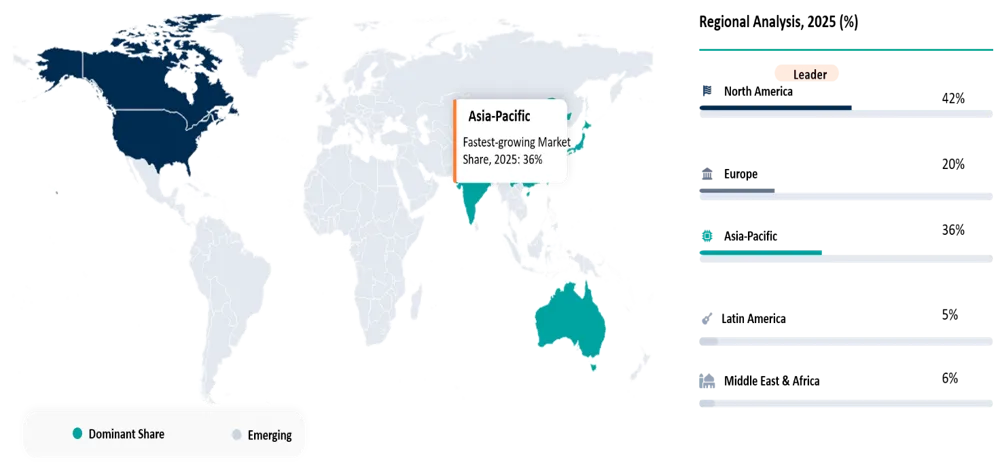
Defense Modernization and 5G Infrastructure Expansion Driving North America’s Dominance in RF Gallium Nitride Market
North America region dominates the RF Gallium Nitride market, with a market share of 42% in 2025, owing to the high demand in defense, aerospace, telecommunication, and satellite communications industry segments. This is supplemented by the availability of key players manufacturing RF semiconductors and defense technologies, coupled with constant efforts in terms of investments in high-frequency communication, radar, and electronic warfare systems. With the increased use of GaN-on-Silicon Carbide (GaN-on-SiC) technology, which accounts for 85% market share of the RF GaN wafer technology market by 2025, regional demand has been further reinforced owing to its power density and superior thermal capabilities.
RTP wafer fab success enhances local RF GaN manufacturing capabilities in North America with increased control of specialized GaN-on-SiC manufacturing capacity. In July 2025, MACOM Technology Solutions Holdings Inc., a US-based semiconductor company specializing in RF, microwave, millimeter wave, and mixed signal semiconductor products, successfully transferred the operations of its wafer fabrication facility based in Research Triangle Park (RTP), North Carolina, US, about six months before the planned schedule. The facility uses specialized GaN on SiC process technology for RF Power Devices and MMICs.
U.S. RF Gallium Nitride Market Trends
The U.S. holds a dominant position in the North America RF Gallium Nitride market, due to its established defense electronics infrastructure and its strong presence of RF semiconductor manufacturers in addition to the wide use of GaN technology in high-power applications. The presence of key players in RF GaN such as Qorvo, Wolfspeed, and MACOM Technology Solutions facilitates cooperation between semiconductor manufacturers, defense contractors, and communication systems providers. The U.S. semiconductor industry is being strengthened through the CHIPS and Science Act, which provides around US$50 billion of government money for semiconductor fabrication, research, and training, contributing to domestic expertise on advanced semiconductors that could be used for compound semiconductors like GaN RF devices.
The investment strengthens the U.S. RF GaN semiconductor research ecosystem through enhanced capabilities in advanced GaN wafer fabrication and device engineering for high-frequency performance. In June 2026, MIT Lincoln Laboratory, a U.S.-based research and development laboratory under the Massachusetts Institute of Technology (MIT) that specializes in the area of defense, electronics, and semiconductor technology, acquired two AIXTRON Hyperion 300 mm systems for GaN and 2D materials research work. AIXTRON SE, a Germany-based manufacturer of semiconductor equipment, especially deposition equipment for manufacturing compound semiconductors, provided the systems in a joint venture backed up by the Governor’s Office of Massachusetts and NEMC.
Canada RF Gallium Nitride Market Outlook
Canada is strengthening its position in the North American RF Gallium Nitride market due to its growing defense electronics sector, advanced research ecosystem, and increasing involvement in compound semiconductor technologies. During 2025, Canada strengthened its semiconductor ecosystem through targeted investments in advanced packaging and compound semiconductor capabilities. The Government of Canada committed up to C$210 million toward a C$662 million semiconductor packaging and commercialization project involving IBM Canada’s Bromont facility and C2MI, supporting the development of advanced semiconductor manufacturing capabilities relevant to emerging RF and high-performance electronic applications.
The deal is set to enhance the global GaN semiconductor industry by helping promote the movement and commercial exploitation of innovative GaN intellectual property, such as those created for use in high-power and radio frequency applications. In March 2025, 5N Plus Inc., a Canada-based manufacturer of specialty semiconductors and performance materials, entered into an exclusive agreement through its subsidiary AZUR SPACE Solar Power GmbH, a Germany-based manufacturer of solar semiconductors and multi-junction cells, with ALLOS Semiconductors GmbH, a Germany-based Gallium Nitride on Silicon (GaN-on-Si) epiwafer technology manufacturer with specialization in micro-LEDs and semiconductors.
RF Gallium Nitride Market Competitive Landscape
- The RF Gallium Nitride market is characterized by three major participant groups: RF GaN device manufacturers, compound semiconductor and wafer technology suppliers, and defense/aerospace system integrators. Leading RF semiconductor companies such as Qorvo, Inc., Wolfspeed, Inc., MACOM Technology Solutions Holdings, Inc., Sumitomo Electric Device Innovations, Inc., NXP Semiconductors N.V., and RFHIC Corporation focus on the development and commercialization of GaN-on-Silicon Carbide (GaN-on-SiC) RF power amplifiers, transistors, and MMICs for 5G infrastructure, radar, satellite communication, and electronic warfare applications. Companies including Infineon Technologies AG, Mitsubishi Electric Corporation, Fujitsu Limited, and Ampleon Netherlands B.V. strengthen the ecosystem through RF semiconductor manufacturing expertise and high-frequency device integration, while Northrop Grumman Corporation leverages GaN-based RF technologies in advanced defense platforms such as AESA radar and electronic warfare systems. The competitive environment is primarily defined by GaN-on-SiC manufacturing capability, defense program participation, RF performance optimization, and long-term supply agreements with telecommunications and aerospace customers.
- Key players include Qorvo, Inc., Wolfspeed, Inc., MACOM Technology Solutions Holdings, Inc., Sumitomo Electric Device Innovations, Inc., NXP Semiconductors N.V., Infineon Technologies AG, Mitsubishi Electric Corporation, Fujitsu Limited, RFHIC Corporation, Ampleon Netherlands B.V., Analog Devices, Inc., and Northrop Grumman Corporation.
Key Developments
- May 2025: Finwave Semiconductor Inc., a U.S.-based fabless semiconductor technology company specializing in Gallium Nitride (GaN)-based RF semiconductor solutions, secured an $8.2 million bridge investment round led by Fine Structure Ventures, Engine Ventures, and Safar Partners, with strategic participation from GlobalFoundries, a U.S.-based semiconductor foundry company specializing in advanced semiconductor manufacturing technologies.
- November 2025: MACOM Technology Solutions Inc., a U.S.-based semiconductor company specializing in RF, microwave, millimeter-wave, and mixed-signal semiconductor products, entered into a strategic agreement with HRL Laboratories LLC, a U.S.-based research and development laboratory specializing in advanced semiconductor, RF, microwave, and defense technologies.
- June 2026: University of Southern California, the California Defense Ready Electronics and Microdevices Superhub (CA DREAMS), and Northrop Grumman Corporation advanced two semiconductor projects, including GaNAmp (Gallium Nitride Amplifier Prototypes), focused on developing next-generation Gallium Nitride (GaN) RF power amplifier technologies for electronic warfare (EW) and high-frequency defense applications.
- April 2026: HRL Laboratories LLC, a U.S.-based corporate research and development laboratory specializing in advanced semiconductor, RF, microwave, aerospace, and defense technologies, achieved Manufacturing Readiness Level (MRL) 6 for its T3L 40nm Gallium Nitride-on-Silicon Carbide (GaN-on-SiC) technology through the U.S. Office of the Under Secretary of War.
- July 2025: Incize, a Belgium-based semiconductor characterization and modeling company, entered into a strategic collaboration with Atomera Inc., a U.S.-based semiconductor materials and intellectual property (IP) licensing company, to advance Gallium Nitride-on-Silicon (GaN-on-Si) technology for next-generation RF and power semiconductor devices.
- June 2026: Falcomm Inc., a U.S.-based semiconductor company specializing in artificial intelligence (AI)-driven RF power amplifier design and wireless communication solutions, introduced GaNdalph.ai, an AI-native Electronic Design Automation (EDA) platform for accelerating RF and millimeter-wave (mmWave) power amplifier (PA) development using GlobalFoundries’ (GF) RFGaN1 (130RFGaN) process technology.
- April 2026: Atomera Inc., a U.S.-based semiconductor materials and technology licensing company, expanded its collaboration with Synopsys Inc., a U.S.-based electronic design automation (EDA) software and semiconductor IP company, to accelerate Gallium Nitride (GaN) device modeling for RF and power semiconductor applications.
Key Procurement Priorities and Buyer Evaluation Criteria
- Organizations investing in the RF Gallium Nitride market are increasingly selecting suppliers based on their ability to provide high-performance GaN-based RF devices, including RF power amplifiers, transistors, and MMICs, with superior power density, frequency performance, thermal efficiency, and reliability for demanding applications such as defense radar, 5G infrastructure, satellite communication, and electronic warfare systems.
- The procurement decision-making process is increasingly influenced by the growing adoption of GaN-on-Silicon Carbide (GaN-on-SiC) technology, next-generation wireless networks, advanced defense communication platforms, and high-frequency RF systems that require compact, energy-efficient, and high-power semiconductor solutions.
- Buyers evaluate factors such as RF output power capability, operating frequency range, thermal management performance, device reliability, efficiency levels, breakdown voltage, manufacturing yield, and long-term supply availability when selecting RF GaN technology suppliers and semiconductor partners.
Why Choose DataM?
- Technological Innovations: Explores advancements in RF Gallium Nitride technologies, including GaN-on-Silicon Carbide (GaN-on-SiC), high-frequency RF power devices, MMICs, and advanced RF transistors, enabling higher power density, improved thermal performance, enhanced efficiency, and reliable operation across defense, 5G, satellite communication, and aerospace applications.
- Product Performance & Market Positioning: Evaluates how different players deliver RF GaN solutions based on output power capability, frequency range, efficiency, thermal management, reliability, and integration capabilities, highlighting how leading companies differentiate through GaN-on-SiC technology leadership, semiconductor manufacturing expertise, and application-specific RF performance optimization.
- Real-World Evidence: Highlights the adoption of RF Gallium Nitride devices across AESA radar systems, electronic warfare platforms, 5G base stations, satellite communication networks, and aerospace systems, demonstrating benefits such as increased transmission power, improved signal efficiency, extended operating frequency ranges, and reduced system size compared with conventional RF technologies.
- Market Updates & Industry Changes: Tracks key developments such as GaN wafer capacity expansions, compound semiconductor manufacturing investments, defense modernization programs, 5G infrastructure deployments, and strategic collaborations across North America, Asia-Pacific, and Europe, supporting the evolution of advanced RF semiconductor ecosystems.
- Competitive Strategies: Analyzes how leading companies such as Qorvo, Wolfspeed, MACOM Technology Solutions, Sumitomo Electric Device Innovations, NXP Semiconductors, RFHIC, and Mitsubishi Electric expand through GaN-on-SiC innovation, manufacturing scale-up, defense partnerships, product portfolio expansion, and technology integration to address increasing demand for high-performance RF applications.
- Pricing & Market Access: Explains pricing variations based on GaN substrate technology, wafer size, device complexity, power rating, frequency capability, and packaging requirements, along with market access through semiconductor manufacturers, defense suppliers, telecommunications infrastructure providers, and RF component distributors supporting global supply chains.
- Market Entry & Expansion: Identifies growth opportunities driven by 5G/6G networks, defense modernization, electronic warfare systems, satellite communication, and aerospace applications, while outlining strategies such as domestic semiconductor capacity development, strategic partnerships, GaN-on-SiC technology advancement, and regional manufacturing expansion to strengthen global market presence.
Target Audience
- RF Semiconductor Manufacturers & Device Developers
- Compound Semiconductor & Wafer Technology Companies
- Defense & Aerospace Companies
- Telecommunication Infrastructure Providers
- Integrated Device Manufacturers (IDMs) & Semiconductor Companies
- Electronic System & Equipment Manufacturers
- Government Agencies & Defense Procurement Organizations
Suggestions for Related Report


























































