

Electronic Medical Records Market Size and Overview
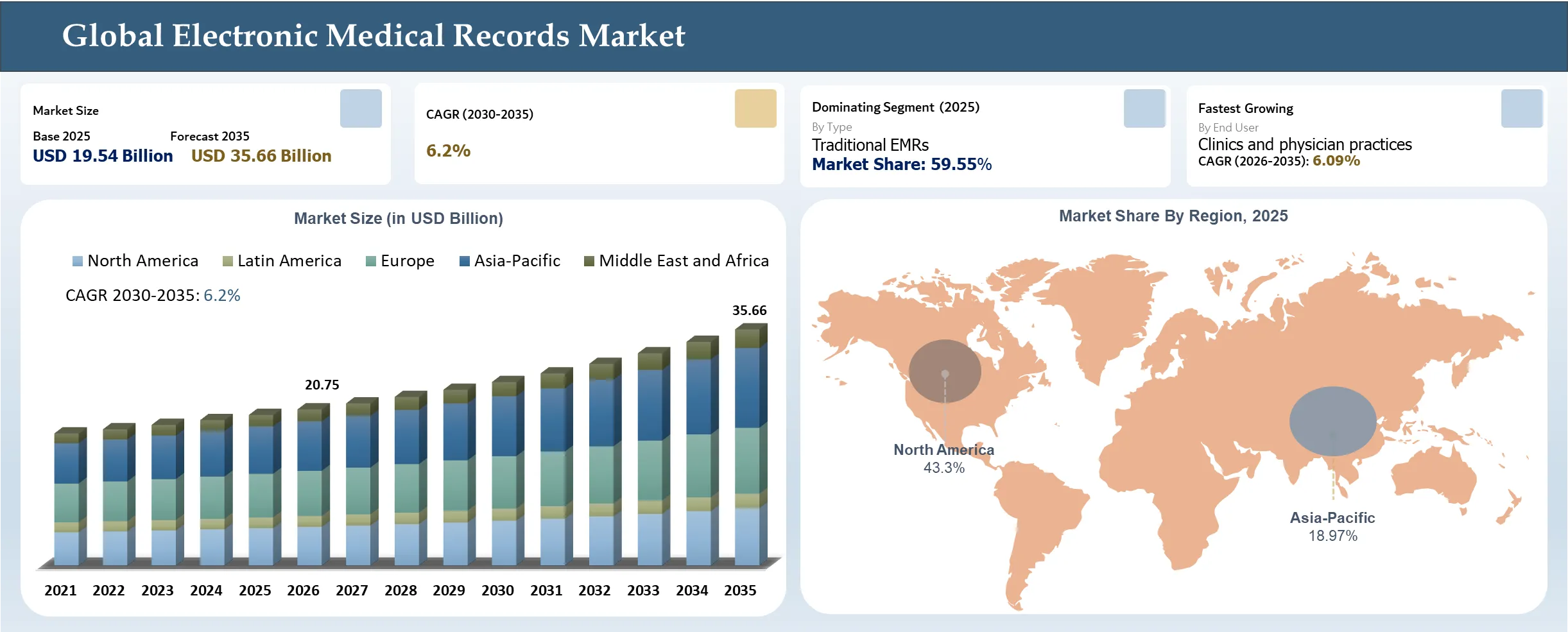
The global electronic medical records market reached USD 19.54 billion in 2025 and is expected to reach USD 35.66 billion by 2035, growing with a CAGR of 6.2% during the forecast period 2026-2035. The market is witnessing increasing adoption as healthcare providers transition from paper-based documentation to digital systems for maintaining patients’ histories, diagnoses, prescriptions, lab reports, and treatment. The growing demand in the EMR industry is driven by the requirement for streamlined clinical operations, care coordination, secure exchange of medical data, and availability of patient data on time. The recent trends in the EMR market are based on cloud-based record management, interoperability, and artificial intelligence-enabled clinical documentation.
Companies like Oracle Health, Epic Systems, and MEDITECH are progressing towards electronic health record system development via integrated clinical applications and workflow automation, along with data sharing. In October 2025, according to the World Health Organisation (WHO) Regional Office for Europe, in the WHO European Region, 87% of member states had national electronic health records, integrated regional systems, or patient portals, whereas 91% had legislation that facilitates the use of national electronic health records. However, a lack of financial resources impeded implementation in at least 37% of countries.
White-Space Opportunities for the Electronic Medical Records (EMR) Market Through U.S. Government Investment in Healthcare IT Modernisation
In January 2026, the U.S. Department of Veterans Affairs (VA) announced a record USD 4.8 billion investment for fiscal year 2026 to modernise, repair, and improve healthcare infrastructure across its medical facilities. The largest investment area is the repair and upgrading of outdated medical facility infrastructure, receiving USD 2.8 billion, while USD 1 billion is specifically allocated to the maintenance and modernisation of electronic health record (EHR) systems, including facility preparation for future EHR modernisation updates.
Additional investments include USD 500 million for major building upgrades, covering elevators, electrical systems, and boiler plants, and USD 500 million to modernise medical centres for current and future healthcare needs. The EHR-specific allocation creates opportunities in electronic medical record software modernisation, system integration, interoperability, clinical data management, cybersecurity, cloud infrastructure, and healthcare IT maintenance.
The investment is expected to create procurement opportunities for healthcare technology vendors, electronic health record platform providers, systems integrators, and infrastructure specialists. Oracle Health is a relevant potential beneficiary in the electronic health record software and modernisation area, while Leidos and Accenture Federal Services are positioned in healthcare IT integration, digital transformation, and government technology services.
General Dynamics Information Technology (GDIT) and Booz Allen Hamilton may find opportunities in healthcare systems engineering, cybersecurity, data integration, and IT modernisation. Microsoft and Amazon Web Services (AWS) are relevant to cloud infrastructure, data storage, security, and scalable digital health platforms, where procurement requirements and applicable government approvals would determine their eligibility.
Electronic Medical Records Market Key Takeaways
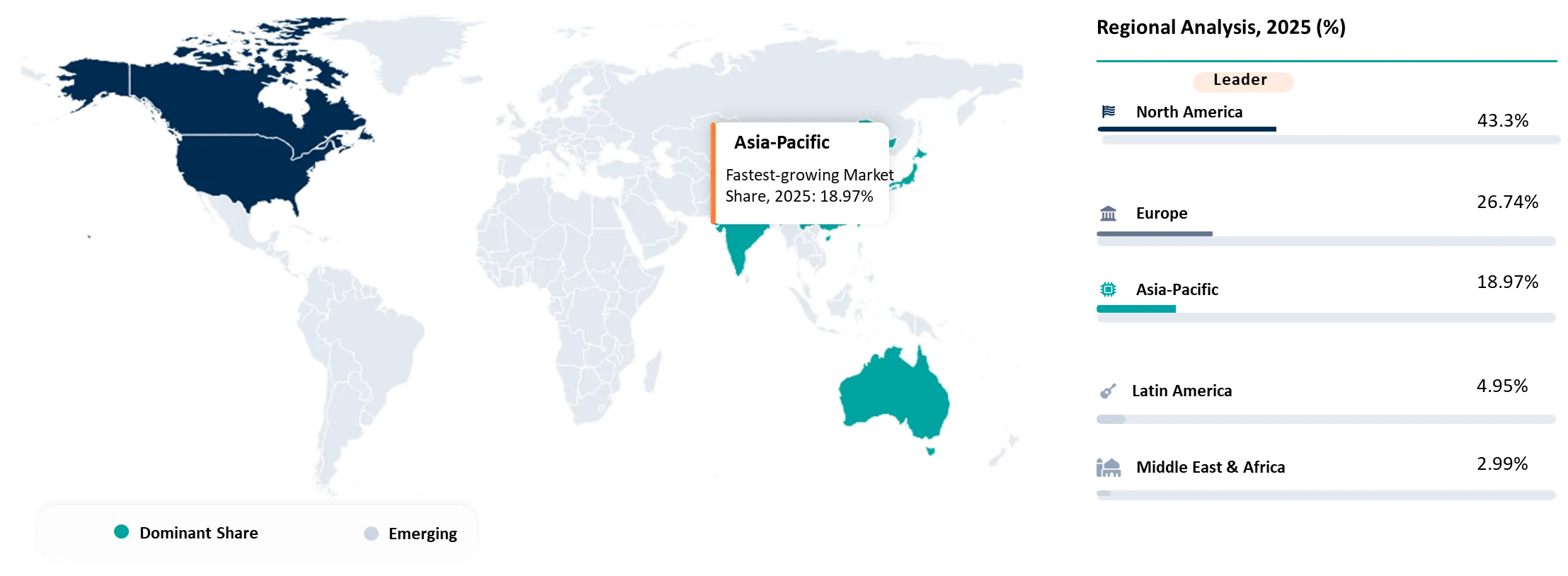
- North America leads the global EMR market, holding the largest regional market share of 43.3% in 2025. Asia-Pacific is recognised as the fastest-growing market region, holding an 18.97% market share in 2025.
- Traditional EMR platforms-maintained market dominance in 2025 by capturing a 59.55% market share due to widespread hospital reliance.
- In the WHO European Region, 87% of member states possess national electronic health records, while 91% have legislation facilitating their use.
- The U.S. Department of Veterans Affairs announced a USD 4.8 billion investment for FY 2026, allocating USD 1 billion specifically to modernise electronic health record (EHR) systems.
Electronic Medical Records Market Industry Trends and Strategic Insight
- Interoperability as a Competitive Differentiator. Vendors are prioritising standards-based data exchange and API connectivity to enable EMR platforms to communicate with laboratories, pharmacies, insurers, diagnostic systems, and external healthcare networks.
- Transition from Record Storage to Clinical Intelligence. EMR platforms are evolving beyond digital repositories toward systems that organise longitudinal patient histories and surface relevant clinical information for treatment decisions, care coordination, and follow-up management.
- Patient-Controlled Access and Consent-Based Data Exchange. EMR strategies are placing greater emphasis on patient access, permission-based information sharing, and transparent data governance to support trust and secure movement of medical records across healthcare settings.
- Open Ecosystems and Platform Partnerships. EMR vendors are competing through partnerships with health information networks, digital health applications, and third-party technology providers, making integration capabilities and access to clinical data important purchasing considerations.
- Strategic Shift Toward Measurable Clinical and Operational Outcomes. Healthcare buyers are evaluating EMR investments based on their ability to improve documentation efficiency, care coordination, data accessibility, and workflow performance rather than simply replacing paper records.
Electronic Medical Records Market Scope
| Metrics | Details | |
| 2025 Market Size | USD 19.54 Billion | |
| 2035 Projected Market Size | USD 35.66 Billion | |
| CAGR (2026-2035) | 6.2% | |
| Largest Market | North America | |
| Fastest Growing Market | Asia-Pacific | |
| By Component | Software, Hardware, Services | |
| By Type | Traditional EMRs, Speech-enabled EMRs, Interoperable EMRs, Others | |
| By Mode of Delivery | Cloud-Based, On-Premises | |
| By End User | Hospitals, Clinics, Specialty Centers, Others | |
| By Region | North America | U.S., Canada, Mexico |
| Europe | Germany, UK, France, Spain, Italy, Poland, Netherlands, Switzerland | |
| Asia-Pacific | China, India, Japan, Australia, South Korea, Indonesia, Malaysia | |
| Latin America | Brazil, Argentina | |
| Middle East and Africa | UAE, Saudi Arabia, South Africa, Israel, Türkiye | |
| Report Insights Covered | Competitive Landscape Analysis, Company Profile Analysis, Market Size, Share, Growth | |
Electronic Medical Records Market Disruption Analysis
Shift Toward AI-Enabled EMR Systems Reshaping Clinical Documentation
The disruption in the electronic medical records (EMR) market is increasingly driven by the transition from conventional, manually maintained digital records toward AI-enabled systems that automate clinical note generation, summarise patient histories, and streamline routine documentation. The process of creating notes manually in traditional EMR systems usually demands much time spent on filling in different fields. Now, generative AI and ambient clinical documentation are transforming this process by turning conversations into structured notes.
Furthermore, technology firms are integrating AI directly into EMR systems and not providing it as an extra application for documentation automation, increasing the competitive edge around workflow integration and productivity metrics. In April 2026, Oracle Health reported that Southwest General doctors have produced about 81,800 AI-powered notes in 18 specialities, and realised a decrease in average EMR time per patient by 18.6% and a 14.15% decrease in after-hours work following the adoption of Clinical AI Agent. Such trends show that AI-driven documentation is changing the nature of competition from simple digital record-keeping to more efficient systems.
Electronic Medical Records Market BCG Matrix: Company Evaluation
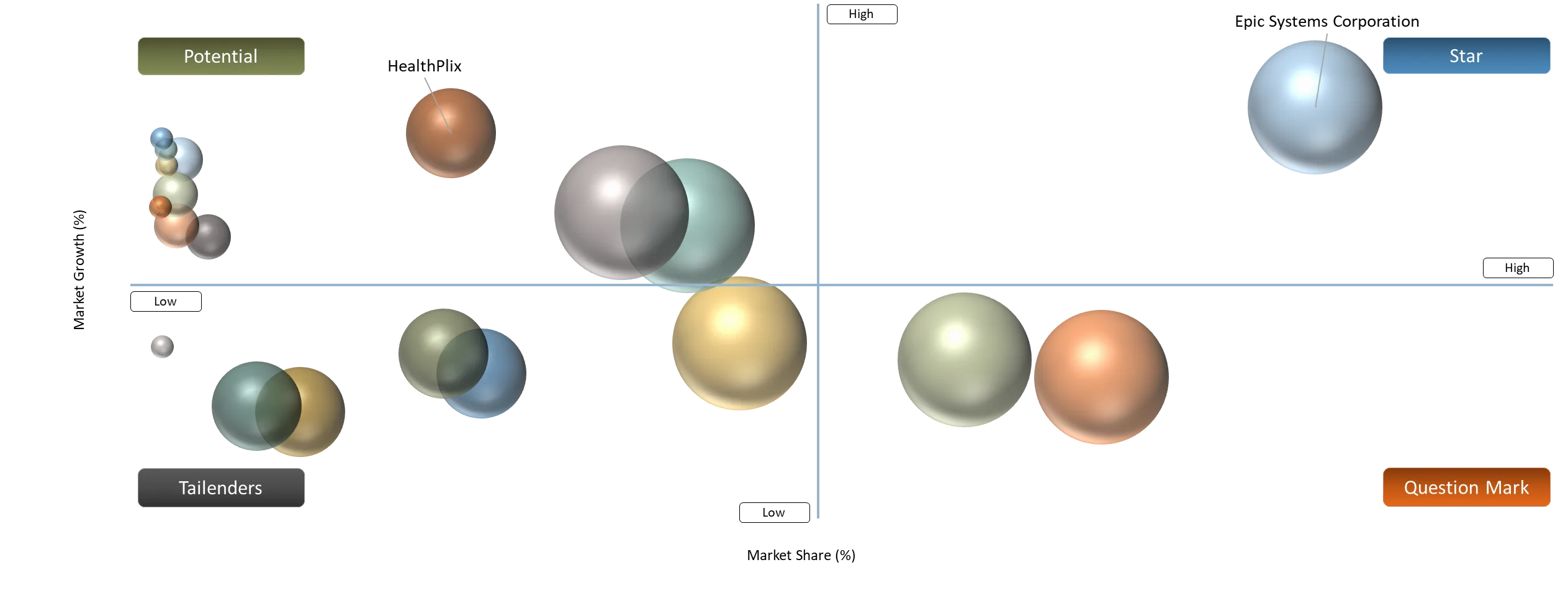
Stars include Epic Systems Corporation and Oracle because they have established strong positions in the electronic medical records market through comprehensive healthcare information systems, broad hospital adoption, and continued investment in cloud-based platforms, interoperability, and AI-enabled clinical workflows. MEDITECH and athenahealth are positioned as Question Marks because they continue to strengthen their EMR offerings through cloud-based solutions, integrated clinical and administrative workflows, and digital healthcare capabilities.
The Potential category includes HealthPlix, EkaCare, and Practo Technologies Pvt. Ltd., which benefit from the increasing digitisation of clinical practices, particularly through physician-focused software, digital patient records, and connected healthcare services. Altera Digital Health, NXGN Management, LLC (NextGen Healthcare), and Meditab are categorised as Tailenders in this evaluation because they face competition from larger EMR platforms and newer cloud-native providers, while needing to differentiate their offerings through speciality-focused solutions, interoperability, user experience, and ongoing technology modernisation.
Electronic Medical Records Market Dynamics
Driver Impact Analysis
| Driver | Market Growth Impact (%) | Demand Concentration | Impacted Use Case | Strategic Impact |
Increasing digitisation of medical records across hospitals and clinics is driving demand for EMR systems. | 30% | Hospitals, multispecialty clinics, and outpatient care facilities | Digital patient records, clinical documentation, medical history management, and information exchange | Accelerates the transition from paper-based records to integrated EMR platforms, increasing demand for scalable and interoperable solutions. |
Government-led digital health programs are accelerating the implementation of electronic record systems across healthcare facilities. | 25% | Public hospitals, government healthcare networks, and primary care centers | National electronic health records, digital health IDs, and cross-facility medical record exchange | Creates implementation opportunities through public-sector digital health initiatives and increases the importance of regulatory compliance and interoperability. |
Growing adoption of AI-enabled healthcare technologies is driving demand for advanced medical documentation. | 20% | Large hospitals, digitally mature healthcare networks, and technology-enabled clinics | AI-assisted clinical notes, automated documentation, patient record summarization, and clinical decision support | Encourages vendors to integrate AI capabilities into EMR platforms, improve clinician productivity, and differentiate products through intelligent workflows. |
Healthcare providers are adopting EMR systems to streamline documentation, improve workflow efficiency, and reduce administrative burdens. | 25% | Hospitals, ambulatory care centers, specialty clinics, and physician practices | Appointment-linked documentation, prescription management, billing integration, and clinical workflow automation | Strengthens demand for user-friendly, workflow-integrated EMR systems that reduce administrative workload and improve operational efficiency. |
Increasing digitisation of medical records across hospitals and clinics is driving demand for EMR systems
The increasing digitalisation of medical records in hospitals and clinics is a major catalyst behind the growth of electronic medical records (EMR) systems. Medical establishments are shifting from the traditional approach to medical record management, which involves paper documents and scattered information systems, to digitalised records that allow patient records, documentation processes, and accessing of patient’s medical history, diagnoses, prescriptions, and test results to be streamlined and more effective. The process is supported by national policies in the area of digital health and the necessity to enhance the continuity of care in medical institutions.
The scale of such transition can be seen from recent developments in the sphere of digital health. In May 2026, India’s Ministry of Health and Family Welfare reported that more than 100 crore (USD 10.33 million) health records were connected to Ayushman Bharat Health Accounts (ABHA), doubling from 50 crore (USD 5.16 million) in February 2025. Also, more than 450 solutions of both public and private health technologies have been integrated into the Ayushman Bharat Digital Mission ecosystem in order to facilitate the digitisation and sharing of medical records between hospitals, clinics, and labs. In June 2026, according to the European Commission, EU-27 states achieved an average 87% score for their eHealth maturity level in 2025.
Restraint Impact Analysis
| Restraint | Drag on Market Growth (%) | Primary Impact Area | Impacted Use Case | Strategic Impact |
Increasing cyberattacks and ransomware threats targeting healthcare information systems create concerns about the security of sensitive patient records. | 20% | Data security, privacy compliance, and cybersecurity expenditure | Electronic patient records, cloud-based EMRs, patient data exchange, and remote access | Increases cybersecurity and compliance costs, slows implementation decisions, and strengthens demand for secure EMR platforms with encryption, access controls, and disaster recovery. |
Differences in data standards and software platforms can complicate the seamless exchange of medical records between healthcare providers. | 18% | Interoperability and system integration | Cross-hospital record exchange, referrals, laboratory results integration, and longitudinal patient records | Increases integration costs and implementation timelines, encouraging vendors to adopt standardized data formats, interoperable architectures, and healthcare data exchange APIs. |
Complex interfaces, excessive documentation requirements, and administrative workloads can reduce clinician acceptance and contribute to burnout. | 15% | Clinician productivity, usability, and workflow efficiency | Clinical note-taking, patient charting, prescription entry, and clinical documentation | Can reduce user adoption and satisfaction, pushing vendors to prioritize intuitive interfaces, workflow customization, automation, and AI-assisted documentation. |
Limited availability of professionals with expertise in healthcare information technology can delay EMR implementation, customisation, and maintenance. | 12% | Implementation capacity, technical support, and workforce availability | EMR deployment, legacy-system migration, software customization, staff training, and ongoing maintenance | Extends implementation timelines and raises service costs, increasing demand for vendor-led implementation, managed services, simplified deployment, and user training. |
Increasing cyberattacks and ransomware threats targeting healthcare information systems create concerns about the security of sensitive patient records
The increasing frequency of cyberattacks and ransomware threats targeting healthcare information systems is a major restraint on the adoption of electronic medical records (EMR) systems. While clinics and hospitals are digitising the patient history, diagnosis, prescriptions, lab results, and treatment records, their reliance on digital infrastructure for confidential and accessible data increases. Cyber-attacks can affect access to patients' files, slow down workflow and even compromise operations in general. It can lead to fines from regulatory authorities and expenses on recovery.
The growing scale of this threat was highlighted in a TechTarget HealthTech Security report. In July 2026, according to the Comparitech worldwide ransomware tracker cited in the report, 410 healthcare ransomware attacks were registered in the first six months of 2026, compared with 360 in the latter half of 2025, a 14% increase in attacks. In addition, Fortified Health Security revealed that there was a 60% increase in critical and high-risk vulnerabilities identified in the first half of 2026 compared to the preceding year. However, the remediation of these vulnerabilities went down to 6.4% in Q1 2026, compared to 23.3% in the first quarter of 2025.
Electronic Medical Records Market Segment Analysis
The global electronic medical records market is segmented based on component, type, mode of delivery, end user, and region.
Established Hospital EHR Adoption and Market Concentration Support Traditional EMR Dominance
The traditional segment holds the dominant position in the electronic medical records (EMRs) market, with a market share of 59.55% in 2025, the dominant segment since hospitals, clinics, and doctor offices rely on the traditional electronic platforms that can be used to track the history of the patient, diagnosis, prescription, laboratory tests, and treatments. The familiar use of such platforms by healthcare professionals, their integration into hospital information systems, and their capacity to perform all necessary clinical work make traditional EMRs popular in the industry.
The continued prevalence of traditional EMR systems is enabled by the broad deployment of existing electronic record software platforms in healthcare organisations. In June 2026, according to the National Coordinator for Health Information Technology (ONC), the market of hospital EHR providers is currently highly consolidated, with the three biggest providers supplying solutions to over 80% of non-federal U.S. acute care hospitals. At the same time, according to the ONC’s report, 99.4% of these hospitals were using certified EHR systems in 2024; however, it should be noted that these statistics pertain to the past year and do not reflect 2025-2026 adoption rates. The statistics indicate the significant number of existing installed base of electronic record software platforms and the necessity of vendor continuity for healthcare organisations.
Electronic Medical Records Market Geographical Penetration
Strong Digital Health Infrastructure and Hospital EMR Adoption in North America
North America dominates the electronic medical records (EMR) market, with a market share of 43.3% in 2025, supported by established healthcare IT infrastructure, widespread adoption of digital patient records, and continued investment in hospital information systems. Healthcare providers across the United States and Canada use EMR platforms to manage clinical documentation, prescriptions, diagnostic results, patient histories, and administrative workflows.
The adoption of AI-powered electronic health records is accelerating the digital transformation of healthcare delivery in the United States. In August 2025, Oracle Corporation, a U.S.-based multinational enterprise software and cloud computing company that operates Oracle Health, its healthcare technology business, launched its next-generation AI-driven Electronic Health Record (EHR) platform for ambulatory healthcare providers in the U.S., featuring voice-enabled access to patient information, AI-powered clinical insights, and automated documentation and coding workflows.
U.S. Electronic Medical Records Market Trends
The U.S. holds a dominant position in the electronic medical records (EMR) market because of its mature healthcare IT ecosystem, widespread digital record adoption, established healthcare software vendors, and continued investment in connected care. Hospitals, physician practices, and health networks use EMR platforms to manage clinical documentation, prescriptions, diagnostic results, patient histories, and administrative workflows.
Strategic acquisitions are strengthening the EMR market by expanding healthcare technology portfolios and broadening access to digital clinical solutions. In July 2026, IKS Health, an India-based healthcare technology and care-enablement services provider, completed its acquisition of TruBridge, Inc., a U.S.-based healthcare IT and electronic health record software provider, in a transaction valued at approximately USD 557 million. TruBridge became a wholly owned subsidiary of IKS Health, expanding its capabilities in electronic health records (EHR), revenue cycle management, and healthcare analytics for rural and community hospitals.
Canada Electronic Medical Records Market Outlook
Canada is one of the major countries in the North American electronic medical records (EMR) market is supported by the country’s ongoing modernisation of healthcare information systems, expanding use of digital clinical records, and initiatives to improve secure information exchange between healthcare providers. Hospitals, family physicians, specialist clinics, and other healthcare facilities use electronic records to manage patient histories, prescriptions, test results, and treatment documentation.
Healthcare technology acquisitions are reshaping Canada’s EMR landscape, increasing regulatory scrutiny of competition and market consolidation. In January 2026, WELL Health Technologies Corp., a Canada-based digital healthcare solutions provider, HEALWELL AI Inc., a Canada-based healthcare artificial intelligence company, and Orion Health, a New Zealand-based healthcare data management and interoperability software provider, were highlighted in an investigation by the Canadian Competition Bureau into WELL Health’s acquisition of control over HEALWELL and its indirect control of Orion Health. The investigation examines competition in healthcare technology markets, including electronic medical records (EMR), patient portals, telehealth, clinical decision-support systems, and data analytics.
Rapid Digital Health Adoption and Interoperability Expansion Across Asia-Pacific
The Asia-Pacific is the fastest-growing region in the electronic medical records (EMR) market, with a market share of 18.97% in 2025, supported by expanding healthcare infrastructure, government-led digital health programs, and increasing adoption of electronic patient records across hospitals and clinics. Countries such as India, China, Japan, Singapore, and South Korea are investing in healthcare digitisation and connected medical information systems. The region’s large patient population, growing healthcare expenditure, and demand for more efficient clinical workflows are creating opportunities for EMR providers.
Strategic acquisitions are accelerating the adoption of cloud-based electronic medical records across South Korea’s digital healthcare sector. In November 2025, NAVER Cloud Corporation, a South Korea-based cloud computing and information technology services provider, acquired Cenacle Inc., a South Korea-based healthcare technology and cloud-based electronic medical records software provider, to expand its digital healthcare business. Before the acquisition, NAVER Cloud held an 8.8% stake in Cenacle and became its largest shareholder following an additional share purchase; the transaction value was not disclosed. Cenacle develops cloud-based EMR software for healthcare providers and an online consultation platform, supporting clinical documentation, patient information management, and connected healthcare services.
Japan Electronic Medical Records Market Trends
Japan is one of the major countries in the electronic medical records (EMR) market and is supported by national healthcare digitalisation initiatives, modernisation of hospital information systems, and efforts to improve the exchange of patient information across healthcare facilities. Hospitals and clinics are increasingly expected to manage clinical records, prescriptions, diagnostic results, and treatment histories electronically. The government’s focus on standardised systems and cloud-based infrastructure is creating opportunities for EMR providers to upgrade legacy platforms and improve interoperability.
Strategic partnerships are accelerating the expansion of electronic medical records (EMR) and digital healthcare infrastructure across Asian markets. In February 2026, Omi Group, a Vietnam-based digital healthcare and medical technology solutions provider, and EHC Viet Nam, a Vietnam-based healthcare IT and electronic medical record software development and implementation provider, signed a memorandum of understanding (MOU) to expand medical digital transformation solutions across Southeast Asia, Japan, and South Korea.
Electronic Medical Records Market Competitive Landscape
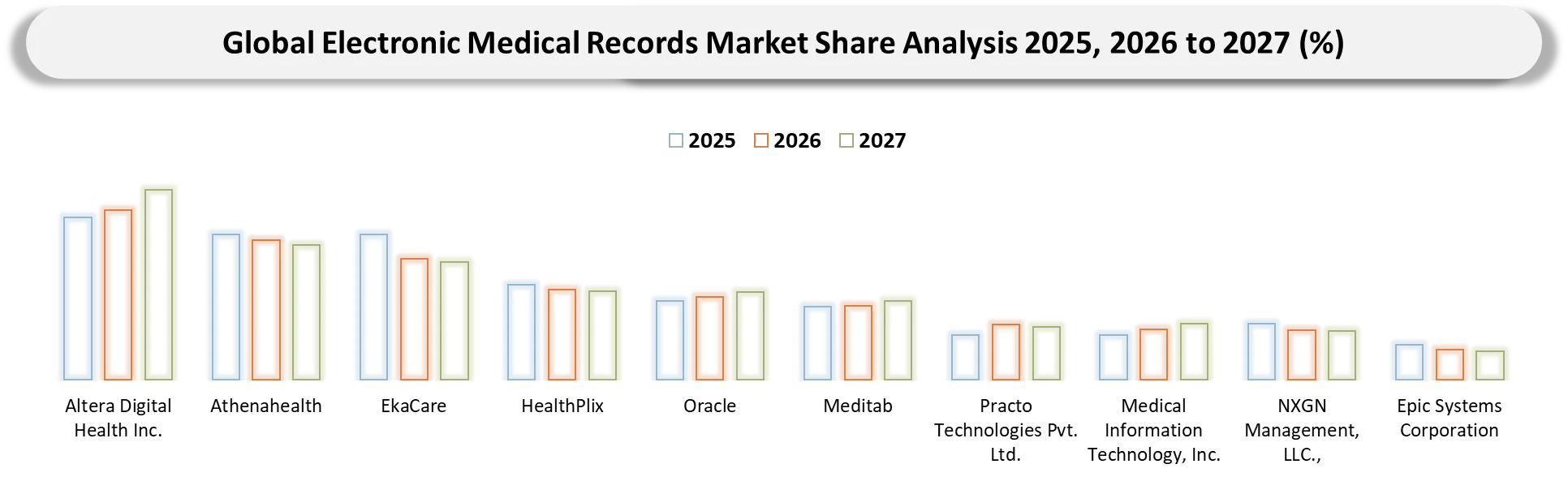
- The competitive landscape of the electronic medical records (EMR) market is shaped by three key participant groups: established hospital information system providers, cloud-based and ambulatory care EMR platforms, and digital health technology companies focused on regional healthcare needs. Epic Systems Corporation and Oracle compete through comprehensive clinical information systems serving large healthcare organisations, while Medical Information Technology, Inc. (MEDITECH), Altera Digital Health Inc., and NXGN Management, LLC (NextGen Healthcare) provide EMR and electronic health information solutions for hospitals, health systems, and physician practices. Athenahealth, Meditab, and regional digital health companies such as EkaCare, HealthPlix, and Practo Technologies Pvt. Ltd. focus on cloud-enabled workflows, practice management, and digital patient-care services. Competitiveness is influenced by interoperability, usability, implementation and support costs, data security, and the ability to integrate clinical documentation with billing and care coordination.
- Key players include Altera Digital Health Inc. (United States), athenahealth (United States), EkaCare (India), HealthPlix (India), Oracle (United States), Meditab (United States), Practo Technologies Pvt. Ltd. (India), Medical Information Technology, Inc. (MEDITECH) (United States), NXGN Management, LLC (NextGen Healthcare) (United States), and Epic Systems Corporation (United States).
Key Developments
- November 2025: GE HealthCare Technologies Inc., a U.S.-based global medical technology and healthcare solutions provider, agreed to acquire Intelerad Medical Systems, a Canada-based medical imaging software and digital healthcare workflow solutions provider, for USD 2.3 billion.
- November 2025: Nanox Imaging Ltd., an Israel-based medical imaging technology and AI-powered diagnostic solutions provider, agreed to acquire VasoHealthcare IT Corp., a U.S.-based healthcare IT integration and medical imaging software implementation provider, for a total consideration of up to USD 800,000, comprising USD 200,000 in cash at closing and up to USD 600,000 in performance-based earnout payments over two years.
- December 2025: Paradigm Healt, a U.S.-based AI-powered clinical research technology provider, raised USD 78 million in an oversubscribed Series B funding round and announced the acquisition of Flatiron Health’s Clinical Research Business, a U.S.-based oncology-focused health technology and clinical research solutions provider.
- August 2026: ModMed, a U.S.-based speciality-focused healthcare software and electronic health record provider, formed a strategic alliance with IntrinsiQ Specialty Solutions, a U.S.-based speciality healthcare technology and infusion management solutions provider, joining IntrinsiQ’s Trusted Vendor Program as its preferred electronic health record (EHR) provider for UroChartEHR customers.
- October 2025: Datavant, a U.S.-based healthcare data connectivity and medical record exchange technology provider, announced a planned strategic collaboration with athenahealth, Inc., a U.S.-based cloud-based electronic health records (EHR), practice management, and patient engagement software provider, to automate medical record requests and releases through athenahealth’s cloud-based athenaOne platform.
- December 2025: C3 EMR, a Canada-based electronic medical records and practice-management software provider, developed by Community Care Connection Inc., partnered with OneChart, a Canada-based AI-powered healthcare technology and clinical documentation solutions provider, to integrate ambient artificial intelligence (AI) documentation and telehealth automation into C3’s EMR platform across Canada and the United States.
Key Procurement Priorities and Buyer Evaluation Criteria
- Organisations investing in the electronic medical records (EMR) Market increasingly select suppliers based on their ability to deliver secure, reliable, and scalable EMR solutions that improve clinical documentation, patient data management, and healthcare workflow efficiency across hospitals, clinics, and speciality care centres.
- Procurement decisions are increasingly influenced by the growing need for healthcare digitalisation, interoperability between healthcare information systems, cloud-based deployment, AI-enabled clinical documentation, and seamless integration with laboratory, pharmacy, billing, and diagnostic systems.
- Buyers evaluate factors such as data security and patient privacy, regulatory compliance, system uptime, ease of use, interoperability standards, implementation costs, scalability, vendor reputation, and the availability of technical support and maintenance services when selecting EMR technology providers.
Why Choose DataM?
- Technological Innovations: Explores advancements in Electronic Medical Records (EMR) solutions, including cloud-based platforms, AI-enabled clinical documentation, interoperable health information systems, and automated clinical workflows, enabling improved patient data accessibility, operational efficiency, and clinical decision-making.
- Product Performance & Market Positioning: Evaluates how EMR providers differentiate their solutions through usability, system reliability, interoperability, customisation, data security, and integration with hospital information systems, helping healthcare organisations identify solutions suited to hospitals, clinics, and speciality care centres.
- Real-World Evidence: Examines EMR adoption across hospitals, physician practices, and speciality healthcare facilities, highlighting practical benefits such as streamlined clinical documentation, reduced administrative workload, improved continuity of care, and more efficient access to patient medical histories.
- Market Updates & Industry Changes: Tracks developments in healthcare digitalisation, electronic health information exchange, cloud-based EMR adoption, AI-assisted documentation, and government-led interoperability initiatives across North America, Europe, and Asia-Pacific, helping stakeholders understand evolving market requirements.
- Competitive Strategies: Analyses how leading EMR companies, including Epic Systems Corporation, Oracle, athenahealth, MEDITECH, and NextGen Healthcare, strengthen their market positions through product innovation, strategic partnerships, platform integration, cloud deployment, and expansion into new healthcare settings.
- Pricing & Market Access: Assesses EMR procurement models, including subscription-based cloud services, perpetual software licensing, implementation fees, customisation, data migration, maintenance, and training costs, helping healthcare providers evaluate total cost of ownership and select solutions aligned with their budgets and operational needs.
- Market Entry & Expansion: Identifies growth opportunities driven by healthcare infrastructure modernisation, increasing demand for interoperable patient records, AI-enabled clinical workflows, telehealth integration, and digital health adoption. It also evaluates strategies such as regional expansion, partnerships with healthcare providers, regulatory compliance, and localised software development to support market entry and long-term growth.
Target Audience 2026
- Healthcare Providers
- EMR Software Developers and Technology Providers
- Healthcare IT and Digital Health Companies
- Hospital Administrators and Healthcare Management Teams
- Government Agencies and Healthcare Regulators
- Healthcare Professionals and Clinical Users
- Healthcare Investors and Financial Institutions