


Global Dairy alternatives for infant Market Size
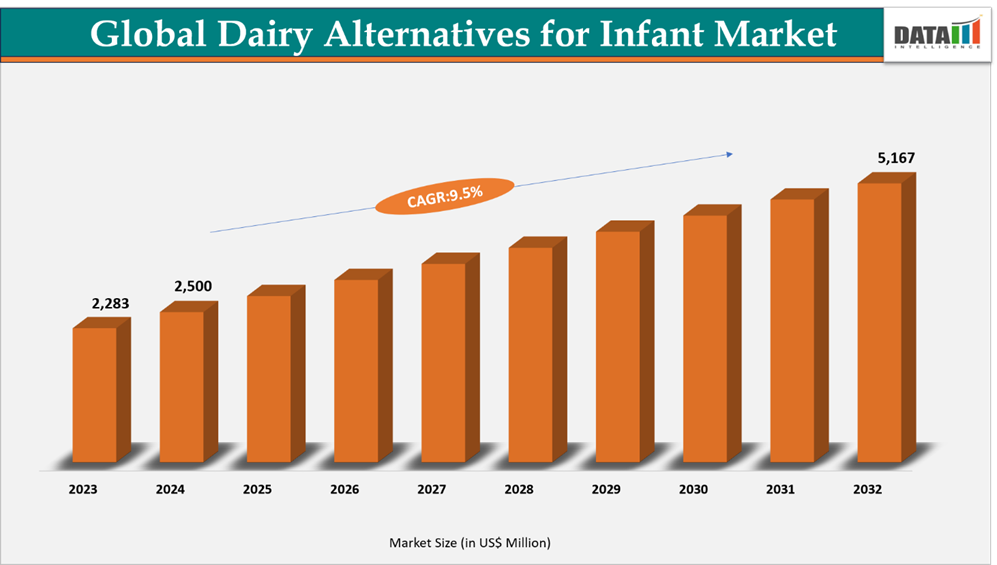
The Global Dairy Alternatives for Infant Market is estimated to reach US$ 2,737.5 million in 2025 and is projected to grow to US$ 5,659.4 million by 2033, expanding at a CAGR of 9.5% during the forecast period 2025 to 2032.
The dairy alternatives for infant market have been gradually expanding, driven by increased knowledge of sleep health, the prevalence of sleep disorders and lifestyle-related stress among urban populations. Dairy alternatives for infant are generally used as a dietary supplement in gummies and softgels, with extended-release formulations approved by the regulations of various countries. Market growth is also being fueled by a growing interest in holistic wellbeing, with manufacturers introducing functional ingredients like herbal extracts, vitamins and stress-relief components to improve product distinctiveness and value.
Dairy alternatives for infant Market Industry Trends and Strategic Insights
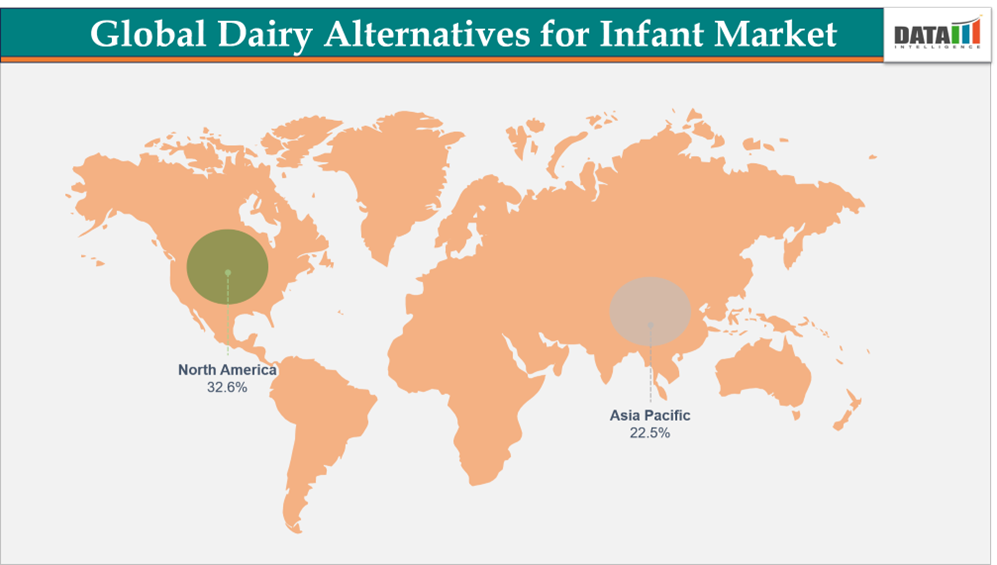
- North America leads the global dairy alternatives for infant market, capturing the largest revenue share of 32.6% in 2024.
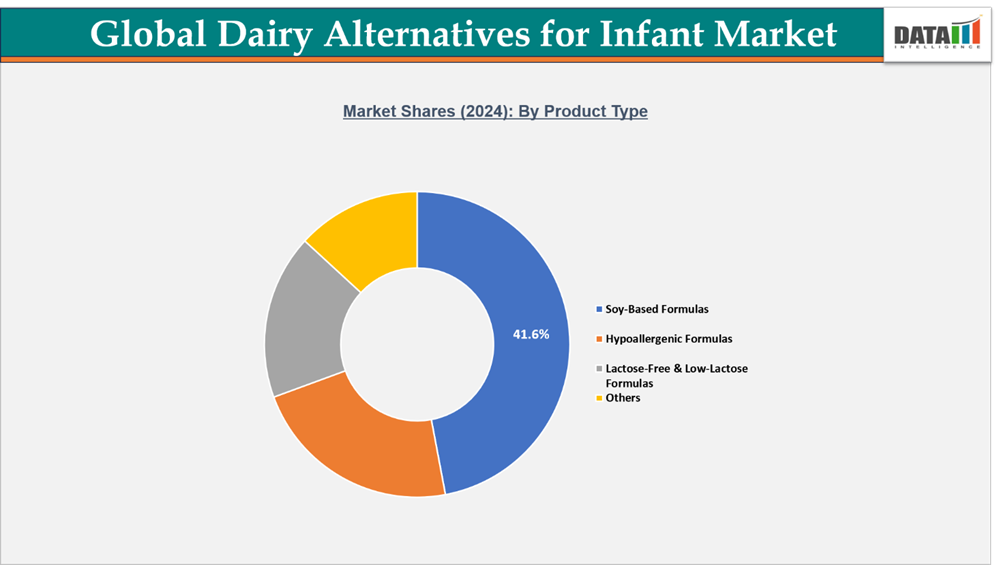
- By product type form segment, soy-based formulas lead the global dairy alternatives for infant market, capturing the largest revenue share of 41.4% in 2024.
Market Size and Future Outlook
- 2025 Market Size: US$ 2,737.5 million
- 2033 Projected Market Size: US$ 5,659.4 million
- CAGR (2026–2033): 9.5%
- Dominating Market: North America
- Fastest Growing Market: Asia-Pacific
Market Scope
| Metrics | Details |
| By Product Type | Soy-Based Formulas, Hypoallergenic Formulas, Lactose-Free & Low-Lactose Formulas, Others |
| By Stage | Stage 1 – Infant Formula (0–6 months), Stage 2 – Follow-on Formula (6–12 months) |
| By Distribution Channel | Online, Offline |
| By Category | Organic, Conventional |
| By Region | North America, South America, Europe, Asia-Pacific, Middle East and Africa |
| Report Insights Covered | Competitive Landscape Analysis, Company Profile Analysis, Market Size, Share, Growth |
For more details on this report, Request for Sample
Market Dynamics
Preference for Organic and Clean-Label Products
Rising parental awareness about infant health and nutrition is significantly boosting demand for organic and clean-label dairy alternatives. Today’s parents are increasingly selective about the ingredients in infant formulas, favoring products that are free from synthetic additives, preservatives, GMOs, and antibiotics. This reflects a growing desire to provide infants with safe, natural, and nutritionally complete feeding options, aligning with broader trends toward health-conscious consumption and transparent labeling.
In response, manufacturers are expanding and innovating their product portfolios to include organic and plant-based alternatives fortified with essential nutrients such as DHA, ARA, prebiotics, probiotics, vitamins, and minerals that support infant growth, immune development, and digestive health. The shift toward organic and clean-label offerings also encourages companies to enhance domestic production, adopt sustainable sourcing, and implement eco-friendly manufacturing practices, further strengthening consumer trust.
For instance, in July 2023, Bobbie, the only mom-founded and led infant formula company in the US, which acquired Nature’s One, an Ohio-based pediatric nutrition company recognized for decades of excellence in organic formulas. This strategic move allows Bobbie, one of the fastest-growing American infant formula brands in the past fifty years, to scale domestic manufacturing and expand its market presence, illustrating how the growing consumer preference for organic, clean-label, and high-quality infant nutrition is shaping industry strategies and driving growth.
Overall, the demand for organic and clean-label products continues to be a key growth driver, pushing companies to focus on premium formulations, sustainable practices, and transparent ingredient sourcing to meet evolving consumer expectations.
Segmentation Analysis
The global dairy alternatives for infant market are segmented based on product type, stage, distribution channel, category and region.
Soy-Based Formulas Segment Leads Due to Nutritional Adequacy and Digestive Ease
The soy-based formulas segment holds a significant share in the global dairy alternatives for infant market owing to its nutritional adequacy, digestibility, and wide acceptance among infants with lactose intolerance or cow milk protein sensitivity. Soy-based formulas provide essential proteins, carbohydrates, fats, vitamins, and minerals necessary for healthy growth and development while serving as a reliable alternative for infants who cannot tolerate conventional cow milk formulas.
Soy protein formulas are formulated to closely mimic the nutrient profile of breast milk, making them a trusted choice for health-conscious parents and pediatricians. The segment benefits from long-standing regulatory recognition, with formulas complying with FDA and EFSA nutritional standards, ensuring both safety and efficacy for infant consumption.
To meet growing demand for plant-based nutrition options, global players are expanding their portfolios. For instance, in May 2025, French dairy giant Danone is strengthening its presence in the US market by acquiring a majority stake in Kate Farms, a US based plant-based infant formula company. This strategic move underscores the industry’s focus on diversifying product offerings, catering to parents seeking soy-based and plant-based alternatives for infants, and reflects the market trend toward premium, functional, and plant-derived nutrition solutions.
Furthermore, soy-based formulas are increasingly enriched with DHA, ARA, prebiotics, and probiotics to support brain development, immune health, and digestive comfort, enhancing their appeal to parents seeking safe, nutritionally complete alternatives. This combination of nutritional reliability, regulatory compliance, and strategic market expansion continues to solidify soy-based formulas as a leading choice in the global dairy alternatives for infant market, particularly in North America, Europe, and Asia-Pacific.
Hypoallergenic Formulas Segment Gains Traction Due to Allergy Management and Safety
The hypoallergenic formulas segment is growing due to the rising prevalence of cow milk protein allergy (CMPA) and other infant sensitivities. These formulas, including partially hydrolyzed (pHF) and extensively hydrolyzed (eHF) options, provide complete nutrition while minimizing allergenic risks, making them preferred by parents and pediatricians.
Many products are fortified with prebiotics, probiotics, and essential fatty acids to support growth, immune health, and digestion. Regulatory approvals from FDA, EFSA, and Codex standards further enhance trust in these products.
In March 2023, Danone launched its new hypoallergenic baby formula brand, Pepticate, in the U.S., reinforcing the company’s commitment to allergy-friendly infant nutrition and highlighting the market’s focus on specialized, safe, and clinically supported formulas.
The combination of health benefits, regulatory compliance, and product innovation continues to drive growth, particularly in North America and Europe, where awareness of infant allergies is higher.
Geographical Penetration
DOMINATING MARKET:
North America Leads the Global Market Due to the Increasing Integration of Sleep Optimization
North America dominates the global dairy alternatives for infant market, driven by health-conscious consumer behavior and the rising preference for organic, clean-label nutrition. Parents increasingly seek formulas that promote healthy growth, immunity, and overall wellness, reflecting a broader trend toward natural, safe, and high-quality infant nutrition.
US Dairy alternatives for infant Market Insights
In the US, demand is fueled by high parental awareness, strong retail penetration, and widespread e-commerce access. Health-conscious parents are actively choosing products that are free from artificial additives, GMOs, and allergens, favoring organic and nutrient-rich options. For instance, in 2025, Nara Organics launched the first FDA-registered and USDA-certified organic whole milk infant formula developed to meet both US and European safety standards. Formulated by moms, scientists, pediatricians, and nutritionists, Nara provides a clean, nutritious alternative free from palm oil, soy, corn syrup, maltodextrin, and GMOs, enabling parents to make confident feeding choices.
Canada Dairy alternatives for infant Market Industry Growth
In Canada, dairy alternatives for infants are regulated as Natural Health Products (NHPs) under Health Canada, ensuring ingredient quality, dosage accuracy, and proper labeling, which fosters consumer trust. Market growth is also supported by expanded retail partnerships and online availability. For instance, in July 2024, Else Nutrition Holdings Inc., a leader in complete plant-based infant and toddler nutrition, launched its entire product line on a major Canadian superstore’s online platform in August 2024, significantly enhancing accessibility for Canadian parents seeking plant-based alternatives.
FASTEST GROWING MARKET:
Asia-Pacific is the Fastest-Growing Region Driven by Rising Health and Nutrition Awareness
The Asia-Pacific dairy alternatives for infant market is experiencing rapid growth due to increasing parental focus on infant gut health, immunity, and overall wellness, coupled with rising adoption of organic, plant-based, and allergen-free formulas. Factors such as urbanization, higher disposable income, lifestyle changes, and growing awareness about clean-label and sustainable nutrition are driving demand for premium alternatives to conventional cow’s milk-based formulas.
India Dairy alternatives for infant Market Outlook
India is emerging as the fastest-growing country in Asia-Pacific for dairy alternatives for infants. Urban parents are increasingly adopting soy-based, plant-based, and hypoallergenic formulas for their children due to rising awareness of digestive sensitivities, allergies, and the benefits of organic nutrition. E-commerce growth, retail expansion, and educational initiatives on infant nutrition further support market adoption. Premium, safe, and nutrient-rich formulas are highly sought after, particularly among middle- and upper-income families in metropolitan regions.
China Dairy alternatives for infant Market Trends
China continues to be the largest market in Asia-Pacific for dairy alternatives for infants, although regulatory compliance is stringent. Products must meet strict safety and certification requirements, limiting over-the-counter adoption and positioning premium, clinically validated formulas as high-value offerings. Parents are increasingly opting for organic, non-GMO, plant-based, and allergen-free formulas that provide balanced nutrition and immune support. The market is growing fastest in urban areas, where awareness of infant nutrition, immunity, and clean-label standards is highest. Brands are leveraging cross-border e-commerce, specialty stores, and partnerships to reach health-conscious parents.
Sustainability and ESG Analysis
Sustainability is increasingly shaping the global dairy alternatives for infant market, influencing consumer preferences, brand positioning, and operational strategies. Although many dairy alternatives—such as plant-based, soy-based, or hypoallergenic formulas use natural ingredients, their commercial production often involves energy-intensive processes, specialized sourcing, and stringent regulatory compliance, which can result in higher carbon footprints and resource use.
To meet ESG standards, companies are adopting renewable energy, water recycling, sustainable ingredient sourcing, and process optimization to minimize emissions, waste, and energy consumption. Brands are also embracing eco-friendly packaging, ethical sourcing, and third-party certifications to strengthen credibility with environmentally conscious consumers.
With growing awareness among consumers, regulators, and investors, companies that integrate environmental stewardship, ethical practices, and ESG-aligned operations are better positioned to enhance brand loyalty, regulatory compliance, and long-term resilience in the dairy alternatives for infant industry.
Competitive Landscape
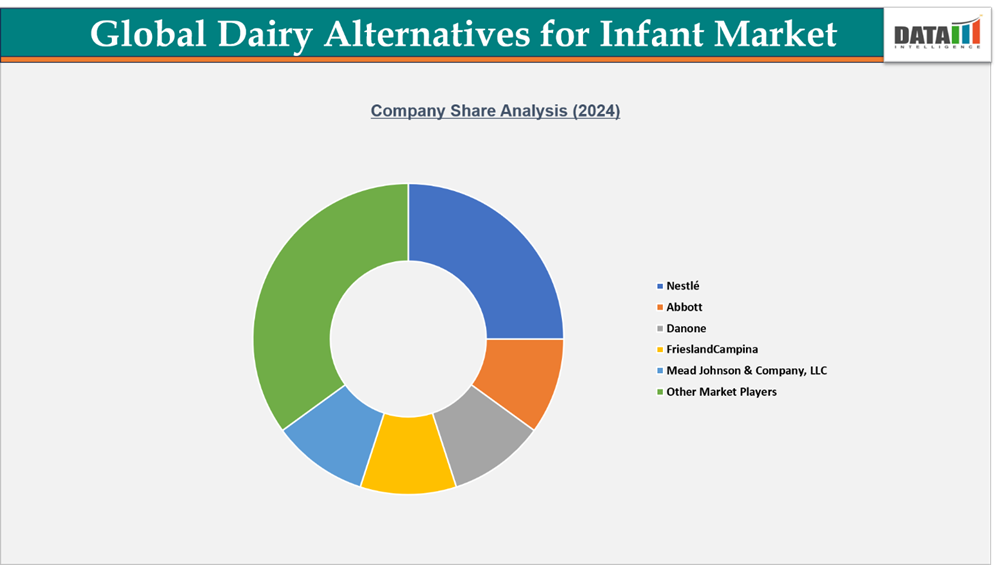
- The global dairy alternatives for infant market is highly competitive, with a mix of multinational corporations and regional players vying for market share. Leading companies such as Nestlé, Abbott, Danone, Friesland Campina, Mead Johnson & Company, dominate the market, leveraging extensive production networks, diverse product portfolios, and strong R&D capabilities.
- International brands have also strengthened their presence through imports and e-commerce channels, expanding accessibility to consumers.
- The market is dynamic, with regulatory compliance, brand reputation, product innovation, and distribution strategies serving as key drivers of competitive advantage. Companies that focus on organic, clean-label, and nutrient-enriched formulas while maintaining high safety and quality standards are best positioned to capture growth in this evolving market.
Key Developments
- May 2026: Danone S.A. expanded plant-based infant-formula production capabilities supporting rising global demand for dairy-free, allergy-friendly and clean-label infant nutrition products.
- April 2026: Nestlé S.A. launched advanced dairy-alternative infant nutrition formulations enriched with probiotics, DHA and plant-based proteins targeting lactose-intolerant and vegan consumer segments globally.
- March 2026: Abbott Laboratories strengthened hypoallergenic infant-formula research initiatives focused on soy-based and plant-derived nutritional alternatives for sensitive infant populations.
- February 2026: European Food Safety Authority updated nutritional-evaluation guidelines supporting innovation and regulatory compliance for plant-based infant-formula manufacturers across Europe.
- January 2026: Reckitt Benckiser Group plc expanded specialty infant-nutrition portfolios with dairy-free formulations designed to address milk-protein allergies and digestive health concerns.
- December 2025: Else Nutrition Holdings Inc. increased commercial expansion of almond-, buckwheat- and tapioca-based infant nutrition products across North America and Asia-Pacific markets.
- November 2025: The Hain Celestial Group, Inc. strengthened organic dairy-alternative infant-food offerings supporting clean-label, non-GMO and sustainable nutrition trends globally.
- October 2025: Arla Foods invested in precision-fermentation and alternative-protein technologies supporting next-generation infant nutrition innovation and sustainable dairy alternatives.
- September 2025: Kerry Group plc advanced plant-protein ingredient solutions optimized for infant-formula applications, improving digestibility, texture and nutritional performance.
- July 2025: U.S. Food and Drug Administration strengthened regulatory oversight and safety-evaluation frameworks for dairy-alternative infant formulas to ensure nutritional adequacy and product-quality standards.
Investment & Funding Landscape
The global dairy alternatives for infant market is witnessing a surge in investments and strategic initiatives, driven by growing consumer demand for natural, plant-based infant nutrition solutions. In 2022, Hawaii-based vegan milk maker PlantBaby was closing a US$4 million seed funding round led by Big Idea Ventures, with participation from The Fund LA, Two Culture Cap, Springbank Collective, Western Technology Investment, and notable private investors including actor Daniella Monet and Athletic Greens president and COO Kat Cole. The investment was being used to support ongoing R&D for existing and future product lines, reflecting the market’s focus on innovation and plant-based nutrition.
| Company | Investment/Funding | Year | Details | |
| PlantBaby | PlantBaby Funding Round | 2022 | Hawaii-based vegan milk maker PlantBaby was closing a US$4 million seed funding round led by Big Idea Ventures, with participation from The Fund LA, Two Culture Cap, Springbank Collective, Western Technology Investment, and notable private investors including actor Daniella Monet and Athletic Greens president and COO Kat Cole. The investment was being used to support ongoing R&D for existing and future product lines, reflecting the market’s focus on innovation and plant-based nutrition. | |
What Sets This Global Dairy alternatives for infant Market Intelligence Report Apart
- Latest Data & Forecasts – Comprehensive, up-to-date insights and projections through 2032. Coverage includes global value by product type, stage, distribution channel and category segments (sleep disorders, jet lag, shift-work). Scenario forecasts with region-level splits (North America, Europe, Asia-Pacific, South America, Middle East and Africa) and sensitivity to factors such as regulatory reclassification and raw-material costs.
- Regulatory Intelligence – Actionable analysis of regulatory frameworks that materially affect dairy alternatives for infant commercialization, revenue by country, allowable label claims, permitted doses, import/export controls and advertising restrictions.
- Competitive Benchmarking – Standardized profiling and benchmarking of leading pharma and nutraceutical players, contract manufacturers and e-commerce specialists active in the market.
- Geographic & Emerging Market Coverage – Region-by-region market sizing, growth drivers, reimbursement dynamics, cultural/consumer behavior and market access considerations. Focus on high-growth or regulatory-uncertain markets.
- Actionable Strategies – Identify opportunities for launching innovative products, while leveraging strategic partnerships and supply chain integration for maximum ROI.
- Pricing & Cost Analysis – In-depth assessment of price trends, raw material costs and sustainability-driven cost efficiencies across regional markets.
- Expert Analysis – Insights from industry experts such as clinical sleep specialists, regulatory affairs professionals and key manufacturing companies.


























































