


Colombia Probiotic Cosmetics Market Growth
Colombia’s beauty and personal care sector is undergoing a structural shift toward microbiome-friendly and functional skincare, positioning probiotic cosmetics as a high-potential niche within the broader industry.
The market’s relevance today is tied to rising consumer alignment with gut health, functional nutrition, and microbiome science, now extending into topical skincare. Buyers are not only seeking cosmetic outcomes but also biological skin benefits such as barrier repair, inflammation control, and long-term skin health. However, adoption remains uneven due to limited consumer awareness and premium pricing, making investment timing dependent on education and product accessibility.
Market Scope
| Metric | Details |
| Market Size (2025) | US$ 15.33 Million |
| Market Size (2035) | US$ 26.68 Million |
| CAGR | 5.73% |
| Historic Years | 2023-2024 |
| Base Year | 2025 |
| Forecast Period | 2026-2035 |
| Segments Covered | Type, Ingredient, Consumer Orientation, Application, Packaging, Distribution Channel |
| Leading Region | Urban Colombia |
| Fastest Growing Region | Urban Colombia |
To Know More -Download Sample
Key Takeaways
- The market expands steadily from US$ 14.50 million in 2024 to US$ 26.68 million by 2035, reflecting niche but durable growth.
- Colombia Probiotic Cosmetics consumer demand trends are strongly aligned with natural, organic, and microbiome-supporting formulations.
- Facial care products dominate due to visible results in acne control, hydration, and anti-aging applications.
- Pricing remains a constraint, with premium positioning limiting penetration beyond urban middle- and high-income consumers.
- Ingredient innovation, especially in live cultures, ferments, and postbiotics, is becoming a competitive differentiator.
- Regulatory clarity around probiotic claims is still evolving, influencing marketing strategies and product labeling.
Demand Landscape and Consumer Shift
Skin Microbiome Awareness Driving Purchase Behavior
The primary Colombia Probiotic Cosmetics growth drivers stem from increasing awareness of the skin microbiome. Consumers are shifting from traditional cosmetic solutions to products that actively improve skin health by balancing beneficial bacteria.
Clinical and consumer-backed insights indicate that probiotics can:
- Reduce inflammation and acne
- Improve hydration and skin barrier function
- Enhance collagen production for anti-aging
The rising incidence of adult acne and sensitivity-related conditions in Colombia reinforces demand for targeted probiotic formulations.
Clean Beauty and Ethical Sourcing Influence
Consumers increasingly prioritize:
- Chemical-free formulations
- Cruelty-free production
- Sustainably sourced ingredients
This aligns probiotic cosmetics with broader clean beauty trends, strengthening brand positioning and long-term loyalty.
Pricing, Adoption, and ROI Perspective
Premium Positioning Slows Mass Adoption
Colombia Probiotic Cosmetics pricing and adoption trends reveal a clear divide. While urban consumers are willing to pay for high-quality formulations, broader adoption is limited by:
- High ingredient and R&D costs
- Limited availability of affordable alternatives
- Perceived complexity of probiotic benefits
From an ROI perspective, brands investing in consumer education and localized pricing strategies are better positioned to scale.
Service and Revenue Model Evolution
Companies are increasingly leveraging:
- Direct-to-consumer e-commerce channels
- Subscription-based skincare models
- Dermatologist-backed product lines
These approaches help justify pricing while improving customer retention.
Ingredient Innovation and Regulatory Considerations
Ingredient Format Segmentation
The market is evolving across different probiotic formats:
- Live probiotics for active microbiome interaction
- Postbiotics offering stability and longer shelf life
- Fermented extracts for enhanced absorption
This Colombia Probiotic Cosmetics ingredient innovation is critical for product differentiation, particularly in anti-aging and sensitive skin segments.
Regulatory Claims and Boundaries
Colombia Probiotic Cosmetics regulatory claims analysis highlights a key challenge. Companies must carefully position products as:
- Skin-supporting rather than therapeutic
- Cosmetic rather than pharmaceutical
Lack of standardized definitions for probiotics in cosmetics can create ambiguity, impacting consumer trust and marketing claims.
Market Opportunities
Opportunities in this market are closely tied to education, affordability, and product diversification.
- Manufacturers can expand into specialized segments such as sun protection, anti-aging, and sensitive skin care with probiotic formulations.
- Investors should focus on brands integrating microbiome science with functional nutrition positioning, bridging ingestible and topical benefits.
- Retailers can leverage omnichannel strategies, combining physical stores with digital platforms to improve accessibility.
- Emerging brands have an opportunity to introduce cost-effective probiotic skincare targeting mid-income consumers.
The strongest growth potential lies in expanding beyond niche urban markets into broader demographics.
Segmentation Analysis
Segmented by type, ingredient, consumer orientation, application, packaging, and distribution channel, and by Region - Share, Trends, and Forecast to 2035.
Application Insights
Facial care dominates the market due to strong demand for microbiome-friendly products. Probiotic cleansers, serums, and moisturizers are widely adopted for their ability to:
- Improve skin texture
- Reduce acne and irritation
- Provide anti-aging benefits
This segment benefits from both functional performance and strong alignment with global skincare trends.
Distribution Channel Analysis
Retail expansion is being driven by:
- E-commerce platforms increasing accessibility
- Social media influencing purchase decisions
- Specialty beauty stores promoting premium products
Digital channels are particularly effective in educating consumers and building brand awareness.
Regional Analysis
Colombia Market Dynamics
Within Colombia, urban centers such as Bogotá, Medellín, and Cali dominate demand due to:
- Higher disposable income
- Greater awareness of global beauty trends
- Strong retail and e-commerce infrastructure
The country’s position as a leading cosmetics exporter in Latin America further strengthens its role in the Colombia Probiotic Cosmetics regional analysis.
Latin America Context
Colombia ranks among the top beauty markets in the region, supported by:
- Expanding middle class
- Strong domestic manufacturing base
- Increasing presence of global brands
This creates a favorable environment for probiotic cosmetics to scale alongside the broader beauty sector.
Competitive Landscape
The Colombia Probiotic Cosmetics vendor landscape is still emerging, with a mix of local innovators and global influence.
Key Colombia Probiotic Cosmetics top companies include:
- Emmie by Biosa Colombia SAS
- Recamier
- Bivien
- Tecnoquímicas
Global players such as Colgate, Johnson & Johnson, and Unilever also influence the competitive environment through their broader skincare portfolios.
Strategy Insights
- Local brands are leveraging Colombia’s biodiversity for natural ingredient sourcing
- Companies are investing in microbiome-focused R&D
- Partnerships with dermatologists and influencers are driving credibility
Product differentiation is increasingly based on ingredient transparency, sustainability, and clinical validation.
Recent Developments
In May 2026, Natura &Co expanded its probiotic-based skincare offerings in Colombia with microbiome-friendly beauty products. The initiative focuses on natural ingredients and skin health. This supports sustainable cosmetics demand.
In April 2026, L’Oréal S.A. introduced probiotic cosmetic products in the Colombian market with advanced formulations targeting skin barrier repair. The development enhances product effectiveness. This benefits consumers.
In March 2026, Unilever PLC strengthened its presence in Colombia with probiotic-infused personal care products. The innovation focuses on hydration and skin microbiome balance. This supports market growth.
Sustainability and Supply Chain Outlook
Colombia’s biodiversity provides a strong foundation for sustainable sourcing of probiotic ingredients. However, challenges include:
- Limited eco-friendly packaging infrastructure
- Higher costs of sustainable production
Companies adopting circular economy practices, such as refillable packaging, are likely to gain long-term competitive advantages.
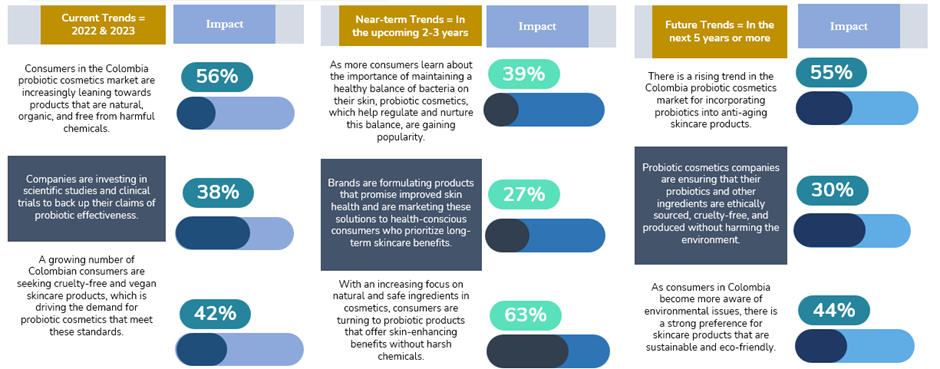
Trends
Report Benefits
This report supports:
- Manufacturers in identifying product innovation and pricing strategies
- Investors in evaluating growth potential and market entry timing
- Retailers in understanding consumer demand trends and channel dynamics
- Strategy teams in assessing competitive positioning and regulatory considerations
The Colombia probiotic cosmetics report would provide approximately 27 tables, 40 figures and 210 pages.
Target Audience
- Cosmetic and skincare manufacturers
- Ingredient suppliers and biotech firms
- Beauty retailers and e-commerce platforms
- Investors and venture capital firms
- Dermatology and skincare professionals
- Emerging clean beauty brands




























































