


Cannabis Testing Market Size and Overview
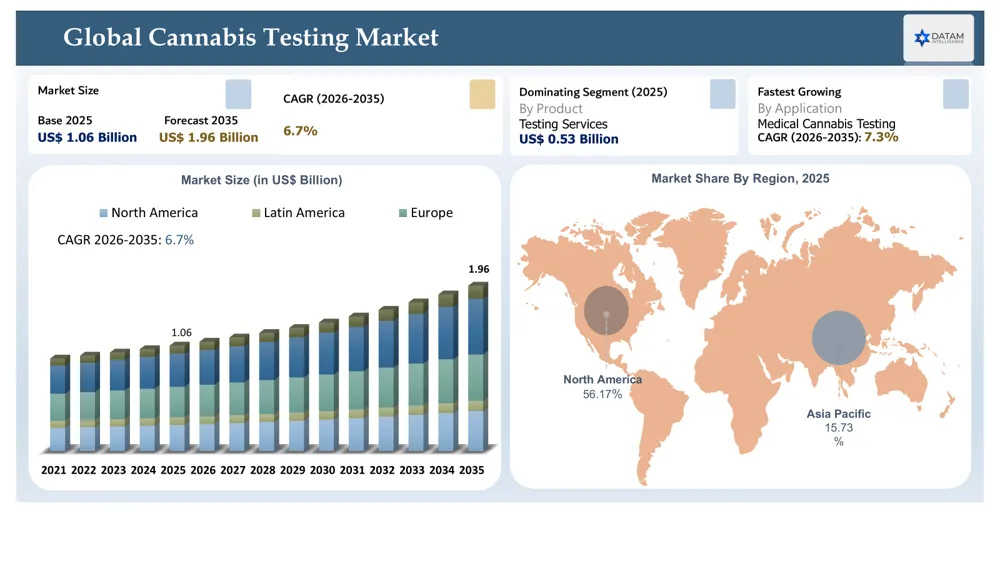
The global Cannabis Testing market reached US$ 1.06 billion in 2025 and is expected to reach US$ 1.96 billion by 2035, growing with a CAGR of 6.7% during the forecast period 2026-2035.
The market is expected to witness consistent growth driven by the legalizing of medical and recreational marijuana in key global economies, along with the growing necessity of mandatory laboratory testing of cannabis products prior to their commercial distribution. Over 60 countries have legalized medical cannabis, whereas 24 US states as well as countries like Canada, Germany, Uruguay, and Malta have legalized recreational cannabis; hence, the demand for accredited laboratories testing cannabis products and regulatory services will increase substantially. Testing and verification is imperative at all stages of the licensed cannabis supply chain, as it ensures safety and potency of the products among other factors. Certified laboratories carry out testing and analysis of cannabinoids, pesticides, heavy metals, residual solvents, microbial presence, mycotoxins, and terpenes profiles in order to meet the regulatory requirements and ensure the product commercialization.
| Country | Cannabis Legal Status | Key Regulations (2025/2026) |
| United States | Medical cannabis legal in 40+ states; Recreational cannabis legal in 24 states | State regulations require mandatory laboratory testing for potency, pesticides, heavy metals, microbial contaminants, residual solvents and mycotoxins before commercial sale. |
| Canada | Medical & Recreational Legal | Federal regulations under the Cannabis Act continue to mandate comprehensive quality testing and Good Production Practices (GPP) compliance. |
| Germany | Medical Legal; Recreational adult-use partially legalized | Implementation of the Cannabis Act (CanG) continues to expand regulated cultivation and strengthen quality assurance requirements for medical cannabis. |
| Australia | Medical Legal | The Therapeutic Goods Administration (TGA) continues to regulate medical cannabis products, with increasing emphasis on GMP manufacturing and laboratory testing. |
| Thailand | Medical Legal | Since 2025, cannabis flower sales require a medical prescription, increasing demand for regulated product testing and quality assurance. |
Growing output of medical cannabis, hemp-derived CBD products, cannabis edibles, cannabis concentrates and pharmaceutical cannabis products further boosts the market. Furthermore, growing investment in accredited testing labs, high end analytical instruments, laboratory automation and digital lab information management systems (LIMS) has increased laboratory’s testing efficiency and capacity. North America is the largest market with established cannabis industry and mature regulations, while the European and Asia-Pacific regions, driven by medical cannabis programs and increasingly rigid regulations, are expected to grow at a rapid pace.
Cannabis Testing Market Key Takeaways
- In 2025, North America accounted for a 56.17% market share, producing roughly US$ 0.60 billion in revenue, propelled by extensive legalization of medical and recreational cannabis, rigorous regulatory testing mandates, and a robust system of certified testing labs.
- In 2025, the Testing Services division accounted for a 50.0% market share, producing US$ 0.53 billion in revenue, bolstered by required testing for cannabinoid potency, pesticides, heavy metals, microbial contaminants, mycotoxins, and residual solvents prior to commercial distribution.
- Over 40 states in the U.S. have sanctioned medical cannabis and 24 allow recreational cannabis, greatly boosting the need for certified cannabis testing labs.
- Hemp and CBD products are expected to experience the quickest growth until 2035, driven by the rising commercialization of CBD oils, nutraceuticals, cosmetics and functional drinks.
- LC-MS/MS, GC-MS, HPLC, ICP-MS and PCR remain the most commonly utilized analytical techniques for regulatory cannabis testing, facilitating accurate contaminant and cannabinoid analysis.
- Europe and Asia-Pacific are anticipated to experience the quickest regional growth, driven by expanding medical cannabis initiatives, more stringent quality regulations and enhancements in laboratory infrastructure.
Cannabis Testing Industry Trends and Strategic Insights
- Testing labs are broadening their service offerings beyond standard potency assessments to encompass genetic testing, stability studies, terpene profiling and shelf-life evaluations as cannabis-based pharmaceuticals and high-end consumer items become more popular.
- The need for multi-contaminant testing is rising as regulators mandate extensive screening via a single analytical process, prompting laboratories to invest in unified testing platforms that enhance efficiency and lower operational expenses.
- Cannabis manufacturers are more frequently collaborating with accredited third-party laboratories to enhance product transparency, bolster premium brand positioning and fulfill quality standards for retailers and export markets.
- Laboratories are creating standardized testing protocols and verified analytical methods to enhance result uniformity across various jurisdictions and decrease variability introduced by differing regulatory standards.
- The growing commercialization of lesser-known cannabinoids like CBG, CBN, CBC and THCV is generating new prospects for tailored analytical testing and method development that extend beyond traditional THC and CBD evaluations.
- Cannabis and hemp producers focused on exports are prioritizing international compliance, ensuring product traceability and obtaining globally recognized laboratory certifications to tap into lucrative pharmaceutical and wellness markets.
Cannabis Testing Market Scope
| Metrics | Details | |
| 2025 Market Size | US$ 1.06 Billion | |
| 2035 Projected Market Size | US$ 1.96 Billion | |
| CAGR (2026-2035) | 6.7% | |
| Largest Market | North America | |
| Fastest Growing Market | Asia-Pacific | |
| By Product | Analytical Instruments, Consumables, Software and Testing Services | |
| By Sample Type | Cannabis Flower, Cannabis Concentrates, Cannabis Oils & Tinctures,, Edibles, Beverages, Topicals, Capsules & Tablets and Hemp & CBD Products | |
| By End-User | Cannabis Testing Laboratories, Cannabis Cultivators & Growers, Cannabis Product Manufacturers, Cannabis Drug Manufacturers, Research Institutes & Universities, Government & Regulatory Agencies, Dispensaries and Others | |
| By Application | Medical Cannabis Testing, Recreational Cannabis Testing, Hemp & CBD, Product Testing, Research & Development and Regulatory Compliance & Quality Assurance | |
| By Region | North America | U.S., Canada, Mexico |
| Europe | Germany, UK, France, Spain, Italy, Poland | |
| Asia-Pacific | China, India, Japan, Australia, South Korea, Indonesia, Malaysia, Singapore, Vietnam, Thailand, Philippines, Taiwan | |
| South America | Brazil, Argentina | |
| Middle East and Africa | UAE, Saudi Arabia, South Africa, Israel, Turkiye | |
| Report Insights Covered | Competitive Landscape Analysis, Company Profile Analysis, Market Size, Share, Growth | |
Why does this report matter in 2026?
In 2026, the global cannabis testing market is poised to be in the early stage of accelerated growth, with the continued expansion of regulated medical cannabis markets around the world and stricter requirements imposed on test product quality and safety. Testing of cannabis is no longer restricted to the determination of potency of cannabinoids, but requires full-fledged testing of pesticides, heavy metals, residual solvents, microbiological contamination, mycotoxins, terpenes and authentication. There is a growing need for analytical services due to the fast-paced development of cannabis derivatives like edible products, extracts, beverages, medicines and CBD-containing hemp products. With ever-growing demands of regulators in major cannabis-producing nations, the laboratories and manufacturing firms should keep themselves updated with their testing facilities and techniques.
The report delivers the strategic intelligence on the size of the market, rapidly growing segments , competitive landscape, development of regulatory environments and investment options within the cannabis testing value chain. It assists manufacturers of analytical instruments in recognizing the demand for advanced testing technologies, aids testing laboratories in assessing opportunities for expansion and service variety and allows cannabis producers, pharmaceutical firms, investors and policymakers to grasp regional growth potential, new testing needs and competitive advancements. As cannabis markets grow more regulated and quality-oriented, the report offers the market insights required to assist in long-term business strategies and investment choices.
Cannabis Testing Market White Space & Investment Opportunities
- Growth of ISO/IEC 17025-accredited cannabis testing labs in recently legalized medical and recreational cannabis sectors throughout Europe, Latin America and Asia-Pacific.
- Expanding investment prospects in testing services for cannabis edibles, drinks, concentrates, vape products and pharmaceutical cannabis formulations, as regulatory standards tighten.
- Increased need for profiling minor cannabinoids (CBG, CBN, CBC, THCV) and terpene analysis is generating chances for specialized analytical testing labs.
- The growing commercialization of hemp-based CBD products is boosting the need for potency validation, THC regulation, contaminant assessment and export-grade testing services.
- Creation of swift and portable cannabis testing solutions for growers, processors and dispensaries to facilitate on-site quality assessment and quicker product launch.
- Targeted investments in international laboratory networks and globally acknowledged testing expertise to facilitate cannabis exports and adherence to changing pharmaceutical-grade quality requirements.
Cannabis Testing Future Market Transformation
It is anticipated that the global cannabis testing market will be transformed from one dominated by the compliance aspect to a full-fledged quality assurance ecosystem with the development of regulatory markets in cannabis around the world. The laboratories conducting tests will no longer be limited to basic analyses such as potency and contamination but will include more advanced tests including minor cannabinoids profiles, terpene identification, genotyping, stability tests and pharmaceutical grade quality tests.
During the forecast period, laboratories will rely on automation in the form of workflow integration, digital LIMS technology, artificial intelligence data analysis and high throughput testing in order to increase the number of samples analyzed while maintaining regulatory compliance. In light of increased harmonization of cannabis laws and increasing international commerce in medicinal cannabis and CBD derived products, laboratories that hold an ISO/IEC 17025 certification, have advanced analytical skills and international regulatory knowledge are poised to help drive future growth in the pharmaceutical industry.
Cannabis Testing Market Buyer Decision-Making Criteria
Factors used to assess the suitability of cannabis testing facilities include the capacity of a lab to consistently comply with legal regulations while providing timely and accurate analysis results. The selection process is significantly affected by whether or not a lab has ISO/IEC 17025 accreditation, proven methods of analysis, turnaround time, scope of accreditation and the capacity of a lab to conduct full analysis for potency of cannabinoids, terpenes, pesticides, heavy metals, residual solvents, microbes, mycotoxins and genetic identification. Labs that offer complete analysis within one workflow are highly favored.
In the light of increasing regulation and international connectivity in cannabis markets, there is an increasing focus on the regulatory expertise, laboratory capacity, digital certificate-of-analysis (CoA) reporting, sample traceability and experience supporting export-oriented cannabis products. Long-term decisions relating to procurement are becoming increasingly dependent on consistency of analysis, regulatory approval from various regions, data integrity and capacity of the laboratory to cope with the changing demands of testing. Laboratories providing specialized cannabis testing services & methodologies and scalable operations will have an advantage.
Cannabis Testing Market Economic & Investment Analysis
Testing of cannabis has become one of the attractive segments to invest in, as the testing process has shifted from being simply a regulatory requirement to a key step in the legal cannabis value chain. The mandatory lab testing of every licensed batch of cannabis flowers, extracts, edibles, beverages, pharmaceuticals and CBD products derived from hemp will lead to recurrent revenue generation for approved laboratories. With the global production of legal cannabis growing on a large scale, there will be a proportional growth in the need for testing for potency, contamination, terpenes, stability and genetics.
The investment trends include increased emphasis on the development of ISO/IEC 17025-accredited laboratories and the formation of regional laboratory networks using high-throughput multi-contaminant analysis systems. The investment is driven by the rapid growth of the legal cannabis market around the globe that had a total market value of about $102.7 billion in 2025 and is associated with investments into production, cultivation, manufacturing, and laboratory analysis. Also, the investment is going into high-end analytical equipment like HPLC, LC-MS/MS, GC-MS, laboratory automation, and Laboratory Information Management System (LIMS).
Cannabis Testing Investment Trends in the Market
- Boosting funding for ISO/IEC 17025-accredited cannabis testing labs to back the growth of medical and recreational cannabis legalization throughout North America, Europe and developing regulated markets.
- Increasing investment in high-throughput multi-contaminant testing systems that can concurrently assess cannabinoids, pesticides, heavy metals, residual solvents, mycotoxins and microbial contaminants.
- Increasing investments in the analytical capabilities of minor cannabinoids (CBG, CBN, CBC, THCV) and in pharmaceutical-grade cannabis testing to enhance product innovation and clinical studies.
- Growth of testing facilities for cannabis edibles, drinks, concentrates, vape items and hemp-sourced CBD products, mirroring the variety in regulated cannabis product ranges.
Strategic collaborations and acquisitions among analytical instrument producers, certified testing labs and cannabis growers to enhance testing capabilities, bolster regional foothold and elevate regulatory adherence. - Boosting funding for portable and on-site cannabis testing technologies for growers, processors and dispensaries to speed up quality verification and shorten product release timelines.
Cannabis Testing Market Strategic Indicators
High Regulation Impact
The cannabis testing market stands out as one of the most regulation driven segments within the life sciences sector. Laboratory-based testing is required prior to legal cannabis product commercialization in most regulated jurisdictions today.As more testing parameters are introduced into cannabis quality assurance, such as pesticide and heavy metal contamination, residual solvent analysis, microbial contaminant screening, mycotoxin detection, moisture content, terpene profiling and genetic verification, the need for laboratories to frequently re-validate their analytical methodology, update testing protocols and ensure ISO/IEC 17025 laboratory accreditations has never been greater.Companies who can demonstrate both extensive regulatory experience and multi-jurisdictional test method compliance alongside an established network of accredited testing labs will be best poised to capture the growing opportunities surrounding this fast-developing area of business, particularly when supporting export orientated cannabis producers.
High Investment Activity
We continue to see robust capital investment into this area of the industry driven by increasing legalisation, regulation and the resulting demand for laboratory services. Capital investment has focused on building out ISO/IEC 17025-accredited laboratories with high-throughput analytical platforms and more advanced capabilities that allow companies to test for minor cannabinoids, terpenes and other novel compounds .
And companies continue to invest in laboratory capacity to meet demand from rapidly-growing cannabis product categories including edibles, beverages, concentrates, vape products and hemp-derived CBD products. Strategic acquisitions and partnerships have allowed laboratories to grow geographically and establish themselves in emerging legalised cannabis markets.
Supply Chain Disruption
The cannabis testing industry has several unique characteristics that make it susceptible to supply chain disruptions. It depends heavily on high-value analytical instrumentation, specialized cannabis reference materials, chromatography columns, lab reagents, certified standards and sample preparation consumables. Delays in obtaining any of those supplies will have a direct impact on laboratory test throughput, which translates into slower regulatory turnaround.
The increase in demand for accredited testing services as more jurisdictions move toward legalization could lead to temporary capacity limitations at certain laboratories, causing increased test cycle times. Most cannabis testing labs are taking steps to counteract potential interruptions by building diversified supplier relationships, negotiating long-term procurement contracts and ramping up inventory levels for critical consumables, while also expanding their laboratory footprints regionally to help offset potential delays.
Pricing Volatility
The pricing of cannabis testing services is influenced by factors such as the operating costs of laboratories, analytical instruments investments and adherence to regulatory requirements. For instance, advanced analytical platforms such as liquid chromatography mass spectrometry (LC-MS/MS) equipment can cost anywhere between US$ 300,000-US$ 600,000, whereas gas chromatography-mass spectrometry (GC-MS) equipment varies from US$ 80,000-US$ 250,000.In general, the price for cannabis test services depends on the extent of the analyses conducted. Potency tests cost roughly US$ 40-US$ 100 per sample, while comprehensive compliance test panels may reach up to US$ 200-US$ 500 per sample.
Increasing cost of certified reference material, chromatography consumables, skilled personnel and ISO / IEC 17025 accreditation continues to put upward pressures on the price for tests offered by analytical testing services. At the same time, growing competitiveness within the sector of accredited laboratories has driven adoption of more efficient operations, including increased levels of automation as well as development of high through-put workflows, which in turn are enabling competitive pricing and protection of profit margins.
Procurement Pressure
The cannabis testing industry has seen increased procurement pressures over time due to growing demands for expanding testing capacities with greater sample volume while complying with changing regulations. Sourcing decisions are based more on availability of critical items including certified cannabinoid reference standards, chromatography columns, lab reagents, sample prep consumables and analytical instrumentation instead of costs only.Moreover, laboratories now seek vendors that provide validated testing methodologies, instrument calibrations, applications assistance and preventive maintenance services along with assured consumables deliveries round the clock so that they can avoid downtimes affecting their ability to comply with laws. This necessitated long term procurement contracts, diversified vendor base and optimized inventories. All these factors combined have made effective supplier management crucial element towards ensuring smooth running labs at all times.
New Technology Adoption
The cannabis industry’s ongoing global expansion is driving strong demand for sophisticated analytical tools to test cannabis and hemp for an ever-growing list of constituents and compounds to ensure consumer safety, regulatory compliance and product quality. To achieve greater testing accuracy, lab productivity and compliance assurance in this dynamic environment, cannabis testing labs have begun implementing an array of advanced, next-generation analytical techniques. Next-generation cannabis testing instruments in demand include LC-MS/MS, GC-MS, ICP-MS, HPLC, PCR based molecular testing techniques and automated sample preparation instruments.
AI-enabled data interpretation and the implementation of digital LIMS(Laboratory Information Management Systems) are also growing in acceptance for more complete cannabis testing, which includes the analysis of cannabinoids, terpenes, pesticides, heavy metals, residual solvents, microbial contaminants and mycotoxins. High-throughput analysis, digital Certificate of Analysis (CoA) production, portable analyzers and advanced genetic testing instrumentation are enabling laboratories for greater efficiency gains, faster turn-around times, improved data reliability and the effective handling of surging testing volumes for medical cannabis, recreational cannabis and hemp-based products.
Regional Expansion Opportunity
There are substantial opportunities for market expansion of cannabis testing on a regional basis with increasing numbers of nations introducing legalised medical cannabis programmes, in addition to improving the quality standards for products. North America will continue to dominate the market with its established and stringent regulations and well-developed cluster of licensed testing laboratories, while Europe is set to become a high growth market, led by Germany, the UK, Portugal and Malta with developing medical cannabis programmes that are driving demand for testing of products that meet the required standards. In the Asia-Pacific region, there is substantial development underway for medical cannabis cultivation and laboratory testing infrastructure in areas such as Australia and Thailand. International trade in medical cannabis and hemp-based products are also facilitating the growth of laboratory regional expansion, enhanced capabilities in testing which meet the requirements of export countries and building strong relationships with cultivators, manufacturers and the pharmaceutical industry.
Government Policy Support
Mandated testing as required by the government is still the major factor driving the growth of the cannabis testing market since the testing is the critical factor for the commercialization of cannabis products. Cannabis producers are mandated to carry out testing on cannabinoid potency, pesticides, heavy metals,residual solvents, microbial contaminants,mycotoxins and other quality standards. New policies on legalizations and regulatory reforms in Germany, Australia, Thailand and a growing number of states in the US have further boosted demand for testing by demanding tests for an expanded range of constituents, thereby driving investment in ISO/IEC 17025 accredited testing facilities, advanced analytical instruments and standardized testing methods. Global coordination of testing policies is a positive sign and with increasingly demanding policies, support from governments will continue to fuel long-term market growth opportunities for testing laboratories, analytical instrument manufacturers and laboratory consumable suppliers.
Pricing Intelligence
The cannabis testing industry features tiered pricing structures, with testing costs differing based on sample type, regulatory standards, turnaround time and the range of analytical parameters required. Premium pricing typically relates to thorough compliance testing, pharmaceutical-grade cannabis evaluation, stability assessments, genetic analysis and export certification, whereas regular potency and cannabinoid profiling tends to be more uniform. Laboratories that hold ISO/IEC 17025 accreditation, have wider regulatory recognition, possess enhanced analytical skills and offer quicker turnaround times usually charge higher service fees. As cannabis markets develop and testing demands rise, laboratories are more frequently providing bundled testing services, extended commercial agreements and volume-based pricing to enhance customer loyalty while staying competitive.
| HS Code | Reporter | Trade Flow | 2025 Trade Value | Interpretation |
| 9027 | United States | Import | High | Strong demand for chromatography, mass spectrometry and analytical instruments used in cannabis testing laboratories. |
| 9027 | Germany | Export | High | Major exporter of precision analytical instruments and laboratory equipment for global testing laboratories. |
| 3822 | Japan | Export | Medium–High | Significant supplier of laboratory reagents, certified reference materials and diagnostic chemicals used in cannabis testing. |
| 9027 | Canada | Import | Medium–High | Imports advanced analytical equipment to support the country's regulated medical and recreational cannabis testing industry. |
AI Impact Analysis of Cannabis Testing Market
AI has the capability to increase the accuracy and speed of cannabis testing laboratories through automated interpretation of chromatography, mass spectrometry, spectroscopy and PCR data. AI based software solutions can help laboratories produce consistent analysis of cannabinoid profiles, terpene levels, pesticides, heavy metals, residual solvents, microbial contamination and mycotoxins by minimizing the likelihood of errors in data processing. Laboratory Information Management Systems (LIMS) that can interface with the AI based testing solutions further simplify the process by automating sample tracking, providing digital Certificate of Analysis (CoA) reports and facilitating improved workflow efficiency and compliance.
As the market for regulated cannabis grows, AI is increasingly being leveraged to support predictive instrument maintenance, automated quality assurance, anomaly detection and real-time lab performance monitoring. Workflow analysis through the use of AI is helping cannabis testing labs reduce time to get results, increase analysis reproducibility, enhance resource management and ensure regulatory compliance. This is relevant in the future as the labs handle increased number of samples while venturing into more complex services like minor cannabinoid profiling, genetic testing and pharmaceutical cannabis analysis.
Cannabis Testing Market Disruption Analysis
There is a change in structure in the cannabis testing industry whereby the laboratories are shifting from traditional tests to full-fledged quality assurance tests. The increased commercialization of medical cannabis, cannabis products such as edibles, drinks, concentrates, vaping products and cannabinoids derived from the hemp plant has led to an increase in the need for specialized cannabis testing including minor cannabinoid analysis, genetic verification, stability tests and pharmaceutical-quality testing.
The other big disruption is the trend toward the standardization of cannabis testing in regulated jurisdictions, along with the consolidation of accredited laboratories. Laboratory networks are growing via mergers and regional expansion capabilities, allowing for standardized testing procedures, increased efficiency and wider regulatory compliance. While on the other hand, the global trade of medical cannabis and hemp derivatives is creating increased demand for internationally recognized testing standards, ISO/IEC 17025 accredited testing labs, digital certificate of analysis reporting and export quality assurance, thus revolutionizing the business of cannabis testing laboratories.
Cannabis Testing Market BCG Matrix: Company Evaluation
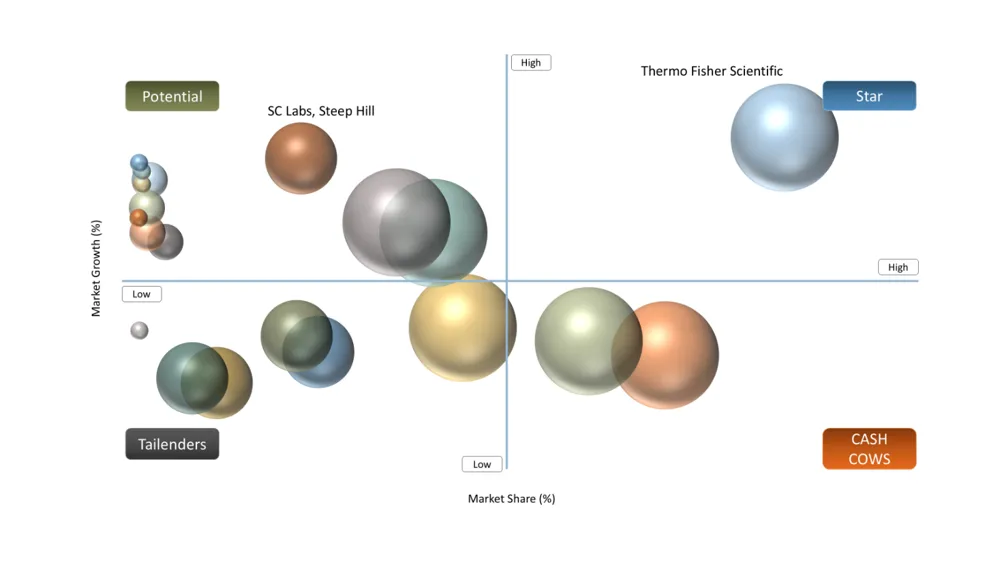
STAR
The leaders of cannabis testing market Thermo Fisher Scientific, Agilent Technologies, Waters Corporation, Shimadzu Corporation, Merck KGaA, Danaher Corporation, Bruker Corporation and PerkinElmer.They have an established global footprint and offer a vast range of analytical instrumentation. The global market is served by the firms via robust supply chains and supply networks. They also invest a great deal in research and development for a plethora of technologies such as mass spectrometry and liquid chromatography, molecular diagnostics and laboratory automation solutions.
POTENTIAL
Some of the companies making significant moves into the industry are SC Labs, Steep Hill, CannaSafe, Digipath, Inc., Kaycha Labs, Medicinal Genomics, Restek Corporation and Bio-Rad Laboratories. This growth has come from a focus on developing accredited networks of labs, increasing their cannabis-specific testing offerings, innovating new analytical approaches, investing in a greater number of technologies for screening a variety of potential contaminants, advancing molecular testing and automating their laboratories. This focus on testing, as well as increasing geographic reach, will likely allow these players to achieve rapid future growth.
Cannabis Testing Market Dynamics
Driver Impact Analysis
| Driver | Market Growth Impact (%) | Demand Concentration | Impacted Use Case | Strategic Impact |
Increasing Legalization of Medical and Recreational Cannabis | 26% | North America, Europe | Regulatory Compliance & Product Safety Testing | Expands demand for accredited cannabis testing laboratories and analytical services. |
Stringent Government Testing Regulations | 22% | North America | Potency, Contaminant & Quality Testing | Drives mandatory testing and increases adoption of advanced analytical technologies. |
Rising Consumer Demand for Safe, High-Quality Cannabis Products | 18% | Global | Potency Verification & Contaminant Screening | Encourages comprehensive testing and strengthens laboratory service demand. |
Advancements in Chromatography, Mass Spectrometry & Molecular Diagnostics | 15% | Global | High-Precision Cannabis Analysis | Improves testing accuracy, laboratory efficiency and supports expansion of testing capabilities. |
Driver: Increasing Legalization of Medical and Recreational Cannabis
One major factor propelling the growth of cannabis testing market is the rising legalization of medical and recreational cannabis by numerous governments across the U.S and globally. In light of stringent regulatory requirements mandated by governments to maintain product safety, efficacy and uniform consistency; mandatory testing of cannabis products by certified laboratories is a requisite before these products can be commercially brought to market. Increasing prevalence of testing tests for potency, cannabinoids, pesticides, heavy metals, residual solvents, microbial contamination, mycotoxins and terpene profiling of cannabis plants are the reason behind higher demand in accredited cannabis testing laboratories. Additionally, expansion of numerous licensed cultivators, processors and manufacturers along with continuous upgradation in advanced technological apparatus namely chromatographic instruments, mass spectrometry instruments and molecular diagnostics is propelling expansion in large scale testing laboratories, leading to overall increase in demand for cannabis testing market.
Restraint Impact Analysis
| Restraint | Drag on Market Growth (%) | Primary Impact Area | Impacted Use Case | Strategic Impact |
High Capital Investment for Advanced Testing Equipment | 20% | Laboratory Infrastructure | New Laboratory Setup & Expansion | Delays market entry and limits capacity expansion, particularly for small laboratories. |
Lack of Standardized Cannabis Testing Regulations | 17% | Regulatory Compliance | Multi-State & International Testing | Increases compliance complexity, testing variability and operational costs. |
Limited Legalization Across Several Countries | 14% | Market Expansion | Commercial Cannabis Testing Services | Restricts demand for testing services and slows geographic market growth. |
Shortage of Skilled Analytical Professionals | 11% | Workforce & Operations | High-Complexity Analytical Testing | Reduces laboratory efficiency, increases turnaround times and limits testing throughput. |
Restraint: High Cost of Advanced Testing Infrastructure and Laboratory Operations
High capital costs required for purchasing analytical instrumentation and equipment that can effectively analyze cannabinoids, residual solvents and other active & inactive ingredients, represent a key challenge for the growth of the market. Advanced analytical techniques, such as high-performance liquid chromatography (HPLC), gas chromatography-mass spectrometry (GC-MS), liquid chromatography-mass spectrometry (LC-MS/MS), inductively coupled plasma mass spectrometry (ICP-MS) and polymerase chain reaction (PCR), require substantial capital investment. Apart from instrument purchases, other related expenses such as, device maintenance and calibration, laboratory accreditation, certified reference materials (CRMs), software and highly trained analysts contribute to significantly elevated operational expenses. High operational expenses raise the cost of testing services, restrict small and independent labs from entering the market and hinder laboratory growth, especially in developing cannabis markets with changing regulatory conditions.
Cannabis Testing Market Segment Analysis
The global Cannabis Testing market is segmented based on the Product, Sample Type, End-User, Application and region.
By Product
Testing Services Will Continue to Lead Value Creation
The Testing Services segment is projected to represent approximately 50.0% of the worldwide cannabis testing market by 2025, providing the most significant portion of market revenue due to strict regulatory standards requiring laboratory testing of cannabis products prior to commercial sale. Rising compliance standards for potency, pesticides, heavy metals, microbial contaminants, residual solvents, mycotoxins and terpene analysis persist in boosting the need for certified cannabis testing services.The growing legalization of both medical and recreational cannabis has greatly heightened the need for potency testing, contaminant screening, terpene profiling, genetic testing and stability analysis. Cannabis growers, processors, manufacturers and regulatory bodies consistently depend on accredited labs to guarantee product safety, quality and adherence to changing regulations.
By Sample Type
Hemp & CBD Products Will Witness the Fastest Growth
Hemp & CBD Products is projected to be the fastest-growing segment within the analyzed period owing to the increase in the global demand for CBD oils, nutraceuticals, cosmetics, beverages and wellness products. As the number of regulations concerning the usage of hemp products increases, players are focusing on adopting advanced testing procedures that offer accurate testing on cannabinoid profiles, THC levels and impurities
Cannabis Testing Market Geographical Penetration
U.S. Cannabis Testing Market Landscape
The U.S. represents the largest cannabis testing market globally, supported by the legalization of medical cannabis in more than 40 states and recreational cannabis in 24 states. Most regulated state cannabis markets have established compulsory testing for a wide range of chemical compounds prior to market entry, including cannabinoid content, pesticides, heavy metals, microbes, mycotoxins, residual solvents and moisture content. High demand is driven by a considerable number of licensed cultivators, processors, manufacturers and retailers operating throughout the state and regulated systems.
The country is also home to top analytical instrument manufacturers, accredited cannabis testing laboratories and lab software companies, putting it at the cutting edge of cannabis testing. The growing commercialization of cannabis edibles, concentrates, beverages, vape products and pharmaceutical cannabis formulations is driving up testing volumes, while changing state regulations prompt laboratories to enhance their testing capabilities and boost operational efficiency.
| Country | Cannabis Legal Status | Key Regulations (2025/2026) |
| California | Medical & Recreational Legal | Mandatory laboratory testing for potency, pesticides, heavy metals, residual solvents, microbial contaminants, mycotoxins and terpene profiles before retail sale under the state's regulated cannabis program. |
| Michigan | Medical & Recreational Legal | State regulations require compliance testing for cannabinoid potency, contaminants and product safety prior to commercial distribution through licensed laboratories. |
| Florida | Medical Cannabis Legal | Medical cannabis products must undergo batch testing for potency, pesticides, heavy metals, residual solvents and microbiological contaminants before patient distribution. |
| New York | Medical & Recreational Legal | Adult-use cannabis regulations require licensed laboratories to perform comprehensive testing for potency, contaminants, heavy metals, pesticides and microbial safety before market release. |
| Illinois | Medical & Recreational Legal | Licensed cannabis products are subject to mandatory testing for cannabinoid potency, pesticides, heavy metals, residual solvents and microbial contaminants under state cannabis regulations. |
Germany Cannabis Testing Market Outlook
Germany stands as the biggest cannabis testing market in Europe owing to its status as the leading medical cannabis market within the region and the enactment of the Cannabis Act (CanG). The country has also established itself as the top medical cannabis importer in Europe, bringing in 200 tonnes of cannabis in 2025, therefore creating considerable requirements for cannabinoid potency testing and testing for pesticides, heavy metals, solvents and other pharmaceutical quality indicators before the products are distributed to the pharmacies and patients. The imposing German EU-GMP and pharmaceutical quality standards guarantee high investments into the accredited analytical laboratories and sophisticated testing technologies.
The expanding medical cannabis ecosystem in Germany is increasing the need for advanced analytical testing services. In fact, Germany’s medical cannabis market was valued at around USD 724 million in the year 2025 due to rising consumption of pharmaceutical cannabis, increasing domestic cultivation and volume of imports as a result of recent regulatory reforms. The increasing commercialization of medical cannabis leads to increasing need for accredited lab testing to ensure compliance with EU-GMP standards, pharmacopoeia specifications and national quality requirements. As pharmaceutical manufacturers, distributors and licensed cultivators are expanding their operations, the need for high-throughput analytical platforms, including HPLC, LC-MS/MS, GC-MS, molecular diagnostics and ISO/IEC 17025 accredited laboratory services is increasing, strengthening Germany’s position as Europe’s leading cannabis testing market.
China Cannabis Testing Market Trends
China has an increasingly prominent place in the cannabis testing market, due to the country being the world's largest producers of industrial hemp, as well as one of the biggest exporters of raw hemp materials. Demand testing mainly focuses on CBD products derived from hemp, along with fiber, extracts and materials intended for export that need to meet quality and safety regulations in global markets. Laboratories are increasingly conducting cannabinoid quantification, THC compliance tests, pesticide screenings, heavy metal analyses and contaminant assessments to meet export standards.
Although recreational cannabis remains prohibited and the domestic medical cannabis market is relatively small, investments in analytical equipment, chromatography, mass spectrometry systems and quality control framework are still making the country as one of biggest market for export industry of industrial hemp. The rise in the demand for the hemp derived ingredients at global market will give an additional trigger for China to serve the global markets of industrial hemp testing and quality control.
Cannabis Testing Market Competitive Landscape
- Competition is steadily moving away from standard compliance testing towards enhanced analytical services, such as pharmaceutical-grade testing, minor cannabinoid profiling, stability assessments and genetic validation as cannabis products advance in complexity.
- Laboratories are setting themselves apart by providing quicker sample processing, wider regulatory compliance across various regions, digital Certificate of Analysis (CoA) delivery and tailored testing solutions for growers, producers and exporters.
- Market players are growing via regional lab buyouts, expanding capacity and entering newly legalized cannabis markets, allowing them to seize rising testing volumes while minimizing sample logistics and turnaround durations.
- Competitive pressure is increasing as laboratories allocate resources to high-throughput testing processes, uniform analytical techniques and quality management systems to enhance operational efficiency and accommodate greater sample quantities without sacrificing analytical precision.
- The market is experiencing more cooperation among analytical instrument manufacturers, testing labs, cannabis growers, pharmaceutical firms and research organizations to create validated testing techniques, enhance laboratory standardization and speed up the commercialization of new cannabis products.
Key Companies of Cannabis Testing Market
- Agilent Technologies
- Thermo Fisher Scientific
- Waters Corporation
- Shimadzu Corporation
- Merck KGaA
- Danaher Corporation
- Bruker Corporation
- PerkinElmer
- Restek Corporation
- Bio-Rad Laboratories
- SC Labs
- Steep Hill
- CannaSafe
- Digipath, Inc.
- Kaycha Labs
- Medicinal Genomics
- Orange Photonics
- Anresco Laboratories
- Eurofins Scientific
- SGS SA
Cannabis Testing Market Major Pain Points
- Significant funding necessary for sophisticated analytical tools and lab facilities.
- Intricate and changing cannabis regulations in various countries and states lead to higher compliance expenses.
- The absence of uniform testing procedures and quality standards results in variable test outcomes.
- Elevated expenses related to laboratory certification, instrument calibration and quality control.
- Lack of qualified individuals with knowledge in cannabis-specific analytical testing.
- Differences in cannabis samples complicate precise potency and contaminant assessment.
- The rising need for swift, precise and thorough multi-contaminant testing puts pressure on laboratory resources.
- Fierce rivalry among testing labs leads to pricing challenges and diminished profit margins.
Cannabis Testing Market Recent Developments
- June 2025: Waters Corporation introduced the Xevo TQ Absolute XR tandem quadrupole mass spectrometer to enhance sensitivity, reliability and efficiency for contaminant testing applications, such as those in cannabis testing labs.
- March 2025: PerkinElmer launched the QSight 500 LC/MS/MS System, aimed at enhancing laboratory availability and lowering sample cost for regular contaminant analysis, aiding high-throughput cannabis testing facilities.
- June 2025: Eurofins Scientific enhanced its cannabis testing services in Canada by incorporating High North Laboratories into the Eurofins ExperNorth platform, improving accredited cannabis testing abilities.
- August 2025: Medicinal Genomics debuted an upgraded version of its PathoSEEK microbial detection platform, allowing quicker DNA-based identification of pathogenic bacteria and fungi in cannabis samples, while enhancing strain verification and quality control for growers and testing labs.
- June 2025: Kaycha Labs launched and received accreditation for new ISO/IEC 17025 compliant cannabis testing facilities in North America, increasing its testing capabilities for potency, pesticides, heavy metals, residual solvents, microbial contaminants and mycotoxins to support licensed cannabis manufacturers.
Analyst View / Opinion on Cannabis Testing Market
- The cannabis testing market is anticipated to shift from compliance-focused testing to high-quality analytical services, featuring pharmaceutical-grade testing, genetic evaluations, stability assessments and minor cannabinoid analysis.
- Testing Services will still represent the biggest portion of market revenue since required regulatory testing is essential for the commercialization of cannabis products in regulated markets.
- The upcoming stage of competition will transition from assessing capacity to evaluating analytical skills, as laboratories set themselves apart by providing quicker turnaround times, wider testing options, digital reporting and globally acknowledged accreditations.
- Firms that provide comprehensive solutions merging analytical tools, lab software, supplies and expert testing services are likely to enhance their competitive edge as labs pursue operational efficiency.
- The global growth of medical cannabis production and international trade will boost the need for universally recognized testing standards, leading to opportunities for laboratories proficient in regulatory compliance and export-ready testing services.
- Long-term market leadership will be shaped by strategic investments in advanced analytical platforms, automation in laboratories and niche cannabis testing services as the industry progresses towards enhanced standardization and commercialization.
Cannabis Testing Market Target Audience
| INDUSTRY | WHO SHOULD BUY THIS REPORT? | REASON TO BUY THIS REPORT |
| Cannabis Testing Laboratories | Laboratory Owners, Laboratory Directors, Quality Managers | To understand market trends, technology advancements, competitive landscape and expansion opportunities. |
| Analytical Instruments | Instrument Manufacturers, Product Managers, Business Development Teams | To identify demand for chromatography, mass spectrometry, PCR and laboratory automation solutions. |
| Cannabis Cultivation | Commercial Growers, Cultivators, Cultivation Companies | To understand testing requirements for regulatory compliance and product quality assurance. |
| Cannabis Processing & Manufacturing | Cannabis Product Manufacturers, Extractors, Edible Manufacturers | To ensure compliance with safety standards and optimize product quality through testing. |
| Pharmaceuticals & Biotechnology | Pharmaceutical Companies, Cannabis Drug Developers, R&D Teams | To evaluate testing technologies supporting medical cannabis research and product development. |
| Contract Research & Testing Services | CROs, Third-Party Testing Providers | To identify emerging testing opportunities and expand accredited laboratory services. |
| Government & Regulatory Bodies | Regulatory Authorities, Public Health Agencies, Standards Organizations | To assess evolving testing standards, compliance requirements and market developments. |
| Food & Beverage | Hemp Food & Beverage Manufacturers, CBD Product Companies | To monitor quality, potency and contaminant testing requirements for hemp-derived products. |
| Academic & Research Institutes | Universities, Research Organizations, Scientific Institutes | To support research in cannabis safety, analytical methods and cannabinoid profiling. |
| Investment & Consulting | Investors, Venture Capital Firms, Market Consultants, Private Equity Firms | To identify high-growth segments, investment opportunities and competitive strategies in the cannabis testing market. |
Why Choose DATAM?
- Data-Driven insights: Dive into detailed analyses with granular insights such as pricing, market shares and value chain evaluations, enriched by interviews with industry leaders and disruptors.
- Post-Purchase Support and Expert Analyst Consultations: As a valued client, gain direct access to our expert analysts for personalized advice and strategic guidance, tailored to your specific needs and challenges.
- White Papers and Case Studies: Benefit quarterly from our in-depth studies related to your purchased titles, tailored to refine your operational and marketing strategies for maximum impact.
- Annual Updates on Purchased Reports: As an existing customer, enjoy the privilege of annual updates to your reports, ensuring you stay abreast of the latest market insights and technological advancements. Terms and conditions apply.
- Specialized Focus on Emerging Markets: DataM differentiates itself by delivering in-depth, specialized insights specifically for emerging markets, rather than offering generalized geographic overviews. The approach equips our clients with a nuanced understanding and actionable intelligence that are essential for navigating and succeeding in high-growth regions.
- Value of DataM Reports: Our reports offer specialized insights tailored to the latest trends and specific business inquiries. The personalized approach provides a deeper, strategic perspective, ensuring you receive the precise information necessary to make informed decisions. The insights complement and go beyond what is typically available in generic databases.
What DATAM Uniquely Provides
- Detailed 10-year market predictions by Product, Sample Type, End User, Application and Region, underpinned by strong market sizing and forecasting techniques.
- Thorough competitive analysis encompassing manufacturers of analytical instruments, laboratories for cannabis testing and providers of testing services, featuring company benchmarking and strategic placement.
- Comprehensive evaluation of regulations and technology focusing on cannabis testing criteria, accreditation standards for laboratories and the implementation of HPLC, LC-MS/MS, GC-MS, ICP-MS, PCR and automation in labs.
- Strategic market insights via AI impact evaluation, disruption assessment, BCG Matrix analysis, pricing intelligence, import-export evaluation and investment trend analysis.
- Tangible analysis of white-space and investment prospects, pinpointing high-growth areas, new testing applications, laboratory growth potential and changing customer needs.
- Insights and recommendations at the country level for markets, allowing laboratories, cannabis producers, instrument manufacturers, investors and policymakers to make informed strategic and investment choices.
Questions This Report Answers
- In what ways will the growth of medical and recreational cannabis legalization affect worldwide demand for cannabis testing services until 2035?
- Which product, sample type, end-user and application segments will generate the greatest revenue potential throughout the forecast period?
- Which analytical technologies (HPLC, LC-MS/MS, GC-MS, ICP-MS, PCR and spectroscopy) will experience the greatest uptake in cannabis testing labs?
- In what ways are changing cannabis regulations and compulsory testing standards transforming laboratory investments, accreditation and competitive strategies in major regions?
- Which companies are most strategically placed to take advantage of the increasing need for cannabis testing and what approaches are they implementing to enhance their market presence?
- Which investment prospects are the most appealing in accredited testing labs, analytical equipment, testing services and emerging cannabis product segments?




























































