


Cable Glands Market Size and Overview
The global Cable Glands market is estimated at approximately US$ 2.8 billion in 2025 and is projected to approach US$ 5.5 billion by 2035, expanding at a mid-to-high single-digit CAGR 7.0 % over 2026-2035. The market is supported by continued electrification, industrial automation, hazardous-area compliance, renewable-energy buildout, data-center construction and replacement of aging cable-management infrastructure. Demand is spread across standard industrial products and premium certified glands that deliver ingress protection, armor retention, EMC continuity or explosion protection.
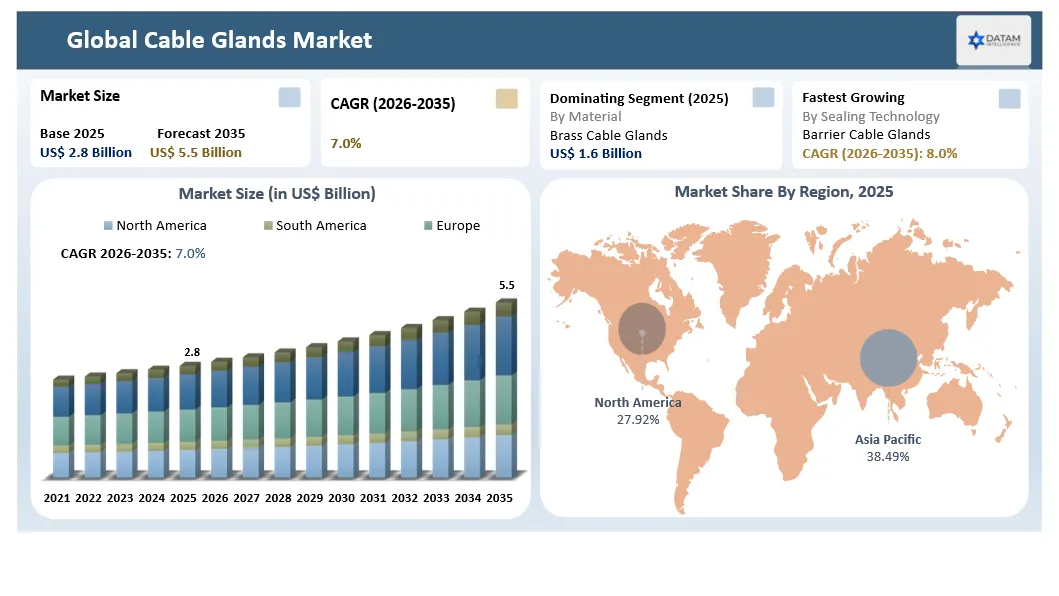
Asia-Pacific represents the largest manufacturing and consumption base because of its scale in industrial production, construction, power infrastructure and renewable-energy investment. North America and Europe remain important premium markets where certifications, hazardous-location requirements, industrial safety and lifecycle reliability support higher average selling prices. Middle East demand is concentrated in oil and gas, petrochemicals, utilities and large infrastructure projects, while marine and offshore applications create additional opportunities in Europe and Asia.
| Market Indicator | 2025 Position | 2035 Direction | Strategic Interpretation |
| Global market value | ~US$ 2.8 Bn | ~US$ 5.5 Bn | Steady expansion with premium segments outgrowing commodity glands |
| Largest region | Asia-Pacific | Asia-Pacific | Manufacturing scale and infrastructure intensity remain decisive |
| Largest material | Brass | Brass remains leading | Conductivity, corrosion resistance and machinability support installed base |
| Fast-growth technologies | Barrier, EMC, IP68/IP69K | Higher share | Safety, automation and harsh-environment requirements drive premiumization |
| Key end markets | Oil & Gas, Manufacturing, Power | More diversified | Data centers, renewables and advanced manufacturing broaden demand |
Cable Glands Market Key Takeaways
- Brass remains the dominant material because it combines mechanical strength, corrosion resistance, conductivity and compatibility with nickel plating for harsh industrial service.
- Explosion-proof and barrier glands command premium pricing in oil and gas, petrochemicals, mining and other hazardous locations where certification and installation integrity are critical.
- High-IP solutions are gaining share as renewable energy, outdoor automation, marine equipment and washdown environments require reliable protection against dust and water ingress.
- EMC cable glands are becoming strategically important in automation, drives, robotics, machine tools and data infrastructure where electromagnetic compatibility is a system-level requirement.
- Asia-Pacific leads volume demand while North America, Europe and the Middle East support attractive premium segments through code compliance, hazardous-location standards and high-value projects.
- Distributors and panel builders remain central to the route to market because availability, thread compatibility, documentation and local technical support strongly influence specification and replacement decisions.
Cable Glands Industry Trends and Strategic Insights
- Product differentiation is shifting from basic mechanical sealing toward certified environmental, hazardous-area, EMC and hygienic performance.
- Manufacturers are expanding modular families that cover multiple cable diameters, thread systems and sealing inserts to reduce SKU complexity for distributors and end users.
- Digital engineering tools, online configurators and CAD libraries are increasingly important because cable glands are specified within enclosure and electrical-design workflows.
- Nickel-plated brass remains a standard premium material, but stainless steel and engineered polymers are gaining share in corrosive, hygienic, lightweight and non-conductive applications.
- Renewables and data centers are creating large repeat-build opportunities where standardized gland plates, cable-entry systems and pre-engineered kits can improve installation productivity.
- Localization and regional inventory are becoming competitive advantages as EPCs and contractors seek shorter lead times and reduced exposure to tariffs and logistics disruption.
Cable Glands Market Scope
| Metrics | Details |
| 2025 Market Size | Approximately US$ 2.8 Billion |
| 2035 Projected Market Size | Approximately US$ 5.5 Billion |
| Forecast Period | 2026-2035 |
| Largest Market | Asia-Pacific |
| Fast-Growth Opportunity | Barrier, EMC and High-IP Cable Glands |
| By Type | Armored, Unarmored |
| By Material | Brass, Stainless Steel, Plastic/Nylon, Aluminum, Others |
| By Sealing Technology | Compression, Barrier/Compound, Explosion-Proof, EMC, Hygienic, Others |
| By Cable Type | SWA, SWB, Unarmored Power, Control & Instrumentation, Data/Fiber |
| By Protection Rating | IP54/IP55, IP66, IP67, IP68, IP69K |
| By Application | Power, Control & Instrumentation, Data & Telecom, Hazardous Area, Marine & Offshore |
| By End Use Industry | Oil & Gas, Power, Manufacturing, Mining, Chemicals, Marine, Rail, Data Centers, Renewables, Construction |
| By Distribution Channel | Direct/OEM, Distributors, EPC/Panel Builders, Online B2B |
| Report Insights Covered | Market Size, Share, Growth, Regulations, Competitive Landscape, Company Profiles and Country-Level Opportunity |
Why does this report matter in 2026?
The year 2026 is strategically important because the installed electrical base is expanding at the same time that end users are tightening requirements around uptime, ingress protection, hazardous-area compliance and electromagnetic compatibility. AI data centers, battery manufacturing, semiconductor fabs, renewable-energy projects and electrified transport are increasing the number of cable terminations per project and raising the value of failure prevention. This favors suppliers that can combine broad certifications with scalable production and local stock availability.
At the same time, raw-material and tariff uncertainty increases pressure on brass and stainless-steel product economics. Manufacturers with regional machining, diversified sourcing, plated-material capability and disciplined channel pricing are better positioned to protect margins. For buyers, specification decisions increasingly incorporate total installed cost, certification documentation and labor productivity rather than unit price alone.
Cable Glands Market White Space & Investment Opportunities
- Barrier and explosion-proof glands for LNG, hydrogen, petrochemicals and offshore projects where certification creates defensible pricing.
- EMC glands for automation, variable-frequency drives, robotics, machine vision and high-speed data infrastructure.
- Hygienic stainless-steel cable glands for food processing, pharmaceuticals, biotechnology and clean manufacturing.
- High-IP and UV-resistant glands for solar, wind, battery storage, EV charging and outdoor telecom infrastructure.
- Pre-assembled cable-entry kits and gland-plate solutions that reduce installation labor for data centers and modular industrial equipment.
- Regional manufacturing and inventory hubs in India, Southeast Asia, the Middle East and North America to reduce lead times and tariff exposure.
Cable Glands Future Market Transformation
The market will gradually shift from a catalog-driven component business toward engineered cable-entry systems. End users will demand fewer installation steps, clearer certification traceability and greater compatibility with digital design workflows. Suppliers are expected to expand configurators, BIM/CAD libraries, pre-terminated kits and multi-cable entry systems that reduce panel-space use and technician time.
Premiumization will be strongest in hazardous-area, EMC, marine, hygienic and high-pressure sealing applications. Commodity nylon and brass glands will remain important in general industry, but margins will increasingly depend on scale, automation and distribution efficiency. The strongest companies will combine global certification, local inventory and application engineering with standardized product families that simplify specification across multiple regions.
Cable Glands Market Buyer Decision-Making Criteria
Buyers prioritize cable diameter range, thread type, armor compatibility, IP rating, temperature range, material, chemical resistance, strain relief and certification. Hazardous-area users require evidence of IECEx, ATEX, UL or regional compliance, while food and pharmaceutical users emphasize smooth surfaces, cleanability and corrosion resistance. Installation speed and the ability to maintain sealing integrity across cable tolerances increasingly influence total installed cost.
Procurement teams also evaluate lead time, SKU availability, approved-vendor status, distributor support and documentation quality. For large projects, standardized gland families that can be specified across multiple enclosure types reduce engineering effort and simplify spare-parts management.
Cable Glands Market Economic & Investment Analysis
Economics are shaped by brass, nickel, stainless steel and engineering-plastic costs, machining productivity, plating, certification expense and channel margins. Commodity products are highly price sensitive, whereas certified hazardous-area and premium sealing products can sustain wider margins because failure consequences and qualification costs are higher. Capital investment is moving toward automated machining, multi-axis production, quality inspection, regional warehousing and testing capability.
Investors should differentiate between high-volume standard-gland businesses and premium application-led franchises. Attractive targets have strong certification portfolios, recurring distributor relationships and exposure to resilient end markets such as power, process industries, data centers and transportation. Cross-selling cable glands alongside enclosures, connectors, conduit systems and cable-management hardware can also create platform value.
Cable Glands Investment Trends in the Market
- Capacity investment in automated CNC machining and plating to improve throughput and material yield.
- Expansion of hazardous-area testing, documentation and certification capabilities.
- Acquisitions in electrical fittings and cable-management portfolios to deepen distributor share of wallet.
- Regional inventory investments to support faster project delivery and aftermarket replacement.
- Product development for EMC, hygienic, renewable-energy and harsh-environment applications.
- Digital commerce, configurators and engineering-data tools to improve specification conversion.
Strategic Indicators for the Cable Glands Market
High Regulation Impact
Hazardous-area and ingress-protection standards materially shape market access. IECEx and ATEX certification, UL and NEC requirements, IP testing, marine approvals and product traceability can determine whether a gland is eligible for use in a project. Certification breadth is therefore a commercial asset rather than a compliance formality.
High Investment Activity
Investment is concentrated in automated machining, high-performance sealing, regional capacity and portfolio expansion. Electrical-equipment groups are also acquiring complementary fittings and connectivity products to expand distribution and project content.
Supply Chain Disruption
Brass, nickel, stainless steel, elastomers and engineering plastics expose manufacturers to commodity and logistics volatility. Plating capacity, thread standards and regional sourcing can create additional constraints during demand spikes.
Pricing Volatility
Standard gland pricing tracks raw-material conditions more closely, while hazardous-area, EMC and hygienic products maintain higher value-based pricing. Buyers increasingly use indexed contracts and alternate-source qualification to manage volatility.
Procurement Pressure
Large EPCs, OEMs and distributors seek global availability, documentation consistency and competitive total installed cost. Suppliers must balance local stock with a broad SKU range covering metric, NPT, PG and other thread standards.
New Technology Adoption
Improved sealing elastomers, modular inserts, EMC contact technologies, hygienic geometry, high-IP designs and tool-free installation are expanding premium product categories.
Regional Expansion Opportunity
India, Southeast Asia and the Middle East offer attractive growth through industrialization, renewable energy, oil and gas and infrastructure. North America also offers strong opportunity through data centers, manufacturing reshoring and energy investment.
Government Policy Support
Industrial localization, grid investment, renewable-energy incentives and critical-infrastructure spending indirectly support demand by increasing the number of electrical installations requiring secure cable entry.
Pricing Intelligence
Commodity nylon glands sit at the lowest price point, followed by standard brass. Stainless steel, EMC, barrier and explosion-proof products carry progressively higher premiums due to material, machining, testing and certification requirements.
Disruption Analysis of Cable Glands Market
The market is being disrupted by labor-saving cable-entry systems, stricter hazardous-area expectations and increased use of connected equipment. Multi-cable frames and modular sealing systems can substitute for multiple individual glands in dense panels, while pre-assembled harnesses reduce field termination. This forces traditional gland manufacturers to compete on installation productivity as well as component performance.
Sustainability and supply-chain resilience are also changing procurement. Customers increasingly ask for product carbon information, material traceability and local sourcing. The market therefore favors manufacturers able to reduce material waste, optimize plating and machining, and provide regional production without compromising certification consistency.
| HS/Trade Indicator | Illustrative Flow | Market Relevance |
| Electrical fittings / cable-entry hardware | Asia to North America and Europe | High-volume standard products and components |
| Brass machined components | Global / regional | Major cost input for metallic glands |
| Stainless-steel fittings | Europe and Asia to global projects | Premium corrosive and hygienic applications |
| Hazardous-area cable fittings | Europe / North America to oil & gas markets | Certification-led premium trade |
Cable Glands Market BCG Matrix: Company Evaluation
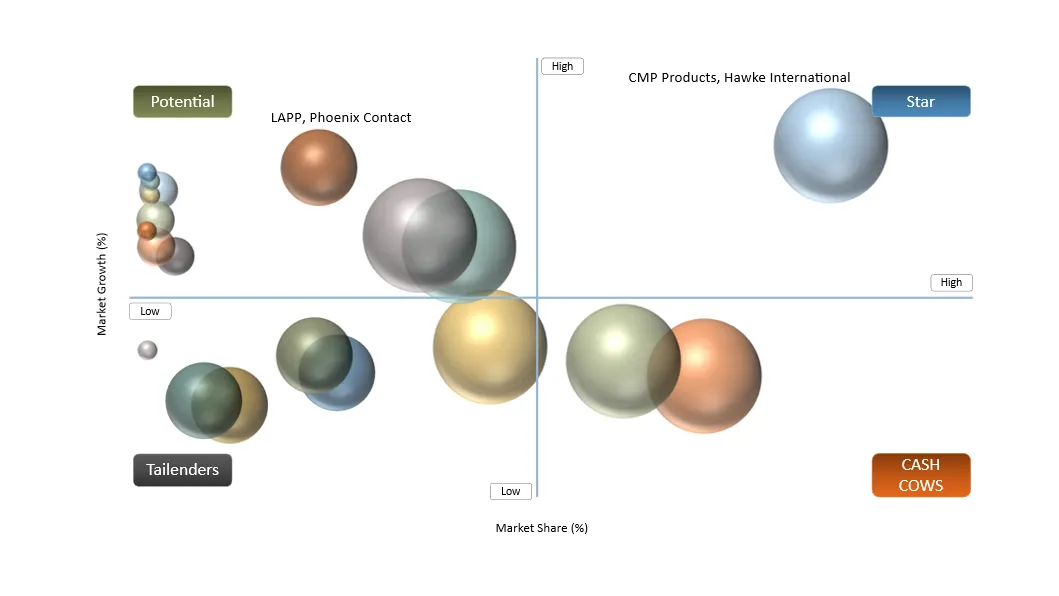
STAR
CMP Products, Hawke International, Eaton Crouse-Hinds, ABB and R. STAHL occupy strong positions in premium industrial and hazardous-area segments through certifications, recognized brands and project-channel access. Their ability to serve oil and gas, marine, mining and process industries supports defensible pricing and recurring specification.
POTENTIAL
LAPP, Phoenix Contact, Hummel, PFLITSCH, WISKA, Cortem and specialist regional manufacturers represent potential growth players. Their upside is tied to automation, EMC, renewable-energy, rail, food and beverage and data-center applications where cable-entry requirements are becoming more specialized.
Cable Glands Market Dynamics
Driver Impact Analysis
| Driver | Market Growth Impact | Demand Concentration | Impacted Use Case | Strategic Impact |
| Industrial electrification and automation | High | Asia-Pacific, North America, Europe | Control, instrumentation and power cable entries | Expands baseline industrial demand |
| Hazardous-area compliance | High | Oil & Gas, chemicals, mining | Barrier and Ex-certified glands | Supports premium pricing and vendor qualification |
| Renewables and outdoor infrastructure | Medium-High | Global | IP68/IP69K, UV-resistant glands | Creates high-volume harsh-environment demand |
| Data centers and advanced manufacturing | Medium-High | North America, Asia-Pacific | Dense panel and cable-entry systems | Raises emphasis on installation speed and standardization |
Driver: Expansion of Industrial Electrification and Hazardous-Area Infrastructure
The principal market driver is the continued increase in electrical and instrumentation cable density across factories, utilities, process plants, data centers and renewable assets. Every enclosure, motor, junction box or control panel requires secure cable entry. In hazardous areas, the gland also becomes part of the protection concept, raising both specification intensity and value per termination.
Restraint Impact Analysis
| Restraint | Drag on Market Growth | Primary Impact Area | Impacted Use Case | Strategic Impact |
| Price competition in standard products | High | Margins | General industrial nylon and brass glands | Favors scale and distributor efficiency |
| Metal price volatility | Medium-High | Manufacturing cost | Brass and stainless-steel glands | Encourages indexing and sourcing diversification |
| Certification complexity | Medium | Time-to-market | Hazardous-area and marine products | Creates barriers but increases development cost |
| Alternative cable-entry systems | Medium | Product substitution | Dense control panels | Pushes suppliers toward modular and labor-saving designs |
Restraint: Price Competition and Material Cost Volatility
Standard glands are widely available from regional and low-cost producers, limiting pricing power in general industry. Metallic products also carry direct exposure to brass, nickel and stainless-steel costs. Manufacturers must therefore improve machining productivity, manage scrap recovery, optimize plating and reserve premium pricing for applications where certification, sealing performance and engineering support create meaningful differentiation.
Cable Glands Market Segment Analysis
The global Cable Glands market is segmented based on Type, Material, Sealing Technology, Cable Type, Protection Rating, Application, End Use Industry, distribution channel, and region.
By Type
Armored Cable Glands Retain Strong Value in Heavy Industry
Armored glands remain strategically important because they provide mechanical armor retention, earth continuity and environmental sealing in industrial, oil and gas, mining and infrastructure applications. Unarmored glands command greater unit volumes across buildings, automation and general electrical equipment, but armored products sustain higher average selling prices.
By Material
Brass Remains the Leading Material
Nickel-plated brass leads due to its balance of mechanical strength, conductivity, corrosion resistance, machinability and cost. Stainless steel is preferred in aggressive chemicals, marine, hygienic and high-corrosion environments, while nylon grows in general industrial and lightweight electrical applications.
By Sealing Technology
Barrier and EMC Glands Outpace Standard Compression Products
Compression glands remain the volume base, but barrier and explosion-proof products expand faster in hazardous areas, while EMC glands benefit from automation and high-frequency electronics. Hygienic solutions create a smaller premium niche in food and pharmaceutical production.
By Cable Type
Steel Wire Armored Cable Creates High-Value Demand
SWA cable glands are central to power and process installations in markets following IEC-oriented practices. Control and instrumentation cable glands are increasingly important in automation-heavy projects, while data and fiber applications create demand for compact and high-density entry systems.
By Protection Rating
IP68 and IP69K Gain Share in Harsh Environments
Higher ingress-protection ratings are increasingly specified for outdoor renewable energy, marine equipment, washdown facilities and exposed industrial assets. The shift raises sealing-material requirements and increases the value of validated installation instructions.
By Application
Power Cable Entry Remains the Largest Application
Power cable entry represents the largest installed base across industrial, utility and building applications. Hazardous-area and control/instrumentation uses provide attractive premium segments because gland failure can compromise safety, signal integrity or process continuity.
By End Use Industry
Oil & Gas Remains a Premium Anchor While Data Centers and Renewables Grow Faster
Oil and gas supports a large premium market for certified glands, while manufacturing drives broad volume demand. Data centers, renewables and battery-related industries are among the fastest-growing end uses because of rapid construction and high cable density.
By Distribution Channel
Electrical Distributors Remain Critical to Market Access
Distributors remain central because customers require broad SKU availability, local stock and rapid replacement. Direct/OEM sales are more important in large repeat-build programs and hazardous-area projects where supplier approval and technical documentation are more complex.
Material Performance Comparison
| Material | Strength | Corrosion Resistance | Conductivity | Relative Cost | Typical Use |
| Nickel-Plated Brass | High | High | High | Medium | General industrial, hazardous area |
| Stainless Steel | Very High | Very High | Medium | High | Marine, chemical, hygienic |
| Plastic / Nylon | Medium | High | Low | Low | General electrical, controls |
| Aluminum | Medium-High | Medium-High | High | Medium | Lightweight and selected industrial uses |
Cable Glands Market Geographical Penetration
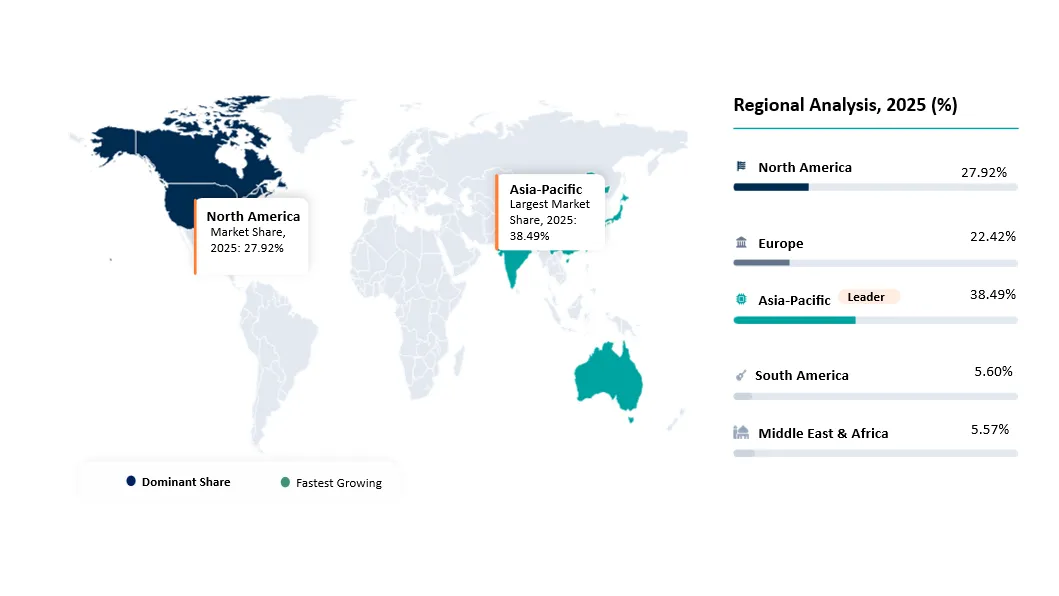
| Region | 2025 Position | Growth Drivers | Strategic Priority |
| Asia-Pacific | Largest | Manufacturing, power, renewables, construction | Local capacity and distributor scale |
| North America | High-value | Data centers, reshoring, energy, code compliance | UL/NEC portfolio and local stock |
| Europe | Premium mature | Industrial automation, offshore, renewables, ATEX | Certification and EMC/hygienic niches |
| Middle East & Africa | Project-led | Oil & gas, utilities, infrastructure | Hazardous-area approvals and EPC relationships |
| South America | Selective growth | Mining, oil & gas, utilities | Distributor and project partnerships |
U.S. Cable Glands Market Landscape
The U.S. market is supported by data-center expansion, oil and gas, manufacturing reshoring, chemical processing and utility investment. NEC and UL requirements shape product selection, and regional terminology often favors cable connectors and cord grips alongside glands. Premium opportunities exist in hazardous locations, industrial automation and large repeat-build facilities.
Germany Cable Glands Market Outlook
Germany is a mature but high-value market driven by automation, machine building, renewable energy and rigorous engineering standards. EMC performance, metric threads, IP ratings and documentation are important purchasing criteria. Domestic and European suppliers compete strongly through engineering depth and distributor relationships.
China Cable Glands Market Trends
China is a major production center and one of the largest consumption markets. Industrial automation, rail, renewable energy, power equipment and manufacturing support volume demand, while local producers intensify competition in standard products. Premium multinational brands retain advantages in export-oriented, hazardous-area and high-specification projects.
India Cable Glands Market Outlook
India benefits from power infrastructure, refineries, chemicals, rail, data centers, manufacturing and renewable projects. Brass gland manufacturing is well established, but premium growth increasingly depends on certification, consistent sealing performance and project approvals. Export-oriented suppliers can also benefit from competitive machining economics.
UAE and Saudi Arabia Cable Glands Market Outlook
Gulf demand is concentrated in oil and gas, petrochemicals, utilities, desalination, transport and large infrastructure. IECEx and ATEX-qualified products are widely specified in process facilities, creating strong opportunity for barrier and explosion-proof glands supported by local EPC relationships and inventory.
Cable Glands Market Competitive Landscape
- CMP Products, Hawke International, Eaton Crouse-Hinds, ABB and R. STAHL are prominent in hazardous-area and premium industrial cable-entry systems.
- LAPP, Phoenix Contact, Hummel, JACOB, PFLITSCH and WISKA compete strongly in industrial automation, machine building, EMC and general electrical applications.
- Competition is segmented by certification, thread system, material, cable type and route to market; no single supplier dominates every application and geography.
- Global electrical groups benefit from cross-selling through enclosures, conduit, connectors, junction boxes and protection systems, while specialists differentiate through deep gland portfolios and technical approvals.
- Local inventory and distributor relationships are increasingly as important as manufacturing scale because projects and maintenance teams require rapid access to exact cable-size and thread combinations.
Public Company Q1-Q2 2026 Performance Comparison
The comparison below uses publicly reported company or segment performance as a proxy for competitive momentum. Cable-gland revenue is generally not disclosed as a standalone financial line, so each entry distinguishes broader electrical/connectivity performance from direct cable-gland exposure.
| Public Company | Q1-Q2 2026 Performance Signal | Relevant Growth Drivers | Cable Glands Relevance |
| Hubbell | Q1 2026 net sales increased 11%; Electrical Solutions sales rose 12% with 11% organic growth. Q2 2026 company sales increased 15%. | Data centers, grid infrastructure, industrial electrical demand, price and acquisitions. | Hawke and electrical fittings exposure benefits from hazardous-area, infrastructure and industrial projects. |
| Eaton | Q1 2026 sales rose 17%; Electrical Americas sales reached US$3.6bn, up 20%, while Electrical Global reached US$1.9bn, up 21%. | Data centers, industrial electrification, backlog expansion and infrastructure spending. | Crouse-Hinds hazardous-area portfolio provides direct exposure to cable glands and related fittings. |
| ABB | Q2 2026 orders rose 30% and revenues 14% at group level, with Electrification a core growth engine. | Electrification, data centers, industrial automation and grid investment. | Cable entry and protection products benefit from broad electrical distribution channels and automation projects. |
| Amphenol | Q1 2026 sales were US$7.6bn, up 58% reported and 33% organically; orders reached US$9.4bn. | IT datacom, industrial connectivity, acquisitions and high-performance interconnect demand. | Industrial and harsh-environment connectivity portfolio overlaps cable-entry and sealing requirements. |
| TE Connectivity | Fiscal Q2 2026 net sales were US$4.74bn, up 15% reported and 7% organically; orders increased 25%. | AI/data centers, grid modernization, industrial automation and transportation connectivity. | Cable accessories and industrial connectivity exposure supports adjacent gland and sealing demand. |
Market Ecosystem Table
| Value Chain Sector | Role in Ecosystem | Representative Companies / Organizations | Strategic Importance |
| Raw Materials | Brass, stainless steel, aluminum, nylon, elastomers, nickel plating inputs | Aurubis, Outokumpu, BASF, Covestro, regional metal suppliers | Determines cost, corrosion resistance and mechanical performance |
| Precision Machining & Components | Bodies, nuts, washers, armor cones, seals | Specialist CNC and elastomer suppliers | Controls tolerance, sealing and production scalability |
| Cable Gland Specialists | Design and manufacture complete cable-entry solutions | CMP Products, Hawke, Hummel, JACOB, PFLITSCH, WISKA, Cortem | Core product innovation and certification |
| Electrical / Hazardous-Area OEMs | Bundle glands with conduit, enclosures and protection systems | Eaton, ABB, R. STAHL, BARTEC, Hubbell | Cross-selling and approved-vendor access |
| Connectivity Platforms | Industrial cable and connector ecosystems | LAPP, Phoenix Contact, Amphenol, TE Connectivity | Integration with cable, connector and automation architecture |
| Distributors | Local inventory, catalog sales and project fulfillment | Rexel, Sonepar, Wesco/Anixter, RS, Grainger | Availability, local service and long-tail SKU coverage |
| Panel Builders / EPCs | Specify and install glands in engineered systems | Worley, Technip Energies, Bechtel, regional panel builders | Drive project specifications and approved-vendor lists |
| End Users | Operate plants, infrastructure and equipment | Oil & gas, mining, utilities, factories, data centers, shipyards | Create recurring project and replacement demand |
| Testing / Standards | Certification and conformity assessment | IECEx, UL Solutions, CSA Group, TÜV, DNV, ABS | Market access and safety assurance |
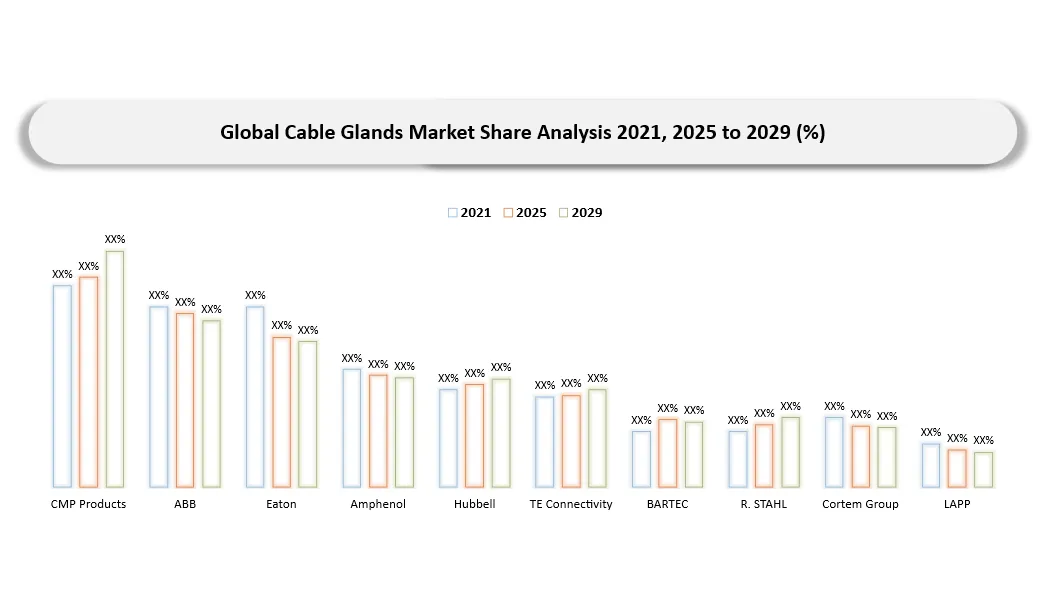
Key Companies
- CMP Products
- Hawke International (Hubbell)
- Eaton Crouse-Hinds
- ABB
- R. STAHL
- BARTEC
- LAPP
- Phoenix Contact
- Hummel AG
- JACOB GmbH
- PFLITSCH
- WISKA
- Cortem Group
- Amphenol
- TE Connectivity
Company Profiles
CMP Products
A specialist cable-gland manufacturer with strong positioning in hazardous-area, marine and industrial applications. Competitive strengths include deep product breadth, international certifications and distributor/EPC relationships. The company competes on technical assurance, armor compatibility and robust sealing rather than commodity price.
Competitive priorities include certification breadth, regional availability, application engineering, product quality and the ability to participate in broader cable-management or electrical-platform sales. Recent growth opportunities are concentrated in hazardous areas, renewable energy, data centers, industrial automation and infrastructure modernization.
Hawke International (Hubbell)
Hawke is a recognized hazardous-area cable-gland brand within Hubbell. Its position is supported by oil and gas, petrochemical and industrial specifications, while Hubbell adds broad electrical-distribution reach and exposure to data-center and infrastructure growth.
Competitive priorities include certification breadth, regional availability, application engineering, product quality and the ability to participate in broader cable-management or electrical-platform sales. Recent growth opportunities are concentrated in hazardous areas, renewable energy, data centers, industrial automation and infrastructure modernization.
Eaton Crouse-Hinds
Eaton Crouse-Hinds serves hazardous and harsh environments with cable glands, fittings, conduit systems and electrical protection products. Its integrated portfolio supports EPC standardization and cross-selling into process industries, energy and infrastructure.
Competitive priorities include certification breadth, regional availability, application engineering, product quality and the ability to participate in broader cable-management or electrical-platform sales. Recent growth opportunities are concentrated in hazardous areas, renewable energy, data centers, industrial automation and infrastructure modernization.
ABB
ABB participates through cable-protection and electrical-installation portfolios integrated with its broader Electrification business. Its channel scale, industrial automation relationships and global project footprint support access to OEMs and end users.
Competitive priorities include certification breadth, regional availability, application engineering, product quality and the ability to participate in broader cable-management or electrical-platform sales. Recent growth opportunities are concentrated in hazardous areas, renewable energy, data centers, industrial automation and infrastructure modernization.
R. STAHL
R. STAHL is focused on explosion protection and hazardous-area electrical equipment. Cable glands complement enclosures, junction boxes and control systems, allowing the company to participate in complete Ex-system specifications.
Competitive priorities include certification breadth, regional availability, application engineering, product quality and the ability to participate in broader cable-management or electrical-platform sales. Recent growth opportunities are concentrated in hazardous areas, renewable energy, data centers, industrial automation and infrastructure modernization.
BARTEC
BARTEC provides explosion-protection and safety technology for process industries. Cable entries form part of broader hazardous-area systems where certification, installation quality and engineering support are central.
Competitive priorities include certification breadth, regional availability, application engineering, product quality and the ability to participate in broader cable-management or electrical-platform sales. Recent growth opportunities are concentrated in hazardous areas, renewable energy, data centers, industrial automation and infrastructure modernization.
LAPP
LAPP combines industrial cables, connectors and cable glands, creating a system-oriented proposition for machine building and automation. Its portfolio is particularly relevant for EMC, strain relief and industrial connectivity.
Competitive priorities include certification breadth, regional availability, application engineering, product quality and the ability to participate in broader cable-management or electrical-platform sales. Recent growth opportunities are concentrated in hazardous areas, renewable energy, data centers, industrial automation and infrastructure modernization.
Phoenix Contact
Phoenix Contact integrates cable-entry and gland solutions with enclosures, connectors, terminal blocks and automation systems. This supports engineered cross-selling in control cabinets and industrial equipment.
Competitive priorities include certification breadth, regional availability, application engineering, product quality and the ability to participate in broader cable-management or electrical-platform sales. Recent growth opportunities are concentrated in hazardous areas, renewable energy, data centers, industrial automation and infrastructure modernization.
Hummel AG
Hummel offers metallic and plastic cable glands across industrial, EMC and specialized applications. The company differentiates through thread variety, sealing technology and application engineering.
Competitive priorities include certification breadth, regional availability, application engineering, product quality and the ability to participate in broader cable-management or electrical-platform sales. Recent growth opportunities are concentrated in hazardous areas, renewable energy, data centers, industrial automation and infrastructure modernization.
JACOB GmbH
JACOB is a specialist in cable glands and cable-entry systems with strong European industrial exposure. Product breadth across metal and polymer designs supports machine building, automation and enclosure applications.
Competitive priorities include certification breadth, regional availability, application engineering, product quality and the ability to participate in broader cable-management or electrical-platform sales. Recent growth opportunities are concentrated in hazardous areas, renewable energy, data centers, industrial automation and infrastructure modernization.
PFLITSCH
PFLITSCH focuses on high-quality cable glands and cable-routing systems, including EMC and hygienic solutions. The company benefits from premium engineering niches where installation quality and sealing performance matter more than lowest price.
Competitive priorities include certification breadth, regional availability, application engineering, product quality and the ability to participate in broader cable-management or electrical-platform sales. Recent growth opportunities are concentrated in hazardous areas, renewable energy, data centers, industrial automation and infrastructure modernization.
WISKA
WISKA supplies cable glands, junction boxes and electrical equipment with strong marine and industrial presence. Harsh-environment capability and global shipbuilding relationships support differentiated demand.
Competitive priorities include certification breadth, regional availability, application engineering, product quality and the ability to participate in broader cable-management or electrical-platform sales. Recent growth opportunities are concentrated in hazardous areas, renewable energy, data centers, industrial automation and infrastructure modernization.
Cortem Group
Cortem specializes in explosion-protected electrical equipment for hazardous areas. Cable glands are part of a broader Ex portfolio targeted at oil and gas, chemicals and process industries.
Competitive priorities include certification breadth, regional availability, application engineering, product quality and the ability to participate in broader cable-management or electrical-platform sales. Recent growth opportunities are concentrated in hazardous areas, renewable energy, data centers, industrial automation and infrastructure modernization.
Amphenol
Amphenol is a global connectivity leader with broad industrial and harsh-environment interconnect exposure. Its scale, acquisition strategy and engineering depth make it a relevant adjacent competitor and ecosystem participant in cable-entry and sealing systems.
Competitive priorities include certification breadth, regional availability, application engineering, product quality and the ability to participate in broader cable-management or electrical-platform sales. Recent growth opportunities are concentrated in hazardous areas, renewable energy, data centers, industrial automation and infrastructure modernization.
TE Connectivity
TE Connectivity provides industrial connectivity, cable accessories, sensors and power/data interconnect solutions. Its exposure to automation, grid modernization, transportation and data centers creates adjacency to high-performance cable-entry applications.
Competitive priorities include certification breadth, regional availability, application engineering, product quality and the ability to participate in broader cable-management or electrical-platform sales. Recent growth opportunities are concentrated in hazardous areas, renewable energy, data centers, industrial automation and infrastructure modernization.
Cable Glands Market Major Pain Points
- Large SKU complexity across thread sizes, cable diameters, armor types, materials and certifications.
- Raw-material volatility in brass, nickel and stainless steel can quickly alter margins.
- Incorrect installation can compromise IP or explosion protection even when the gland is correctly certified.
- Local low-cost competition compresses pricing in standard industrial and building applications.
- Certification renewal and regional approvals increase product-development cost and time-to-market.
- Project delays and distributor destocking can create uneven demand despite long-term end-market growth.
- Counterfeit or substandard products create safety and reputational risk in hazardous applications.
- Multi-cable entry systems and pre-terminated solutions can substitute for traditional single-cable glands in dense panels.
Cable Glands Market Recent Developments
- 2026: Hubbell continued to expand Electrical Solutions through acquisitions and strong organic growth, reinforcing its access to electrical fittings, connectivity and infrastructure customers.
- 2026: Eaton reported strong growth and backlog in its Electrical businesses, supporting capacity investment across power-management and hazardous-environment portfolios.
- 2026: ABB reported record-high orders at group level, with electrification demand benefiting from data centers, industrial investment and infrastructure modernization.
- 2026: Amphenol integrated the acquired CommScope Connectivity and Cable Solutions business, materially expanding its global connectivity portfolio and customer reach.
- 2026: TE Connectivity reported strong order growth tied to AI, grid modernization and next-generation transportation, reinforcing investment in power and data interconnection technologies.
Analyst View / Opinion on Cable Glands Market
- The market should deliver steady long-term growth because cable glands are low-cost but mission-critical components embedded in nearly every wired electrical installation.
- Premium growth will come from hazardous-area, EMC, high-IP and hygienic products rather than standard commodity glands.
- Asia-Pacific will remain the volume center, but North America, Europe and the Middle East are likely to retain attractive margins through safety standards, project specifications and higher-value applications.
- Companies that combine certification, local stock, distributor reach and installation-friendly designs will outperform product-only competitors.
- Data centers, renewables, electrified manufacturing and process-industry investment broaden the demand base and reduce dependence on any single end market.
- Long-term competitive advantage will increasingly depend on total installed cost, digital specification tools and system-level cable-entry solutions rather than standalone gland price.
Cable Glands Market Target Audience
| INDUSTRY | WHO SHOULD BUY THIS REPORT? | REASON TO BUY THIS REPORT |
| Cable Gland Manufacturers | Product leaders, strategy teams, sales directors | Benchmark product segments, regions and competitors |
| Electrical Equipment OEMs | Portfolio and business-development teams | Identify cross-selling and acquisition opportunities |
| EPCs & Panel Builders | Engineering, procurement and project teams | Understand technology, certification and supplier trends |
| Oil & Gas / Chemicals | Electrical and reliability teams | Assess hazardous-area products and vendor landscape |
| Data Centers / Industrial | Facility and electrical infrastructure teams | Evaluate high-density and high-reliability cable entry |
| Distributors | Category managers and sourcing teams | Optimize assortment, stocking and supplier strategy |
| Investors & Consulting | PE, VC, institutional investors, consultants | Evaluate market growth, consolidation and white spaces |
Why Choose DATAM?
- Data-driven insights combining market sizing, product segmentation, certifications, regional demand and competitive benchmarking.
- Post-purchase analyst support for market entry, channel strategy, product positioning and partnership identification.
- Annual updates covering regulation, product launches, acquisitions and regional investment trends.
- Specialized focus on emerging markets and project-driven industrial demand rather than broad geographic summaries.
- Actionable analysis connecting cable-entry technology with end-user specifications, procurement behavior and route-to-market requirements.
What DATAM Uniquely Provides
- Ten-year forecasts across eight segmentation dimensions and five major regions.
- Application-level differentiation between standard, hazardous-area, EMC, hygienic and high-IP cable-entry products.
- Market ecosystem mapping from raw materials and machining through OEMs, distributors, EPCs and end users.
- Public-company Q1-Q2 2026 performance comparison linked to the structural drivers relevant to cable glands.
- Country-level opportunity analysis connecting industrial capex, energy investment, standards and distribution channels.



























































