


Asthma Drugs Market Overview
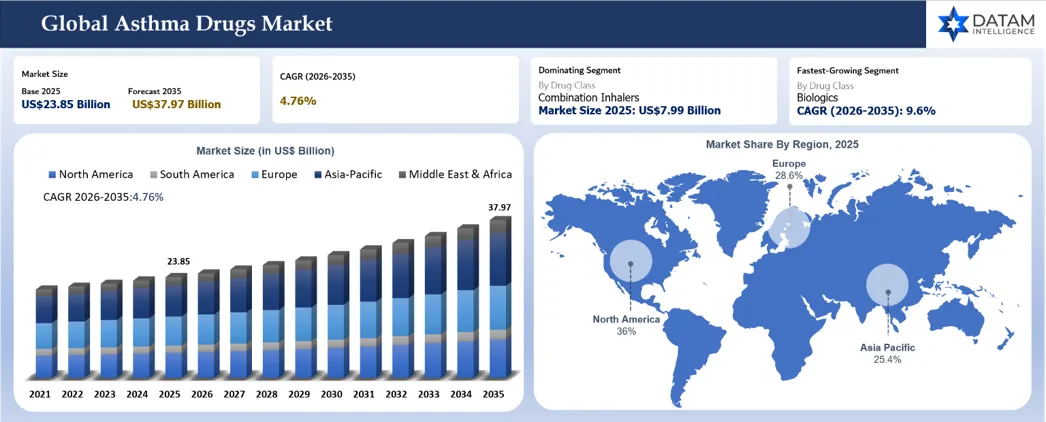
The global asthma drugs market reached US$23.85 billion in 2025 and is expected to reach US$37.97 billion by 2035, growing with a CAGR of 4.76% during the forecast period 2026-2035. Market growth is supported by the rising diagnosed asthma population, increasing prevalence of severe and uncontrolled disease, and continued expansion of long-term controller therapy across pediatric and adult populations.
Inhaled corticosteroids, bronchodilators and combination inhalers remain central to asthma management; however, the competitive landscape is increasingly shifting toward biologic therapies for eosinophilic, allergic and type 2 inflammatory asthma. Growing adoption of anti-IgE, anti-IL-5, anti-IL-4 receptor and anti-TSLP therapies is increasing treatment intensity and market value, particularly in severe asthma.
At the same time, single-inhaler combination therapies, triple therapies and extended-interval biologics are improving treatment convenience and adherence. Future market expansion will be shaped by biomarker-guided treatment selection, pediatric label extensions, therapies for non-type 2 asthma, digital inhaler technologies and lower-carbon inhaler platforms.
Asthma Drugs Market Key Takeaways
- The global asthma drugs market reached US$23.85 billion in 2025 and is projected to reach US$37.97 billion by 2035, growing at a CAGR of 4.76% during 2026-2035.
- Market growth is increasingly driven by the adoption of biologic therapies targeting eosinophilic, allergic and type 2 inflammatory asthma, particularly among patients with severe or uncontrolled disease.
- Combination inhalers and single-inhaler triple therapies are gaining importance as treatment strategies shift toward simplified regimens, improved adherence and better long-term disease control.
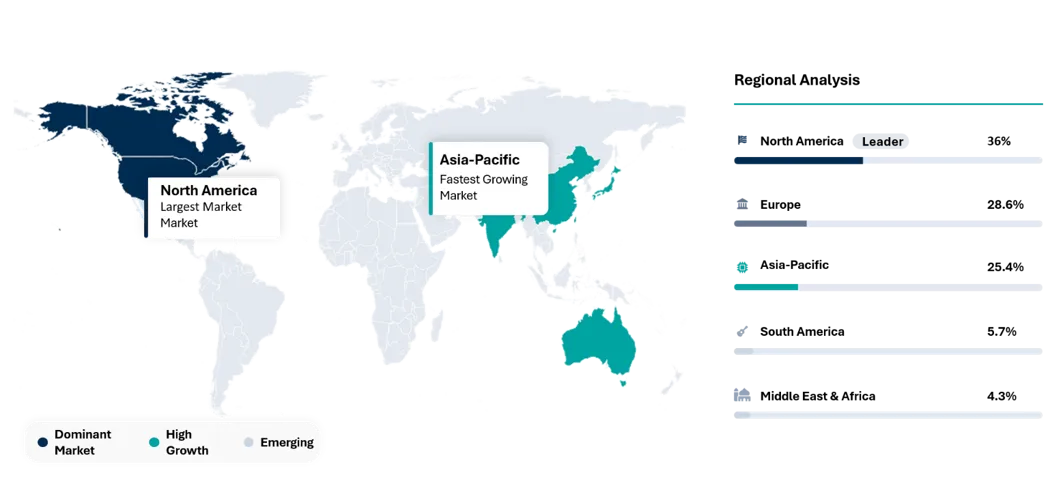
- North America remains the leading regional market, supported by high treatment expenditure, strong biologic penetration, advanced reimbursement systems and the presence of major respiratory drug companies.
- Future growth opportunities are concentrated in next-generation biologics, extended-interval dosing, pediatric expansion, biomarker-guided treatment and non-type 2 asthma, where significant unmet treatment needs remain.
Asthma Drugs Market Scope
| Metrics | Details | |
| 2025 Market Size | US$23.85 Billion | |
| 2035 Projected Market Size | US$37.97 Billion | |
| CAGR (2026-2035) | 4.76% | |
| Largest Market | North America | |
| Fastest Growing Market | Asia-Pacific | |
| By Drug Class | Inhaled Corticosteroids, Leukotriene Modifiers, Long-Acting Beta Agonists (LABAs), Quick-Relief Medications, Combination Inhalers, Biologics, Others | |
| By Route of Administration | Inhalation, Oral, Others | |
| By Distribution Channel | Hospital Pharmacies, Retail Pharmacies, Online Pharmacies | |
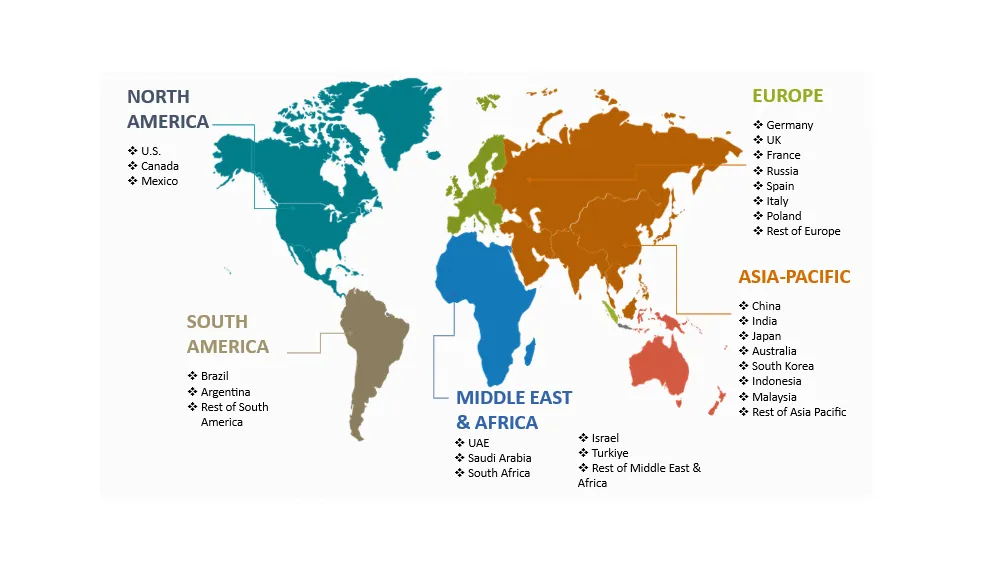
| By Region | North America | U.S., Canada, Mexico |
| Europe | Germany, UK, France, Spain, Italy, Poland | |
| Asia-Pacific | China, India, Japan, Australia, South Korea, Indonesia, Malaysia, Singapore, Vietnam, Thailand, Philippines, Taiwan | |
| South America | Brazil, Argentina | |
| Middle East and Africa | Israel, Saudi Arabia, UAE, Turkiye, South Africa, Nigeria | |
| Report Insights Covered | Competitive Landscape Analysis, Company Profile Analysis, Market Size, Share, Growth | |
Asthma Drugs Market White Space & Investment Opportunities
- Next-Generation Biologics for Broader Asthma Phenotypes: Invest in therapies targeting upstream inflammatory pathways such as TSLP, IL-33 and other emerging cytokine targets to address patients who do not respond adequately to existing eosinophilic or allergic asthma biologics. Opportunities remain particularly strong in biomarker-low, non-type 2 and difficult-to-treat asthma populations where effective targeted options are limited.
- Long-Acting and More Convenient Asthma Therapies: Develop extended-interval biologics, inhaled biologics and simplified maintenance regimens that reduce injection frequency, treatment burden and dependence on frequent dosing. Twice-yearly or other long-duration treatment approaches could improve adherence, persistence and patient convenience while creating meaningful differentiation in the severe asthma market.
- Precision Asthma Management and Biomarker-Guided Treatment: Expand investment in eosinophil, IgE, FeNO and emerging biomarker platforms that improve patient stratification and predict therapeutic response. Integration of digital monitoring, connected inhalers and AI-supported treatment selection can enable earlier identification of uncontrolled disease, improve biologic selection and support more personalized treatment escalation.
- Single-Inhaler Triple Therapy and Advanced Combination Products: Expand development of ICS/LABA/LAMA combinations and other simplified inhaled regimens for patients inadequately controlled on conventional therapy. Single-device approaches offer opportunities to improve adherence, reduce treatment complexity and strengthen lifecycle management across established inhaled drug portfolios.
- Pediatric and Adolescent Asthma Expansion: Pursue label expansion and dedicated clinical development for younger asthma populations, particularly children with severe eosinophilic, allergic or uncontrolled disease. Pediatric indications remain an important whitespace for biologics and advanced inhaled therapies as treatment options are generally more limited than in adults.
- Non-Type 2 and Treatment-Resistant Asthma: Develop novel mechanisms for patients with neutrophilic, paucigranulocytic or biomarker-negative asthma who derive limited benefit from currently available targeted biologics. This underserved population creates opportunities for pathway-independent therapies, novel anti-inflammatory mechanisms and combination approaches.
- Digital Inhalers and Adherence Management Platforms: Invest in connected inhalers, dose tracking, inhaler-technique monitoring and digital adherence platforms that can identify poor compliance before treatment escalation. Combining drug therapy with digital monitoring offers opportunities to improve outcomes, reduce preventable exacerbations and generate real-world evidence for payers and healthcare providers.
- Lower-Carbon and Sustainable Inhaler Platforms: Develop next-generation metered-dose inhalers using lower-global-warming-potential propellants and improved dry-powder technologies. Environmental regulation and sustainability commitments are creating opportunities for manufacturers to differentiate products while supporting portfolio transition and long-term regulatory compliance.
Asthma Drugs Market Buyer Decision-Making Criteria
Major Buyer Decision-Making Criteria:
- Reduction in Annualized Asthma Exacerbation Rate
- Improvement in Lung Function and FEV1
- Improvement in Asthma Control and Symptom Scores
- Reduction in Rescue Medication Use
- Prevention of Severe Exacerbations and Hospitalizations
- Effectiveness in Moderate-to-Severe and Uncontrolled Asthma
- Effectiveness Across Eosinophilic, Allergic and Type 2 Inflammatory Asthma
- Ability to Reduce or Eliminate Oral Corticosteroid Use
- Speed and Durability of Clinical Response
- Effectiveness in Patients with Prior Treatment Failure
- Biomarker-Based Patient Eligibility and Response Predictability
- Blood Eosinophil Count, IgE and FeNO Requirements
- Dosing Frequency and Treatment Convenience
- Route of Administration and Ease of Use
- Inhaler Device Usability and Correct Technique Requirements
- Treatment Adherence and Persistence
- Safety and Tolerability Profile
- Risk of Injection-Site, Systemic or Respiratory Adverse Events
- Pediatric and Adolescent Indication Availability
- Compatibility with Existing Controller Therapies
- Long-Term Clinical Evidence and Real-World Effectiveness
- Regulatory Approval and Guideline Positioning
- Physician Familiarity and Prescribing Confidence
- Drug Acquisition Cost and Overall Treatment Cost
- Insurance Coverage, Reimbursement and Prior-Authorization Requirements
- Availability of Patient Assistance and Support Programs
- Hospitalization and Healthcare Resource Reduction Potential
- Product Availability and Distribution Reliability
- Manufacturer Reputation and Clinical Support
- Convenience of Home Administration or Self-Administration
- Environmental Profile and Sustainability of Inhaler Platforms
Asthma Drugs Market BCG Matrix: Company Evaluation
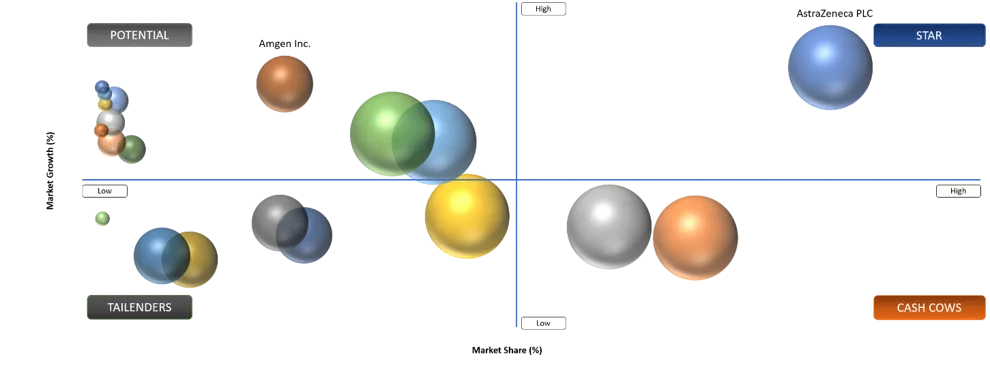
STAR
AstraZeneca PLC, GSK plc, Sanofi S.A. and Regeneron Pharmaceuticals, Inc. are positioned in the Star category based on their strong commercial presence across inhaled maintenance therapies and biologics, broad geographic reach, established severe-asthma franchises and continued regulatory and lifecycle expansion. AstraZeneca maintains a leading position through Fasenra, Tezspire, Symbicort and its broader respiratory portfolio. In April 2026, the U.S. FDA approved Breztri for asthma in patients aged 12 years and older, strengthening AstraZeneca's position in single-inhaler triple therapy, while Tezspire remains approved for severe asthma across major global markets and has treated more than 100,000 patients since 2021. GSK continues strengthening its severe-asthma franchise through Nucala and Exdensur. Exdensur became the first twice-yearly biologic approved in the U.S. for severe eosinophilic asthma in December 2025, followed by European Commission approval in February 2026 and Chinese approval in March 2026. Sanofi and Regeneron maintain a differentiated position through Dupixent, which addresses type 2 inflammatory asthma across multiple age groups and geographies. In December 2025, Dupixent received Japanese approval for children aged 6–11 years with severe or refractory bronchial asthma, supported by Phase III data showing a 54%–65% reduction in exacerbations. Sanofi is also advancing lunsekimig, which met the primary and key secondary endpoints in a Phase IIb moderate-to-severe asthma study in April 2026, further strengthening its next-generation respiratory pipeline.
POTENTIAL
Amgen Inc., Chiesi Farmaceutici S.p.A., Teva Pharmaceutical Industries Ltd. and Novartis AG are positioned in the Potential category based on expanding biologic platforms, new inhaled combinations, late-stage asthma programs and opportunities to increase their share in specific patient populations. Amgen is strengthening its asthma opportunity through its collaboration with AstraZeneca on Tezspire and through sunakiment, an inhaled anti-TSLP Fab therapy. In August 2026, Amgen reported that the Phase II LEVANTE asthma study of sunakiment had been completed with encouraging results supporting dose selection, providing a potential differentiated inhaled biologic approach for future development. Chiesi significantly expanded its U.S. opportunity in May 2026 when the FDA approved TRIMBOW, its single-inhaler triple therapy containing beclomethasone dipropionate, formoterol and glycopyrrolate, for maintenance treatment of asthma in adults; the therapy is already commercialized in nearly 50 countries outside the U.S. Teva is advancing its Dual-Action Asthma Rescue Inhaler program, with targeted enrollment for adult and pediatric populations in its Phase III program achieved by the end of 2025, potentially strengthening its position in rescue therapy beyond its established respiratory portfolio. Novartis retains an established asthma presence and is pursuing lifecycle expansion of its inhaled portfolio, including a Phase III study initiated in August 2026 evaluating the triple combination QVM149 in adolescents aged 12–17 years with asthma, alongside pediatric development of its indacaterol and mometasone combination, creating additional opportunities to expand into younger patient groups.
Asthma Drugs Market Dynamics
Driver Impact Analysis
| Driver | Market Growth Impact (%) | Demand Concentration | Impacted Use Case | Strategic Impact |
Rising Prevalence of Asthma and Expanding Diagnosed Patient Population | 15.2% | Patient volume, prescription demand and long-term maintenance therapy | Children and adults with persistent, uncontrolled and recurrent asthma | Expands the addressable treatment population and sustains demand for controller, reliever and combination asthma therapies |
Increasing Adoption of Biologics for Severe and Uncontrolled Asthma | 13.7% | Biologic utilization, specialist prescribing and premium therapy adoption | Patients with severe eosinophilic, allergic and type 2 inflammatory asthma | Accelerates adoption of anti-IgE, anti-IL-5, anti-IL-5 receptor, anti-IL-4 receptor and anti-TSLP therapies and increases market value per treated patient |
Growing Use of Combination Inhalers and Single-Inhaler Triple Therapy | 12.4% | Maintenance treatment, adherence improvement and treatment escalation | Patients inadequately controlled with inhaled corticosteroids or dual therapy | Supports transition toward ICS/LABA and ICS/LABA/LAMA combinations, improves adherence and expands opportunities for differentiated inhaler products |
Driver: Rising Prevalence of Asthma and Expanding Diagnosed Patient Population
The global asthma drugs market is primarily driven by the rising prevalence of asthma, increasing adoption of biologic therapies and growing use of combination inhalers. A larger diagnosed patient population is expanding demand for long-term controller and rescue medications across both pediatric and adult populations. At the same time, biologics targeting eosinophilic, allergic and type 2 inflammatory asthma are improving treatment options for patients with severe or uncontrolled disease. The shift toward ICS/LABA and single-inhaler triple therapies is also strengthening market growth by simplifying treatment regimens, improving adherence and enabling therapy escalation for patients who remain inadequately controlled on conventional inhaled corticosteroid therapy.
Restraint Impact Analysis
| Restraint | Drag on Market Growth (%) | Primary Impact Area | Impacted Use Case | Strategic Impact |
High Cost of Biologic Therapies and Reimbursement Constraints | 12.8% | Treatment affordability, payer approval and biologic initiation | Patients with severe eosinophilic, allergic and type 2 inflammatory asthma | Restricts access to advanced therapies, increases prior-authorization requirements and limits biologic penetration in cost-sensitive healthcare systems |
Poor Treatment Adherence and Incorrect Inhaler Technique | 10.9% | Prescription persistence, disease control and maintenance therapy effectiveness | Patients requiring long-term inhaled corticosteroids and combination inhalers | Reduces real-world treatment effectiveness, increases uncontrolled asthma and limits the commercial potential of maintenance therapies despite product availability |
Generic Competition and Pricing Pressure on Established Asthma Drugs | 8.7% | Product pricing, branded prescription volumes and revenue retention | Mature inhaled corticosteroids, bronchodilators, leukotriene modifiers and combination therapies | Compresses margins for established brands, accelerates substitution toward lower-cost alternatives and increases the need for lifecycle management and differentiated formulations |
Restraint: High Cost of Biologic Therapies and Reimbursement Constraints
The global asthma drugs market faces constraints from the high cost of biologic therapies, persistent adherence challenges and pricing pressure from generic competition. Biologics provide significant benefits for severe and uncontrolled asthma but remain expensive, with reimbursement restrictions and prior-authorization requirements limiting broader patient access. Inhaled therapies also face real-world effectiveness challenges because incorrect inhaler technique and inconsistent long-term adherence can reduce disease control and treatment persistence. Meanwhile, patent expirations and the availability of lower-cost generic alternatives place pressure on established branded drugs. These factors encourage manufacturers to focus on differentiated formulations, simplified dosing, improved inhaler usability and stronger payer-access strategies.
Asthma Drugs Market Segment Analysis
The global asthma drugs market is segmented based on drug class, route of administration, distribution channel, and region.
Drug Class:
The inhaled corticosteroids segment is expected to dominate the global asthma drugs market share
The inhaled corticosteroids segment holds a major portion of the global asthma drugs market share and is expected to continue to hold a significant portion of the global asthma drugs market share during the forecast period.
Inhaled corticosteroids (ICS) are the FDA-recommended first-line treatment for preventing asthma exacerbations in patients with persistent asthma. Persistent asthma is defined by symptoms that occur more than twice a week, more than three nighttime awakenings per month, frequent use of short-acting beta-2 agonists for symptom control, or any limitations on normal activities due to asthma.
Regular use of ICS significantly reduces the frequency of asthma symptoms and bronchial hyper-responsiveness, lowers the risk of severe exacerbations, and enhances the overall quality of life for patients. This activity will explore the mode of action of inhaled corticosteroids, including their pharmacological mechanisms, potential adverse effects, eligible patient populations, monitoring requirements, and the essential role of the interprofessional healthcare team in managing patients with asthma.
Inhaled corticosteroids exert their effects by binding to glucocorticoid receptors in the airway epithelial cells. This binding leads to a cascade of anti-inflammatory actions, including the inhibition of pro-inflammatory cytokines and chemokines, reduction of airway inflammation, and decreased mucus production. As a result, ICS helps restore normal airway function and reduce asthma symptoms.
Furthermore, key players in the industry are product launches and approvals that would drive this asthma drugs market growth. For instance, in October 2023, Aiolos Bio, a newly launched biotechnology company, raised $245 million in a Series A financing round to develop a novel asthma treatment that requires administration only twice a year. This significant funding marks one of the largest venture capital rounds for a biotech company in recent months and positions Aiolos Bio as a promising player in the respiratory therapeutics market.
Also, in January 2023, Airsupra (albuterol/budesonide), formerly known as PT027, was approved by the FDA as the first and only rescue medication for asthma that can be used on an as-needed basis to reduce the risk of exacerbations. This innovative inhaler combines albuterol, a short-acting beta-2 agonist (SABA), with budesonide, an inhaled corticosteroid (ICS), providing a dual-action approach to asthma management. These factors have solidified the segment's position in the global asthma drugs market.
Asthma Drugs Market Geographical Penetration
U.S. Asthma Drugs Market Landscape
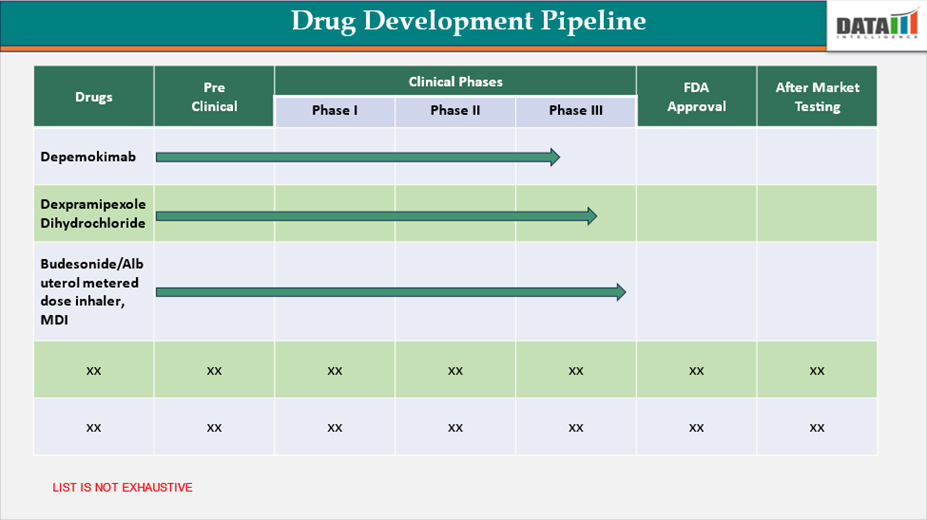
The U.S. represents the largest country-level market for asthma drugs, supported by a substantial diagnosed patient population, high pharmaceutical expenditure, broad insurance coverage and strong adoption of advanced inhaled therapies and biologics. According to the CDC, 8.6% of U.S. adults and 6.5% of children had current asthma in 2024, highlighting a significant addressable treatment population. Competition is concentrated among AstraZeneca, GSK, Sanofi, Regeneron, Amgen and Teva, with increasing differentiation through biologics targeting eosinophilic and type 2 inflammatory asthma. The December 2025 FDA approval of GSK's Exdensur (depemokimab) for severe eosinophilic asthma introduced a twice-yearly biologic dosing option, potentially improving treatment convenience and adherence. Future market growth will be supported by biologic penetration, single-inhaler triple therapies, personalized treatment based on inflammatory phenotype, pediatric label expansions and continued development of therapies designed to reduce severe exacerbations and dependence on systemic corticosteroids.
Japan Asthma Drugs Market Outlook
Japan represents a significant developed asthma therapeutics market, characterized by high treatment access, established reimbursement, an ageing population and increasing adoption of combination inhalers and targeted biologic therapies. A nationwide Japanese study found severe asthma prevalence of approximately 36.1 per 100,000 people in 2019, with severe asthma accounting for around 4.3% of identified asthma cases; approximately 45% of severe asthma patients remained uncontrolled, demonstrating continued unmet treatment need. The market includes biologics such as dupilumab, tezepelumab, omalizumab, mepolizumab and newer long-acting treatments. In December 2025, Japan approved Sanofi and Regeneron's Dupixent for children aged 6-11 years with severe or refractory bronchial asthma, expanding access beyond patients aged 12 years and older. Japan has also established optimal-use guidance for depemokimab in bronchial asthma in April 2026, reflecting continued expansion of advanced biologic treatment options. Market growth will increasingly depend on improved severe-asthma control, biologic uptake, convenient dosing and pediatric treatment expansion.
Asthma Drugs Market Competitive Landscape
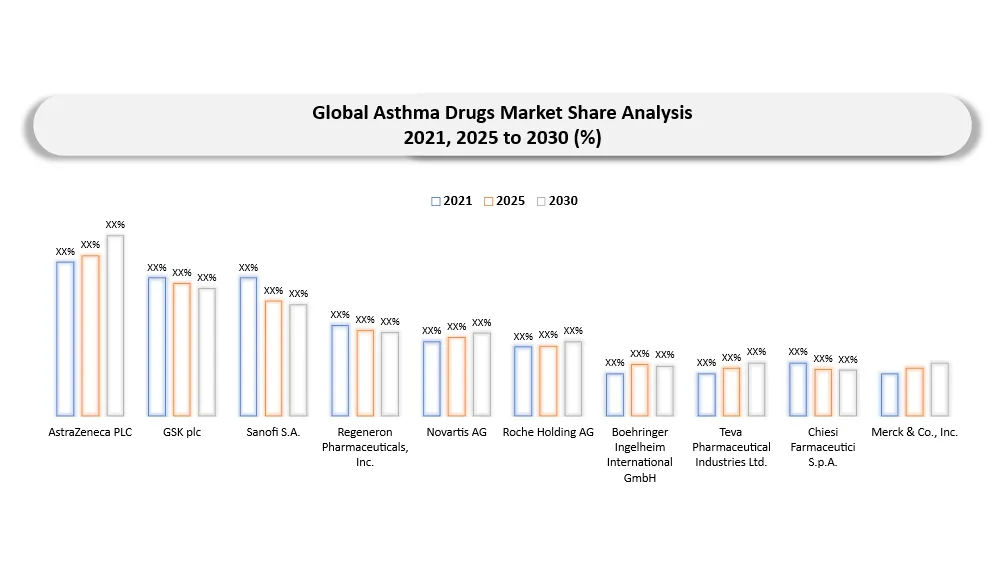
- The global asthma drugs market is moderately consolidated, with competition led by AstraZeneca PLC, GSK plc, Sanofi S.A., Regeneron Pharmaceuticals, Inc., Novartis AG, Roche Holding AG, Boehringer Ingelheim International GmbH, Teva Pharmaceutical Industries Ltd., Chiesi Farmaceutici S.p.A. and Amgen Inc. Competitive differentiation is increasingly based on biologic efficacy, dosing convenience, inhaler innovation, expansion into broader asthma phenotypes and the ability to reduce exacerbations among patients inadequately controlled by conventional inhaled therapies.
- AstraZeneca holds a strong competitive position through Fasenra, Tezspire, Symbicort, Airsupra and Breztri. In April 2026, the U.S. FDA approved Breztri as a maintenance treatment for asthma in patients aged 12 years and older, strengthening the company's presence in single-inhaler triple therapy. GSK is strengthening its severe asthma franchise through Nucala and Exdensur, with Exdensur offering twice-yearly dosing and receiving European approval in February 2026 and Chinese approval in March 2026. Sanofi and Regeneron remain important competitors through Dupixent, while Sanofi is developing lunsekimig, a dual TSLP and IL-13 targeting therapy that achieved positive Phase IIb results in moderate-to-severe asthma in April 2026.
- Competition is also intensifying within inhaled combination therapies. Chiesi expanded its position with the May 2026 U.S. approval of TRIMBOW for maintenance treatment of adult asthma, complementing its established commercialization across numerous international markets. Overall, market leadership is shifting toward companies capable of combining established inhaled franchises with next-generation biologics, longer dosing intervals, precision treatment approaches and single-inhaler combination therapies. Future competitive advantage will increasingly depend on clinical differentiation, broader patient eligibility, adherence improvement, convenient administration, payer access and continued expansion into earlier lines of asthma treatment.
Key Companies of Asthma Drugs Market
- AstraZeneca PLC (United Kingdom)
- GSK plc (United Kingdom)
- Sanofi S.A. (France)
- Regeneron Pharmaceuticals, Inc. (United States)
- Novartis AG (Switzerland)
- Roche Holding AG (Switzerland)
- Boehringer Ingelheim International GmbH (Germany)
- Teva Pharmaceutical Industries Ltd. (Israel)
- Chiesi Farmaceutici S.p.A. (Italy)
- Merck & Co., Inc. (United States)
- Amgen Inc. (United States)
- Covis Pharma GmbH (Luxembourg)
- Cipla Limited (India)
- Lupin Limited (India)
- Glenmark Pharmaceuticals Limited (India)
- Viatris Inc. (United States)
- Orion Corporation (Finland)
- A. Menarini Industrie Farmaceutiche Riunite S.r.l. (Italy)
- Sun Pharmaceutical Industries Limited (India)
- Hikma Pharmaceuticals PLC (United Kingdom)
Asthma Drugs Market Recent Developments
- September 2026: GSK submitted a regulatory application in the European Union for a next-generation, lower-carbon version of its Ventolin (salbutamol) metered-dose inhaler. The submission was supported by positive Phase III data demonstrating therapeutic equivalence and a comparable safety profile between the new HFA-152a propellant formulation and the existing HFA-134a formulation. Ventolin is widely used as a rapid-relief treatment for asthma and COPD.
- September 2026: Chiesi Farmaceutici announced that European regulatory agencies validated submissions for its next-generation propellant pressurized metered-dose inhalers across both its Single Inhaler Triple Therapy and ICS/LABA combination portfolios. The products use HFA-152a, a low-global-warming-potential propellant designed to reduce the carbon footprint of the inhalers by up to 90% while maintaining established efficacy, safety and usability.
- August 2026: Amgen reported encouraging results from the completed Phase II LEVANTE study of sunakiment (AMG 104/AZD8630), an inhaled anti-TSLP Fab therapy being developed for asthma in collaboration with AstraZeneca. The dose-ranging study generated results supporting dose selection, and Amgen and AstraZeneca are planning a Phase III development program in asthma, potentially advancing a differentiated inhaled biologic approach to late-stage development.
- July 2026: Chiesi received European Commission Marketing Authorisation for its Single Inhaler Triple Therapy containing beclometasone dipropionate, formoterol fumarate and glycopyrronium, delivered through the NEXThaler dry-powder inhaler, for maintenance treatment of asthma in adults. The approval expands Chiesi's asthma portfolio by providing its triple therapy through an additional inhaler platform.
- July 2026: GSK announced that Australia's Therapeutic Goods Administration registered Exdensur (depemokimab) as an add-on maintenance treatment for severe eosinophilic asthma in patients aged 12 years and older who remain inadequately controlled on medium- to high-dose inhaled corticosteroids plus another asthma controller. Depemokimab is an anti-IL-5 monoclonal antibody administered once every six months, offering a differentiated extended-dosing approach for severe asthma management.
- July 2026: AstraZeneca announced that the European Medicines Agency's Committee for Medicinal Products for Human Use recommended Trixeo Aerosphere for approval as maintenance treatment of asthma in patients aged 12 years and older who are inadequately controlled with medium-dose inhaled corticosteroid and long-acting beta2-agonist therapy. The recommendation was supported by the Phase III KALOS and LOGOS trials, in which the single-inhaler ICS/LABA/LAMA triple therapy produced statistically significant improvements in lung function compared with dual ICS/LABA therapy.
What DATAM Uniquely Provides
- In-depth segmentation of the asthma drugs market by drug class, route of administration, distribution channel and region, with additional analysis of inhaled corticosteroids, leukotriene modifiers, long-acting beta agonists, quick-relief medications, combination inhalers and biologic therapies.
- Competitive analysis of leading asthma therapeutics companies covering approved product portfolios, mechanism of action, clinical efficacy, exacerbation reduction, lung-function improvement, dosing frequency, safety profile, inhaler platforms, biologic differentiation, pipeline maturity, regulatory progress and commercialization strategy.
- Comprehensive assessment of diagnosed and treatment-eligible asthma populations, including mild, moderate and severe asthma patients, uncontrolled asthma populations, eosinophilic asthma, allergic asthma, type 2 inflammatory asthma, pediatric and adult patient groups, treatment escalation patterns and regional treatment-access dynamics.
- Actionable intelligence on biologic adoption and competitive positioning across anti-IgE, anti-IL-5, anti-IL-5 receptor, anti-IL-4 receptor and anti-TSLP therapies, including patient eligibility, biomarker requirements, dosing convenience, clinical differentiation and opportunities for expansion into broader asthma populations.
- Detailed assessment of inhaled therapy trends, including single-inhaler combination therapies, ICS/LABA and ICS/LABA/LAMA regimens, rescue inhalers, maintenance therapies, inhaler-device innovation, adherence challenges and the transition toward lower-carbon propellant technologies.
- Pipeline and emerging-therapy analysis covering next-generation biologics, extended-interval biologics, inhaled biologic candidates, novel inflammatory targets and combination approaches, supported by clinical-trial progress, expected regulatory milestones and potential impact on the future treatment algorithm.
- Commercial opportunity assessment incorporating treatment switching, biologic penetration, prescription dynamics, payer and reimbursement considerations, generic competition, patent and exclusivity trends, distribution-channel dynamics and geographic differences in access to advanced asthma therapies.
- Strategic assessment of unmet needs and future growth opportunities, including uncontrolled severe asthma, treatment adherence, personalized therapy selection, biomarker-driven treatment, pediatric expansion, reduced dosing frequency and therapies capable of addressing broader asthma phenotypes.




























































