


The first FDA-approved LGMD therapy establishes a new clinical benchmark for gene therapy developers, reshapes rare-disease investment priorities and creates potential commercialization opportunities across the USA, Japan and South Korea.
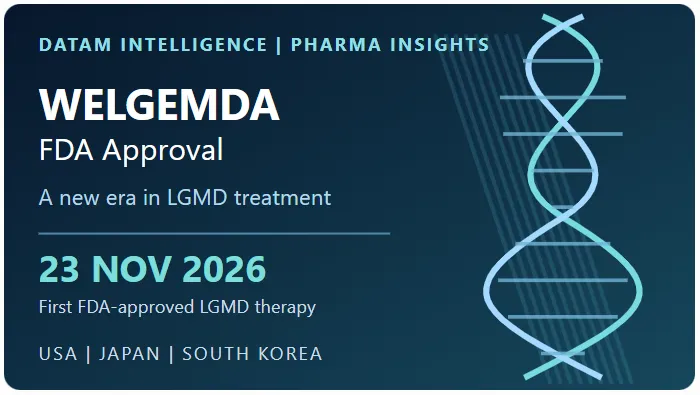
The global neuromuscular disease treatment landscape has reached a defining milestone. On November 23, 2026, the US Food and Drug Administration (FDA) approved BridgeBio Pharma's Welgemda (ribitol), previously known as BBP-418, for the treatment of limb-girdle muscular dystrophy type 2I/R9 (LGMD2I/R9) in adult and pediatric patients weighing at least 30 kg.
The approval represents the first FDA-authorized therapy for any form of limb-girdle muscular dystrophy (LGMD), marking an important transition from supportive disease management toward genetically targeted pharmaceutical intervention.
Beyond its clinical significance, Welgemda introduces a new commercial benchmark for neuromuscular drug developers. Pharmaceutical companies pursuing gene therapies, precision medicines and rare-disease portfolio expansion must now reassess their clinical differentiation, addressable patient populations, pricing assumptions and commercialization strategies.
For biotechnology investors and pharmaceutical strategy leaders, the emerging question is no longer whether a genetically targeted LGMD treatment can secure regulatory approval, but which therapeutic technologies and commercialization models will capture future market value.
Request Sample: https://www.datamintelligence.com/download-sample/limb-girdle-muscular-dystrophy-treatment-market
Welgemda FDA Approval: Key Facts and Commercial Significance
| Parameter | Details |
| Drug name | Welgemda |
| Active ingredient | Ribitol |
| Development code | BBP-418 |
| Company | BridgeBio Pharma / ML Bio Solutions |
| FDA approval date | 23-Nov-26 |
| Approved indication | Limb-girdle muscular dystrophy type 2I/R9 |
| Eligible population | Adult and pediatric patients weighing at least 30 kg |
| Therapeutic modality | Oral small-molecule therapy |
| Pivotal clinical trial | Phase 3 FORTIFY |
| Regulatory status | Traditional FDA approval |
| Initial commercial market | United States |
The FDA approval also resulted in BridgeBio receiving a Rare Pediatric Disease Priority Review Voucher, adding a potential source of strategic financial value beyond the product's commercial revenue.
Phase 3 FORTIFY Results Establish a New Clinical Benchmark
Welgemda's approval was supported by the Phase 3 FORTIFY clinical trial, a randomized, double-blind, placebo-controlled study involving 112 patients with genetically confirmed LGMD2I/R9.
The disease is associated with mutations in the FKRP gene, which impair the glycosylation of alpha-dystroglycan, an important protein involved in maintaining muscle fiber integrity. This biological disruption contributes to progressive muscle weakness, mobility limitations and respiratory complications.
Although Welgemda's precise therapeutic mechanism is not fully established, it is believed to support processes involved in functional alpha-dystroglycan glycosylation.
At the planned 12-month interim analysis, the study demonstrated clinically relevant improvements in mobility and respiratory function.
| Clinical parameter | FORTIFY findings |
| 100-meter timed test | 0.27 m/s improvement in walking velocity relative to placebo |
| Forced vital capacity | 4.89 percentage-point benefit relative to placebo |
| Motor performance | Nominally significant improvement on the NSAD assessment |
| Alpha-dystroglycan glycosylation | Significant improvement observed at three and 12 months |
| Serum creatine kinase | Significant reduction at 12 months |
| Safety | Common adverse reactions included gastrointestinal effects and joint pain |
Source: US FDA and BridgeBio Pharma, November 23, 2026.
These findings are commercially important because future therapeutic developers will need to demonstrate meaningful functional benefits alongside biological activity. Biomarker improvements alone may not provide sufficient differentiation in an increasingly competitive treatment landscape.
How Welgemda Could Reshape the Global Limb-Girdle Muscular Dystrophy Treatment Market
According to DataM Intelligence's September 2026 assessment, the global limb-girdle muscular dystrophy treatment market was valued at USD 631.70 million in 2025 and was projected to reach USD 854.74 million by 2035, growing at a CAGR of 3.07% during 2026-2035.
Global LGMD Treatment Market: Pre-Approval Baseline
| Market indicator | Market assessment |
| Global market size, 2025 | USD 631.70 million |
| Global market forecast, 2035 | USD 854.74 million |
| Forecast CAGR, 2026-2035 | 3.07% |
| North America market share, 2025 | 39% |
| Europe market share, 2025 | 30% |
| Medication segment share, 2025 | 52% |
| Autosomal-recessive LGMD share, 2025 | 56% |
Source: DataM Intelligence, September 2026.
These estimates represent the broader LGMD treatment market before Welgemda's regulatory approval, including medications used for symptom and complication management and supportive healthcare services.
The introduction of an approved targeted therapy creates potential incremental revenue opportunities that warrant reassessment of the existing forecast.
Future market growth will increasingly depend on five variables:
- Identification of genetically confirmed LGMD2I/R9 patients.
- Welgemda's commercial pricing, reimbursement and treatment adoption.
- International regulatory approvals and commercialization agreements.
- Clinical development across additional genetically defined LGMD subtypes.
- Competitive entry of gene replacement and other advanced therapies.
Importantly, the entire LGMD patient population cannot be considered Welgemda's addressable market. Commercial forecasting must distinguish eligible FKRP-related patients from other genetically distinct muscular dystrophy populations.
This shift makes genotype-specific epidemiology, treatment eligibility and patient identification increasingly valuable commercial intelligence assets.
Request a Customized Report According to Your Business Strategy: https://www.datamintelligence.com/customize/limb-girdle-muscular-dystrophy-treatment-market
Competitive Intelligence: Which Companies Are Developing the Next Generation of LGMD Treatments?
Welgemda's approval raises the competitive standard for pharmaceutical and biotechnology companies developing genetically targeted muscular dystrophy treatments.
AskBio, part of Bayer, and Atamyo Therapeutics are particularly relevant because their investigational gene therapy programs target the same FKRP-associated disease subtype.
Other developers targeting genetically distinct LGMD forms represent broader competition for rare-disease investment, clinical development resources and neuromuscular treatment infrastructure.
Approved Drugs and Emerging LGMD Therapeutic Pipeline
| Company | Drug or candidate | Target indication | Therapeutic technology | Development status |
BridgeBio Pharma / ML Bio Solutions | Welgemda (BBP-418) | LGMD2I/R9 | Oral ribitol therapy | FDA approved |
| AskBio / Bayer | AB-1003 (LION-101) | LGMD2I/R9 | AAV-mediated gene replacement | Phase 1/2 |
| Atamyo Therapeutics | ATA-100 | LGMD2I/R9 | FKRP gene replacement therapy | Phase 1/2 |
| Atamyo Therapeutics | ATA-200 | LGMD2C/R5 | SGCG gene replacement therapy | Phase 1b/2 |
| BridgeBio Pharma | BBP-418 pediatric expansion | LGMD2I/R9 | Oral ribitol therapy | Additional studies planned |
| BridgeBio Pharma | BBP-418 indication expansion | LGMD2M/R13 and LGMD2U/R20 | Oral ribitol therapy | Clinical studies planned |
Pipeline status as of November 25, 2026. Investigational therapies have not received regulatory approval for the listed indications.
The most important competitive development is the emergence of two distinct therapeutic approaches: repeated oral treatment and gene replacement therapies designed for potentially durable therapeutic intervention.
Welgemda's first-mover advantage could influence physician prescribing behavior, patient expectations, reimbursement frameworks and clinical trial recruitment.
However, gene therapy developers may establish differentiated positions through durable functional outcomes, alternative treatment eligibility, administration advantages or benefits in specific patient populations, provided these advantages are supported by clinical evidence.
Oral Small-Molecule Therapy vs. Gene Therapy: The Emerging Commercial Competition
The future LGMD treatment market may be shaped not only by clinical effectiveness but also by the economics of different therapeutic modalities.
| Commercial parameter | Oral small-molecule therapy | AAV gene replacement therapy |
| Treatment model | Repeated administration | Intended one-time administration |
| Revenue opportunity | Recurring treatment revenue | Potential single-treatment revenue |
| Manufacturing | Small-molecule pharmaceutical production | Specialized viral-vector production |
| Patient access | Prescription and ongoing reimbursement | Specialized administration and monitoring |
| Key commercial challenge | Adherence and long-term reimbursement | Upfront treatment costs and eligibility |
| Clinical differentiation | Sustained functional improvement | Potential long-term therapeutic durability |
| Development risk | Long-term effectiveness and indication expansion | Safety, immunogenicity and durability |
For pharmaceutical executives, these differences have implications extending beyond product development.
Capital allocation decisions must account for clinical development expenditure, manufacturing scalability, treatment infrastructure, reimbursement uncertainty and the time required to reach commercial profitability.
Welgemda's approval does not eliminate the opportunity for gene therapy. Instead, it changes the criteria through which future gene therapies may be evaluated by regulators, physicians, investors and healthcare payers.
USA: The First Commercial Battleground for Targeted LGMD Therapies
The United States is positioned to become the initial commercial testing ground for genetically targeted LGMD therapies.
DataM Intelligence estimated that North America accounted for approximately 39% of global LGMD treatment expenditure in 2025, equivalent to USD 246.36 million.
BridgeBio anticipates an immediate US commercial launch and has established patient support services through its ForgingBridges program, including insurance assistance and financial support options.
The commercial success of Welgemda will depend significantly on the company's ability to identify eligible patients, establish specialist referral networks and translate regulatory approval into reimbursed treatment access.
Strategic Opportunities in the US Market
- Genetic testing and FKRP-specific patient identification.
- Specialty pharmaceutical distribution.
- Rare-disease patient support services.
- Real-world evidence generation.
- Neuromuscular specialist and treatment-center mapping.
- Competitive clinical trial benchmarking.
- Gene therapy development and portfolio licensing.
For competing biotechnology companies, monitoring Welgemda's prescription growth, patient persistence, payer coverage and net pricing could provide valuable insights into the commercial viability of future LGMD therapies.
The US launch will also provide an important reference point for companies evaluating international licensing and regional market-entry opportunities.
Japan: Rare-Disease Licensing and Precision Medicine Opportunities
Japan represents a potential strategic expansion market for genetically targeted muscular dystrophy therapies, supported by established pharmaceutical research capabilities, orphan drug development frameworks and specialist healthcare infrastructure.
Japan's orphan drug designation framework provides eligible developers with regulatory and financial incentives that can support rare-disease drug development.
However, translating Welgemda's US clinical and regulatory success into Japanese commercial availability will require a separate regulatory and market-access strategy.
Local epidemiology, FKRP variant distribution, clinical evidence requirements, reimbursement assessment and specialist physician engagement will influence the commercial opportunity.
Japanese pharmaceutical companies such as Takeda Pharmaceutical, Astellas Pharma, Nippon Shinyaku and Chugai Pharmaceutical represent relevant companies to monitor because of their broader capabilities in rare diseases, advanced therapeutics and pharmaceutical commercialization.
Potential business opportunities include:
- Regional licensing and commercialization partnerships.
- Genotype-specific patient registries and diagnostic services.
- International clinical trial collaboration.
- Neuromuscular therapeutic portfolio expansion.
- Genetic medicine research and co-development.
- Japanese regulatory and reimbursement strategy development.
For Japanese pharmaceutical strategy teams, the key question is whether early participation in emerging LGMD therapeutic programs could provide a stronger competitive position before the market becomes more established.
No Japanese approval, launch date or commercialization partner for Welgemda was confirmed in BridgeBio's November 23 announcement.
South Korea: Emerging Opportunities in Genetic Diagnostics and Rare-Disease Commercialization
South Korea offers potential opportunities through its growing biotechnology ecosystem, genetic diagnostics capabilities, pharmaceutical manufacturing infrastructure and rare-disease healthcare framework.
The increasing importance of genetically confirmed treatment eligibility could create opportunities for Korean diagnostic companies and specialized clinical laboratories.
For pharmaceutical developers, local commercialization will depend on regulatory review, reimbursement negotiations, patient identification and the ability to establish commercially effective specialist networks.
Companies such as GC Biopharma, Hanmi Pharmaceutical, Samsung Biologics and Macrogen are relevant organizations to monitor across the broader rare-disease, advanced therapeutic manufacturing and genetic diagnostics ecosystem.
Key Commercial Opportunities in South Korea
- Molecular diagnostics and genetic screening.
- Rare-disease drug licensing and distribution.
- Advanced therapeutic manufacturing services.
- Clinical development partnerships.
- Specialist hospital and physician network development.
- Regulatory intelligence and market-access assessment.
Welgemda's approval could encourage Korean biotechnology companies to evaluate additional opportunities within genetically targeted neuromuscular drug development.
Nevertheless, South Korean regulatory approval and commercialization remain potential future developments rather than confirmed milestones.
Beyond LGMD2I/R9: BridgeBio's Potential Indication Expansion Strategy
One of the most commercially significant elements of BridgeBio's development strategy is the potential expansion of BBP-418 beyond its initial approved indication.
The company intends to investigate additional pediatric populations and other LGMD subtypes, including LGMD2M/R13 and LGMD2U/R20.
Successful development in these indications could expand the addressable patient population and strengthen BridgeBio's position within genetically targeted neuromuscular therapeutics.
However, efficacy demonstrated in LGMD2I/R9 cannot automatically be extrapolated to genetically distinct disease subtypes. Additional clinical studies and regulatory approvals will be necessary.
For pharmaceutical companies evaluating competitive positioning, this creates a second strategic consideration: whether to develop individual genotype-specific products or pursue therapeutic approaches that could potentially address multiple related disorders.
LGMD Therapeutics: Key Clinical and Commercial Milestones to Monitor Through 2030
| Timeline | Development milestone | Strategic significance |
| Late 2026 | Anticipated Welgemda US launch | Establishes initial adoption and access benchmarks |
| First half of 2027 | Planned studies in younger pediatric patients weighing less than 30 kg | Potential expansion of treatment eligibility |
| 2027 onward | Potential additional LGMD subtype studies | New opportunities for indication expansion |
| 2027-2028 | Emerging gene therapy clinical updates | Competitive differentiation and investment decisions |
| Late 2027-early 2028 | Expected 36-month FORTIFY results | Long-term clinical evidence |
| First half of 2028 | Planned European marketing authorization application | Potential international market expansion |
| 2028-2030 | Potential Asian licensing and regulatory activity | Scenario-based opportunities in Japan and South Korea |
Company-announced timelines remain subject to clinical outcomes, regulatory requirements and development decisions. Asian market-entry opportunities are analytical scenarios, not confirmed company commitments.
Seven Strategic Implications for Pharmaceutical Decision-Makers
1. Genotype-specific forecasting will replace broad disease-level commercial assumptions.
Pharmaceutical companies must evaluate patient populations according to genetic subtype, diagnosis rates, treatment eligibility and geographic distribution.
2. Genetic diagnostics will become a commercial growth enabler.
The availability of an approved therapy creates a stronger incentive to identify previously undiagnosed and genetically unclassified patients.
3. Gene therapy developers face a new clinical benchmark.
Future programs will need to demonstrate differentiated functional benefits, acceptable safety and potentially durable treatment outcomes.
4. Rare-disease licensing opportunities could become increasingly important.
Regional pharmaceutical companies may evaluate licensing and commercialization partnerships to establish positions in genetically targeted neuromuscular therapeutics.
5. Long-term treatment economics will influence competitive positioning.
Healthcare payers will need to assess recurring oral treatment expenditure against potential one-time advanced therapeutic costs and long-term clinical benefits.
6. Additional indication development could expand the competitive landscape.
Clinical success across further LGMD subtypes could create new commercial opportunities beyond the initial FKRP-associated population.
7. International commercialization requires country-specific intelligence.
The USA, Japan and South Korea have distinct regulatory, reimbursement, diagnostic and specialist healthcare environments that require differentiated market-entry strategies.
DataM Intelligence Outlook: Where Will the Next Wave of LGMD Market Value Emerge?
The FDA approval of Welgemda marks the beginning of a new commercial phase in limb-girdle muscular dystrophy therapeutics.
DataM Intelligence expects future competitive activity to increasingly focus on genetically defined patient populations, therapeutic differentiation, long-term treatment outcomes and international commercialization opportunities.
The strongest strategic positions may emerge not simply from developing new therapies, but from integrating drug development with genetic diagnostics, specialist networks, reimbursement capabilities and patient identification infrastructure.
For pharmaceutical CEOs, business development leaders, portfolio strategy teams and biotechnology investors, the immediate priority is to determine which LGMD subtypes offer commercially viable opportunities, which pipeline programs have credible differentiation potential and which geographic markets justify early investment.
Evaluate Your Competitive Position in the Post-Welgemda Treatment Market
DataM Intelligence's Limb-Girdle Muscular Dystrophy Treatment Market Research Report, 2026-2035 provides a foundation for evaluating:
- Global and regional market size and forecasts.
- Disease subtype and treatment segmentation.
- Patient diagnosis and treatment pathways.
- Approved and investigational therapeutic landscapes.
- Pharmaceutical competitive intelligence.
- Regional commercialization opportunities.
- Emerging clinical and regulatory developments.
- Strategic investment and portfolio expansion opportunities.
Customized research can additionally address post-approval revenue scenarios, country-specific patient populations, oral therapy versus gene therapy economics, potential licensing partners and competitive market-entry strategies.
Purchase the Full Market Intelligence Report
Frequently Asked Questions
What is Welgemda?
Welgemda is an oral ribitol-based pharmaceutical therapy developed by BridgeBio Pharma and ML Bio Solutions for treating limb-girdle muscular dystrophy type 2I/R9 in adult and pediatric patients weighing at least 30 kg.
When did the FDA approve Welgemda?
The US FDA approved Welgemda on November 23, 2026, making it the first FDA-approved treatment for any form of limb-girdle muscular dystrophy.
What were the Phase 3 FORTIFY clinical trial results?
The trial demonstrated a 0.27 m/s benefit in walking velocity and a 4.89 percentage-point benefit in forced vital capacity relative to placebo at the 12-month interim assessment.
Which companies are developing competing LGMD gene therapies?
AskBio, part of Bayer, is developing AB-1003, while Atamyo Therapeutics is developing ATA-100. Both investigational therapies target FKRP-related LGMD2I/R9, making them particularly relevant pipeline comparators to Welgemda.
What is the global limb-girdle muscular dystrophy treatment market size?
DataM Intelligence's pre-approval assessment valued the global LGMD treatment market at USD 631.70 million in 2025 and projected it to reach USD 854.74 million by 2035, at a CAGR of 3.07%. Welgemda's approval creates a reason to reassess this forecast.
How will Welgemda affect the gene therapy market?
Welgemda establishes a new clinical and commercial benchmark for investigational gene therapies. Future developers may need to demonstrate differentiation through functional outcomes, therapeutic durability, safety, treatment eligibility and long-term healthcare economics.
Is Welgemda approved in Japan?
No Japanese approval was confirmed as of November 25, 2026. Future availability will depend on BridgeBio's development strategy, Japanese regulatory review and market-access requirements.
Is Welgemda approved in South Korea?
Welgemda was not approved in South Korea as of November 25, 2026. Potential commercialization will depend on local regulatory submissions, reimbursement assessment and commercial arrangements.
What are the emerging business opportunities in LGMD therapeutics?
Key opportunities include genetically targeted drug development, molecular diagnostics, gene therapy manufacturing, patient identification, orphan drug licensing, specialty commercialization and country-specific market intelligence.