


Delhi-Meerut Namo Bharat Corridor to Source 60% Power from New 110 MW Solar Plant
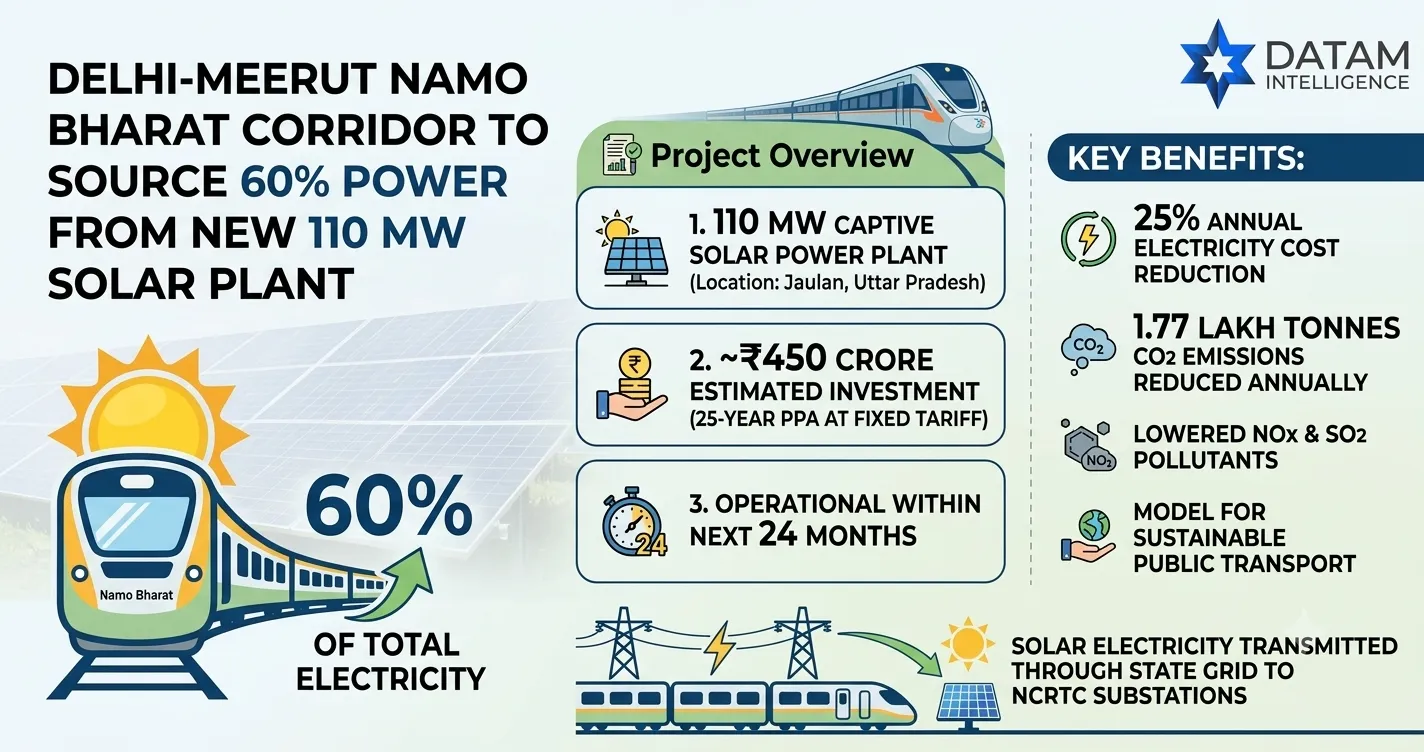
The National Capital Region Transport Corporation (NCRTC) has signed a long-term power purchase agreement (PPA) for a 110 MW captive solar power plant that will supply nearly 60% of the electricity required to operate the Delhi-Meerut Namo Bharat corridor. The move represents one of India's most significant renewable energy integrations within a regional rapid transit system.
The solar project, estimated at approximately ₹450 crore, will be developed in Jaulan, Uttar Pradesh, and is expected to become operational within the next 24 months. Electricity generated from the plant will be transmitted through the Uttar Pradesh state grid and supplied to NCRTC substations across Uttar Pradesh and Delhi before being distributed throughout the corridor.
Explore the Battery Anode Materials Market: Trends, Opportunities & Competitive Insights
Get a deeper view of the battery anode materials market landscape from silicon-based anodes and graphite supply-chain diversification to EV and energy-storage demand. Explore market size, growth forecasts, regional dynamics, competitive positioning, key developments, and emerging white-space opportunities to identify where the next growth opportunities are emerging. Request a Sample Report Today!
Under the agreement, NCRTC will procure solar electricity at a fixed tariff for the next 25 years, providing long-term energy cost stability while reducing dependence on conventional power sources. As electricity currently represents a significant portion of operational expenditure for the Namo Bharat corridor, the renewable energy initiative is expected to lower annual electricity expenses by approximately 25%.
Beyond financial benefits, the project is expected to deliver substantial environmental gains. NCRTC estimates that the solar plant will help reduce carbon dioxide emissions by around 1.77 lakh tonnes annually while lowering emissions of pollutants such as nitrogen oxides and sulphur dioxide. These reductions align with India's broader objectives of decarbonizing transportation infrastructure and accelerating renewable energy adoption.
The agreement further strengthens the positioning of the Namo Bharat network as a model for sustainable public transportation. As urban transit systems worldwide seek cleaner and more efficient energy solutions, NCRTC's solar-powered approach demonstrates how large-scale rail infrastructure can contribute to national climate goals while improving operational efficiency.
Industry analysts believe the project could serve as a benchmark for future regional transit networks across India, encouraging greater integration of renewable energy into transportation infrastructure. The initiative also reinforces the growing convergence between clean energy investments and next-generation mobility projects, creating long-term opportunities for sustainable urban development.
Why This News Matters
- Supports India's renewable energy and net-zero ambitions.
- Demonstrates large-scale renewable integration in public transportation.
- Reduces operational expenditure for rapid transit infrastructure.
- Strengthens energy security through long-term fixed-tariff procurement.
- Establishes a blueprint for future green mobility corridors.
FAQs
1. What is the capacity of the solar power project signed by NCRTC?
The project involves a 110 MW captive solar power plant that will supply electricity to the Delhi-Meerut Namo Bharat corridor.
2. How much of the Namo Bharat corridor's electricity demand will the solar plant meet?
The solar facility is expected to meet nearly 60% of the corridor's total electricity requirements.
3. Where will the solar plant be developed?
The solar project will be established in Jaulan, Uttar Pradesh.
4. What is the estimated investment in the solar project?
The project is estimated to cost around ₹450 crore.
5. How much can NCRTC reduce electricity costs through this project?
NCRTC expects the solar initiative to reduce annual electricity expenditure by approximately 25%.
6. What environmental benefits will the project deliver?
The solar plant is expected to reduce carbon dioxide emissions by about 1.77 lakh tonnes annually while lowering other harmful emissions.
7. How long is the power purchase agreement?
NCRTC will procure electricity from the solar plant under a fixed-tariff agreement spanning 25 years.
8. Why is this project important for India's transportation sector?
The project showcases how renewable energy can power large-scale public transportation systems, helping reduce costs and emissions while supporting sustainable mobility goals.
News source: https://manufacturing.economictimes.indiatimes.com/news/energy/ncrtc-signs-pact-for-110-mw-solar-plant-to-meet-60-of-namo-bharat-corridors-power-needs/133627393