


India Strengthens Semiconductor Manufacturing Push with ₹1.64 Lakh Crore Investment Pipeline
India has approved 12 semiconductor manufacturing projects under the India Semiconductor Mission (ISM), marking one of the country’s most significant strategic investments in advanced electronics and AI-ready compute infrastructure.
The approved pipeline, valued at approximately ₹1.64 lakh crore, includes a mix of semiconductor fabrication units, compound semiconductor fabs, and advanced packaging (OSAT/ATMP) facilities, reinforcing India’s ambition to become a global semiconductor manufacturing hub.
This development is expected to accelerate India’s position in AI hardware supply chains, high-performance computing (HPC), and data center ecosystems, which are increasingly dependent on advanced chip technologies.
Unlock Strategic Insights into India’s Fast-Growing Semiconductor Manufacturing Market
India's semiconductor industry is entering a transformative growth phase, fueled by government incentives, AI infrastructure expansion, electronics manufacturing investments, and rising domestic chip demand. Gain exclusive access to market forecasts, competitive intelligence, supply chain analysis, investment opportunities, and emerging technology trends shaping the industry through 2035. The market is projected to grow from US$59.78 billion in 2025 to US$161.40 billion by 2035.
Request for the Sample Report: India Semiconductor Manufacturing Market Report
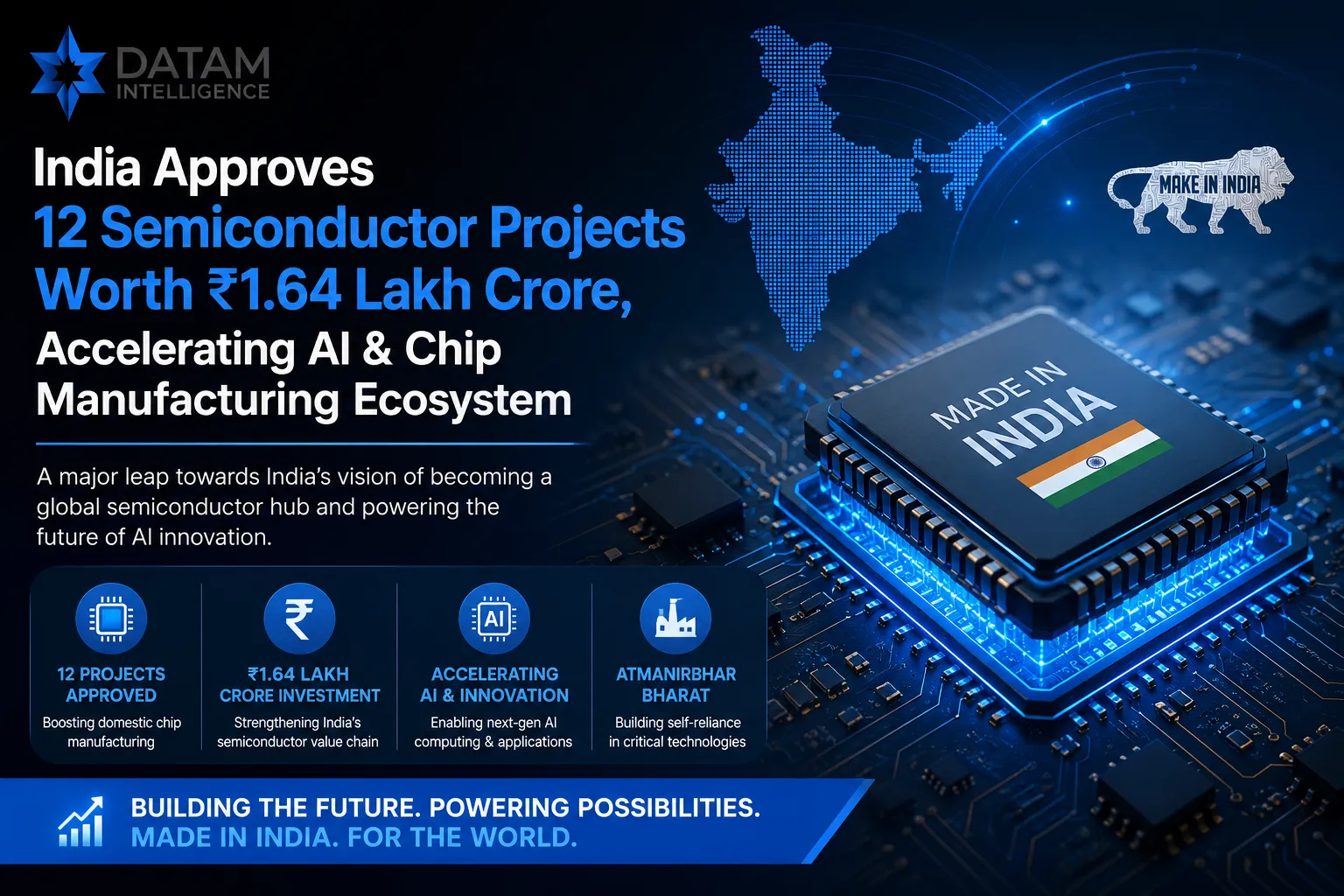
Breakdown of Approved Semiconductor Projects in India
According to government-backed disclosures, the approved projects include:
- 1 Semiconductor Fabrication (Fab) Unit
- 2 Compound Semiconductor Fabrication Units
- 9 Packaging / OSAT (Outsourced Semiconductor Assembly & Testing) Units
This structure reflects a full-stack semiconductor ecosystem strategy, where India is not only focusing on chip assembly but also moving upstream into fabrication and design-linked innovation.
Strategic Impact on India’s AI & Digital Infrastructure Growth
The semiconductor push is tightly linked with India’s expanding AI compute infrastructure strategy, including:
- National AI compute infrastructure with 45,000+ GPUs
- Expansion of AI training and foundation model ecosystems
- Growth in data center capacity and cloud infrastructure demand
Industry experts note that semiconductors are now a critical enabler of AI competitiveness, powering everything from large language models (LLMs) to hyperscale data centers and edge computing systems.
India Semiconductor Mission 2.0: Next Phase of Growth
The government has also signaled a transition toward India Semiconductor Mission 2.0, focusing on:
- Semiconductor equipment manufacturing
- Material supply chain localization
- Indigenous chip design IP development
- Supply chain resilience in advanced electronics
This marks a shift from basic assembly toward deep-tech semiconductor sovereignty, reducing dependency on global chip supply chains dominated by Taiwan, South Korea, and the US.
Market Impact: Electronics, AI & Data Center Ecosystem Expansion
India’s electronics manufacturing sector is now valued at approximately ₹13 lakh crore, making it one of the fastest-growing industrial verticals in the country.
The semiconductor expansion is expected to drive:
1. AI Infrastructure Growth
- Increased demand for AI accelerators and GPUs
- Expansion of AI cloud infrastructure and HPC clusters
2. Data Center Acceleration
- Rise in hyperscale AI data centers
- Higher demand for semiconductor-based networking and storage chips
3. Export Competitiveness
- Strengthening India’s position as a global electronics export hub
- Integration into global semiconductor value chains
Investment Intelligence: Why This Matters for Global Stakeholders
From an investor and enterprise perspective, the semiconductor approvals indicate:
- Strong government-backed capital deployment in deep-tech manufacturing
- Long-term policy stability through ISM and ISM 2.0
- Integration of AI + semiconductor + cloud ecosystems
- Emergence of India as a strategic alternative to East Asian supply chains
Expert View
India’s semiconductor roadmap signals a structural shift toward technology sovereignty, where chips are no longer just industrial components but strategic assets powering:
- Artificial intelligence systems
- Defense electronics
- Automotive electronics (EVs, ADAS)
- Cloud infrastructure
- 5G/6G telecom networks
This convergence is expected to reshape global supply chain diversification strategies over the next decade.
Outlook: India’s Position in the Global Semiconductor Race
With 12 approved projects and a ₹1.64 lakh crore investment pipeline, India is transitioning from a chip-import-dependent economy to a manufacturing-led semiconductor ecosystem.
The success of these projects will determine India’s ability to compete in:
- AI hardware leadership
- Advanced chip fabrication
- Global OSAT services
- High-performance computing infrastructure
Conclusion
India’s latest semiconductor approvals mark a strategic inflection point in its technology and industrial policy. By aligning semiconductor manufacturing with AI infrastructure expansion, India is positioning itself as a next-generation global hub for advanced computing ecosystems.