


Water Conservation Is No Longer Just a Sustainability Initiative
Water scarcity is rapidly emerging as one of the most significant global challenges affecting governments, businesses, and consumers. According to international environmental agencies, rising urbanization, population growth, climate variability, and increasing industrial demand are placing unprecedented pressure on freshwater resources worldwide.
For the Ceramic Sanitaryware Market industry, this challenge is creating a fundamental shift in how products are designed, manufactured, marketed, and procured.
Historically, sanitaryware manufacturers competed primarily on product aesthetics, durability, pricing, and distribution reach. Today, water efficiency is becoming a critical purchasing criterion across residential, commercial, hospitality, healthcare, and public infrastructure projects.
As sustainability goals become integrated into construction and procurement strategies, water conservation is evolving from a regulatory requirement into a competitive advantage.
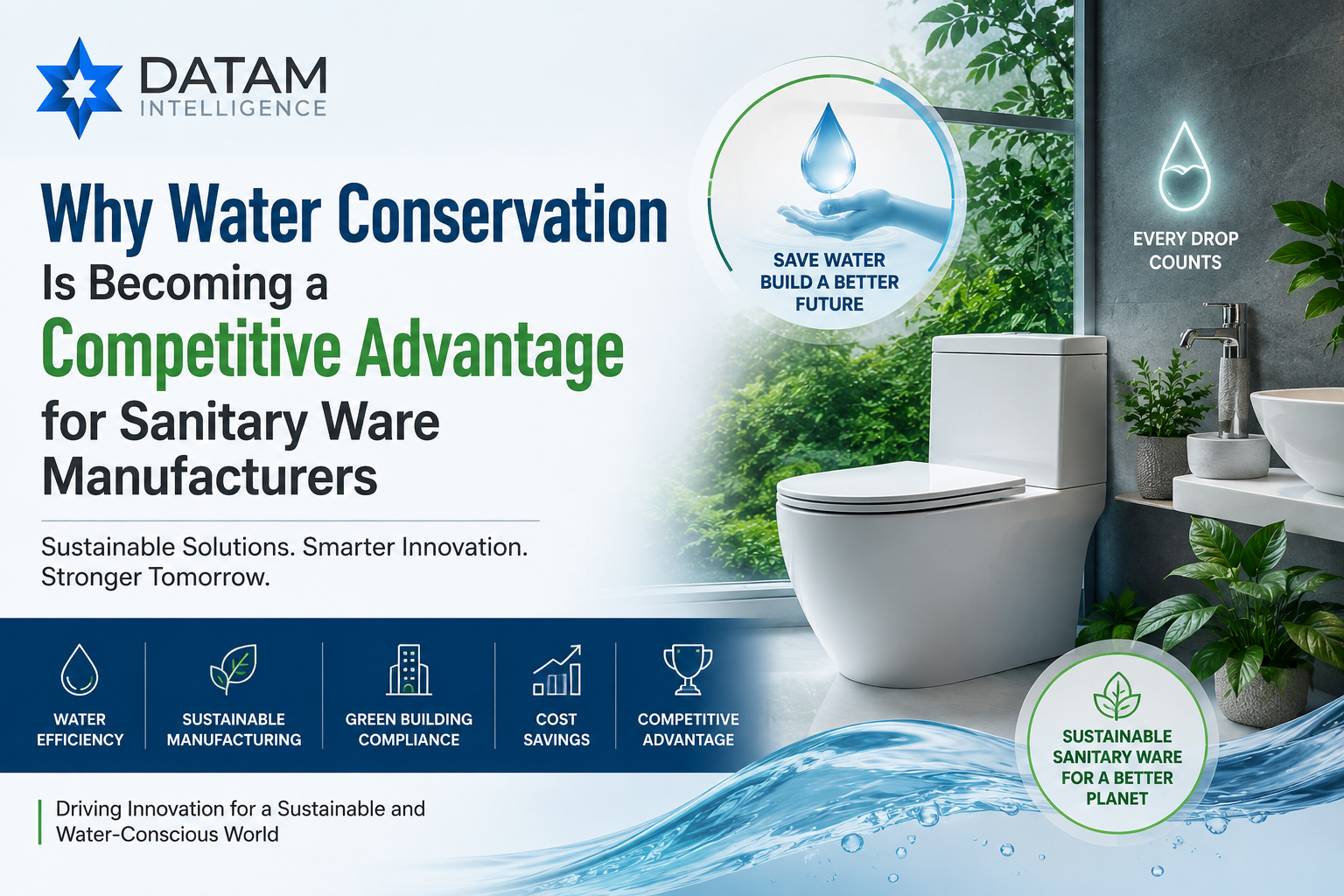
Why Water Scarcity Is Reshaping the Sanitaryware Industry
Water stress is affecting regions across Europe, North America, the Middle East, Africa, India, and Asia-Pacific. Governments are implementing stricter building codes and water-efficiency regulations to reduce consumption and improve resource management.
These regulations are influencing procurement decisions for:
- Residential housing projects
- Commercial buildings
- Hotels and resorts
- Healthcare facilities
- Educational institutions
- Public infrastructure developments
Developers increasingly seek sanitaryware solutions that support water conservation targets while maintaining user comfort and operational efficiency.
As a result, manufacturers capable of delivering measurable water savings are gaining stronger market positioning.
Water-Efficient Products Are Driving Product Innovation
Innovation within the sanitaryware sector is increasingly centered on water management technologies.
Modern sanitaryware manufacturers are investing in:
Low-Flow Toilets
Low-flow toilet systems significantly reduce water consumption without compromising flushing performance. These products have become essential for green building projects and environmentally conscious consumers.
Dual-Flush Technology
Dual-flush systems allow users to select different flushing volumes depending on waste requirements, helping reduce unnecessary water usage.
Sensor-Based Fixtures
Touchless faucets and automated flushing systems improve hygiene while optimizing water consumption through intelligent flow management.
Smart Water Monitoring
Connected bathroom technologies enable facility managers and homeowners to monitor water usage, detect leaks, and improve overall efficiency.
These innovations demonstrate how water conservation is becoming a core product development strategy rather than a supplementary feature.
Green Building Certifications Are Accelerating Demand
Green building standards are playing a major role in driving water-efficient sanitaryware adoption.
Certification programs such as:
- LEED (Leadership in Energy and Environmental Design)
- BREEAM (Building Research Establishment Environmental Assessment Method)
- WELL Building Standard
- Regional green construction frameworks
increasingly prioritize water conservation and resource efficiency.
To achieve certification requirements, developers often specify products that contribute to water reduction goals.
This trend is creating significant opportunities for manufacturers that offer certified, environmentally responsible sanitaryware solutions.
The Hospitality Sector Is Prioritizing Water Efficiency
Hotels, resorts, and commercial real estate operators are under growing pressure to reduce environmental impact while maintaining high-quality guest experiences.
Water-efficient sanitaryware helps organizations:
- Reduce utility costs
- Meet sustainability commitments
- Improve ESG performance
- Enhance brand reputation
- Support green building certifications
Many global hospitality brands now integrate water conservation targets into new construction and renovation projects, creating sustained demand for advanced sanitaryware products.
Smart Bathrooms Are Supporting Sustainability Goals
The rise of smart buildings and connected homes is further strengthening the business case for water-efficient sanitaryware.
Modern smart bathrooms increasingly incorporate:
- Motion-sensing faucets
- Automated flushing systems
- Leak detection technology
- Real-time water monitoring
- Predictive maintenance solutions
These technologies improve operational efficiency while helping consumers and businesses reduce water waste.
As smart home adoption accelerates globally, manufacturers that integrate digital capabilities into sanitaryware products are likely to gain competitive advantages.
Sustainability Is Influencing Procurement Decisions
Environmental, Social, and Governance (ESG) considerations are becoming central to procurement strategies across multiple industries.
Large organizations now evaluate suppliers based on:
- Water conservation performance
- Environmental certifications
- Sustainable manufacturing practices
- Carbon footprint reduction initiatives
- Resource efficiency programs
This shift is changing competitive dynamics within the sanitaryware industry.
Manufacturers that can demonstrate measurable environmental impact are increasingly favored in procurement processes compared to competitors focused solely on pricing.
Emerging Markets Present Significant Growth Opportunities
Rapid urbanization and infrastructure development in emerging economies are creating substantial demand for modern sanitation solutions.
Countries across Asia-Pacific, the Middle East, and Africa are investing heavily in:
- Smart city projects
- Affordable housing programs
- Sustainable urban infrastructure
- Commercial real estate developments
- Hospitality and tourism expansion
These projects frequently incorporate water conservation requirements, creating long-term growth opportunities for manufacturers specializing in efficient sanitaryware solutions.
Why Water Conservation Will Define Future Market Leaders
The sanitaryware industry is entering a new era where sustainability and efficiency are becoming as important as product quality and design.
Future market leadership will increasingly depend on a company's ability to:
- Deliver innovative water-saving technologies
- Meet evolving regulatory requirements
- Support green building certifications
- Integrate smart bathroom capabilities
- Demonstrate environmental responsibility
Organizations that proactively invest in water-efficient product portfolios will be better positioned to capture emerging opportunities and respond to changing customer expectations.
Strategic Outlook for Industry Stakeholders
Water conservation is no longer simply a compliance requirement. It has become a strategic business opportunity that influences product innovation, procurement decisions, construction practices, and competitive positioning.
For manufacturers, investors, developers, and industry stakeholders, understanding these market dynamics is essential for long-term success.
As global sustainability initiatives continue to evolve, water-efficient sanitaryware solutions will play a critical role in shaping the future of residential, commercial, and public infrastructure projects.
Explore Comprehensive Market Insights
For detailed market forecasts, competitive analysis, growth opportunities, regional trends, and strategic intelligence, explore DataM Intelligence's latest Ceramic Sanitaryware Market Report.