


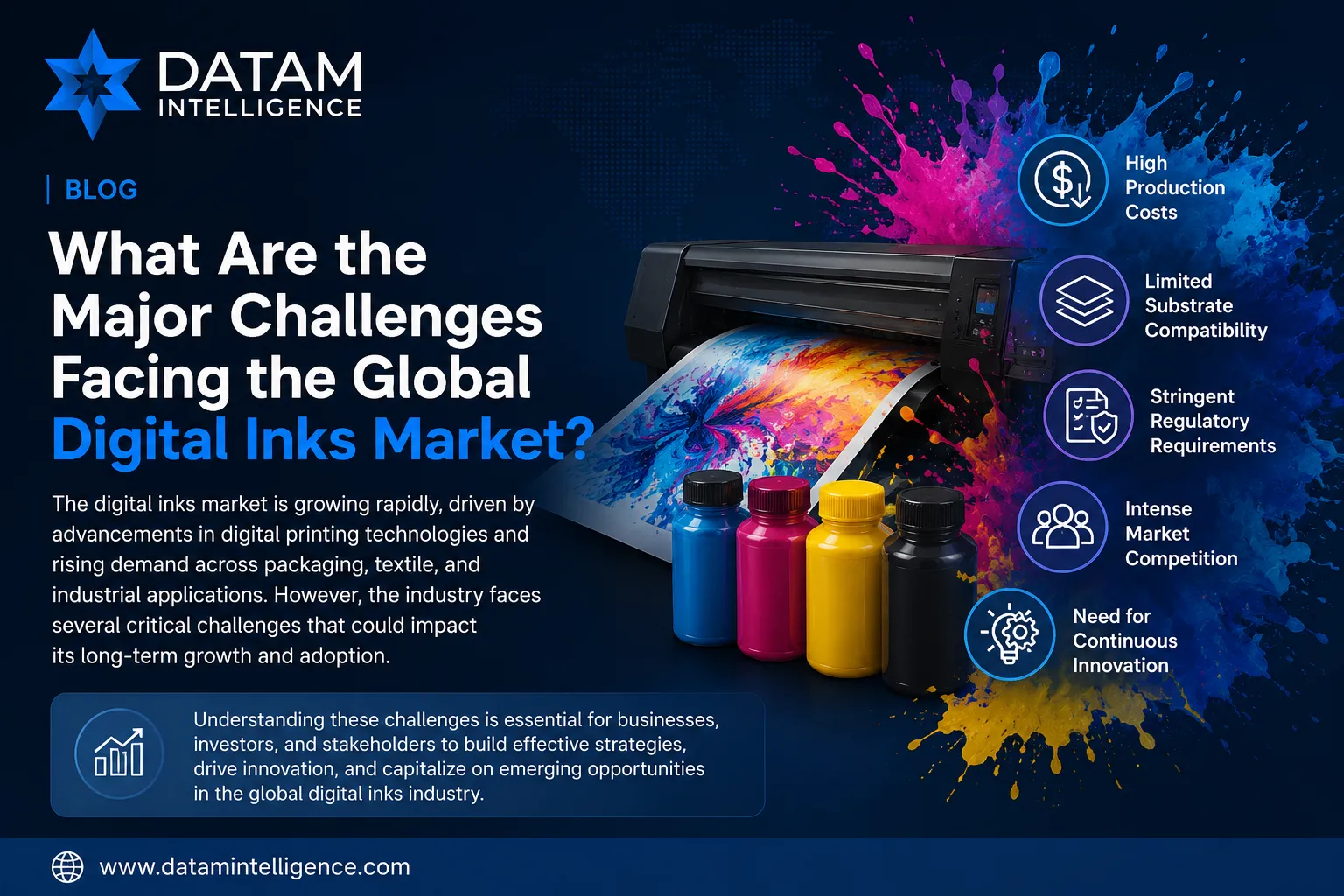
The digital inks market is rapidly expanding due to the growing demand for digital printing applications such as packaging, textiles, labels, commercial printing, signage, ceramics, dcor, and industrial printing, driven by trends like shorter print runs, customization, growth of e-commerce, personalization of textiles, and shift from conventional to digital production. While the digital inks market has strong growth prospects, it has many significant challenges.
Understanding these challenges is essential for ink manufacturers, printing equipment suppliers, packaging companies, investors, and buyers of digital inks market reports.
Download the Digital Inks Market Report
Looking to understand where the digital inks industry is headed next?
Gain access to comprehensive market intelligence covering growth opportunities, technology innovations, competitive benchmarking, sustainability trends, and regional demand forecasts shaping the future of digital printing.
The Digital Inks Market Report provides:
✔ Market size, share, and forecast analysis
✔ Competitive landscape of leading digital ink manufacturers
✔ Packaging, textile, and industrial printing trends
✔ Emerging digital printing technologies
✔ Sustainability and regulatory developments
✔ Strategic investment opportunities
Whether you're a manufacturer, investor, supplier, technology provider, or business strategist, this report delivers actionable insights to support informed decision-making and long-term growth.
👉 Download Your Free Sample Report Today
Explore detailed market forecasts, company profiles, technology trends, and growth opportunities driving the global digital inks industry.
https://www.datamintelligence.com/digital-inks-market
1.High Raw Material Costs
High raw materials cost is the biggest challenge facing the digital inks market. Digital ink formulation requires the use of pigments, dyes, solvents, resins, additives, binders and photo initiators. These ingredients are affected by global supply chain disturbances, oil prices, chemical availability and constraints on regional manufacturing processes. As digital inks formulations need to fulfill stringent quality standards, the options available to manufacturers are limited in substituting one ingredient with another. So increasing raw material prices, like with the Strait of Hormuz closure, will affect margins and selling prices.
2.Equipment Compatibility
It is an imperative that digital inks are extremely compatible with specific printheads, substrates, curing systems, and printing speed. It's not enough for the inks to work with one printing system but they need to function accurately in any such machine that the buyer decides to use. In digital printing, even minute variations in viscosity, particle size, surface tension, and drying behavior can impact the print quality. This becomes a technical hurdle that ink producers face. They have to spend a significant amount of capital and resources in researching and testing their products and certifying it for all leading digital printing platforms to ensure the ink's flawless performance with each system.
3.Sustainability and Regulatory Pressure
There has been significant and increasing pressure on producers of digital inks to develop low-VOC, water based, recyclable, low migration and food safe inks from regulatory bodies and customers. This also imposes complexities for ink manufacturers. It is always a trade-off between environmentally friendly inks and high print quality. For particular applications like food packaging, pharmaceuticals and textile printing, these restrictions are much stricter and compliance standards need to be met accurately.
4.High Cost of Adopting Digital Printing
The cost of investment in digital printing equipment, digital inks, workflow software and training of personnel, can be prohibitive. Most of the small and medium-sized printers continue to rely on established printing technologies like offset, gravure, flexography due to the cost effective print runs they offer. High entry cost acts as a limiting factor and inhibits demand for digital inks in price sensitive markets.
5.Substrate Performance Limitations
Digital inks need to be versatile enough to work across various types of surfaces like plastics, paper, textiles, metals, ceramics, glass, wood and concrete. They are required to adhere and possess durability on diverse substrates in varied environments of high humidity, heat, abrasion and contact. They also need to fulfill performance parameters with regard to color, durability and print quality according to specified requirements like food safety, wash fastness in textile printing and chemical resistance. These specifications challenge the ink manufacturers.
6.Conventional Printing Technology
In 2026, it is still more cost effective for printing a longer print run with the existing offset, flexographic or gravure printers, which represent about 77% of total print volumes. Digital printing may find its fastest growth rate in applications with short runs and varied information, which also represent the segments with very high value and lower price constraints. For the rest, conventional printing technologies may still be the preferred choice for many years to come.
7.Supply Chain and Regional Manufacturing Risks
Digital inks depend on specialty chemicals and the supply chain issues may greatly affect these components. Problems will also arise from the regional manufacturing limitations, availability of particular chemicals and transportation restrictions that may impact print production and delivery schedule, particularly for color critical and high-volume applications requiring consistent quality print output. To avoid supply risks, global chemical companies are trying to shift from just-in-time to just-in-case supply chain, which would require considerable investment in localizing production facilities.
Conclusion
The global digital inks market presents significant opportunities for market players. However, market dynamics is challenging it through raw material costs, compatibility issues, regulatory demands, cost of implementation, limitations of the ink on various substrates and competition from established technologies and potential disruptions of the supply chain. Those that successfully meet these challenges with cost effective, sustainable, printer- compatible, high-quality inks, will be positioned for sustained growth and profitability.