


Pressure injuries, often called bedsores or pressure ulcers, develop when sustained pressure or shear damages skin and underlying tissue. They are particularly concerning for people with limited mobility in hospitals, long-term care facilities and homecare. The market for devices that prevent or manage these injuries is shifting from basic cushioning toward coordinated prevention, monitoring and wound management.
What Are Pressure Ulcer Devices and How Do They Work?
Imagine sitting or lying in the same position for hours. Body weight concentrates on areas such as the heels, hips and tailbone, restricting blood flow to vulnerable tissues. Pressure ulcer devices are designed to spread that load more evenly, reduce friction and moisture or support treatment once skin damage develops.
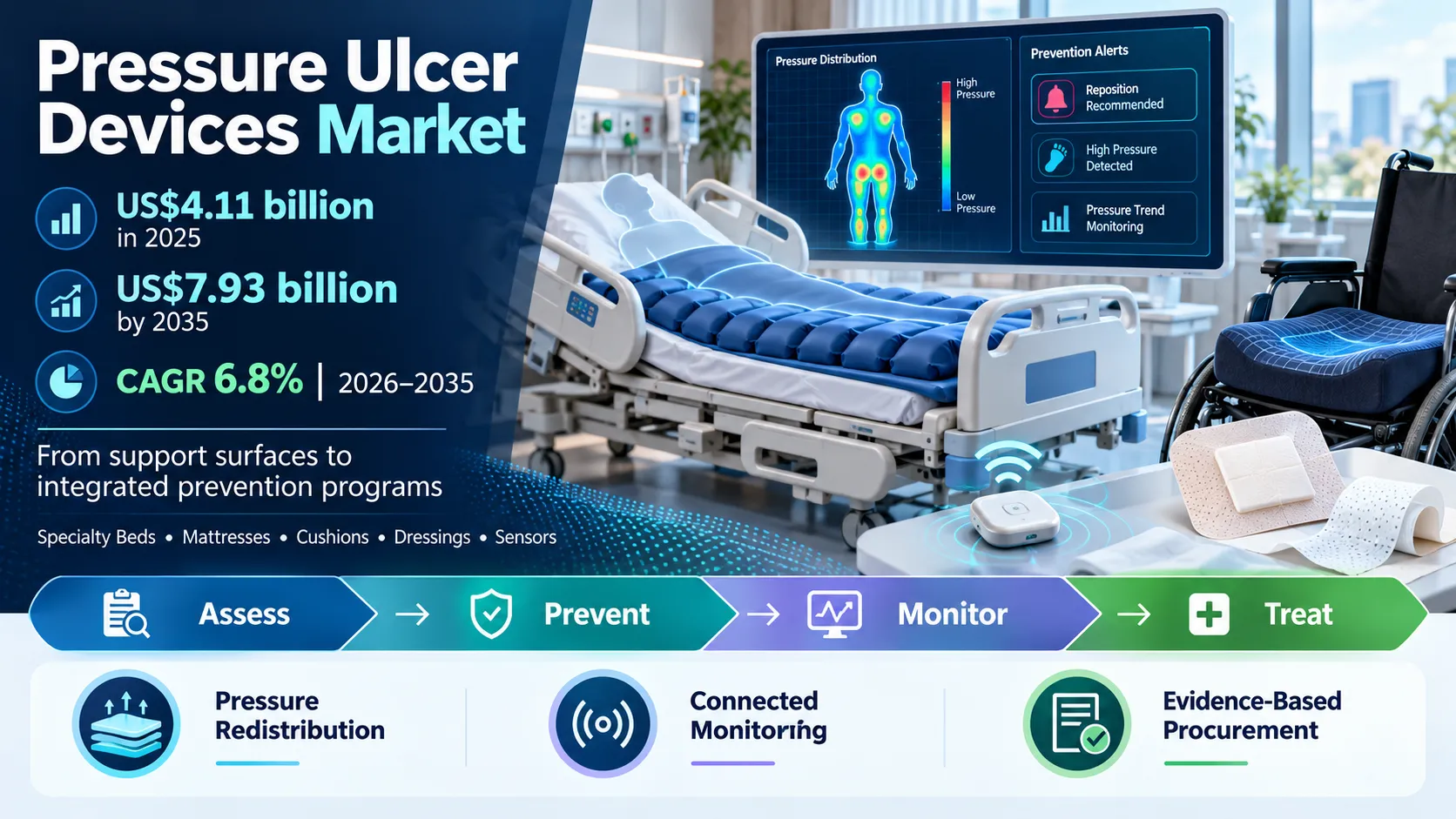
A pressure-redistribution foam mattress adjusts to body contours; an alternating-pressure air mattress repeatedly changes inflation across air cells; a low-air-loss surface helps manage heat and moisture near the skin. Specialty beds can incorporate turning or positioning features. Wheelchair cushions protect people who remain seated for long periods while heel protectors and positioning aids address specific high-risk areas.
Advanced dressings protect vulnerable tissue and support management of existing wounds. Negative-pressure wound therapy may also be used for appropriately selected wounds under clinical supervision. Importantly, even sophisticated devices complement rather than replace repositioning, skin assessment and professional care.
Request Sample: https://www.datamintelligence.com/download-sample/pressure-ulcer-devices-market
Major Growth Opportunities in the Market
1. Hospital-wide prevention programs
Hospitals increasingly evaluate equipment by its contribution to pressure-injury prevention and staff workflows. There is demand for mattresses and specialty beds that can be deployed consistently across intensive care, emergency departments and patient-transfer settings. The 2025 international clinical guideline emphasizes matching support surfaces to each patient’s risk, body size and care needs.
2. Aging populations and long-term care
Older adults and patients recovering from major illness often require prolonged support. Nursing homes and rehabilitation providers represent a sustained opportunity for easy-to-clean therapeutic mattresses, durable pumps and positioning solutions, with rental and service models offering recurring revenue.
3. Homecare and wheelchair mobility
Care is moving beyond hospital walls. Portable alternating-pressure cushions, adjustable overlays and heel-protection products can improve access to pressure management at home. Manufacturers that simplify setup, reduce noise and offer caregiver training may be better positioned in this cost-sensitive segment.
4. Connected surfaces and measurable prevention
Sensors capable of tracking position, interface pressure or device performance could help caregivers identify patients needing attention. The commercial challenge is to demonstrate that alerts change clinical decisions and improve outcomes without creating alarm fatigue or excessive costs.
5. Integrated wound-care portfolios
Equipment suppliers can expand their role through dressings, negative-pressure wound therapy and complementary skin-protection products. Buyers increasingly assess entire care pathways, creating cross-selling opportunities for vendors that provide evidence, training and reliable supply.
Where Is the Market Headed Through 2035?
DataM Intelligence’s key market highlights put the global pressure ulcer devices market at US$4.11 billion in 2025, with a projection of US$7.93 billion by 2035 at a reported 6.8% CAGR. Pressure-relief mattresses account for 30.81% of the product market while North America represents 42.17% of regional revenue. Asia-Pacific is positioned as an important growth region as healthcare capacity and homecare services expand.
The next decade is going to bring three shifts: passive mattresses toward more responsive and connected surfaces; standalone products toward prevention-and-treatment portfolios; and hospital-only procurement toward products designed for care across multiple settings. Adoption will remain tied to clinical evidence, maintenance economics, reimbursement rules and infection-control requirements. Smart systems are promising, but wider purchasing will depend on proving a meaningful advantage over established support surfaces.
10 Major Companies Shaping the Competitive Landscape
- Stryker. Therapeutic support surfaces, specialty beds and patient-handling equipment across acute-care settings.
- Baxter (Hillrom). Integrated hospital beds and pressure-management surfaces with a broad installed healthcare base.
- Arjo. Alternating-pressure mattresses, therapeutic surfaces and patient-mobility solutions.
- Smith+Nephew. Advanced wound dressings, negative-pressure wound therapy and patient-repositioning technologies.
- Mölnlycke Health Care. Advanced protective dressings and wound-care products used in pressure-injury pathways.
- Convatec. Advanced wound management products addressing wound protection and healing needs.
- Coloplast. Wound and skin-care solutions supporting management of chronic and complex wounds.
- Solventum. Medical dressings and wound-care technologies, including products historically associated with 3M Health Care.
- Medline Industries. Pressure-redistribution mattresses, cushions, dressings and hospital supply programs.
- LINET Group. Medical beds and therapeutic mattress solutions supporting patient positioning and care.
Other participants include Joerns Healthcare, Apex Medical, Paramount Bed, Invacare, Savaria (Span-America), Drive DeVilbiss Healthcare, EHOB and Talley Group.
Competition increasingly centers on proven pressure redistribution, clinical outcomes, connected monitoring, patient comfort, infection control, maintenance and service coverage. Suppliers that can connect support surfaces with practical nursing workflows and wound-care protocols are likely to gain an advantage in large healthcare contracts.
Request Sample: https://www.datamintelligence.com/download-sample/pressure-ulcer-devices-market
The Bigger Opportunity
The pressure ulcer devices market is evolving around an important question: how can healthcare providers protect vulnerable patients earlier, more consistently and at a manageable total cost? Through 2035, manufacturers that combine effective devices with clinical evidence, caregiver usability and dependable after-sales support will be best positioned to turn prevention into a measurable operational priority.