


How regulation, liability and water reuse are turning filtration from a plant utility into a strategic compliance platform
| Core trigger PFAS drinking water limits and wider contaminant scrutiny | Fastest demand pool Utilities, landfill leachate, airports and industrial wastewater | Best near term fit Activated carbon, ion exchange, RO and nanofiltration | Emerging profit pool Media replacement, mobile systems, monitoring and concentrate handling |
PFAS and emerging contaminants are changing the economics of industrial filtration. For years, filtration systems were mainly evaluated through uptime, discharge compliance and process quality. In 2026, the market is moving into a new phase because utilities and industrial operators must address contaminants that are persistent, difficult to destroy and increasingly visible to regulators, communities and investors.
The strongest near term growth is likely to come from customers that face a clear exposure pathway or liability trigger. Drinking water utilities need treatment plans and monitoring programs. Landfill operators need to manage leachate. Airports, defense sites and fire training facilities need to address historic aqueous film forming foam contamination. Industrial users in chemicals, electronics, plating, textiles and packaging need better wastewater control as PFAS restrictions and emerging contaminant rules expand across regions.
This is why PFAS is becoming a new growth frontier for industrial filtration. The opportunity is not limited to one filter technology. It spans adsorbent media, ion exchange resins, membrane systems, mobile treatment units, monitoring services and concentrate handling. The companies that win will be those that can combine contaminant capture, lifecycle cost control and regulatory proof in one operating model.
PFAS regulation is turning uncertainty into capital spending
The U.S. remains the most important reference market for PFAS related filtration demand. EPA finalized the first national drinking water regulation for six PFAS in 2024 and set enforceable levels of 4 parts per trillion for PFOA and PFOS. Public water systems were required to complete initial monitoring by 2027 under the 2024 rule and implement solutions by 2029 if levels exceed the limits. In May 2026, EPA proposed a revised path that would keep the PFOA and PFOS limits while giving systems an option to request additional time until 2031 and reconsidering requirements for several other PFAS compounds.
Even with regulatory uncertainty, the direction for the filtration market is clear. Utilities must monitor, disclose and plan. Industrial sites must understand whether wastewater, leachate, groundwater or process streams create exposure risk. Buyers are moving from PFAS awareness to procurement decisions because the cost of waiting can become larger than the cost of treatment.
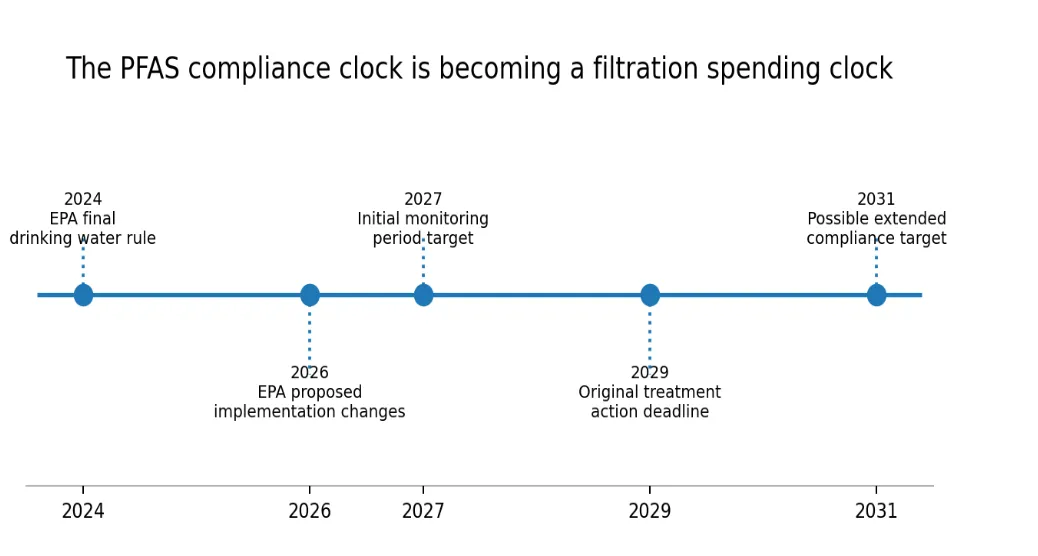
PFAS regulation is becoming a planning calendar for filtration buyers
For a wider view of this shift, explore DataM Intelligence on the Industrial Filtration Market and how liquid filtration, activated carbon media and smart systems are becoming part of industrial compliance planning.
PFAS is creating a harder filtration problem than ordinary wastewater contaminants
PFAS compounds are difficult because many break down slowly and can build up in people, animals and the environment over time. EPA notes that PFAS have been used in industry and consumer products since the 1940s, with exposure pathways that include drinking water, soil, food, firefighting foam, manufacturing sites and biosolids. That broad exposure map makes PFAS different from a localized wastewater issue.
Industrial filtration vendors are being pulled into this challenge because many conventional treatment steps were never designed for parts per trillion control. Traditional wastewater plants may remove suspended solids, oils and biological load effectively, yet PFAS can pass through many standard treatment trains. This shifts demand toward technologies that can adsorb, separate or concentrate PFAS at very low levels.
The near term solution set is therefore pragmatic. Granular activated carbon and ion exchange resins are proven workhorses for many water applications. Reverse osmosis and nanofiltration can deliver stronger separation in selected use cases, especially when water quality, concentrate management and cost conditions are favorable. Destruction technologies are advancing, although many remain better suited to concentrated waste streams than high volume dilute water.
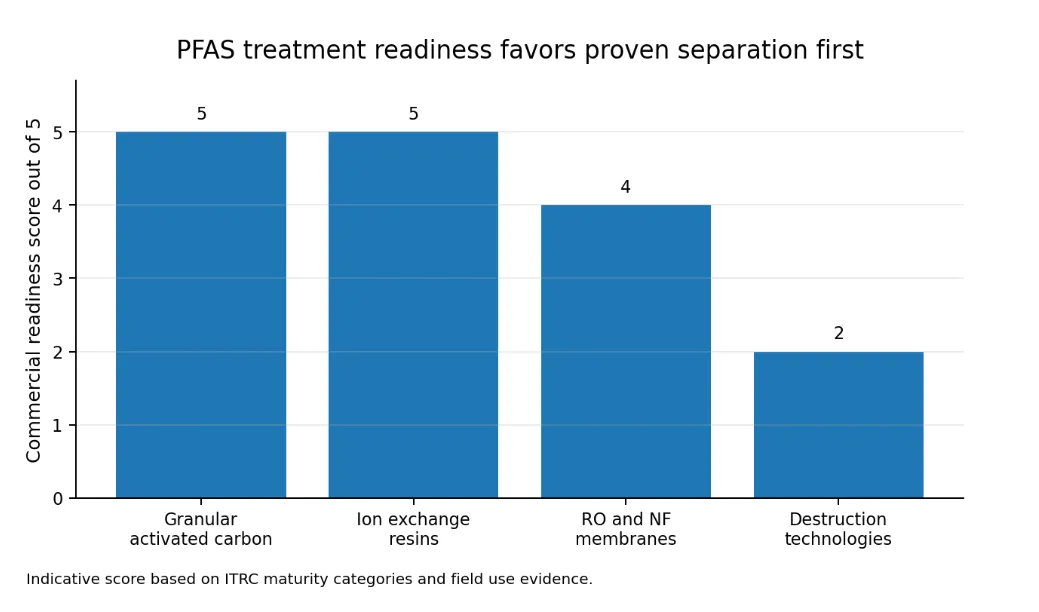
Proven separation technologies lead near term PFAS treatment deployment
Filtration demand is expanding across drinking water, leachate and industrial process streams
The first wave of demand is coming from drinking water utilities because regulatory deadlines, public reporting and consumer concern create a direct action pathway. Utilities need monitoring data, pilot studies, media selection, system design and long term service support. For small and rural systems, packaged systems and outsourced operating support may become especially important because internal technical resources are limited.
The next demand pool is industrial wastewater and landfill leachate. These streams can have complex chemistry, higher organic load and co contaminants that reduce media life or complicate membrane operation. This creates an opportunity for specialized engineering, pretreatment, mobile treatment systems and staged process design. In these applications, the vendor selling the filtration unit may capture less value than the vendor that controls media replacement, testing cadence and residual waste handling.
Airports and defense sites are another important opportunity because aqueous film forming foam has created known PFAS source areas. Many of these projects involve groundwater, soil water interfaces and long remediation timelines. That favors suppliers with field service capacity, mobile systems, data reporting and experience handling regulated waste streams.
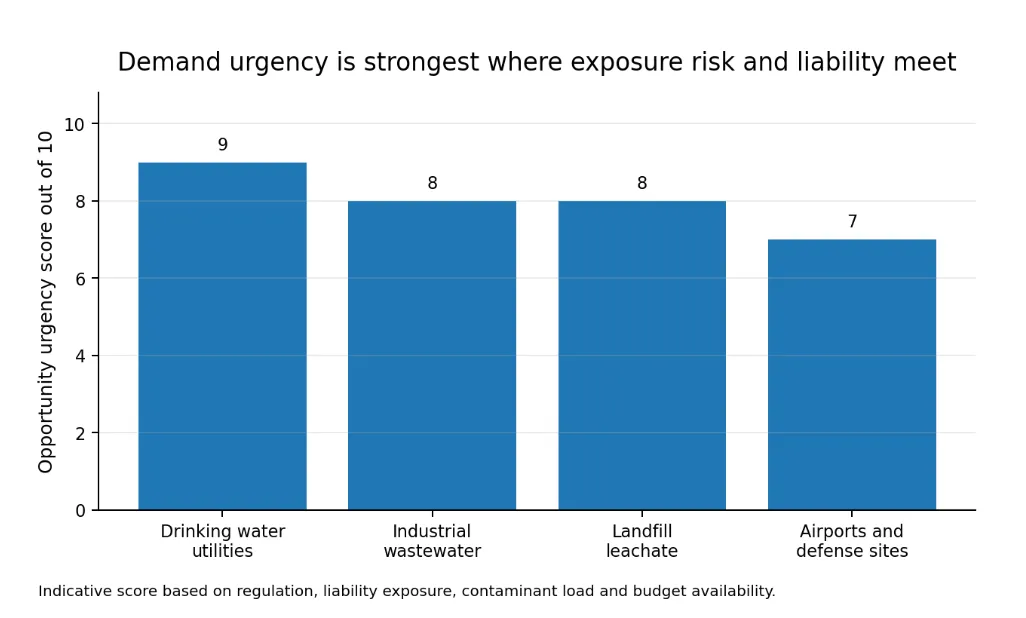
Figure 3 Demand is strongest where exposure risk and liability converge
The technology stack is moving from capture toward concentration and destruction
The market is moving beyond a simple filter replacement story. PFAS treatment often starts with capture, but the economic challenge continues after contaminants are removed from water. Spent carbon, loaded resin, membrane concentrate and leachate residuals still need to be managed. That is why the next growth phase will focus on complete treatment trains rather than isolated equipment sales.
The practical treatment architecture is likely to involve four layers. The first layer is sampling and monitoring to identify compound mix, concentration and water chemistry. The second layer is separation through activated carbon, ion exchange or membranes. The third layer is concentration management through regeneration, brine handling or concentrate reduction. The fourth layer is destruction or secure disposal for residual streams when economics and regulations support it.
ITRC guidance reflects this reality. It notes that field implemented full scale treatment for PFAS liquids is mainly built around sequestration technologies, especially granular activated carbon and ion exchange media. Destruction and mineralization technologies are being tested, with applicability depending heavily on stream concentration, volume and chemistry.
For technology specific market context, review DataM Intelligence on the Membrane Filtration Market and the role of membrane systems in wastewater reuse, high purity water and advanced separation applications.
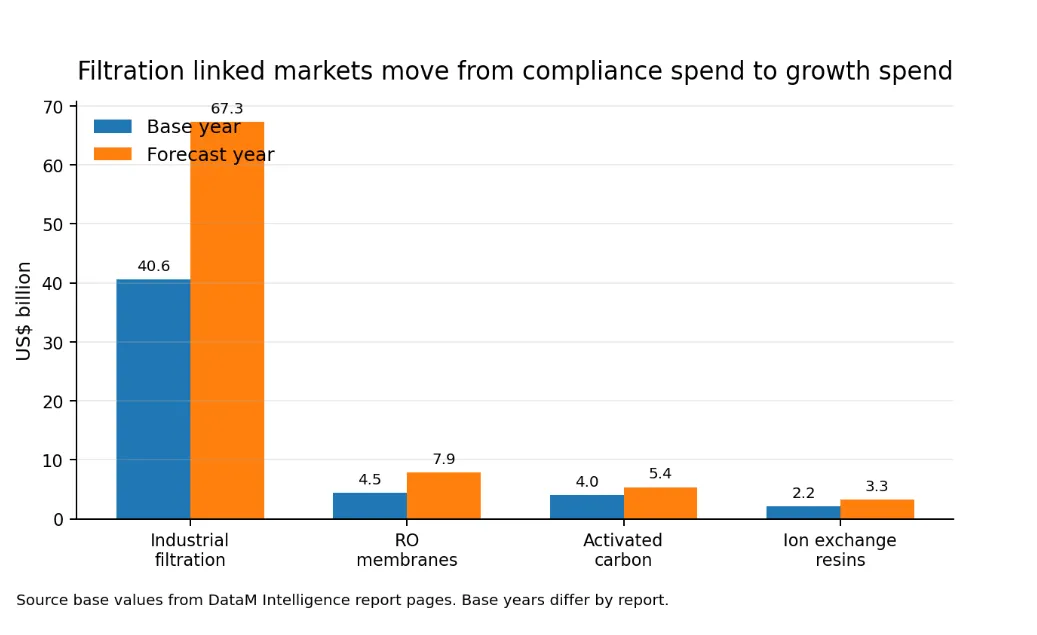
Filtration adjacent markets show why PFAS is attracting supplier attention
Suppliers with recurring service models may benefit more than equipment only vendors
PFAS and emerging contaminants create a different commercial model from many conventional filtration projects. A plant may buy a treatment skid once, but it will continue to buy replacement media, lab analysis, performance verification, waste handling and optimization services for years. This creates recurring revenue opportunities for suppliers that can manage the full lifecycle.
Activated carbon suppliers can benefit from higher demand for granular activated carbon and reactivation services. Ion exchange providers can gain where selective resin performance improves bed life or reduces breakthrough risk. Membrane companies can win in applications that need high removal efficiency and can manage concentrate. Mobile treatment service providers can benefit when customers need fast deployment before permanent infrastructure is ready.
The more complex the contaminant mix, the more valuable the service layer becomes. Buyers need proof that systems meet regulatory requirements under real operating conditions. That creates demand for monitoring, data analytics, maintenance planning and chain of custody reporting around spent media or concentrate.
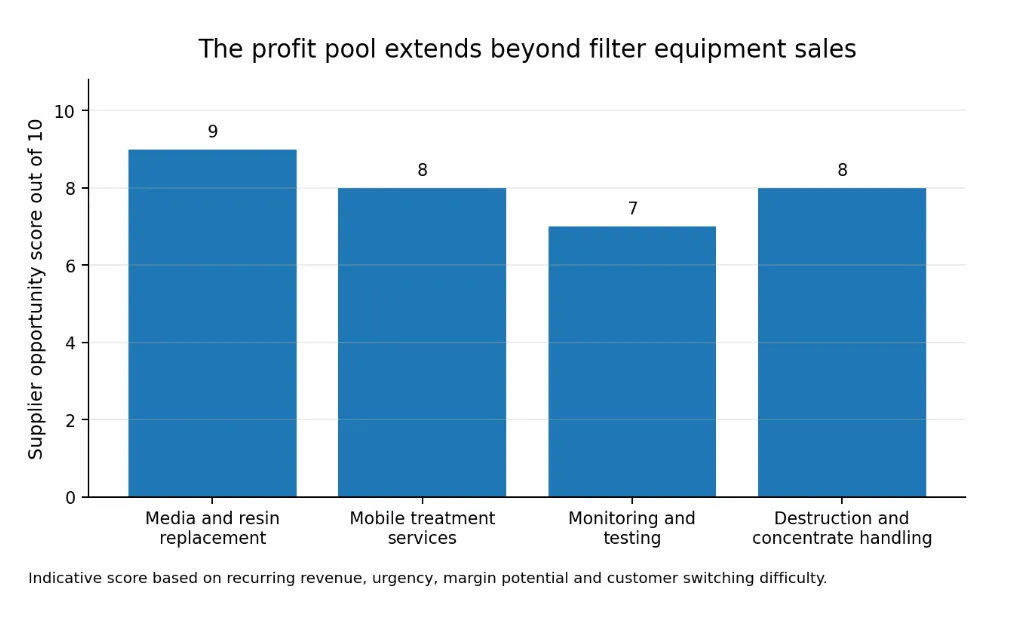
Recurring services and residual management expand the filtration profit pool
To track media demand, explore DataM Intelligence on the Activated Carbon Market for water treatment, adsorption media and downstream end user trends.
To assess resin based separation opportunities, explore DataM Intelligence on the Ion Exchange Resins Market across power, industrial water, wastewater and high purity applications.
To evaluate membrane separation economics, review DataM Intelligence on the Reverse Osmosis Membrane Market for desalination, purification and industrial water reuse opportunities.
The global opportunity is broader than the U.S. drinking water rule
The U.S. will likely remain the most visible near term market because federal drinking water standards, state actions and litigation risk are forcing treatment decisions. Europe is broadening the discussion through PFAS restrictions, food contact packaging rules and more aggressive chemical policy. The EU Packaging and Packaging Waste Regulation will generally apply from August 2026 and includes restrictions on PFAS in food contact packaging when thresholds are exceeded.
Asia Pacific is becoming a second growth engine because industrial expansion, water stress and rising discharge expectations are pushing manufacturers toward more advanced water treatment. Chemicals, electronics, pharmaceuticals, textiles and metal finishing facilities are especially relevant because they combine complex water streams with growing compliance scrutiny.
This global picture matters because filtration suppliers can use PFAS as an entry point into a larger emerging contaminants market. Pharmaceuticals, pesticides, microplastics, solvents, heavy metals and disinfection byproducts all support the same broader shift. Industrial customers want treatment systems that can adapt as the regulated contaminant list expands.
Where investment opportunities are emerging first
The fastest investment opportunities are likely to appear in four areas. The first is media and resin capacity, including products tailored to short chain PFAS and difficult water chemistry. The second is mobile treatment, where speed matters for utilities, contaminated sites and industrial customers facing public or regulatory pressure. The third is integrated monitoring, because low level contaminant management depends on reliable sampling, laboratory testing and performance data. The fourth is concentrate and residual handling, where spent media, brine and high strength waste streams create the next bottleneck.
The best positioned suppliers will be those that can prove lifecycle economics. Buyers will compare media life, empty bed contact time, pressure drop, regeneration options, disposal cost, downtime risk and regulatory reporting burden. A low upfront cost system can become expensive if breakthrough occurs quickly or residual handling is poorly designed.
That creates an opening for vendors with application engineering, field service and data capability. PFAS treatment is becoming a managed compliance platform. It rewards companies that can combine hardware, consumables and operating intelligence into a repeatable model.
Related DataM Intelligence reports for this market
- Industrial Filtration Market Best fit for the overall filtration equipment, filter media and end user demand opportunity.
- Membrane Filtration Market Relevant for advanced separation, water reuse, wastewater treatment and high purity industrial applications.
- Activated Carbon Market Relevant for adsorption media, granular activated carbon demand and water treatment applications.
- Ion Exchange Resins Market Relevant for selective contaminant removal, industrial water treatment and wastewater reuse.
- Reverse Osmosis Membrane Market Relevant for high rejection separation, purification, desalination and industrial water recycling.