


Growing Demand for Natural Caffeine in Mainstream and Matcha-Based Beverages
The natural caffeine market globally benefits from widespread caffeine consumption, with approximately 90% of consumer caffeine intake from drinks excluding energy drinks such as coffee, tea, and soft drinks, according to the American Beverage Association. In the U.S, coffee is responsible for 69% of caffeine consumption through beverages, carbonated soft drinks account for 15.4%, tea accounts for 8.8%, and energy drinks make up 6.3%.
The growing preference for matcha-based beverages and plant-derived ingredients in the UK is encouraging manufacturers to incorporate natural caffeine into clean-label energy drink formulations. For instance, in May 2026, PerfectTed is introduced four new Matcha Energy Drinks, Strawberry, Very Cherry, Juicy Peach and Lemon Lime with no added sugar and matcha-powered caffeine. PerfectTed Matcha EnergyThe new range has launched initially in Planet Organic, with listings in Holland & Barrett, Ocado, Sainsbury’s, Tesco and Whole Foods Market to follow.
Request Exclusive Sample: https://www.datamintelligence.com/download-sample/natural-caffeine-market
Growing Preference for Natural Caffeine in Clean-Label Energy Drinks and Functional Beverages in Europe
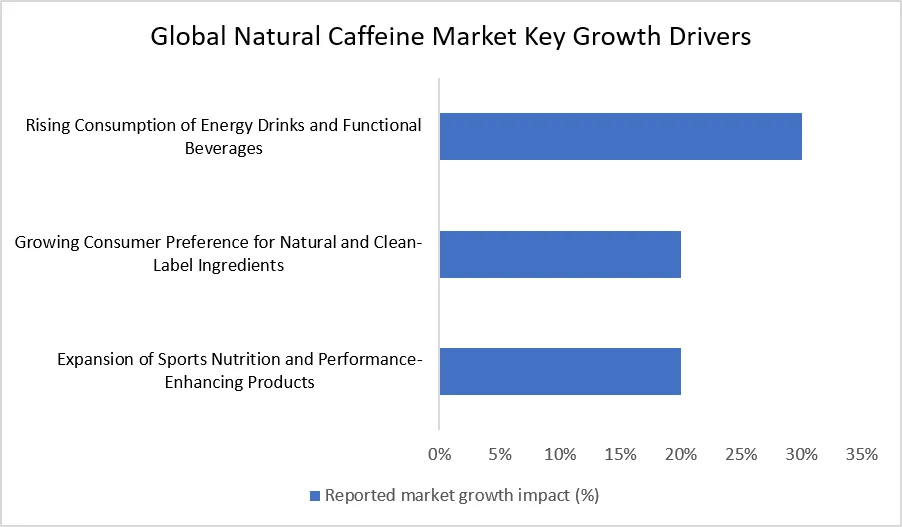
The growth of Europe natural caffeine market is being influenced by the rising consumption of energy drinks, functional beverages, and sports nutrition drinks with herbal extracts. The growing preference for clean label formulation and natural ingredients among consumers is prompting beverage and dietary supplements companies to use green tea and coffee extracts of caffeine.
Beverage manufacturers are incorporating botanical caffeine sources such as guarana into fruit-based formulations to offer alternatives to traditional energy drinks. For instance, in March 2026, Fazer Group expanded its Froosh brand into energy drinks with three flavours containing natural caffeine sourced from guarana. The new Froosh Energy product range offers a fresh alternative to traditional energy drinks. The drinks contain vitamins and around 10–14% fruit juice. The product does not include added sugar or colourings. They have a low sugar content (0.6–1.5 g/100 ml), and the light carbonation together with natural caffeine (105 mg per can).
High Coffee Import Volumes and Growing Adoption of Plant-Derived Caffeine in Germany
In 2025, the EU imported 2.9 million tonnes of coffee from non-EU countries. Around a third of these imports were made by Germany (1 010 500 tonnes imported, or 34% of the total extra-EU imports) The use of plant-based energy and functional beverages is leading to novel uses of natural caffeine in Germany. Beverage manufacturers are using botanical sources of caffeine along with ingredients such as matcha and fruit flavors to develop varied ready-to-drink beverages. For instance, in June 2026, Koakult GmbH launched its ready-to-drink Matcha Strawberry drink in Germany and Austria. This 235 ml ready-to-drink drink consists of matcha, flavor of strawberries, organic milk, and caffeine from guarana. The plant-based caffeine was introduced through retailers including dm and Rossmann retail stores.
Rising Demand for Green Tea-Derived Caffeine in U.S. Functional Energy Drinks
The U.S. natural caffeine market is supported by widespread coffee consumption and rising demand for plant-derived ingredients in beverages, sports nutrition, and dietary supplements. Increasing consumer interest in energy drinks made from plants with caffeine content is encouraging the production of beverages that blend energy sources with hydration and focus-related elements. In May 2025, Anheuser-Busch, 1st Phorm launched Phorm Energy nationally available in four varieties Screamin’ Freedom, Blue Blitz, Orange Fury, and Grape Smash, Phorm Energy boasts natural flavors, natural caffeine from green tea, electrolytes for hydration, and a blend of ingredients aimed at supporting mental focus.
Expansion of Coffee-Bean-Derived Caffeine into Japan’s Mainstream Beverage Market
Japan is the world's fourth-largest coffee market by volume, blending kissaten tradition with canned coffee ubiquity and a thriving specialty scene. The growing use of plant-derived caffeine in alternative beverage categories is expanding its application beyond traditional coffee, tea, and energy drinks in Japan. For instance, in August 2026, Asahi Soft Drinks extended the national sale of their green cola, which is a calorie-free cola that has stevia as its sugar and caffeine from coffee beans. Based on the food industry report in Japan, the company managed to sell more than 14.4 million bottles of the beverage within three days of the national launch.
Food and Beverage Applications Drive Natural Caffeine Demand Through Organic and Ready-to-Drink Functional Beverages
The food and beverages segment holds a major share of the global natural caffeine market, driven by the use of naturally sourced caffeine in coffee, tea, energy drinks, carbonated beverages, and functional drinks. Wider distribution through supermarkets, convenience stores, online platforms, and specialty retailers also expands consumer access to these products. For instance, in October 2025, Uncle Matt’s Organic launched its Organic Yerba Mate Energy Tea in the U.S., combining organic yerba mate leaves, organic lemon juice, and organic green tea caffeine. The beverage delivers 100 mg of naturally derived caffeine per serving and contains 45 calories, with nationwide availability at Whole Foods Market and Sprouts Farmers Market, as well as online. This launch reflects the use of plant-derived caffeine in organic, ready-to-drink functional beverages.