


The Industrial Energy Transformation Is Underway
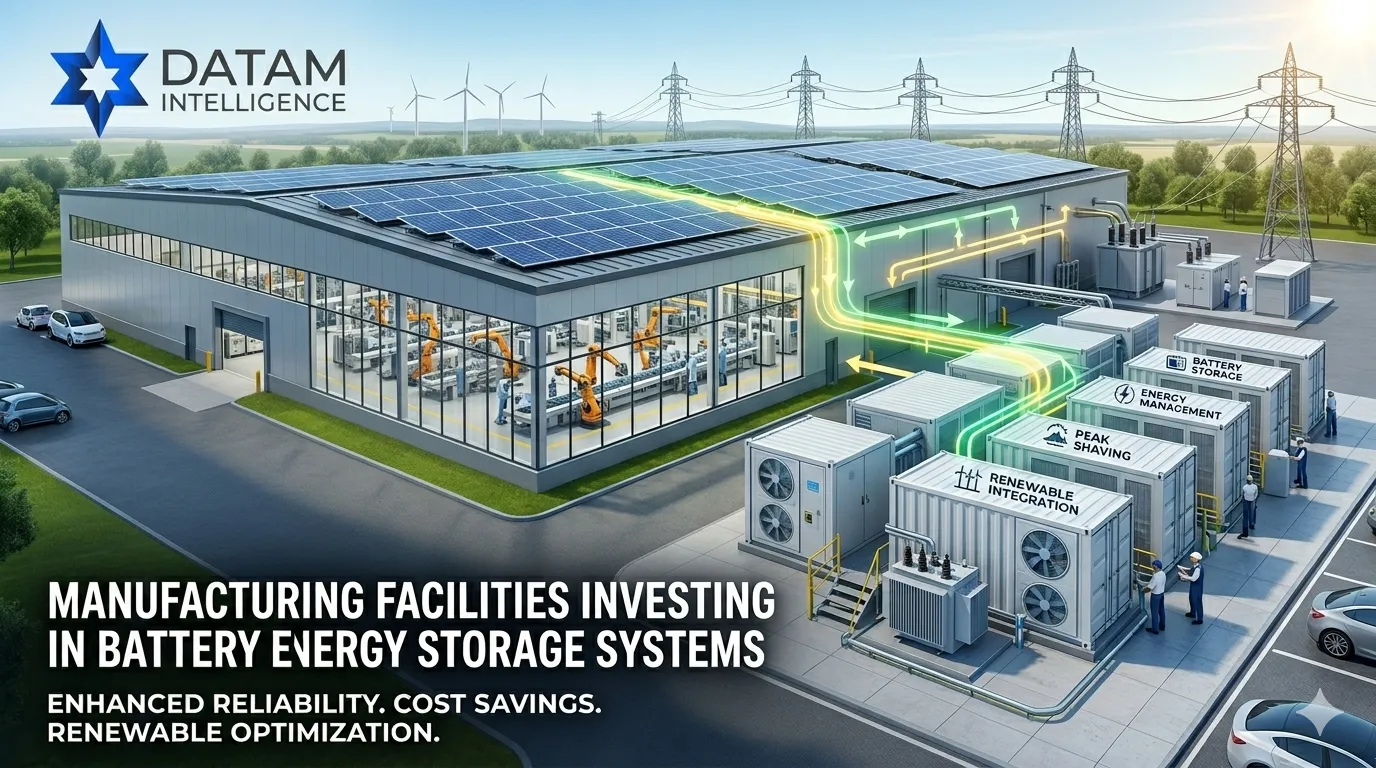
Manufacturing facilities worldwide are facing unprecedented pressure from rising electricity costs, grid instability, sustainability mandates, and increasing energy-intensive production processes. As industrial energy consumption continues to grow, Battery Energy Storage Systems (BESS) are emerging as one of the most strategic investments manufacturers can make to improve operational efficiency and long-term competitiveness.
What was once considered an optional sustainability initiative has become a core business strategy. Modern manufacturers are increasingly deploying Battery Energy Storage Systems to manage energy costs, ensure operational continuity, support renewable energy integration, and strengthen energy resilience.
According to industry analysts, battery storage deployment is accelerating globally as industries seek greater control over their energy infrastructure. Utility-scale and commercial battery storage projects are experiencing significant growth across major industrial economies, signaling a broader shift toward decentralized energy management.
Download Free Sample Report
Get a detailed preview of the Battery Energy Storage Systems (BESS) Market Report, including key market trends, segmentation insights, growth drivers, and regional analysis.
Understand the full scope of the study before making a purchase decision.
Download your free sample now and explore actionable market insights.
What Is a Battery Energy Storage System (BESS)?
A Battery Energy Storage System is an advanced energy management solution that stores electricity for later use. These systems typically consist of:
- Battery modules
- Power conversion systems
- Battery management systems
- Energy management software
- Thermal management components
BESS enables manufacturers to store energy during low-cost periods and deploy it when electricity prices peak or when grid disruptions occur.
Why are manufacturing facilities investing in Battery Energy Storage Systems?
Manufacturing facilities invest in Battery Energy Storage Systems (BESS) to reduce electricity costs, manage peak demand charges, improve energy reliability, support renewable energy integration, achieve sustainability targets, and protect operations from power outages. BESS allows manufacturers to store energy when prices are low and use it when costs are high, improving operational efficiency and long-term energy resilience.
Rising Energy Costs Are Driving Adoption
One of the most significant drivers of industrial battery storage adoption is the increasing cost of electricity.
Many manufacturers face:
- Peak demand charges
- Time-of-use pricing fluctuations
- Energy market volatility
- Rising transmission and distribution costs
Battery storage enables facilities to perform peak shaving by discharging stored electricity during high-demand periods. This reduces utility demand charges, which often represent a substantial portion of industrial electricity bills.
For energy-intensive industries such as automotive manufacturing, chemicals, metals, food processing, and electronics production, even small reductions in peak demand can generate significant annual savings.
Enhancing Energy Reliability and Business Continuity
Unexpected power interruptions can result in:
- Production downtime
- Equipment damage
- Product quality issues
- Revenue losses
- Supply chain disruptions
Manufacturing facilities increasingly view energy reliability as a competitive advantage.
Battery Energy Storage Systems provide backup power capabilities that help maintain critical operations during grid outages or voltage fluctuations. Unlike traditional backup generators, BESS responds almost instantly, ensuring seamless power continuity.
As industrial automation and smart manufacturing technologies become more prevalent, the importance of uninterrupted power continues to increase.
Supporting Renewable Energy Integration
Manufacturers are investing heavily in onsite renewable energy systems such as solar and wind power. However, renewable generation is inherently intermittent.
Battery storage solves this challenge by storing excess renewable electricity and making it available when production exceeds generation.
Benefits include:
- Increased renewable energy utilization
- Reduced dependence on the grid
- Lower carbon emissions
- Improved sustainability performance
Recent energy storage deployments worldwide demonstrate how battery systems are becoming essential infrastructure for maximizing renewable energy investments and stabilizing power systems.
Achieving Sustainability and ESG Goals
Environmental, Social, and Governance (ESG) initiatives are becoming increasingly important for manufacturers.
Stakeholders including:
- Investors
- Customers
- Regulators
- Supply chain partners
are demanding measurable sustainability improvements.
Battery Energy Storage Systems help manufacturers:
- Reduce greenhouse gas emissions
- Increase renewable energy consumption
- Support carbon reduction targets
- Demonstrate environmental leadership
Organizations implementing energy storage solutions often gain advantages in sustainability reporting, ESG ratings, and regulatory compliance.
Enabling Smart Factory Operations
Industry 4.0 technologies are transforming manufacturing environments.
Modern factories rely on:
- Automation systems
- Robotics
- Industrial IoT devices
- AI-powered analytics
- Digital twins
These technologies require stable, high-quality power.
Battery storage systems integrated with advanced energy management platforms provide manufacturers with real-time control over energy consumption, enabling smarter operational decisions and improved efficiency.
Emerging research also highlights the growing role of intelligent battery management systems and digital twins in maximizing storage performance and economic returns.
Reducing Exposure to Grid Instability
Industrial facilities increasingly face challenges associated with:
- Grid congestion
- Renewable energy variability
- Extreme weather events
- Transmission constraints
Battery storage allows manufacturers to operate more independently from external energy disruptions.
Several large-scale storage initiatives globally are being developed specifically to address grid reliability challenges and support industrial energy security.
Creating New Revenue Opportunities
Beyond energy savings, Battery Energy Storage Systems can create additional value streams.
Depending on market regulations, manufacturers may participate in:
- Demand response programs
- Capacity markets
- Frequency regulation services
- Energy arbitrage opportunities
- Virtual power plant programs
These revenue opportunities can significantly improve project economics and accelerate return on investment.
Industries Leading BESS Adoption
Battery Energy Storage Systems (BESS) are rapidly becoming a foundational energy solution across multiple energy-intensive industries. Each sector is adopting storage technology for different operational priorities—ranging from cost reduction and reliability to process stability and sustainability compliance.
Automotive Manufacturing
The automotive sector, particularly electric vehicle (EV) production facilities, is among the earliest and most aggressive adopters of BESS. Manufacturing plants require highly stable and uninterrupted power for robotics, assembly lines, and precision tooling systems. Battery storage helps automotive manufacturers manage peak electricity demand, reduce operational energy costs, and seamlessly integrate onsite renewable energy such as solar to power EV production lines.
Food and Beverage Processing
Food processing plants operate under strict temperature control and hygiene standards, making uninterrupted power critical. Even minor outages can lead to product spoilage and regulatory compliance issues. BESS provides instant backup power, ensuring continuous operation of refrigeration, processing, and packaging systems while also helping facilities optimize energy consumption during peak tariff periods.
Chemical Manufacturing
Chemical production facilities rely on continuous, stable energy supply to maintain reaction processes, safety systems, and environmental controls. Any disruption can pose safety risks and production losses. Battery energy storage enhances operational resilience by stabilizing power supply, reducing dependency on grid fluctuations, and supporting critical safety infrastructure during outages or voltage drops.
Electronics Manufacturing
Electronics manufacturing requires extremely high power quality due to sensitive semiconductor fabrication, circuit assembly, and testing environments. Voltage fluctuations or power interruptions can result in significant product defects and financial losses. BESS helps regulate power quality, provide backup support, and protect high-value equipment from electrical disturbances.
Metals and Heavy Industry
Energy-intensive sectors such as steel, aluminum, and cement production face significant electricity costs, especially during peak demand periods. BESS enables these industries to implement peak shaving strategies, store low-cost off-peak energy, and reduce overall energy expenses. This improves competitiveness in highly price-sensitive global markets.
Data Centers and Technology Facilities
Data centers demand uninterrupted, high-reliability power to support cloud computing, AI workloads, and digital infrastructure. Battery storage systems act as a critical layer of backup power and load management, ensuring uptime while reducing dependence on diesel generators. They also support sustainability goals by enabling cleaner and more efficient energy usage.
Growing Industrial Investment Momentum
Across all sectors, the increasing adoption of BESS is driving a parallel rise in global investment in battery manufacturing capacity, supply chain expansion, and advanced energy storage technologies. Governments and private investors are accelerating funding in lithium-ion and next-generation battery systems to meet growing industrial demand, strengthen energy security, and support the global transition toward low-carbon manufacturing ecosystems.
As industries continue to prioritize energy efficiency, resilience, and sustainability, Battery Energy Storage Systems are expected to become a standard infrastructure component in modern industrial facilities rather than an optional upgrade.
Future Outlook for Industrial Battery Energy Storage
The future of manufacturing energy management will be increasingly storage-centric.
Several trends are accelerating adoption:
- Falling battery costs
- AI-driven energy optimization
- Expansion of renewable energy
- Government decarbonization policies
- Grid modernization initiatives
- Growth of industrial microgrids
Industry analysts project continued expansion of Battery Energy Storage Systems as organizations prioritize energy resilience, operational efficiency, and sustainability. Battery storage is rapidly evolving from a supplemental technology into a foundational component of modern industrial infrastructure.
Conclusion
Manufacturing facilities are no longer viewing energy as simply a utility expense. Energy has become a strategic business asset that directly impacts profitability, competitiveness, and sustainability performance.
Battery Energy Storage Systems provide manufacturers with a powerful solution to address rising energy costs, improve operational resilience, support renewable energy integration, and achieve long-term sustainability objectives.
As energy markets continue to evolve, organizations that invest early in advanced energy storage infrastructure will be better positioned to navigate uncertainty, reduce operational risks, and capture new growth opportunities.
For decision-makers evaluating the future of industrial energy management, Battery Energy Storage Systems represent one of the most compelling investments available today.