


Market Size & Growth Outlook
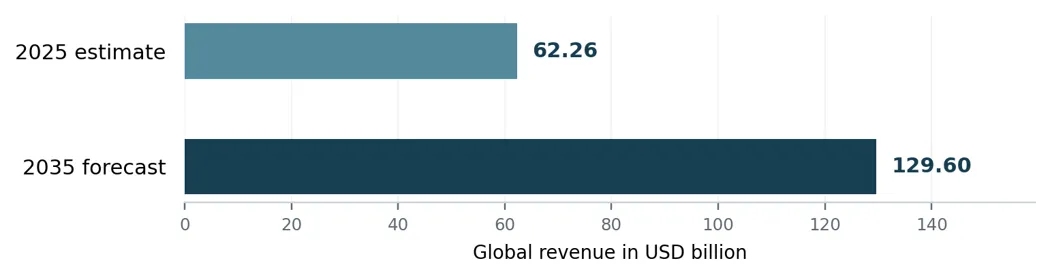
The global women’s health supplements market was valued at USD 62.26 billion (JPY 9.94 trillion) in 2025 and is projected to reach USD 129.60 billion (JPY 20.68 trillion) by 2035, growing at a 7.6% CAGR during 2026-2035. These global figures provide context for Japan, where demand opportunities are supported by a large older female population, established prenatal nutrition products and expanding menopause-focused portfolios. Recent domestic launches indicate that formulation, daily convenience and distribution channels are becoming central to competitive positioning.
Japan offers distinct opportunities across female life stages
Japan had 20.52 million women aged 65 and above in October 2025, representing 32.4% of its female population. This demographic base supports the commercial relevance of bone health and nutrition during later life. At the same time, government attention to working women’s health is raising the visibility of menstrual and menopausal concerns. These factors create different consumer needs, purchase occasions and routes to market.
| Japan market signal | Market Indicator | Commercial implication |
| Older female population | 20.52 million women aged 65 and above in 2025 | A substantial audience for nutrition during later life. |
| Prenatal nutrition guidance | 400 micrograms of folic acid daily from supplements or fortified foods for specified preconception and early-pregnancy groups | A clear reference point for prenatal formulation and education. |
| Menopause portfolio expansion | New Otsuka and Asahi products introduced in 2026 | Competition is developing across clinical and retail channels. |
Recent launches show different approaches to menopause nutrition
The 2025-2026 product pipeline illustrates how suppliers are competing for consumers in midlife. Otsuka emphasizes a dedicated clinical channel, FANCL combines a simple daily regimen with broad distribution, and Asahi has introduced a smaller pack intended to lower the commitment required for an initial purchase. Their formulations and positioning differ, so comparisons require attention to ingredient form and daily quantity.
| Company and development | Product and launch status | Market implication |
| Otsuka Pharmaceutical | EQUELLE Petit Plus was introduced in June 2026 for hospitals and clinics. Two tablets provide 10 mg S-equol, 20 micrograms vitamin D and 5 mg zinc. | Extends the equol portfolio through a clinically oriented channel and a broader nutrient combination. |
| FANCL | Concentrated Soy Isoflavones Lactic Acid Bacteria Plus launched on 16 January 2025 through mail order, company stores and general retail. One tablet daily combines soy isoflavones, plant-derived lactic acid bacteria, oligosaccharides and CoQ10. | Combines midlife positioning with a convenient regimen and access across multiple channels. |
| Asahi Group Foods | Dear-Natura Style Equol × Soy Isoflavones launched on 7 September 2026. Two tablets provide 2 mg S-equol and 22 mg soy isoflavones, alongside iron, calcium, magnesium and vitamin D. | Adds a combination product in a 20-day pouch aimed at first-time equol users. |
Daily cost and formulation both influence the value proposition
| Product | Published pack price including tax | Days per pack | Calculated daily cost |
| FANCL soy isoflavones plus formulation | JPY 1,980 | 30 | JPY 66.00 |
| Asahi Dear-Natura Style equol formulation | JPY 1,922 | 20 | JPY 96.10 |
The smaller Asahi pack reduces the initial purchase amount, while FANCL’s one-tablet regimen addresses daily convenience. Neither comparison establishes superior efficacy. For market assessment, pack affordability, cost per day, distribution margins and repeat purchase should be evaluated together. A lower shelf price can encourage trial, but sustained sales will depend on whether consumers understand the product’s role and continue using it.
Channel access influences how products compete
Otsuka’s hospital-and-clinic-only positioning makes professional access part of its commercial model. Retail and online entrants need clear communication of the intended consumer group and formulation. The channel affects how evidence is presented, how the product is explained and where demand is generated.
Prenatal nutrition provides an established product reference point
Japan’s Ministry of Health, Labour and Welfare reiterates a recommendation for women planning pregnancy, women who may become pregnant and women in early pregnancy to obtain 400 micrograms of folic acid daily from supplements or fortified foods, in addition to dietary folate. The guidance creates a specific basis for product development and consumer education. It also makes accurate labeling and clear differentiation between preconception, pregnancy and breastfeeding products commercially relevant.
Pigeon’s current portfolio shows how this distinction is implemented. Its prenatal Folic Acid Calcium Plus provides 400 micrograms of folic acid within a combination of 12 vitamins and minerals. Its breastfeeding Mother’s Milk Power Plus contains 340 micrograms of folic acid and a different nutrient mix. This portfolio structure illustrates an opportunity to maintain a customer relationship as nutritional needs change, supported by products with an explicit intended life stage.
Aging supports a broad audience beyond menopause positioning
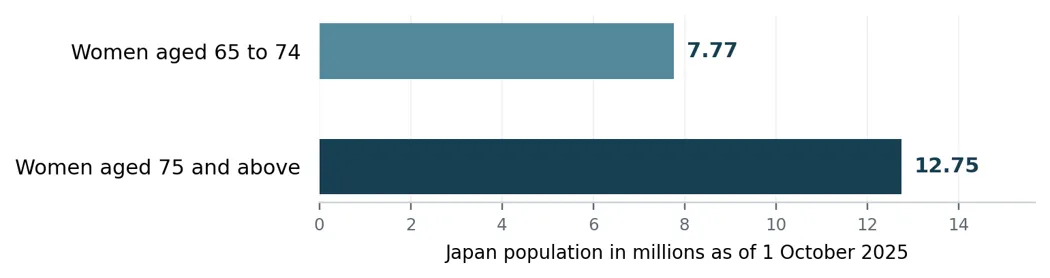
Women aged 75 and above represented 12.75 million of Japan’s older female population in 2025, compared with 7.77 million aged 65-74. Product development for these groups should account for practical use, including tablet size, packaging legibility and the clarity of instructions. Population scale provides an opportunity; conversion into supplement revenue depends on consumer need, access and sustained use.
| Life stage | Relevant product focus | Commercial consideration |
| Preconception and pregnancy | Folic acid and supporting micronutrients | Alignment with Japanese guidance and clear labeling of the intended stage. |
| Postpartum and breastfeeding | Stage-specific micronutrient combinations | A distinct follow-on product with an explicit nutrient profile. |
| Midlife and menopause | Equol, soy isoflavones and selected nutrient combinations | Evidence relevant to the actual formulation, daily convenience and channel fit. |
| Later life | Bone health and nutritional adequacy | Accessible presentation and a clearly defined role within daily nutrition. |
Quality requirements are changing the basis of supplier selection
Japan’s Consumer Affairs Agency states that revised labeling provisions and mandatory good manufacturing practice requirements for covered tablet and capsule products under the Foods with Function Claims system apply to products manufactured from 1 September 2026. This is a specific regulatory route and should not be generalized to every supplement. For businesses using it, manufacturing controls and the supporting documentation now directly affect product eligibility and market access.
The commercial implication is greater importance for qualified manufacturing partners, consistent specifications and traceable production records. Product classification also matters. Otsuka identifies EQUELLE Petit Plus as a Food with Nutrient Function Claims for zinc, illustrating why each formulation must be assessed under its own applicable framework. Brand comparisons that group all women’s supplements under one claims category can obscure material differences.
Workplace health increases visibility of female health needs
Government material cites an estimated JPY 3.4 trillion in annual economic losses associated with women-specific health issues, including menstrual symptoms, menopause, gynecological cancers and fertility treatment. The 2026 policy agenda also identifies lifelong support for women’s health as a priority. This establishes a broader setting for education and awareness, rather than a measure of supplement spending or benefits attributable to supplements.
Five commercial indicators will shape market opportunities
| Indicator | What it reveals | Implication for market assessment |
| Life stage specificity | Whether the product addresses a clearly defined consumer group. | Assess intended users and formulation fit before combining demand estimates. |
| Ingredient and dose evidence | Whether substantiation is relevant to the marketed formula. | Compare ingredient identity, daily quantity and supporting endpoints. |
| Channel economics | How consumers discover and replenish the product. | Separate clinical, retail and direct-channel revenue and margin assumptions. |
| Trial and repeat purchase | Whether initial interest becomes continuing demand. | Evaluate pack size, daily cost and purchase frequency together. |
| Manufacturing and claims route | Which requirements apply to the individual product. | Include supplier qualification and documentation in launch cost and timing. |
Competitive outlook through 2030
Japan’s near-term opportunity is clearest in targeted midlife formulations and clearly differentiated prenatal and postpartum portfolios. Recent launches show that established suppliers are competing through combinations of ingredients, simpler daily regimens and channel access. This creates opportunities for brands and manufacturing partners that can connect a defined consumer need with a well-documented product and viable repeat-purchase economics.
Competitive strength will depend on evidence relevant to the final formulation, reliable quality and a sustainable price for regular use. Local purchase behavior, distribution margins and continued use will determine the revenue that suppliers can capture.