


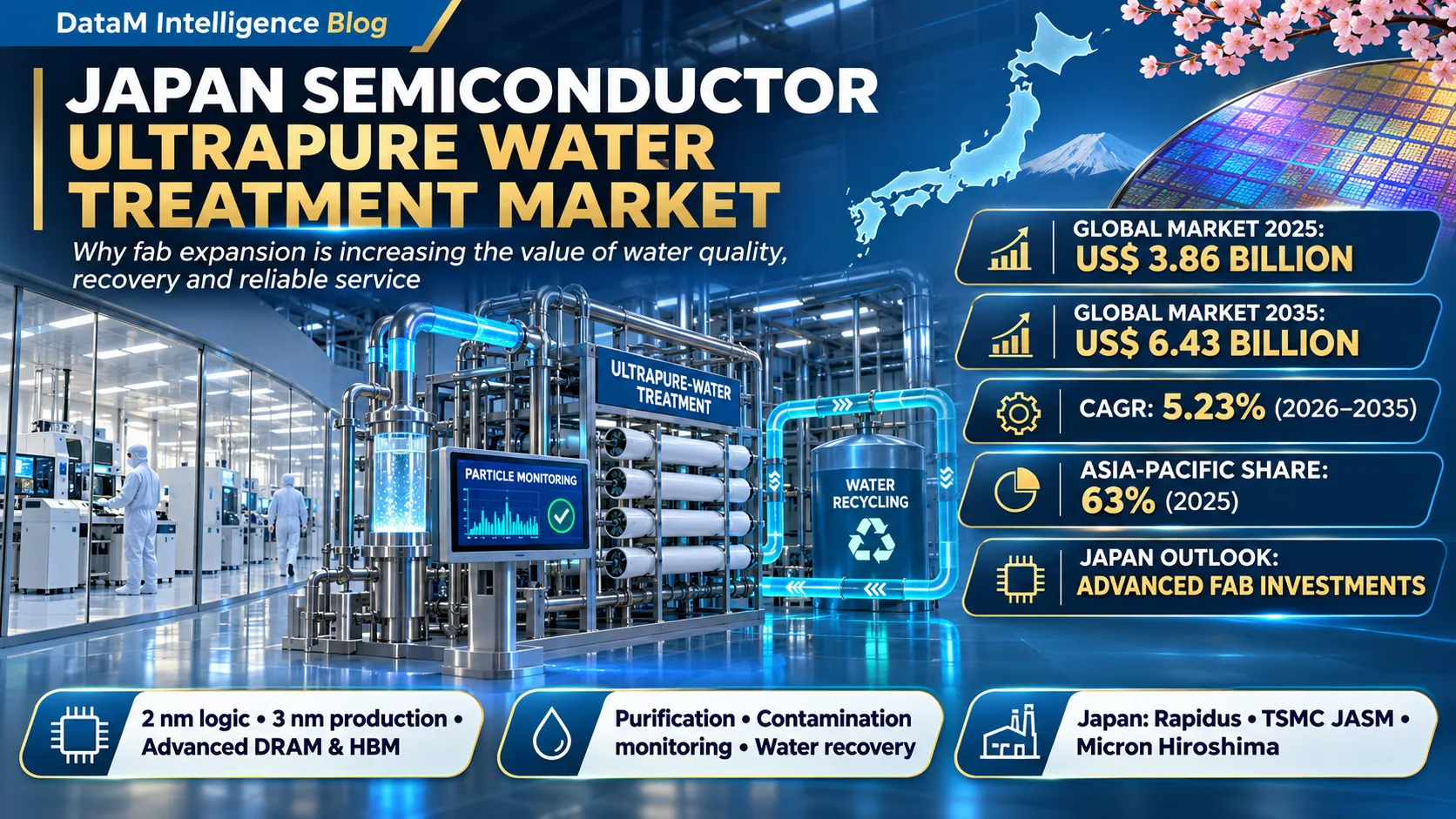
The global semiconductor ultrapure water treatment market was valued at USD 3.86 billion (JPY 616.02 billion) in 2025 and is projected to reach USD 6.43 billion (JPY 1,026.16 billion) by 2035, growing at a 5.23% CAGR during 2026–2035. Asia-Pacific accounted for 63% of global revenue in 2025, representing approximately USD 2.43 billion (JPY 387.80 billion). Within this regional market, Japan’s growth prospects are supported by investments in advanced logic and memory manufacturing, alongside increasing requirements for high-purity process water, contamination monitoring and integrated water-recycling infrastructure.
Request Exclusive Sample: https://www.datamintelligence.com/download-sample/semiconductor-ultrapure-water-treatment-market
New fabs are changing the commercial value of water treatment
Japan’s semiconductor expansion is creating a broader opportunity for ultrapure water suppliers. Advanced logic projects, memory investment and tighter control of water resources are increasing the importance of purification, contamination monitoring, water recovery and reliable operation. The commercial opportunity extends from initial plant construction into the services needed throughout a fab’s operating life.
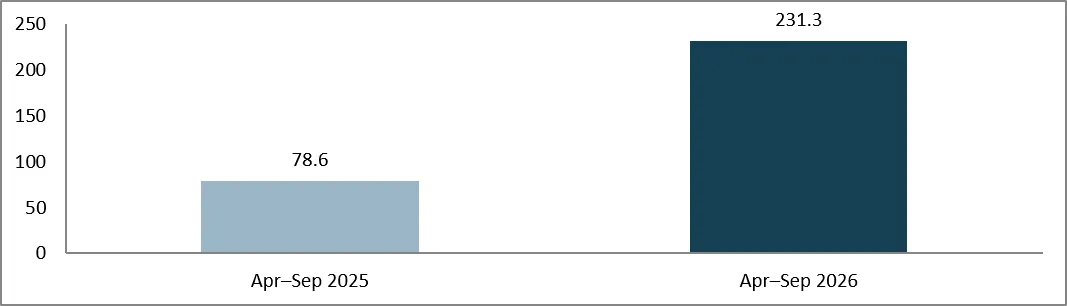
Kurita’s global Electronics Industry orders rose 194.3% to JPY 231.3 billion in April–September 2026, from JPY 78.6 billion a year earlier. Its November presentation identifies large projects in Japan, South Korea and the United States as drivers. This global segment indicator demonstrates the strength of supplier demand.
| Market signal | Verified figure | Commercial implication |
| Advanced logic in Hokkaido | Rapidus targets 2 nm mass production in 2027 | Qualification and stable supply become central to supplier selection. |
| Advanced logic in Kumamoto | TSMC targets 3 nm production at its second Japan fab in 2028 | Water-system requirements must follow the updated process roadmap. |
| Local water stewardship | JASM recorded 8 million m鲁 of groundwater restoration in 2025 | Water-resource planning is part of the operating environment. |
Kurita global Electronics Industry orders nearly tripled (JPY Billion)
Advanced logic and memory projects create different buying requirements
The Japanese project pipeline spans several manufacturing needs. Rapidus is developing leading-edge logic in Hokkaido, TSMC is advancing its second Kumamoto fab, and Micron is expanding cleanroom space in Hiroshima. For water suppliers, these projects suggest separate opportunities in initial installation, process qualification, capacity expansion and ongoing service. Suppliers need to align their offers with each project’s stage and process requirements.
| Project and location | Latest disclosed milestone | Implication for water suppliers |
| Rapidus IIM Chitose, Hokkaido | Pilot line began operating in April 2025; 2 nm mass production remains scheduled for 2027. | Support process qualification, reliable ultrapure water supply and integration with recovery systems. |
| TSMC JASM second fab Kumamoto | October 2026 guidance targets 3 nm volume production in 2028. | Align treatment design and commissioning with the current technology and production schedule. |
| Micron cleanroom expansion Hiroshima | Groundbreaking took place in July 2026; initial output is expected in late 2028. | Assess incremental water-system capacity and service needs for advanced DRAM, HBM and future transitions. |
Company project milestones current to 18 November 2026. Commercial implications are analysis.
Request a Customized Report According to Your Business Strategy: https://www.datamintelligence.com/customize/semiconductor-ultrapure-water-treatment-market
Rapidus demonstrates the shift toward responsibility for water supply
Organo’s disclosed work at Rapidus provides a concrete example of how the buying model is changing. Its scope includes ultrapure water production, wastewater treatment and water recovery equipment. Under a facility-owned service agreement, Organo owns the equipment and handles operation, maintenance and responses to unexpected problems. Dedicated personnel support the site 24 hours a day, 365 days a year.
Commercially, this creates a relationship that continues beyond equipment delivery. A supplier’s ability to maintain water quality, respond quickly and support the customer through production changes becomes part of its value. For competing providers, a credible service team near the fab can strengthen an offer alongside treatment technology and construction capability.
Water quality and measurement capability must develop together
Organo describes large semiconductor cleaning systems supplying up to 1,000 m³ of ultrapure water per hour and analytical technology capable of measuring 10 nm particles. These company capability examples illustrate why treatment scale and contamination measurement need to be assessed together when comparing suppliers.
Water recovery is becoming part of production planning
Japan’s water-treatment opportunity also depends on how effectively fabs use their available water resources. TSMC reports that JASM’s Kumamoto groundwater recharge programs achieved 8 million m³ of restoration in 2025. The figure refers specifically to watershed restoration. For water-treatment suppliers, it underscores the need to assess factory water systems alongside the resources that support them.
The commercial implication is a need to connect purification with recovery and wastewater management. The Rapidus project already brings these functions into one disclosed supplier scope. For purchasers, the relevant comparison includes how reclaimed streams can be reused while protecting process quality, operating reliability and the site’s water balance.
Japan contributes a measurable supplier revenue base
For Japan specifically, Kurita forecasts Electronics Industry sales of JPY 95.4 billion for the year ending March 2027, versus JPY 91.0 billion in the previous year. These figures cover the domestic segment’s facilities and services.
Kurita Japan Electronics Industry sales outlook (JPY Billion)
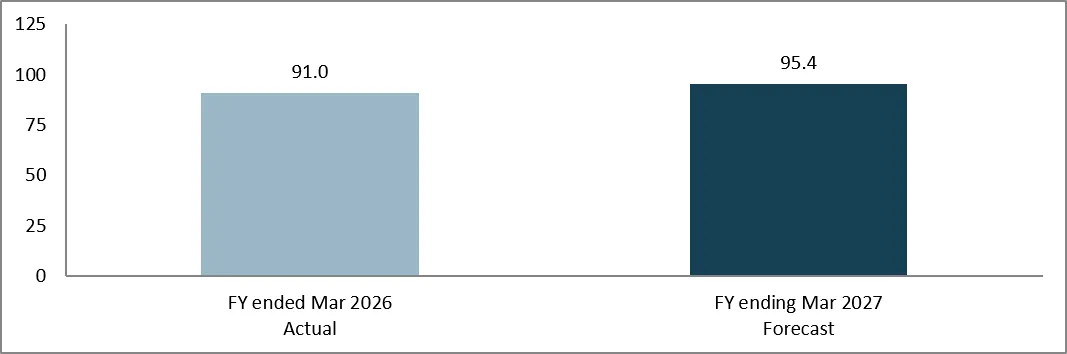
Figure 2: JPY billion. Japan segment, continuing operations. November 2026 forecast.
Prefabrication addresses the pressure to deliver systems faster
Kurita began taking orders for its e-WT ready-made ultrapure water system in October 2025 through the Fracta Leap and InQuuater business structure. The company states that prefabricated units can shorten the engineering, procurement and construction process by approximately 30% compared with custom-made solutions. The system also offers cloud connectivity for operational support. The company-stated delivery benefit depends on project requirements and configuration.
For Japan’s suppliers, faster delivery can help address engineering constraints, but the offer still needs to fit the customer’s source water, required purity and operating conditions. Standardized equipment and specialized engineering will each have a role, depending on the project.
Five commercial signals buyers and suppliers should track
| Signal | What it reveals | Commercial action |
Fab process roadmap changes | The required water-system specification and qualification plan may change with the manufacturing process. | Update opportunity assessments using the latest process node, commissioning schedule and customer specifications. |
Water supplier takes ownership of equipment | Equipment supply can become a continuing contract covering operation and maintenance. | Compare ownership, service fees, response obligations and responsibility for maintaining water quality. |
Recovery becomes part of the treatment scope | Customers are evaluating how purification, wastewater treatment and reuse work together. | Compare recovery performance within a clearly defined water balance, including treatment losses and energy requirements. |
Prefabricated equipment promises shorter delivery | Engineering capacity and construction time are becoming competitive factors. | Validate the quoted schedule against installation, qualification and operating requirements at the actual site. |
New production capacity enters ramp-up | Water demand and service requirements change as tools are installed and utilization rises. | Separate construction opportunities from commissioning support, recurring operation and later optimization work. |
Commercial interpretation based on the company disclosures cited in this article.
Request Executive Sample: https://www.datamintelligence.com/download-sample/semiconductor-ultrapure-water-treatment-market
Competition increasingly depends on delivery and service capability
The disclosed developments point to a market in which engineering execution, contamination control and service coverage matter alongside treatment technology. The Rapidus agreement demonstrates the importance of continuing operational responsibility. Kurita’s e-WT launch addresses delivery speed and engineering workload. These are distinct approaches to the same customer concern: having qualified water available when manufacturing needs it.
For suppliers and component manufacturers, the practical opportunity is to understand where they fit in each project. A membrane, resin, monitoring instrument or treatment module must operate within a larger system whose performance is judged at the fab. Partnerships with system providers and a clear technical qualification path can therefore matter as much as the number of projects announced.
The opportunity continues after the first installation
New fabs create initial demand, while their operating lives create further needs for maintenance, monitoring, replacement components and water-efficiency improvements. Market analysis should distinguish these revenue streams and their timing. A project announcement establishes potential demand; qualification, construction progress and production ramp-up determine when that demand becomes commercially accessible.
What the investment cycle means for market decisions
Japan’s semiconductor ultrapure water treatment market should be assessed through the projects entering development, qualification and production, together with the installed systems that need ongoing support. The clearest opportunities connect water quality, delivery schedules, recovery and dependable service. A single headline on semiconductor investment cannot show which suppliers can capture that business.
For equipment suppliers, investors and fab operators, the next questions are specific: Which projects have confirmed treatment requirements? Where is local service coverage sufficient? Which customers prefer equipment ownership or a water-supply service agreement? How will recovery targets affect system design and operating cost? And which opportunities are available before the planned 2027–2028 production milestones?
The strongest competitive position will come from proving that a water system can support the customer’s process, remain reliable during production and adapt as manufacturing requirements change.