


Introduction
Japan has long been recognized as one of the world's most advanced functional food markets. With a deep-rooted culture of consuming fermented foods such as miso, natto, and fermented dairy products, Japanese consumers have historically embraced products that support digestive wellness. Today, this cultural foundation is converging with modern nutritional science, creating substantial growth opportunities within the probiotic food supplement market.
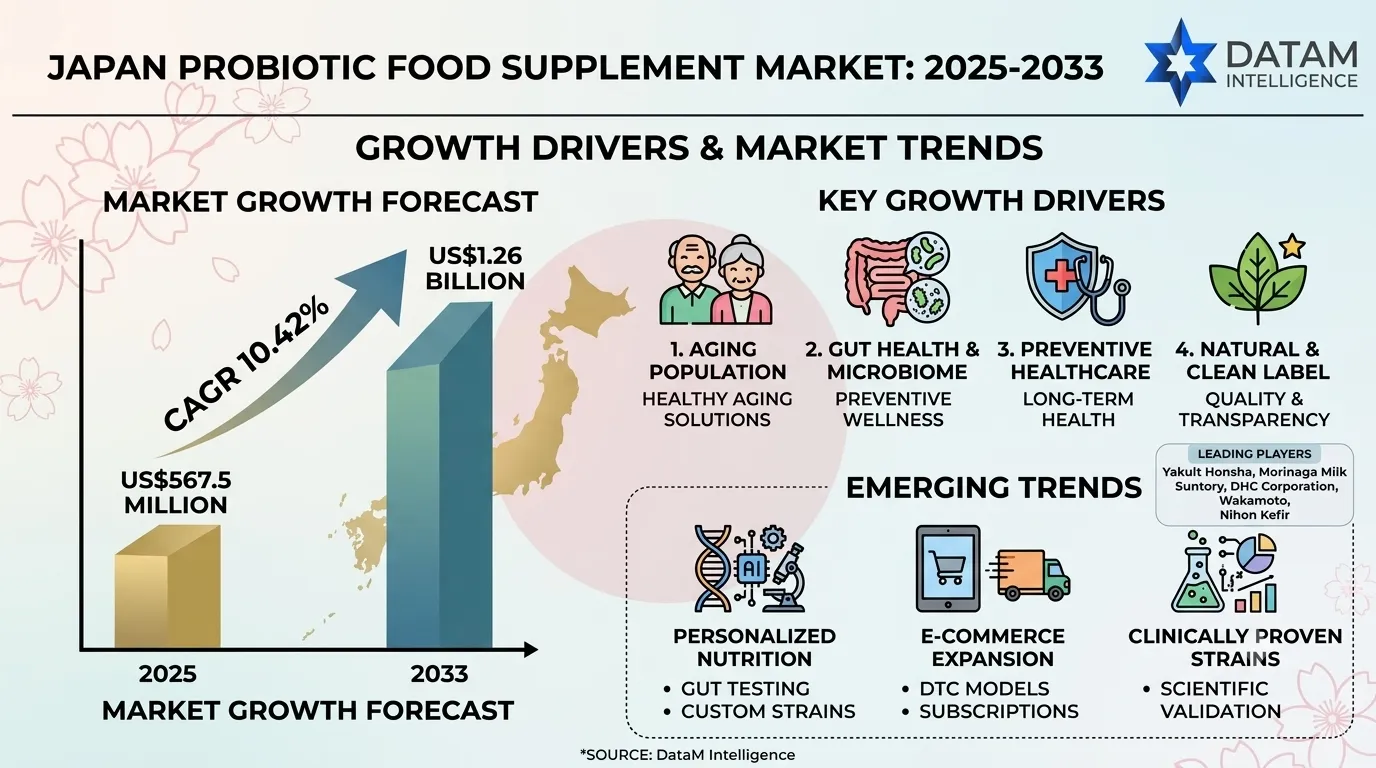
According to DataM Intelligence, the Japan Probiotic Food Supplement Market was valued at approximately US$567.5 million in 2025 and is projected to reach US$1.26 billion by 2033, growing at a CAGR of 10.42% during the forecast period. This growth reflects increasing consumer demand for evidence-based nutritional products that support gut health, immunity, healthy aging, and overall wellness.
Explore Growth Opportunities in Japan’s Probiotic Food Supplement Market
Discover critical insights into Japan’s expanding probiotic supplement ecosystem with our sample market report. Analyze future growth prospects, consumer trends, innovation opportunities, competitive strategies, and investment potential through 2033.
Whether you are a manufacturer, investor, distributor, or healthcare industry stakeholder, this report provides actionable intelligence to help you identify opportunities and make informed business decisions.
As healthcare costs rise and preventive healthcare becomes a national priority, probiotic supplements are emerging as a strategic category for manufacturers, investors, retailers, and healthcare stakeholders seeking growth in Japan's health and wellness sector.
Understanding the Japan Probiotic Food Supplement Market
Probiotic food supplements contain live beneficial microorganisms that support digestive balance and overall health. These products are available in various forms, including capsules, tablets, powders, gummies, sachets, and liquid formulations.
The Japanese market is characterized by:
- High consumer awareness of gut health
- Strong trust in science-backed health products
- Established functional food regulations
- Significant aging population
- Growing focus on preventive healthcare
- Increasing demand for personalized nutrition solutions
Unlike many emerging probiotic markets, Japan benefits from decades of consumer familiarity with probiotics through iconic brands and fermented food traditions, creating a favorable environment for premium supplement adoption.
Key Growth Drivers Fueling Market Expansion
1. Aging Population Driving Demand for Healthy Aging Solutions
Japan has one of the world's oldest populations, creating significant demand for nutritional products that support long-term health and quality of life.
Older consumers increasingly seek solutions for:
- Digestive health maintenance
- Immune system support
- Nutrient absorption
- Metabolic wellness
- Cognitive health
- Healthy aging
Research across Japan's functional food sector highlights aging demographics as one of the most influential growth drivers for probiotic and functional nutrition products.
For supplement manufacturers and investors, this demographic trend represents a long-term growth opportunity with sustained market demand.
2. Rising Awareness of Gut Health and the Microbiome
Scientific advancements have transformed consumer understanding of the gut microbiome.
Modern consumers increasingly recognize the connection between gut health and:
- Immunity
- Mental wellness
- Stress management
- Digestive performance
- Inflammation control
- Overall health outcomes
The growing interest in the gut-brain axis has expanded probiotic applications beyond digestive health, creating new opportunities for product innovation and market expansion.
3. Shift Toward Preventive Healthcare
Healthcare systems globally are transitioning from treatment-based models to prevention-focused approaches.
In Japan, consumers are proactively investing in nutritional supplements that may help reduce long-term health risks and improve daily wellness.
This shift is supporting demand for:
- Functional foods
- Dietary supplements
- Probiotic formulations
- Personalized nutrition products
- Preventive wellness solutions
As healthcare expenditure continues to rise, preventive nutrition categories are expected to attract increasing consumer spending and investment attention.
4. Demand for Natural and Clean-Label Products
Japanese consumers place a high value on product quality, transparency, and safety.
As a result, manufacturers are increasingly focusing on:
- Natural ingredients
- Organic sourcing
- Clean-label formulations
- Clinically validated probiotic strains
- Transparent health claims
This trend is encouraging innovation while raising quality standards across the probiotic supplement industry.
Emerging Trends Reshaping the Japan Probiotic Food Supplement Market
The Japan probiotic food supplement market is undergoing a significant transformation driven by advancements in nutritional science, evolving consumer preferences, digital health technologies, and increasing demand for evidence-based wellness solutions. As consumers become more proactive about managing their health, market participants are introducing innovative products and business models that extend beyond traditional digestive health applications. Several emerging trends are expected to redefine the competitive landscape and create new growth opportunities through 2033.
Personalized Probiotic Nutrition: The Future of Precision Wellness
One of the most influential trends shaping the market is the rise of personalized probiotic nutrition. Modern consumers increasingly recognize that health and wellness needs vary significantly from person to person, leading to growing demand for customized nutritional solutions tailored to individual biological profiles.
Recent advances in microbiome research have revealed that each individual possesses a unique gut microbiota composition that influences digestion, immunity, metabolism, mental well-being, and overall health outcomes. As a result, a standardized approach to probiotic supplementation is gradually giving way to more personalized interventions.
Leading companies are investing heavily in:
- Gut microbiome testing and analysis
- AI-powered health assessment platforms
- Personalized dietary recommendations
- Customized probiotic strain combinations
- Digital wellness monitoring programs
- Precision nutrition ecosystems
Artificial intelligence and data analytics are playing a critical role in this transformation. By analyzing consumer health data, dietary habits, lifestyle factors, and microbiome profiles, companies can develop targeted probiotic formulations designed to address specific health concerns such as digestive disorders, immune support, stress management, weight management, and healthy aging.
Japan's technologically advanced healthcare environment makes it particularly well-positioned to adopt personalized nutrition solutions. As consumers increasingly seek preventive healthcare strategies and tailored wellness programs, personalized probiotics are expected to become a premium segment within the broader probiotic supplement market.
For manufacturers and investors, this trend presents substantial opportunities to develop high-value products with stronger consumer engagement, improved efficacy, and enhanced customer retention.
Expansion of E-Commerce Channels: Transforming Consumer Access and Engagement
The rapid growth of e-commerce is reshaping how probiotic supplements are marketed, distributed, and consumed across Japan. Digital platforms have evolved beyond simple retail channels and are now becoming critical components of customer acquisition, education, and long-term relationship management strategies.
Japanese consumers increasingly prefer online purchasing due to convenience, broader product selection, access to product reviews, and personalized shopping experiences. This shift has accelerated the adoption of direct-to-consumer (DTC) business models, allowing brands to establish stronger connections with end-users while reducing reliance on traditional retail intermediaries.
The expansion of e-commerce provides several strategic advantages:
Enhanced Product Accessibility
Consumers can easily access a wider range of domestic and international probiotic brands regardless of geographical location. This accessibility is particularly important for specialized formulations targeting niche health conditions.
Direct-to-Consumer Engagement
Digital channels enable companies to communicate directly with customers through educational content, personalized recommendations, health assessments, and targeted marketing campaigns. This direct interaction strengthens brand loyalty and improves customer lifetime value.
Subscription-Based Revenue Models
Many probiotic supplement companies are introducing subscription services that provide recurring product deliveries and personalized health support. Subscription models improve customer retention while generating predictable revenue streams.
Consumer Education and Awareness
Digital platforms serve as valuable educational tools where consumers can learn about gut health, microbiome science, probiotic strains, and product benefits. Increased consumer education often translates into greater trust and higher adoption rates.
Data-Driven Personalization
E-commerce platforms generate valuable consumer insights that enable brands to offer personalized product recommendations, optimize marketing strategies, and improve product development initiatives.
As Japan continues to embrace digital health and online wellness services, e-commerce is expected to remain a key growth driver, particularly for emerging brands seeking to compete with established industry leaders.
Clinically Proven Probiotic Strains: Growing Demand for Scientific Validation
Consumer expectations within the probiotic supplement market are becoming increasingly sophisticated. Rather than relying solely on broad health claims, today's consumers seek scientifically validated products supported by clinical evidence and transparent research.
This shift is driving demand for probiotic supplements formulated with clinically studied strains that demonstrate measurable health benefits. Consumers, healthcare professionals, and regulatory bodies are placing greater emphasis on efficacy, safety, and evidence-based health outcomes.
To meet these expectations, leading manufacturers are focusing on:
Clinical Research and Human Trials
Companies are investing in rigorous scientific studies to validate the effectiveness of specific probiotic strains for targeted health applications. Clinical evidence helps differentiate products in an increasingly competitive market.
Strain-Specific Health Benefits
Research has shown that different probiotic strains provide distinct physiological benefits. As a result, brands are increasingly highlighting strain-specific functionality related to digestive health, immune support, metabolic health, mental wellness, and healthy aging.
Scientific Transparency
Consumers are demanding greater transparency regarding ingredient sourcing, strain identification, manufacturing processes, and clinical evidence. Brands that openly communicate scientific findings are more likely to gain consumer trust.
Healthcare Professional Endorsements
Recommendations from healthcare practitioners, nutritionists, and medical experts are becoming important factors influencing consumer purchasing decisions. Products supported by healthcare professionals often benefit from enhanced credibility and stronger market acceptance.
Regulatory Compliance and Quality Assurance
Japan's highly regulated health and wellness market requires companies to maintain stringent quality standards. Manufacturers that demonstrate superior quality control and scientific validation are better positioned to secure long-term consumer confidence.
The growing emphasis on clinical validation is expected to elevate industry standards and encourage continued investment in research and development. Over time, scientifically substantiated products are likely to capture a larger share of the market as consumers prioritize effectiveness over marketing claims.
Strategic Implications for Industry Stakeholders
These emerging trends collectively indicate a broader shift toward a more sophisticated, technology-enabled, and science-driven probiotic supplement industry in Japan. Companies that successfully integrate personalized nutrition capabilities, leverage digital commerce channels, and invest in clinical research will be better positioned to capitalize on evolving consumer demands.
For investors, the convergence of microbiome science, artificial intelligence, preventive healthcare, and digital health technologies presents significant opportunities for innovation and long-term value creation. As the market continues to mature, competitive advantage will increasingly depend on scientific credibility, personalization capabilities, consumer engagement, and the ability to deliver measurable health outcomes.
The organizations that adapt to these trends early are likely to emerge as market leaders in Japan's rapidly expanding probiotic food supplement sector through 2033 and beyond.Competitive Landscape
The Japan Probiotic Food Supplement Market includes a mix of established domestic leaders and emerging innovators.
Key participants include:
- Yakult Honsha Co., Ltd.
- Morinaga Milk Industry Co., Ltd.
- Suntory Holdings Limited
- DHC Corporation
- Wakamoto Pharmaceutical Co., Ltd.
- Nihon Kefir Co., Ltd.
- Yotsuba Japan
These companies continue to invest in research, product development, and functional ingredient innovation to strengthen their market position.
Competition is increasingly centered around:
- Clinical validation
- Product differentiation
- Premium positioning
- Digital engagement
- Personalized health solutions
Investment Opportunities Through 2033
The Japan Probiotic Food Supplement Market presents a compelling investment landscape through 2033, supported by strong consumer demand, favorable demographic trends, advancements in microbiome science, and increasing adoption of preventive healthcare solutions. As the market evolves from traditional digestive health products toward comprehensive wellness and personalized nutrition offerings, new opportunities are emerging across product innovation, technology integration, and strategic business expansion.
Investors, manufacturers, ingredient suppliers, healthcare companies, and private equity firms are increasingly recognizing the long-term growth potential of Japan's probiotic supplement sector. The market's projected expansion is expected to create significant opportunities for stakeholders seeking exposure to one of Asia-Pacific's most mature and innovation-driven health and wellness markets.
Functional Nutrition Expansion Creates Long-Term Growth Potential
The growing convergence of nutrition, healthcare, and wellness is driving the rapid expansion of Japan's functional nutrition ecosystem. Consumers are no longer purchasing supplements solely to address specific health concerns; instead, they are increasingly integrating functional nutrition products into their daily wellness routines to support long-term health outcomes.
This shift is creating opportunities across multiple high-growth categories, including:
- Probiotic supplements
- Synbiotic formulations
- Postbiotic ingredients
- Gut health solutions
- Immune support products
- Healthy aging supplements
- Women's health nutrition
- Personalized wellness products
Among these categories, probiotics remain a foundational segment due to increasing scientific evidence linking gut health to broader physiological functions such as immunity, metabolism, mental well-being, and inflammation management.
At the same time, emerging categories such as synbiotics and postbiotics are gaining attention from both consumers and manufacturers.
Synbiotics: The Next Generation of Gut Health Solutions
Synbiotics combine probiotics with prebiotics to enhance the survival and effectiveness of beneficial microorganisms. As consumer awareness of microbiome health increases, demand for more comprehensive gut health formulations is expected to accelerate.
Companies investing in synbiotic innovation may benefit from premium pricing opportunities and product differentiation in an increasingly competitive marketplace.
Postbiotics: An Emerging High-Value Segment
Postbiotics, which consist of beneficial compounds produced during probiotic fermentation, are attracting interest due to their stability, safety profile, and potential health benefits.
Unlike live probiotics, postbiotics may offer improved shelf stability and easier formulation capabilities, making them attractive for manufacturers seeking innovative product development opportunities.
Healthy Aging Nutrition
Japan's aging population remains one of the strongest drivers of functional nutrition demand. Older consumers increasingly seek nutritional solutions that support digestive health, immune resilience, nutrient absorption, and overall quality of life.
As a result, healthy aging-focused probiotic formulations are expected to become a major investment area throughout the forecast period.
For investors, the continued expansion of functional nutrition represents a long-term structural growth opportunity supported by demographic trends, healthcare transformation, and evolving consumer lifestyles.
Innovation in Delivery Formats Enhances Consumer Adoption
Product innovation is extending beyond ingredient development and increasingly focusing on delivery formats that improve convenience, accessibility, and consumer compliance.
Modern consumers expect health supplements to integrate seamlessly into their daily routines. Traditional capsules and tablets continue to maintain strong demand; however, manufacturers are introducing alternative delivery systems designed to enhance user experience and product differentiation.
Emerging delivery formats include:
- Probiotic gummies
- Single-serve sachets
- Functional beverages
- Chewable tablets
- Stick packs
- Ready-to-drink formulations
- Powdered drink mixes
- On-the-go nutrition products
Gummies and Chewables Gain Popularity
Gummies and chewable supplements are becoming increasingly popular among younger consumers and older adults seeking more convenient alternatives to traditional capsules.
These formats offer improved palatability, ease of consumption, and stronger consumer engagement, making them attractive options for both established and emerging brands.
Functional Beverages Drive Market Expansion
The growing demand for convenient health solutions is encouraging the development of probiotic-infused beverages that combine nutrition with everyday consumption habits.
Ready-to-drink probiotic products enable manufacturers to target consumers seeking convenient wellness solutions without requiring additional supplementation routines.
Portable and On-the-Go Nutrition Solutions
Busy lifestyles are driving demand for portable formats such as sachets and stick packs that can be easily incorporated into travel, work, and daily activities.
These innovations are particularly relevant for urban consumers who prioritize convenience without compromising health objectives.
As competition intensifies, delivery format innovation is expected to become a critical differentiator. Companies that successfully combine scientific efficacy with superior user experience are likely to achieve stronger consumer adoption and brand loyalty.
For investors, businesses focused on next-generation delivery technologies may represent attractive opportunities as consumer preferences continue to evolve.
Strategic Partnerships and M&A Activity Expected to Accelerate
As the Japan probiotic food supplement market grows, strategic partnerships, acquisitions, and collaborative innovation initiatives are expected to play an increasingly important role in shaping industry dynamics.
The market's growing attractiveness is encouraging companies to pursue partnerships that expand product portfolios, accelerate innovation, strengthen distribution capabilities, and enhance technological expertise.
Key areas of collaboration are expected to include:
Ingredient Partnerships
Supplement manufacturers are increasingly collaborating with biotechnology firms, microbiome research organizations, and ingredient suppliers to gain access to proprietary probiotic strains and advanced formulation technologies.
These partnerships enable companies to accelerate product development while enhancing scientific credibility and market differentiation.
Technology Collaborations
The integration of artificial intelligence, microbiome analytics, and digital health technologies is creating new opportunities for strategic alliances between nutrition companies and health technology providers.
Such collaborations can support personalized nutrition programs, consumer health monitoring, and precision wellness solutions.
Distribution Alliances
Expanding market reach remains a key priority for both domestic and international players. Strategic distribution partnerships can help companies access new customer segments, strengthen e-commerce capabilities, and improve market penetration across Japan.
Distribution alliances are particularly valuable for international brands seeking to establish a presence in Japan's highly competitive and regulated supplement market.
Mergers and Acquisitions
The increasing importance of scientific validation and innovation is expected to drive consolidation across the industry.
Large nutrition companies may pursue acquisitions to:
- Expand probiotic product portfolios
- Acquire proprietary technologies
- Strengthen research capabilities
- Enter emerging market segments
- Enhance competitive positioning
Similarly, private equity firms and institutional investors may target high-growth probiotic companies with strong intellectual property portfolios and scalable business models.
As the market matures, consolidation activity is likely to increase as industry participants seek economies of scale, operational efficiencies, and broader market access.
Why Investors Are Watching the Japan Probiotic Market
Several structural factors make Japan one of the most attractive probiotic supplement markets globally:
- Rapidly aging population
- High consumer awareness of gut health
- Strong acceptance of functional nutrition products
- Advanced healthcare infrastructure
- Increasing demand for preventive healthcare
- Growing adoption of personalized nutrition
- Rising investment in microbiome research
- Expanding e-commerce and digital health ecosystems
These factors collectively create a favorable environment for sustained market growth and innovation.
Outlook for Investors Through 2033
Looking ahead, the Japan Probiotic Food Supplement Market is expected to evolve into a more science-driven, technology-enabled, and consumer-centric industry. Companies that successfully capitalize on functional nutrition expansion, innovative product formats, and strategic partnerships are likely to capture significant market share and generate long-term value.
For investors, the market offers exposure to multiple high-growth themes, including healthy aging, preventive healthcare, microbiome science, personalized nutrition, and digital wellness. As consumer demand continues to shift toward proactive health management, Japan's probiotic supplement industry is expected to remain a highly attractive destination for investment and strategic expansion through 2033.
Challenges to Monitor
Despite strong growth prospects, stakeholders should remain aware of several challenges:
Regulatory and Safety Expectations
Japanese consumers prioritize safety and efficacy. Following increased scrutiny of certain supplement categories, manufacturers face growing pressure to demonstrate product quality and transparency.
Consumer Trust and Scientific Validation
Brands must continue investing in research, quality assurance, and education to maintain consumer confidence and support long-term growth.
Market Saturation
As new entrants enter the market, differentiation through innovation and evidence-based positioning will become increasingly important.
Future Outlook
The Japan Probiotic Food Supplement Market is positioned for sustained expansion through 2033. Rising health awareness, aging demographics, scientific advances in microbiome research, and increasing demand for preventive healthcare are creating a favorable environment for long-term growth.
Organizations that prioritize clinical validation, consumer trust, product innovation, and personalized nutrition strategies will be best positioned to capitalize on emerging opportunities.
For manufacturers, investors, healthcare stakeholders, and market entrants, Japan remains one of the most attractive probiotic supplement markets globally.
Frequently Asked Questions
What is driving the growth of the Japan Probiotic Food Supplement Market?
The market is primarily driven by rising health consciousness, an aging population, increasing awareness of gut health, growing demand for preventive healthcare, and consumer preference for scientifically validated nutritional products.
What is the projected market size of the Japan Probiotic Food Supplement Market by 2033?
The market is expected to grow from US$567.5 million in 2025 to approximately US$1.26 billion by 2033, at a CAGR of 10.42%.
Which companies are leading the Japan Probiotic Food Supplement Market?
Major players include Yakult Honsha, Morinaga Milk Industry, Suntory Holdings, DHC Corporation, Wakamoto Pharmaceutical, Nihon Kefir, and Yotsuba Japan.
Explore the Full Market Intelligence Report
Gain deeper insights into Japan Probiotic Food Supplement Market size, competitive benchmarking, consumer trends, growth forecasts, regulatory developments, and investment opportunities.
Request a Japan Probiotic Food Supplement Market Sample Report to uncover strategic opportunities through 2033 and stay ahead in Japan's rapidly evolving functional nutrition industry.